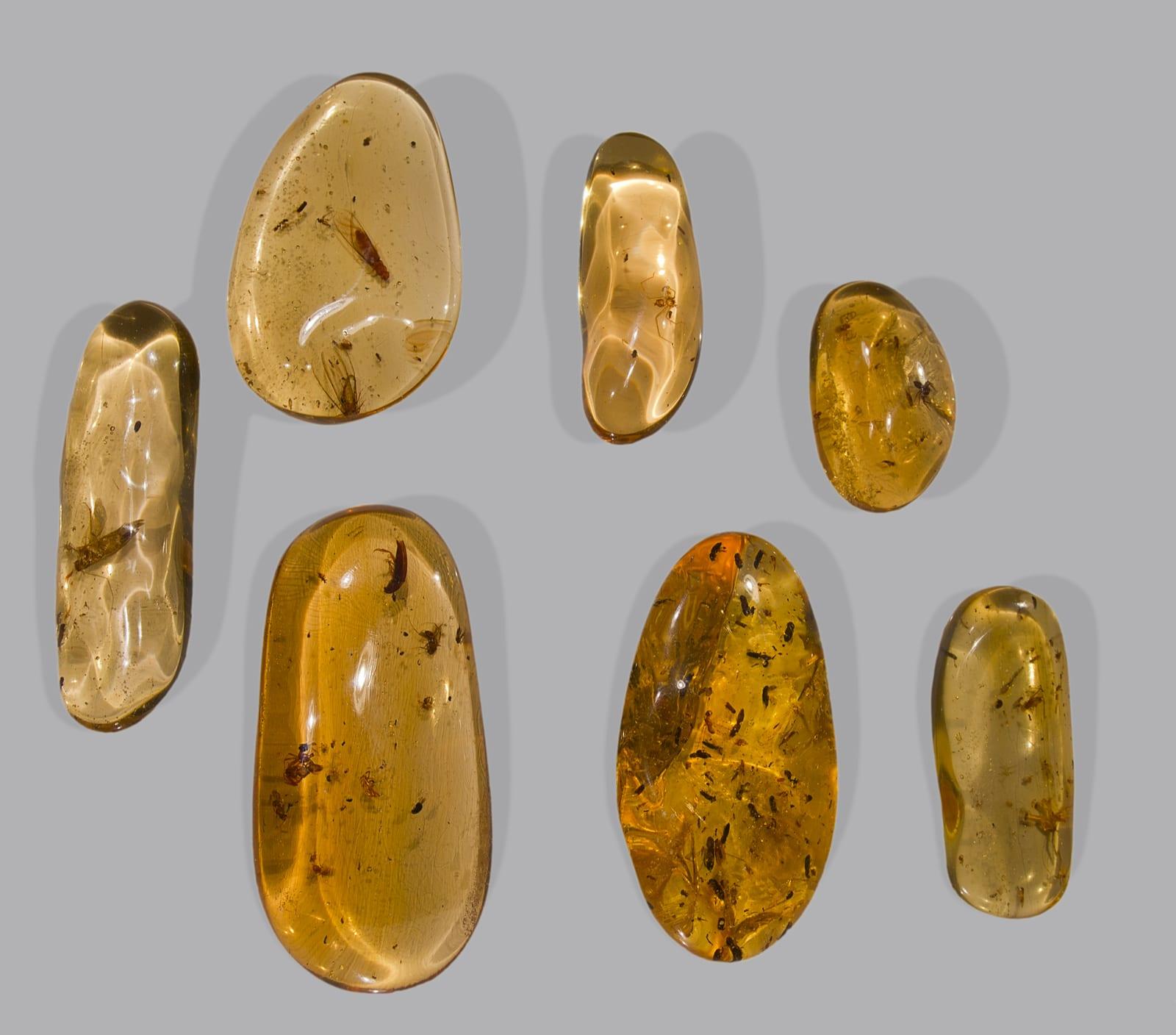
Amber is fossilized tree resin that often preserves ancient insects, plant matter, and bubbles. It is lightweight, warm to the touch, and can be distinguished from modern resins like copal by its hardness and solubility in solvents. It is primarily recovered from coastal deposits and sedimentary shales.
Spotting amber in the field
Field marks- 1
Warm to the touch, not cold like stone, and extremely light in the hand
- 2
Floats in strong salt water, where nearly all imitations sink
- 3
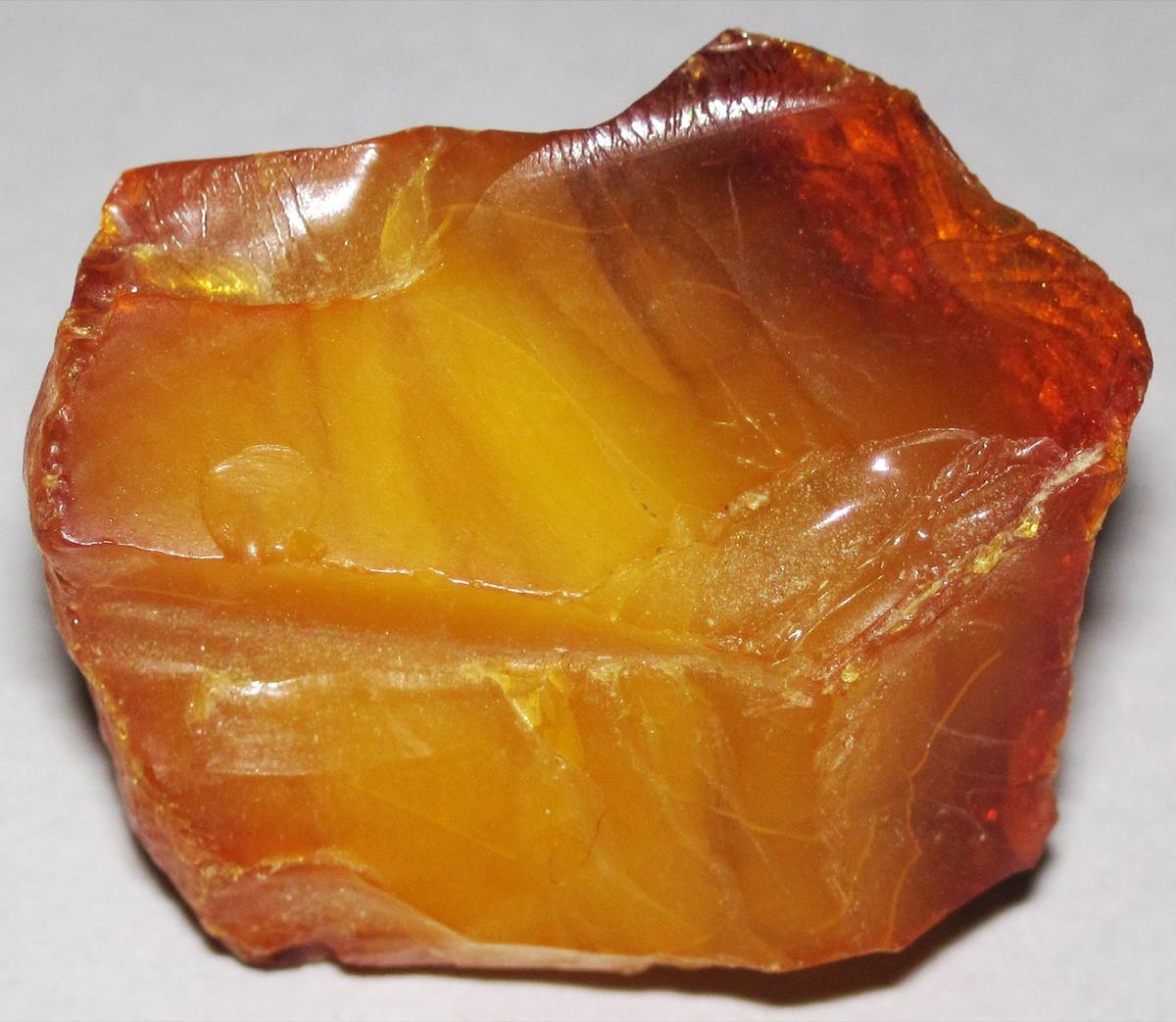
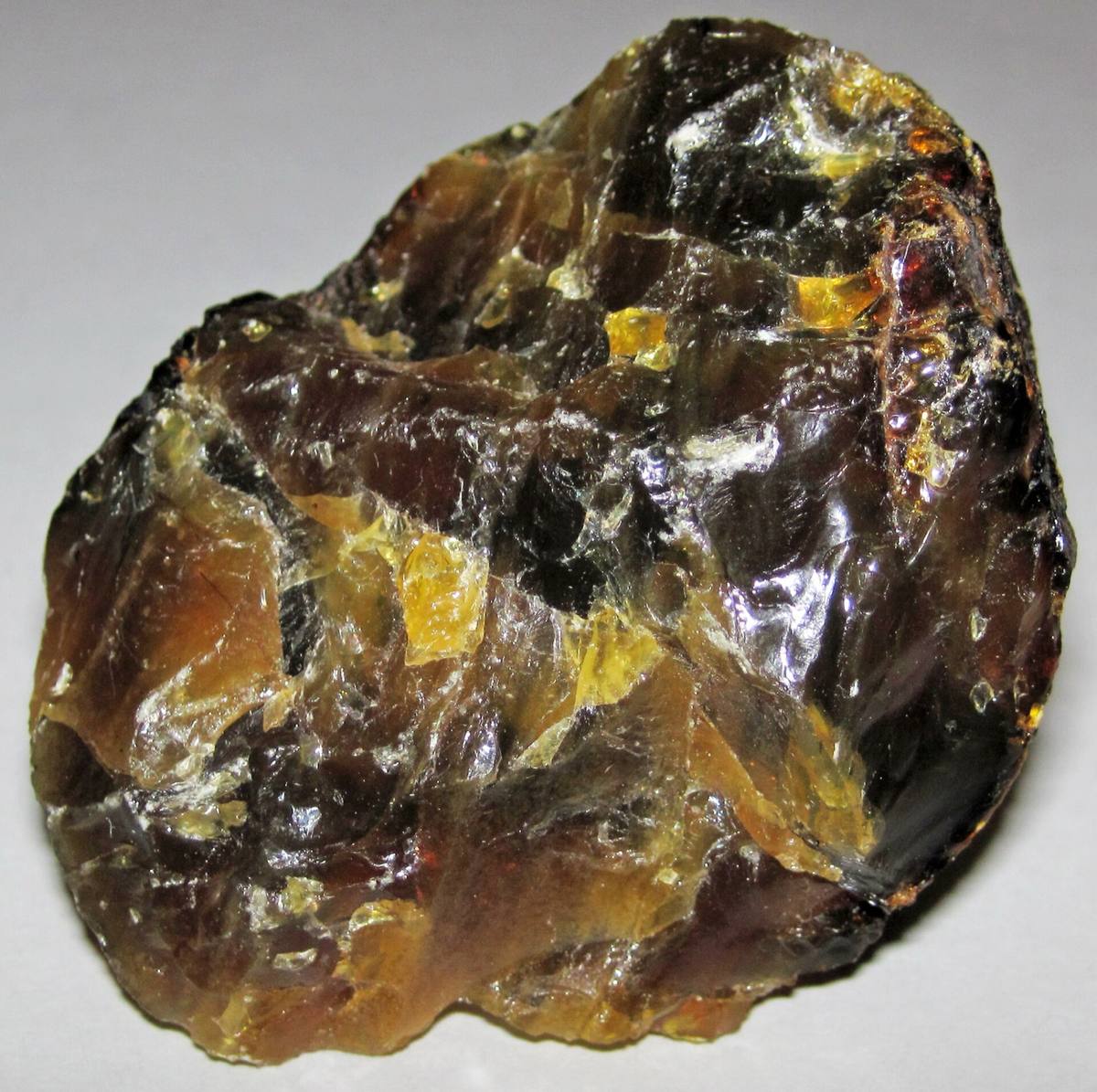
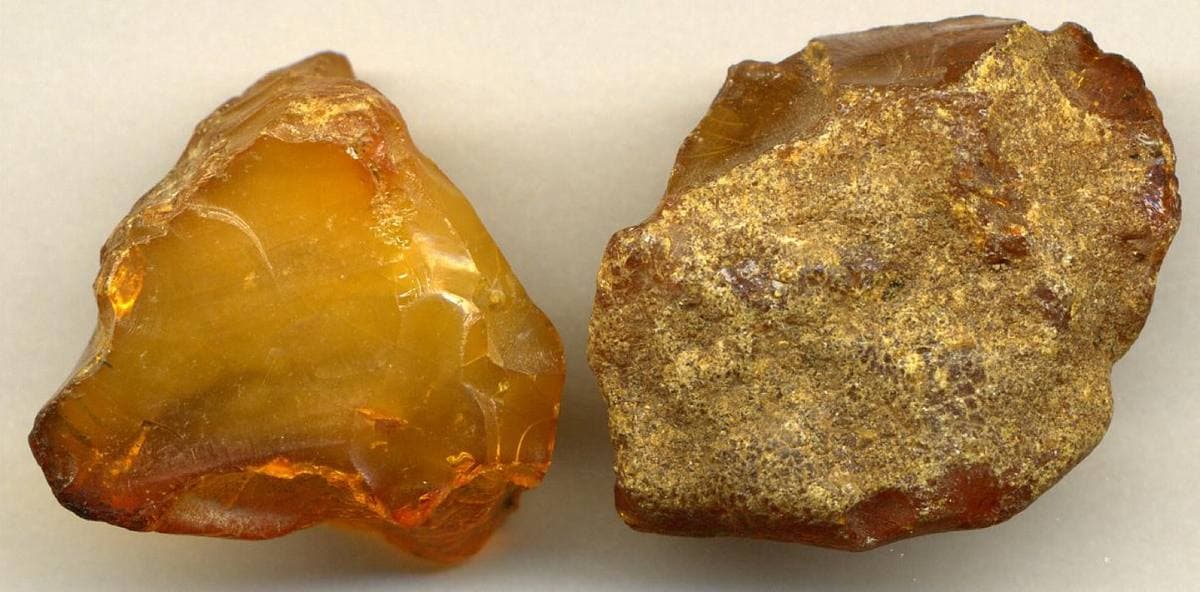
Golden to orange, translucent, with a resinous rather than glassy luster
Amber is fossil tree resin, and its lightness is the first field mark: it feels wrong, far too light for its size, and it warms in your hand rather than staying cold. The classic salt-water float test uses about two tablespoons of salt in a cup of water, in which amber floats and glass, plastic and most imitations sink. Baltic beaches after storms, especially along Poland and Lithuania, are the productive hunting; American occurrences in New Jersey and Arkansas exist but are minor and difficult.
Straight answers
- Is it worth cutting?
- Very soft at 2 to 2.5 and heat-sensitive. Work it by hand with fine abrasives and plenty of water, and finish with a soft cloth. Machine speeds will melt and burn it.
- What is it really worth?
- Plain amber is inexpensive. Well-preserved insect inclusions are valuable, and are also the most faked thing in the entire mineral trade, so buy inclusions only from dealers who will stand behind them.
- Can you legally keep it?
- Baltic material is imported and traded normally. Some countries restrict beach collecting, so check locally.
Often confused with
Amber vs. its common look-alikes, and how to tell them apart in the field.
Often found alongside amber
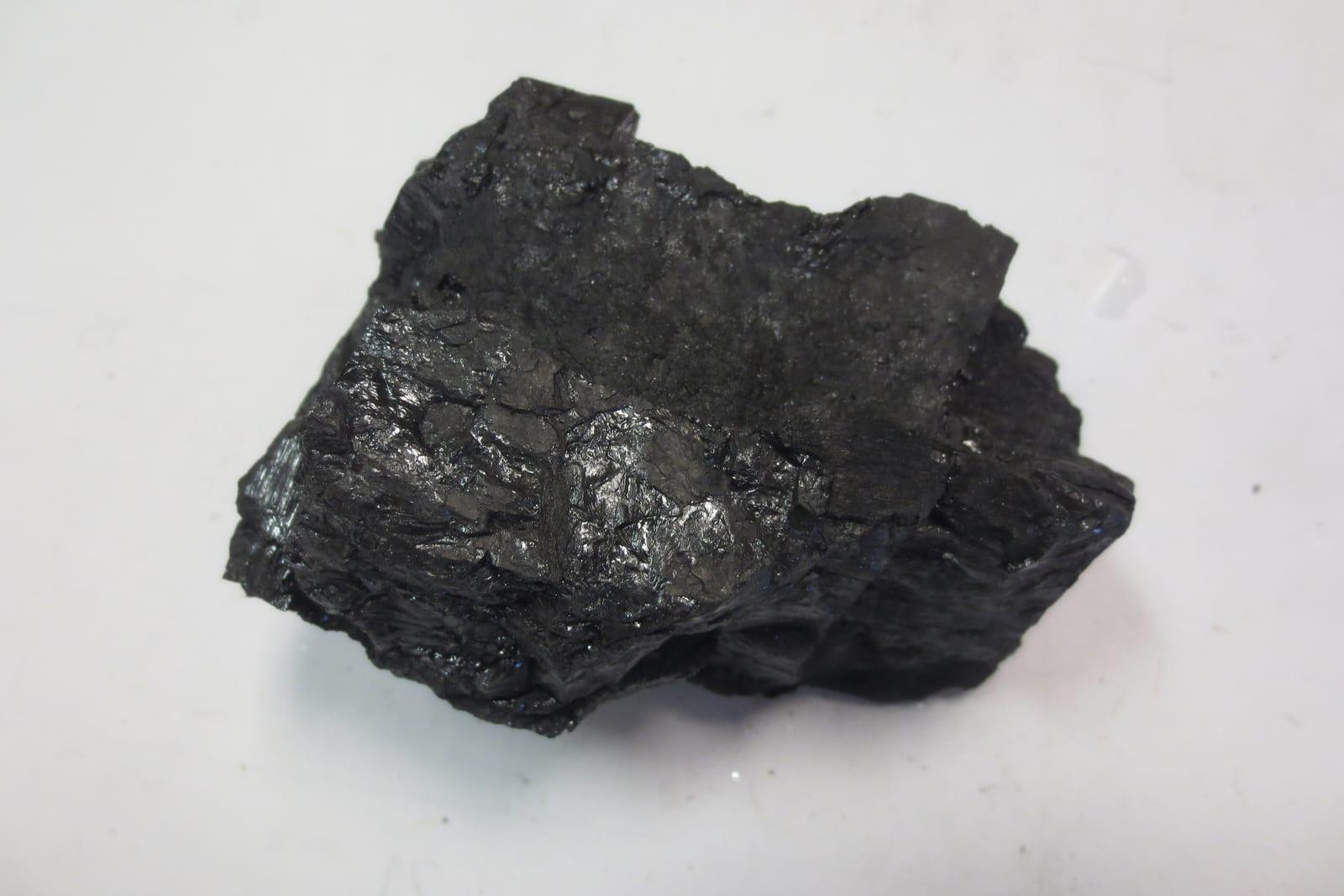
Minerals reported to co-occur with amber. Spotting these in float or country rock is a strong cue you are in the right ground.
All properties
- Mohs hardness
- 2-2.5
- Density
- 1.05-1.10 g/cm³
- Luster
- Resinous
- Transparency
- Translucent
- Fluorescence
- Blue to green under LW UV
- Rarity
- Common
- Uses
- Decorative, Jewelry, Collector
- Host rock
- sedimentary deposits
- Organism
- Fossilized tree resin; Baltic amber is thought to come from the family Sciadopityaceae
- Preservation
- Fossilized resin, sometimes with plant or animal inclusions
Where rockhounds find amber
23 mapped spotsClassic worldwide localities
- Baltic Sea region
- Dominican Republic
- Mexico
- Myanmar
- Canada
U.S. states with amber
Each link opens a state-specific list of mapped rockhounding spots that produce amber.
Field-hunting tip
Where it forms: sedimentary deposits. If you start seeing coal, lignite, clay in float, you are in the right ground. In the U.S., the densest reported localities are in New Jersey, Maryland, New Mexico. Start trip planning there.
More amber photos
Common questions
How do you identify amber?+
Where is amber found?+
Can I find amber in the United States?+
What rocks look like amber?+
What minerals are found with amber?+
What kind of rock does amber form in?+
What is amber used for?+
Find amber on the map
RockHoundR shows mapped rockhounding spots, access rules, and lets you log every find.