
Barbosalite is a rare iron phosphate mineral typically found as a secondary mineral in complex granitic pegmatites. It usually forms as dark, fine-grained masses or fibrous aggregates replacing triphylite, and is prized by serious collectors of phosphate mineral species.
Is this barbosalite?
5-step field checkRun through these checks against the specimen in your hand. The more boxes tick, the more confident the ID.
- 1Test the hardnessTry to scratch barbosalite with a known reference. Barbosalite sits at Mohs 6, softer than the next harder reference, harder than the previous one.
- 2Check the streakDrag the specimen across an unglazed porcelain plate. Streak: dark blue.
- 3Read the lusterHold the specimen under a strong light. Luster: vitreous to earthy.
- 4Match the color rangeCompare against the expected color range: blue green, green blue, greenish black, black.
- 5Look at form & habitCrystal system: monoclinic. Typical habit: massive, crusts, radial aggregates of acicular crystals.
Often confused with
Barbosalite vs. its common look-alikes, and how to tell them apart in the field.
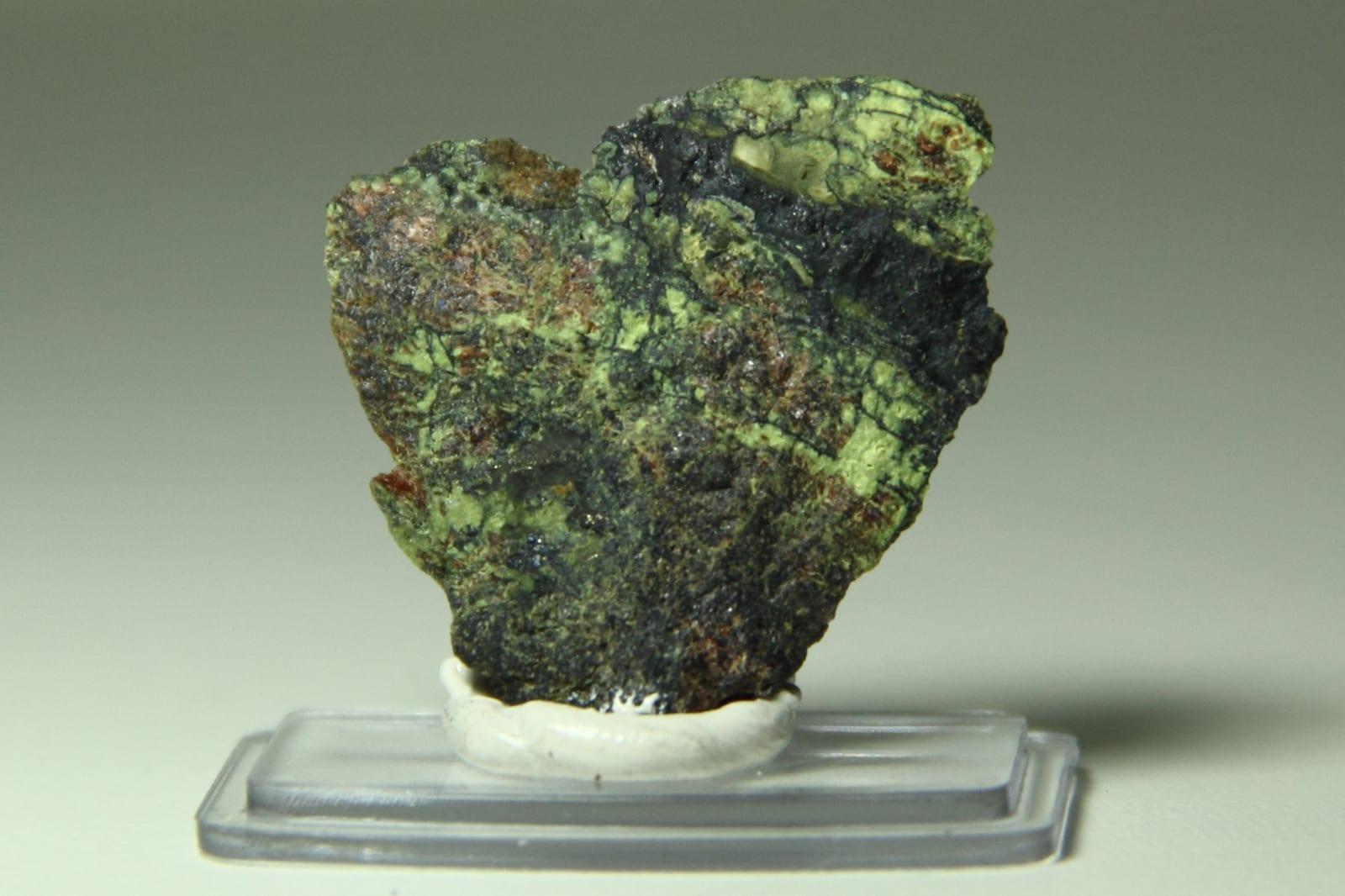
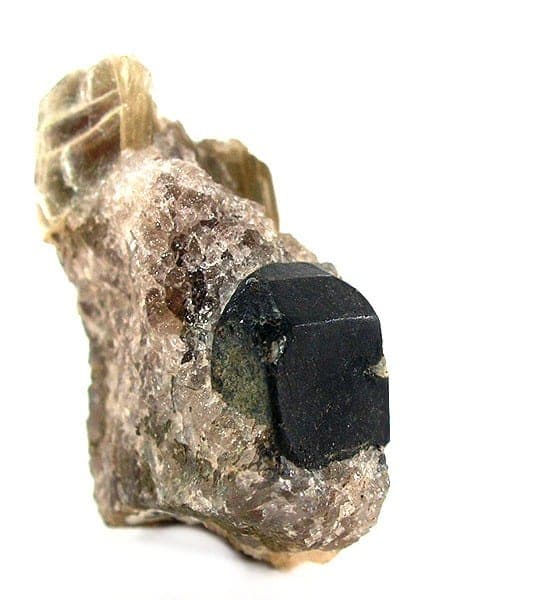
How to tell apart: Barbosalite is noticeably harder (Mohs 6 vs. 5); streak differs, so Barbosalite leaves dark blue, Tavorite leaves pale green.
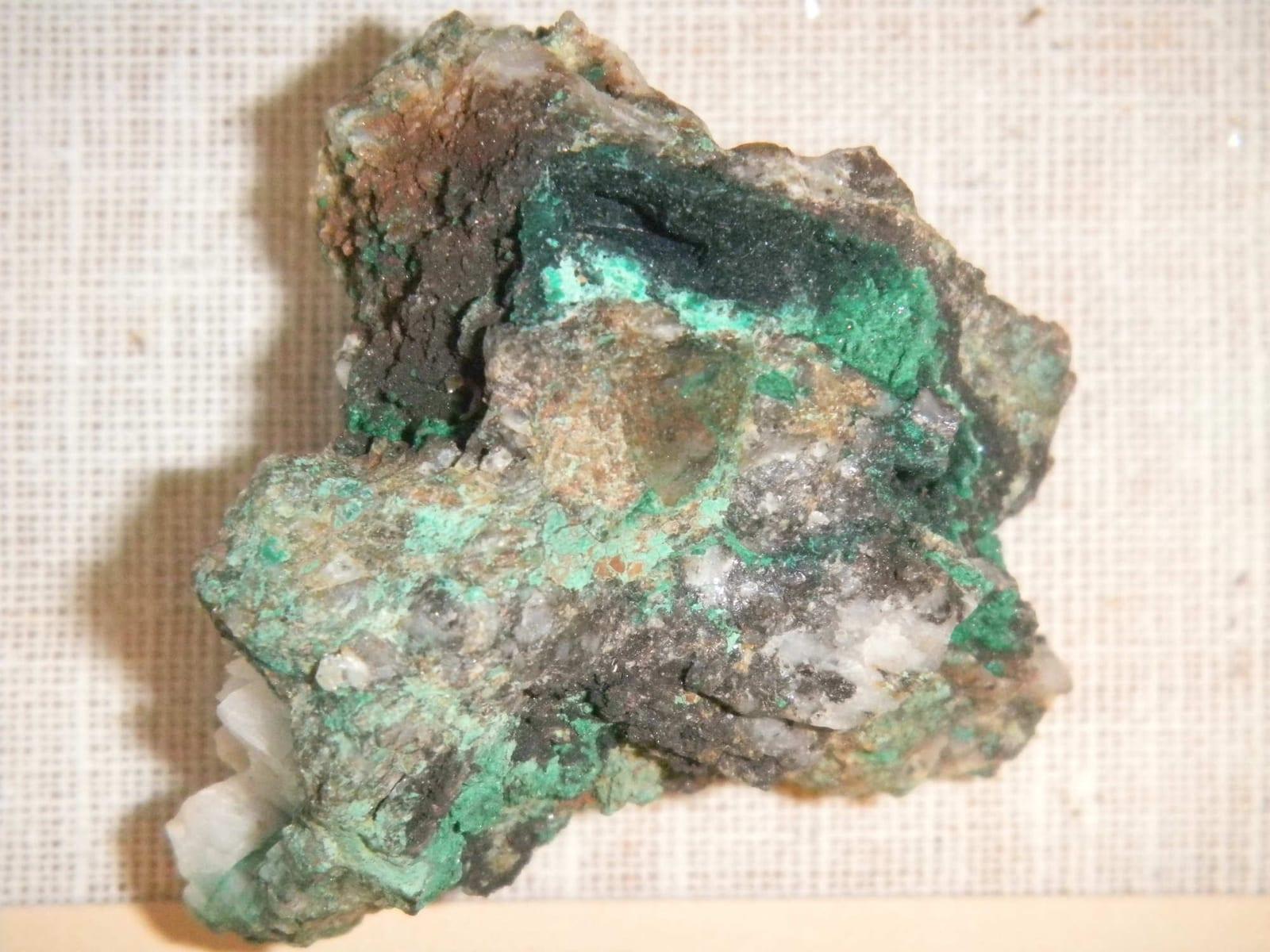
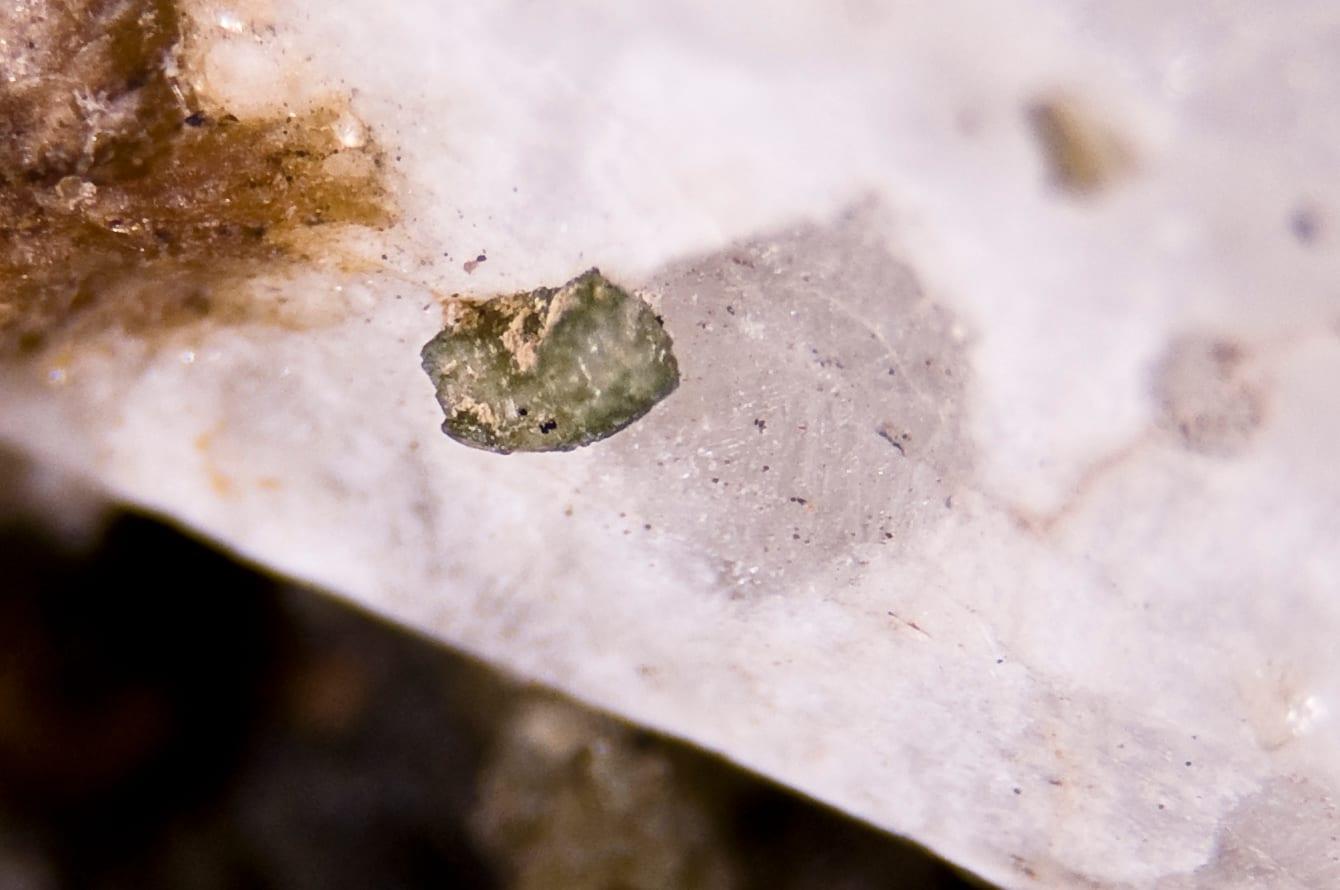
How to tell apart: Barbosalite is noticeably harder (Mohs 6 vs. 3.5); streak differs, so Barbosalite leaves dark blue, Lipscombite leaves light green.
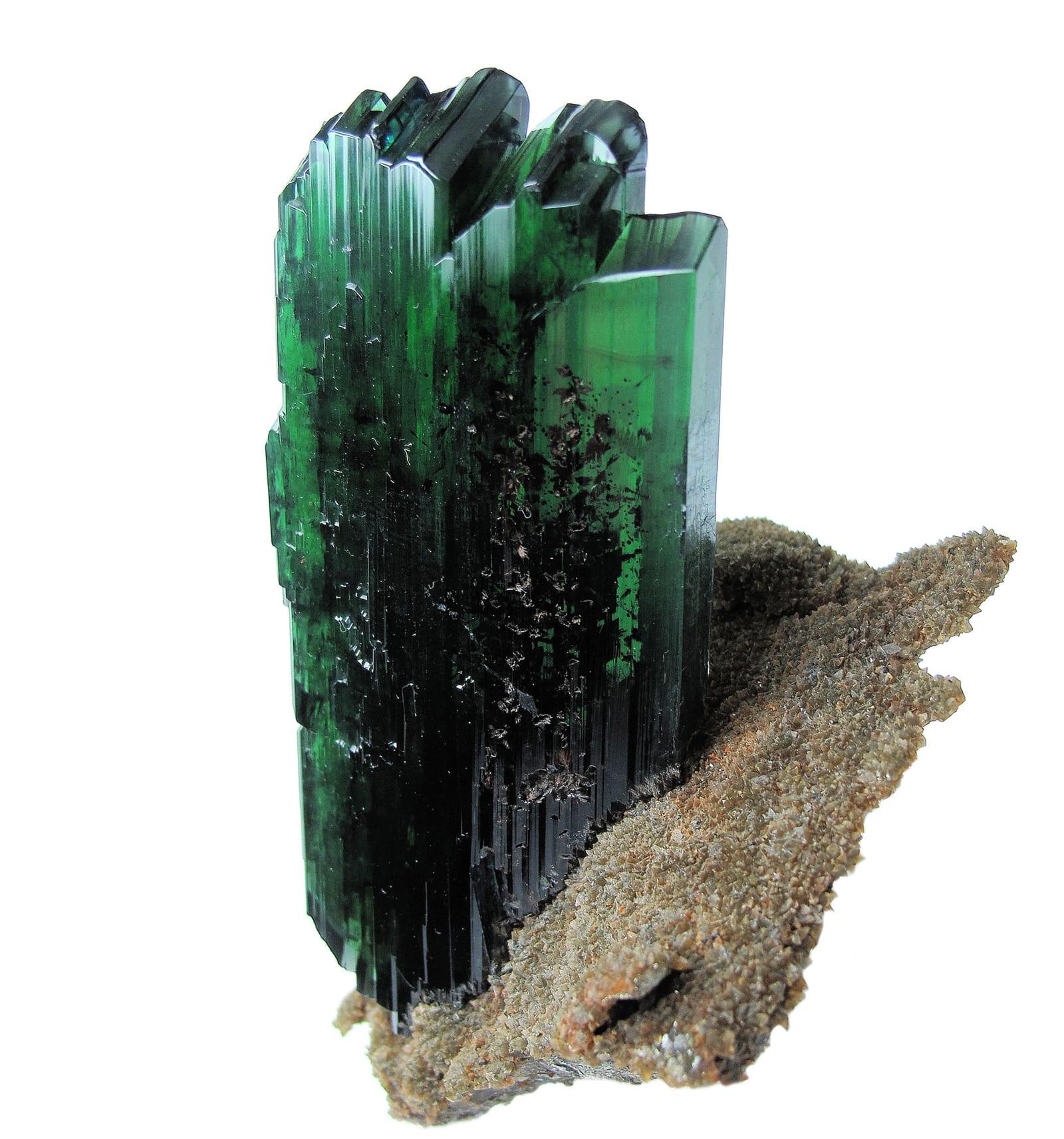
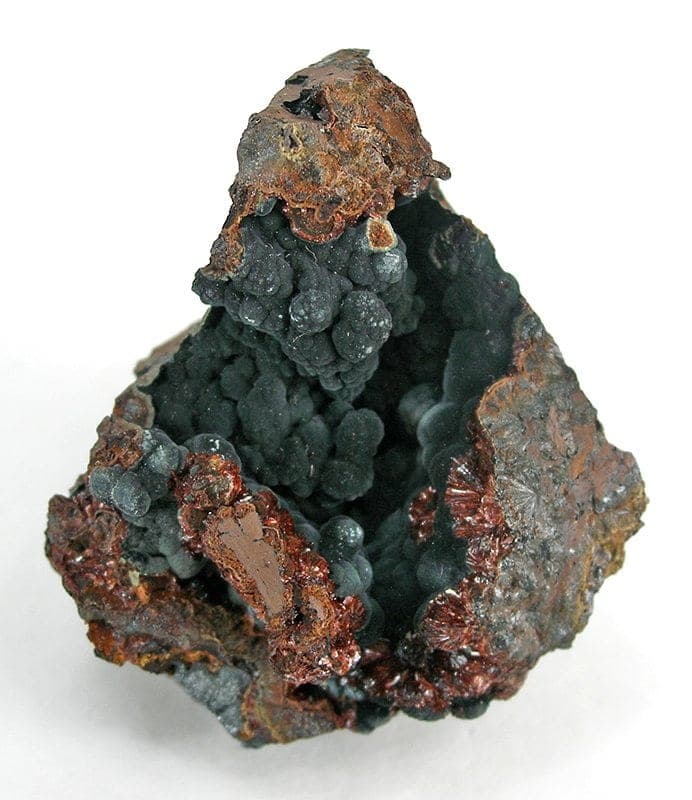
How to tell apart: Barbosalite is noticeably harder (Mohs 6 vs. 1.5-2); streak differs, so Barbosalite leaves dark blue, Vivianite leaves white, altering to dark blue, brown.
Often found alongside barbosalite
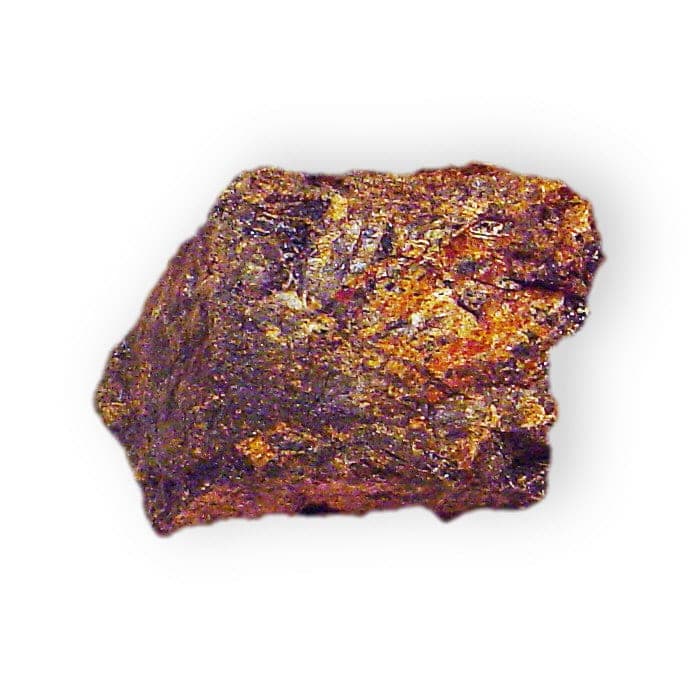
Minerals reported to co-occur with barbosalite. Spotting these in float or country rock is a strong cue you are in the right ground.
All properties
- Chemical formula
- Fe²⁺Fe³⁺₂(PO₄)₂(OH)₂
- Mohs hardness
- 6
- Density
- 3.60-3.62 g/cm³
- Streak
- Dark blue
- Luster
- Vitreous to earthy
- Transparency
- Translucent to nearly opaque
- Crystal system
- Monoclinic
- Crystal habit
- Massive, crusts, radial aggregates of acicular crystals
- Cleavage
- None
- Rarity
- Rare
- Uses
- Collector
- Host rock
- In complex granitic pegmatites, formed by oxidation and hydration of primary phosphates
Where rockhounds find barbosalite
Classic worldwide localities
- Palermo #1 mine, near North Groton, Grafton Co., New Hampshire, USA
- Bull Moose and Tip Top mines, near Custer, Custer Co., South Dakota, USA
- Williams pegmatite, Coosa Co., Alabama, USA
- Minas Gerais, at the Sapucaia pegmatite mine, about 50 km east-southeast of Governador Valadares, and in Criminoso pegmatite mine, about 35 km north of São Jose da Safira, Agua Boa, Brazil
- Wilson’s quarry, Thackaringa district, 40 km southwest of Broken Hill, New South Wales, and in the Wiperaminga Hill West quarry, Boolcoomata, South Australia
- Buranga pegmatite, near Gatumba, Rwanda
Field-hunting tip
Where it forms: In complex granitic pegmatites, formed by oxidation and hydration of primary phosphates. If you start seeing tavorite, huréaulite, heterosite in float, you are in the right ground. Typical habit: massive, crusts, radial aggregates of acicular crystals. Train your eye for that shape before scanning the outcrop.
Common questions
How do you identify barbosalite?+
Where is barbosalite found?+
What rocks look like barbosalite?+
What minerals are found with barbosalite?+
What kind of rock does barbosalite form in?+
What is barbosalite used for?+
Find barbosalite on the map
RockHoundR shows mapped rockhounding spots, access rules, and lets you log every find.

