
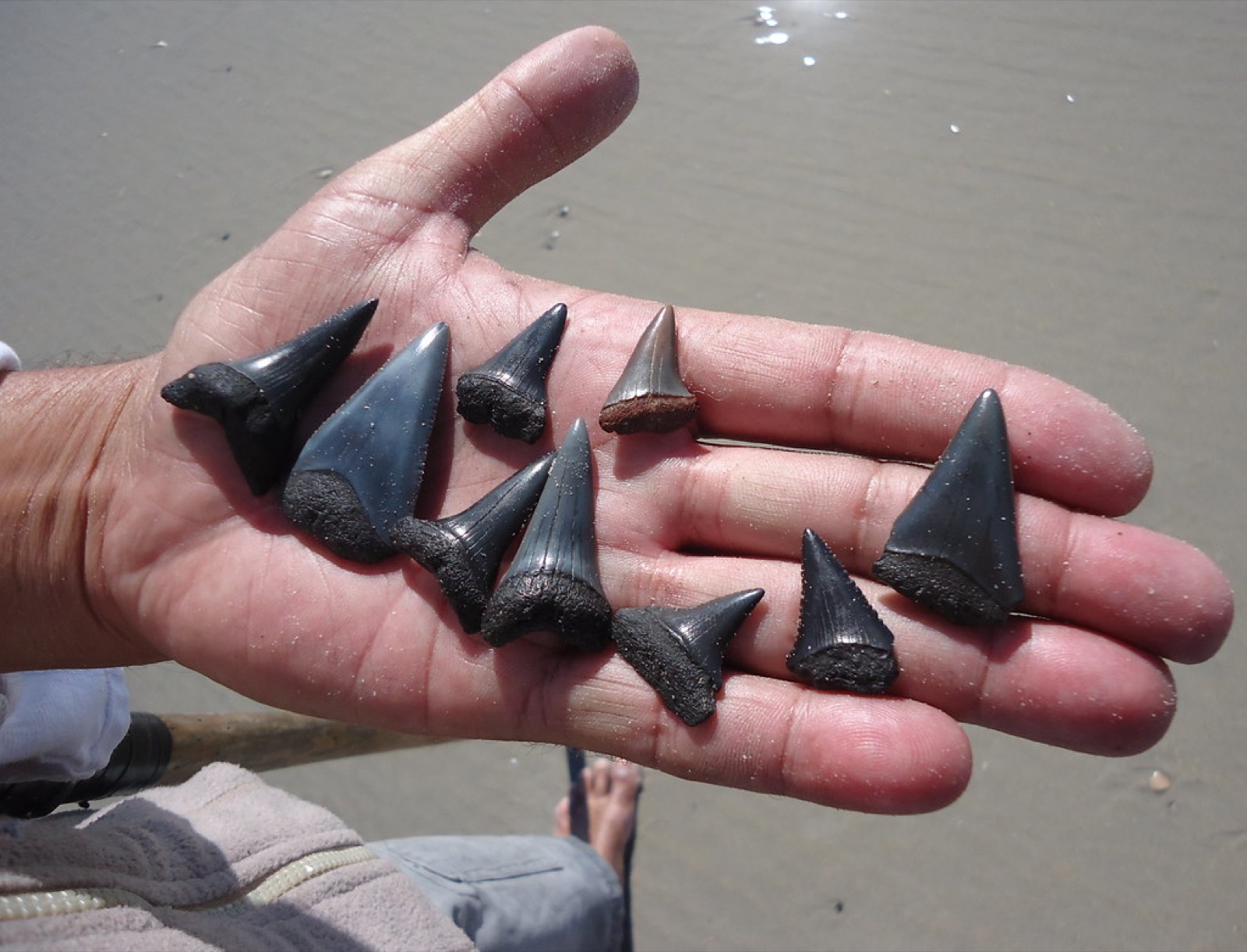
Shark ToothMohs 3-5
Distinctive crown and root with serrated or smooth blade. Cenozoic phosphate deposits and beach gravels are the productive contexts.
Photo: barbourians · flickr
Fossils preserve organisms across nearly two billion years of Earth history, but the ones you'll actually find while walking a creek, quarry, or roadcut come from a much shorter list. This identifier reads the photo for diagnostic features (sutures, segmentation, growth rings, tooth root and crown), then returns three ranked candidates with geological age, typical host rock, and a similar fossil to rule out.
Reviewed by RockHoundR Field Team · Field identification & geology editors · Last verified
Quick answer
Photograph a single fossil specimen showing its diagnostic feature: sutures, segmentation, tooth crown, or growth rings. The identifier returns three ranked matches with geological age, typical host rock, and a similar fossil to rule out.
Most fossils that turn up in casual collecting come from a few groups: marine invertebrates (ammonites, trilobites, brachiopods, crinoids), plant material (petrified wood, leaf impressions), vertebrate teeth (shark teeth, mammal teeth), and assorted shells and bones. Each group has a small set of diagnostic features that separate it from the others, and from non-fossil lookalikes like modern beach shells.
Geological context narrows the answer fast. A coiled, ribbed shell with suture lines in a Cretaceous chalk is almost certainly an ammonite; the same shape in a Paleozoic limestone is more likely a nautiloid. The identifier accepts an optional host-rock or formation note and uses it to weight regionally and stratigraphically common identifications without inventing locality details.
Photo identification is solid for distinctive groups (ammonites, trilobites, shark teeth, petrified wood) and weaker for incomplete or eroded material. The result is a starting point. Confirm with reference fossils in a local museum collection or a state geological survey publication before committing to a species-level call.
Reference specimens for the most-found fossil groups. Each card shows the diagnostic feature that separates it from a modern lookalike.
Distinctive crown and root with serrated or smooth blade. Cenozoic phosphate deposits and beach gravels are the productive contexts.
Photo: barbourians · flickr
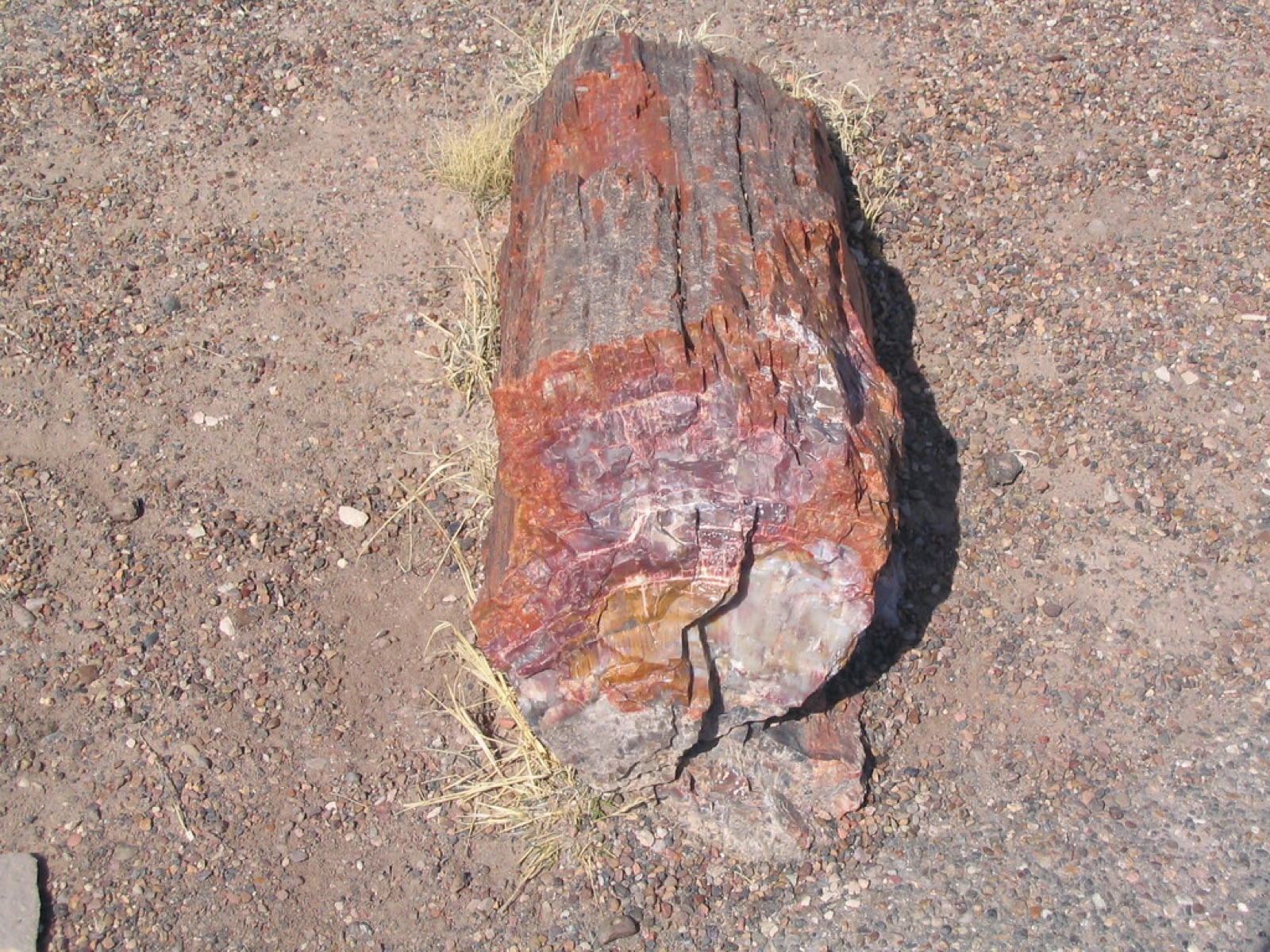
Preserves growth rings and cell structure. Mohs 7, since the silica replacement is as hard as quartz. Found across the American West.
Photo: Ken Lund · flickr
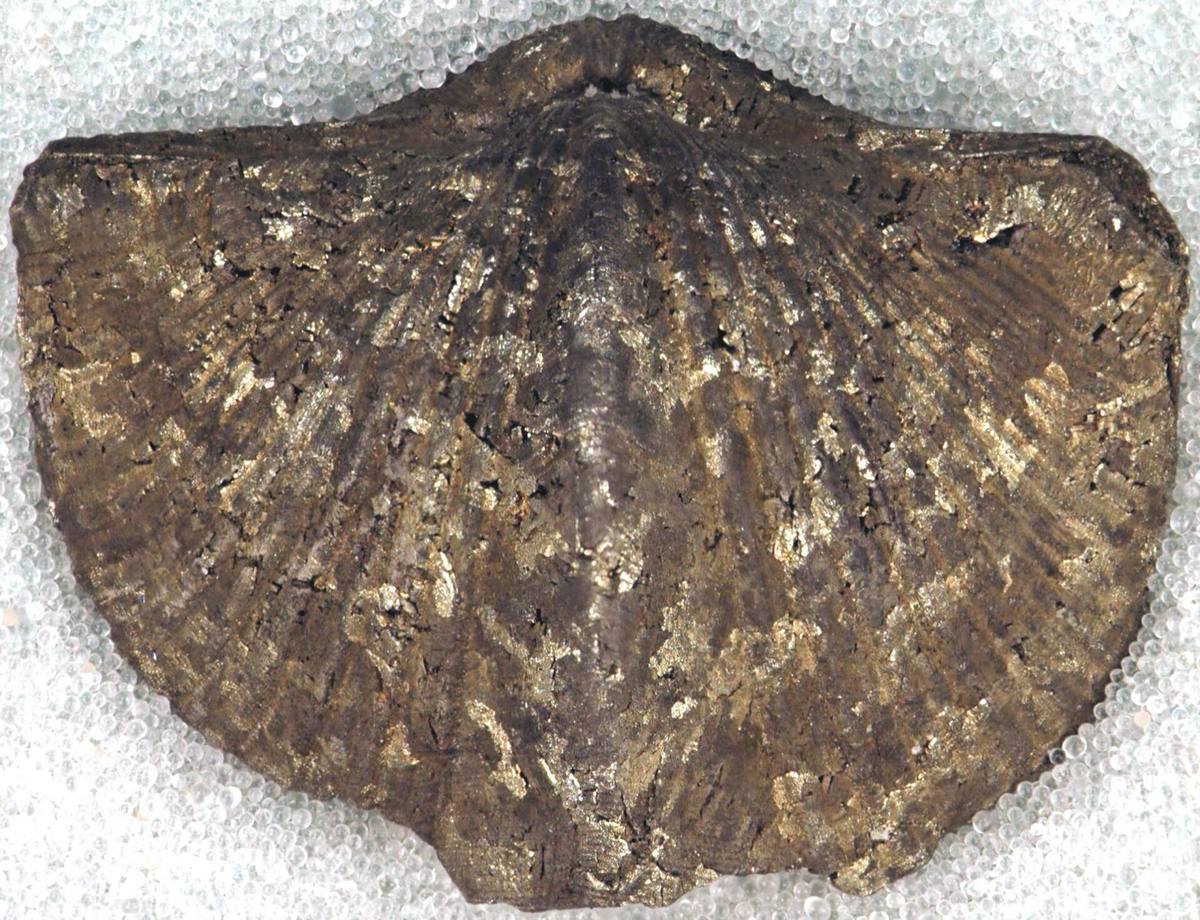
Bivalve-like shells with bilateral symmetry running through the hinge axis. Most diverse in Paleozoic marine limestones.
Photo: James St. John · wikimedia
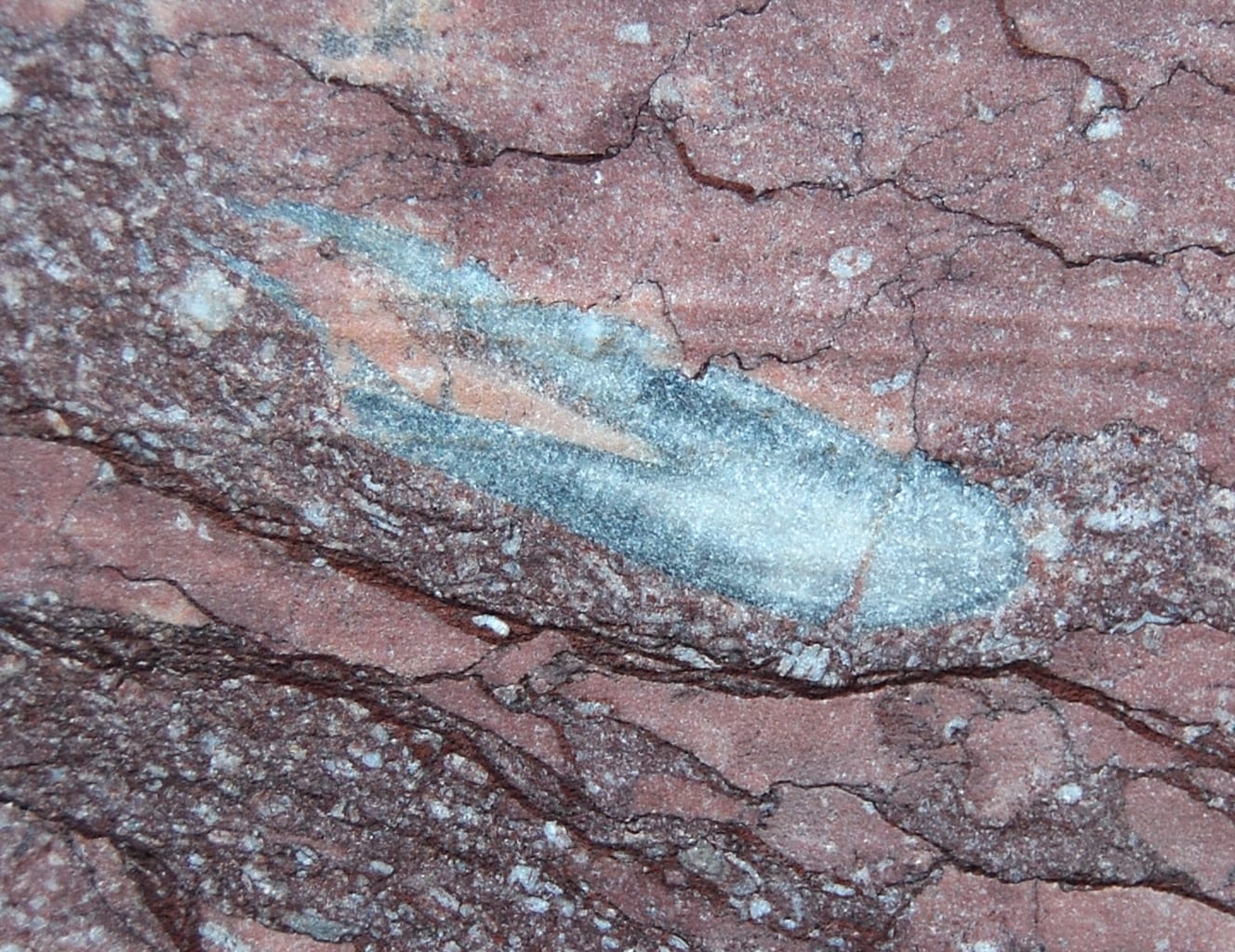
Bullet-shaped cephalopod guards. Smooth, often calcite-replaced. Mesozoic marine deposits.
Photo: Tommy from Arad · wikimedia
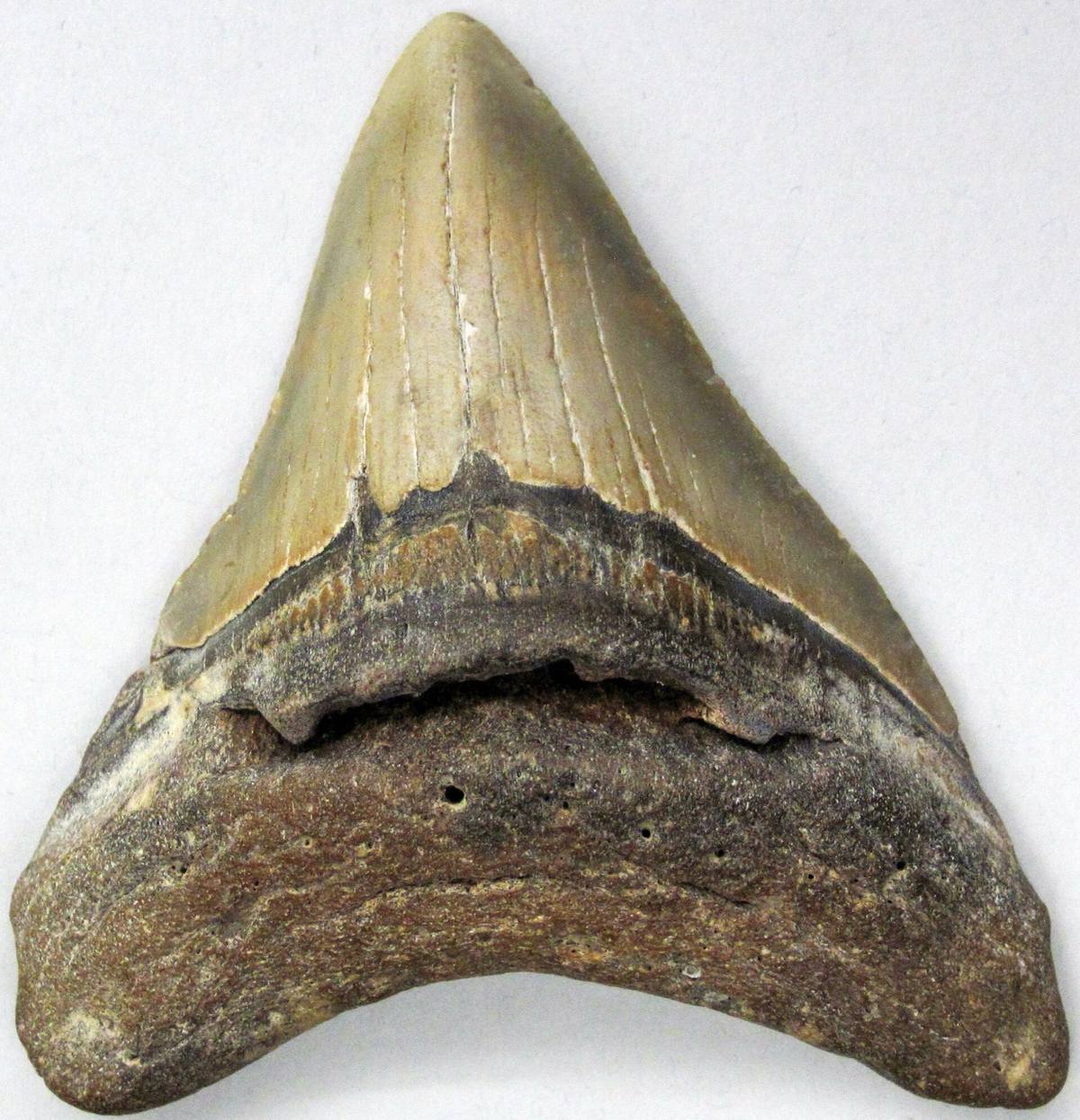
Massive serrated crown, distinct chevron above the root. Miocene to Pliocene phosphate units in the southeastern U.S.
Photo: James St. John · wikimedia
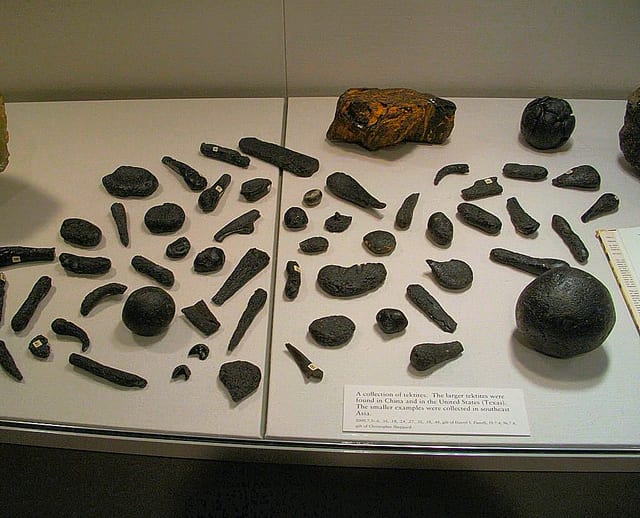
Impact-glass. Not strictly a fossil, but commonly found alongside them. Dark glassy spheres or splash forms.
Photo: ficusdesk · wikimedia
Host rock and depositional environment narrow the candidate list before you even look at the specimen. The table shows where each fossil group typically occurs.
| Specimen | Age | Typical host rock | Field tell |
|---|---|---|---|
| Shark Tooth | Devonian to Recent | Phosphate, marine sandstone, beach gravels | Crown + root + serrated or smooth blade. Modern teeth are white; fossils are darkened. |
| Petrified Wood | Devonian to Pliocene | Continental sandstones and ash deposits | Growth rings visible. Mohs 7 (silica replacement). |
| Brachiopod | Cambrian to Recent (peak Paleozoic) | Marine limestone and shale | Symmetry axis runs through the hinge, not between the valves. |
| Belemnite | Carboniferous to Cretaceous | Marine shale and limestone | Bullet-shaped calcite guard. |
| Megalodon Tooth | Miocene to Pliocene (~23–3.6 Ma) | Phosphate, marine sand | Chevron at the root–crown junction; size (up to 18 cm). |
| Tektite | Variable (impact event) | Strewn fields from meteorite impacts | Glassy black, often splash forms (teardrops, dumbbells). |
Ammonites
Coiled, ribbed cephalopod shells with suture lines visible on weathered surfaces.
Trilobites
Three-lobed Paleozoic arthropods with segmented bodies. Best preserved in shale.
Shark teeth
Serrated or smooth crowns with a clear root. Common in Cenozoic phosphate.
Crinoid stems
Stacked disk segments from ancient sea lilies. Limestone and shale.
Brachiopods
Bivalve-like shells with bilateral symmetry through the hinge, not through the valves like a clam.
Petrified wood
Mineralized wood preserving growth rings and cell structure. Mohs 7, feels like quartz.
The rock around a fossil narrows the candidate list before you even look at the specimen.
The feature that survived preservation is often the strongest taxonomic cue.
Show diagnostic features: sutures, segmentation, growth rings, tooth root. JPG, PNG, or WebP up to 6MB.
Devonian shale, Eocene phosphate, Cretaceous chalk. Formation context narrows likely organisms quickly.
Each result includes geological age, typical host rock, diagnostic clues, and a similar fossil to rule out.
Distinctive groups identify well from a photo. Eroded or incomplete material drops accuracy fast, so show both sides and a scale when possible.
The RockHoundR app works offline, saves every find to your map, and overlays them onto 250,000+ rockhounding spots with geology and land-access data.


Yes. Upload a fossil photo and get identification results in the browser at no cost. Three free identifications per day per device, no signup, no install. The RockHoundR app removes the daily limit and adds offline use and saved finds.
Common groups rockhounders and amateur paleontologists find: ammonites, trilobites, brachiopods, crinoids, shark teeth, petrified wood, fossil bone, plant impressions, corals, bryozoans, and a long tail of bivalves and gastropods. Rare or specialist fossils may identify only to group level.
Photo ID works well for distinctive groups (ammonites, trilobites, shark teeth, petrified wood). Less complete material (bone fragments, isolated impressions, eroded specimens) benefits from showing both sides and a scale. The tool returns three ranked candidates with a similar fossil to rule out for each.
Geological context narrows possibilities fast. A coiled shell in Cretaceous chalk is almost certainly an ammonite; the same shape in a Paleozoic limestone might be a nautiloid. The host-rock field is optional and never invented. It only weights stratigraphically common candidates.
Yes. The identifier flags non-fossil material so you don't get a misleading ID on a beach-worn modern shell or recent bone. Preservation features like calcite replacement, host-rock cementation, and mineral infilling differ from anything you'd find on living material.
No. This tool focuses on identification and field context, not appraisal. Many fossils have legal collection rules, so always check before keeping material from public land. Federal lands (BLM, USFS) typically allow casual invertebrate and plant collection but restrict vertebrate fossils.
Property data and reference imagery used on this page are cross-checked against the following sources.
Open database of fossil occurrences worldwide. Reference for age and host rock data.
Reference imagery and group-level taxonomy for the visual identification guide.
Federal program using fossils to define geologic ages and rock-formation correlations.