
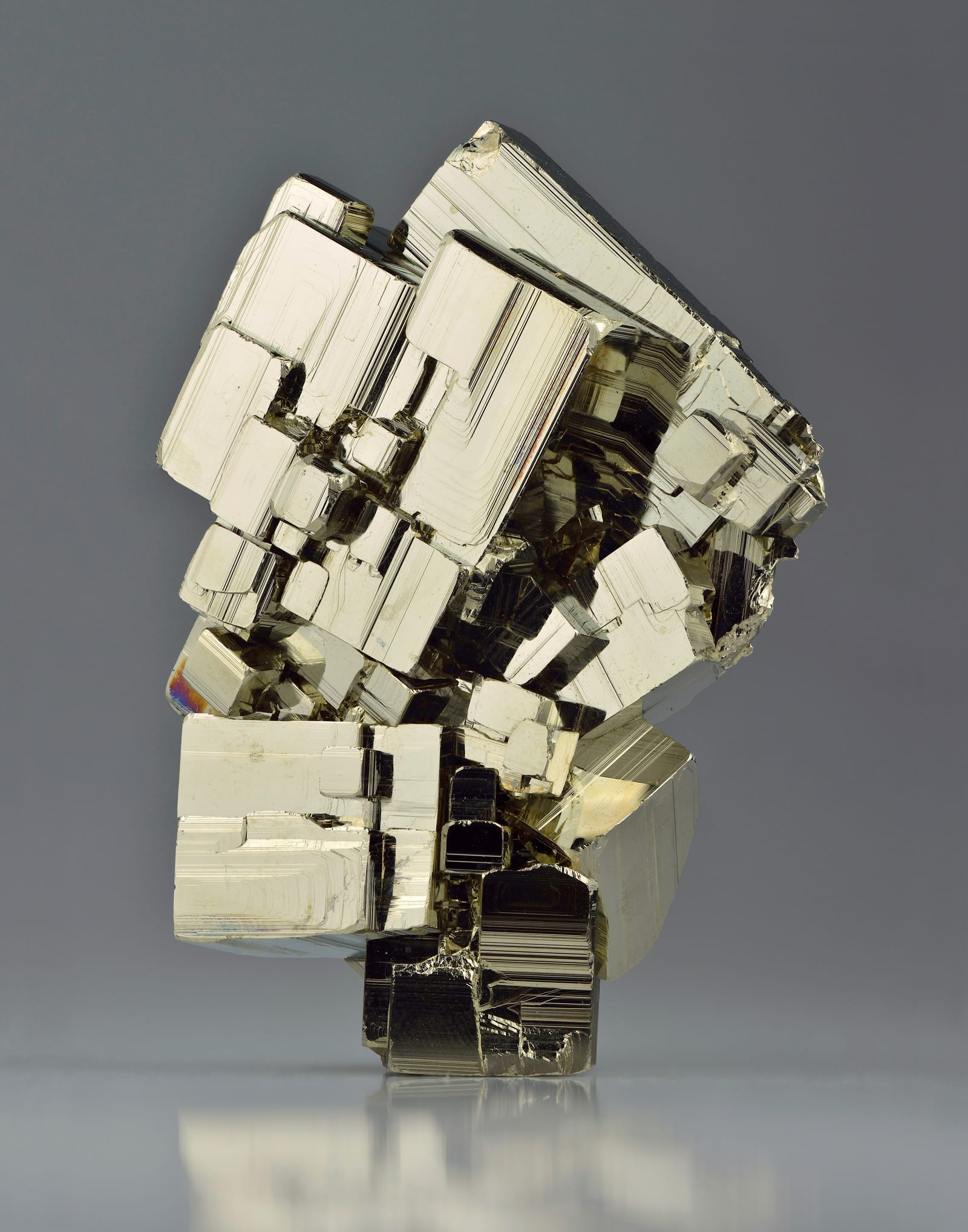
PyriteMohs 6-6.5
Brassy yellow, metallic luster, often cubic or pyritohedral crystals with striated faces. Greenish-black streak distinguishes from gold (yellow streak).
Photo: Wikipedia contributors · wikipedia
Minerals get identified by a short list of physical properties: hardness, streak color, luster, cleavage, and crystal habit. This identifier reads what's visible from a photo (color, luster, habit) and then names the one diagnostic test that separates each candidate from its closest lookalike. The result is a ranked candidate list with the next step written into each card.
Reviewed by RockHoundR Field Team · Field identification & geology editors · Last verified
Quick answer
Photograph a single mineral specimen on a plain background. The identifier returns three ranked matches with Mohs hardness, luster, and one diagnostic field test (streak, acid, magnet, hardness scratch) to separate each candidate from its closest lookalike.
A mineral is a naturally-occurring inorganic substance with a fixed chemical composition and crystal structure. Common rockhounding minerals (quartz, calcite, pyrite, galena, hematite, magnetite, mica) each have a property fingerprint that separates them. The identifier reads color, luster, and habit from the photo, then writes the one test (streak, acid, magnet, hardness) that confirms or rules out each candidate.
Luster is the single most underused field test. Metallic luster narrows the field to about a dozen common minerals: pyrite, galena, magnetite, hematite (specular form), chalcopyrite, sphalerite, and a few others. Submetallic narrows it further. Vitreous opens onto quartz, calcite, fluorite, feldspar. Resinous points at sphalerite or sulphur. Reading luster from a photo is the strongest single ID move after habit.
Streak (the color a mineral leaves when scraped on unglazed porcelain) separates hematite (red-brown streak) from magnetite (black), pyrite (greenish-black) from chalcopyrite (black), and many color-overlapping minerals. The identifier names which streak result you should look for, but you'll need a streak plate to confirm.
These six show up most often in mineral ID submissions. Each card shows a reference specimen and the test that confirms it.
Brassy yellow, metallic luster, often cubic or pyritohedral crystals with striated faces. Greenish-black streak distinguishes from gold (yellow streak).
Photo: Wikipedia contributors · wikipedia
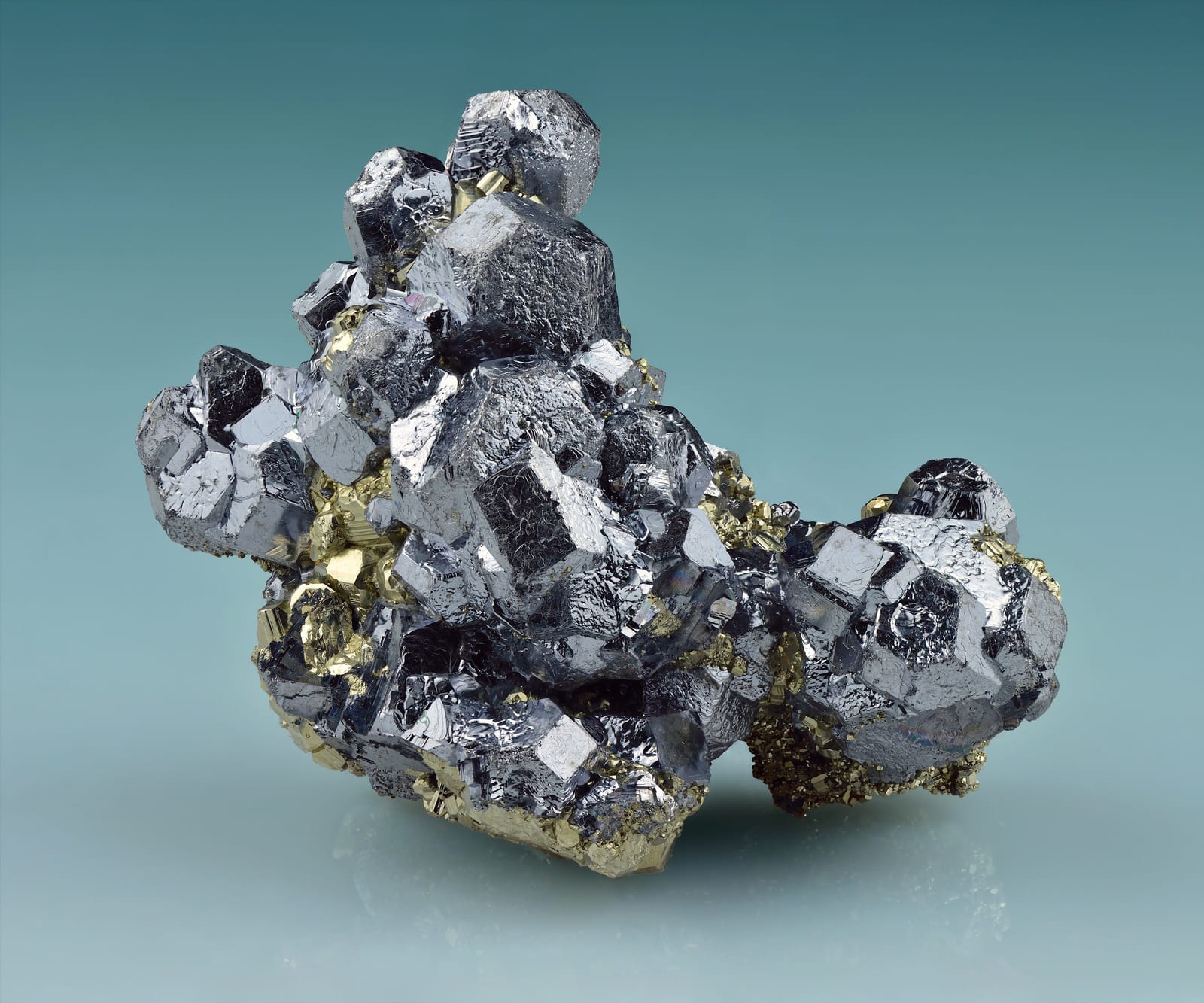
Lead-gray metallic cubes with three cleavages at right angles. Very dense, feels much heavier than its size. Mohs 2.5 (knife scratches).
Photo: Wikipedia contributors · wikipedia
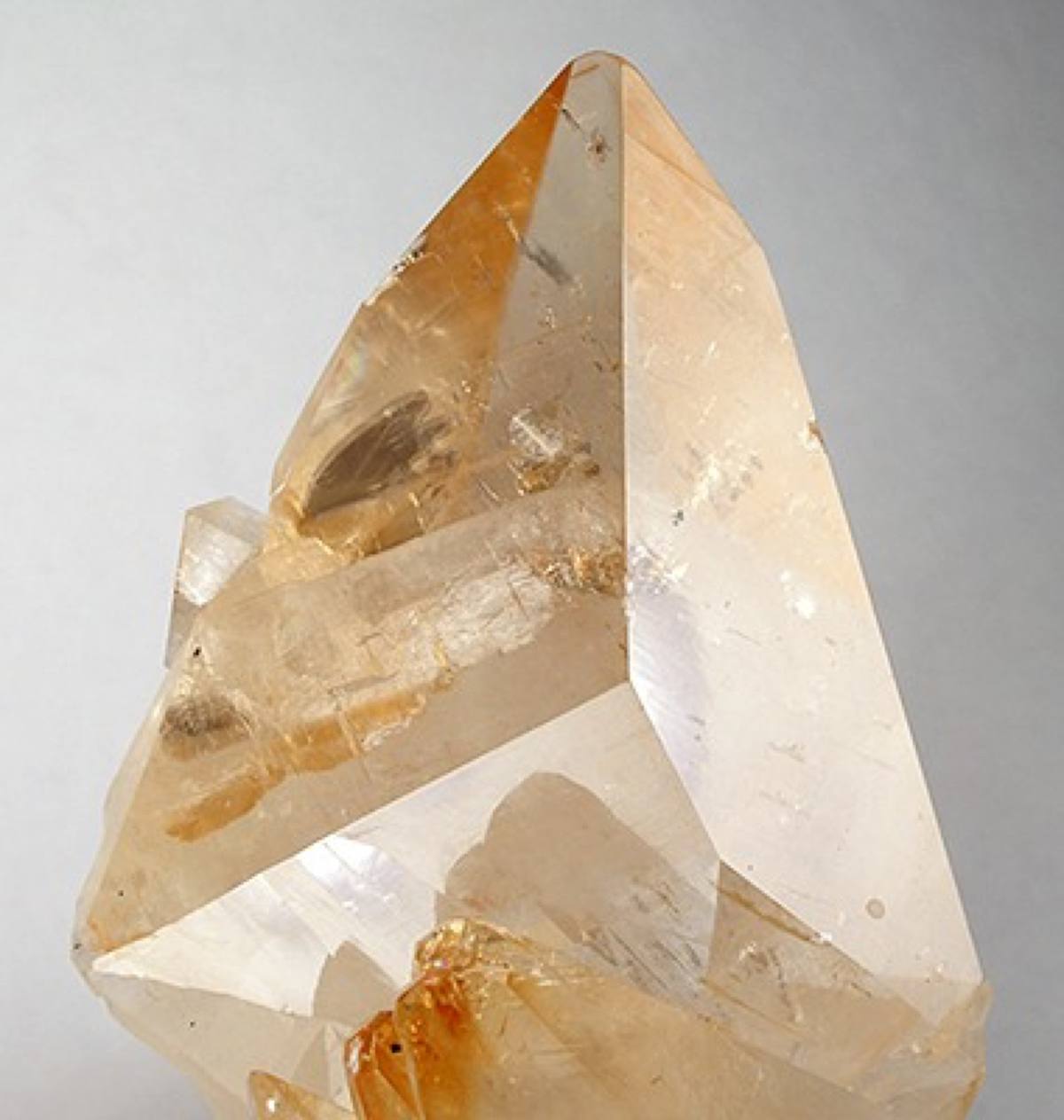
Rhombohedral cleavage in three directions, vitreous luster, fizzes vigorously in dilute hydrochloric acid. Mohs 3 (copper penny scratches).
Photo: Robert M. Lavinsky · wikimedia
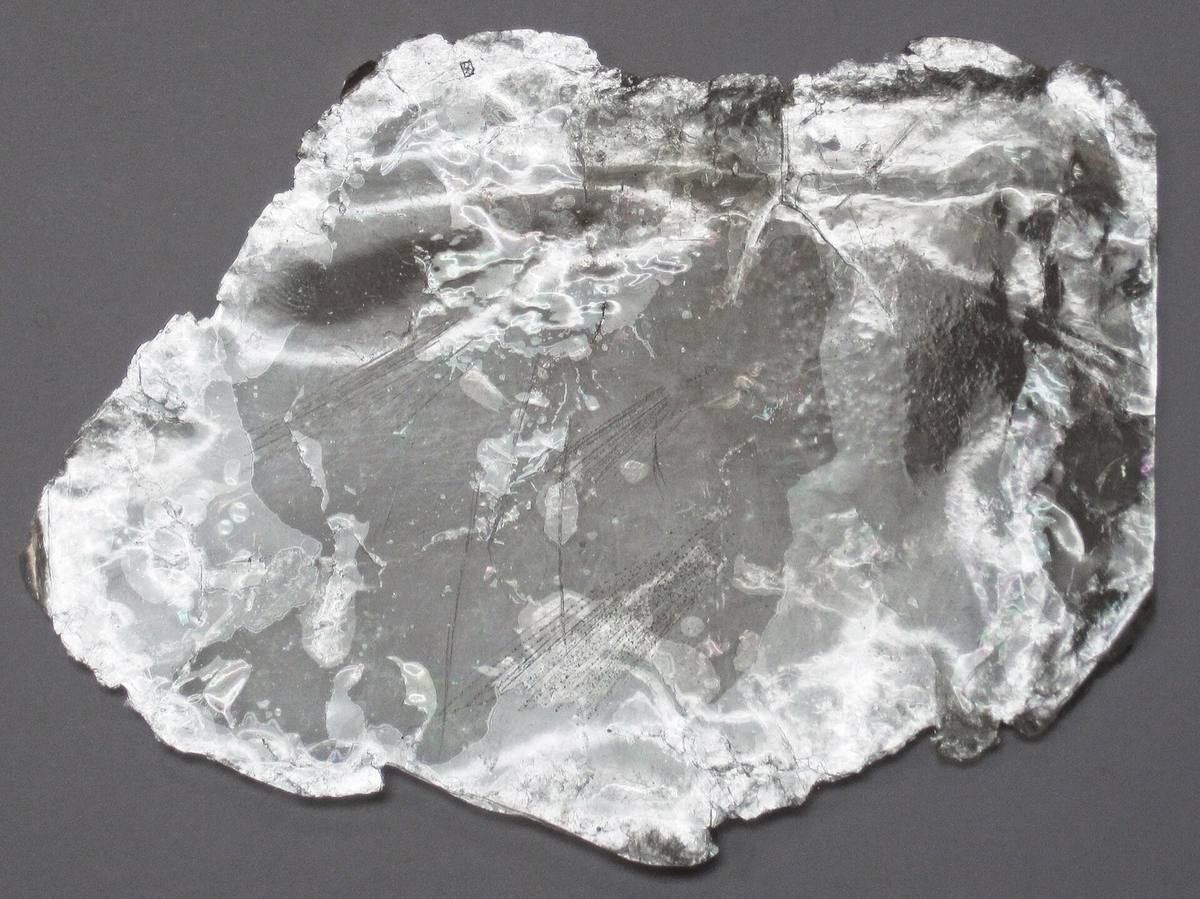
Splits into thin transparent sheets along basal cleavage. Pearly luster on cleaved surfaces. Mohs 2–2.5.
Photo: James St. John · wikimedia
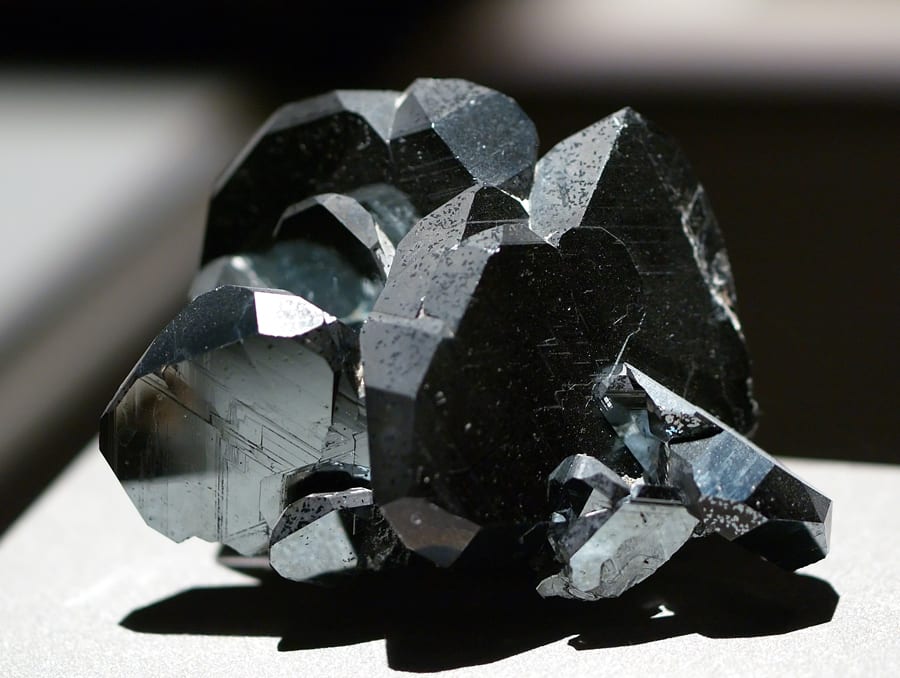
Reniform 'kidney ore' or metallic-specular varieties. Red-brown streak is diagnostic, even when the specimen looks black.
Photo: Wikipedia contributors · wikipedia
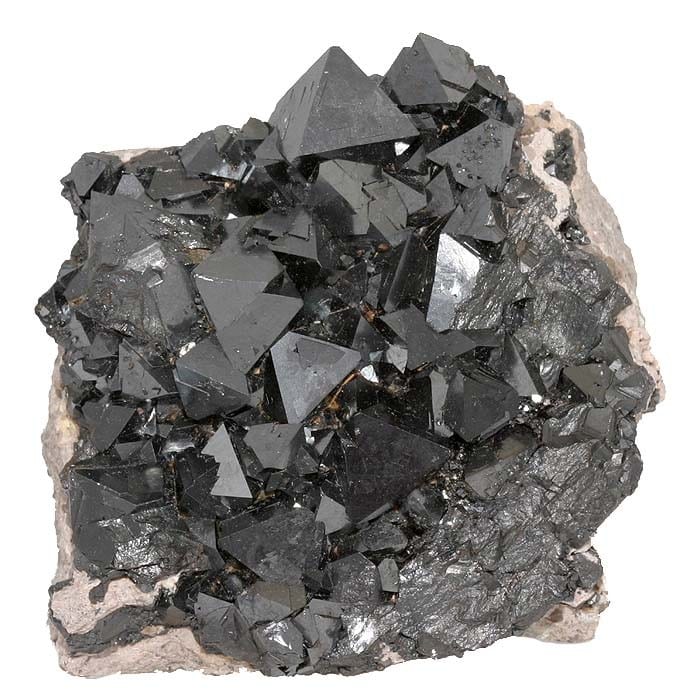
Black metallic octahedral crystals. Strongly magnetic, sticks to a magnet directly. Black streak (vs hematite's red-brown).
Photo: Wikipedia contributors · wikipedia
Six common minerals side by side. Streak and acid reaction settle most lookalike confusions instantly.
| Specimen | Hardness (Mohs) | Streak | Luster | Cleavage | Field tell |
|---|---|---|---|---|---|
| Pyrite | 6-6.5 | greenish black to brownish black | metallic, splendent | indistinct on {001}; partings on {011} and {111}, indistinct | Greenish-black streak; striated cubes; brassy. |
| Galena | 2.5-2.75 | lead-gray | metallic | perfect on {001}; parting or cleavage on {111} | Cubic cleavage, very dense, lead-gray streak. |
| Calcite | 3 | white | vitreous; pearly on cleavages and {0001} | {1011}, perfect | Fizzes in dilute HCl; rhombohedral cleavage. |
| Muscovite | 2.5-4 | white | vitreous to pearly or silky | {001} perfect; partings on {110}, {010} | Splits into thin transparent sheets. |
| Hematite | 5-6 | cherry-red or reddish brown | metallic or submetallic to dull | parting on {0001} and {1011} due to twinning | Red-brown streak even when specimen looks black. |
| Magnetite | 5.5-6.5 | black | metallic to submetallic, may be dull | parting on {111}, very good | Strongly magnetic; black streak; octahedral. |
Luster narrows the candidate list further than color does. Read it first.
Streak is the color of the powdered mineral on unglazed porcelain. Often the deciding test when luster and color are similar.
How the properties combine into an answer, in the order you would actually check them in the field. Each starts with a find the way people describe it and ends with the deciding test.
A hiker pulls a chunk of white vein quartz out of a creek with brassy, sharp-edged metal cubes grown through it, and wants to know if it's gold.
Verdict: Pyrite, the classic fool's gold. The streak alone settles it, but the striated cubes had already given it away: gold dents like lead and never grows sharp striated cubes.
A collector picks a fist-size rock off an old Missouri mine dump. It is startlingly heavy, breaks into stair-stepped shiny gray cubes, and a knife scratches it easily.
Verdict: Galena, lead sulfide. The cubic cleavage plus the density is conclusive. Wash your hands after handling, and don't sand, saw, or crush it: it is roughly 87% lead by weight.
A beach walker finds a dense black crystal in glacial till that visibly jumps to a pocket magnet, and suspects a meteorite.
Verdict: Magnetite, one of the most common heavy minerals on Earth and the single most common 'meteorite' submission we see. Strong magnetism plus black streak plus octahedral habit is terrestrial iron oxide, not a space rock.
Show a fresh face and the overall habit. Natural light reads true color and luster best.
Mine name, district, or rock unit. Locality narrows possibilities sharply in ore districts.
Each result: mineral name, Mohs hardness and luster, plus one field test (streak, acid, magnet) to confirm.
Photos read color, luster, and habit well. Streak, acid reaction, hardness, density, and magnetism (the actual diagnostic tests) they don't show.
Photo ID plus the field tests above settle most finds. A short list of situations genuinely calls for expert eyes, and a few minerals should not be handled casually at all.
The RockHoundR app works offline, saves every find to your map, and overlays them onto 250,000+ rockhounding spots with geology and land-access data.


A mineral is a single chemical substance with a defined crystal structure (quartz, calcite, pyrite, galena). A rock is typically an aggregate of multiple minerals (granite is quartz + feldspar + mica; basalt is plagioclase + pyroxene). This tool focuses on single-mineral specimens. For an aggregate, use the rock identifier instead. The prompts and lookalike lists differ.
Yes. Common sulfides (pyrite, galena, sphalerite, chalcopyrite), oxides (hematite, magnetite, cassiterite), carbonates (smithsonite, malachite, azurite), and a handful of phosphates and sulphates are covered. Industrial ores and rare-earth-bearing minerals are weaker because they often look identical to the eye without lab work.
Yes, when useful. The identifier flags lookalikes that share color but have different streak (hematite is red-brown; magnetite is black) and explicitly suggests the streak as the diagnostic test in each card. You'll need a piece of unglazed porcelain (the back of a tile works) to actually run it.
Photos can't show fluorescence or radioactivity directly. The identifier can name a specimen and note that it commonly fluoresces (fluorite, calcite, willemite, scheelite) but a UV lamp or Geiger counter is needed to confirm. Treat the result as a prompt to run the test, not a substitute.
Mineralogy is geography. The same green-colored mineral could be malachite at one mine and dioptase at another. Adding the mine, district, or country narrows the answer significantly, but it's never required, and we never invent details about the location.
The crystal identifier is tuned for well-formed crystals with visible faces and termination, so it leads with habit and prefers varietal names (amethyst, citrine). The mineral identifier handles massive, granular, fibrous, or botryoidal specimens with no clear crystal shape, so it leads with luster and streak. Pick the one that matches what you're holding.
Property data and reference imagery used on this page are cross-checked against the following sources.
Primary reference for streak, luster, cleavage, and locality data used in the comparison table.
Federal source for U.S. mineral occurrences and ore districts.
Reference imagery and species pages for the visual identification guide.