
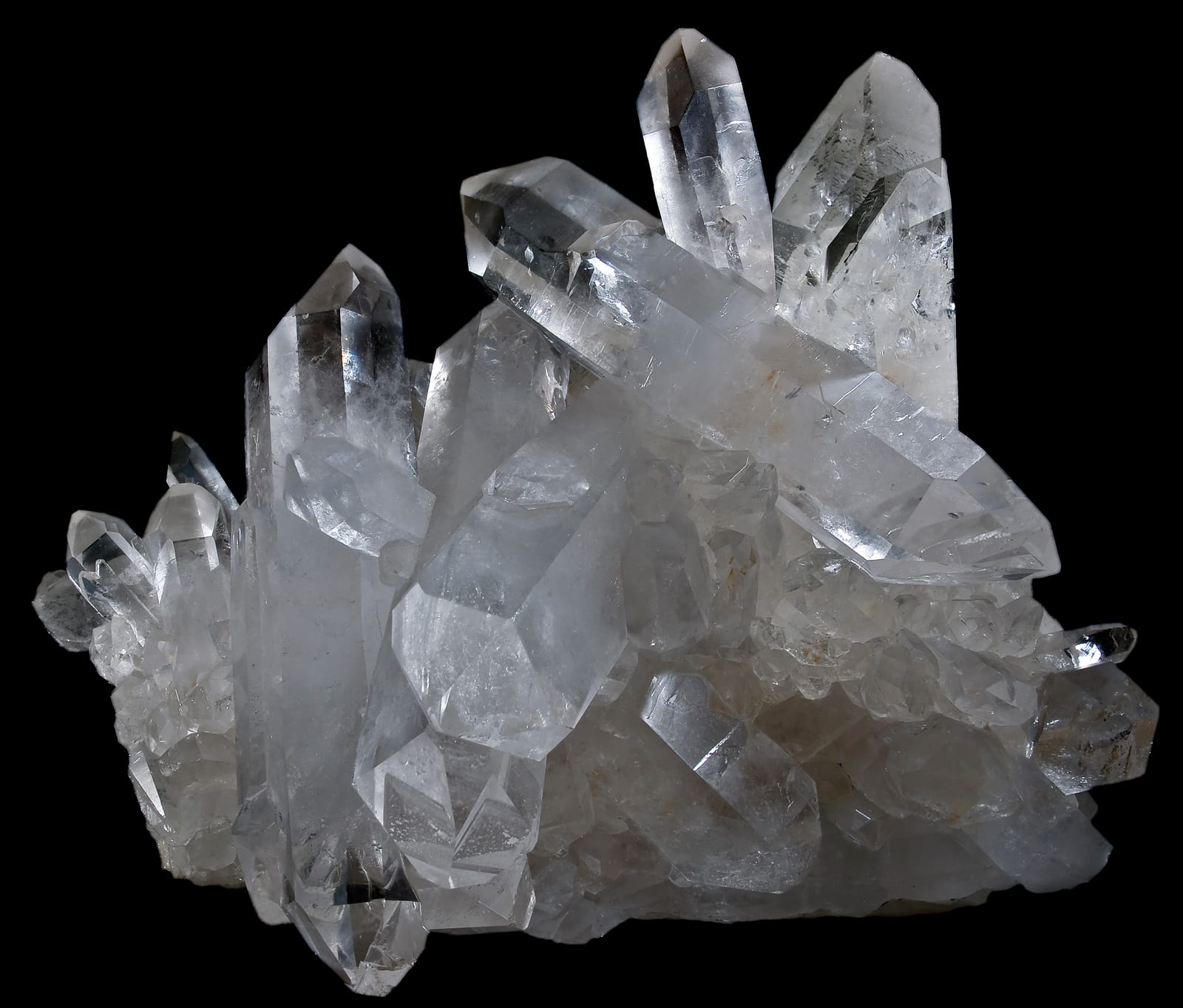
QuartzMohs 7
Hexagonal prismatic crystals terminated by six-sided pyramids. Vitreous luster, no cleavage. Mohs 7, scratches glass.
Photo: Wikipedia contributors · wikipedia
A crystal's identity is written in its faces. Termination style, internal angles, and color zoning separate quartz from calcite and amethyst from fluorite even when raw color looks identical. This identifier reads habit and termination from a single photo, then returns three ranked candidates with the variety name where the photo supports it.
Reviewed by RockHoundR Field Team · Field identification & geology editors · Last verified
Quick answer
Crystals are identified by habit (the shape) and color zoning. Upload a clean photo of a single specimen with terminations visible. The identifier returns three ranked matches with variety names, Mohs hardness, and a lookalike crystal to rule out.
Crystal identification is mostly about habit, the geometry a mineral takes when free to grow. Quartz forms six-sided prisms ending in pyramidal terminations. Calcite forms rhombohedrons that look like leaning cubes. Fluorite forms cubes or octahedrons. Garnet forms dodecahedrons. The habit name often gets you to the species before color, luster, or hardness enter the picture.
Color decides variety, not species. Purple quartz is amethyst. Yellow quartz is citrine. Brown-to-black quartz is smoky. Each variety is still quartz mineralogically (Mohs 7, vitreous luster, no cleavage), but collectors and buyers care about the variety, so the identifier returns the varietal name when the photo supports it.
Photos miss three useful crystal tests: cleavage (calcite breaks into rhombs, quartz doesn't break cleanly), double refraction (calcite splits a line into two when laid on text, quartz doesn't), and streak (most clear crystals streak white, but a few don't). Use the photo result as a starting point, then run these tests to confirm.
These six cover the bulk of crystal submissions. Each card shows a reference specimen and the habit cue that separates it from its closest lookalike.
Hexagonal prismatic crystals terminated by six-sided pyramids. Vitreous luster, no cleavage. Mohs 7, scratches glass.
Photo: Wikipedia contributors · wikipedia
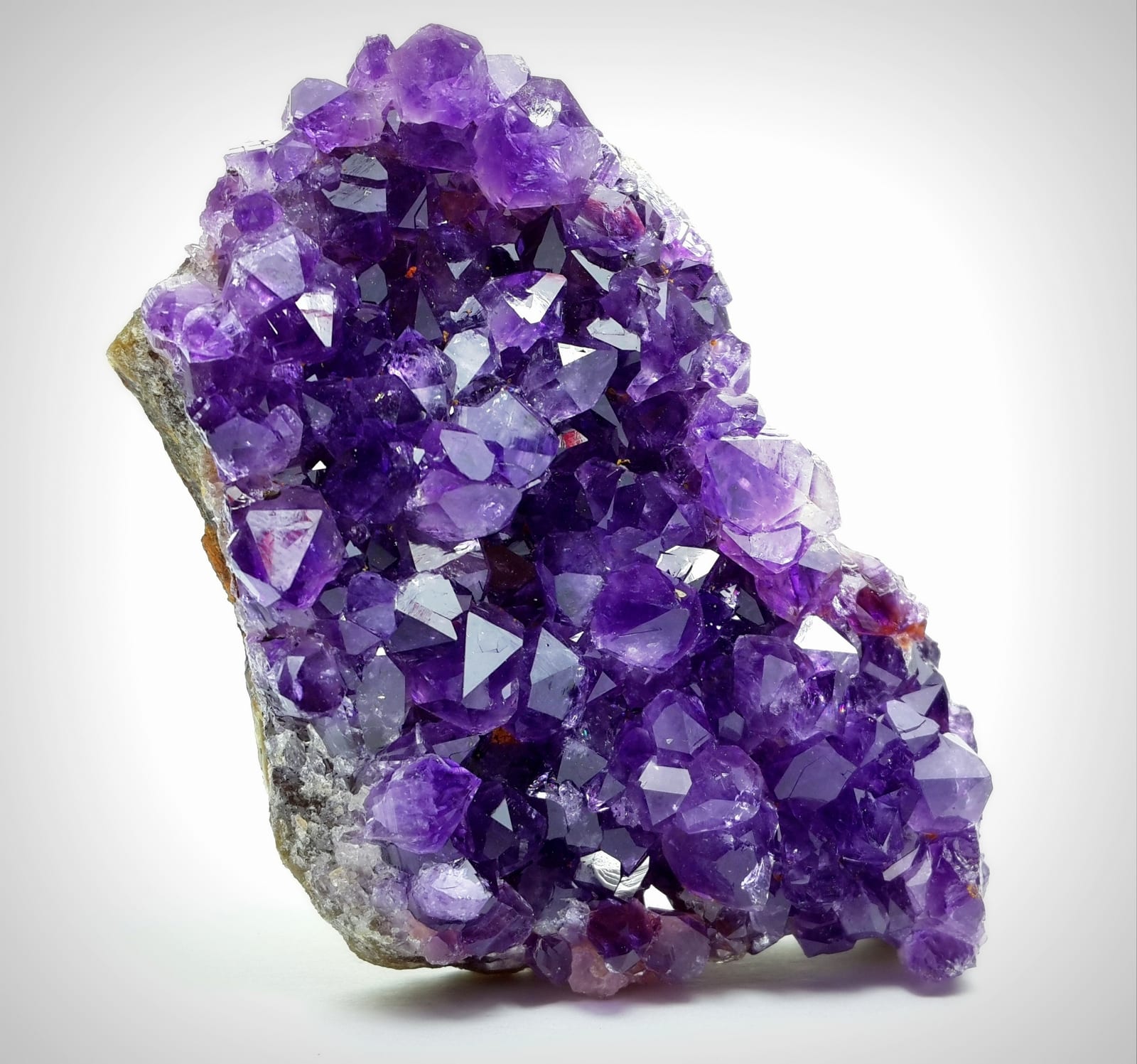
Purple quartz. Same habit as clear quartz but with iron-induced color zoning, often deepest at the tip and fading toward the base.
Photo: Wikipedia contributors · wikipedia
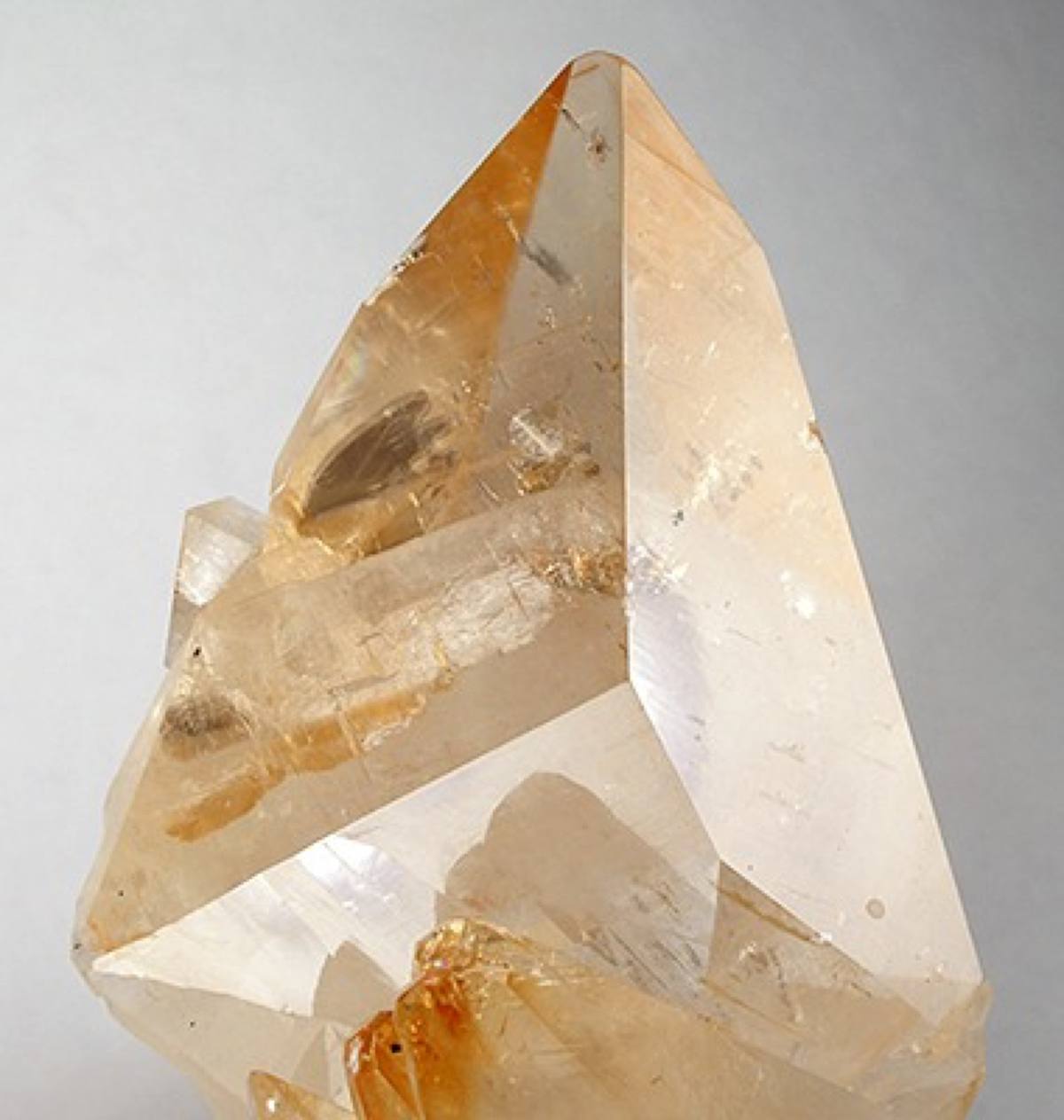
Rhombohedral crystals (lean-sided cube shape) with three perfect cleavages. Birefringent: laid on text, splits letters into two.
Photo: Robert M. Lavinsky · wikimedia
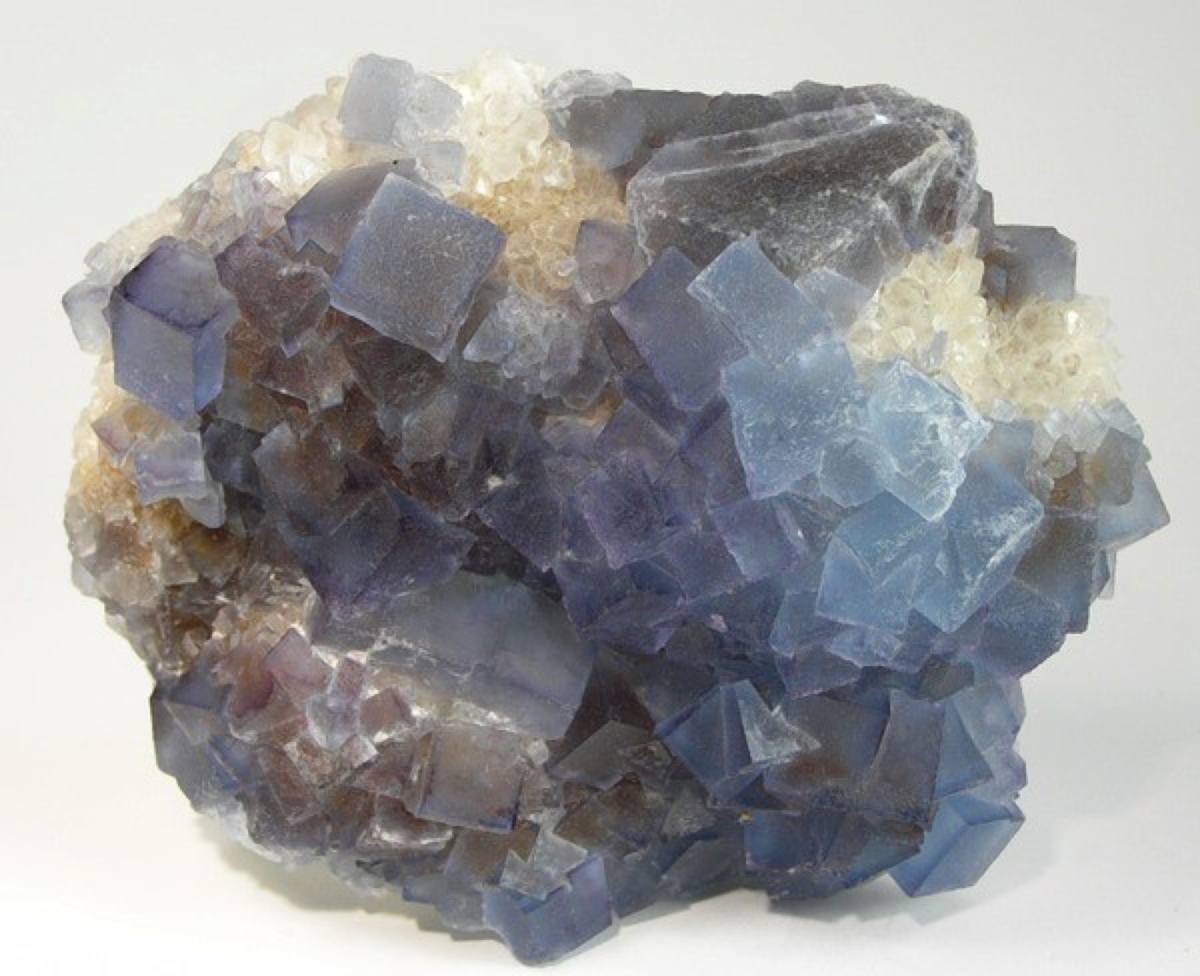
Cubes or octahedrons, often green, purple, or blue. Four perfect cleavages. Fluoresces under UV (where the name comes from).
Photo: Robert M. Lavinsky · wikimedia
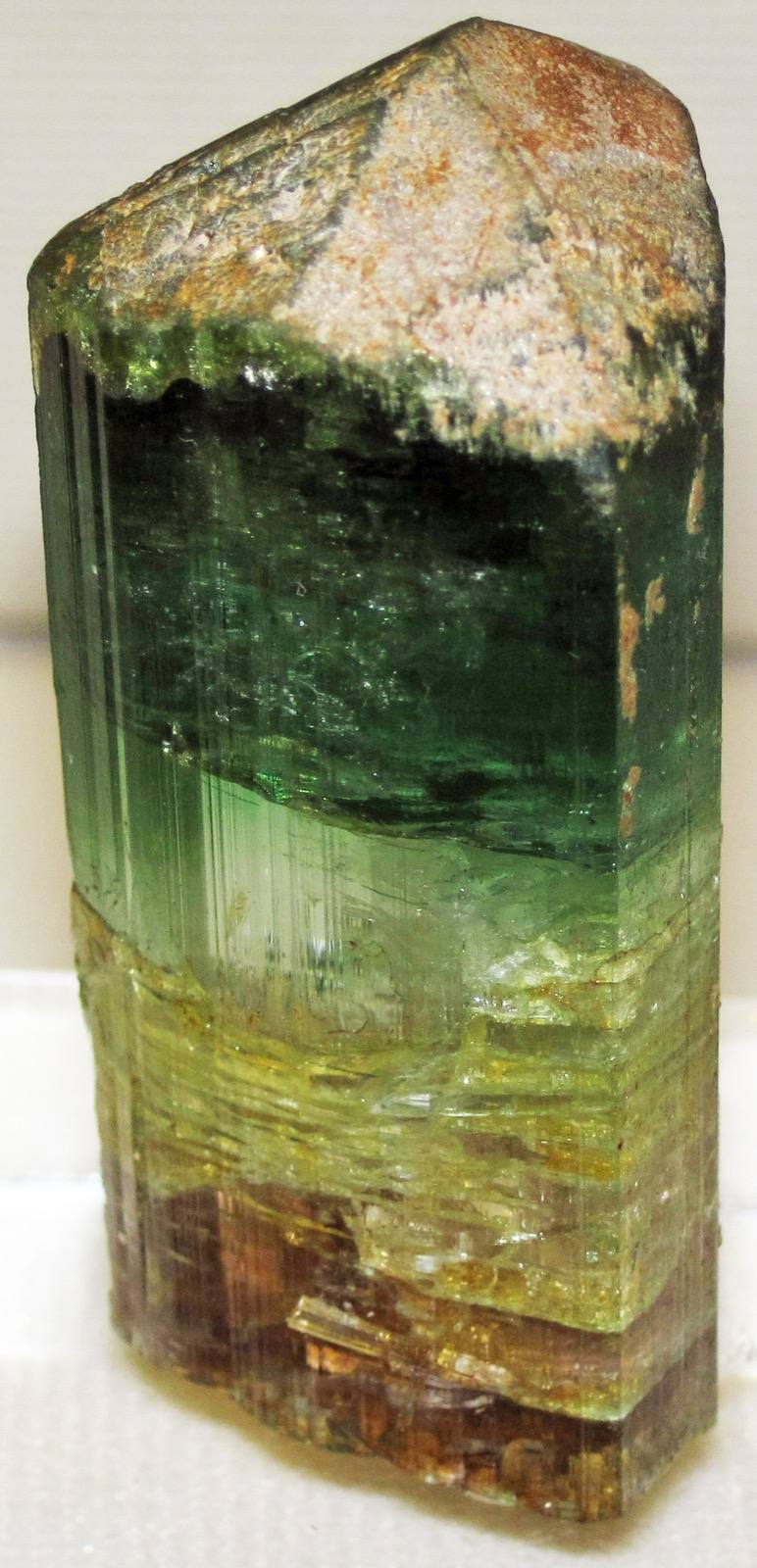
Long striated prismatic crystals with a triangular cross-section. Common color: schorl (black). Vertical striations are diagnostic.
Photo: James St. John · wikimedia
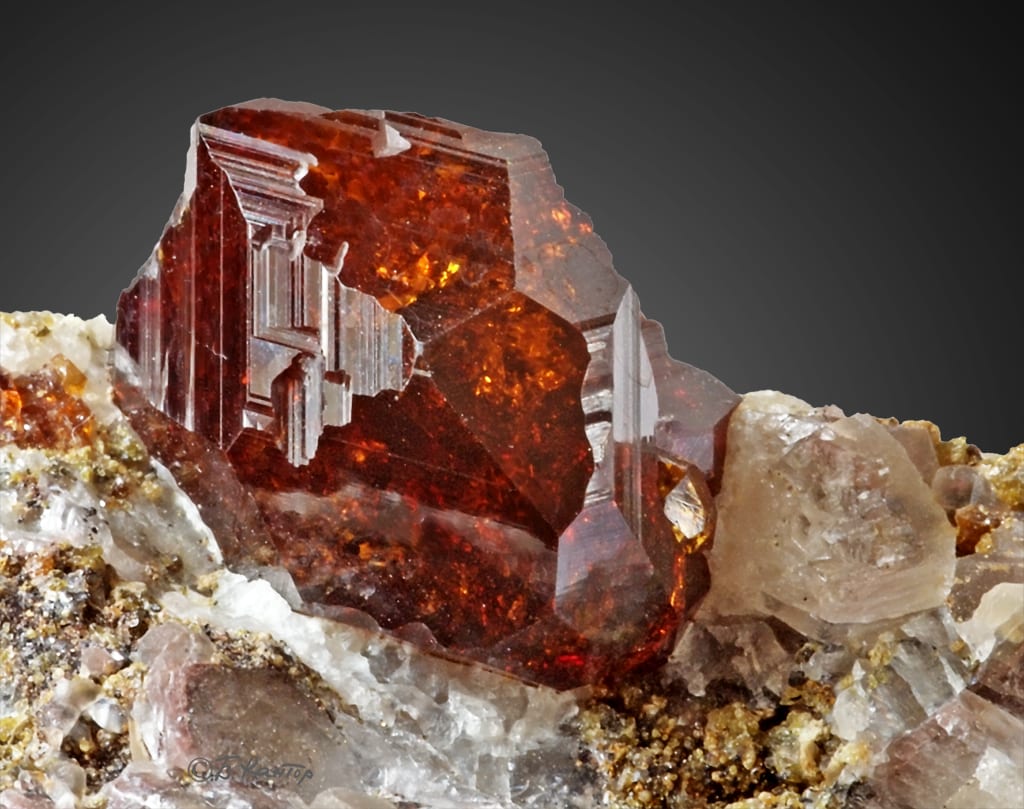
Dodecahedral or trapezohedral crystals: soccer-ball-like 12- or 24-sided shapes. Deep red (almandine) to green (uvarovite). Mohs 7 to 7.5.
Photo: Wikipedia contributors · wikipedia
The six common crystals side by side. Cleavage is often the deciding test when the photo isn't conclusive.
| Specimen | Hardness (Mohs) | Luster | Cleavage | Habit | Field tell |
|---|---|---|---|---|---|
| Quartz | 7 | vitreous; waxy to dull when massive | rarely observable, poor on {1011}, {0111}, {1010}, some others; rhombohedral parting | prismatic crystals with pyramidal terminations, massive, granular | Six-sided prism ending in pyramid. No cleavage. |
| Amethyst | 7 | vitreous | none | prismatic crystals in geodes | Quartz habit with purple iron coloration zoning. |
| Calcite | 3 | vitreous; pearly on cleavages and {0001} | {1011}, perfect | rhombohedral, prismatic, scalenohedral, massive, stalactitic | Rhombohedral cleavage in three directions, fizzes in acid. |
| Fluorite | 4 | vitreous; dull when massive | {111}, perfect; on {011}, parting, poor | cubic crystals, octahedral, dodecahedral, massive | Cubic or octahedral. Octahedral cleavage. UV fluorescent. |
| Tourmaline | 7-7.5 | vitreous | none | prismatic, vertically striated crystals, columnar | Striated prism, triangular cross-section. Pyroelectric. |
| Garnet | 6.5-7.5 | vitreous | none | dodecahedral and trapezohedral crystals, massive | 12- or 24-sided shape, deep red, Mohs 7–7.5. |
The shape a crystal takes when it grew freely is the single strongest visual cue.
How the crystal ends (flat, pointed, doubly terminated) is often more diagnostic than the prism itself.
Show terminations and faces. A single crystal reads more clearly than a tight cluster.
Locality (mine, region, country) helps narrow varietal names. Arkansas quartz reads differently than Brazilian.
Variety, habit, typical hardness, and a similar-looking crystal to rule out for each match.
Habit reads well from a photo. Cleavage, streak, and refractive index do not. Here's where the tool is strong and where you should verify.
The RockHoundR app works offline, saves every find to your map, and overlays them onto 250,000+ rockhounding spots with geology and land-access data.


When habit, color zoning, and luster support it, the identifier returns the variety (Amethyst, Citrine, Smoky Quartz) rather than the generic species. If the image is ambiguous it stays at the species level (e.g. 'Quartz') and explains which variety it could be.
Quartz has glassy luster and a six-sided prism ending in a six-sided pyramid; calcite shows rhombohedral cleavage (three flat faces meeting at oblique angles) and a duller pearly-to-vitreous luster. Confirm with the scratch test (quartz scratches glass, calcite does not) or the acid test, where calcite fizzes in dilute hydrochloric acid and quartz does not.
Less reliably. Cutting and polishing remove habit, which is the strongest visual clue. The identifier still tries and is honest about lower confidence on cut material. Raw specimens with visible faces identify much better.
Yes. Geode interiors and clusters are some of the easiest specimens to identify because habit, color, and matrix all read at once. For a cluster, ranked matches describe the dominant crystal species and note matrix associations.
No. This is a geological identifier. It returns mineral identity, habit, and physical properties, not metaphysical claims.
A doubly terminated crystal has points at both ends instead of one end attached to matrix. It means the crystal grew suspended in solution rather than fixed to a wall, common in vugs in dolomitic rocks. Herkimer Diamonds (a quartz variety from New York) are the best-known example.
Property data and reference imagery used on this page are cross-checked against the following sources.
Reference for crystal habit, varietal names, and locality data.
Reference imagery for well-formed crystal habits across species.
Reference for crystal habit, the characteristic shape a mineral takes, and the crystal systems behind it.