
Billietite is a rare barium-uranium oxide mineral that typically forms bright yellow, thin tabular crystals. Collectors prize its sharp, pseudo-hexagonal morphology, though it is primarily found in the oxidized zones of uranium-rich ore deposits. Due to its radioactive nature, it should be stored with appropriate radiation shielding and handling precautions.
Is this billietite?
5-step field checkRun through these checks against the specimen in your hand. The more boxes tick, the more confident the ID.
- 1Test the hardnessTry to scratch billietite with a known reference. Billietite sits at Mohs 2-3, softer than the next harder reference, harder than the previous one.
- 2Check the streakDrag the specimen across an unglazed porcelain plate. Streak: yellow.
- 3Read the lusterHold the specimen under a strong light. Luster: adamantine.
- 4Match the color rangeCompare against the expected color range: yellow brown, golden yellow.
- 5Look at form & habitCrystal system: orthorhombic. Typical habit: tabular crystals, often pseudo-hexagonal with striations.
Often confused with
Billietite vs. its common look-alikes, and how to tell them apart in the field.
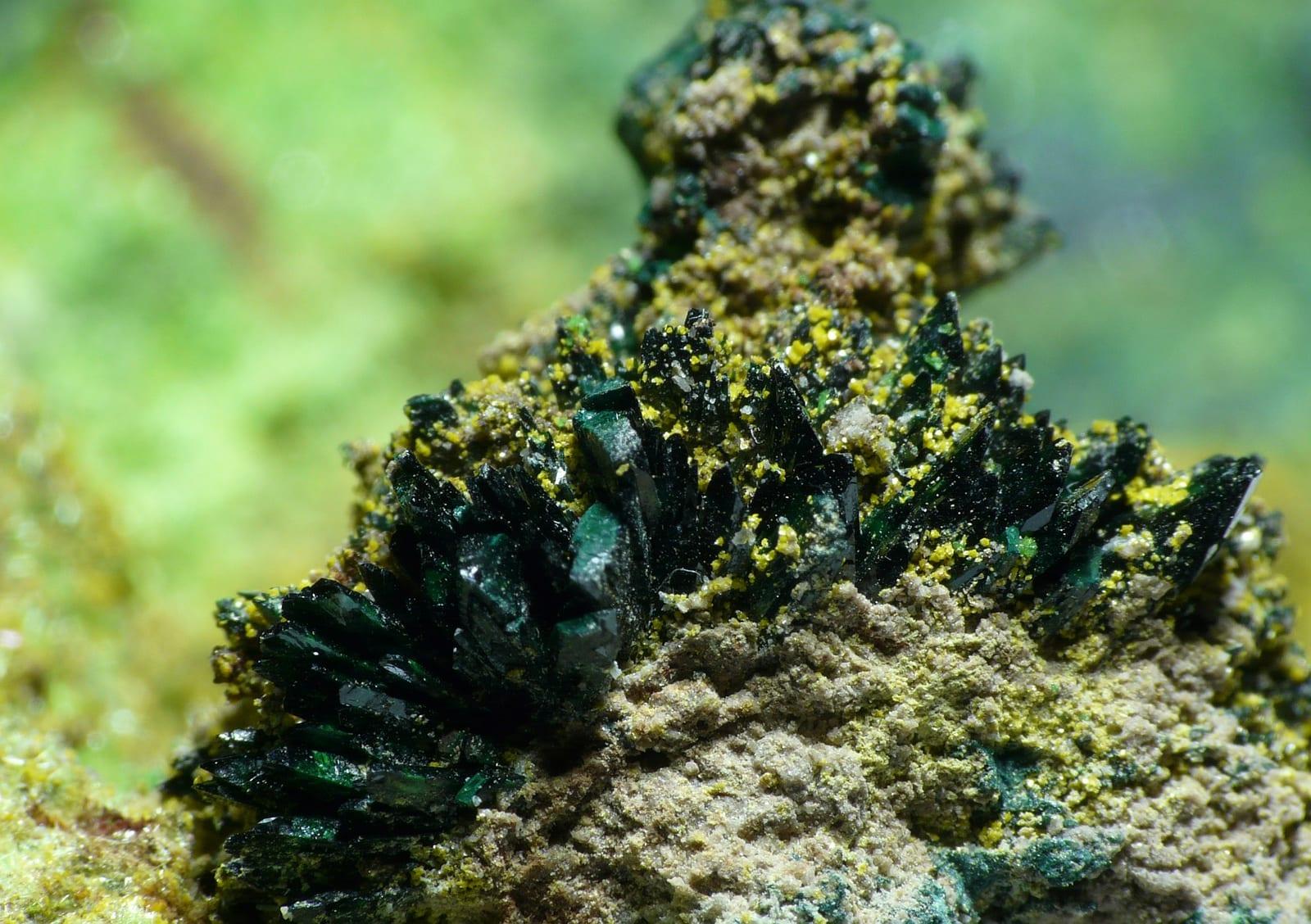
How to tell apart: Vandenbrandeite is the harder of the two (Mohs 4 vs. 2-3); streak differs, so Billietite leaves yellow, Vandenbrandeite leaves green; luster reads adamantine on Billietite and vitreous on Vandenbrandeite.
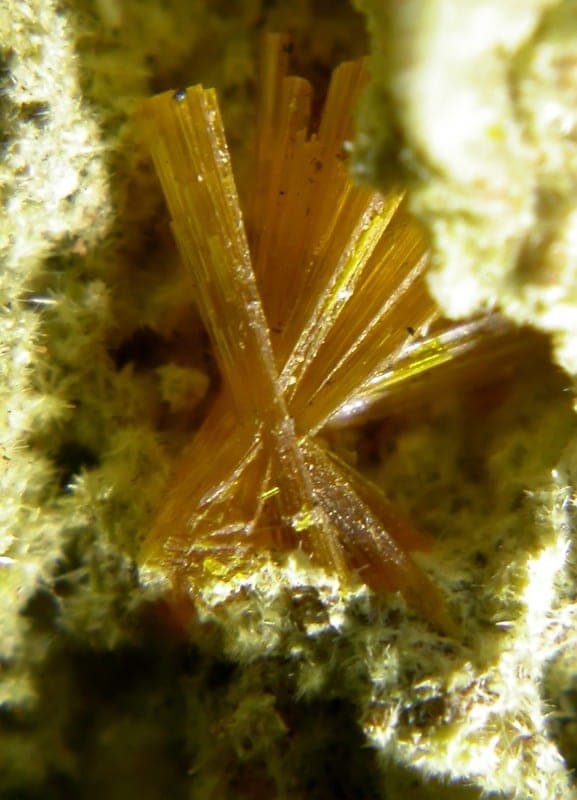
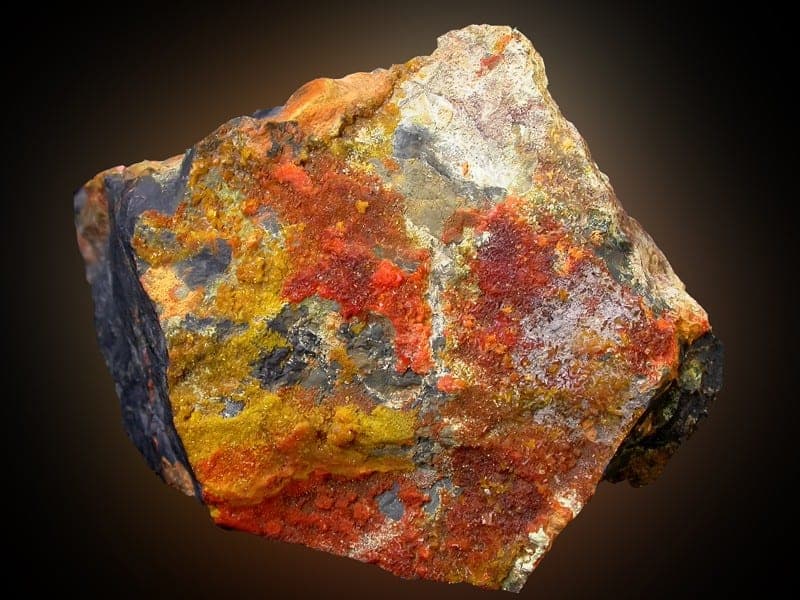
How to tell apart: Streak differs, so Billietite leaves yellow, Fourmarierite leaves orange.
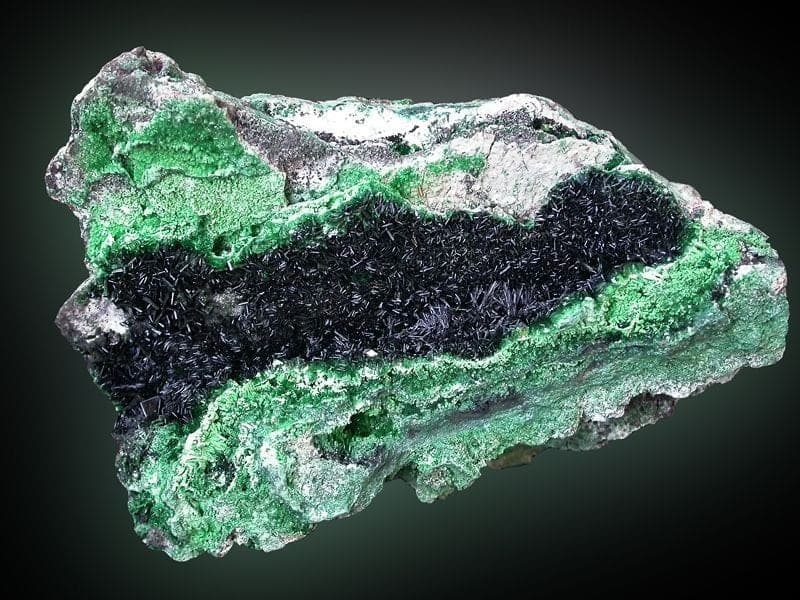
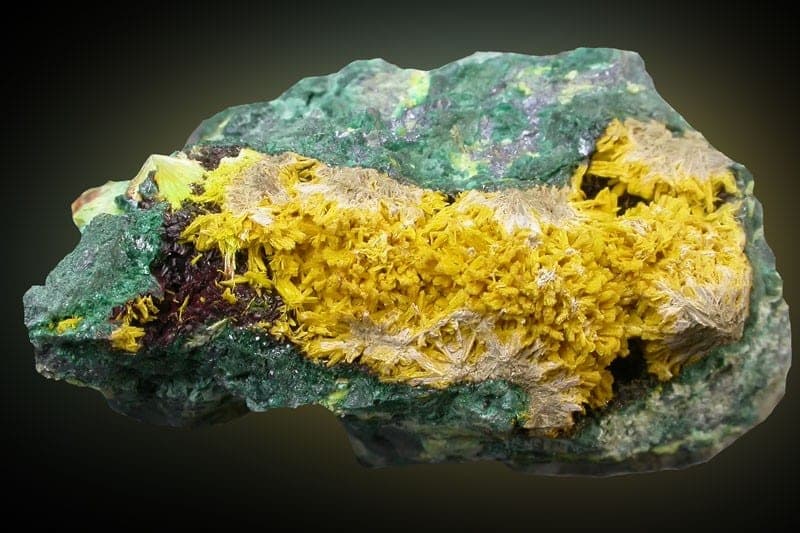
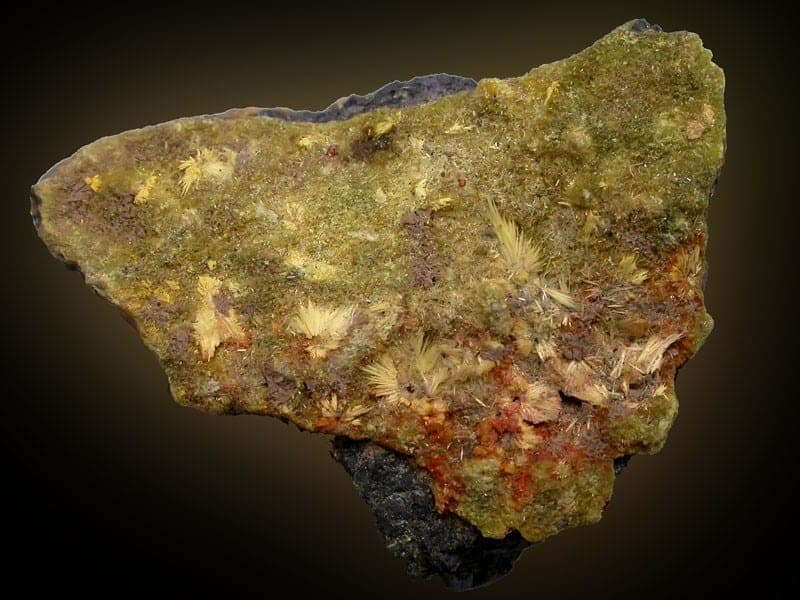
Often found alongside billietite
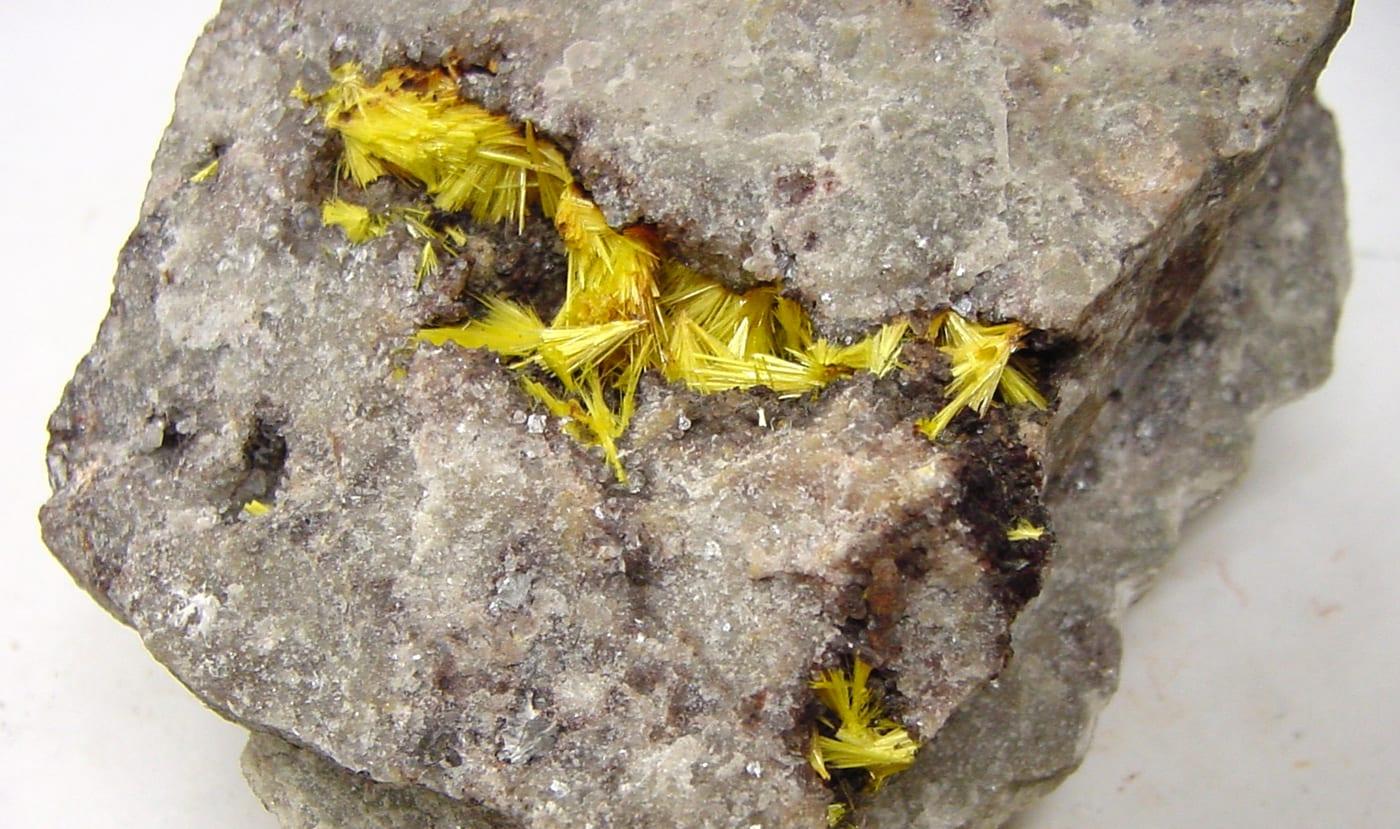
Minerals reported to co-occur with billietite. Spotting these in float or country rock is a strong cue you are in the right ground.
All properties
- Chemical formula
- Ba(UO₂)₆O₄(OH)₆·8H₂O
- Mohs hardness
- 2-3
- Density
- 5.28-5.36 g/cm³
- Streak
- Yellow
- Luster
- Adamantine
- Transparency
- Transparent to translucent
- Crystal system
- Orthorhombic
- Crystal habit
- Tabular crystals, often pseudo-hexagonal with striations
- Cleavage
- {001} perfect, {110} and {010} imperfect
- Fluorescence
- Yellow-green under UV light
- Rarity
- Rare
- Uses
- Collector
- Host rock
- An uncommon alteration product of uraninite
Where rockhounds find billietite
Classic worldwide localities
- Mauch Chunk Ridge, Jim Thorpe, Carbon Co., Pennsylvania, and in the Delta mine, Emery Co., Utah, USA
- Shinkolobwe and in the Musonoi mine, near Kolwezi, Katanga Province, Congo (Shaba Province, Zaire)
- La Crouzille mine, and the Margnac mine, Compreignac, Haute-Vienne, and in the Rabéjac uranium deposit, seven km south-southeast of Lodève, Hérault, France
- Wölsendorf, Bavaria, Germany
- Menzenschwand, and at Wittichen, Black Forest, Germany
- Bergen, Vogtland, Saxony, Germany
Field-hunting tip
Where it forms: An uncommon alteration product of uraninite. If you start seeing uranophane, fourmarierite, metatorbernite in float, you are in the right ground. Typical habit: tabular crystals, often pseudo-hexagonal with striations. Train your eye for that shape before scanning the outcrop.
Common questions
How do you identify billietite?+
Where is billietite found?+
Is billietite safe to handle?+
What rocks look like billietite?+
What minerals are found with billietite?+
What kind of rock does billietite form in?+
What is billietite used for?+
Find billietite on the map
RockHoundR shows mapped rockhounding spots, access rules, and lets you log every find.

