
Rauvite is a rare secondary uranium-vanadium mineral typically found as earthy or botryoidal coatings on sandstone. Its distinct purple to violet coloration makes it a sought-after rarity for radioactive mineral collectors, though it is usually found in small, micro-crystalline amounts.
Is this rauvite?
4-step field checkRun through these checks against the specimen in your hand. The more boxes tick, the more confident the ID.
- 1Check the streakDrag the specimen across an unglazed porcelain plate. Streak: yellowish brown to olive.
- 2Read the lusterHold the specimen under a strong light. Luster: adamantine to waxy.
- 3Match the color rangeCompare against the expected color range: bluish black, brown red, orange, purple red.
- 4Look at form & habitCrystal system: amorphous. Typical habit: compact, waxy.
Often confused with
Rauvite vs. its common look-alikes, and how to tell them apart in the field.
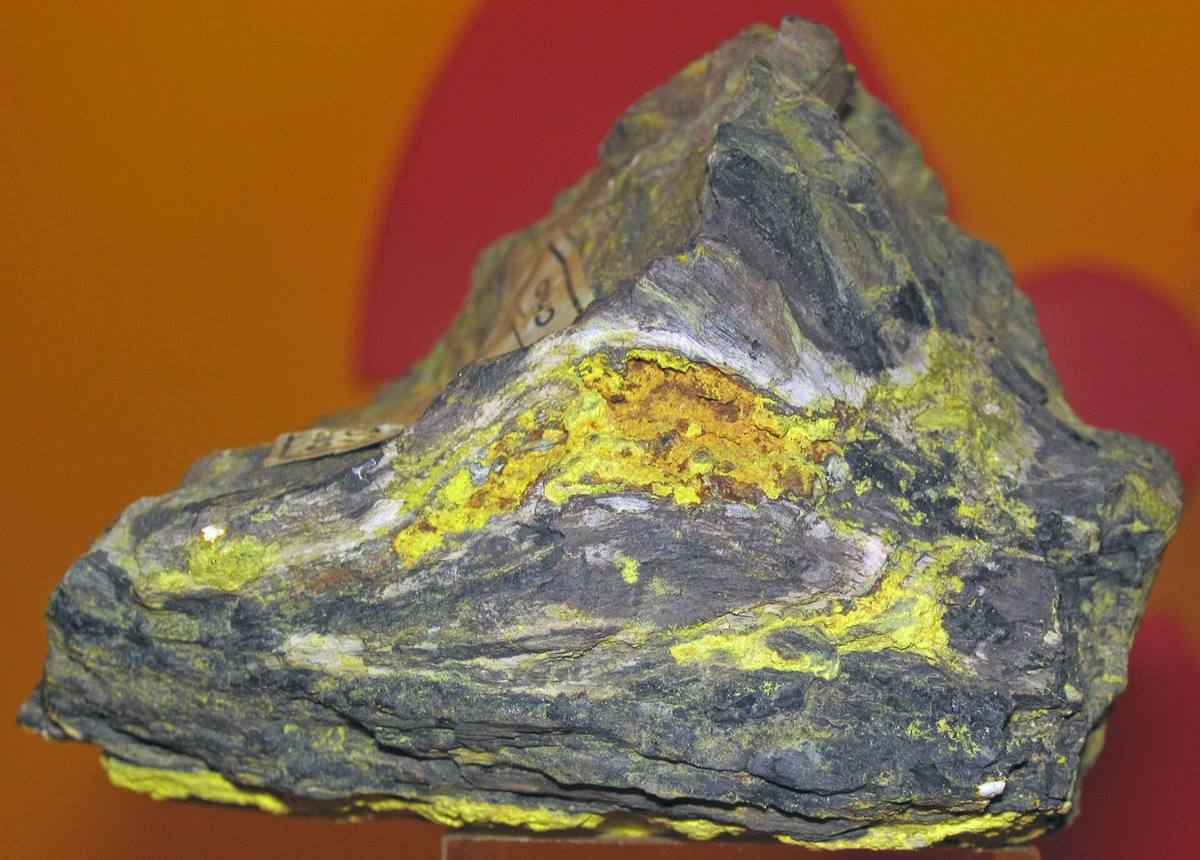
How to tell apart: Streak differs, so Rauvite leaves yellowish brown to olive, Carnotite leaves strontian-yellow; luster reads adamantine to waxy on Rauvite and dull, earthy; silky when crystalline on Carnotite.
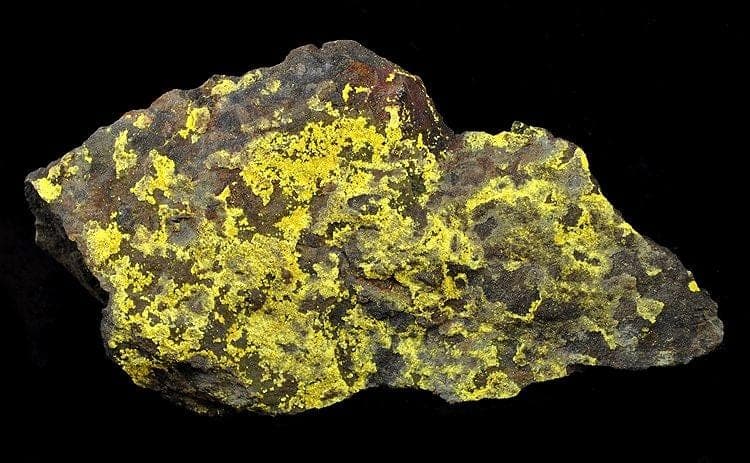
How to tell apart: Streak differs, so Rauvite leaves yellowish brown to olive, Tyuyamunite leaves light yellow.
Often found alongside rauvite
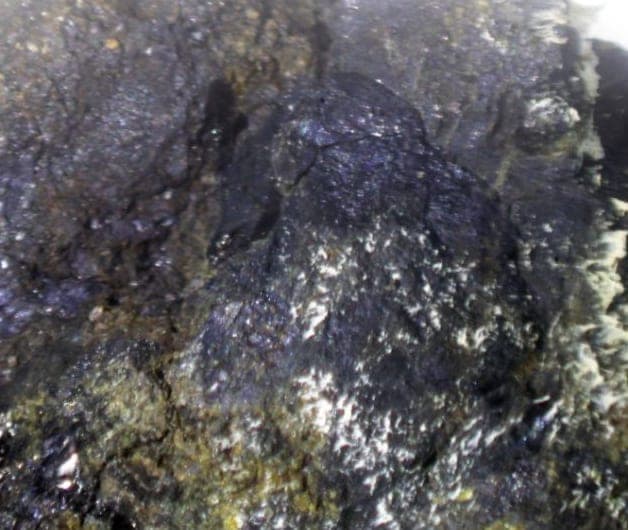
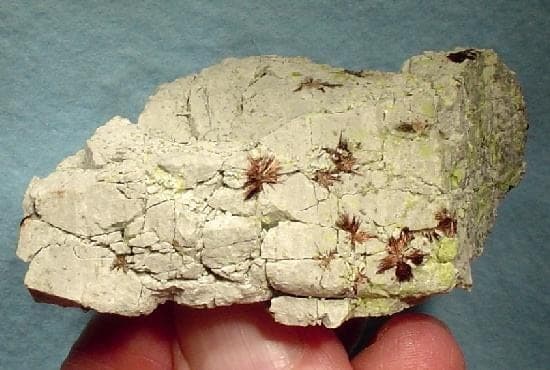
Minerals reported to co-occur with rauvite. Spotting these in float or country rock is a strong cue you are in the right ground.
All properties
- Chemical formula
- Ca(UO₂)₂(V₁₀O₂₈)·16H₂O
- Density
- 2.92 g/cm³
- Streak
- Yellowish brown to olive
- Luster
- Adamantine to waxy
- Transparency
- Semitransparent
- Crystal system
- Amorphous
- Crystal habit
- Compact, waxy
- Cleavage
- None
- Rarity
- Rare
- Uses
- Collector
- Host rock
- An uncommon mineral in the oxidized zones of U–V ores in Colorado Plateau-type deposits
Where rockhounds find rauvite
Classic worldwide localities
- Temple Rock and Flat Top, Emery Co., and at the Cactus Rat mine group, Yellow Cat district, 24 km southeast of Thompson, Grand Co., Utah, USA
- Small Spot, Arrowhead, and Corvusite mines, Gateway district, Mesa Co., at the Hummer, Bitter Creek, Jo Dandy, and J.J. mines, Paradox Valley, Montrose Co., Colorado, USA
- Monument No. 2 mine, Monument Valley, Apache Co., and Monument No. 1 and Mitten No. 2 mines, Navajo Co., Arizona, USA
- Road Hog No. 3A claim, Coal Canyon, Fall River Co., South Dakota, USA
- Hatrurim Formation, Israel
Field-hunting tip
Where it forms: An uncommon mineral in the oxidized zones of U–V ores in Colorado Plateau-type deposits. If you start seeing carnotite, corvusite, uvanite in float, you are in the right ground. Typical habit: compact, waxy. Train your eye for that shape before scanning the outcrop.
Common questions
How do you identify rauvite?+
Where is rauvite found?+
Is rauvite safe to handle?+
What rocks look like rauvite?+
What minerals are found with rauvite?+
What kind of rock does rauvite form in?+
What is rauvite used for?+
Find rauvite on the map
RockHoundR shows mapped rockhounding spots, access rules, and lets you log every find.

