Taenite is a nickel-iron alloy found almost exclusively in iron meteorites. It forms the finer components of the Widmanstätten pattern when intergrown with kamacite and is characterized by its high nickel content, which grants it higher resistance to chemical etching than its counterpart.
Is this taenite?
5-step field checkRun through these checks against the specimen in your hand. The more boxes tick, the more confident the ID.
- 1Test the hardnessTry to scratch taenite with a known reference. Taenite sits at Mohs 5-5.5, softer than the next harder reference, harder than the previous one.
- 2Check the streakDrag the specimen across an unglazed porcelain plate. Streak: light gray.
- 3Read the lusterHold the specimen under a strong light. Luster: metallic.
- 4Match the color rangeCompare against the expected color range: silver white, grayish white.
- 5Look at form & habitCrystal system: cubic. Typical habit: exsolution inclusions, granular, massive.
Often confused with
Taenite vs. its common look-alikes, and how to tell them apart in the field.
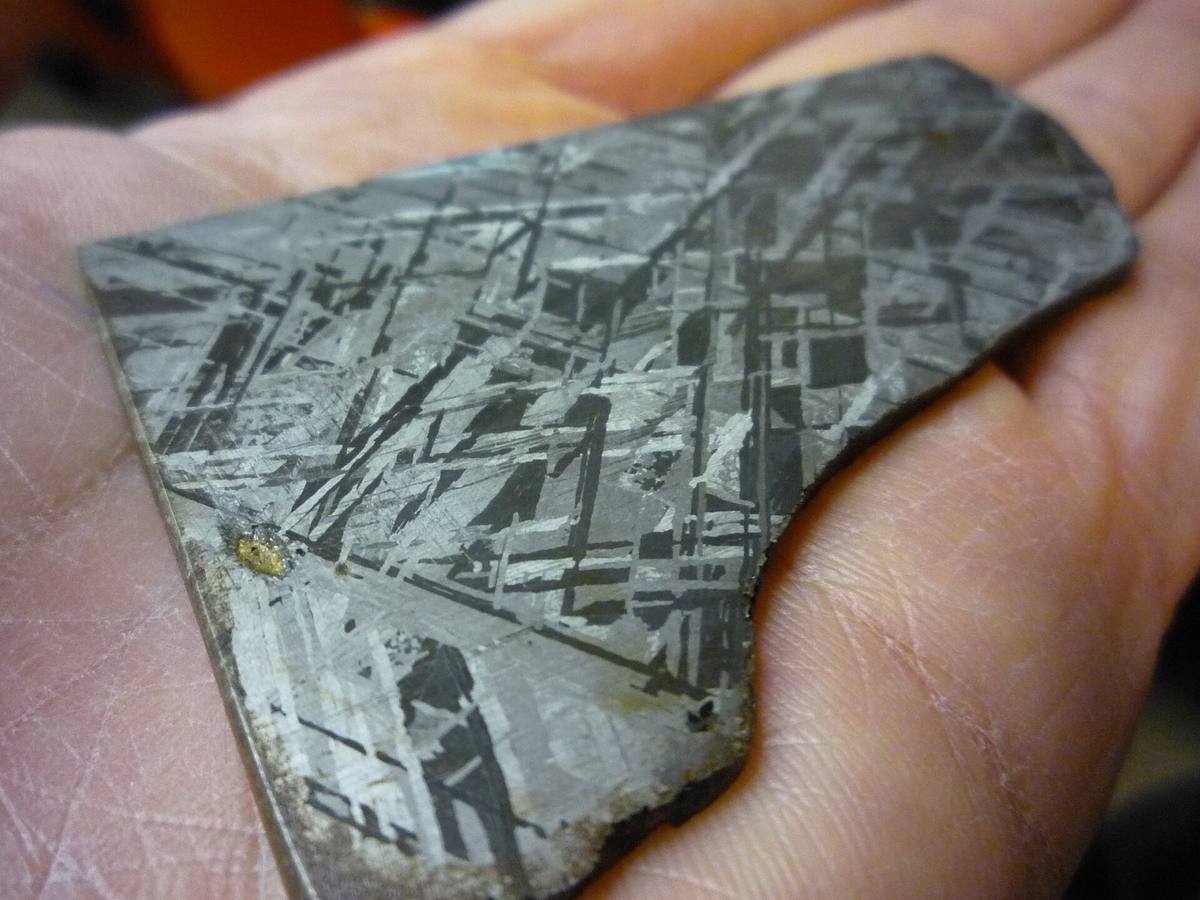
How to tell apart: Taenite is noticeably harder (Mohs 5-5.5 vs. 4); streak differs, so Taenite leaves light gray, Kamacite leaves gray.
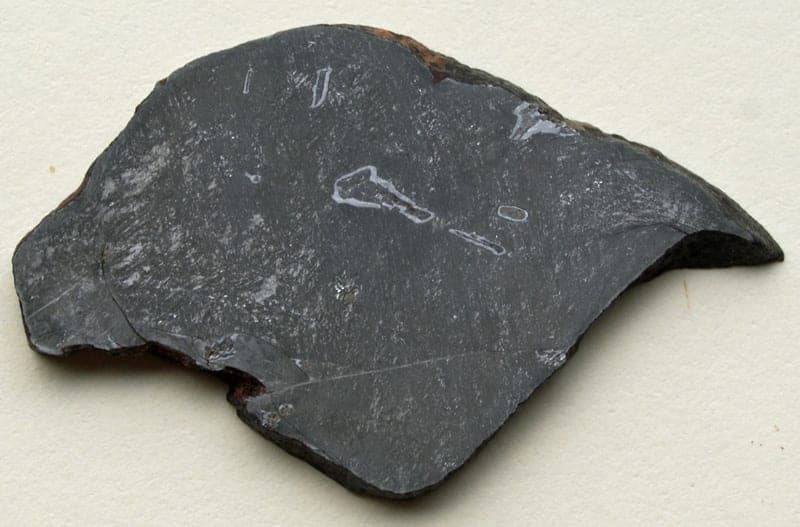
How to tell apart: Schreibersite is the harder of the two (Mohs 6.5-7 vs. 5-5.5); streak differs, so Taenite leaves light gray, Schreibersite leaves dark gray; luster reads metallic on Taenite and brilliant metallic on Schreibersite.
Often found alongside taenite
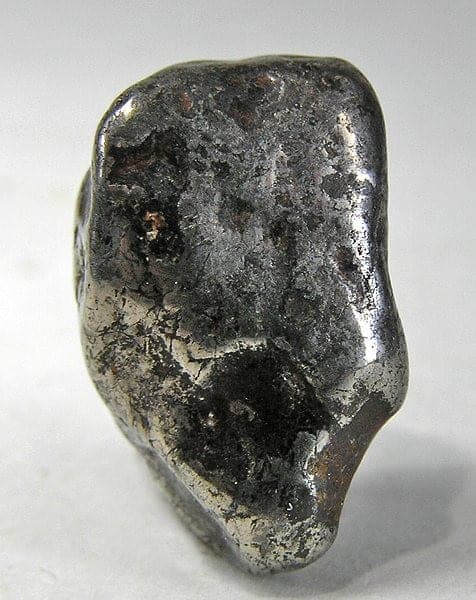
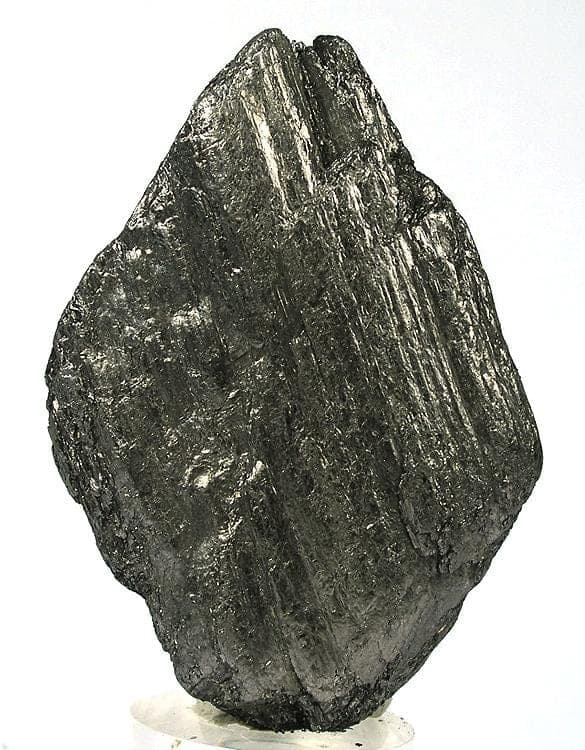
Minerals reported to co-occur with taenite. Spotting these in float or country rock is a strong cue you are in the right ground.
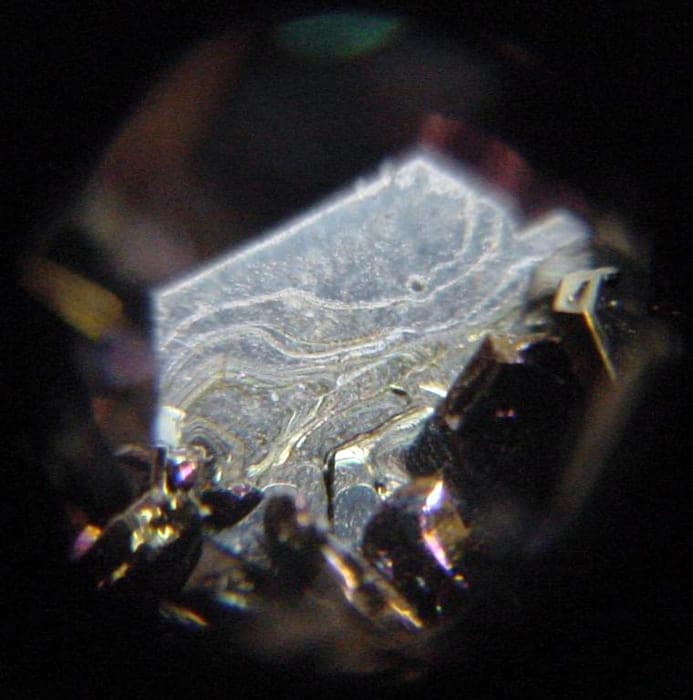
All properties
- Chemical formula
- FeNi
- Mohs hardness
- 5-5.5
- Density
- 7.8-8.22 g/cm³
- Streak
- Light gray
- Luster
- Metallic
- Transparency
- Opaque
- Crystal system
- Cubic
- Crystal habit
- Exsolution inclusions, granular, massive
- Cleavage
- None
- Rarity
- Rare
- Uses
- Collector, Scientific research
- Host rock
- Important in meteorites
Where rockhounds find taenite
Classic worldwide localities
- Josephine and Jackson Cos., Oregon, USA
- South Fork, Smith River, Del Norte Co., California, USA
- Gorge River, South Island, New Zealand
- Fraser River, Lillooet district, British Columbia and as spherules in Pleistocene sediment, Alberta, Canada
- Mt. Ozernaya mafic intrusion, Siberian Platform, Russia
Field-hunting tip
Where it forms: Important in meteorites. If you start seeing kamacite, awaruite, graphite in float, you are in the right ground. Typical habit: exsolution inclusions, granular, massive. Train your eye for that shape before scanning the outcrop.
Common questions
How do you identify taenite?+
Where is taenite found?+
Is taenite safe to handle?+
What rocks look like taenite?+
What minerals are found with taenite?+
What kind of rock does taenite form in?+
What is taenite used for?+
Find taenite on the map
RockHoundR shows mapped rockhounding spots, access rules, and lets you log every find.