Quartz vs Calcite: how to tell them apart
Quick answer
The difference between quartz and calcite is hardness and chemistry. Quartz is hard (Mohs 7), scratches glass, and ignores acid, while calcite is soft (Mohs 3), is scratched by a knife, and fizzes in vinegar. A scratch test or a drop of vinegar tells them apart instantly.
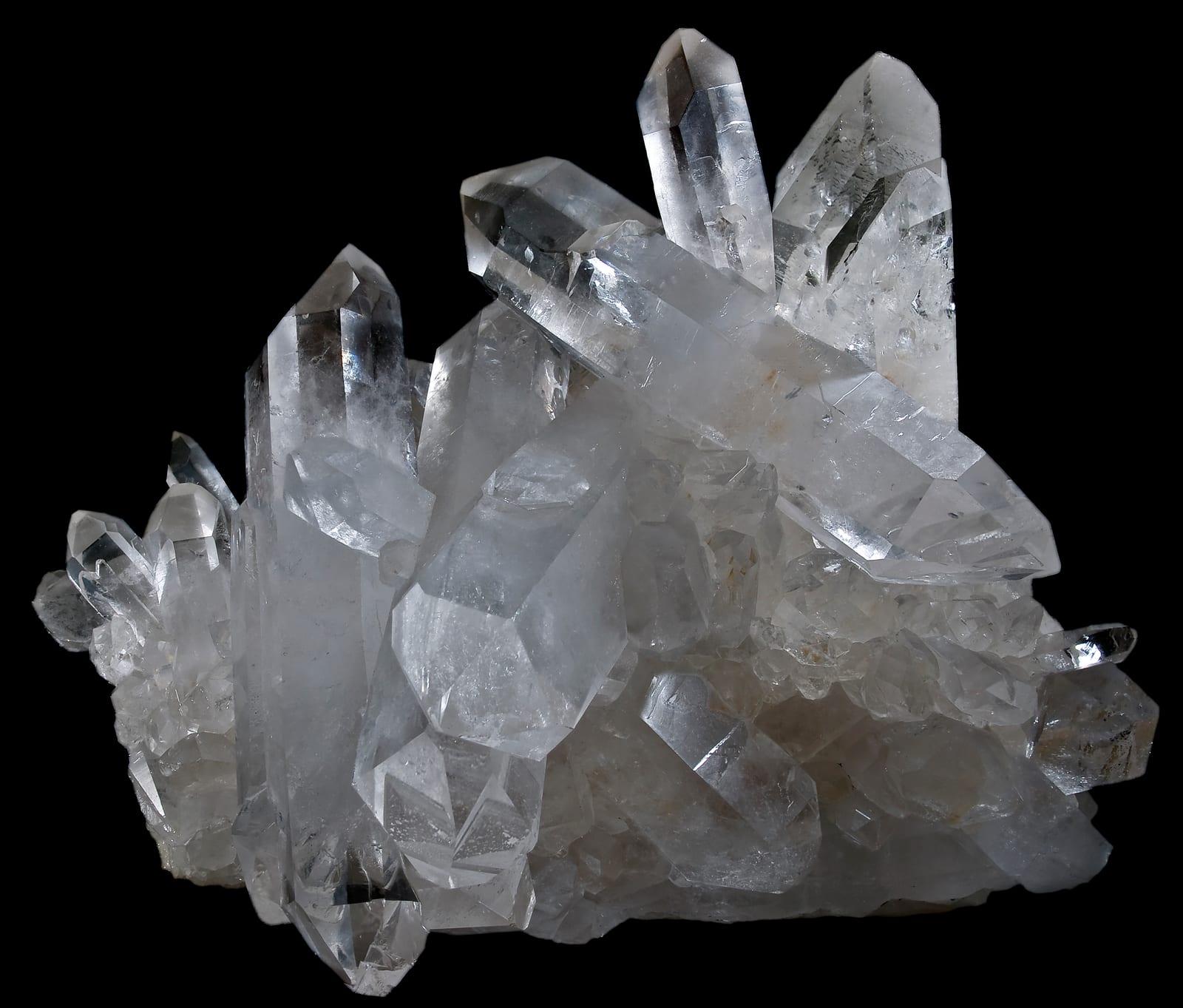
Quartz
Full quartz guide →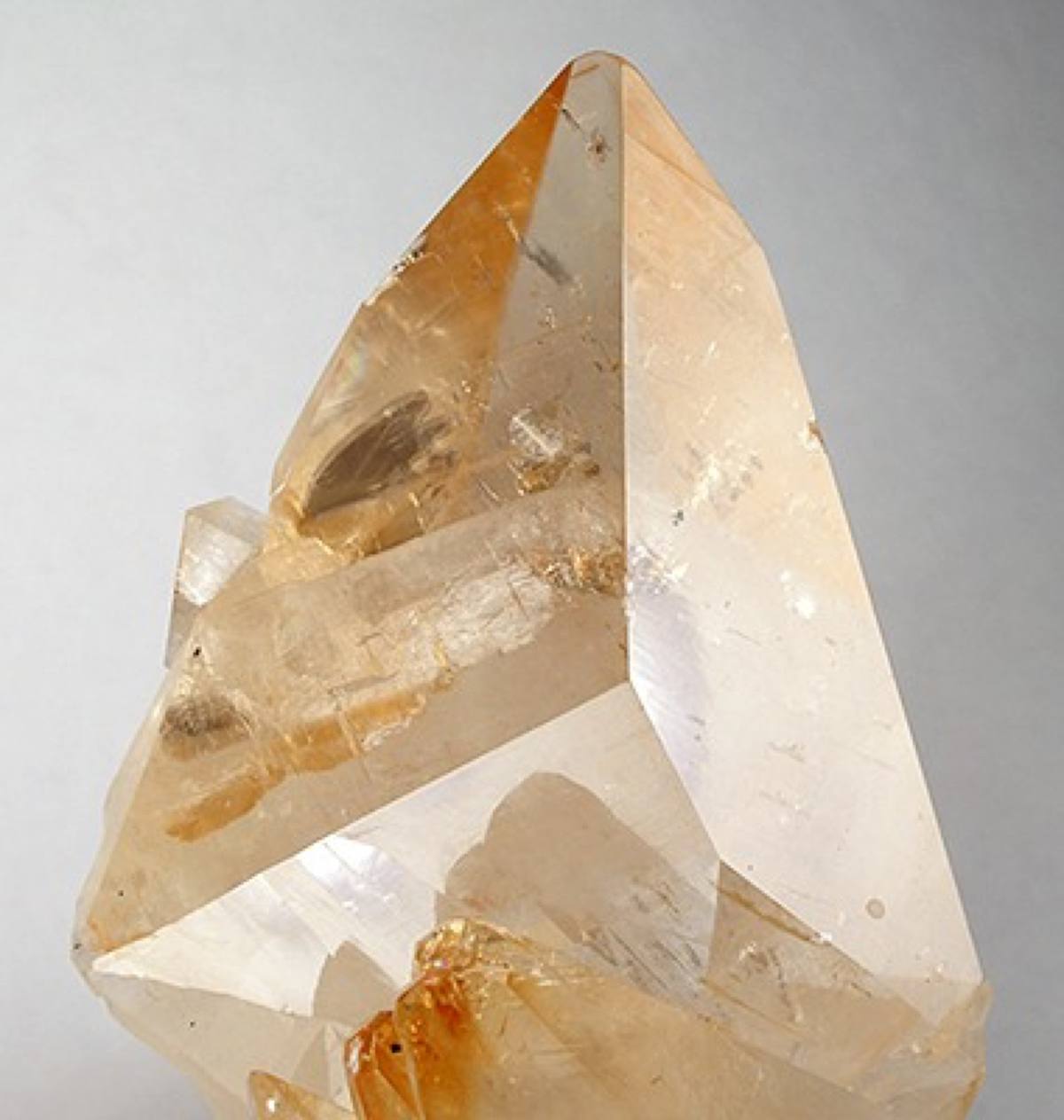
Calcite
Full calcite guide →Quartz and calcite are two of the most common clear-to-white crystals a rockhound finds, and beginners mix them up constantly. They could not behave more differently, though. Quartz is hard silica with no cleavage, so it ends in six-sided points and breaks with curved conchoidal fractures. Calcite is soft carbonate with perfect cleavage, so it splits into leaning rhombohedron blocks and reacts with acid. A scratch and a drop of vinegar tell them apart instantly.
What is the difference between Quartz and Calcite?
Hardness
- Quartz
- Mohs 7. Scratches glass and a steel knife.
- Calcite
- Mohs 3. A copper coin or knife scratches it.
Reaction to acid
- Quartz
- No reaction to vinegar or dilute acid.
- Calcite
- Fizzes in vinegar or dilute hydrochloric acid.
How it breaks
- Quartz
- Conchoidal fracture, no flat cleavage planes.
- Calcite
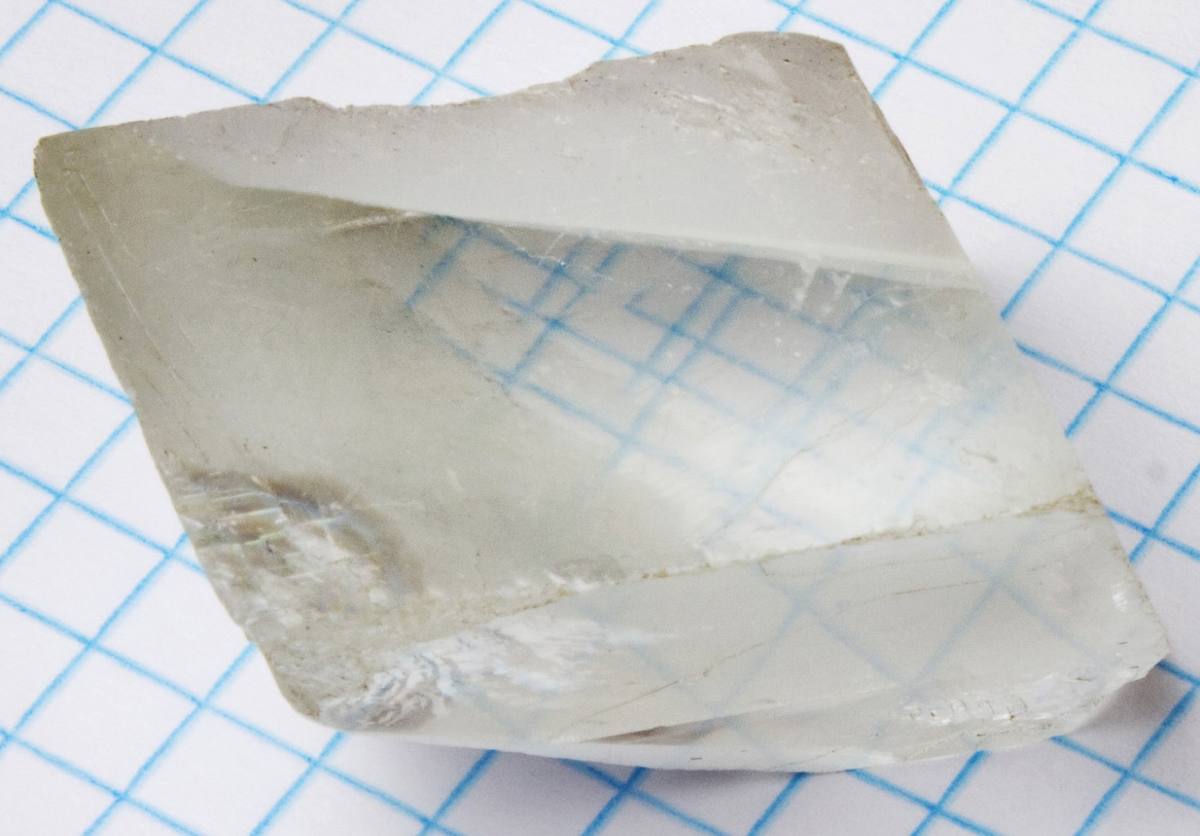
- Perfect cleavage into rhomb-shaped blocks.
Crystal shape
- Quartz
- Six-sided prisms ending in pyramidal points.
- Calcite
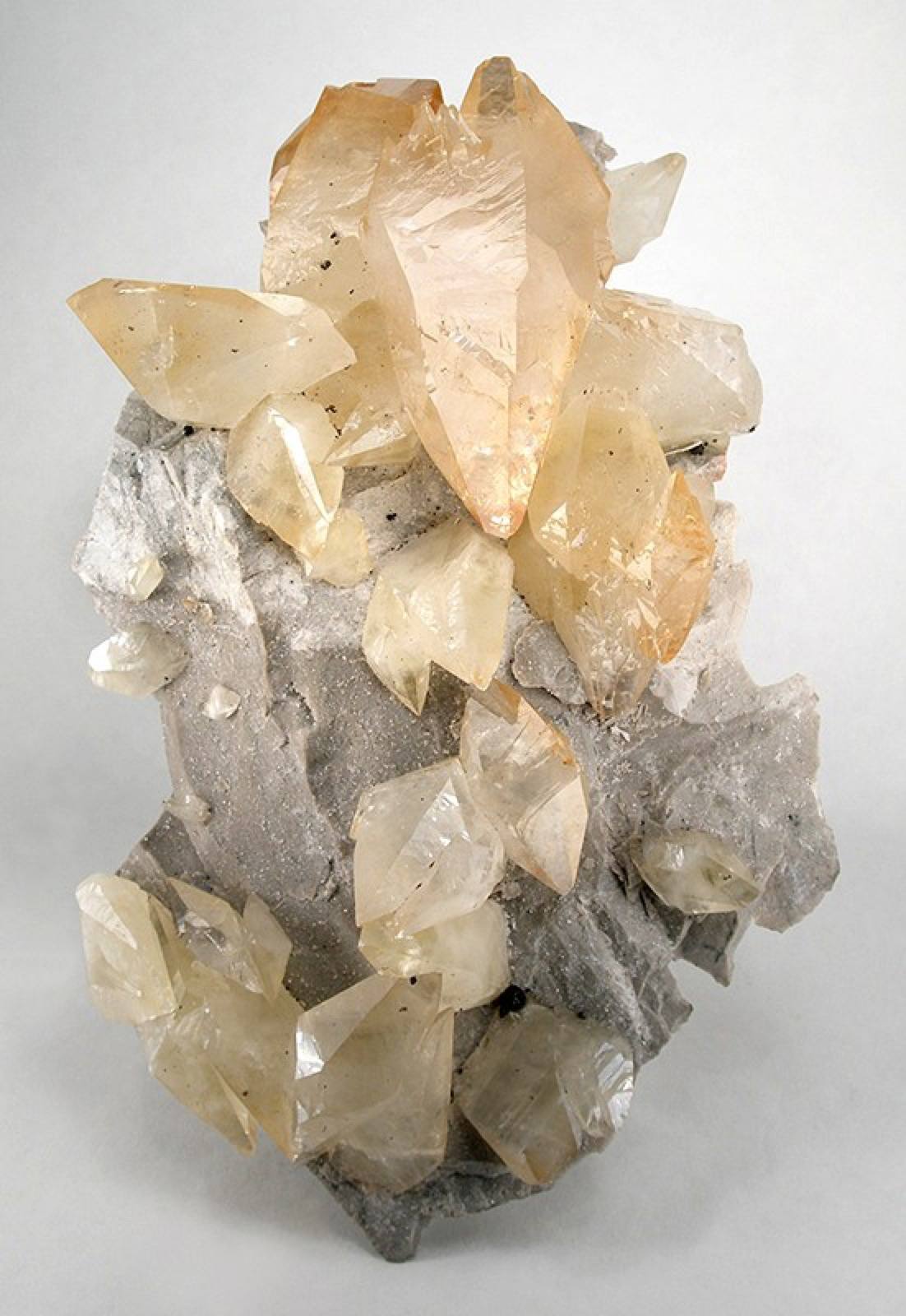
- Rhombohedra, scalenohedra (dogtooth), and tabular forms.
Quartz vs Calcite: properties compared
Highlighted rows are where Quartz and Calcite differ. The badge marks the most reliable at-a-glance separator. Property data from the RockHoundR mineral database.
| Property | Quartz | Calcite |
|---|---|---|
| Type | Mineral | Mineral |
| Mohs hardness(differs)Best field test | 7Harder | 3 |
| Streak | White | White |
| Transparency(differs) | Transparent to Nearly Opaque | Transparent to Opaque |
| Luster(differs) | Vitreous; Waxy to Dull When Massive | Vitreous; Pearly On Cleavages and {0001} |
| Cleavage(differs) | Rarely Observable, Poor On {1011}, {0111}, {1010}, Some Others; Rhombohedral Parting | {1011}, Perfect |
| Crystal system | Trigonal | Trigonal |
| Crystal habit(differs) | Prismatic Crystals with Pyramidal Terminations, Massive, Granular | Rhombohedral, Prismatic, Scalenohedral, Massive, Stalactitic |
| Fluorescence(differs) | Yellow-orange Under SW and LW UV | Yellow Under SW and LW UV |
| Chemical formula(differs) | SiO₂ | CaCO₃ |
Why are Quartz and Calcite confused?
Both can be colorless, glassy, and crystalline, and both grow in vugs and veins together. A clear quartz point and a clear calcite crystal look similar to a new collector until the crystal shape, hardness, and acid reaction are checked.
How to tell Quartz from Calcite
Ordered from the most reliable field test to the least. Start at the top.
- 1
Scratch test against glass
ReliableTry to scratch a piece of glass or a knife blade with the crystal. Quartz at Mohs 7 scratches glass and resists the knife. Calcite at Mohs 3 will not scratch glass and is itself scratched easily by the knife.
- 2
Vinegar fizz test
ReliablePut a drop of white vinegar or dilute hydrochloric acid on the specimen. Calcite fizzes as it releases carbon dioxide, sometimes faintly, so look closely. Quartz does nothing. This is diagnostic for the carbonate.
- 3
Look at the breakage and crystal form
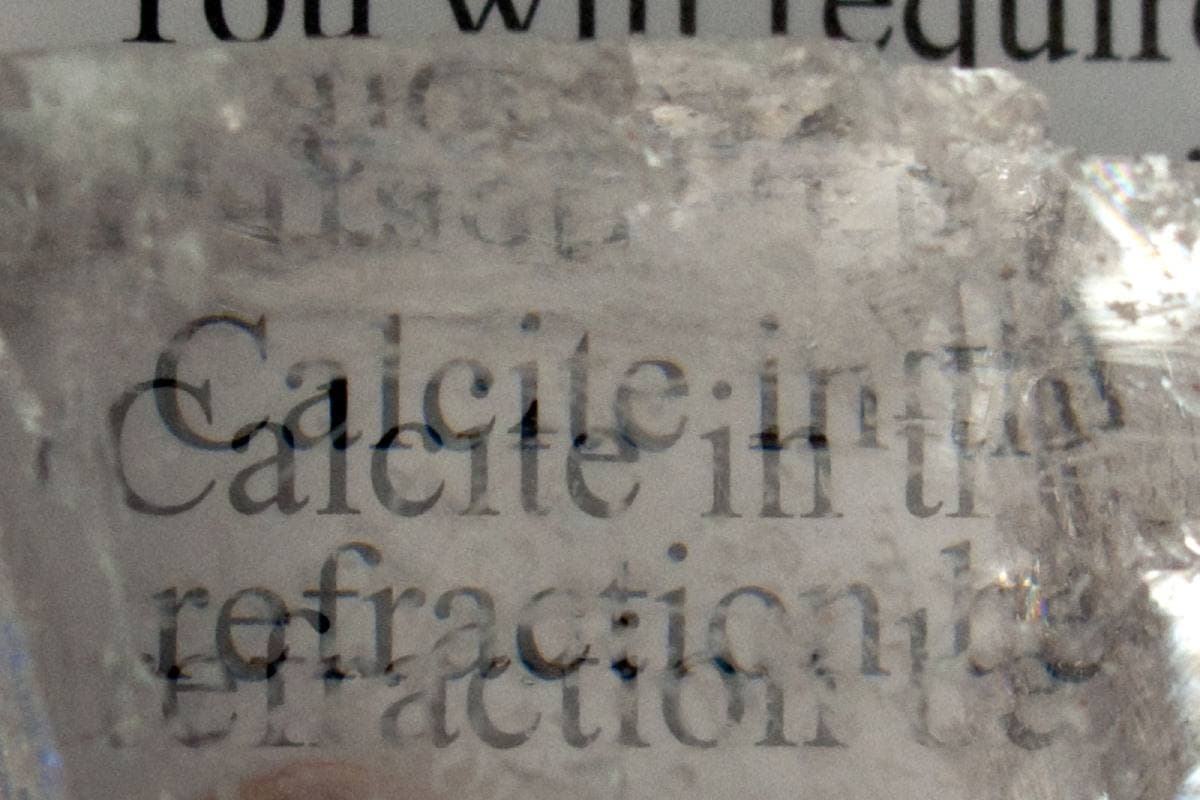
UsefulFlat, mirror-like faces that split into rhomb shapes mean calcite cleavage. Curved, shell-like fracture surfaces and six-sided terminated points mean quartz. A clear rhomb that shows doubled images of a line beneath it is the calcite variety Iceland spar.
Quartz or Calcite: which is more valuable?
Both are abundant and inexpensive as common specimens. Value comes from quality: gem-clear amethyst or well-formed quartz points, and large transparent or fluorescent calcite crystals, are the pieces collectors pay for. The mineral name alone does not set the price.
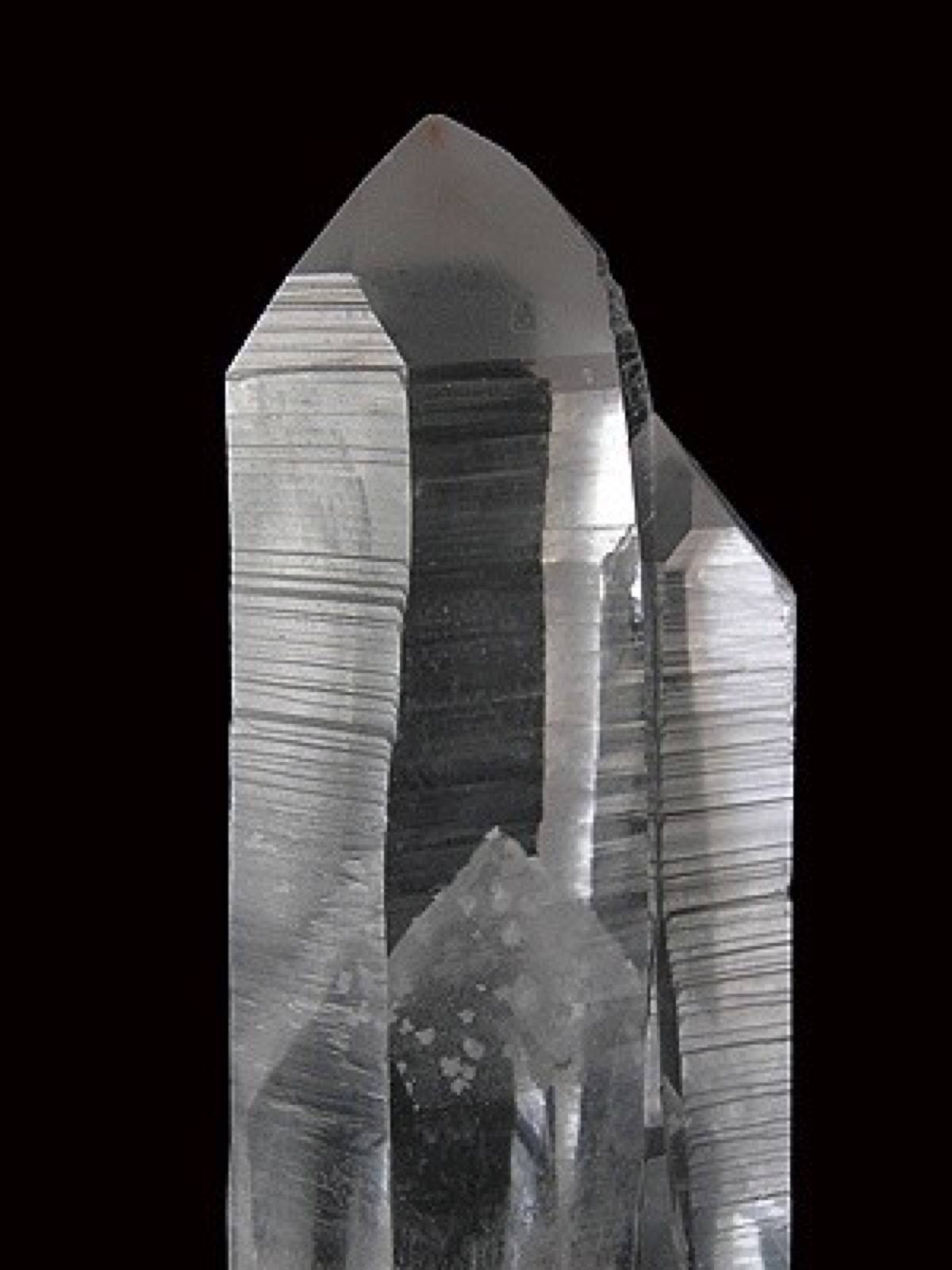
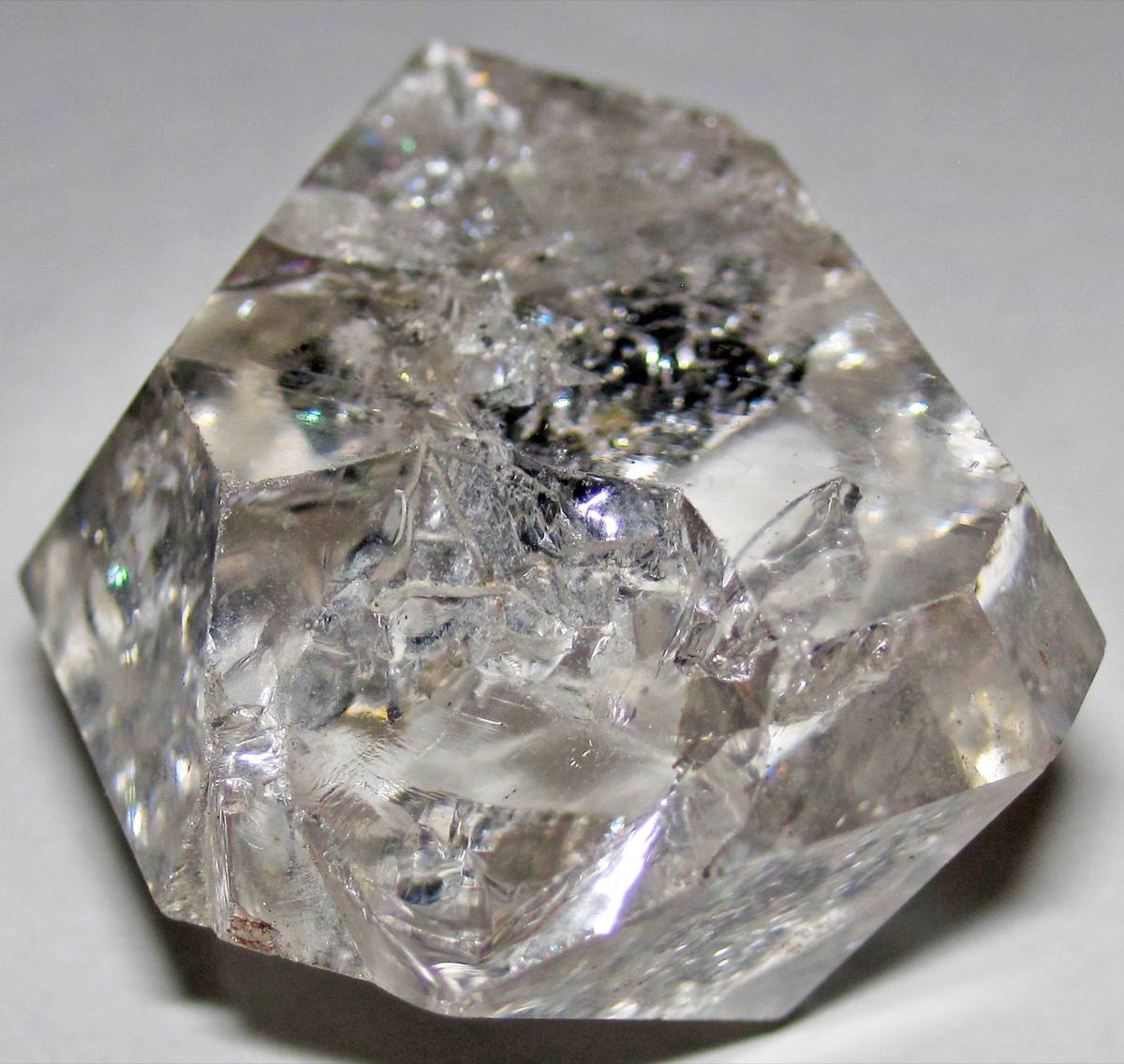
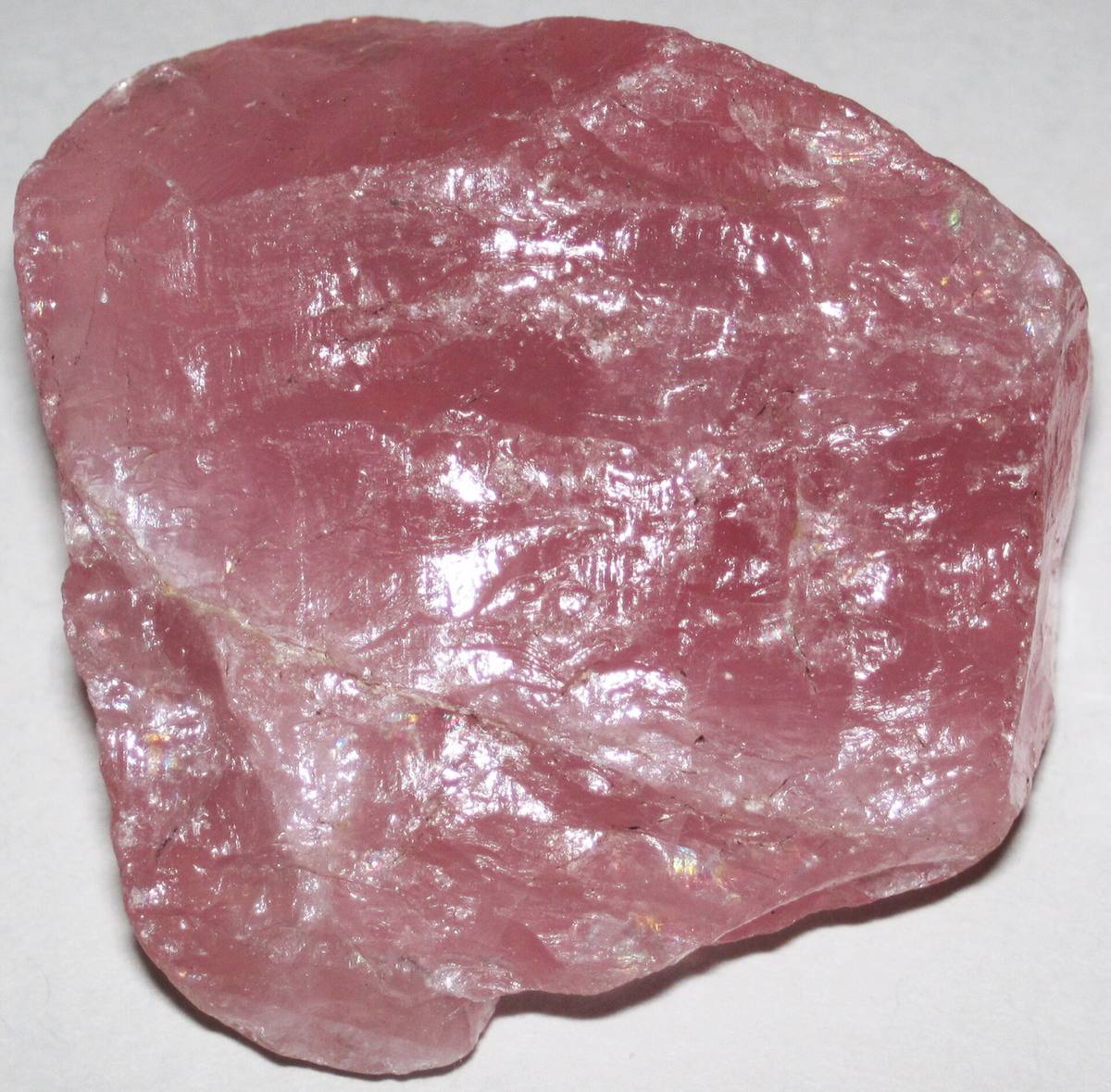
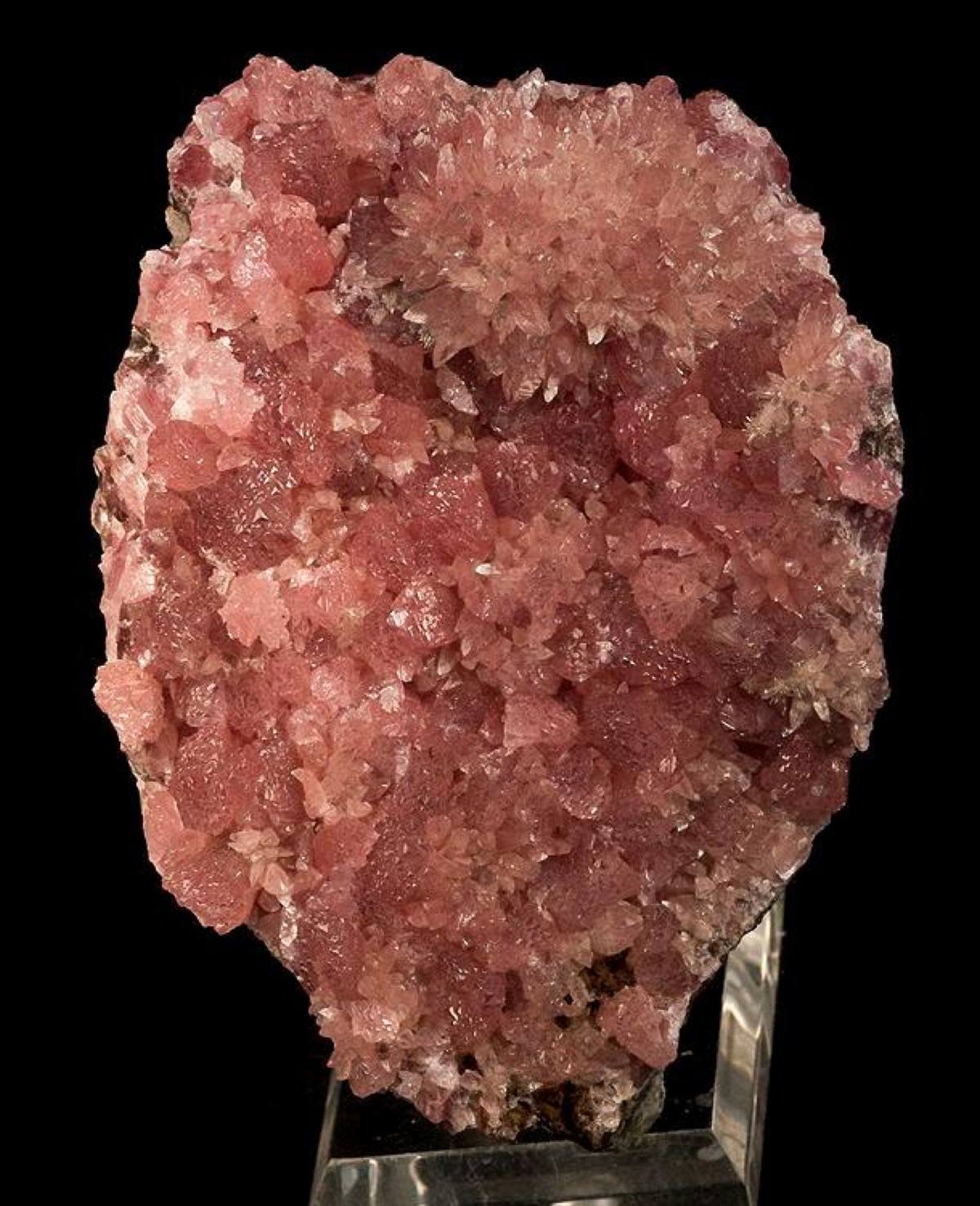
Quartz and Calcite photos
Where to find each
Bottom line
Scratches glass and ignores acid: quartz. Soft, fizzes in vinegar, and cleaves into rhombs: calcite. Either test alone is usually enough.
Common questions
What is the quickest way to tell quartz from calcite?+
Does calcite scratch glass?+
Why does my crystal fizz in vinegar?+
How do I tell clear calcite from clear quartz crystals?+
Identify your find in the field
RockHoundR maps rockhounding spots, shows land access, and lets you log and label every find so you stop second-guessing look-alikes.