Astrophyllite is highly sought by collectors for its stunning, star-shaped radiating crystal clusters known as stellate habits. It is typically found embedded in igneous rocks like nepheline syenite and exhibits a distinct golden-bronze luster that contrasts beautifully with its matrix.
Is this astrophyllite?
5-step field checkRun through these checks against the specimen in your hand. The more boxes tick, the more confident the ID.
- 1Test the hardnessTry to scratch astrophyllite with a known reference. Astrophyllite sits at Mohs 3, softer than the next harder reference, harder than the previous one.
- 2Check the streakDrag the specimen across an unglazed porcelain plate. Streak: golden.
- 3Read the lusterHold the specimen under a strong light. Luster: submetallic, pearly, greasy.
- 4Match the color rangeCompare against the expected color range: bronze, golden-yellow, brown, brownish red, bronze yellow, gold yellow.
- 5Look at form & habitCrystal system: triclinic. Typical habit: bladed, crystalline, stellate.
Often confused with
Astrophyllite vs. its common look-alikes, and how to tell them apart in the field.
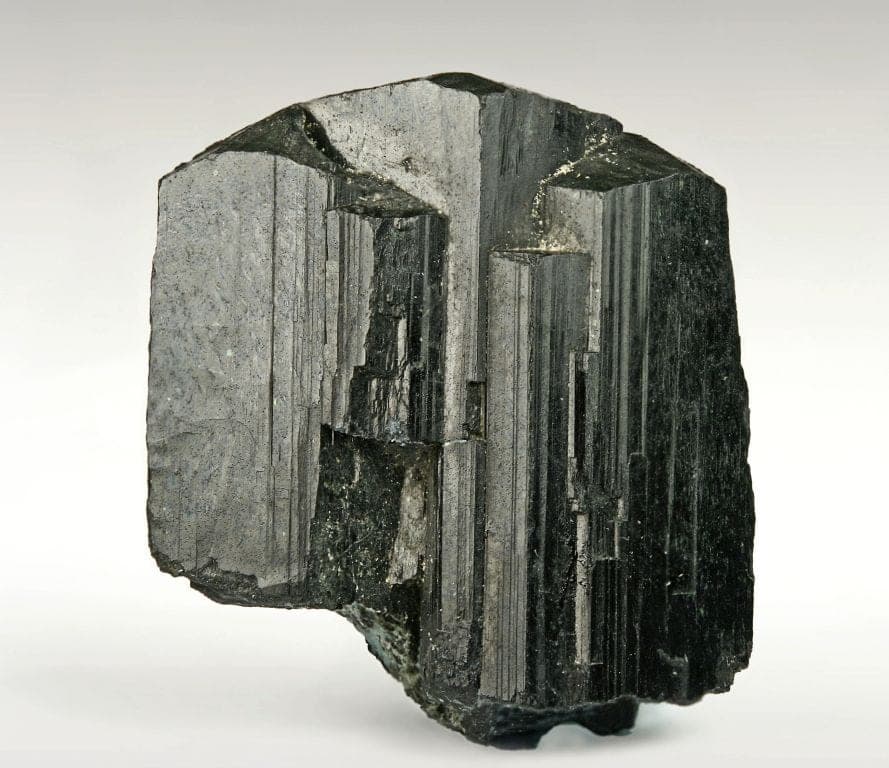
How to tell apart: Arfvedsonite is the harder of the two (Mohs 5-6 vs. 3); streak differs, so Astrophyllite leaves golden, Arfvedsonite leaves deep bluish gray, gray-green; luster reads submetallic, pearly, greasy on Astrophyllite and vitreous on Arfvedsonite.
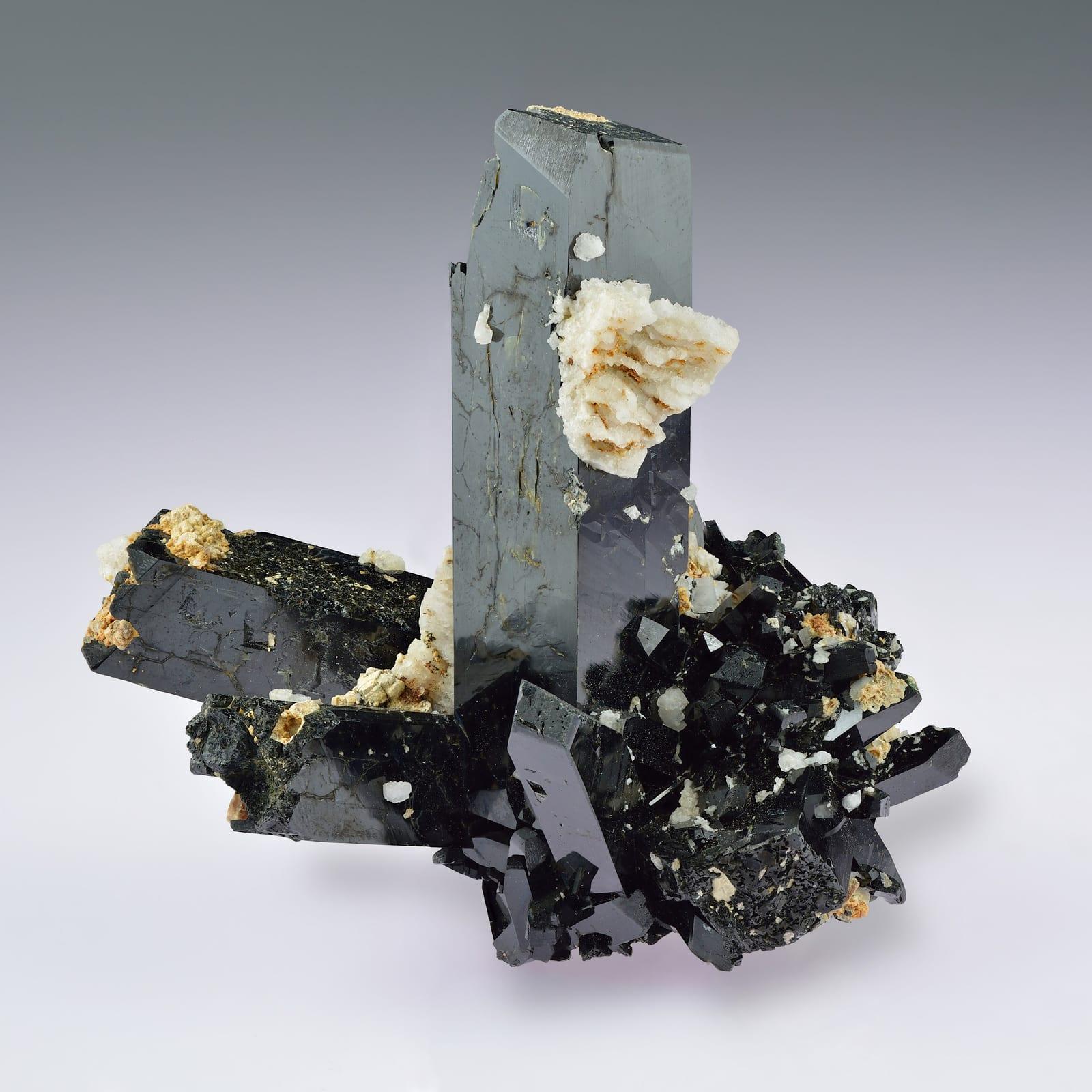
How to tell apart: Aegirine is the harder of the two (Mohs 6 vs. 3); streak differs, so Astrophyllite leaves golden, Aegirine leaves pale yellowish gray; luster reads submetallic, pearly, greasy on Astrophyllite and vitreous to slightly resinous on Aegirine.
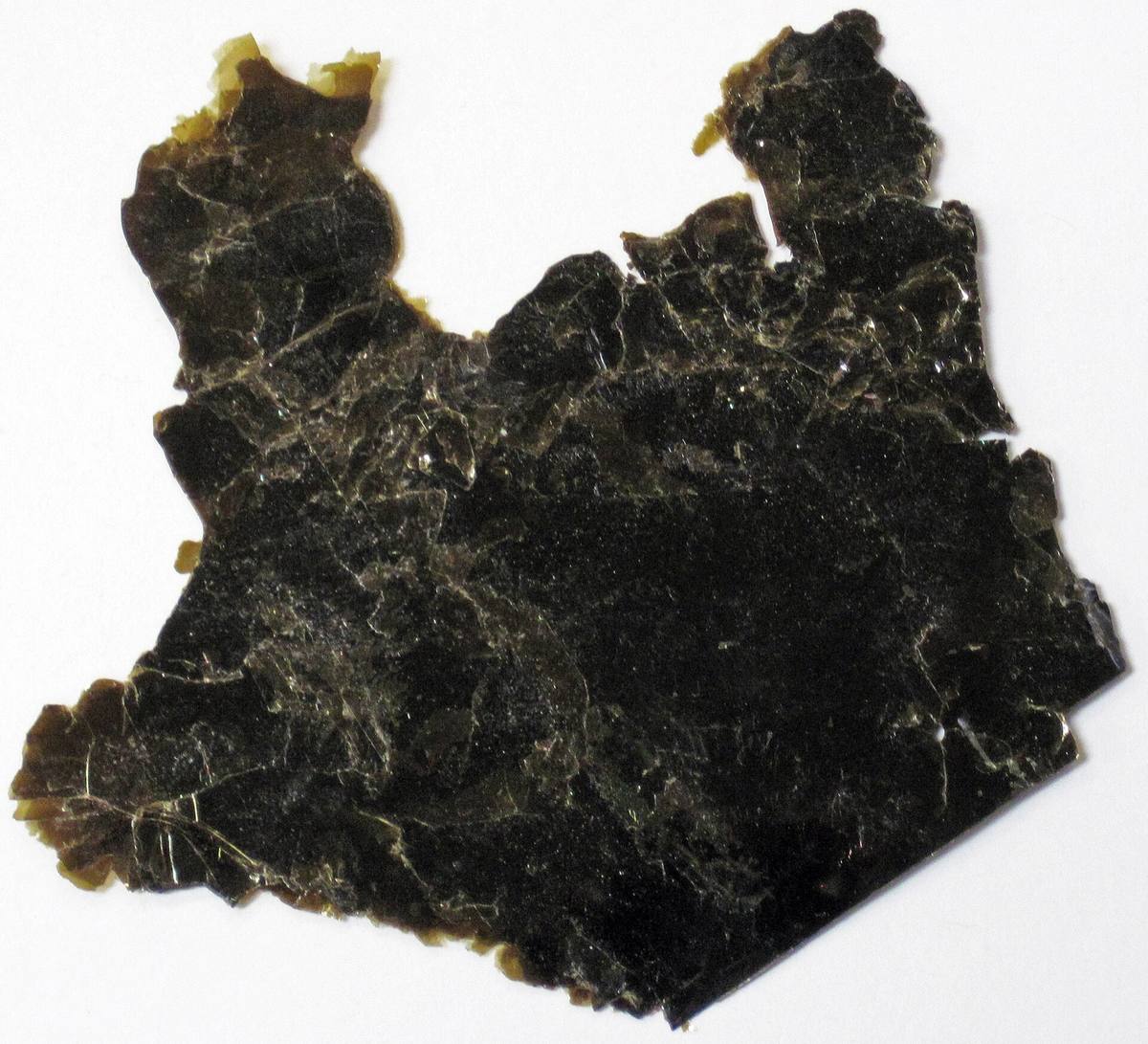
How to tell apart: Streak differs, so Astrophyllite leaves golden, Biotite leaves white; luster reads submetallic, pearly, greasy on Astrophyllite and splendent to submetallic, vitreous, pearly on cleavage on Biotite.
Often found alongside astrophyllite
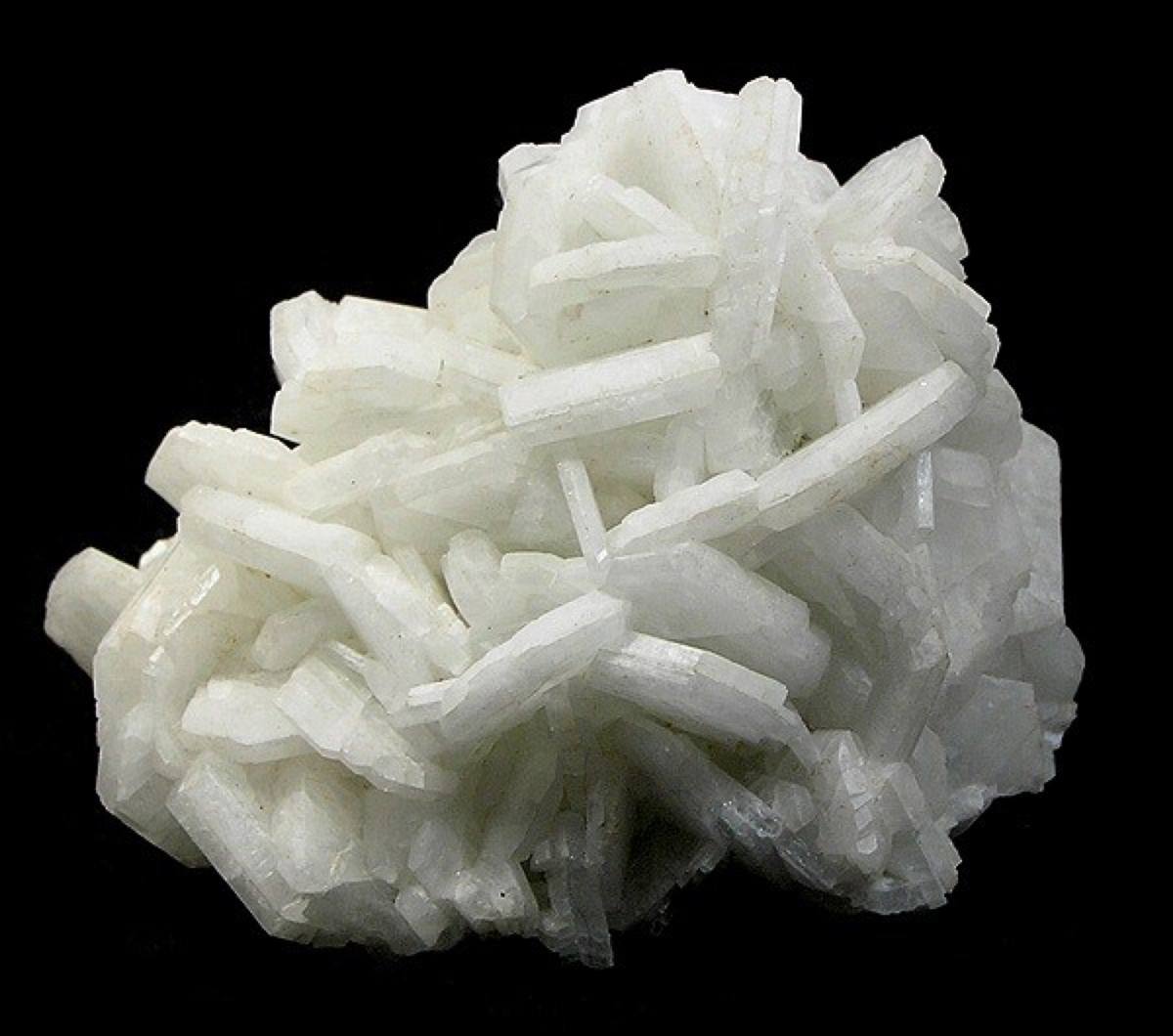
Minerals reported to co-occur with astrophyllite. Spotting these in float or country rock is a strong cue you are in the right ground.
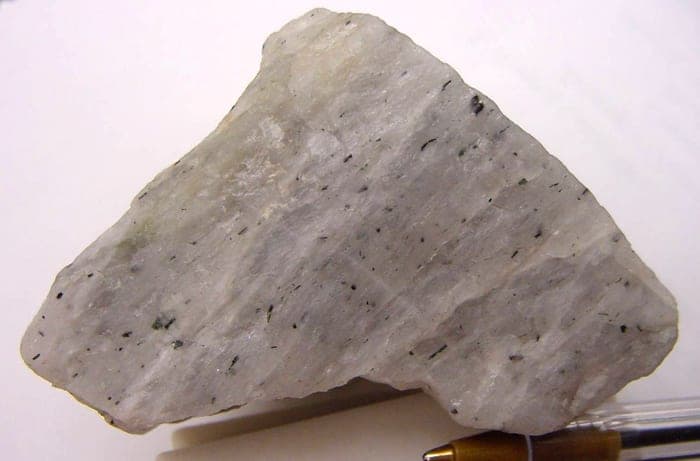
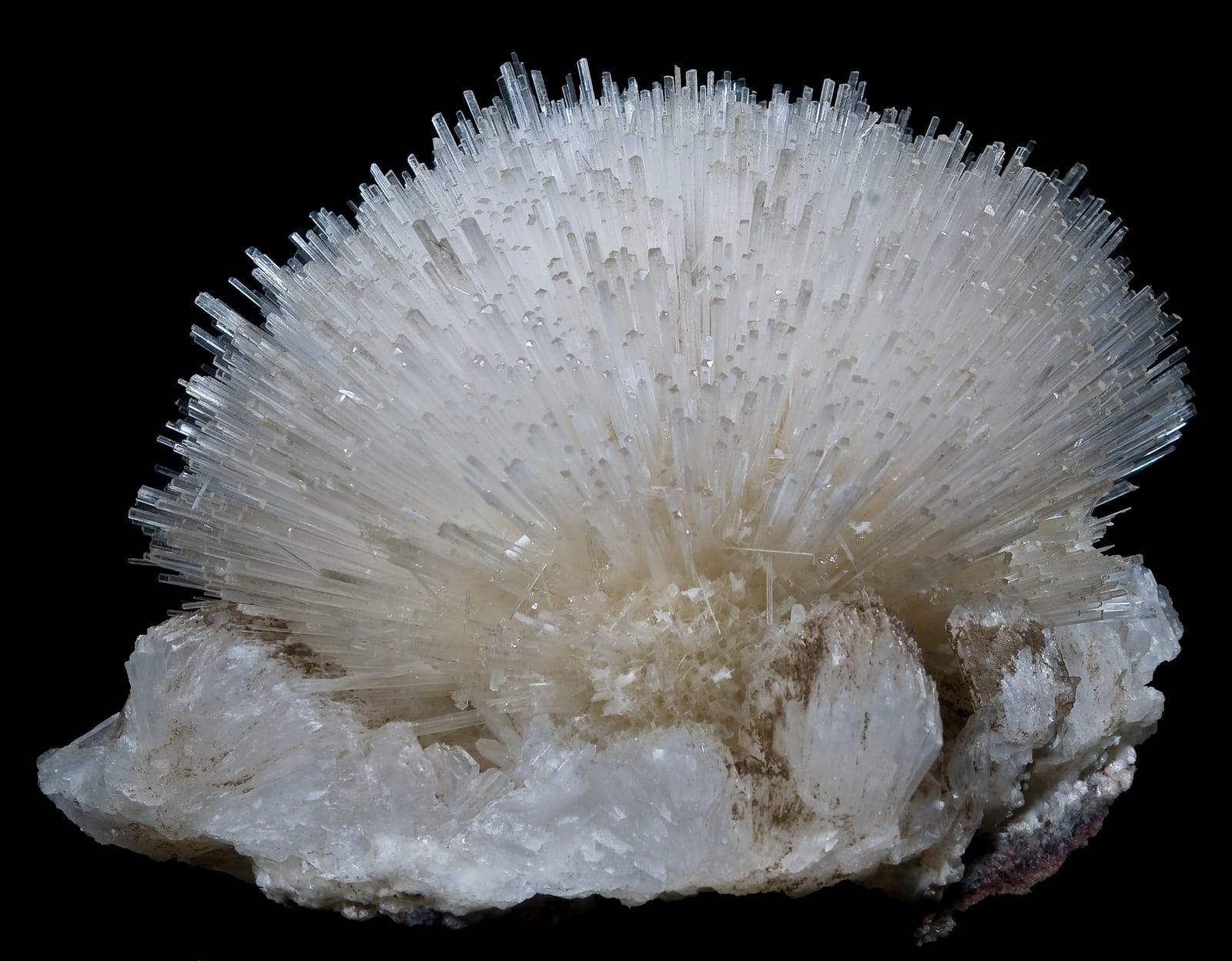
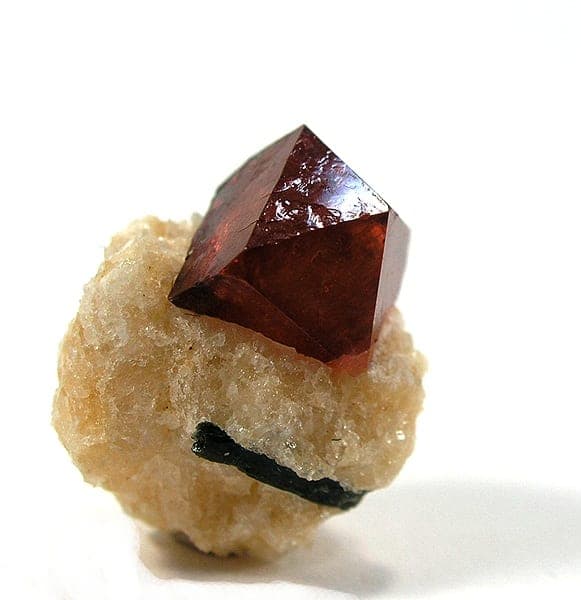
All properties
- Chemical formula
- K₂NaFe₇Ti₂(Si₄O₁₂)₂O₂(OH)₄F
- Mohs hardness
- 3
- Density
- 3.2-3.4 g/cm³
- Colors
- Streak
- Golden
- Luster
- Submetallic, pearly, greasy
- Transparency
- Opaque to translucent in thin leaves
- Crystal system
- Triclinic
- Crystal habit
- Bladed, crystalline, stellate
- Cleavage
- Perfect on {001}, poor on {100}
- Rarity
- Uncommon
- Uses
- Collector, Lapidary
- Host rock
- In nepheline syenites, alkali granites, and their pegmatites; less commonly in fenites and other metasomatized rocks; in nepheline syenite gneisses and paragneisses
Where rockhounds find astrophyllite
Classic worldwide localities
- Colorado, at St. Peters Dome, near Pikes Peak, El Paso Co., and in Maine, near Biddeford, York Co., USA
- Låven Island and near Brevik, Langesundsfjord, Norway
- South of La Guia, and at Monte Galiñeiro, Vigo, Pontevedra Province, Spain
- Mont Saint-Hilaire, Quebec, and the Red Wine complex, Labrador, Newfoundland, Canada
- Rouma Isle, Los Islands, Guinea
- Pilansberg, Transvaal, South Africa
Field-hunting tip
Where it forms: In nepheline syenites, alkali granites, and their pegmatites; less commonly in fenites and other metasomatized rocks; in nepheline syenite gneisses and paragneisses. If you start seeing albite, aegirine, arfvedsonite in float, you are in the right ground. Typical habit: bladed, crystalline, stellate. Train your eye for that shape before scanning the outcrop.
Common questions
How do you identify astrophyllite?+
Where is astrophyllite found?+
What rocks look like astrophyllite?+
What minerals are found with astrophyllite?+
What kind of rock does astrophyllite form in?+
What is astrophyllite used for?+
Find astrophyllite on the map
RockHoundR shows mapped rockhounding spots, access rules, and lets you log every find.