
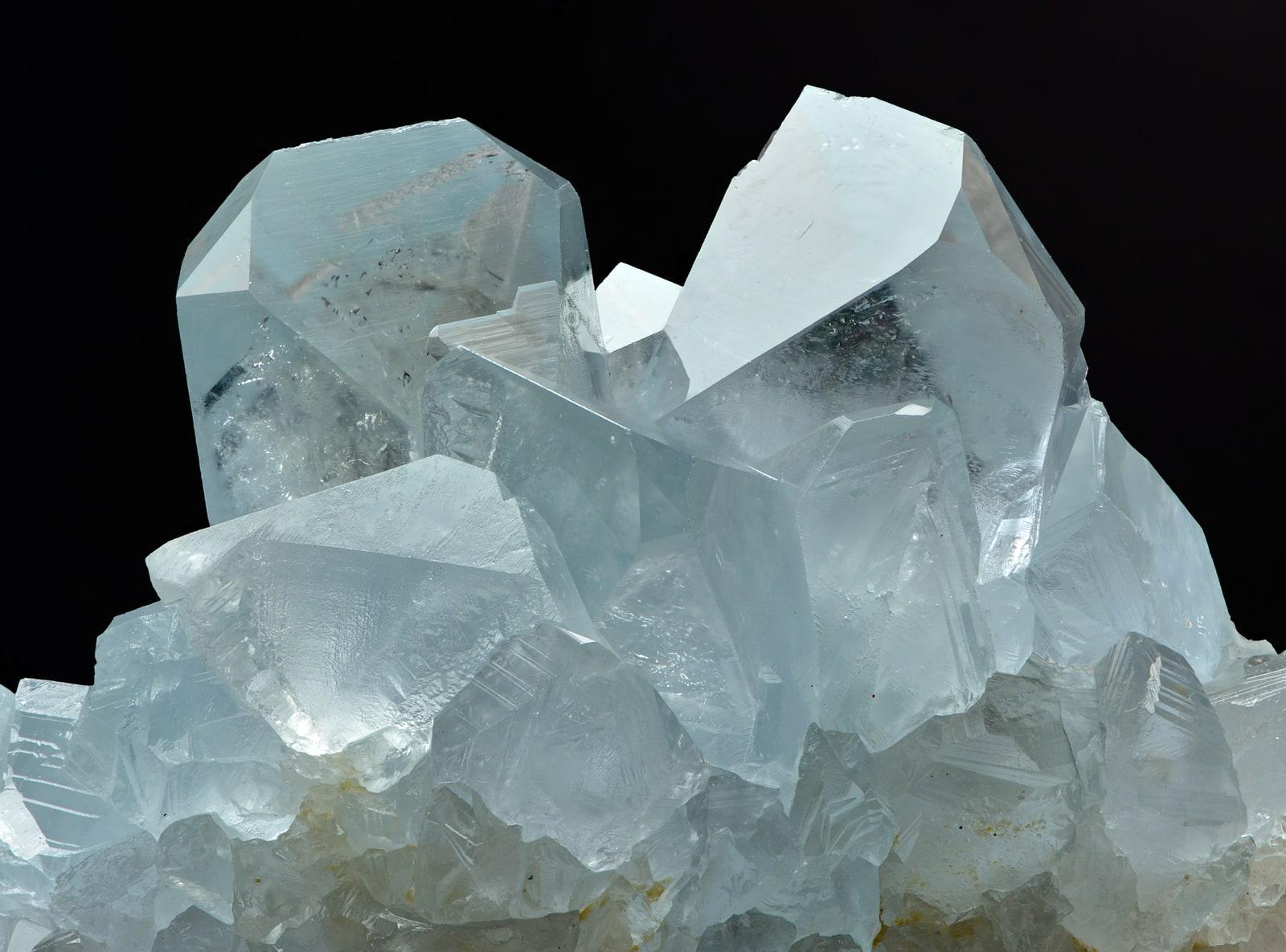
Celestine is a strontium sulfate mineral best known for its stunning, pale sky-blue crystals found in sedimentary vugs and geodes. Collectors typically look for its characteristic orthorhombic tabular habits, often associated with calcitic or dolomitic matrix.
Spotting celestine in the field
Field marks- 1
Pale sky blue, though often colorless or white, in tabular or prismatic crystals
- 2
Heavy for a pale mineral, though slightly less so than barite
- 3
Soft at 3 to 3.5, with good cleavage, and gives a crimson flame test
Celestine (also sold as celestite) is strontium sulfate, the barite twin, and the two are genuinely difficult to separate by eye. The flame test resolves it: strontium burns crimson, barium burns green. It forms in sedimentary rock, especially in limestone and evaporite settings, and geodes lined with pale blue celestine from Madagascar are among the most widely sold mineral specimens in the world. Clay Center in Ohio produced the famous American crystals.
Straight answers
- Is it worth cutting?
- Too soft and too fragile to cut. A display mineral.
- What is it really worth?
- Inexpensive, since Madagascar geodes are abundant. Large well-formed American crystals are collectible.
- Can you legally keep it?
- Ordinary personal-use collecting rules apply. The Ohio localities are private quarries.
Often confused with
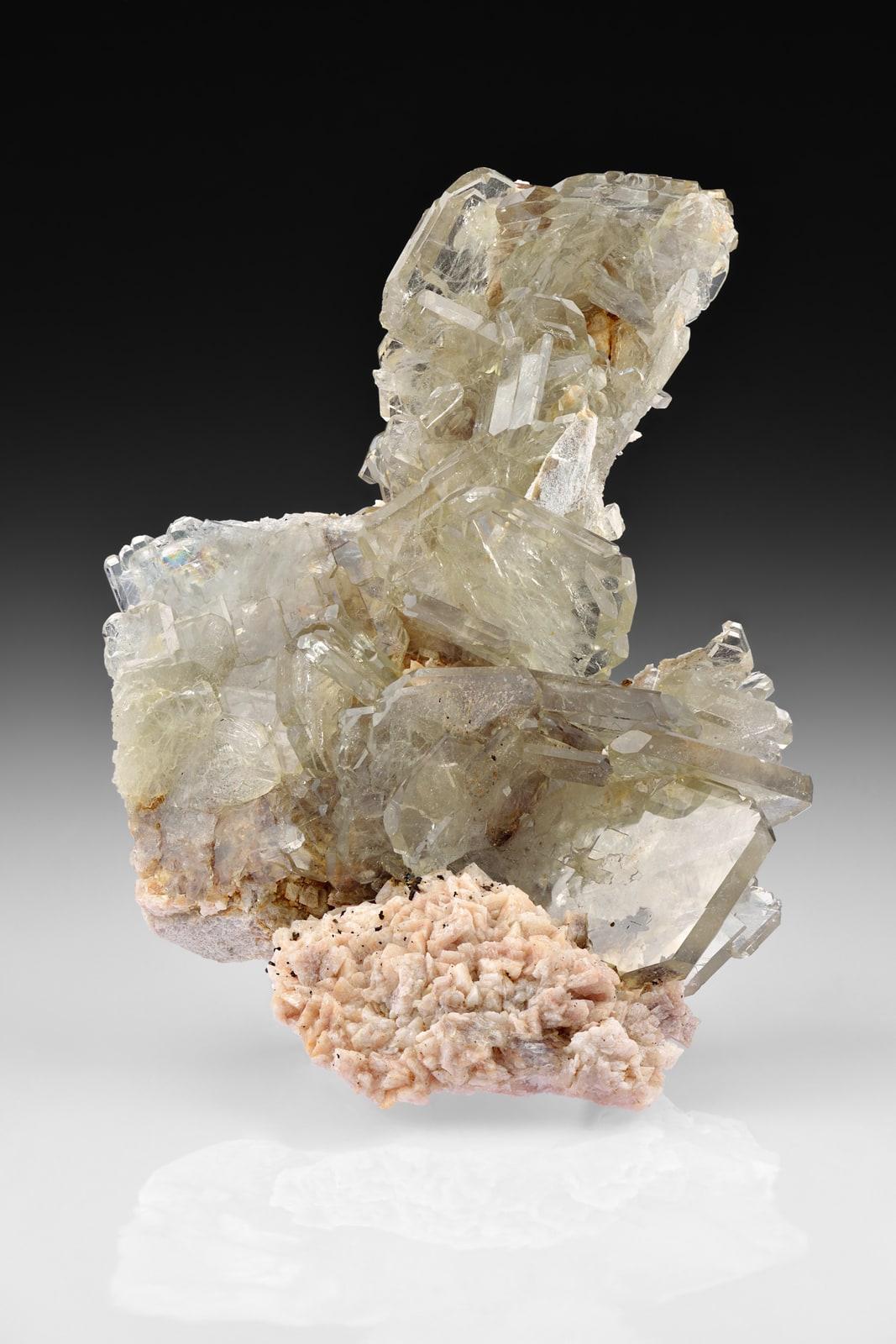
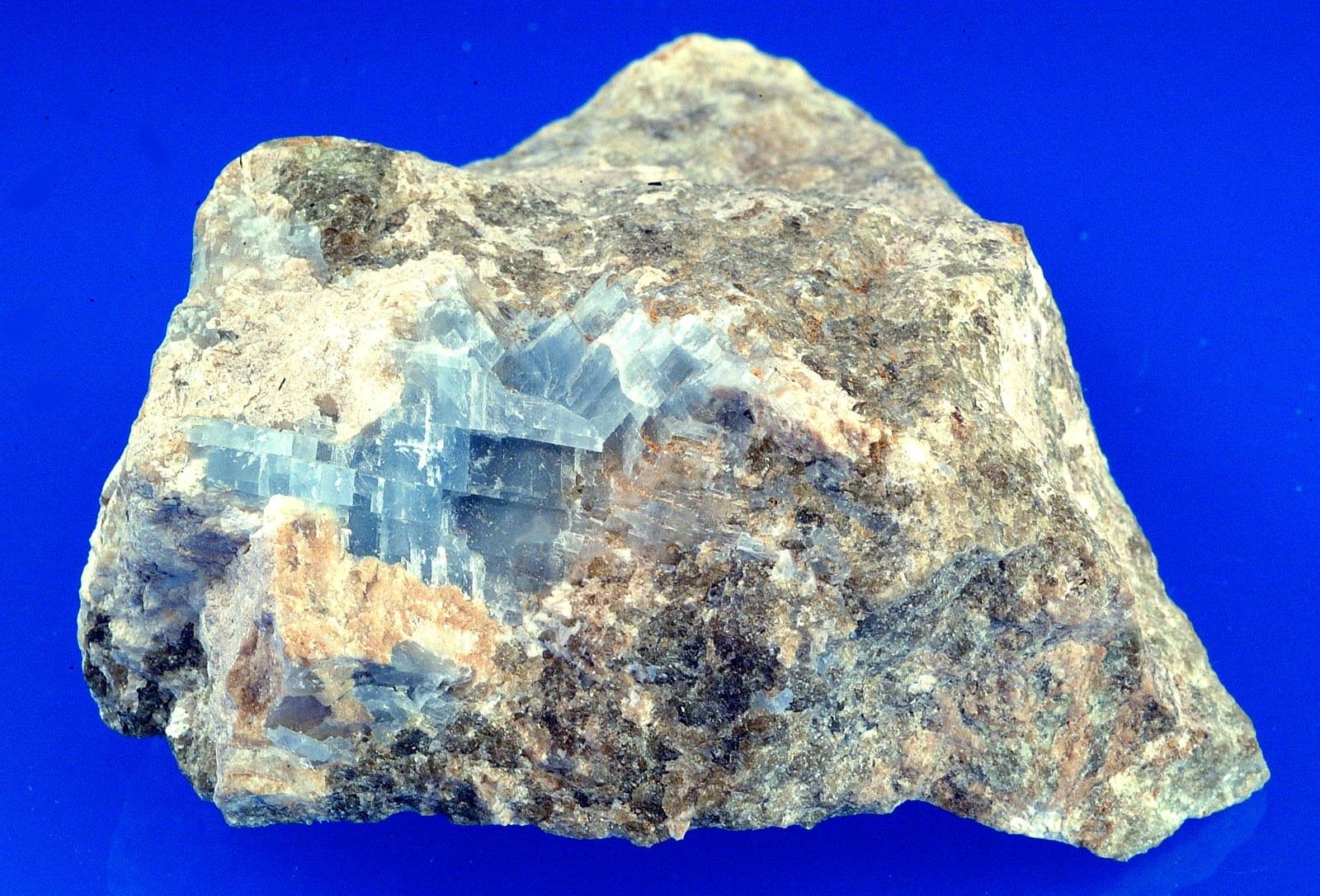
Celestine vs. its common look-alikes, and how to tell them apart in the field.
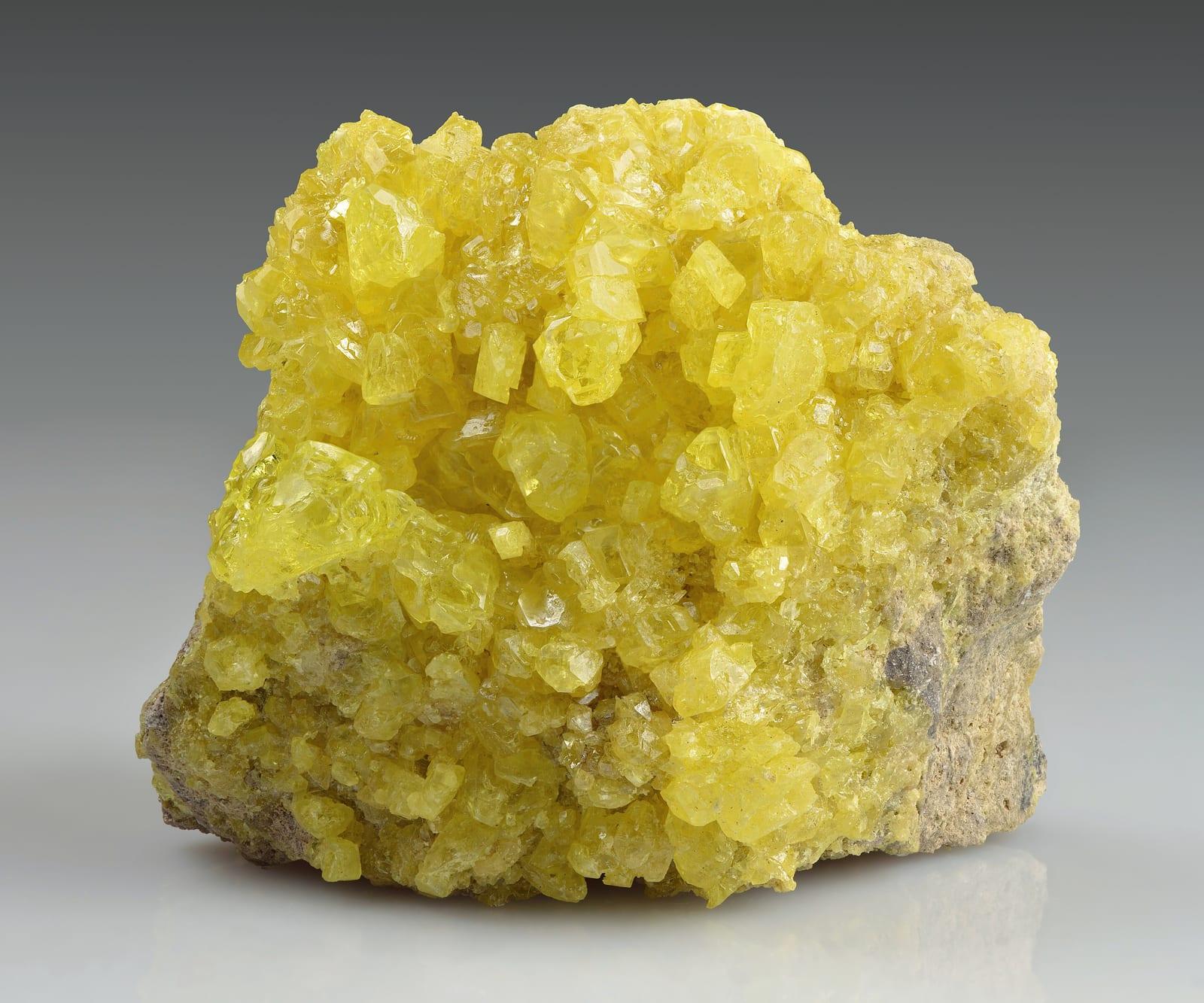
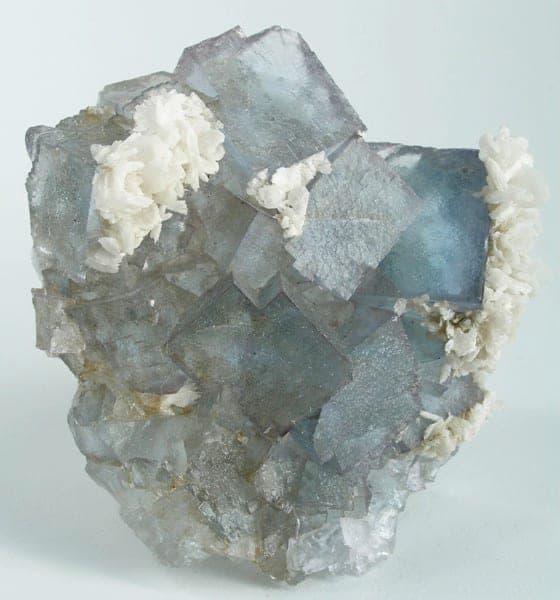
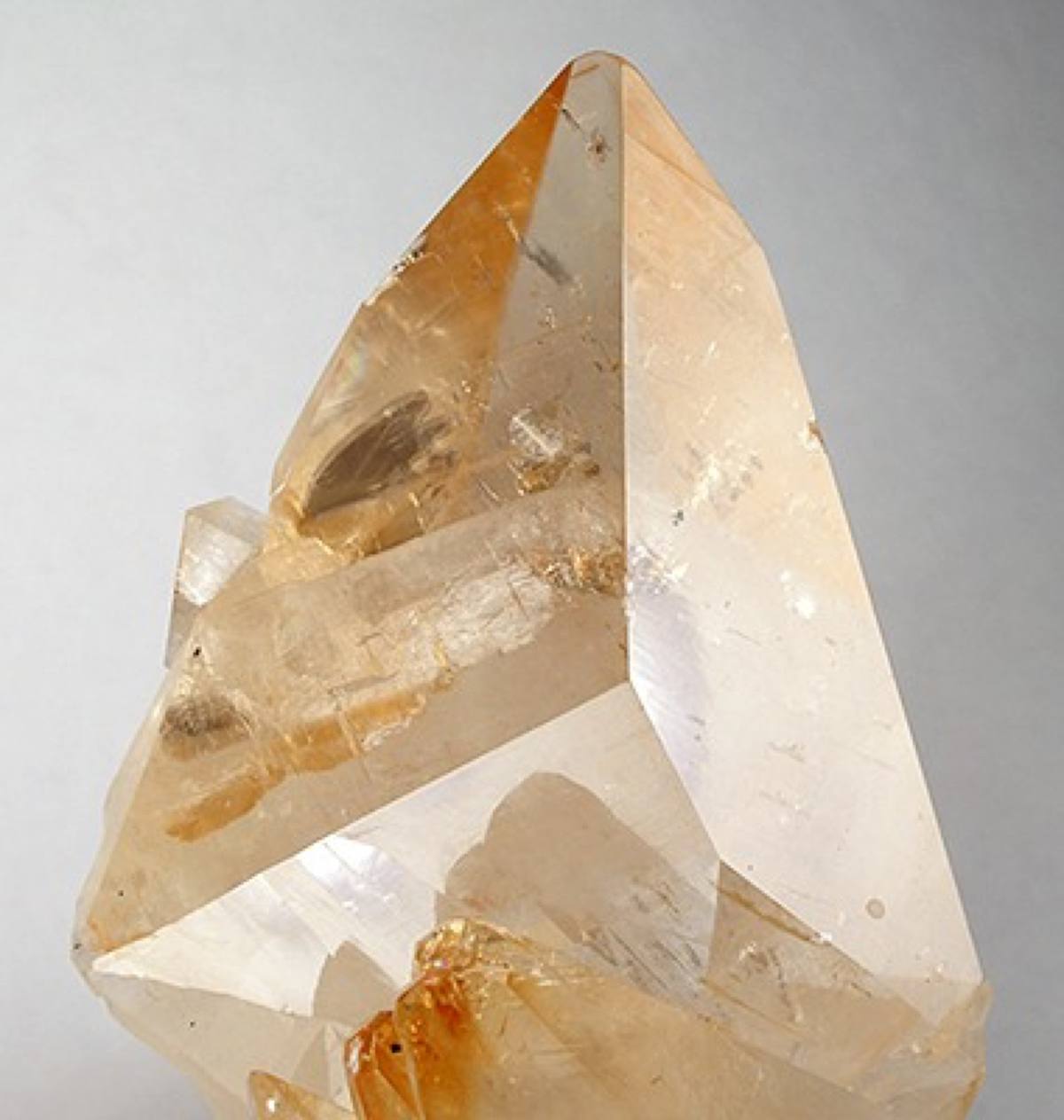
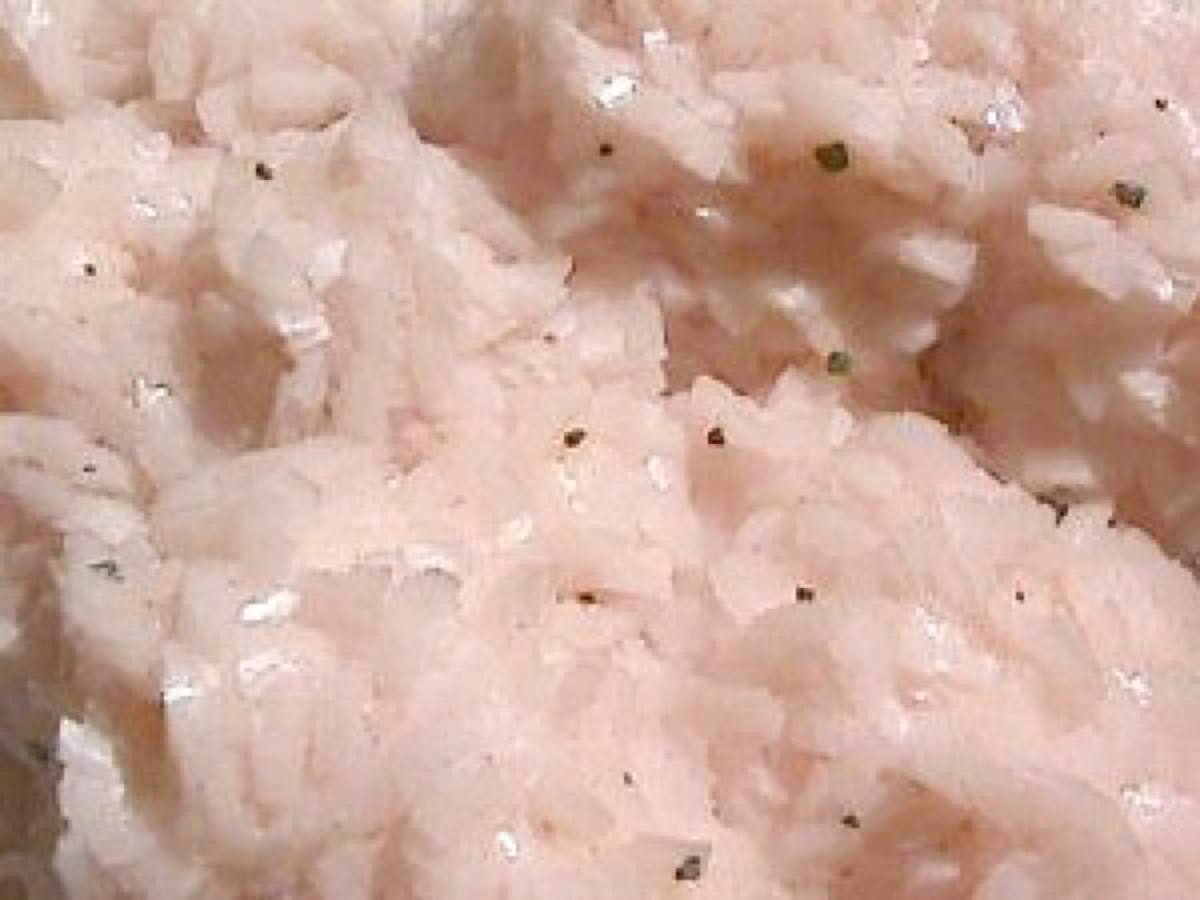
Often found alongside celestine
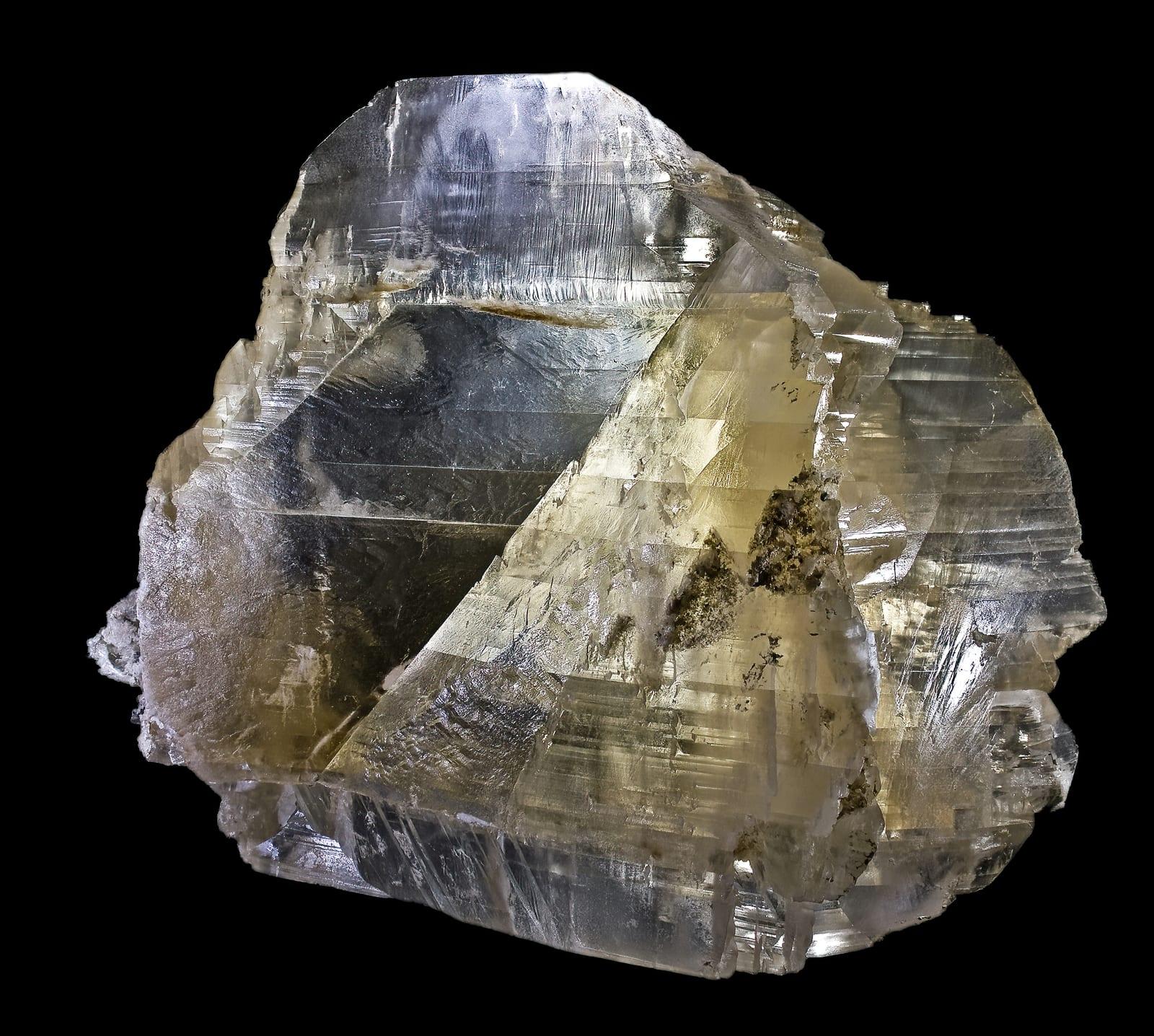
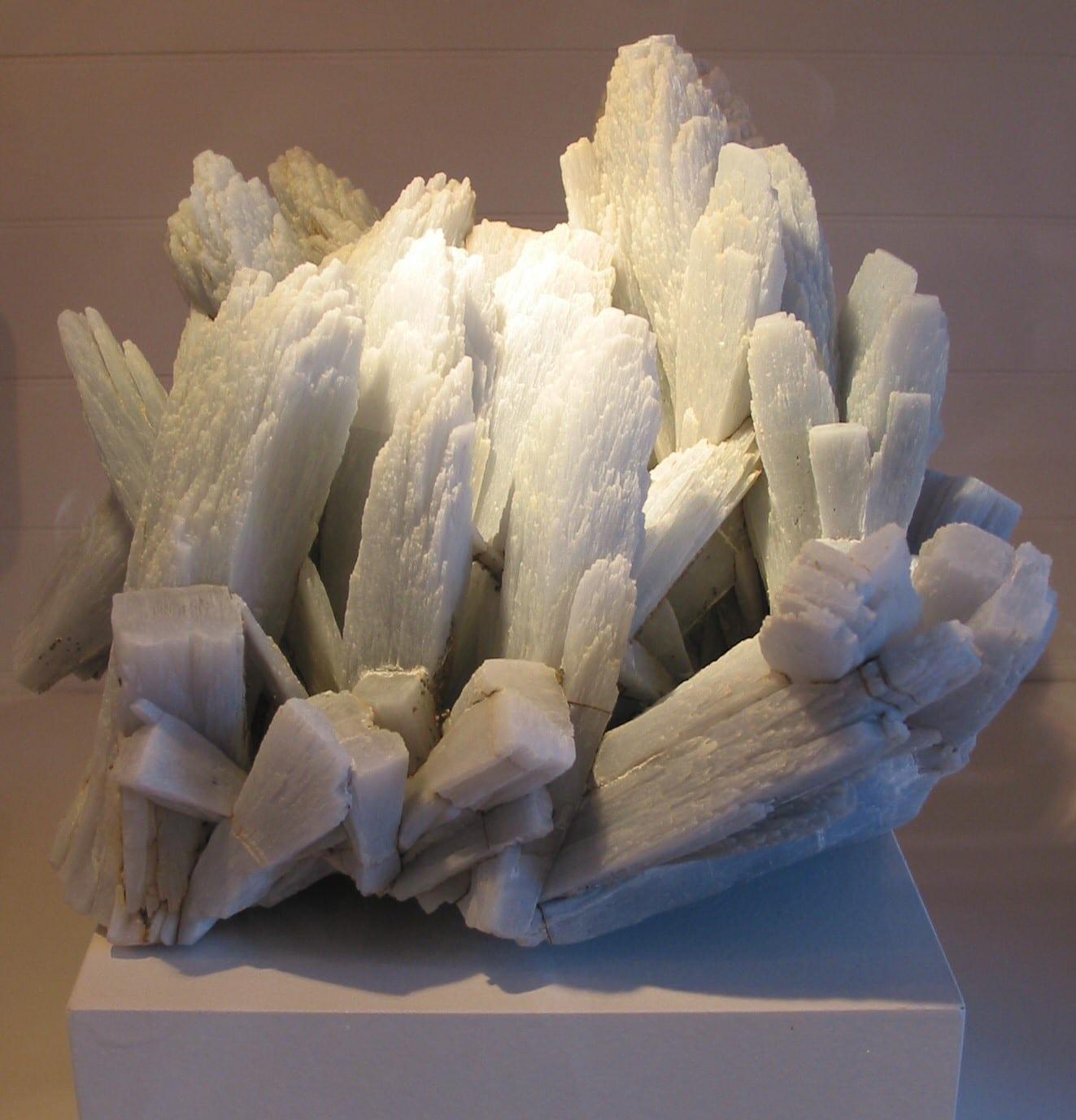
Minerals reported to co-occur with celestine. Spotting these in float or country rock is a strong cue you are in the right ground.
All properties
- Chemical formula
- SrSO₄
- Mohs hardness
- 3-3.5
- Density
- 3.97 g/cm³
- Streak
- White
- Luster
- Vitreous, pearly on cleavages
- Transparency
- Transparent to translucent
- Crystal system
- Orthorhombic
- Crystal habit
- Tabular, prismatic, or pyramidal crystals, often in geodes
- Cleavage
- On {001}, perfect; on {210}, good; on {010}, poor
- Fluorescence
- Yellow under SW and LW UV
- Rarity
- Common
- Uses
- Collector, Decorative, Industrial source of strontium
- Host rock
- Sedimentary rocks
Where rockhounds find celestine
3 mapped spotsClassic worldwide localities
- Crystal Cave, Put-in-Bay, South Bass Island, and at Clay Center, Ottawa Co., Ohio, USA
- Cave-in-Rock, Hardin Co., Illinois, USA
- Scofield quarry, Maybee, Monroe Co., Michigan, USA
- Adamsville, Lampasas Co., Texas, USA
- Near Bellwood, Blair Co., Pennsylvania, USA
- Dundas, Ontario, Canada
Field-hunting tip
Where it forms: Sedimentary rocks. If you start seeing gypsum, anhydrite, sulfur in float, you are in the right ground. Typical habit: tabular, prismatic, or pyramidal crystals, often in geodes. Train your eye for that shape before scanning the outcrop. In the U.S., the densest reported localities are in Connecticut, Pennsylvania, Wisconsin. Start trip planning there.
More celestine photos
Common questions
How do you identify celestine?+
Where is celestine found?+
Can I find celestine in the United States?+
What rocks look like celestine?+
What minerals are found with celestine?+
What kind of rock does celestine form in?+
What is celestine used for?+
Find celestine on the map
RockHoundR shows mapped rockhounding spots, access rules, and lets you log every find.

