
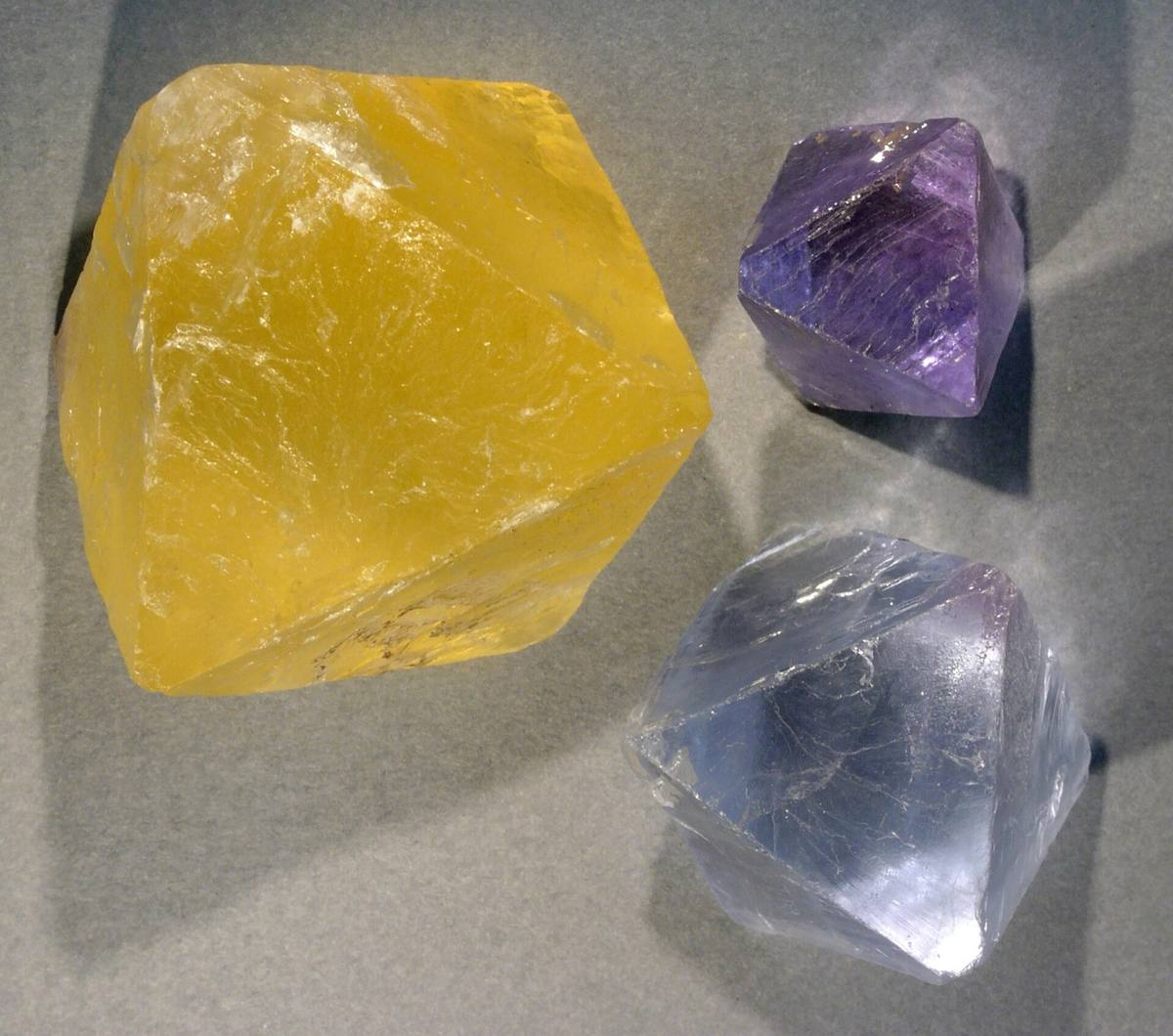
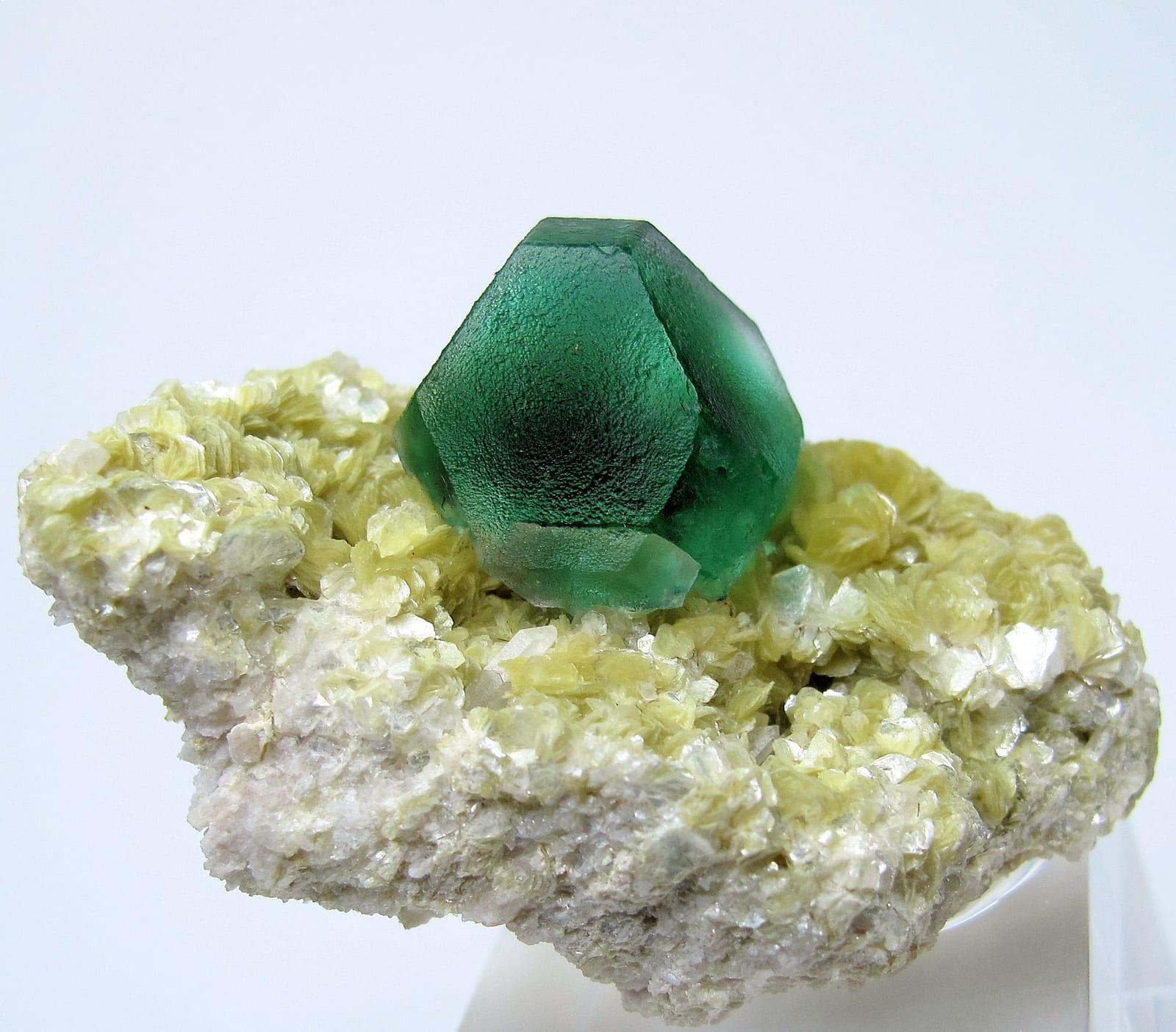
Fluorite is prized by collectors for its stunning range of vibrant colors and well-defined cubic or octahedral crystals. It is easily identified by its perfect octahedral cleavage and relative softness, making it a staple in any mineral collection.
Spotting fluorite in the field
Field marks- 1
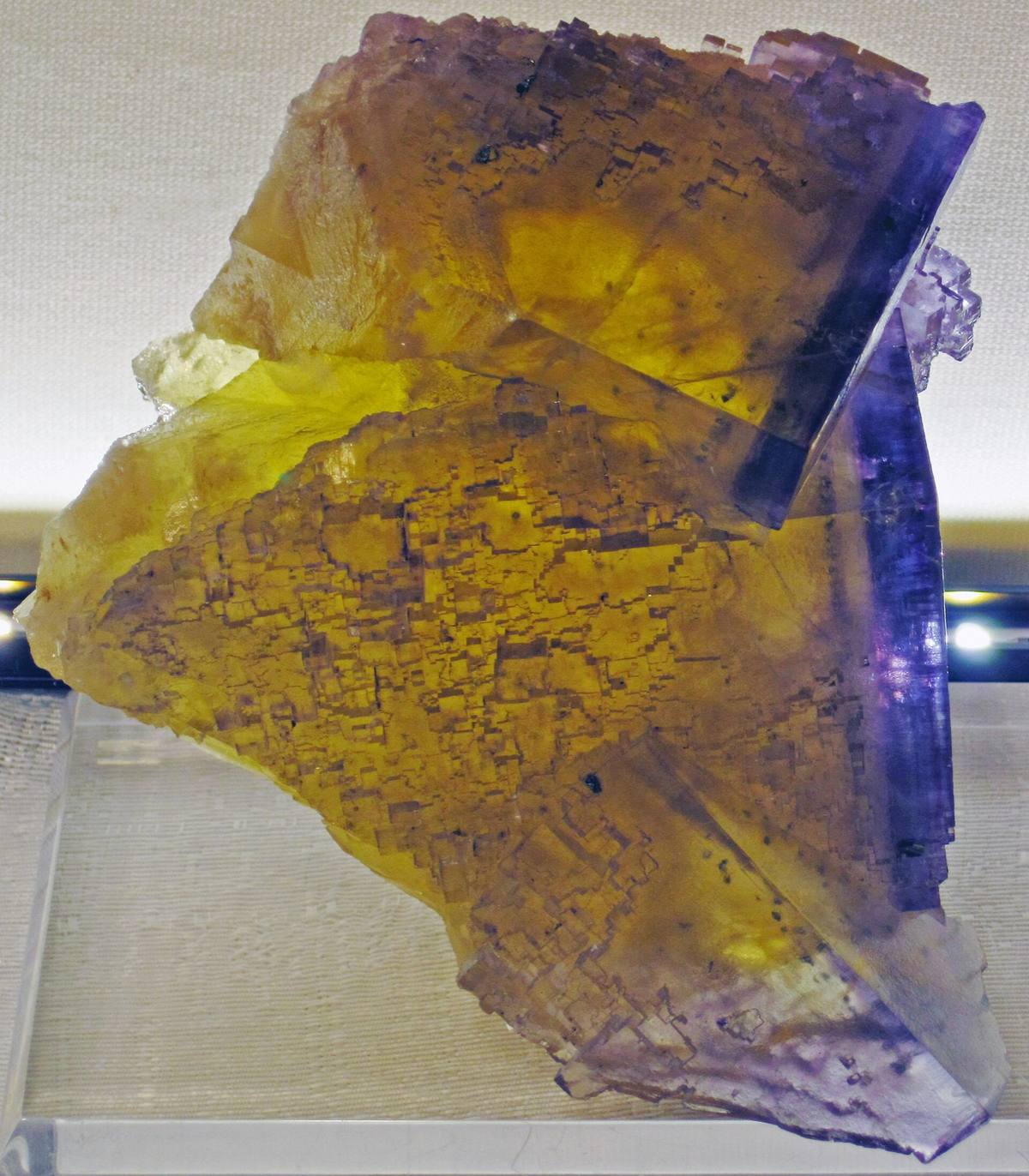
Cubes, and often cubes stacked on cubes, in purple, green, blue or yellow
- 2
Four perfect cleavage directions, so broken corners come away as neat triangles
- 3
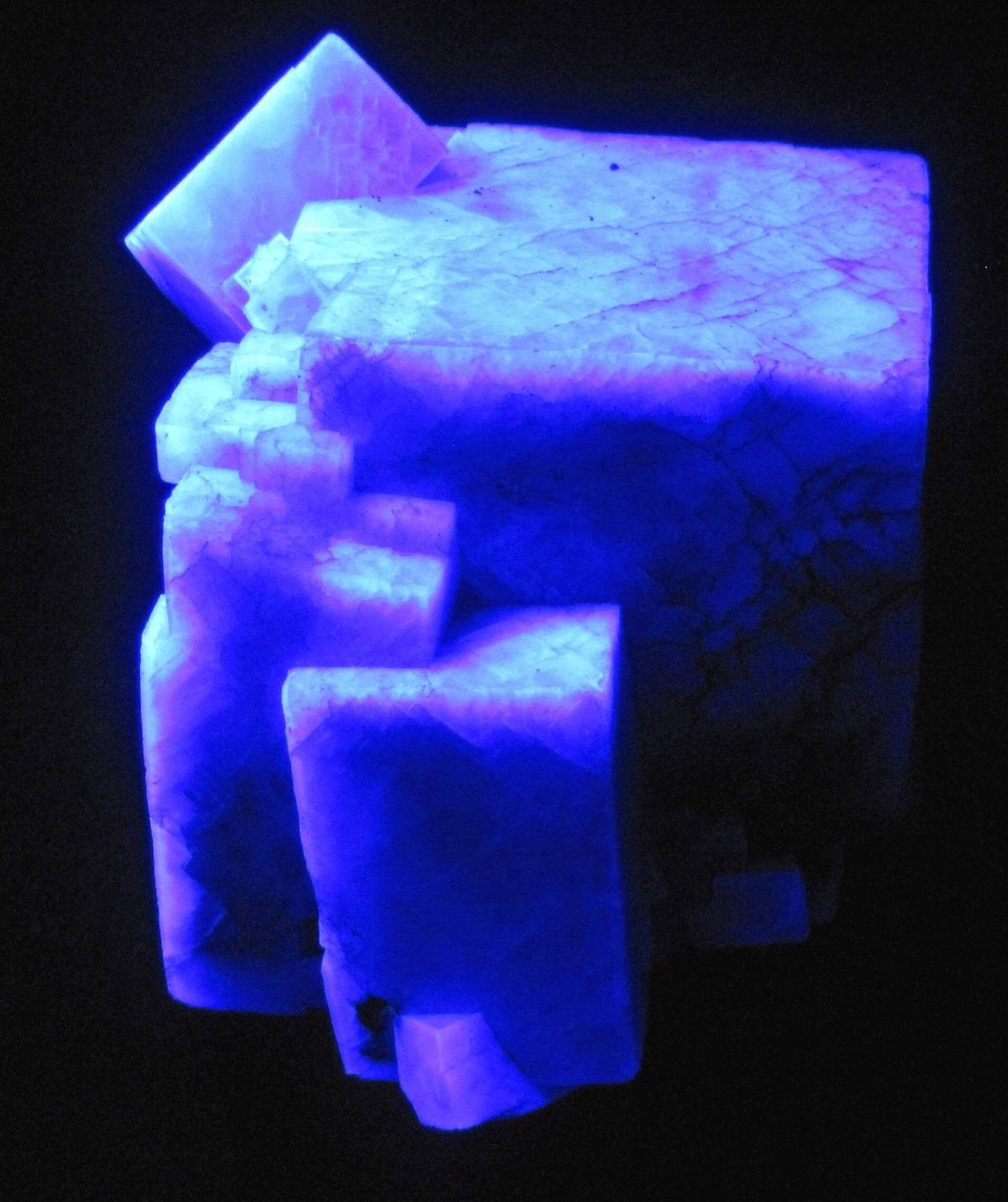
Soft at 4, so a knife marks it easily, and many specimens glow under ultraviolet light
Cubes plus softness settles it. If it forms cubes and a steel point marks it, it is fluorite rather than quartz, and the octahedral cleavage means damaged corners break off as little pyramids rather than chipping randomly. It occurs in hydrothermal veins and in limestone, and the Illinois-Kentucky district around Cave in Rock and Marion produced the finest American material. Fluorite gave fluorescence its name, so a UV light is worth carrying, though not every specimen glows.
Straight answers
- Is it worth cutting?
- Too soft and too cleavable for jewelry that gets worn. It is carved and cut as display pieces, and Blue John from Derbyshire is the famous banded ornamental variety.
- What is it really worth?
- Inexpensive as material. Sharp lustrous crystal groups, unusual colors and strong fluorescence are the collector value, and Illinois specimens have a following.
- Can you legally keep it?
- The Illinois-Kentucky mines are closed as commercial operations, but there are established fee-dig opportunities and a museum-run collecting site in the district.
Where it is worth going
- Illinois-Kentucky fluorspar districtAround Cave in Rock, Illinois and Marion, Kentucky
Fluorite is the Illinois state mineral. Mines are closed, but organized fee digging on dumps is available.
Often confused with
Fluorite vs. its common look-alikes, and how to tell them apart in the field.
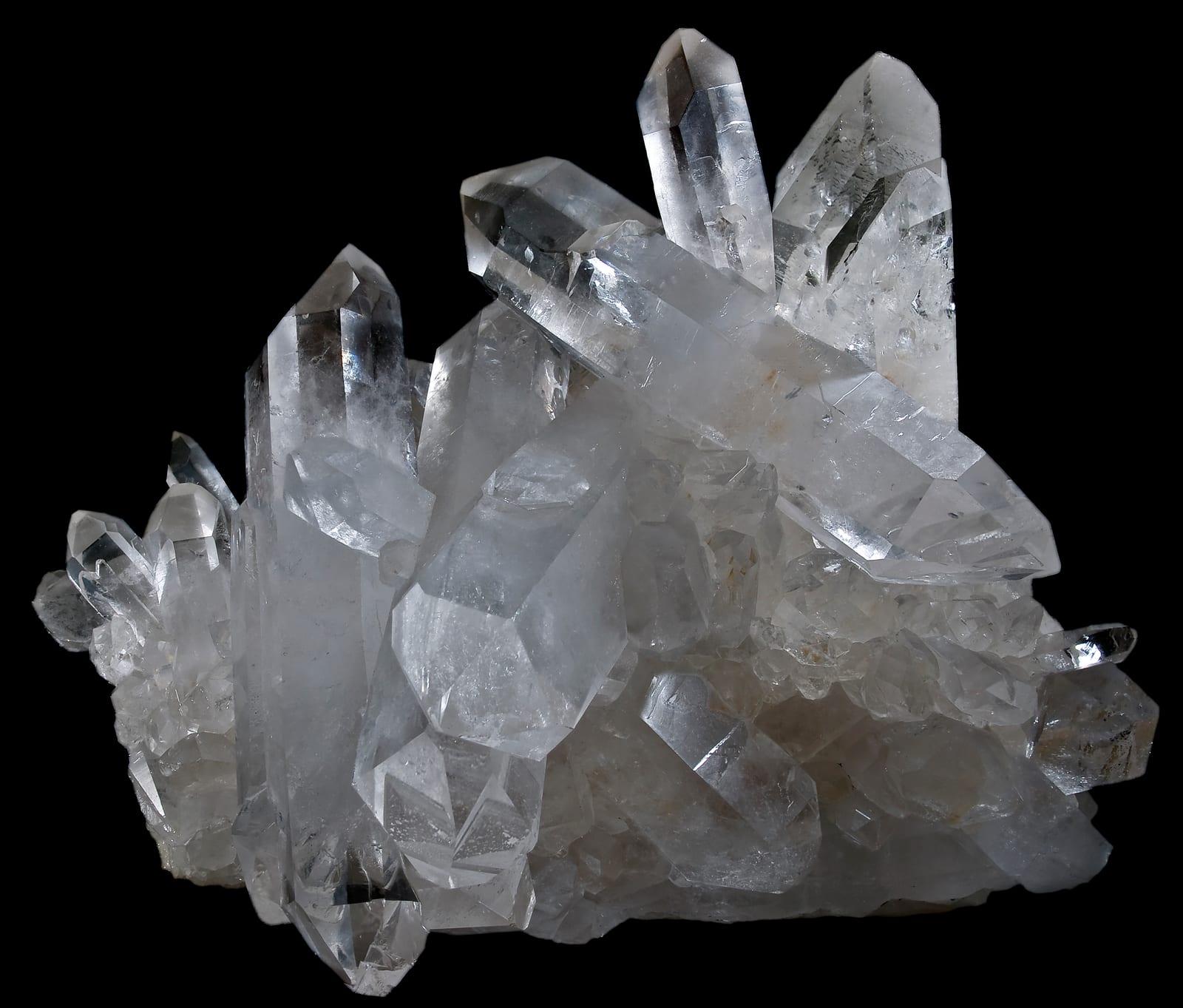
How to tell apart: Quartz forms six-sided prisms, is hardness 7 and has no cleavage. Fluorite forms cubes, is hardness 4 and cleaves perfectly.
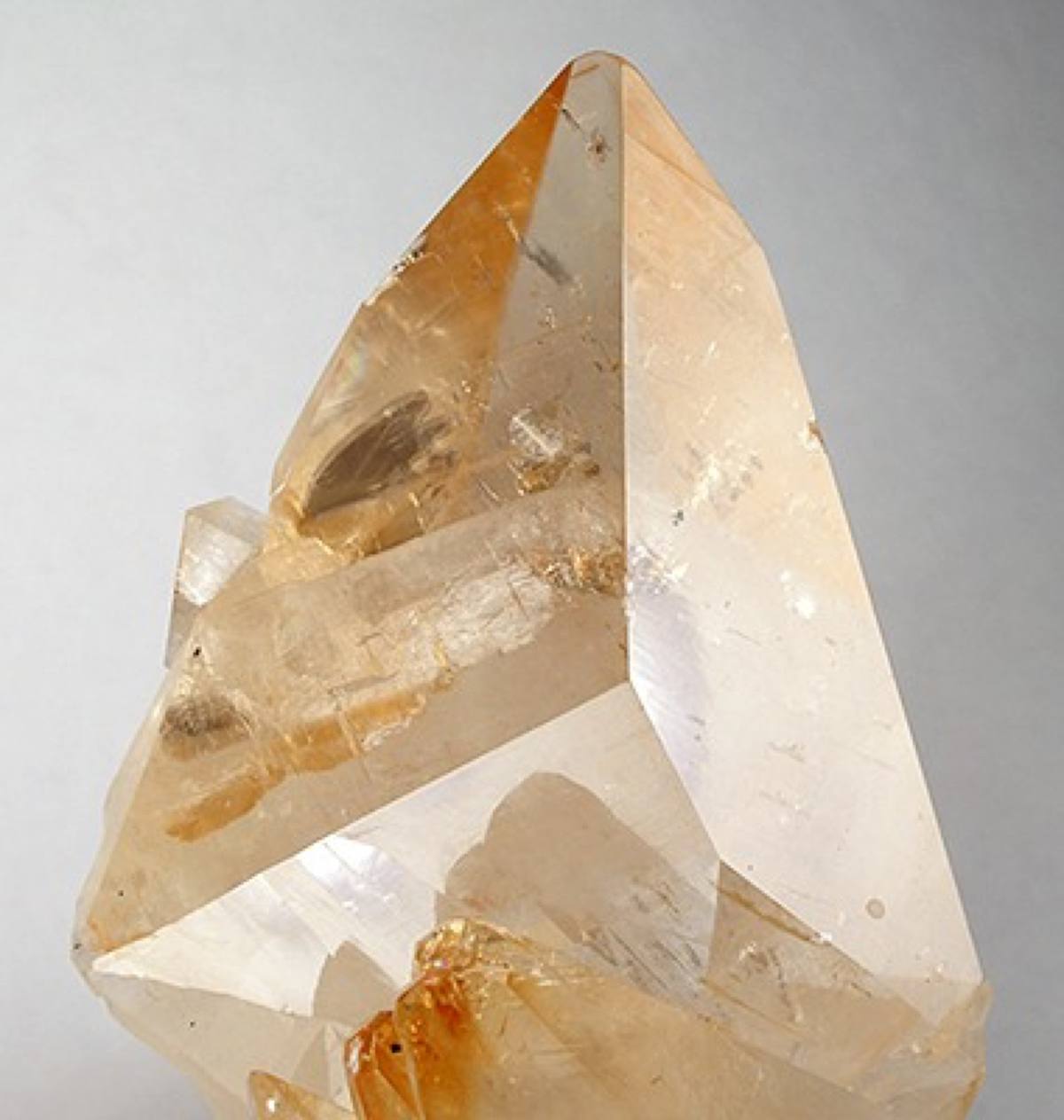
How to tell apart: Calcite is softer at 3, cleaves into rhombs rather than octahedra, and fizzes in dilute acid. Fluorite does not fizz.
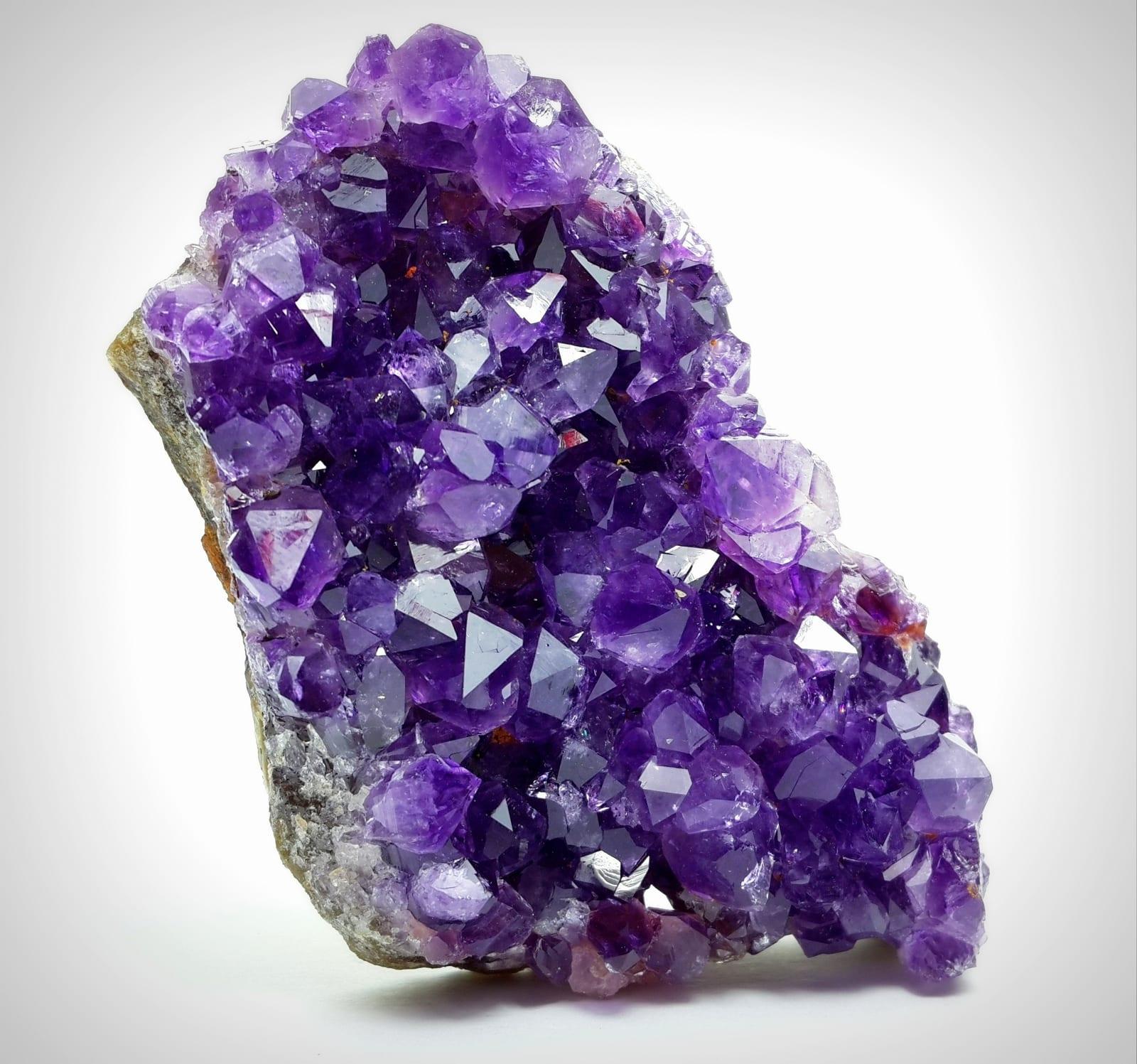
How to tell apart: Purple fluorite is often mistaken for amethyst. Hardness and cleavage separate them instantly.
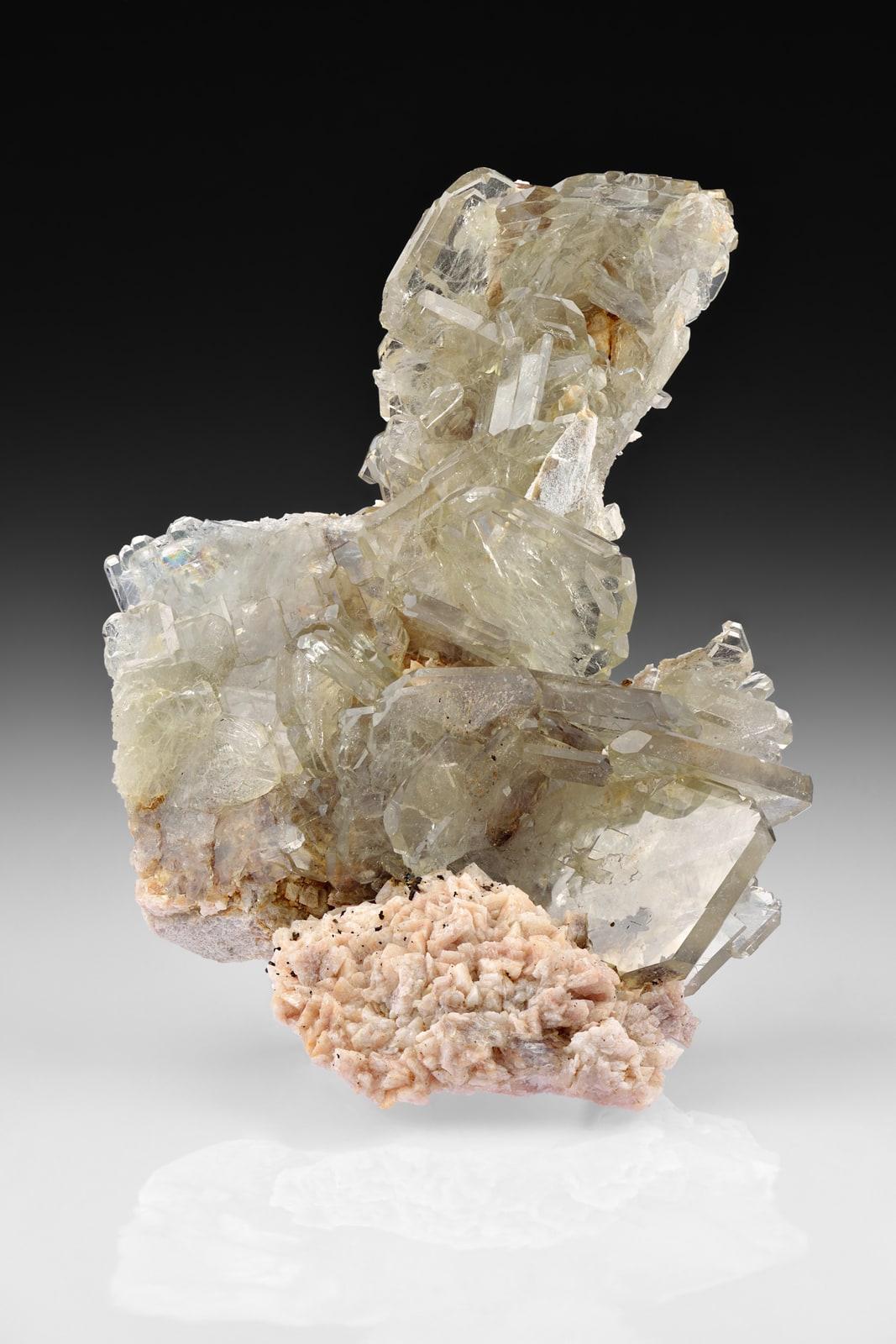
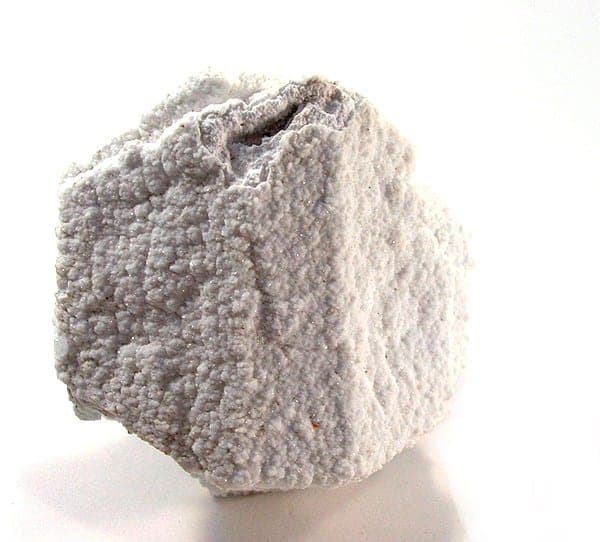
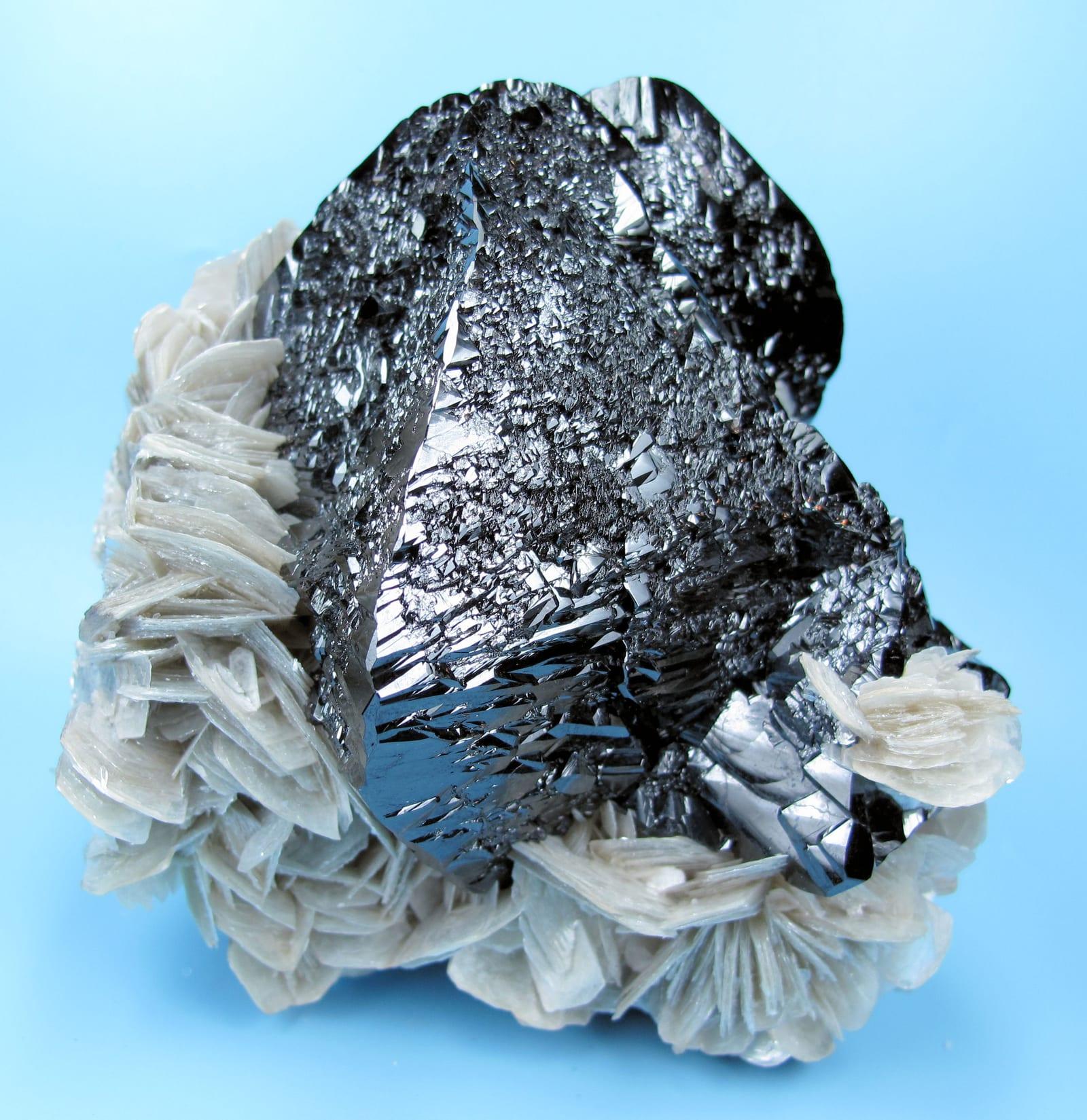
Often found alongside fluorite
Minerals reported to co-occur with fluorite. Spotting these in float or country rock is a strong cue you are in the right ground.
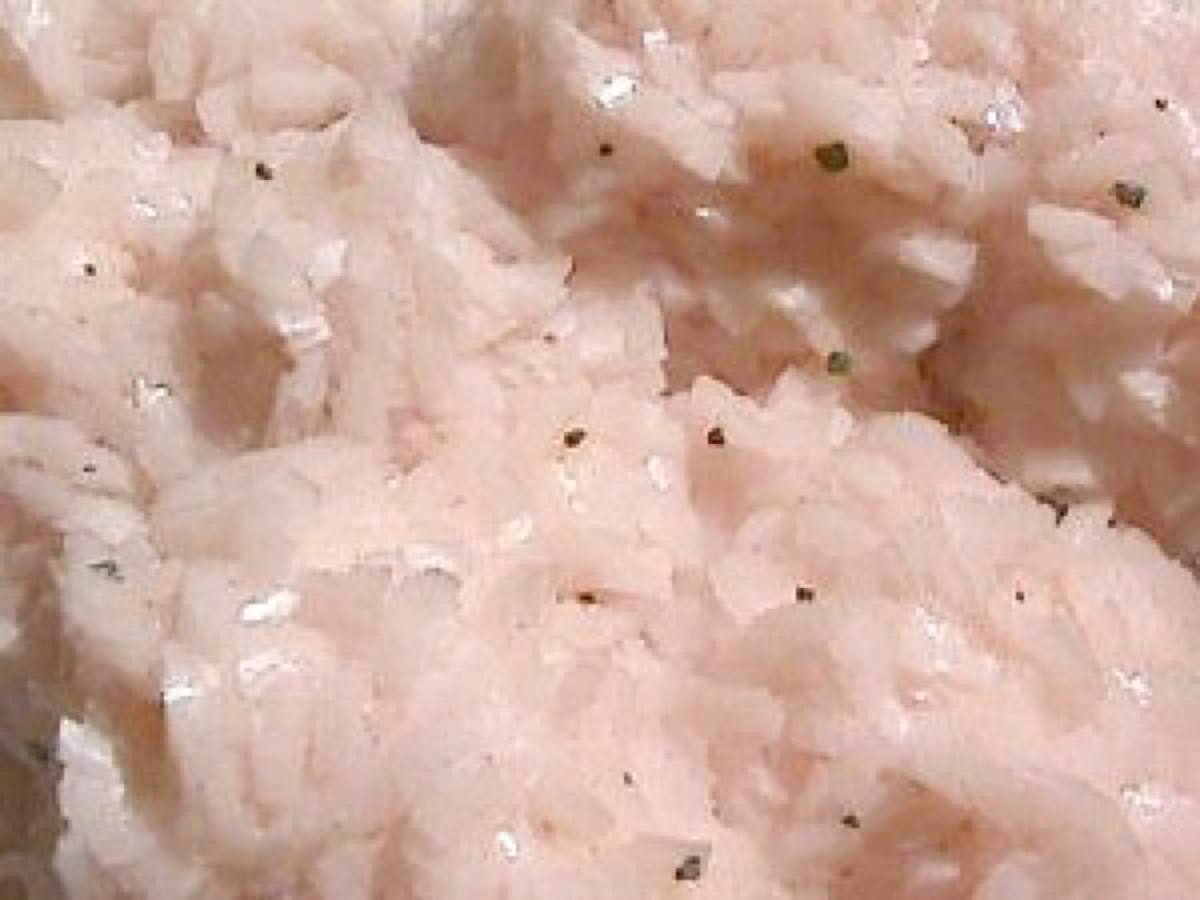
All properties
- Chemical formula
- CaF₂
- Mohs hardness
- 4
- Density
- 3.175-3.184 g/cm³
- Streak
- White
- Luster
- Vitreous; dull when massive
- Transparency
- Transparent to translucent
- Crystal system
- Cubic
- Crystal habit
- Cubic crystals, octahedral, dodecahedral, massive
- Cleavage
- {111}, perfect; on {011}, parting, poor
- Fluorescence
- Blue under SW and LW UV
- Rarity
- Common
- Uses
- Collector, Industrial, Lapidary, Flux
- Host rock
- An accessory mineral in granite, granite pegmatites, syenites; around fumaroles; in carbonatites and alkaline intrusives
Where rockhounds find fluorite
133 mapped spotsClassic worldwide localities
- Macomb, St. Lawrence Co., and Penfield, Monroe Co., New York, USA
- Clay Center, Ottawa Co., Ohio, USA
- Rosiclare and Cave-in-Rock, Hardin Co., Illinois, USA
- Elmwood mine, Smith Co., Tennessee, USA
- Durham, as at Weardale, England
- Castleton, Derbyshire, England
U.S. states with fluorite
Each link opens a state-specific list of mapped rockhounding spots that produce fluorite.
- Utah23 spots
- New Mexico13 spots
- New York12 spots
- Kentucky11 spots
- Colorado8 spots
- Arizona7 spots
- Missouri7 spots
- Pennsylvania6 spots
Field-hunting tip
Where it forms: An accessory mineral in granite, granite pegmatites, syenites; around fumaroles; in carbonatites and alkaline intrusives. If you start seeing quartz, dolomite, calcite in float, you are in the right ground. Typical habit: cubic crystals, octahedral, dodecahedral, massive. Train your eye for that shape before scanning the outcrop. In the U.S., the densest reported localities are in Utah, New Mexico, New York. Start trip planning there.
More fluorite photos
Common questions
How do you identify fluorite?+
Where is fluorite found?+
Can I find fluorite in the United States?+
What rocks look like fluorite?+
What minerals are found with fluorite?+
What kind of rock does fluorite form in?+
What is fluorite used for?+
Find fluorite on the map
RockHoundR shows mapped rockhounding spots, access rules, and lets you log every find.

