Grigorievite is an extremely rare copper-iron vanadate mineral discovered in the volcanic fumaroles of the Tolbachik volcano in Russia. It typically appears as black to dark brown metallic octahedral crystals embedded within volcanic scoria, often associated with other exotic secondary fumarolic minerals.
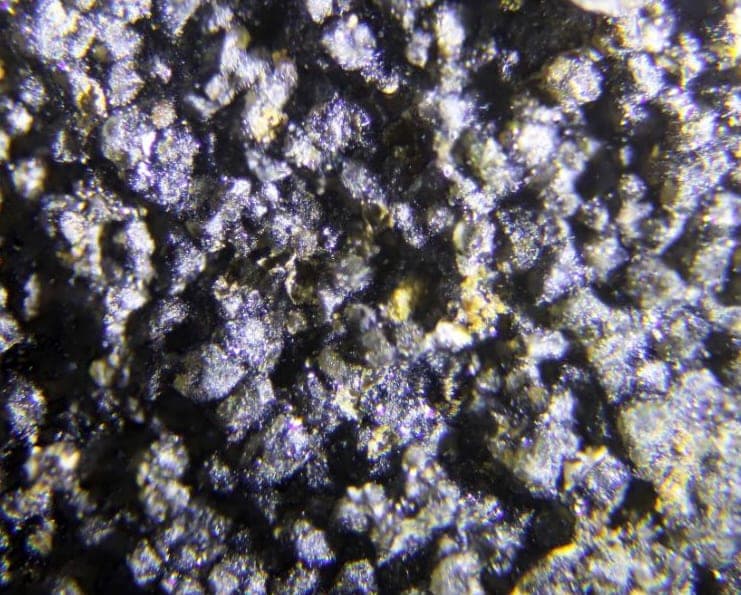
Is this grigorievite?
5-step field checkRun through these checks against the specimen in your hand. The more boxes tick, the more confident the ID.
- 1Test the hardnessTry to scratch grigorievite with a known reference. Grigorievite sits at Mohs ~5, softer than the next harder reference, harder than the previous one.
- 2Check the streakDrag the specimen across an unglazed porcelain plate. Streak: reddish brown.
- 3Read the lusterHold the specimen under a strong light. Luster: semi-metallic.
- 4Match the color rangeCompare against the expected color range: black.
- 5Look at form & habitCrystal system: triclinic. Typical habit: prismatic to thick tabular crystals.
Often confused with
Grigorievite vs. its common look-alikes, and how to tell them apart in the field.
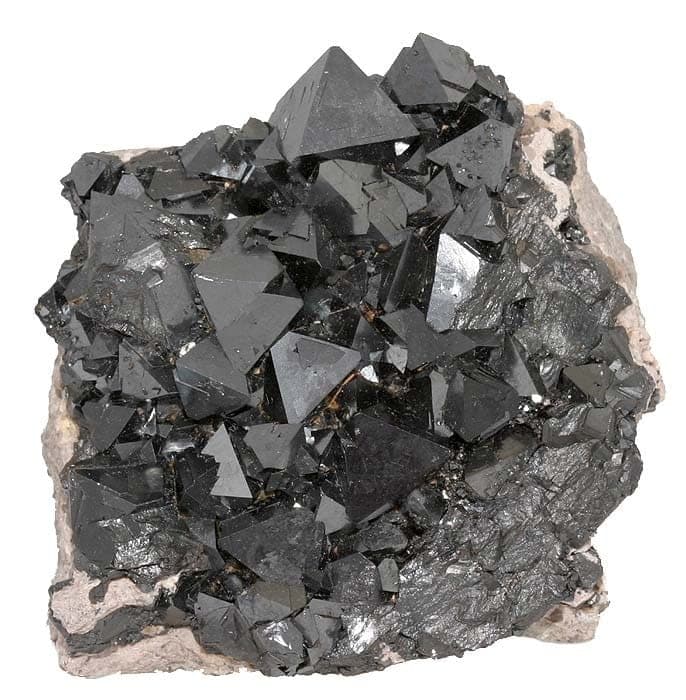
How to tell apart: Streak differs, so Grigorievite leaves reddish brown, Magnetite leaves black; luster reads semi-metallic on Grigorievite and metallic to submetallic, may be dull on Magnetite.
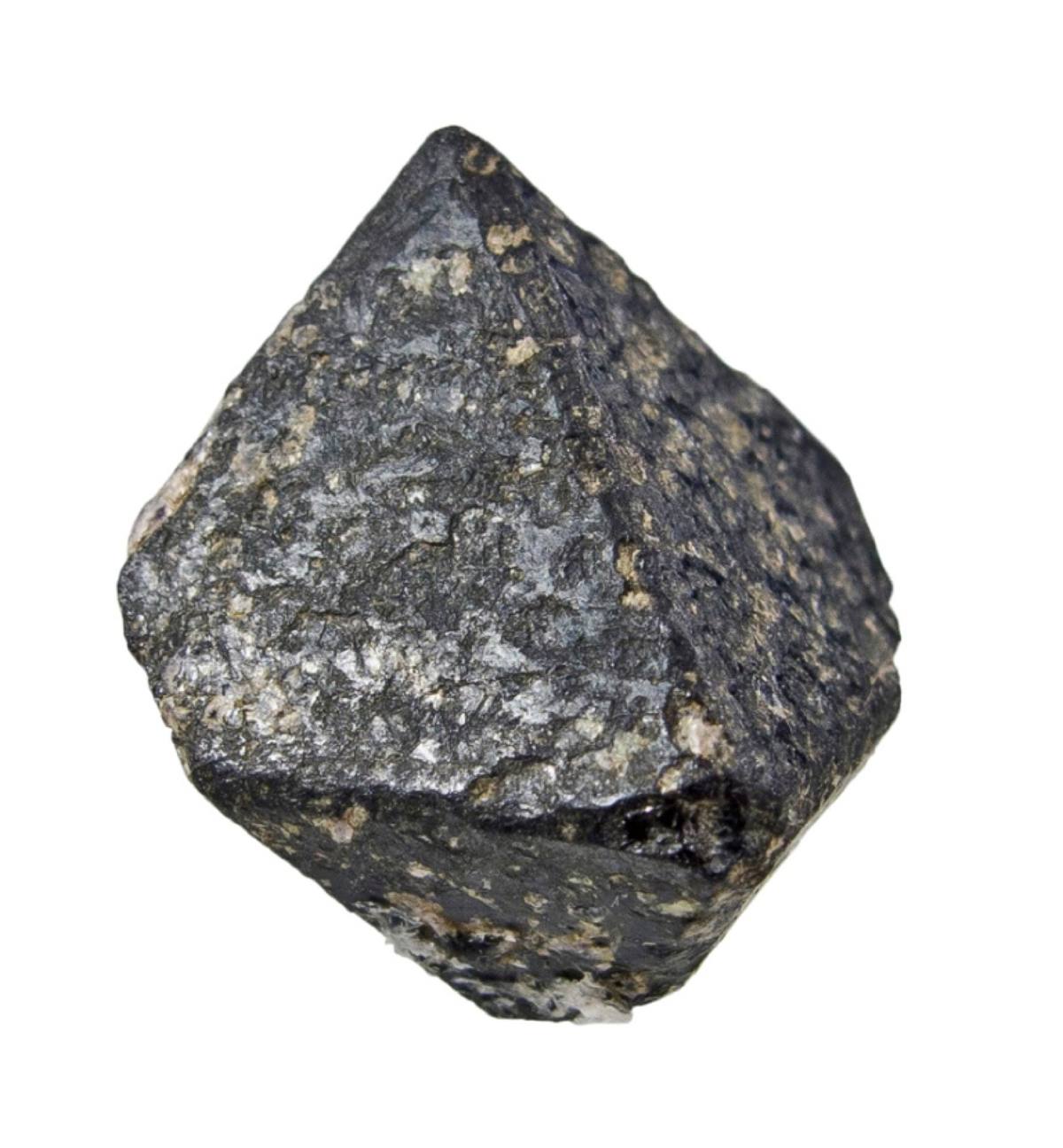
How to tell apart: Streak differs, so Grigorievite leaves reddish brown, Chromite leaves brown; luster reads semi-metallic on Grigorievite and metallic to submetallic on Chromite.
Often found alongside grigorievite
Minerals reported to co-occur with grigorievite. Spotting these in float or country rock is a strong cue you are in the right ground.
All properties
- Chemical formula
- Cu₃Fe₂Al₂(VO₄)₆
- Mohs hardness
- ~5
- Density
- 3.67 g/cm³
- Colors
- Streak
- Reddish brown
- Luster
- Semi-metallic
- Transparency
- Opaque
- Crystal system
- Triclinic
- Crystal habit
- Prismatic to thick tabular crystals
- Cleavage
- None
- Rarity
- Rare
- Uses
- Collector
- Host rock
- A sublimate on basaltic scoria deposited from fumarolic gas
Where rockhounds find grigorievite
Classic worldwide localities
- Tolbachik volcano (Kamchatka, Russia)
Field-hunting tip
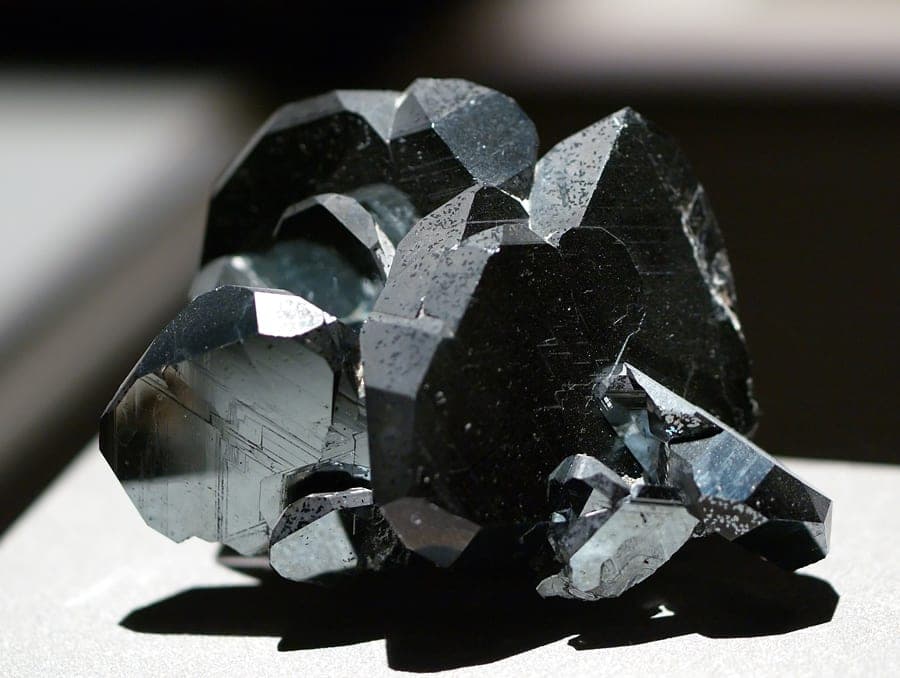
Where it forms: A sublimate on basaltic scoria deposited from fumarolic gas. If you start seeing hematite, bannermanite, ziesite in float, you are in the right ground. Typical habit: prismatic to thick tabular crystals. Train your eye for that shape before scanning the outcrop.
Common questions
How do you identify grigorievite?+
Where is grigorievite found?+
Is grigorievite safe to handle?+
What rocks look like grigorievite?+
What minerals are found with grigorievite?+
What kind of rock does grigorievite form in?+
What is grigorievite used for?+
Find grigorievite on the map
RockHoundR shows mapped rockhounding spots, access rules, and lets you log every find.