
Metastibnite is an amorphous, red modification of stibnite typically found as earthy crusts or coatings in hot spring environments. It is a rare, metastable mineral that often alters back to common grey stibnite over time. Collectors prize it primarily for its distinct red coloration compared to typical stibnite.
Is this metastibnite?
5-step field checkRun through these checks against the specimen in your hand. The more boxes tick, the more confident the ID.
- 1Test the hardnessTry to scratch metastibnite with a known reference. Metastibnite sits at Mohs 2-3, softer than the next harder reference, harder than the previous one.
- 2Check the streakDrag the specimen across an unglazed porcelain plate. Streak: red.
- 3Read the lusterHold the specimen under a strong light. Luster: submetallic.
- 4Match the color rangeCompare against the expected color range: red, purple, purple gray, reddish gray.
- 5Look at form & habitCrystal system: amorphous. Typical habit: encrustations, mammillary, powdery.
Often confused with
Metastibnite vs. its common look-alikes, and how to tell them apart in the field.
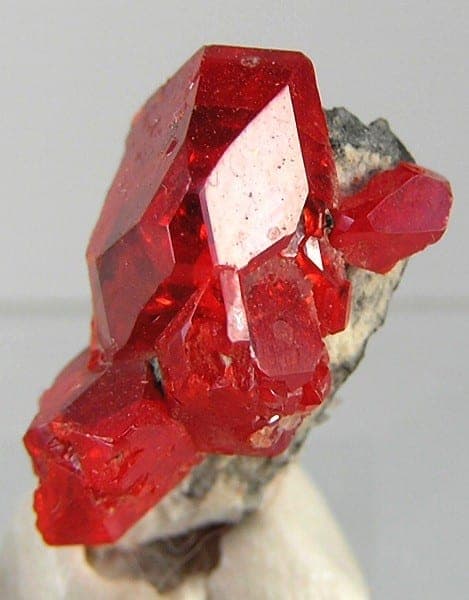
How to tell apart: Streak differs, so Metastibnite leaves red, Realgar leaves red-orange to red; luster reads submetallic on Metastibnite and resinous to greasy on Realgar.
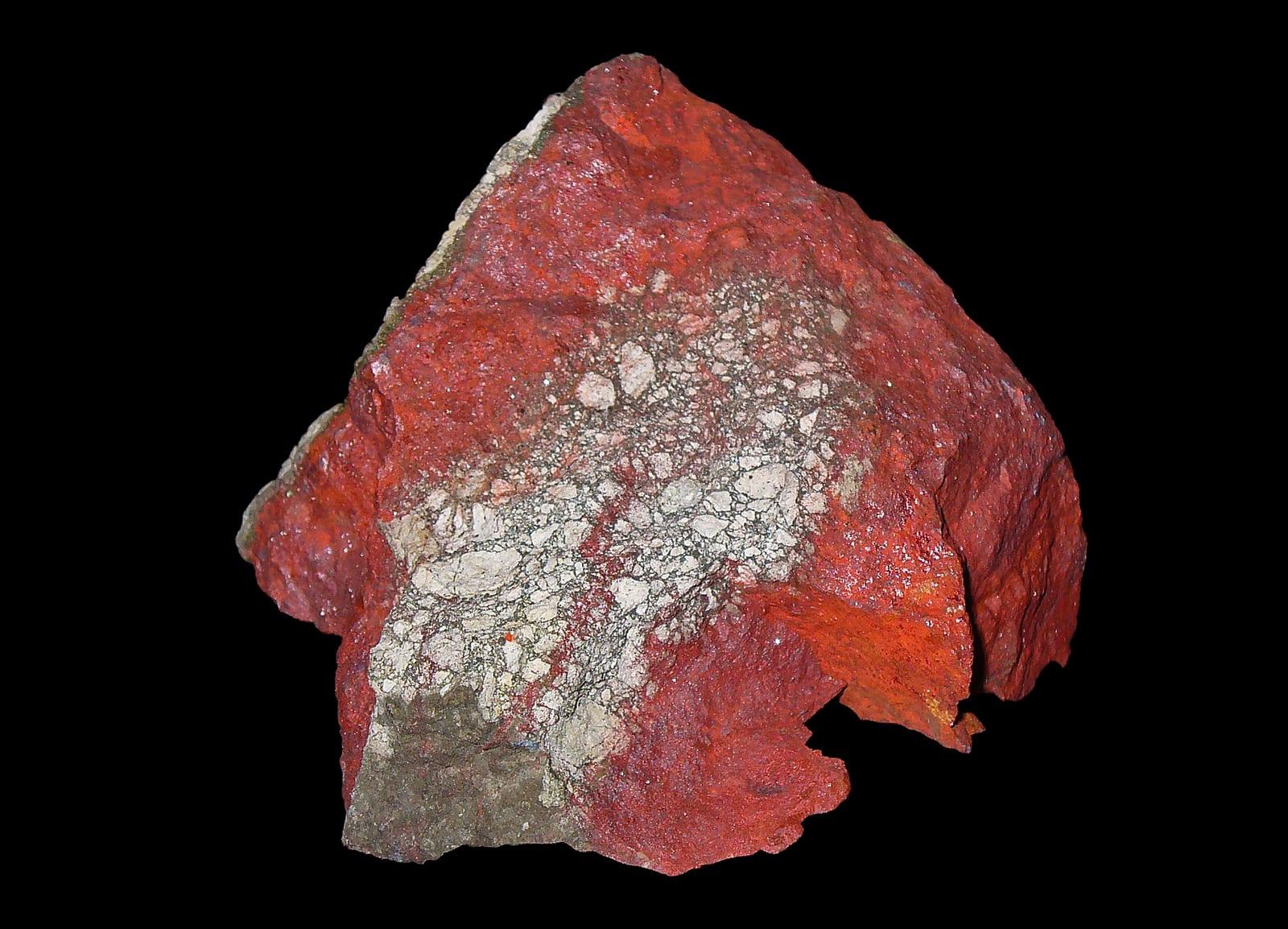
How to tell apart: Streak differs, so Metastibnite leaves red, Cinnabar leaves scarlet; luster reads submetallic on Metastibnite and adamantine, inclining to metallic when dark; dull in friable material on Cinnabar.
Often found alongside metastibnite
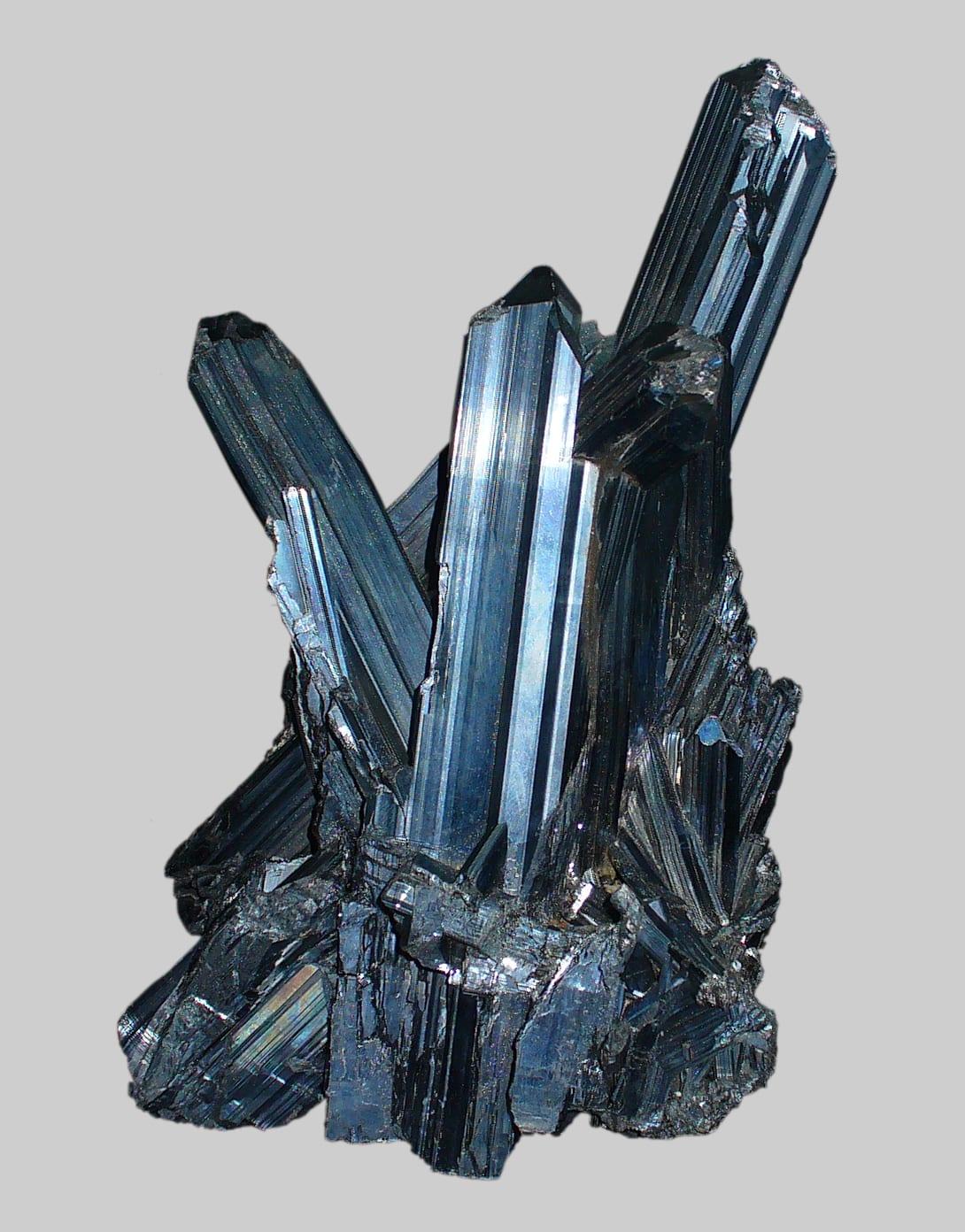
Minerals reported to co-occur with metastibnite. Spotting these in float or country rock is a strong cue you are in the right ground.
All properties
- Chemical formula
- Sb₂S₃
- Mohs hardness
- 2-3
- Density
- 4.5-4.6 g/cm³
- Colors
- Streak
- Red
- Luster
- Submetallic
- Transparency
- Translucent, transparent in thin fragments
- Crystal system
- Amorphous
- Crystal habit
- Encrustations, mammillary, powdery
- Cleavage
- None
- Rarity
- Rare
- Uses
- Collector
- Host rock
- Appears to be of primary hydrothermal origin around fumarolic centers (The Geysers, California; Steamboat Springs, Nevada, USA); and the result of oxidation of stibnite (Copiapó, Chile)
Where rockhounds find metastibnite
Classic worldwide localities
- Steamboat Springs, Washoe Co., Nevada (type locality) and at The Geysers, Sonoma Co., California, USA
- Lac Nicolet mine, South Ham, Quebec, Canada
- Northern Chile, at the Alacrán Ag–As–Sb mine, Pampa Larga district, Copiapó
- San José mine, Oruro, Bolivia
- Rujevac Sb–Zn–Pb deposit, western Serbia
- Zlata Bana deposit, Slanske vrchy Mountains, Slovakia
Field-hunting tip
Where it forms: Appears to be of primary hydrothermal origin around fumarolic centers (The Geysers, California; Steamboat Springs, Nevada, USA); and the result of oxidation of stibnite (Copiapó, Chile). If you start seeing cinnabar, stibnite in float, you are in the right ground. Typical habit: encrustations, mammillary, powdery. Train your eye for that shape before scanning the outcrop.
Common questions
How do you identify metastibnite?+
Where is metastibnite found?+
Is metastibnite safe to handle?+
What rocks look like metastibnite?+
What minerals are found with metastibnite?+
What kind of rock does metastibnite form in?+
What is metastibnite used for?+
Find metastibnite on the map
RockHoundR shows mapped rockhounding spots, access rules, and lets you log every find.

