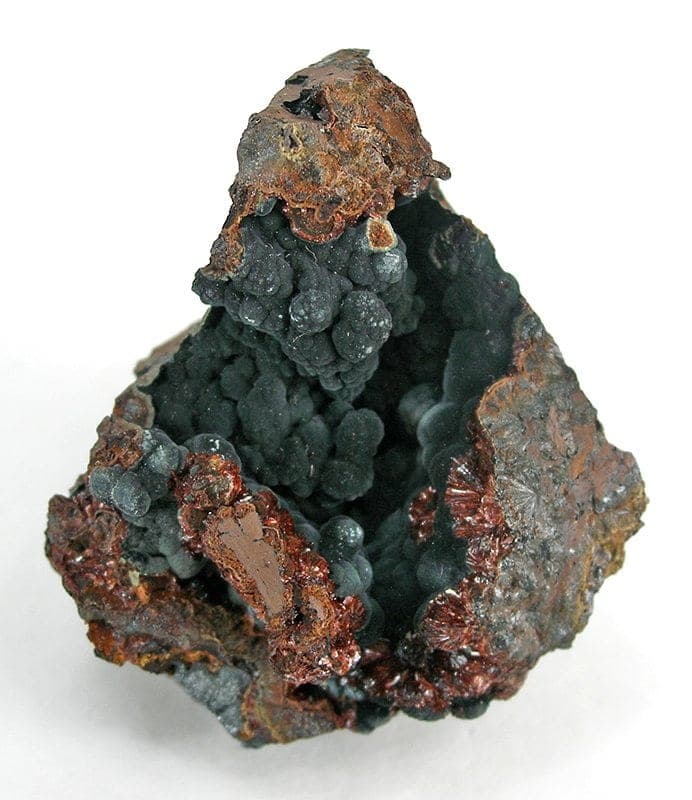
Mitridatite is a secondary phosphate mineral most commonly found as earthy or botryoidal masses in iron-rich sedimentary environments. It is characterized by its distinctive olive-green color and typically forms as an alteration product of other phosphate minerals like vivianite.
Is this mitridatite?
5-step field checkRun through these checks against the specimen in your hand. The more boxes tick, the more confident the ID.
- 1Test the hardnessTry to scratch mitridatite with a known reference. Mitridatite sits at Mohs 2.5, softer than the next harder reference, harder than the previous one.
- 2Check the streakDrag the specimen across an unglazed porcelain plate. Streak: olive-green.
- 3Read the lusterHold the specimen under a strong light. Luster: dull, earthy to resinous.
- 4Match the color rangeCompare against the expected color range: green, bronze red, brown green, greenish yellow, yellow brown.
- 5Look at form & habitCrystal system: monoclinic. Typical habit: massive, nodular.
Often confused with
Mitridatite vs. its common look-alikes, and how to tell them apart in the field.
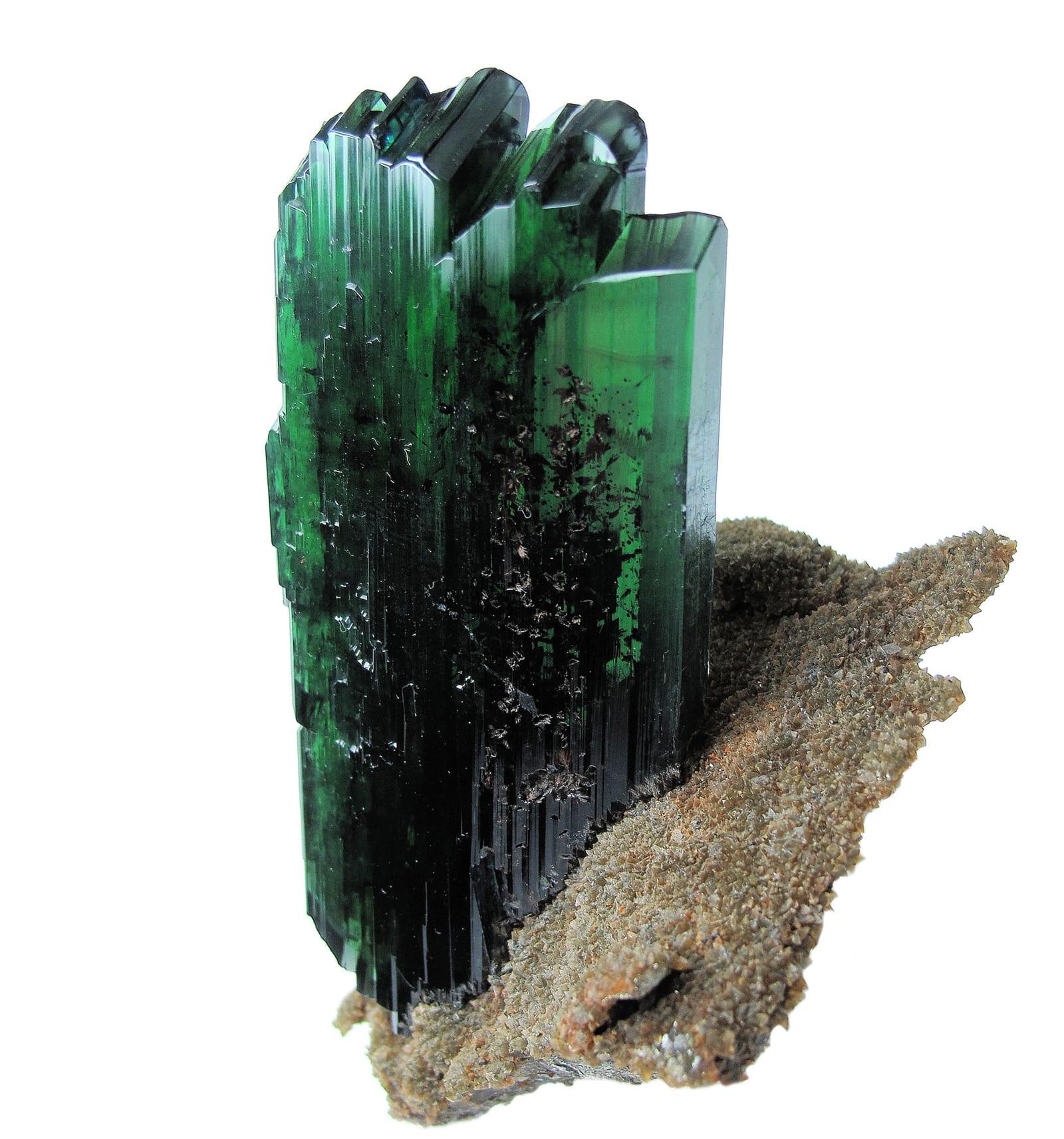
How to tell apart: Streak differs, so Mitridatite leaves olive-green, Vivianite leaves white, altering to dark blue, brown; luster reads dull, earthy to resinous on Mitridatite and vitreous, pearly on the cleavage, dull when earthy on Vivianite.
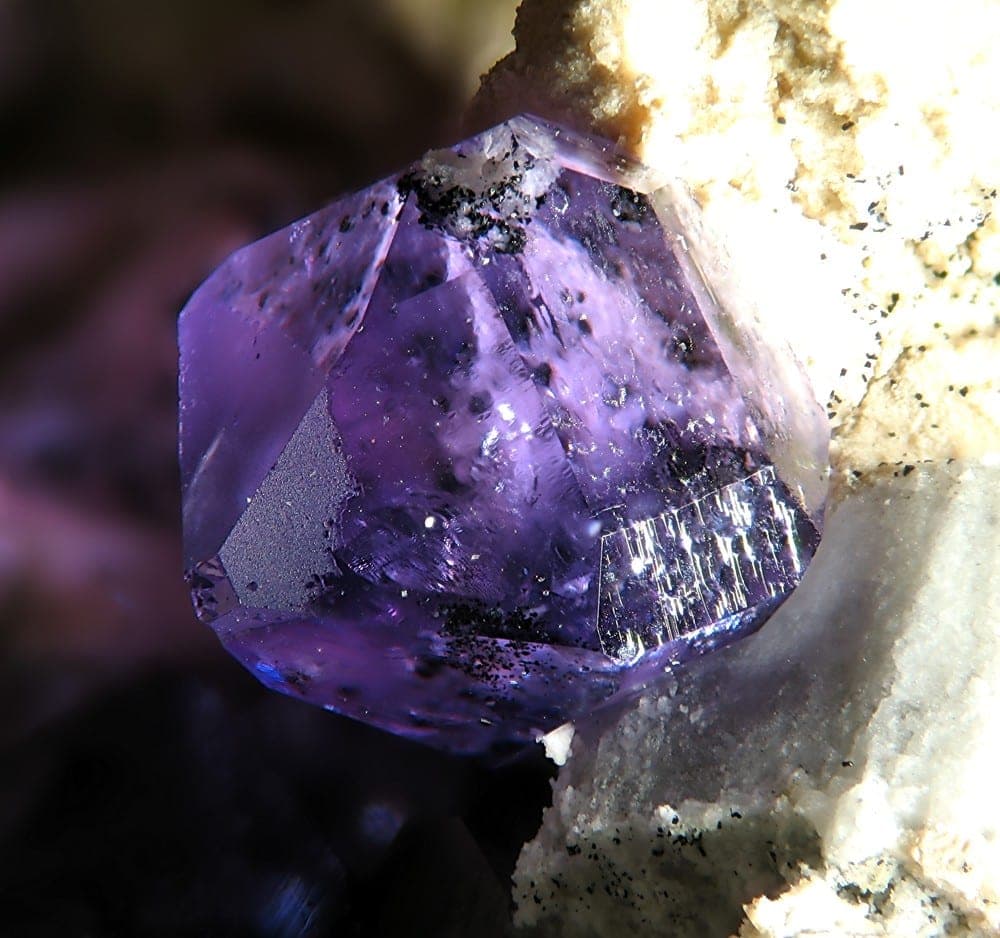
How to tell apart: Strengite is the harder of the two (Mohs 3.5 vs. 2.5); streak differs, so Mitridatite leaves olive-green, Strengite leaves white; luster reads dull, earthy to resinous on Mitridatite and vitreous on Strengite.
Often found alongside mitridatite
Minerals reported to co-occur with mitridatite. Spotting these in float or country rock is a strong cue you are in the right ground.
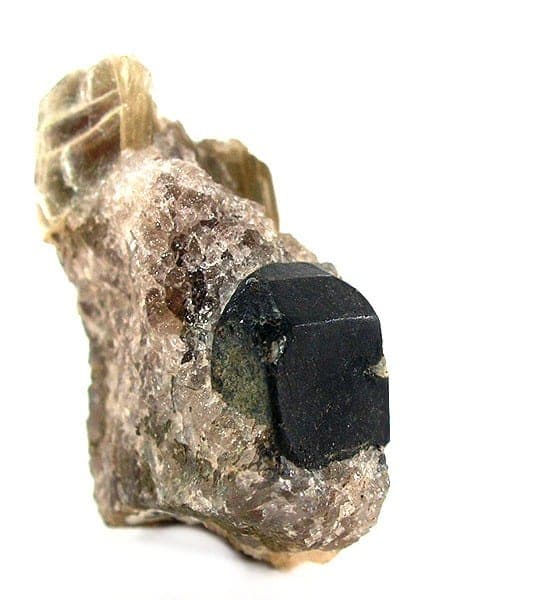
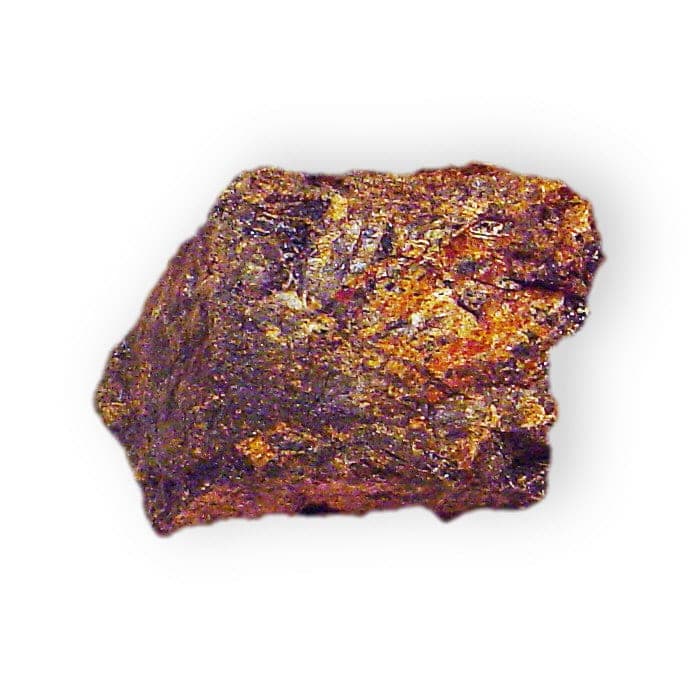
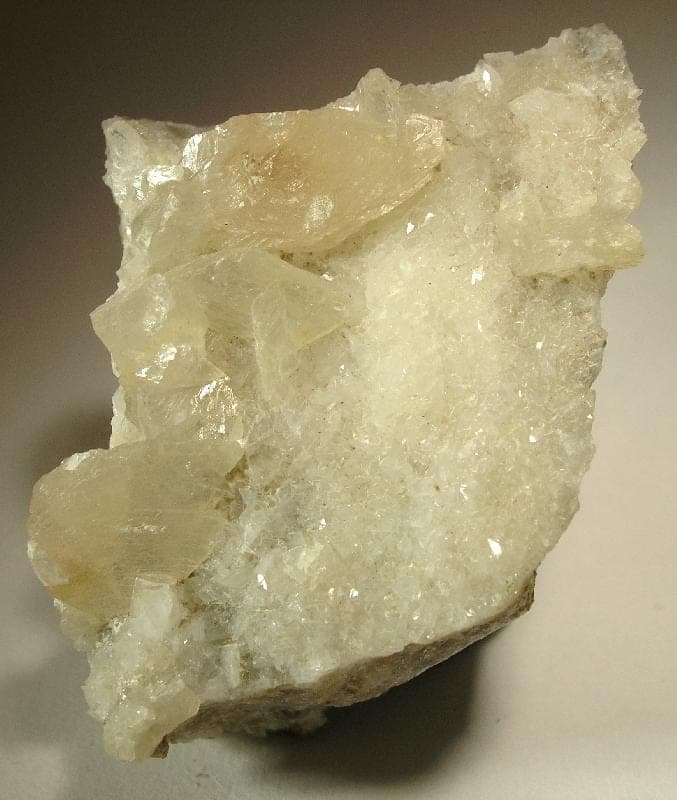
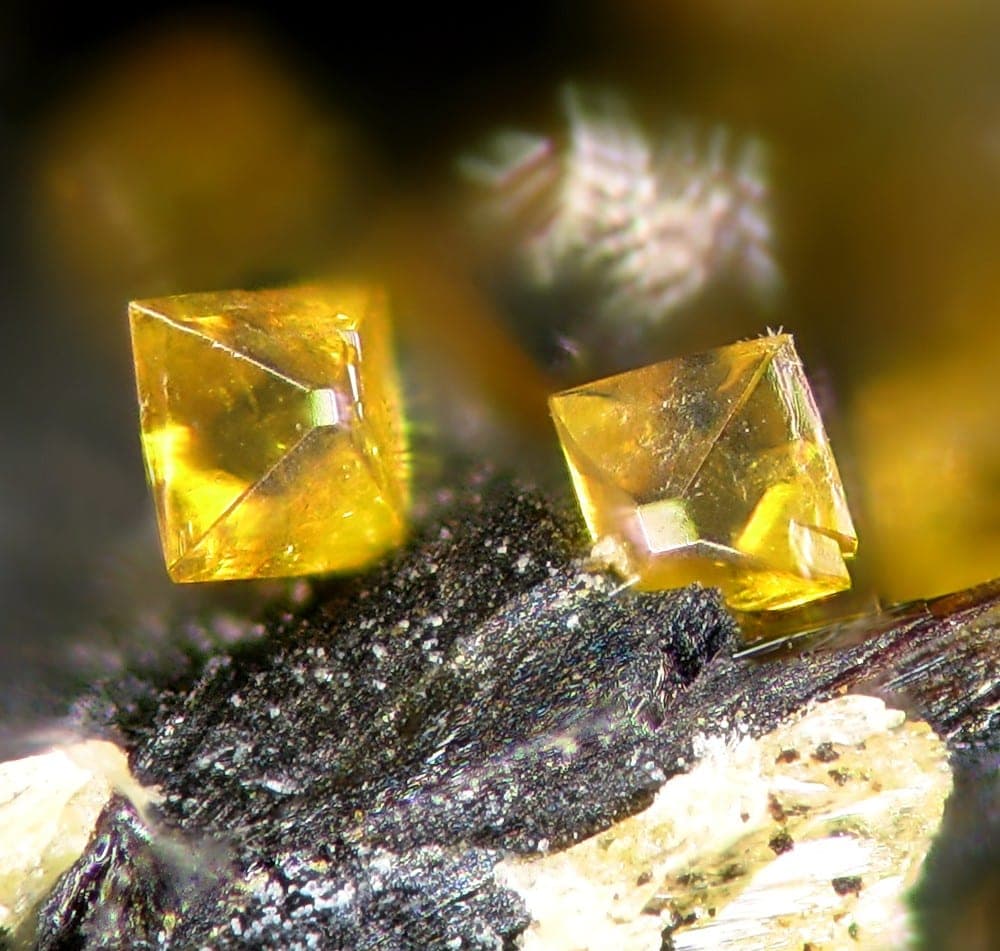
All properties
- Chemical formula
- Ca₂Fe³⁺₃(PO₄)₃O₂·3H₂O
- Mohs hardness
- 2.5
- Density
- 3.24 g/cm³
- Colors
- Streak
- Olive-green
- Luster
- Dull, earthy to resinous
- Transparency
- Translucent to opaque
- Crystal system
- Monoclinic
- Crystal habit
- Massive, nodular
- Cleavage
- Good on {100}
- Rarity
- Uncommon
- Uses
- Collector, Scientific research
- Host rock
- A common stain or crust on minerals near oxidizing ferrous phosphate minerals, typically triphylite or vivianite in granite pegmatite; a component of cement or fossil replacements in some ferruginous oölitic sediments
Where rockhounds find mitridatite
Classic worldwide localities
- Tip Top, White Elephant, Bull Moose, and Linwood mines, near Custer, Custer Co., and the Gap Lode pegmatite, Pennington Co., South Dakota, USA
- Palermo #1 mine, near North Groton, Grafton Co., New Hampshire, USA
- Kerch, Crimean Peninsula, Ukraine
- Taman Peninsula, and at the Voron’i massif, Kola Peninsula, Russia
- Boons and West Driefontein Caves, Transvaal, South Africa
- Glen Chosaidh, Loch Quoich, Inverness-shire, Scotland
Field-hunting tip
Where it forms: A common stain or crust on minerals near oxidizing ferrous phosphate minerals, typically triphylite or vivianite in granite pegmatite; a component of cement or fossil replacements in some ferruginous oölitic sediments. If you start seeing triphylite, vivianite, rockbridgeite in float, you are in the right ground. Typical habit: massive, nodular. Train your eye for that shape before scanning the outcrop.
Common questions
How do you identify mitridatite?+
Where is mitridatite found?+
What rocks look like mitridatite?+
What minerals are found with mitridatite?+
What kind of rock does mitridatite form in?+
What is mitridatite used for?+
Find mitridatite on the map
RockHoundR shows mapped rockhounding spots, access rules, and lets you log every find.