The Petoskey stone is a fossilized rugose coral from the Devonian period, characterized by its distinct hexagonal patterns which resemble honeycomb. Collectors often find them along the shores of Lake Michigan, where they are polished smooth by glacial activity and water movement.
Spotting petoskey stones in the field
Field marks- 1
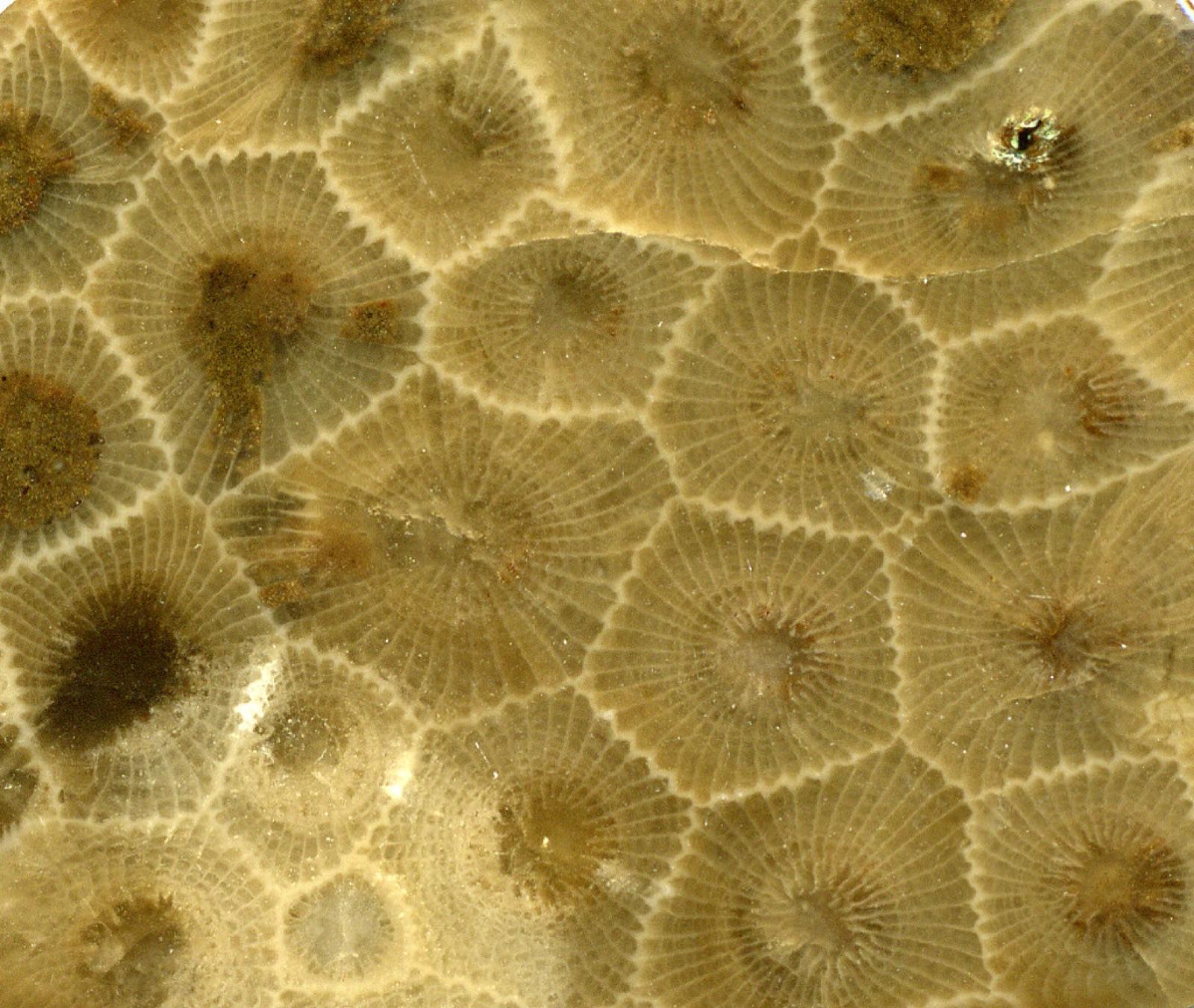
Six-sided cells with a dark center dot and radiating lines, like a honeycomb of small eyes
- 2
Dry it is a plain grey cobble; wet, the pattern appears clearly
- 3
Smooth, rounded and beach-worn, palm sized or smaller
This is the wet-test fossil. A dry Petoskey stone on the beach is grey and completely unremarkable, and the coral pattern only shows when it is wet, which is why every experienced hunter along Lake Michigan carries a spray bottle or simply works the waterline. It is fossil Devonian colonial coral, Hexagonaria percarinata, and it is the Michigan state stone. Hunt after a storm has turned the beach cobble over, and look in the swash where stones are still wet.
Straight answers
- Is it worth cutting?
- Soft for a lapidary material at around 3 to 4, so it polishes quickly and scratches just as quickly. Wet sand through the grits by hand and finish with a light polish; aggressive machine work rounds the pattern away.
- What is it really worth?
- Low, and that is part of the charm. Large, evenly patterned, unbroken stones and well-polished pieces are what people pay for.
- Can you legally keep it?
- Michigan law allows collection of up to 25 pounds per person per year of rocks and minerals, including Petoskey stones, from state-owned land and Great Lakes bottomlands. National lakeshores, including Sleeping Bear Dunes, prohibit collecting entirely.
Where it is worth going
- Lake Michigan shorelinePetoskey, Charlevoix and Traverse City, Michigan
The classic beaches. Heavily hunted, so go after storms and work the wet cobble line.
Often confused with
Petoskey Stones vs. its common look-alikes, and how to tell them apart in the field.
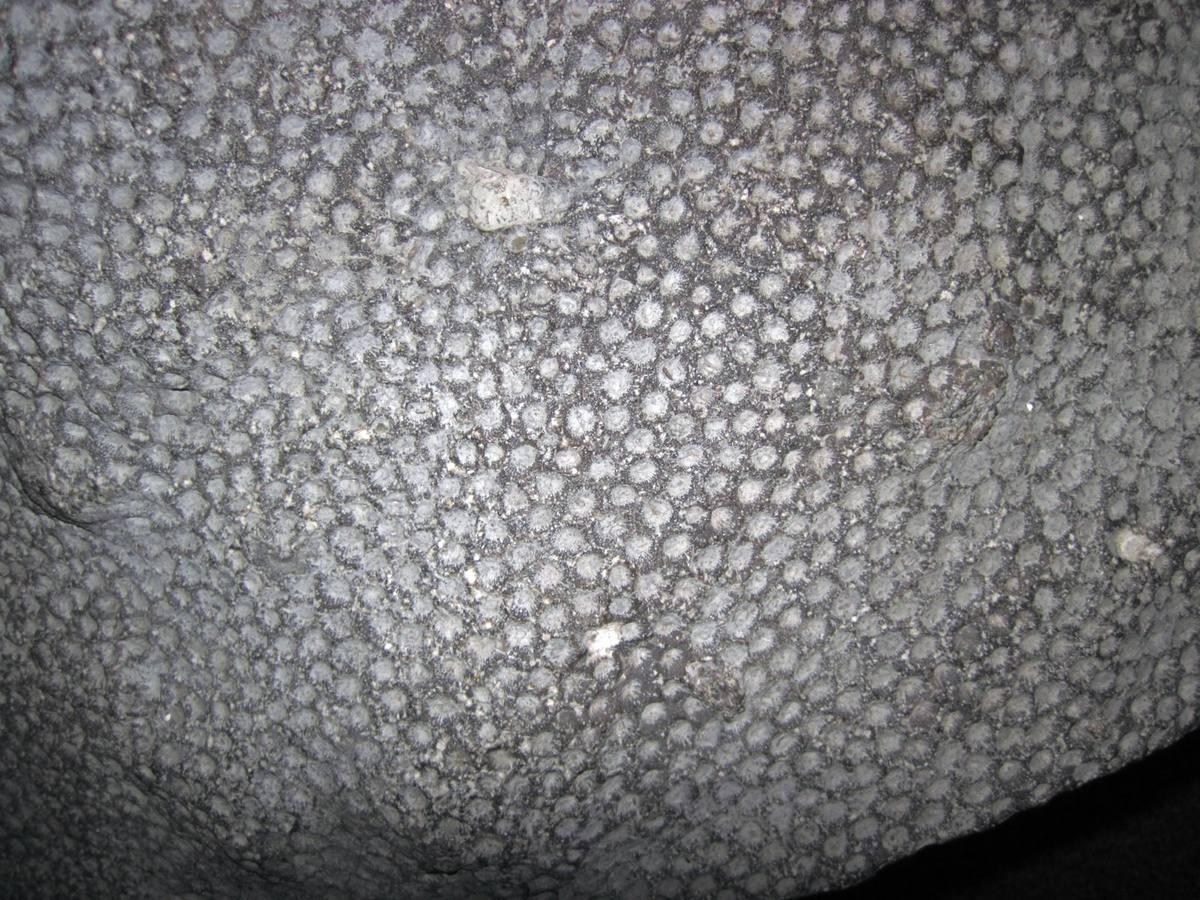
How to tell apart: A closely related coral from the same beaches with much smaller, tighter cells. Same idea, finer pattern, and often mistaken for a young Petoskey.
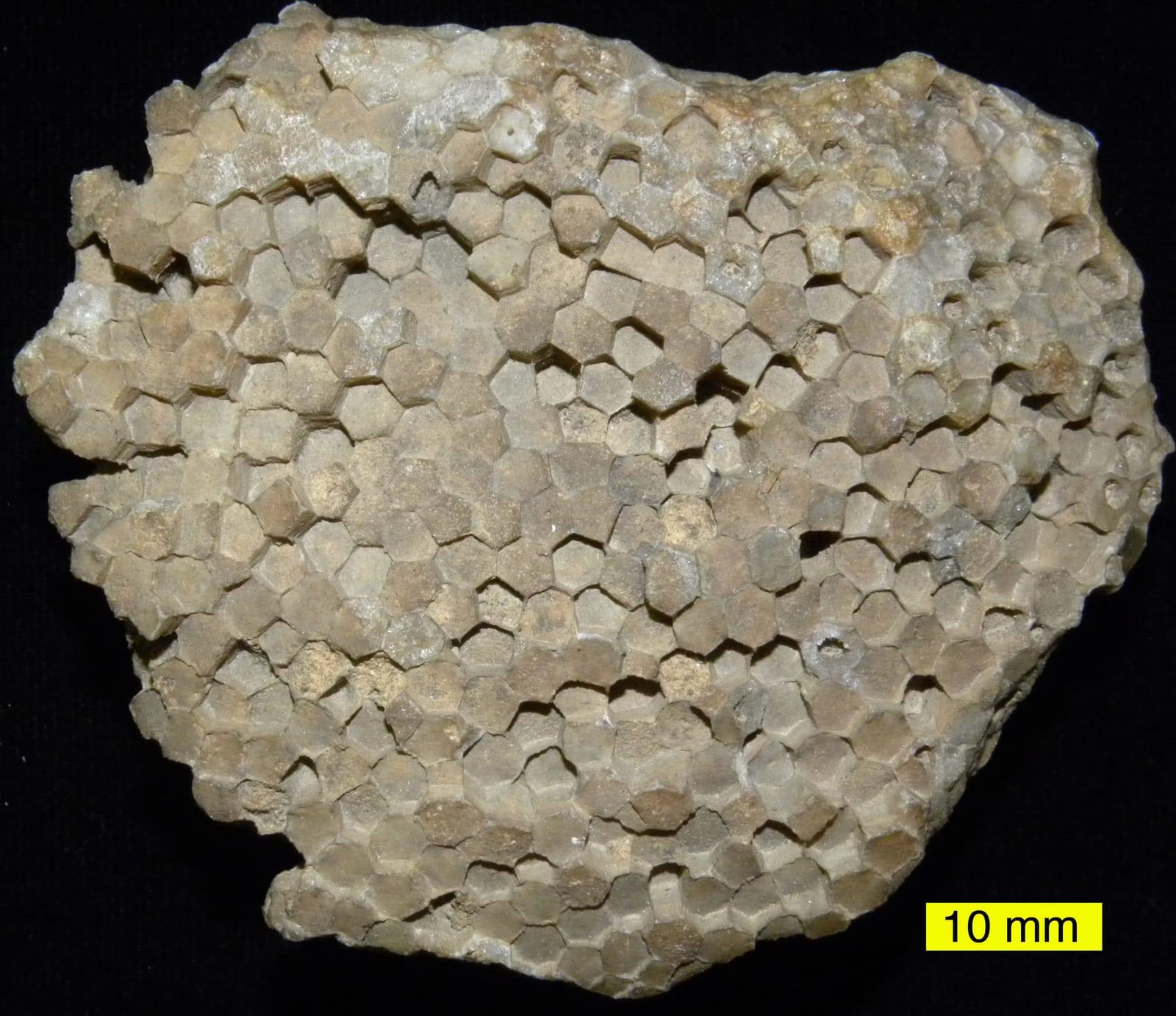
How to tell apart: Honeycomb coral has smaller cells without the distinctive dark center eye and radiating lines.
Often found alongside petoskey stones
Minerals reported to co-occur with petoskey stones. Spotting these in float or country rock is a strong cue you are in the right ground.
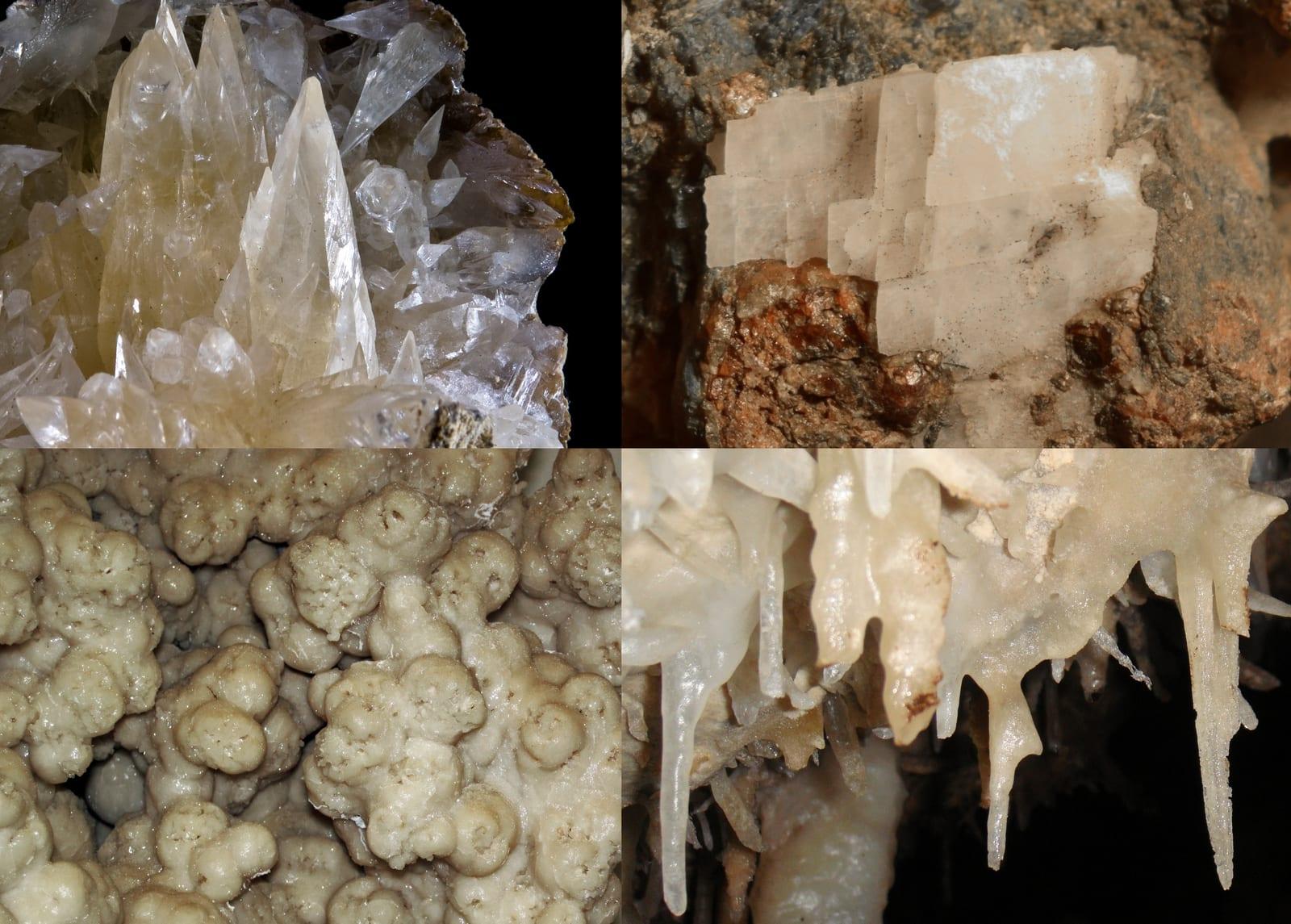
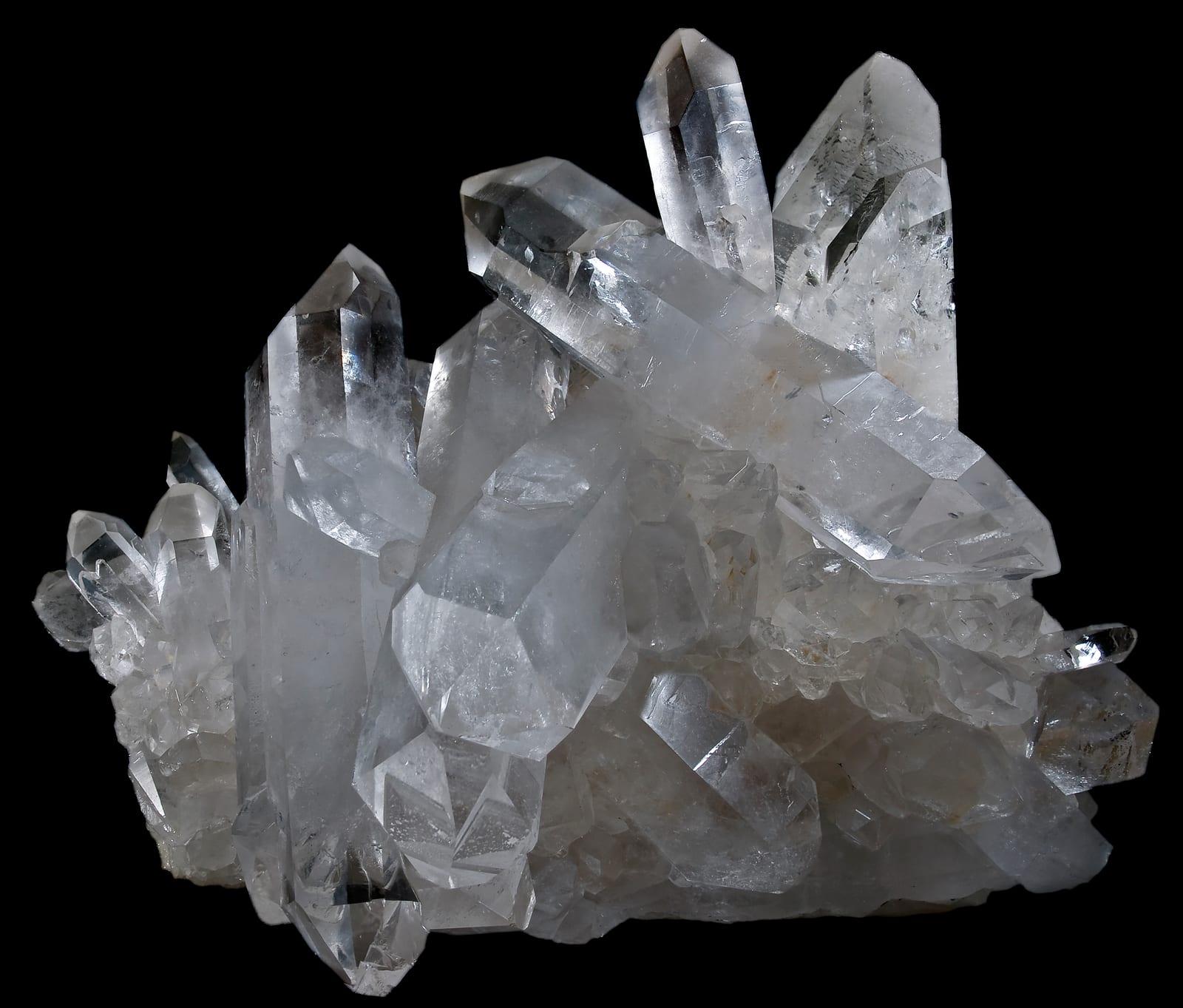
All properties
- Chemical formula
- CaCO₃
- Mohs hardness
- 3-4
- Density
- 2.6-2.7 g/cm³
- Streak
- White
- Luster
- Dull to Vitreous
- Transparency
- Opaque
- Crystal habit
- Massive
- Cleavage
- None
- Rarity
- Common
- Uses
- Lapidary, Collector, Decorative
- Host rock
- Limestone
- Typical price
- $5-50 for polished specimens
Where rockhounds find petoskey stones
7 mapped spotsClassic worldwide localities
- Michigan
- USA
Field-hunting tip
Look in limestone country, the host setting where petoskey stones typically forms. If you start seeing calcite, quartz in float, you are in the right ground. Field specimens usually show a massive habit, so train your eye for that shape before scanning the outcrop. In the U.S., the densest reported localities are in Michigan. Start trip planning there.
More petoskey stones photos
Common questions
How do you identify petoskey stones?+
Where is petoskey stones found?+
Can I find petoskey stones in the United States?+
How much is petoskey stones worth?+
What rocks look like petoskey stones?+
What minerals are found with petoskey stones?+
What kind of rock does petoskey stones form in?+
What is petoskey stones used for?+
Find petoskey stones on the map
RockHoundR shows mapped rockhounding spots, access rules, and lets you log every find.