
Riebeckite is an amphibole group mineral typically found in silica-rich alkaline igneous rocks like granite. It often occurs as prismatic crystals or as a fibrous, asbestiform variety known as crocidolite, which can replace other minerals during pseudomorphosis.
Is this riebeckite?
5-step field checkRun through these checks against the specimen in your hand. The more boxes tick, the more confident the ID.
- 1Test the hardnessTry to scratch riebeckite with a known reference. Riebeckite sits at Mohs 6, softer than the next harder reference, harder than the previous one.
- 2Check the streakDrag the specimen across an unglazed porcelain plate. Streak: greenish brown.
- 3Read the lusterHold the specimen under a strong light. Luster: vitreous to silky.
- 4Match the color rangeCompare against the expected color range: dark blue, black, blue-green, blue, dark green.
- 5Look at form & habitCrystal system: monoclinic. Typical habit: fibrous, massive, striated.
Often confused with
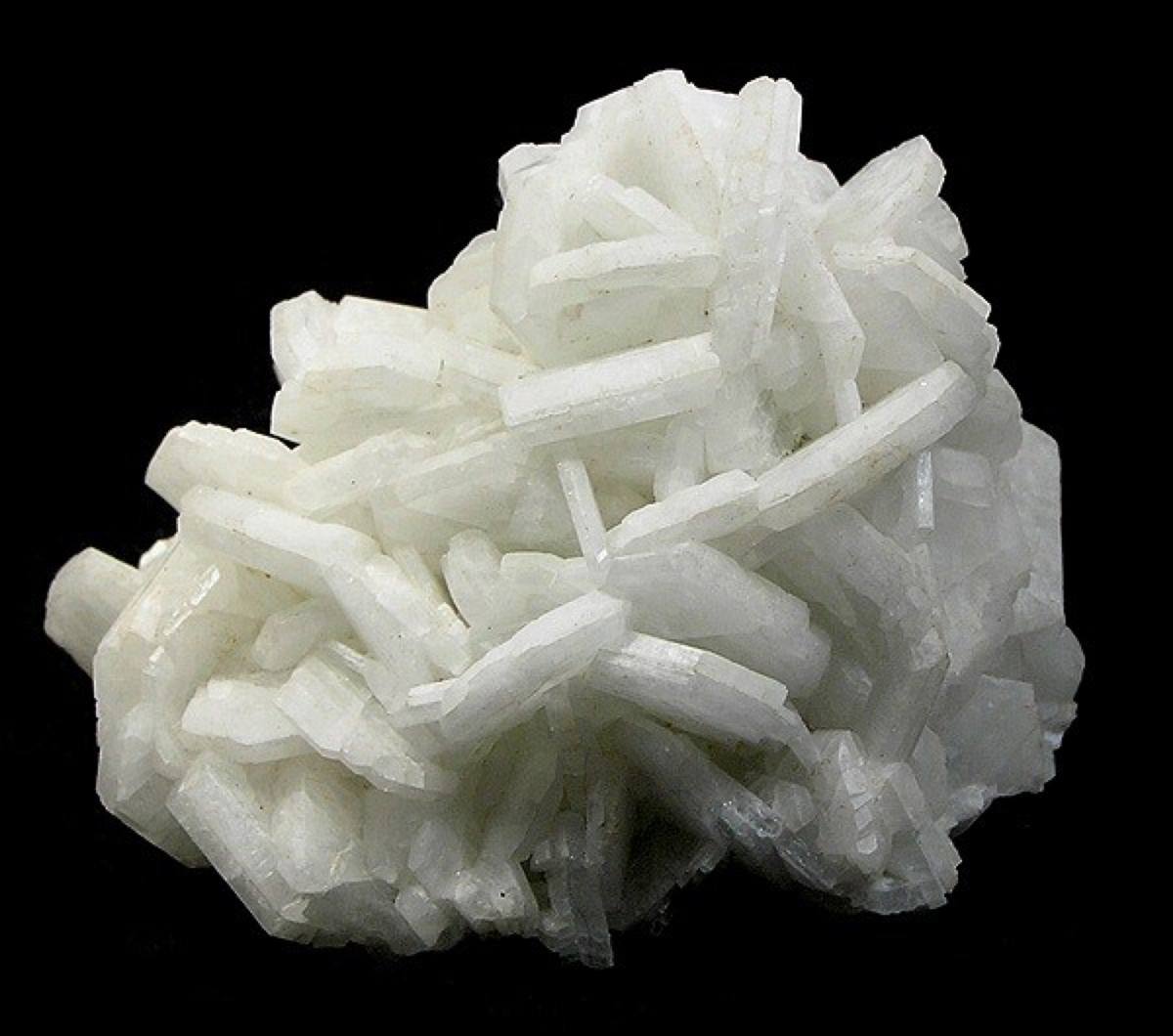
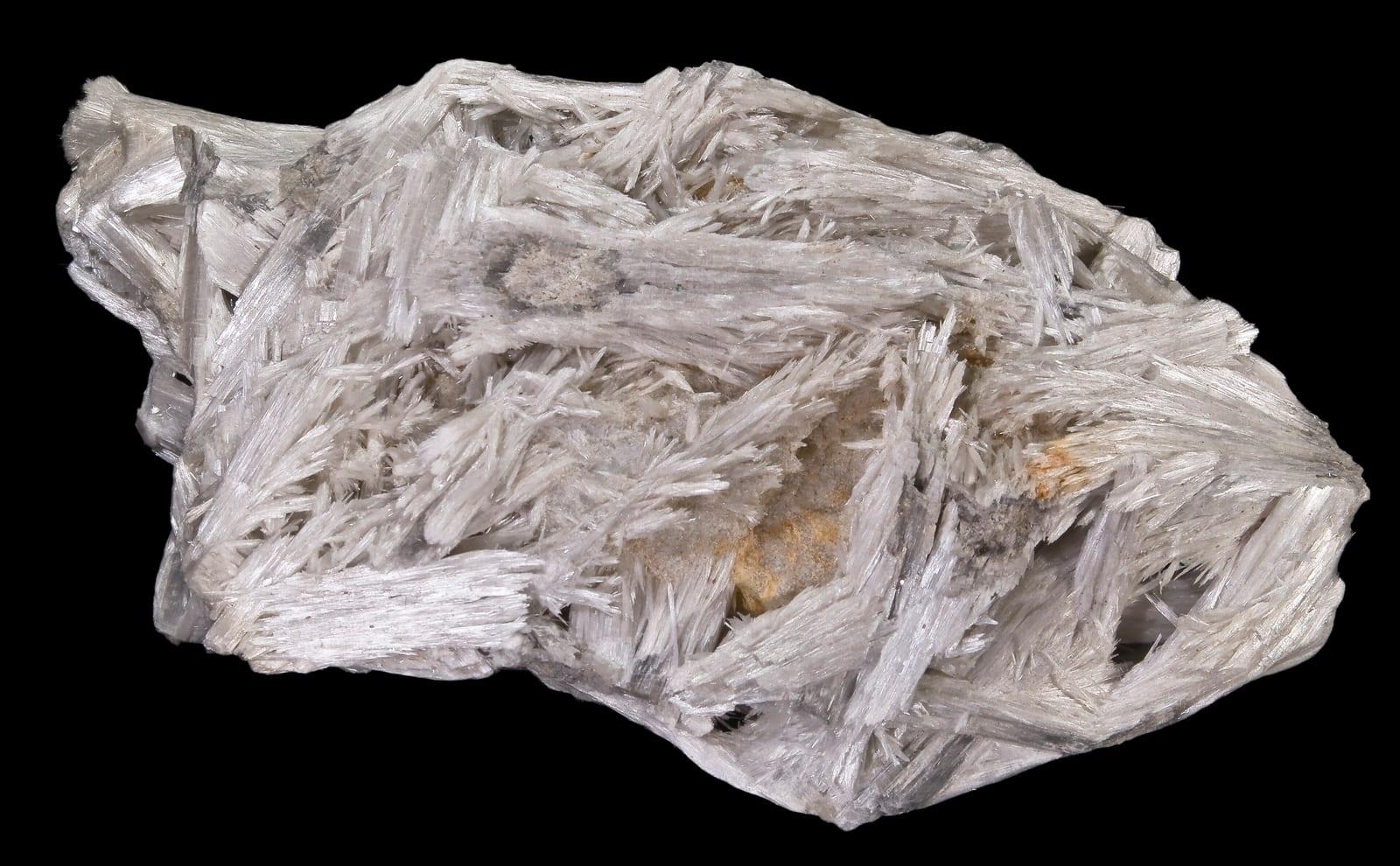
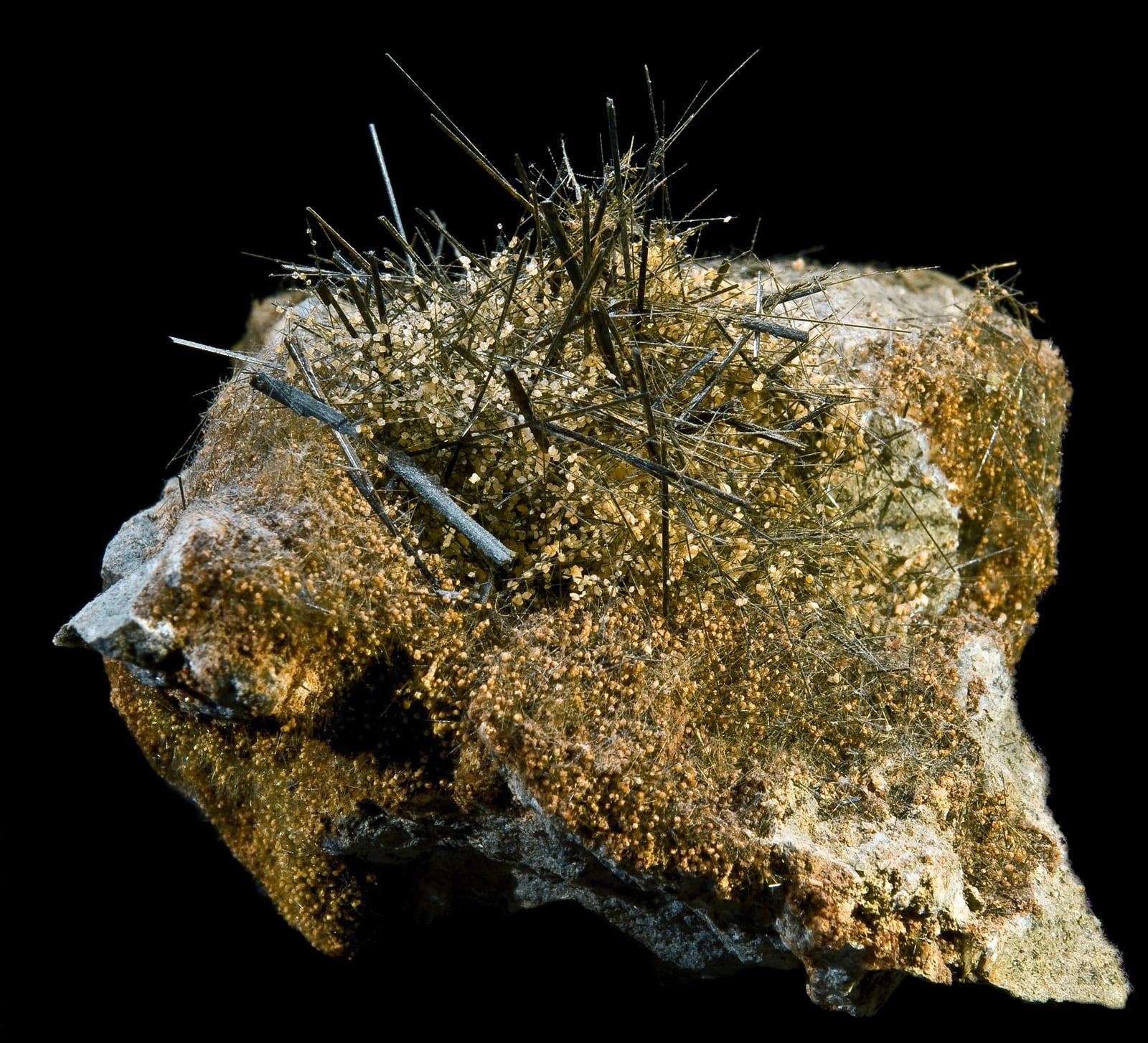
Riebeckite vs. its common look-alikes, and how to tell them apart in the field.
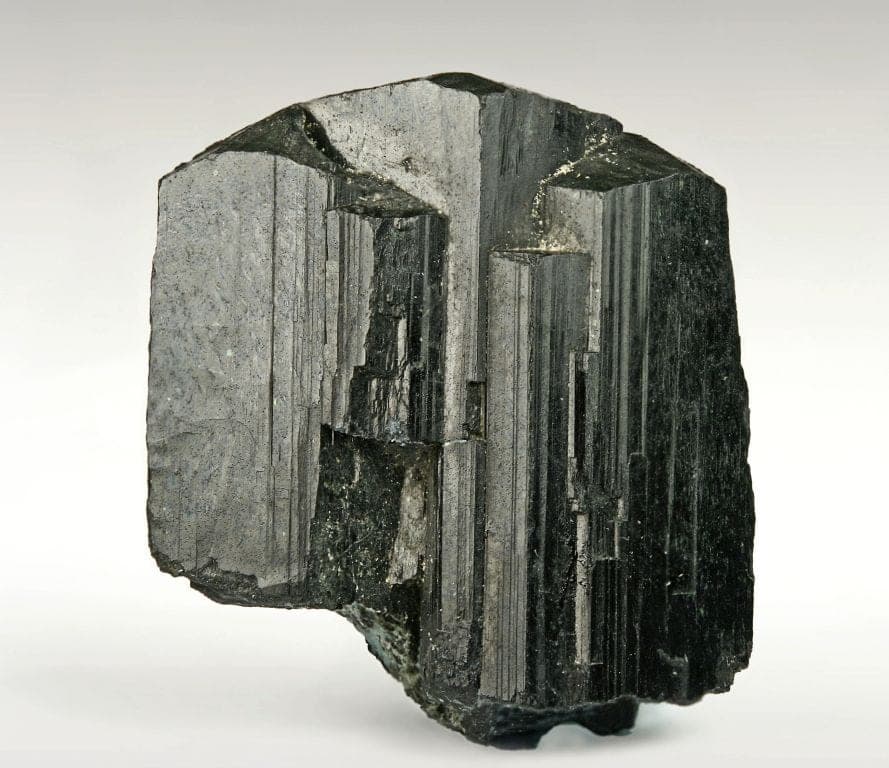
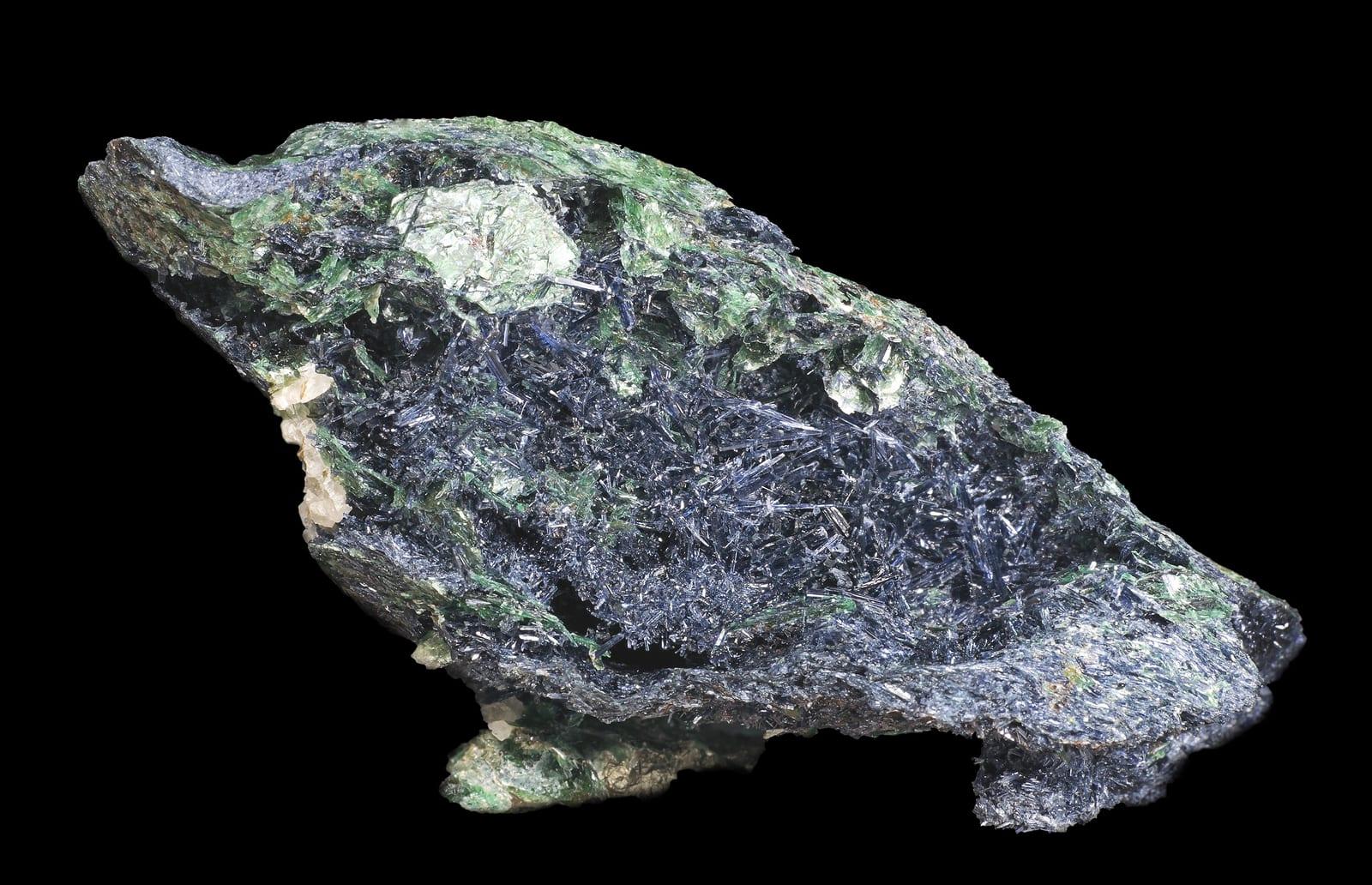
Often found alongside riebeckite
Minerals reported to co-occur with riebeckite. Spotting these in float or country rock is a strong cue you are in the right ground.
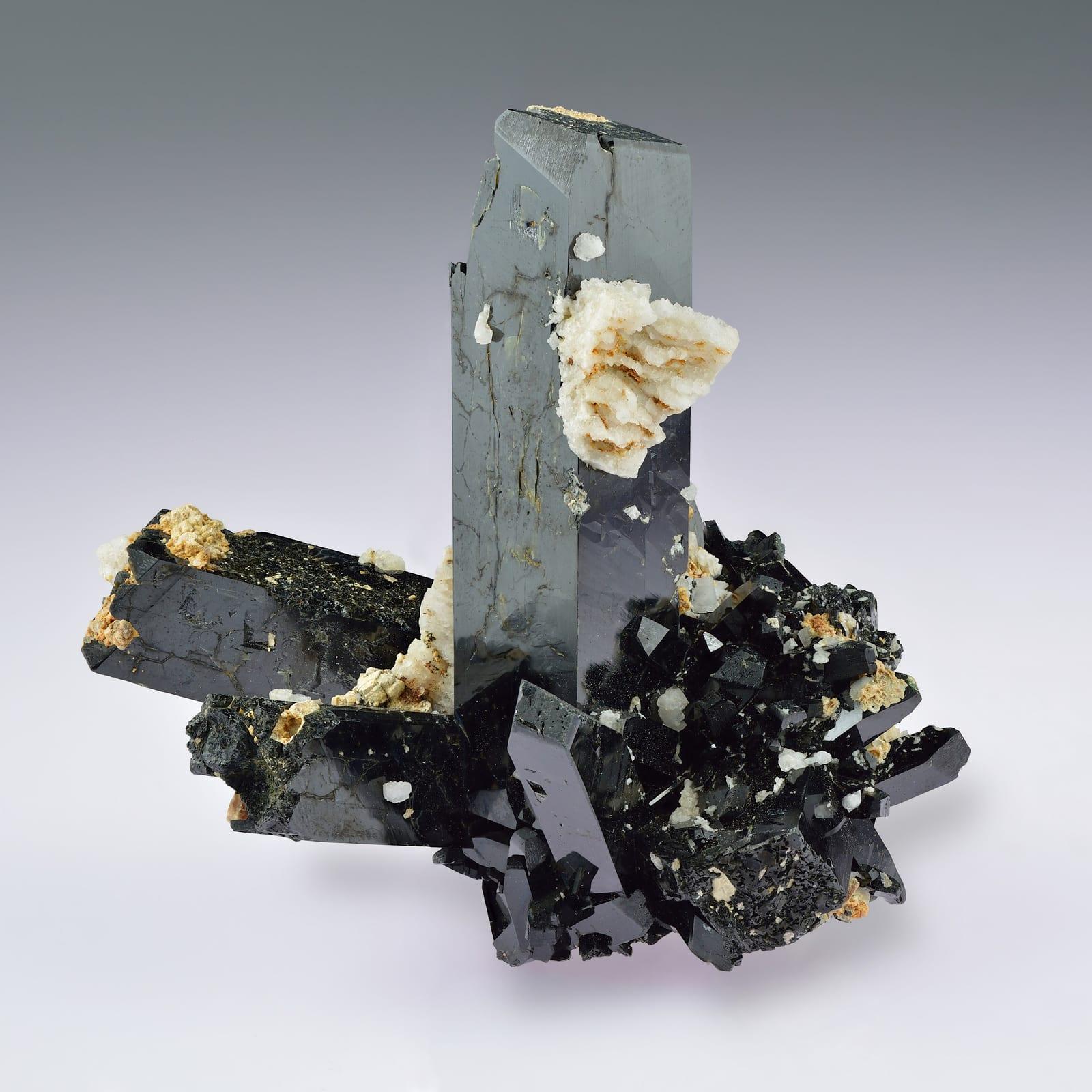
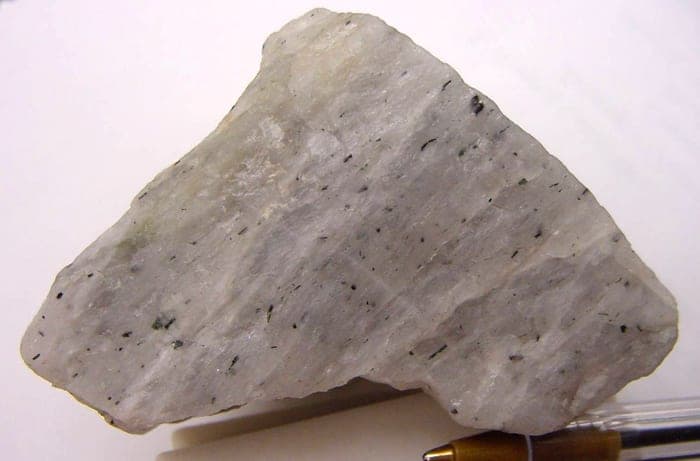
All properties
- Chemical formula
- Na₂Fe²⁺₃Fe³⁺₂Si₈O₂₂(OH)₂
- Mohs hardness
- 6
- Density
- 3.28-3.44 g/cm³
- Streak
- Greenish brown
- Luster
- Vitreous to silky
- Transparency
- Semitransparent
- Crystal system
- Monoclinic
- Crystal habit
- Fibrous, massive, striated
- Cleavage
- Perfect on {110}, intersecting at 56° and 124°; partings on {100}, {010}
- Rarity
- Common
- Uses
- Collector, Lapidary
- Host rock
- In alkalic granites and syenites; rarer in felsic volcanics and granite pegmatites; in some schists
Where rockhounds find riebeckite
1 mapped spotsClassic worldwide localities
- Quincy, Norfolk Co., Massachusetts, USA
- St. Peters Dome, near Pikes Peak, El Paso Co., Colorado, USA
- Pass, Okanogan Co., Washington, USA
- Socotra Island, Indian Ocean
- North from Koegas, Cape Province, and east of Pietersburg, Transvaal, South Africa
- Sultan Hamud, Kenya
Field-hunting tip
Where it forms: In alkalic granites and syenites; rarer in felsic volcanics and granite pegmatites; in some schists. If you start seeing aegirine, nepheline, albite in float, you are in the right ground. Typical habit: fibrous, massive, striated. Train your eye for that shape before scanning the outcrop. In the U.S., the densest reported localities are in Utah. Start trip planning there.
Common questions
How do you identify riebeckite?+
Where is riebeckite found?+
Can I find riebeckite in the United States?+
Is riebeckite safe to handle?+
What rocks look like riebeckite?+
What minerals are found with riebeckite?+
What kind of rock does riebeckite form in?+
What is riebeckite used for?+
Find riebeckite on the map
RockHoundR shows mapped rockhounding spots, access rules, and lets you log every find.

