Snowflake Obsidian is a naturally occurring volcanic glass that features white, snowflake-like patches caused by inclusions of the mineral cristobalite. It is characterized by its smooth, glassy texture and conchoidal fracture, making it a popular material for cabochons and tumbled stones.
Spotting snowflake obsidian in the field
Field marks- 1
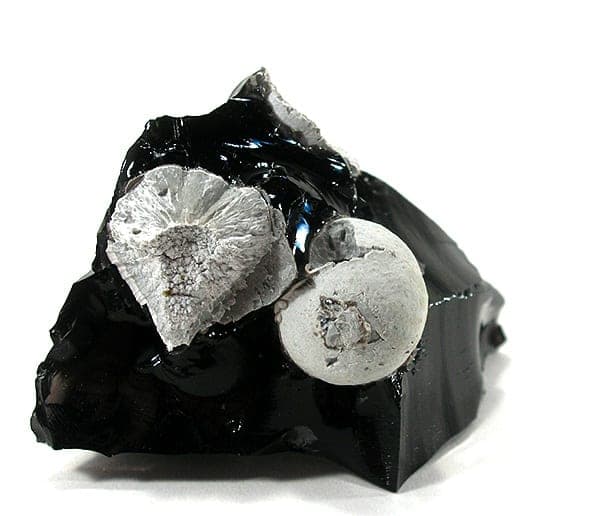
Black glass with white to grey radiating patches that genuinely resemble snowflakes
- 2
The white patches are cristobalite spherulites, not inclusions of another rock
- 3
Same glassy fracture and sharp edges as plain obsidian
The snowflakes are spherulites: radiating clusters of the silica mineral cristobalite that began to crystallize in the glass as it slowly devitrified. That means snowflake obsidian is obsidian caught partway through turning into rock. Look in the same beds as ordinary obsidian, since it often occurs as zones within a single flow. Utah and Oregon both produce good material.
Before you collect
Sharp edges, same as all obsidian. Gloves when breaking.
Straight answers
- Is it worth cutting?
- Cuts like obsidian, but the cristobalite patches are softer than the glass and can undercut slightly, so finish on a soft wheel. High-contrast material with well-separated snowflakes cabs best.
- What is it really worth?
- Inexpensive. Crisp white snowflakes on a deep black ground with even spacing are the quality mark.
- Can you legally keep it?
- Same as obsidian: open on BLM ground, closed in national parks.
Often confused with
Snowflake Obsidian vs. its common look-alikes, and how to tell them apart in the field.
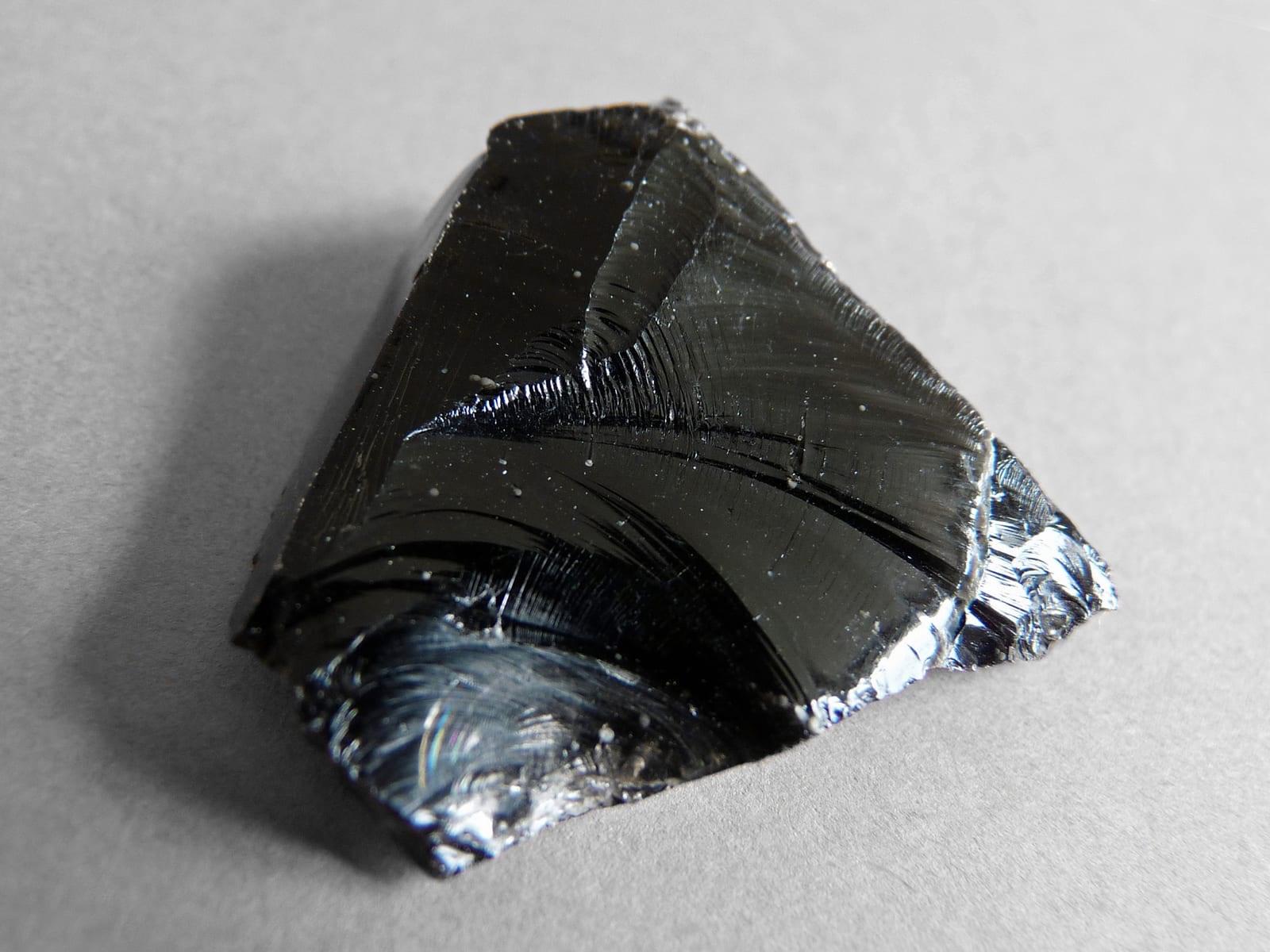
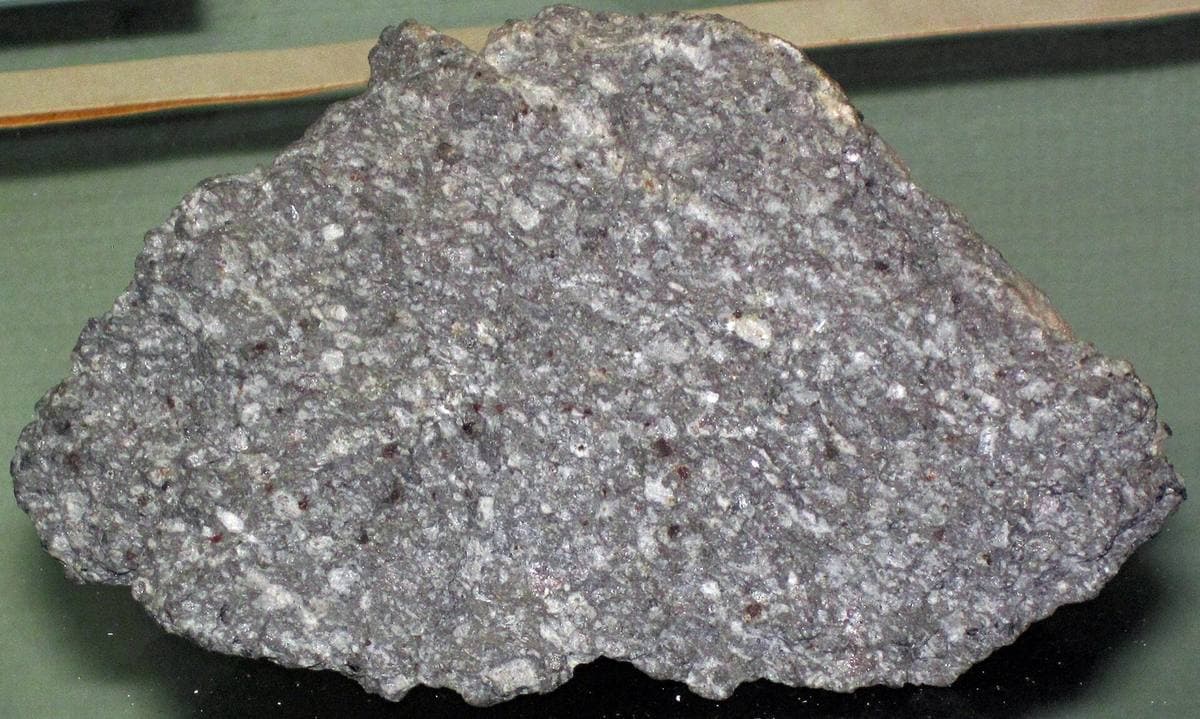
Often found alongside snowflake obsidian
Minerals reported to co-occur with snowflake obsidian. Spotting these in float or country rock is a strong cue you are in the right ground.
All properties
- Mohs hardness
- 5-5.5
- Density
- 2.35-2.60 g/cm³
- Streak
- White
- Luster
- Vitreous
- Transparency
- Opaque
- Crystal system
- Amorphous
- Crystal habit
- Massive
- Cleavage
- None
- Rarity
- Common
- Uses
- Lapidary, Collector, Decorative
- Host rock
- volcanic
Where rockhounds find snowflake obsidian
2 mapped spotsClassic worldwide localities
- USA
- Mexico
- Iceland
- Italy
Field-hunting tip
Where it forms: volcanic. If you start seeing rhyolite, cristobalite in float, you are in the right ground. Typical habit: massive. Train your eye for that shape before scanning the outcrop. In the U.S., the densest reported localities are in Oregon, Utah. Start trip planning there.
Common questions
How do you identify snowflake obsidian?+
Where is snowflake obsidian found?+
Can I find snowflake obsidian in the United States?+
What rocks look like snowflake obsidian?+
What minerals are found with snowflake obsidian?+
What kind of rock does snowflake obsidian form in?+
What is snowflake obsidian used for?+
Find snowflake obsidian on the map
RockHoundR shows mapped rockhounding spots, access rules, and lets you log every find.