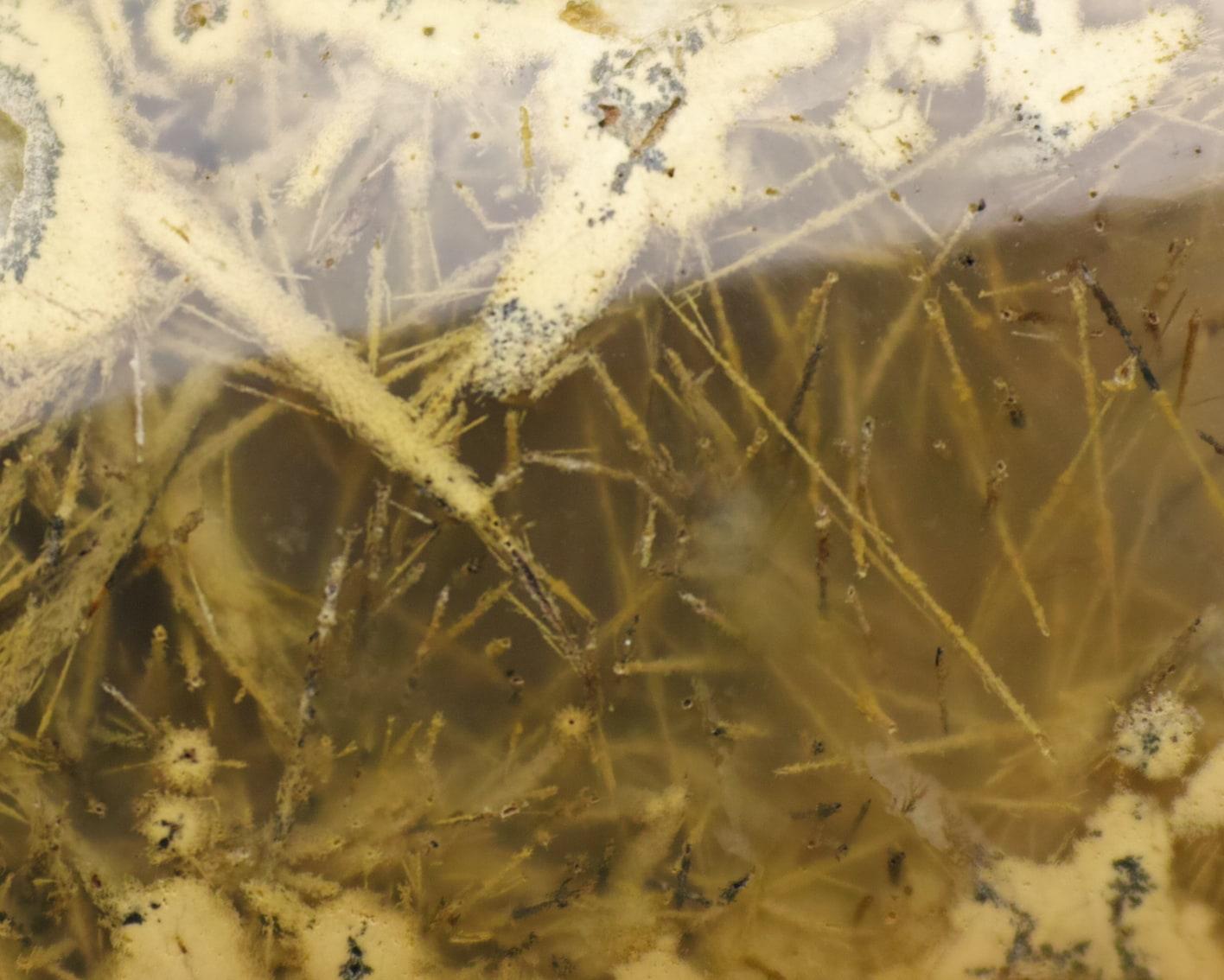
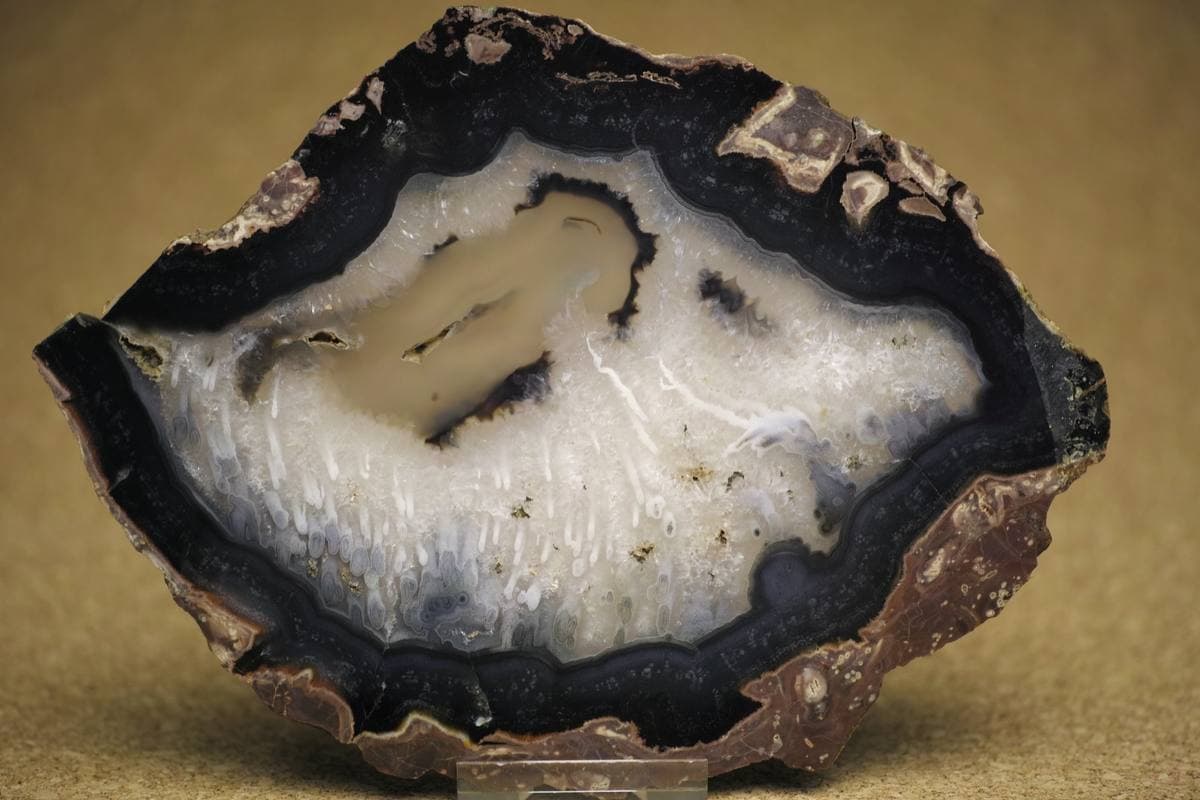
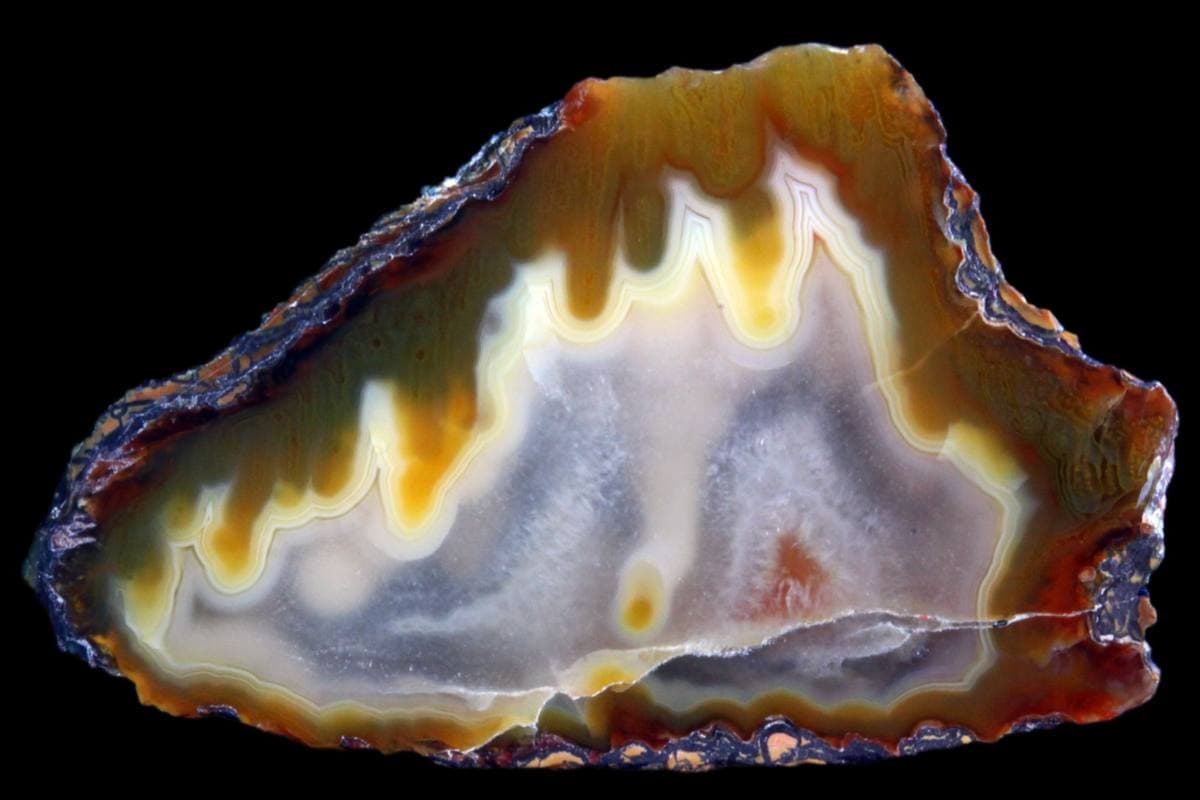
Tube Agate is a variety of chalcedony characterized by distinctive, hollow, tube-like formations that often radiate within the stone. These tubes, which can be clear or filled with contrasting minerals, are created during the deposition process in volcanic cavities. Collectors prize them for their unique structural patterns which reveal intricate details when sliced and polished.
Spotting tube agate in the field
Field marks- 1
Hollow or mineral-filled tubes running through the chalcedony
- 2
Cut across, they appear as rings or dots; cut along, as long parallel straws
- 3
Often paired with banding that wraps around the tube openings
Tube agate formed where the silica grew around fine channels, sometimes mineral fibers, sometimes escaping fluid. It is a cutter's material: from the outside a tube agate nodule is indistinguishable from any other, and the tubes only announce themselves on a sawn face. The pleasure of it is that a single nodule gives completely different images depending on the angle you take it at.
Straight answers
- Is it worth cutting?
- Worth cutting twice. Take one slab across the tubes for the polka-dot face and one along them for the straw face, then decide which the rock is better at.
- What is it really worth?
- Modest on its own, more when the tubes are clean and numerous enough to make a strong pattern.
- Can you legally keep it?
- Follows the bed it came from.
Often confused with
Tube Agate vs. its common look-alikes, and how to tell them apart in the field.
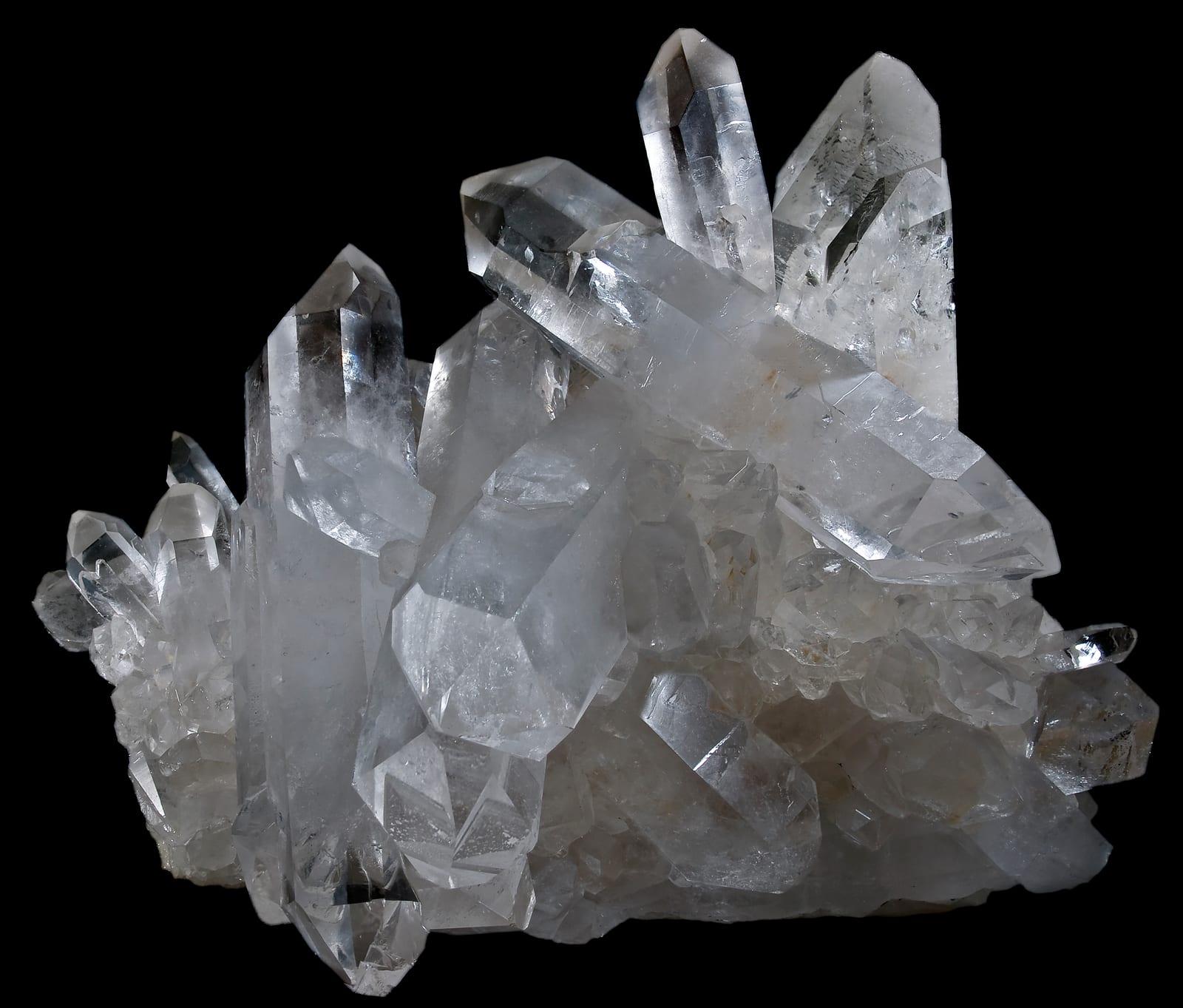
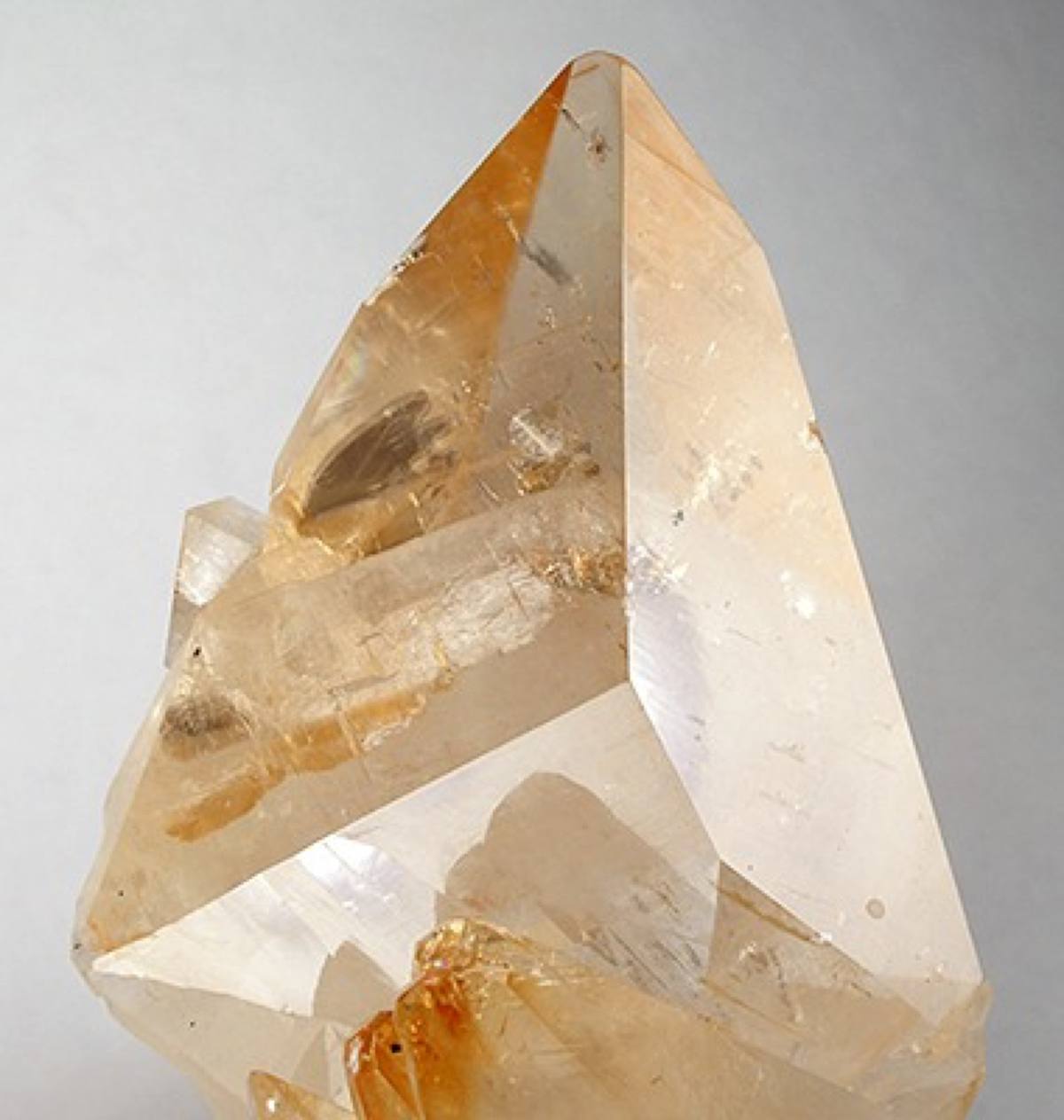
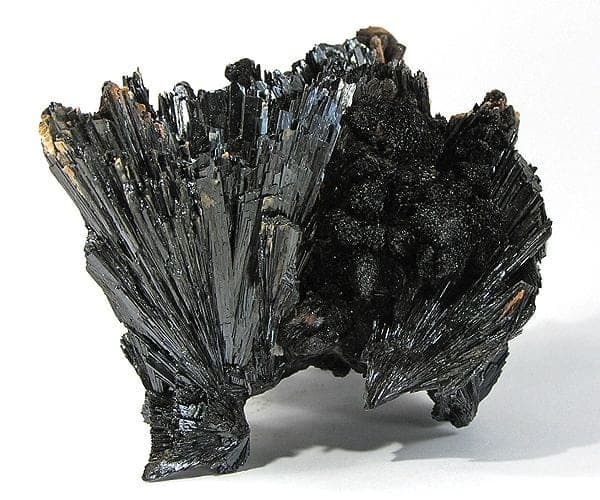
Often found alongside tube agate
Minerals reported to co-occur with tube agate. Spotting these in float or country rock is a strong cue you are in the right ground.
All properties
- Chemical formula
- SiO₂
- Mohs hardness
- 6.5-7
- Density
- 2.6-2.7 g/cm³
- Streak
- White
- Luster
- Waxy
- Transparency
- Translucent
- Crystal system
- Trigonal
- Crystal habit
- Botryoidal
- Cleavage
- None
- Rarity
- Common
- Uses
- Lapidary, Collector, Decorative
- Host rock
- rhyolite cavities
Where rockhounds find tube agate
Classic worldwide localities
- Ojo Laguna, Mexico
- Montana, USA
- Agua Nueva, Mexico
- Patagonia, Argentina
Field-hunting tip
Where it forms: rhyolite cavities. If you start seeing quartz, calcite, goethite in float, you are in the right ground. Typical habit: botryoidal. Train your eye for that shape before scanning the outcrop.
More tube agate photos
Common questions
How do you identify tube agate?+
Where is tube agate found?+
What rocks look like tube agate?+
What minerals are found with tube agate?+
What kind of rock does tube agate form in?+
What is tube agate used for?+
Find tube agate on the map
RockHoundR shows mapped rockhounding spots, access rules, and lets you log every find.