Amethyst vs Fluorite: how to tell them apart
Quick answer
Purple amethyst and purple fluorite look alike but differ in hardness. Amethyst is hard (Mohs 7), scratches glass, and has no cleavage, while fluorite is soft (Mohs 4), is scratched by a knife, and cleaves into octahedra. A scratch test settles it, and fluorite often glows under UV light.
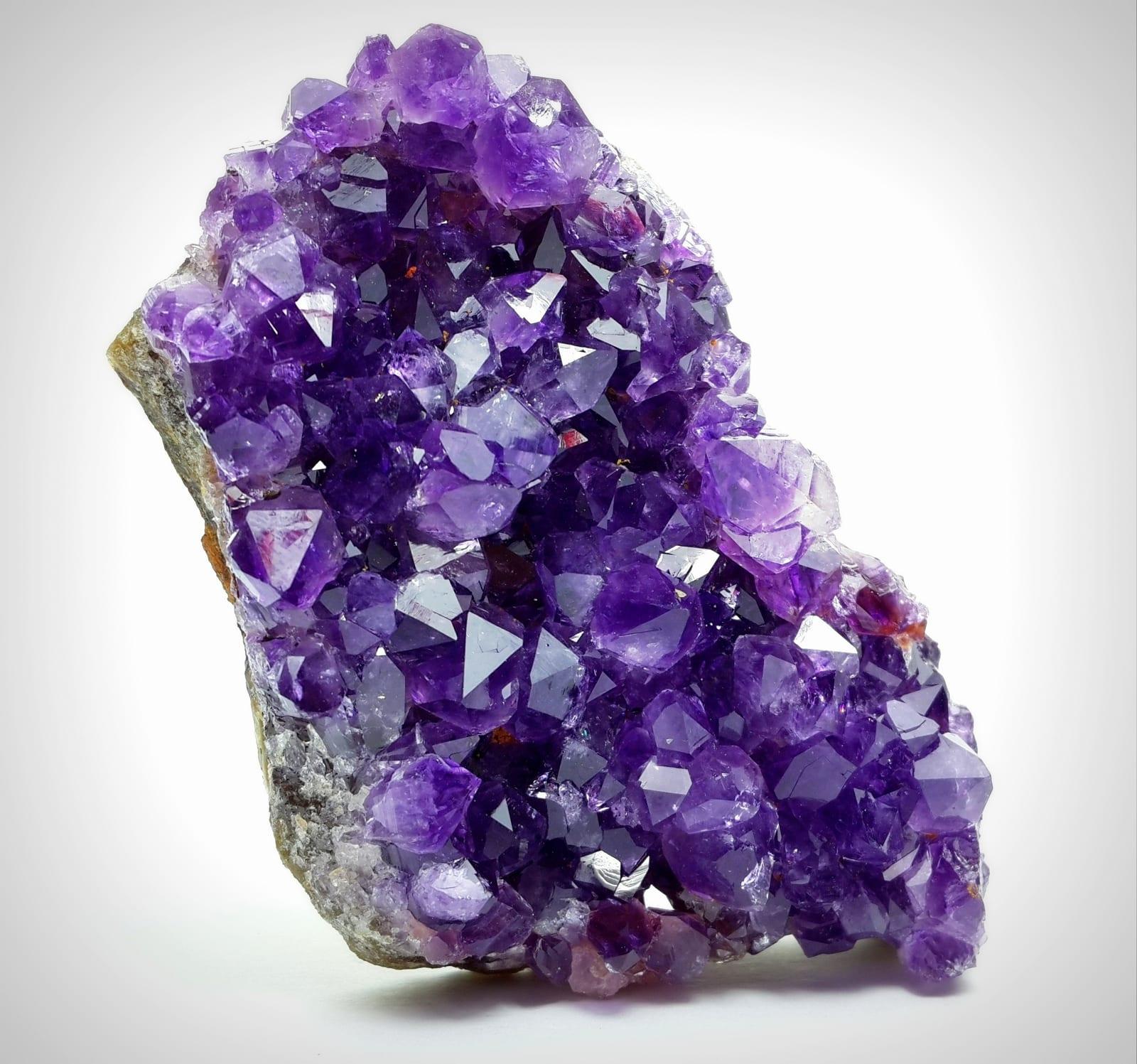
Amethyst
Full amethyst guide →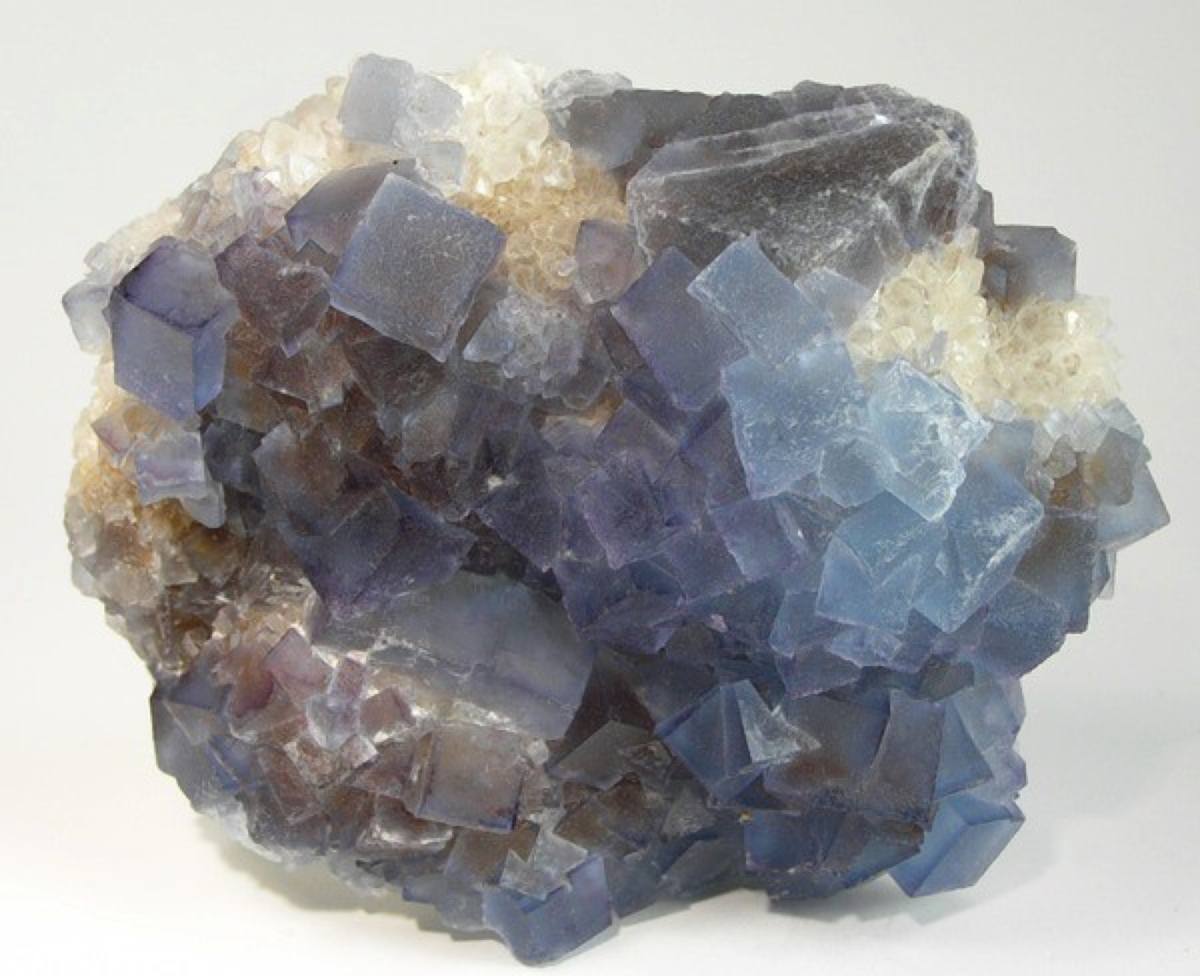
Fluorite
Full fluorite guide →Purple amethyst and purple fluorite are a classic mix-up because both grow as showy violet crystals. They are easy to separate physically, though. Amethyst is purple quartz, hard and cleavage-free, ending in six-sided points. Fluorite is much softer, cleaves perfectly into octahedra, often forms cubes, and frequently fluoresces under ultraviolet light, the mineral that gave fluorescence its name. A scratch test is decisive.
What is the difference between Amethyst and Fluorite?
Hardness
- Amethyst
- Mohs 7. Scratches glass; a knife will not scratch it.
- Fluorite
- Mohs 4. A steel knife scratches it readily.
Cleavage
- Amethyst
- None. Breaks with curved conchoidal fracture.
- Fluorite
- Perfect octahedral cleavage in four directions.
Crystal shape
- Amethyst
- Six-sided prisms with pyramidal terminations.
- Fluorite
- Cubes and octahedra.
Fluorescence under UV
- Amethyst
- Usually none.
- Fluorite
- Often fluoresces blue or purple under UV light.
Amethyst vs Fluorite: properties compared
Highlighted rows are where Amethyst and Fluorite differ. The badge marks the most reliable at-a-glance separator. Property data from the RockHoundR mineral database.
| Property | Amethyst | Fluorite |
|---|---|---|
| Type(differs)Best field test | Gemstone | Mineral |
| Mohs hardness(differs) | 7Harder | 4 |
| Streak | White | White |
| Transparency(differs) | Transparent | Transparent to Translucent |
| Luster(differs) | Vitreous | Vitreous; Dull When Massive |
| Cleavage(differs) | None | {111}, Perfect; On {011}, Parting, Poor |
| Crystal system(differs) | Trigonal | Cubic |
| Crystal habit(differs) | Prismatic Crystals in Geodes | Cubic Crystals, Octahedral, Dodecahedral, Massive |
| Fluorescence | Not recorded | Blue Under SW and LW UV |
| Chemical formula(differs) | SiO₂ | CaF₂ |
Why are Amethyst and Fluorite confused?
Both occur as transparent purple crystals in vugs and veins, sometimes in the same color range, and both are popular display pieces. To the eye, a purple fluorite cube and an amethyst point can read as the same stone until hardness or crystal shape is checked.
How to tell Amethyst from Fluorite
Ordered from the most reliable field test to the least. Start at the top.
- 1
Scratch test
ReliableTry the crystal against glass and against a steel knife. Amethyst at Mohs 7 scratches glass and resists the knife. Fluorite at Mohs 4 is scratched by the knife and will not scratch glass. This separates them at once.
- 2
Look at crystal shape and cleavage
ReliableCubes, octahedra, or chips that break into triangular octahedral faces mean fluorite. Six-sided prisms ending in points, with shell-like fracture rather than flat cleavage planes, mean amethyst.
- 3
UV light test
UsefulUnder an ultraviolet lamp, many fluorites glow blue or violet, while amethyst typically stays dark. A clear fluorescent response supports fluorite, though not every fluorite fluoresces, so treat a negative result as inconclusive.
Amethyst or Fluorite: which is more valuable?
Fine deep-purple amethyst in clean points and cathedral clusters is widely collected and durable enough for everyday jewelry. Purple fluorite is prized by mineral collectors for its crystal form and color, but its softness and easy cleavage make it a display stone rather than a ring stone. Condition and color drive value in both.
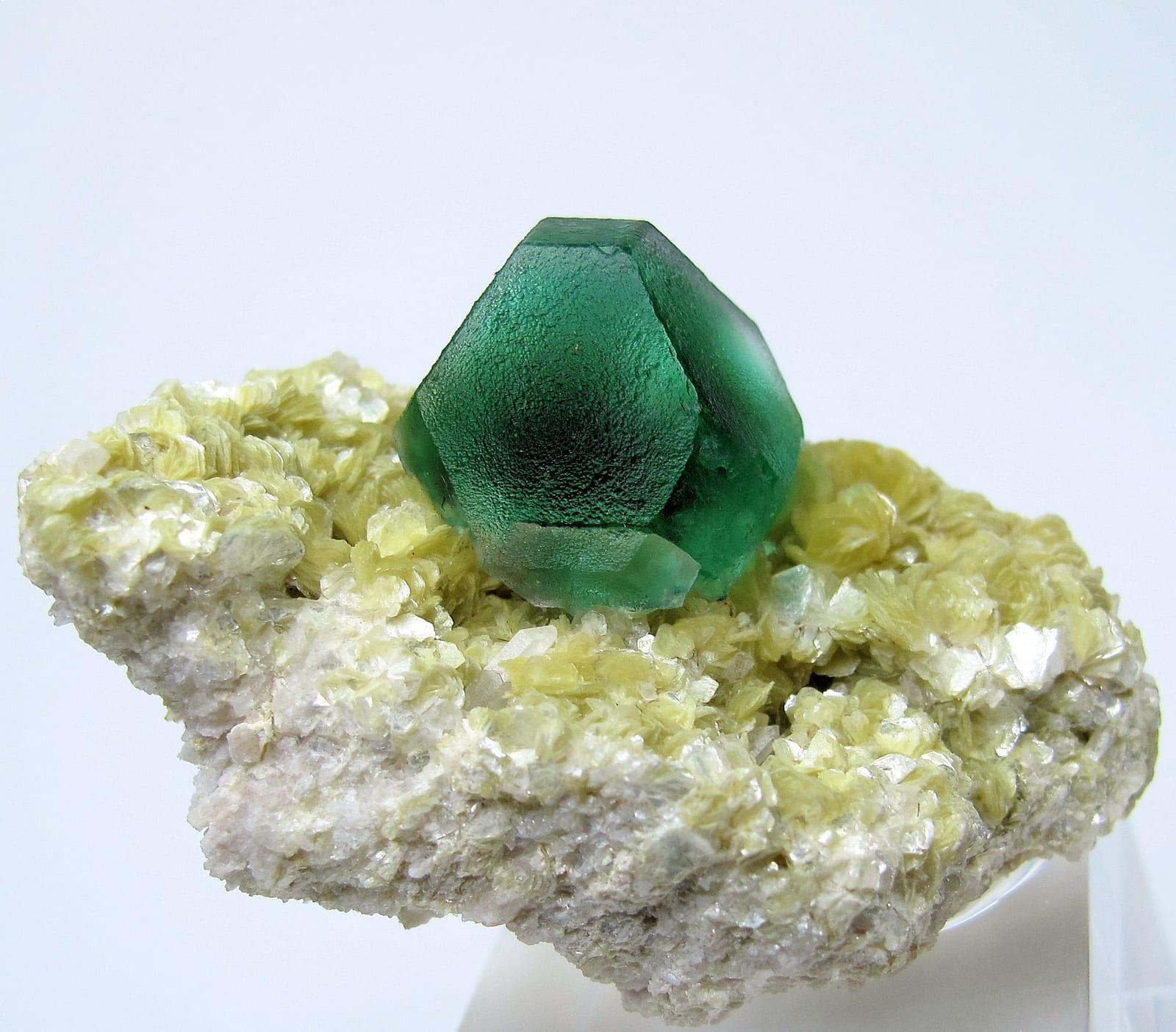
Amethyst and Fluorite photos
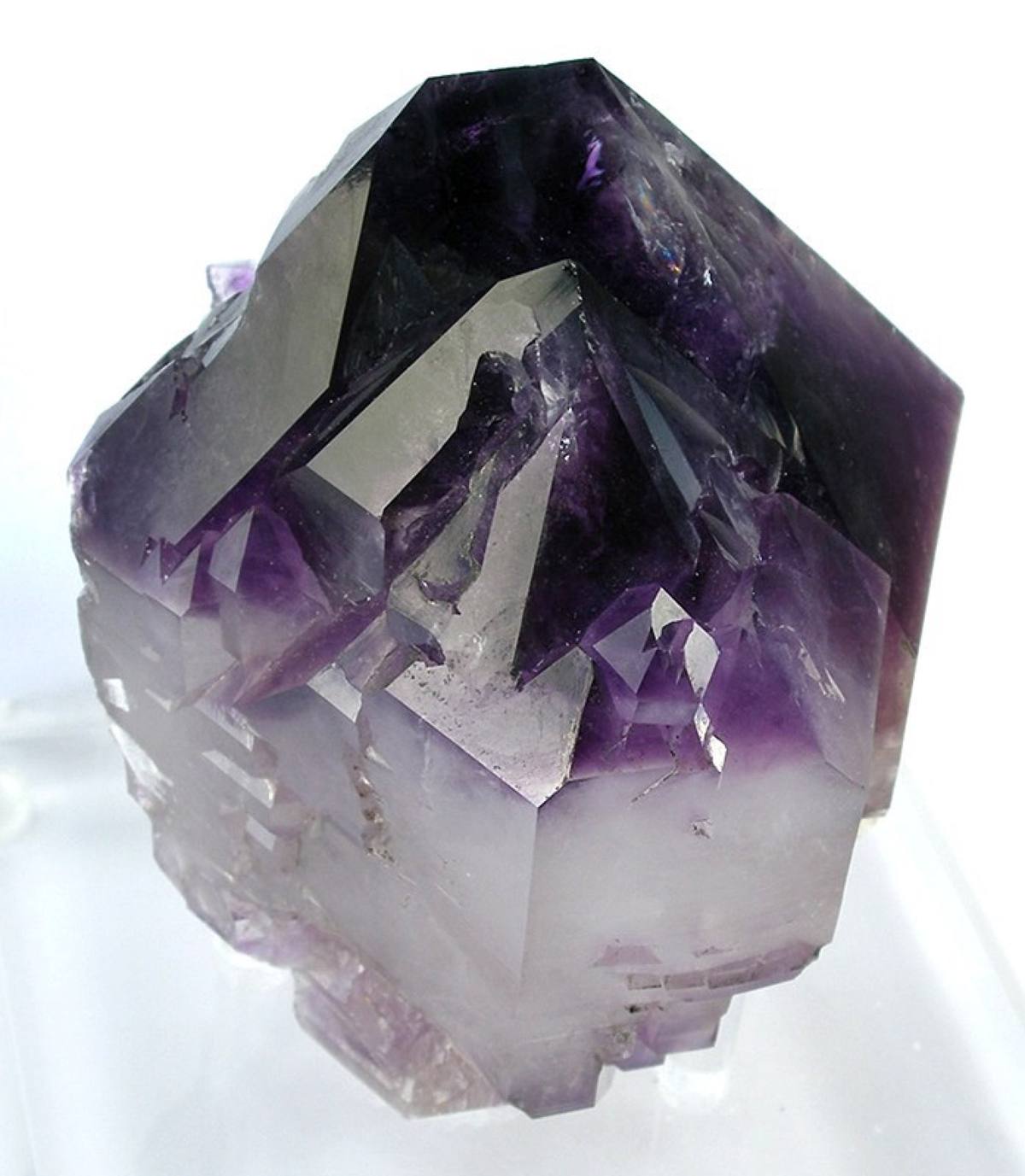
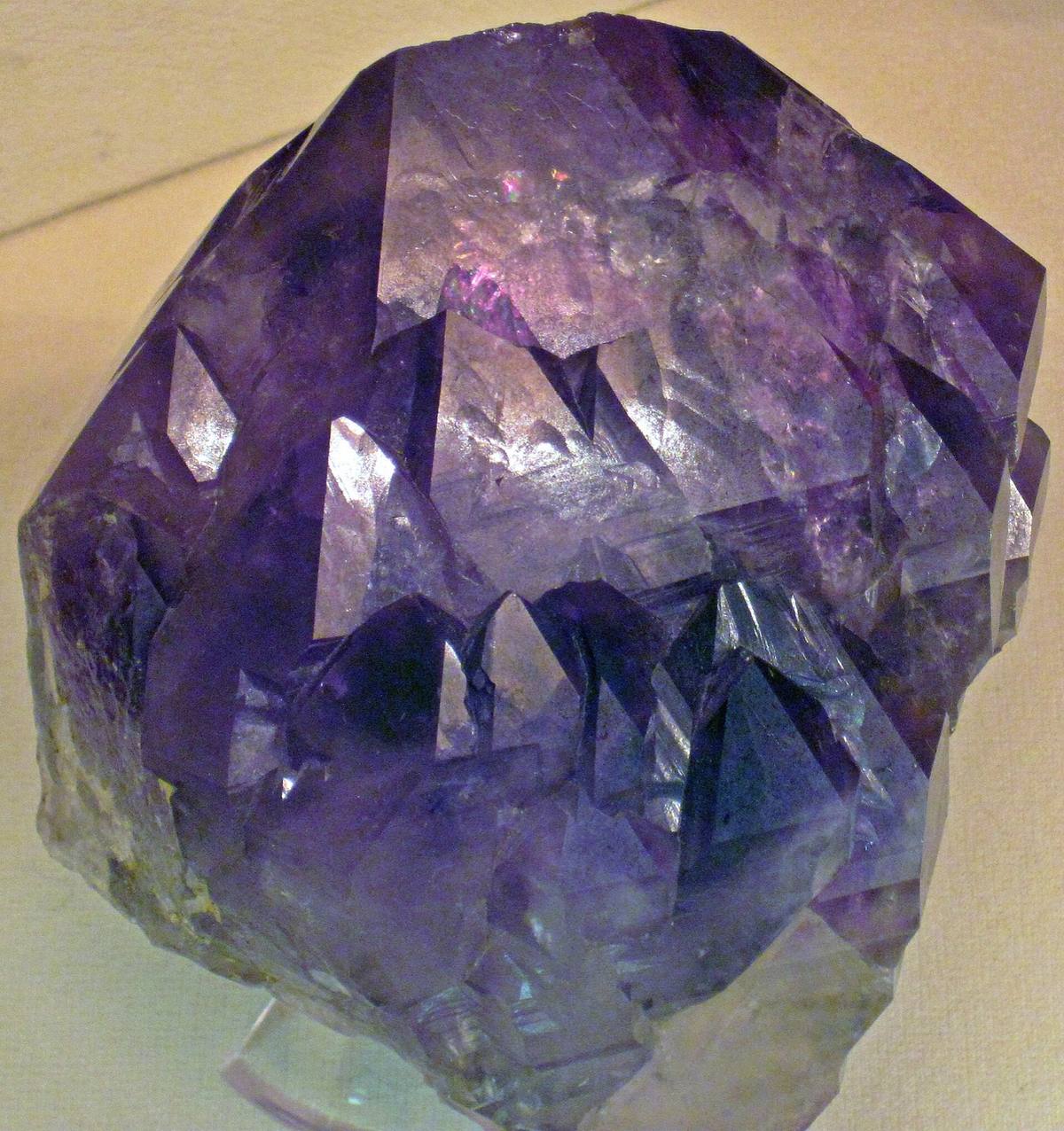
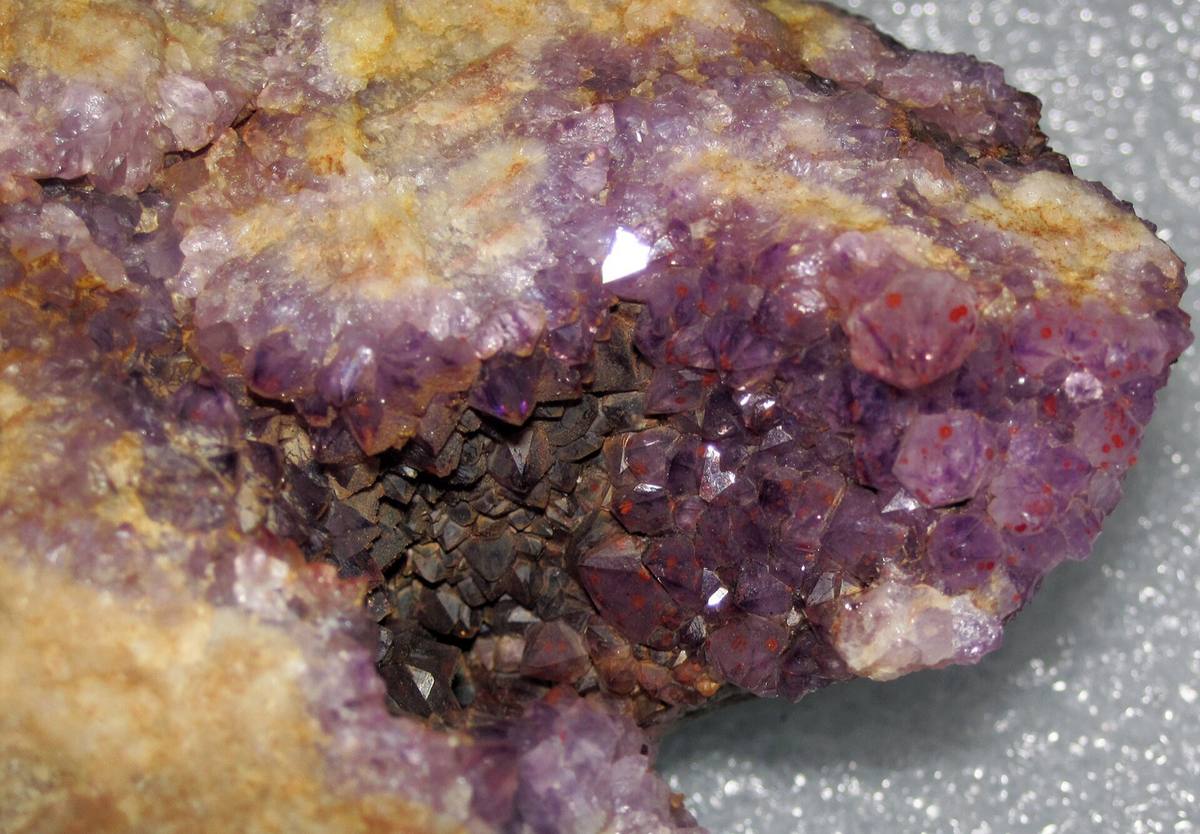
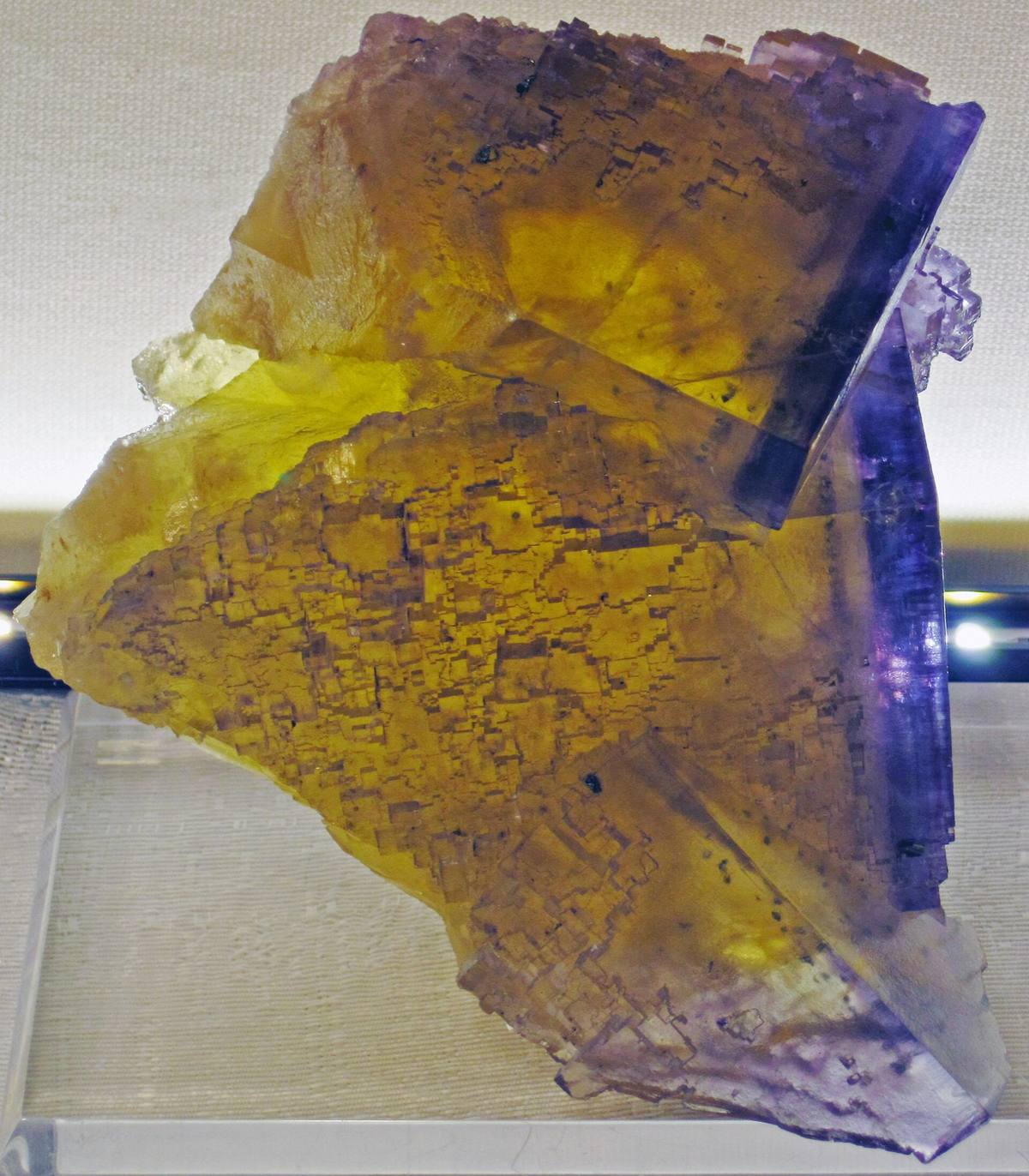
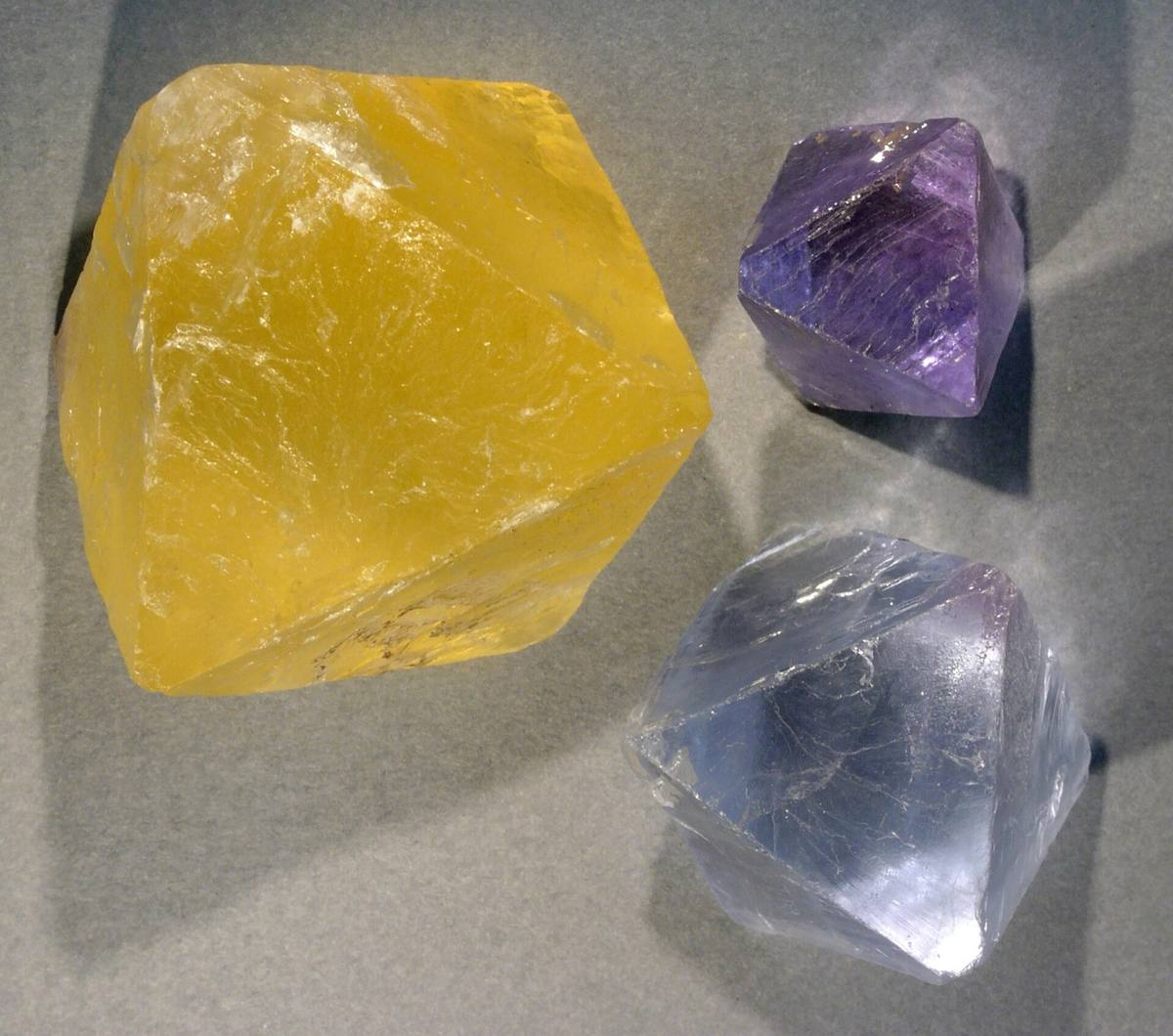
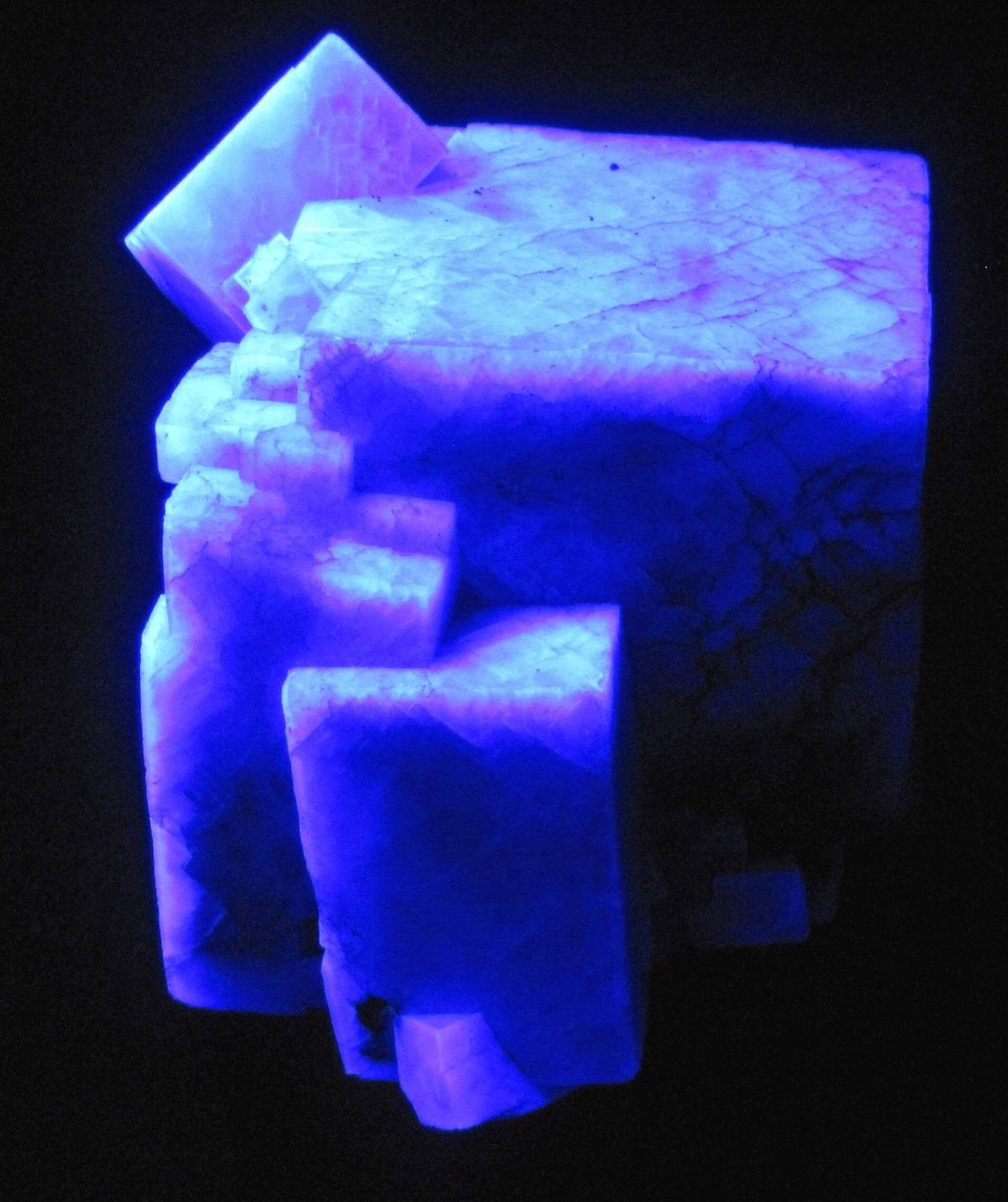
Where to find each
Bottom line
Scratches glass, no cleavage, six-sided points: amethyst. Scratched by a knife, octahedral cleavage, cubes, often UV-reactive: fluorite. The hardness test alone is usually enough.
Common questions
How do I tell amethyst from purple fluorite?+
Does fluorite glow under UV light?+
Is amethyst harder than fluorite?+
Why does my purple crystal break into flat pieces?+
References
Identify your find in the field
RockHoundR maps rockhounding spots, shows land access, and lets you log and label every find so you stop second-guessing look-alikes.