Hematite vs Magnetite: how to tell them apart
Quick answer
The difference between hematite and magnetite comes down to streak and magnetism. Hematite leaves a cherry-red streak and is, at most, weakly magnetic, while magnetite leaves a black streak and is strongly magnetic. Rub each on unglazed tile and hold up a magnet: a red streak means hematite, a strong pull means magnetite.
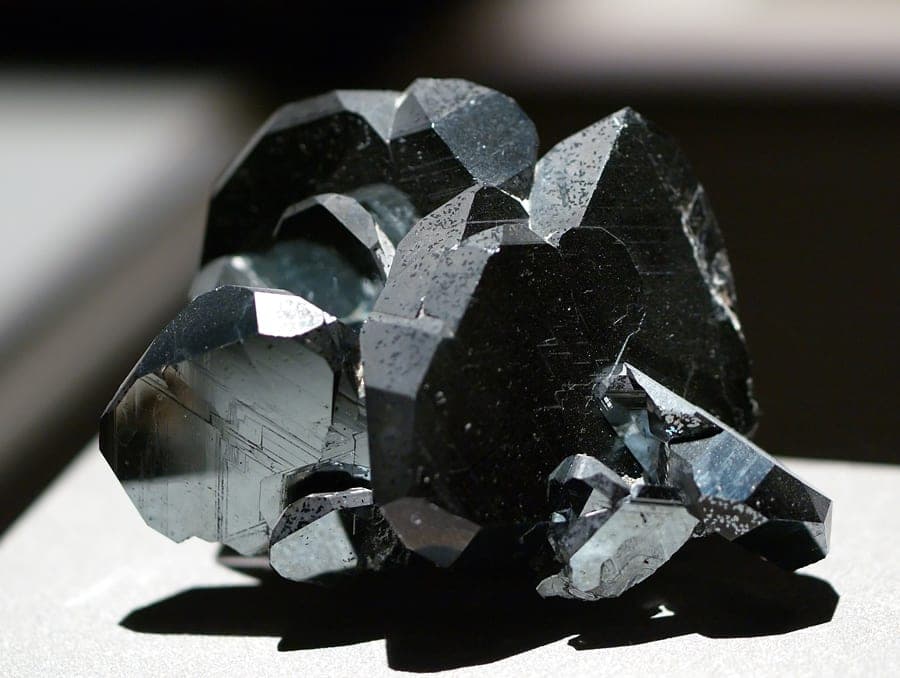
Hematite
Full hematite guide →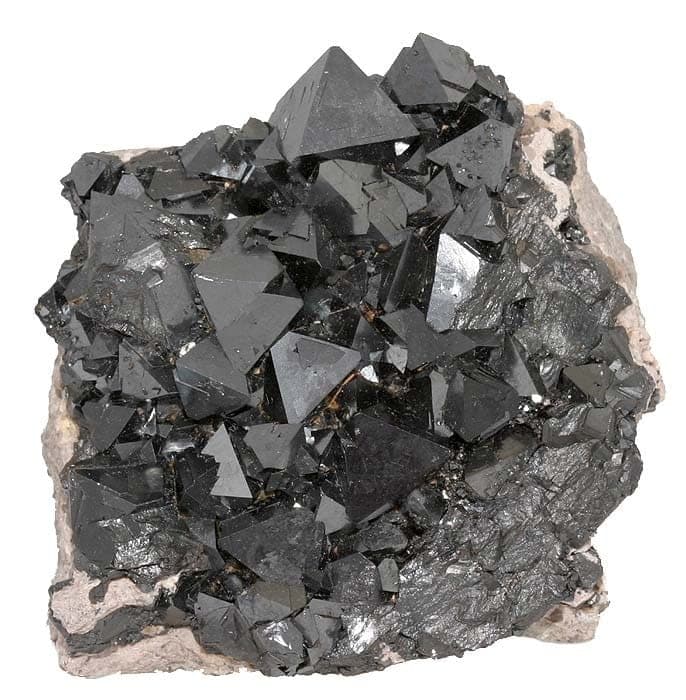
Magnetite
Full magnetite guide →Hematite and magnetite are the two big iron-ore minerals, both heavy, dark, and metallic, and both common in the same deposits. Two simple tests separate them cleanly. Magnetite is strongly magnetic and leaves a black streak. Hematite leaves an unmistakable cherry-red to reddish-brown streak and is, at most, weakly magnetic. The streak test alone is usually decisive.
What is the difference between Hematite and Magnetite?
Streak
- Hematite
- Cherry-red to reddish-brown, always.
- Magnetite
- Black.
Magnetism
- Hematite
- Weak at most; natural hematite is not strongly magnetic.
- Magnetite
- Strongly magnetic; attracts a magnet firmly.
Crystal form
- Hematite
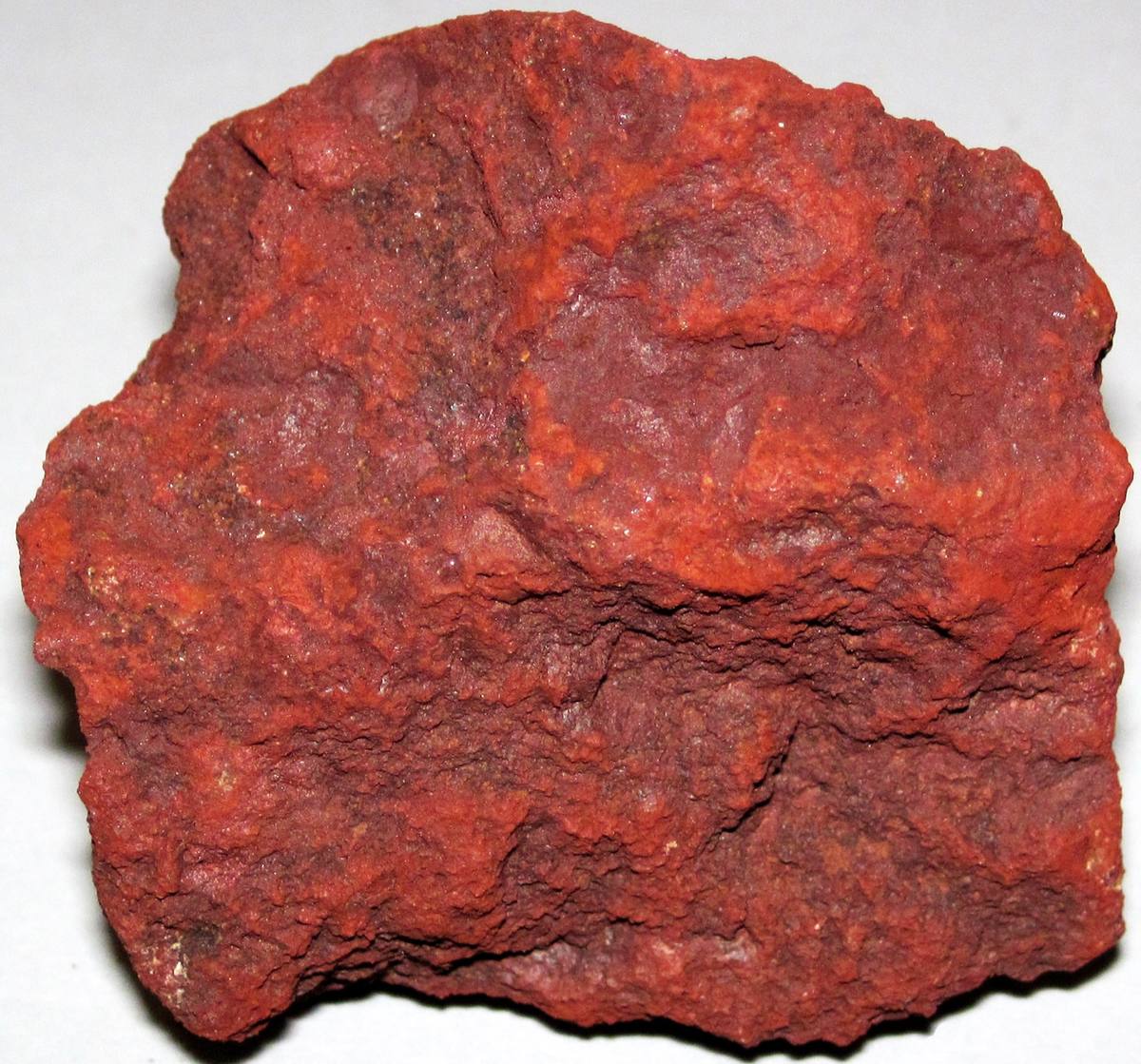
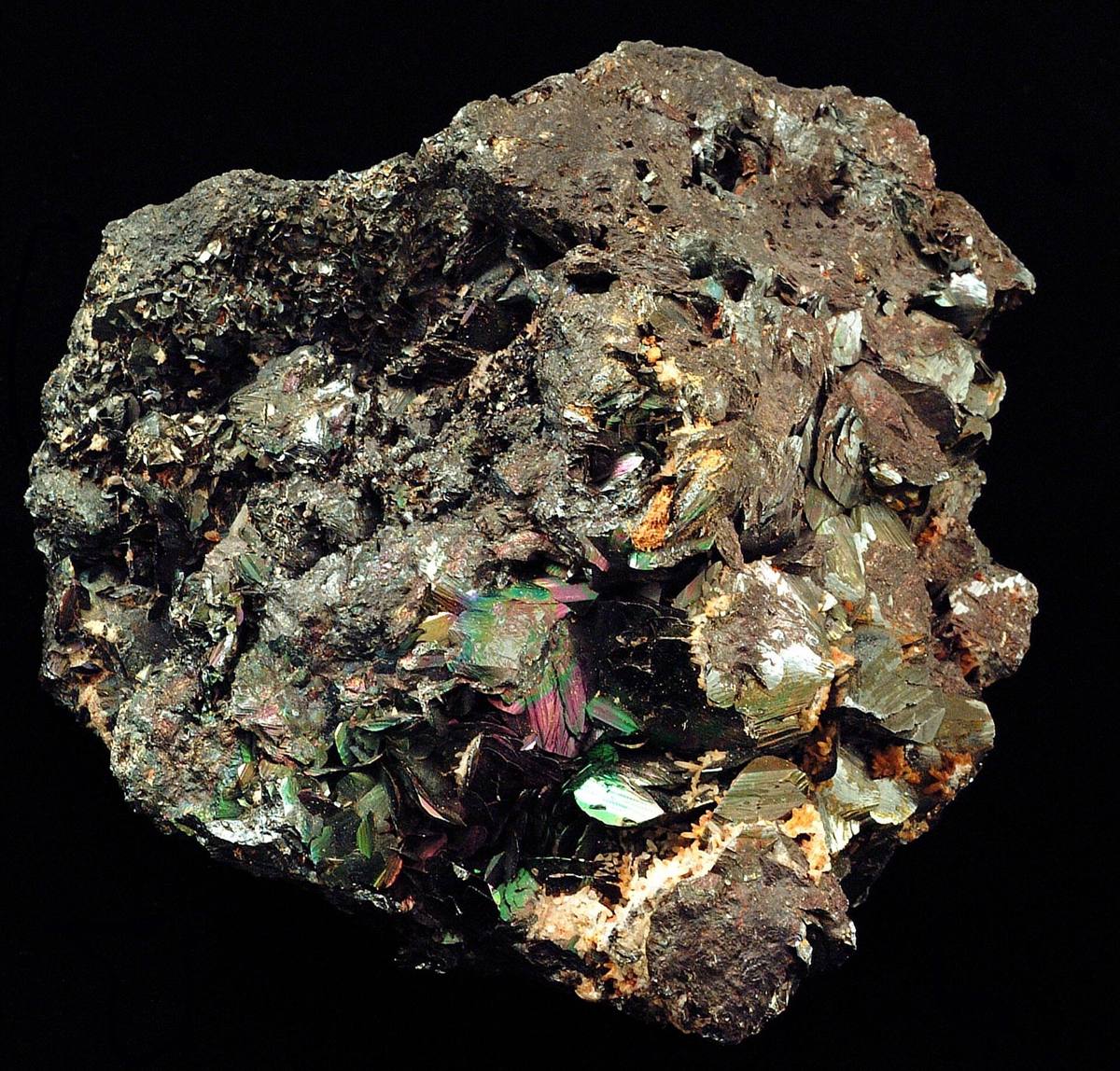
- Tabular plates, micaceous flakes, botryoidal kidney shapes.
- Magnetite
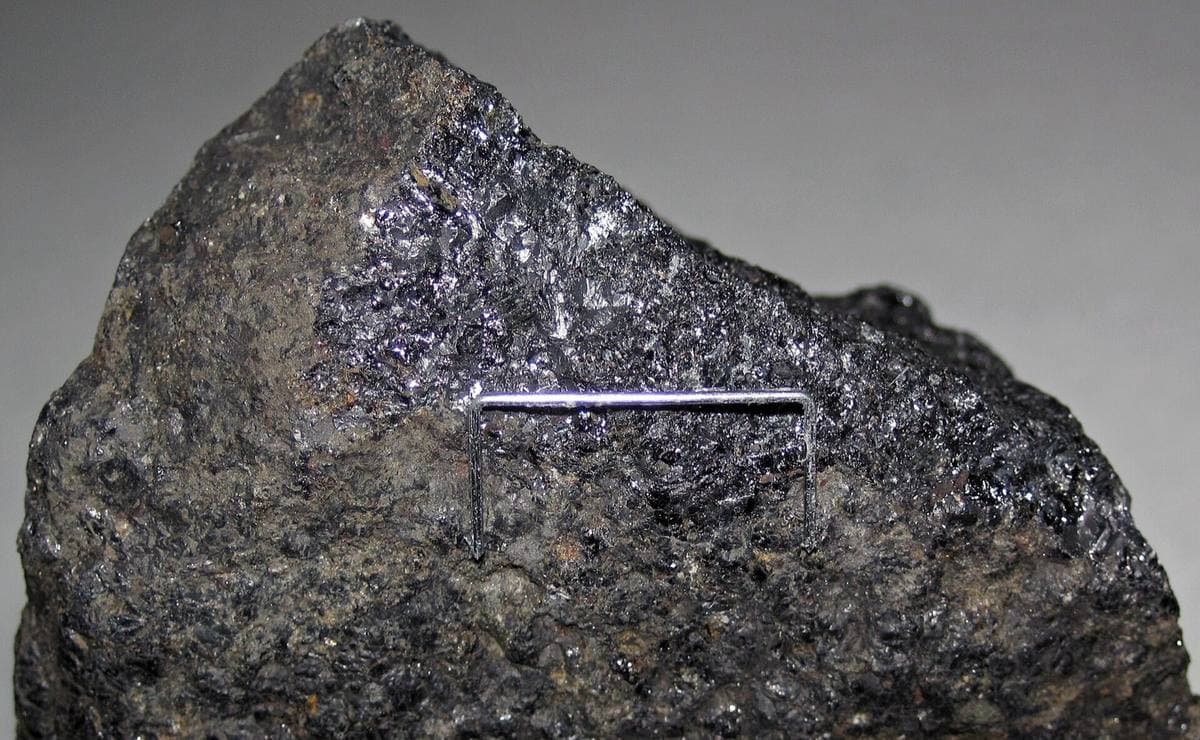
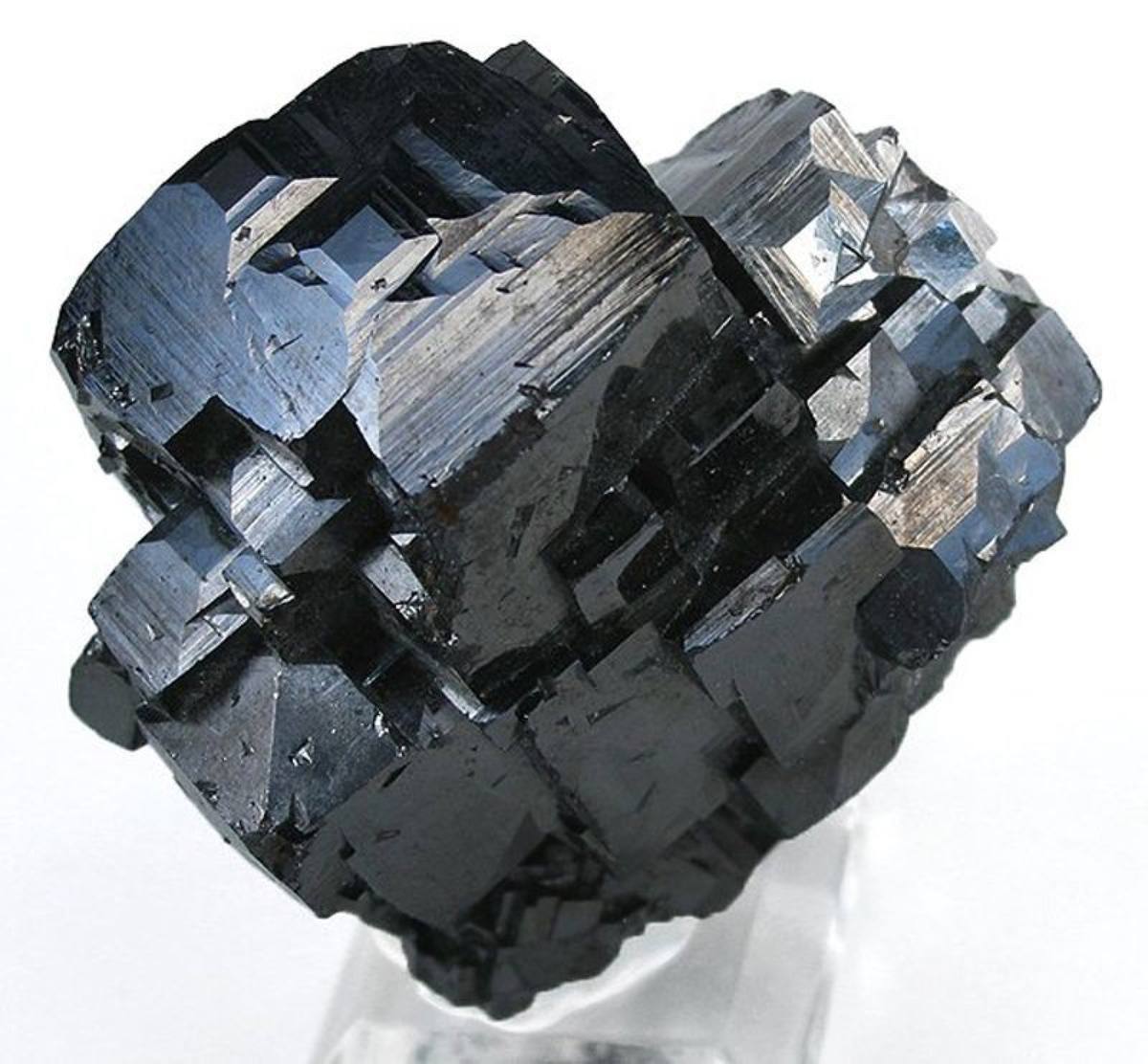
- Octahedra and dodecahedra; often granular masses.
Color in detail
- Hematite
- Grey to black, often with a reddish cast or rusty edges.
- Magnetite
- Iron-black, no red tint.
Hematite vs Magnetite: properties compared
Highlighted rows are where Hematite and Magnetite differ. The badge marks the most reliable at-a-glance separator. Property data from the RockHoundR mineral database.
| Property | Hematite | Magnetite |
|---|---|---|
| Type | Mineral | Mineral |
| Mohs hardness(differs)Best field test | 5-6 | 5.5-6.5 |
| Streak(differs) | Cherry-red or Reddish Brown | Black |
| Transparency(differs) | Opaque, Transparent On Thin Edges | Opaque, Translucent Through Very Thin Edges |
| Luster(differs) | Metallic or Submetallic to Dull | Metallic to Submetallic, May Be Dull |
| Cleavage(differs) | Parting On {0001} and {1011} Due to Twinning | Parting On {111}, Very Good |
| Crystal system(differs) | Trigonal | Cubic |
| Crystal habit(differs) | Tabular, Micaceous, Botryoidal, Massive, Or Reniform | Octahedral Crystals, Massive, Granular |
| Chemical formula(differs) | Fe₂O₃ | Fe₃O₄ |
Why are Hematite and Magnetite confused?
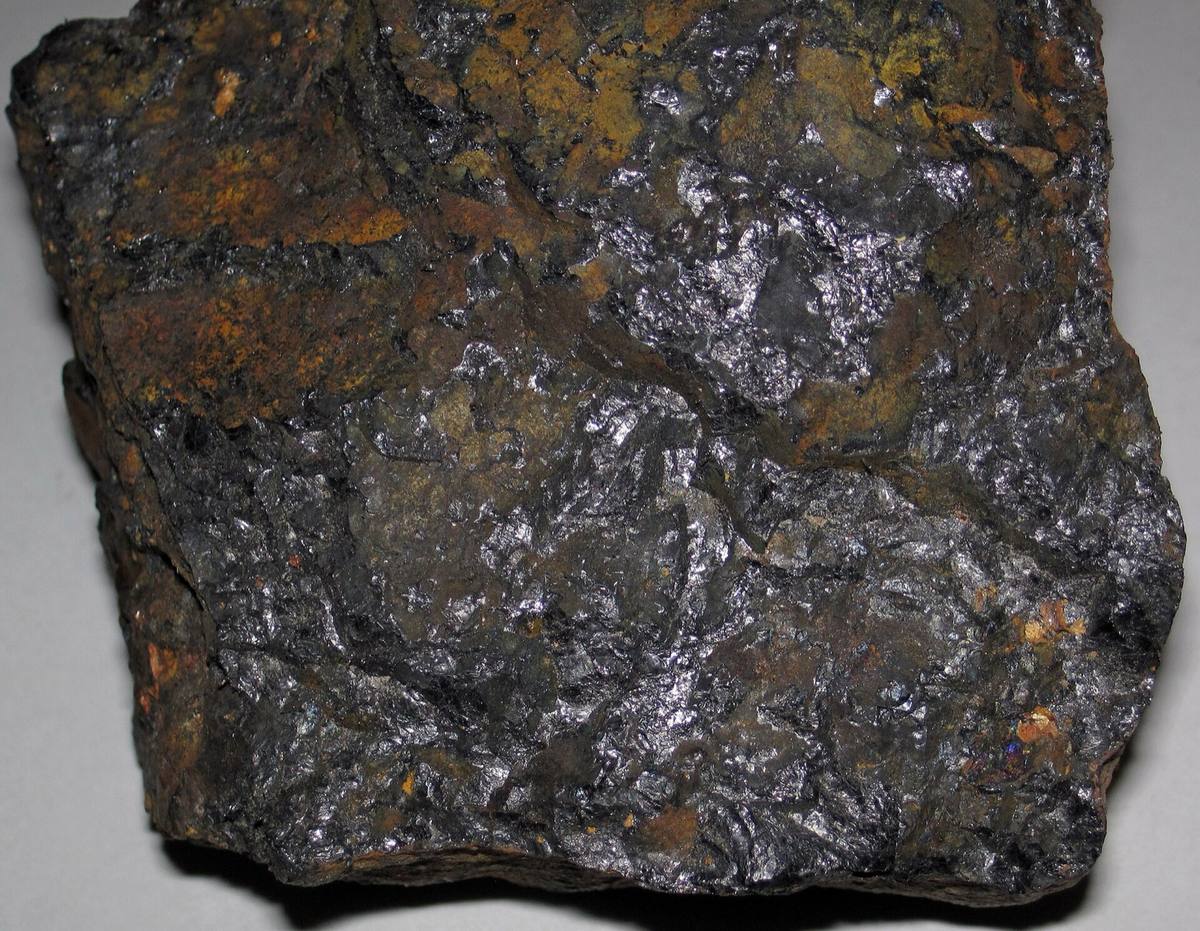
Massive specimens of both are steel-grey to black with a metallic to dull sheen and similar hardness, and they weather and intergrow together in iron formations. A solid grey lump can be either until you check the streak or reach for a magnet.
How to tell Hematite from Magnetite
Ordered from the most reliable field test to the least. Start at the top.
- 1
Streak on unglazed tile
ReliableDrag the specimen across a streak plate or the back of a tile. Hematite leaves a distinctive cherry-red to reddish-brown line every time, even when the specimen looks black. Magnetite leaves a black line. This is the single best test.
- 2
Magnet test
ReliableHold a magnet to the sample. Magnetite is strongly attracted and may even hold the magnet. Natural hematite is, at most, weakly attracted. Beware so-called magnetic hematite jewelry, which is a synthetic magnetized material, not natural hematite.
- 3
Look at the crystal habit
UsefulShiny tabular plates, a stack of micaceous flakes, or a smooth botryoidal kidney surface point to hematite (specular hematite and kidney ore). Sharp octahedral crystals or a uniform granular mass point to magnetite.
Hematite or Magnetite: which is more valuable?
Both are primarily iron ores and inexpensive, but crystallized specimens have collector value: mirror-bright specular hematite, rosettes (iron roses), and sharp octahedral magnetite crystals are sought after. Polished hematite is popular in jewelry, while lodestone, naturally magnetized magnetite, is a curiosity piece.
Hematite and Magnetite photos
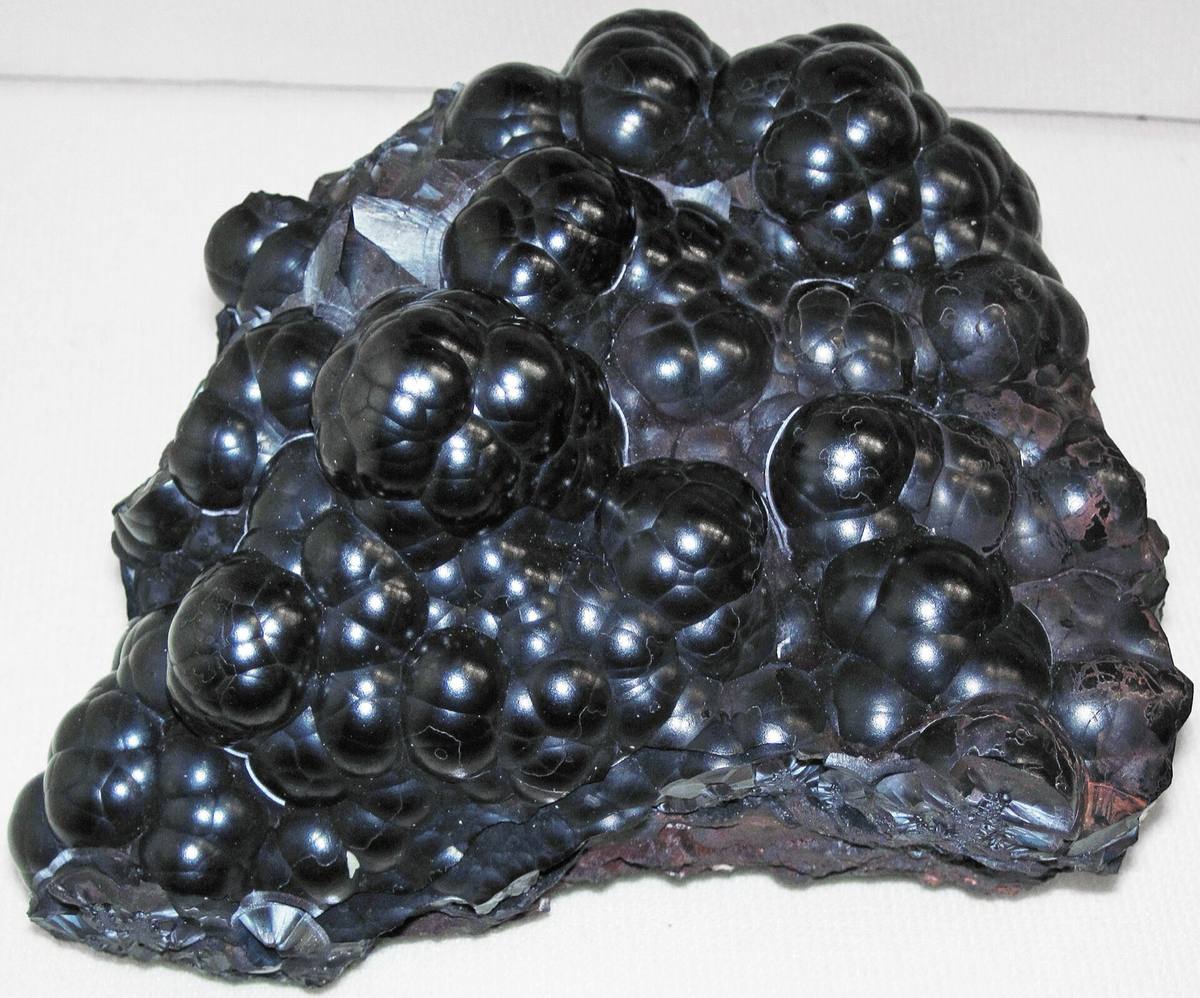
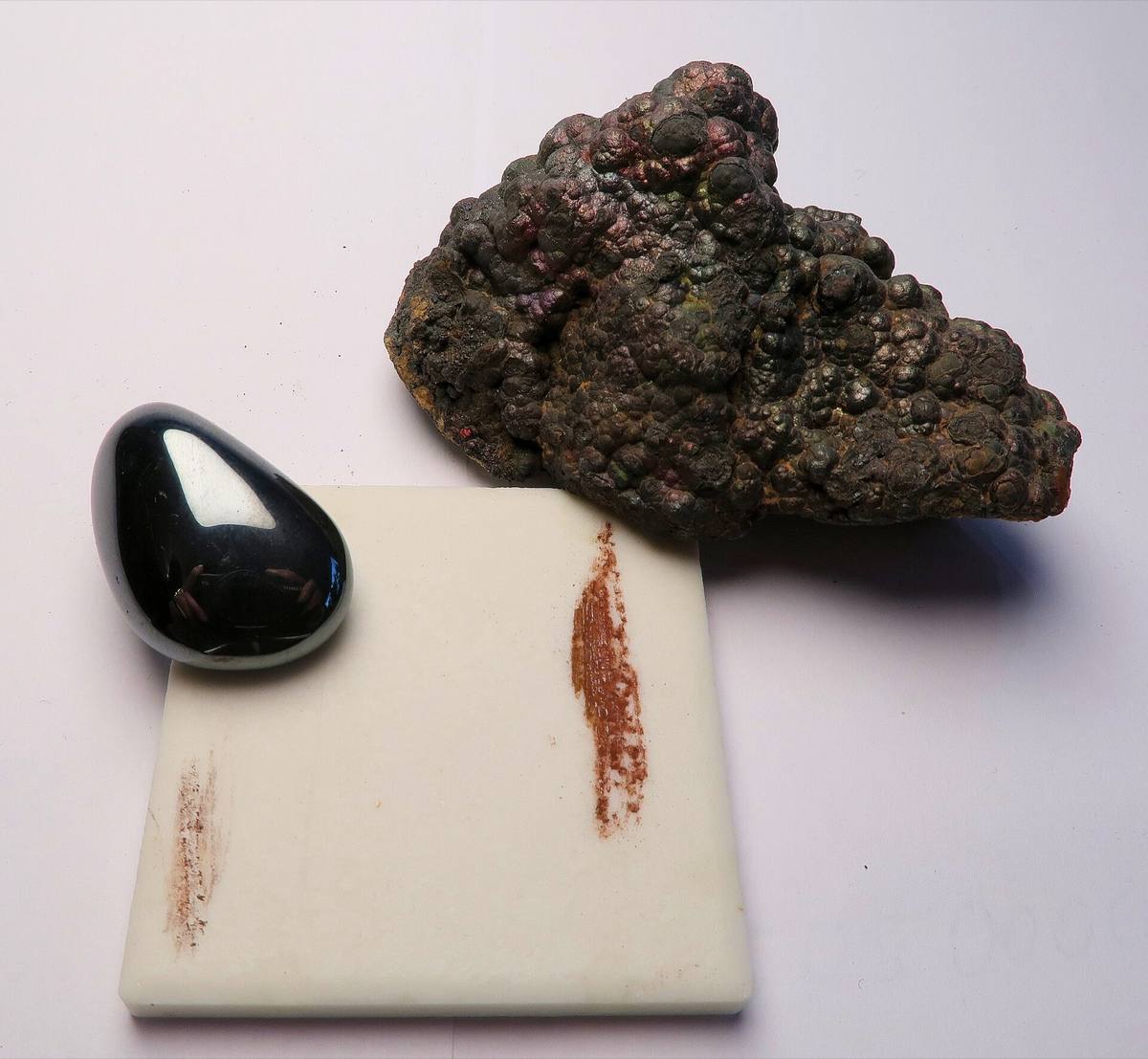
Where to find each
Bottom line
Red-brown streak and little magnetism: hematite. Black streak and strong magnetism: magnetite. The streak test settles nearly every specimen on its own.
Common questions
What is the easiest way to tell hematite from magnetite?+
Is hematite magnetic?+
Can hematite and magnetite occur together?+
Why does my black mineral leave a red streak?+
Identify your find in the field
RockHoundR maps rockhounding spots, shows land access, and lets you log and label every find so you stop second-guessing look-alikes.