Labradorite vs Moonstone: how to tell them apart
Quick answer
Both are feldspars, but their optical effect differs. Labradorite shows labradorescence, directional metallic flashes of blue, green, and gold over a darker body. Moonstone shows adularescence, a soft blue-white glow that floats across a paler, more translucent stone. Tilt each under one light: a sharp flash means labradorite, a drifting glow means moonstone.
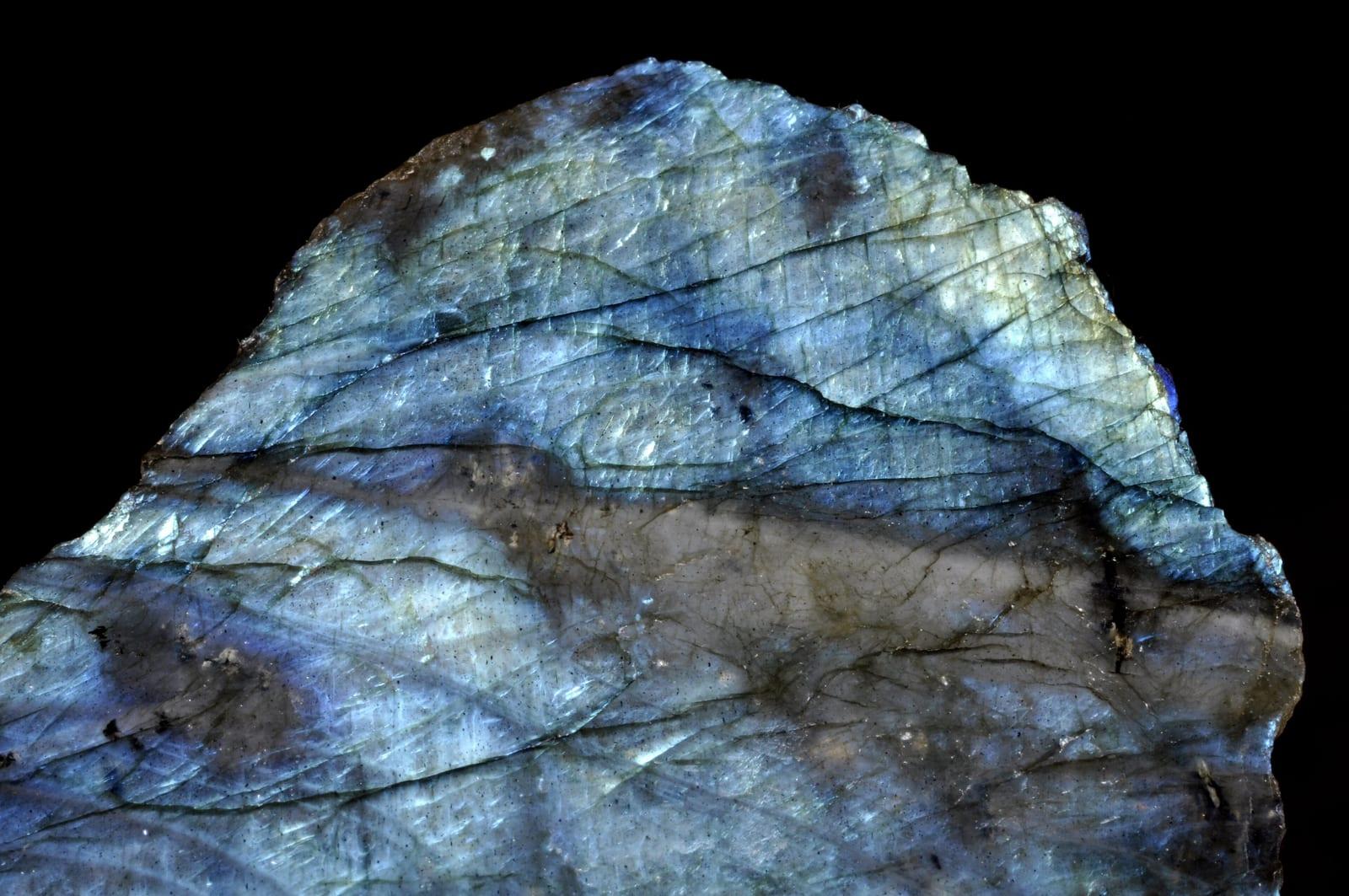
Labradorite
Full labradorite guide →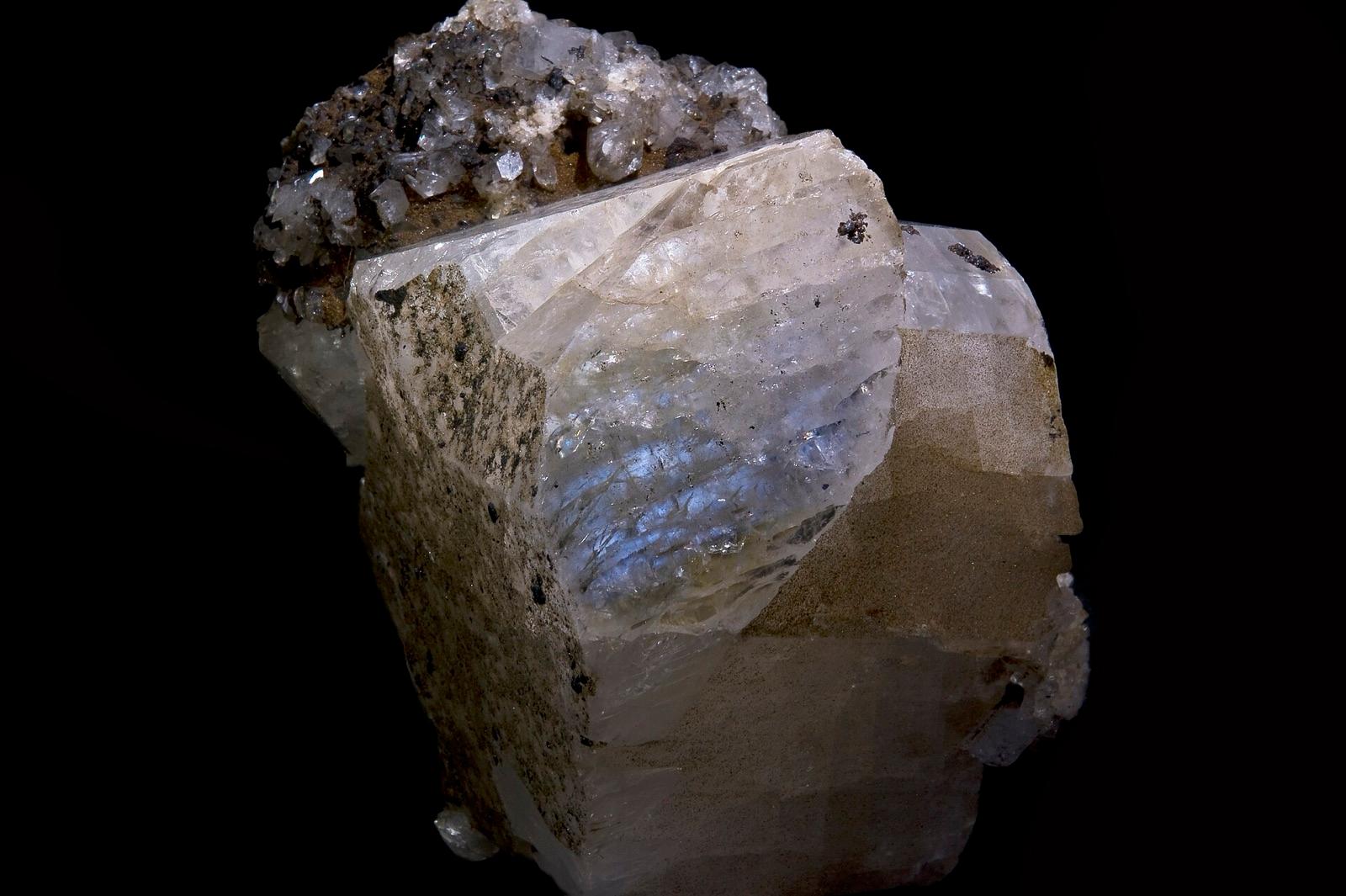
Moonstone
Full moonstone guide →Labradorite and moonstone are both feldspars that owe their beauty to light bouncing off internal structures, so they are easy to confuse by description alone. The optical effect is the giveaway. Labradorite shows labradorescence, sharp spectral flashes that switch on and off as you tilt it, usually over a grey to dark body. Moonstone shows adularescence, a billowy blue-white sheen that drifts across a paler, more translucent stone. Once you have seen both effects, they are hard to mistake.
What is the difference between Labradorite and Moonstone?
Type of sheen
- Labradorite
- Labradorescence: directional, metallic spectral flashes.
- Moonstone
- Adularescence: soft blue-white glow that floats and rolls.
Body color and clarity
- Labradorite
- Usually grey to dark, more opaque.
- Moonstone
- Usually colorless to white, more translucent.
Color of the effect
- Labradorite
- Blue, green, gold, even full spectrum in spectrolite.
- Moonstone
- Mostly blue to white sheen.
Mineral family
- Labradorite
- Plagioclase feldspar (labradorite).
- Moonstone
- Orthoclase feldspar (adularia), though rainbow moonstone is labradorite.
Labradorite vs Moonstone: properties compared
Highlighted rows are where Labradorite and Moonstone differ. The badge marks the most reliable at-a-glance separator. Property data from the RockHoundR mineral database.
| Property | Labradorite | Moonstone |
|---|---|---|
| Type(differs)Best field test | Mineral | Gemstone |
| Mohs hardness(differs) | 6-6.5 | 6 |
| Streak | White | White |
| Transparency(differs) | Translucent to Transparent | Translucent |
| Luster(differs) | Vitreous; Pearly On Cleavages | Vitreous |
| Cleavage(differs) | Perfect On {001}, Less Perfect On {010}, Intersecting At 90°; Distinct On {110} | Perfect |
| Crystal system(differs) | Triclinic | Monoclinic |
| Crystal habit(differs) | Massive | Tabular Crystals |
| Chemical formula(differs) | (Na, Ca)(Si, Al)₄O₈ | KAlSi₃O₈ |
Why are Labradorite and Moonstone confused?
Both are described as having a blue shimmer and a similar hardness near 6, and rainbow moonstone is actually a variety of labradorite, which muddies the naming. Listings often use the two words loosely, so the stones get swapped in jewelry and bead lots.
How to tell Labradorite from Moonstone
Ordered from the most reliable field test to the least. Start at the top.
- 1
Tilt under a single light
ReliableRock the stone slowly under one light source. Labradorite flashes bright spectral color that appears and disappears at specific angles, like a beetle's wing. Moonstone shows a soft glow that seems to hover just below the surface and glide as you move it.
- 2
Judge body color and transparency
UsefulA darker, greyer, more opaque body with vivid flashes is labradorite. A paler, more see-through stone with a gentle blue or white shimmer is classic moonstone.
- 3
Note the color range of the flash
SupportingGreen, gold, and multicolor play is labradorite (and the richly colored spectrolite variety). A pure blue-to-white sheen with no green or gold leans toward moonstone, though rainbow moonstone overlaps because it is technically labradorite.
Labradorite or Moonstone: which is more valuable?
Value tracks the strength and color of the optical effect. Vivid, full-spectrum spectrolite labradorite and clean blue-sheen moonstone with strong adularescence are the prized material. Hardness near 6 to 6.5 with feldspar cleavage means both need a little care in rings.
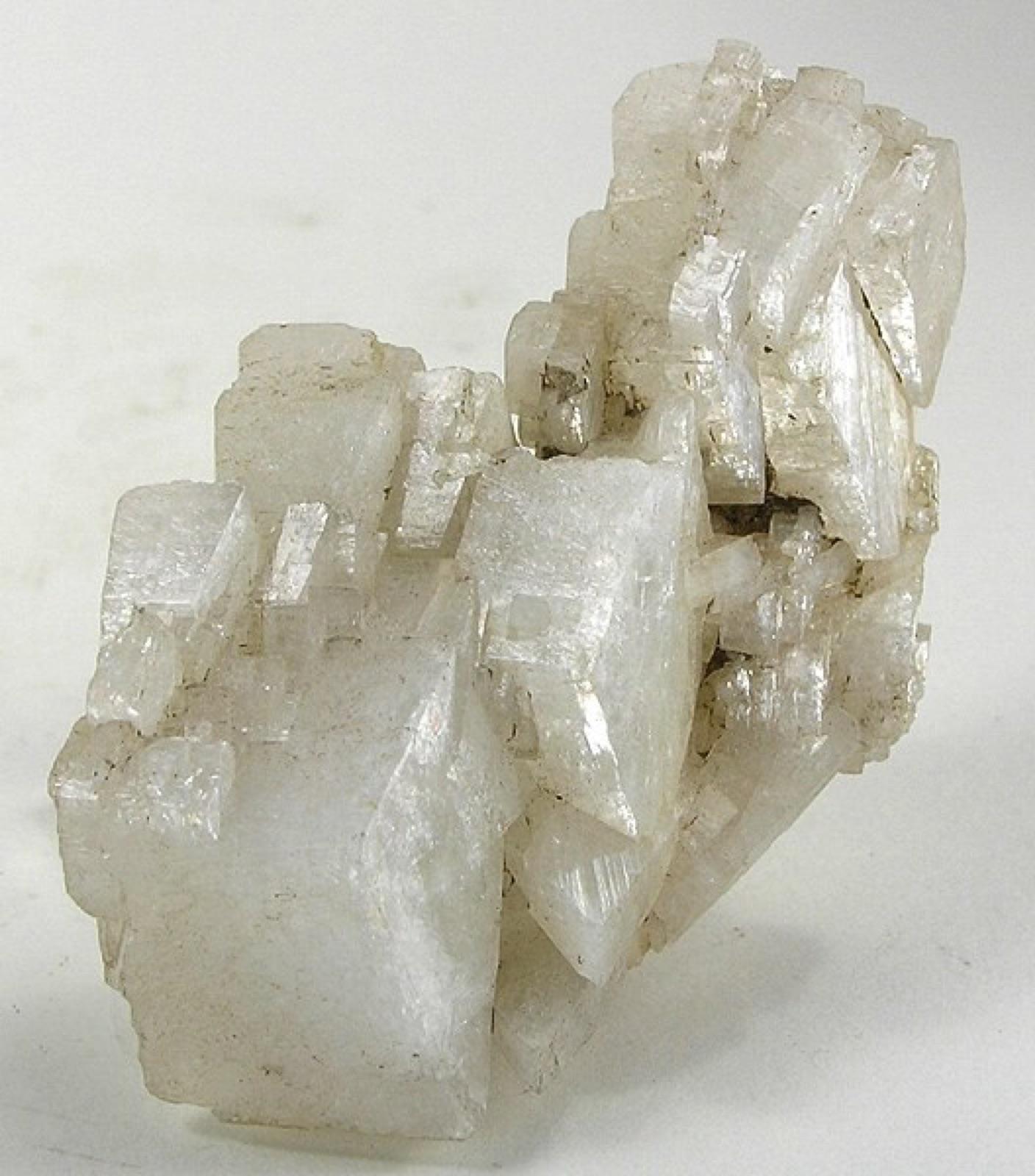
Labradorite and Moonstone photos
Where to find each
Bottom line
Sharp, directional, multicolor flashes mean labradorite. A soft blue-white glow that floats across a paler, more translucent stone means moonstone. The kind of sheen, not the body color, is the real tell.
Common questions
What is the difference between labradorite and moonstone?+
Is rainbow moonstone actually labradorite?+
Are labradorite and moonstone the same hardness?+
How do I see the effect best?+
Identify your find in the field
RockHoundR maps rockhounding spots, shows land access, and lets you log and label every find so you stop second-guessing look-alikes.