Labradorite is best identified by its labradorescence, a spectacular play-of-color resulting from internal lamellar structures that diffract light. It is commonly found in massive form within mafic igneous rocks and is highly sought after by lapidaries for its metallic, shifting blue, green, and gold flashes.
Spotting labradorite in the field
Field marks- 1
Dull grey until it catches the light, then flashes blue, green, gold or violet
- 2
The flash appears only from a narrow range of angles
- 3
Flat cleavage surfaces that reflect as broad bright planes
Labradorite is the great disappointment in the field and the great surprise on the wheel, because rough labradorite is a plain grey rock from almost every angle. Finding it means tilting every grey feldspar cobble through a full range of angles until one flashes. Work in direct sun. It occurs in mafic intrusive rock, with the classic sources being Labrador in Canada, Finland for the intensely colored spectrolite, and Madagascar for most commercial material.
Straight answers
- Is it worth cutting?
- Everything depends on orienting the slab parallel to the plane that shows the flash. Find that plane on the rough first by tilting under a bright light, then cut to it. This is the single most orientation-sensitive common lapidary material.
- What is it really worth?
- Inexpensive for ordinary material, higher for Finnish spectrolite with a full spectral range on a black body.
- Can you legally keep it?
- Imported material for the most part. Ordinary personal-use rules where it occurs domestically.
Often confused with
Labradorite vs. its common look-alikes, and how to tell them apart in the field.
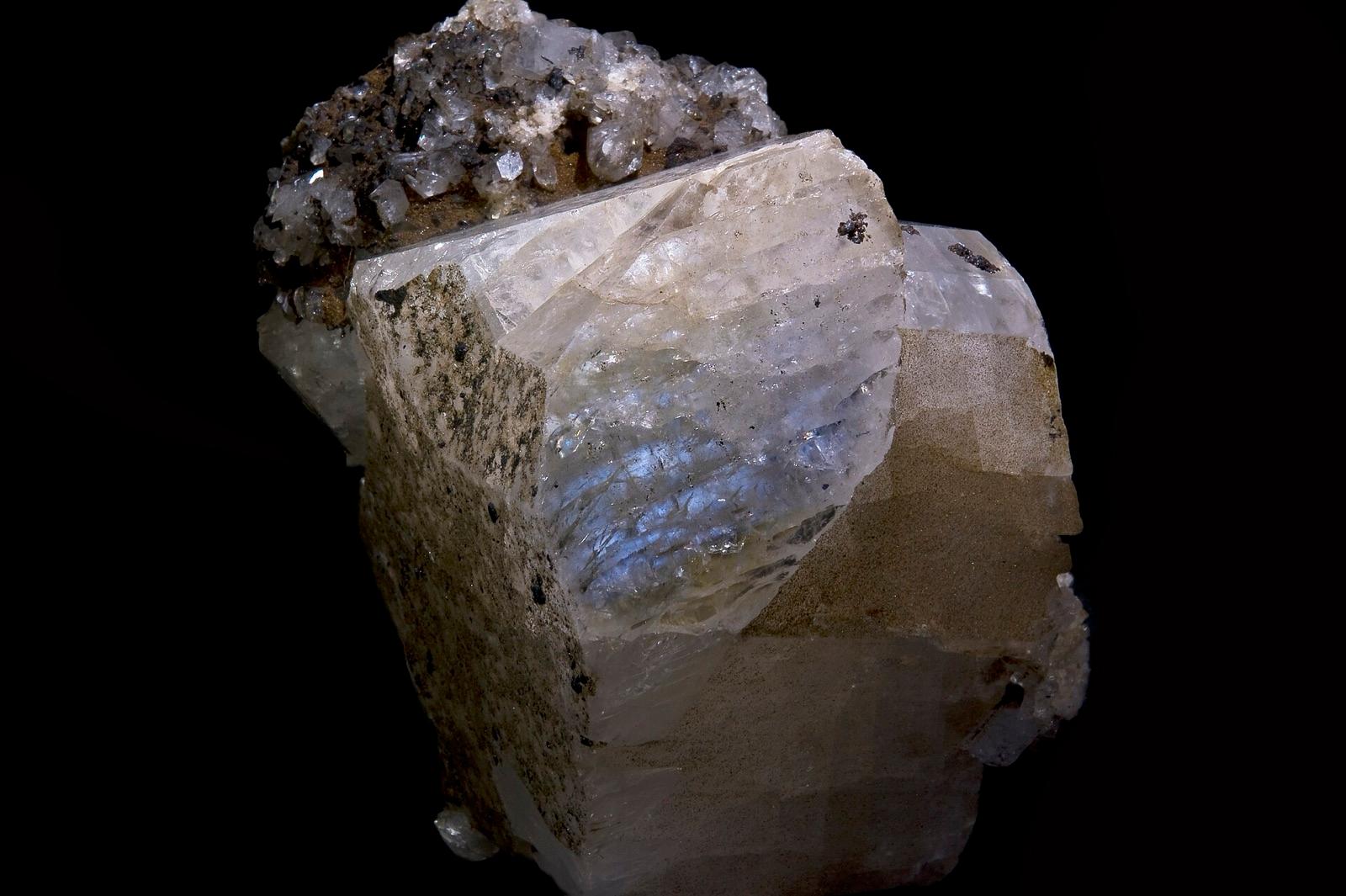
Often found alongside labradorite
Minerals reported to co-occur with labradorite. Spotting these in float or country rock is a strong cue you are in the right ground.
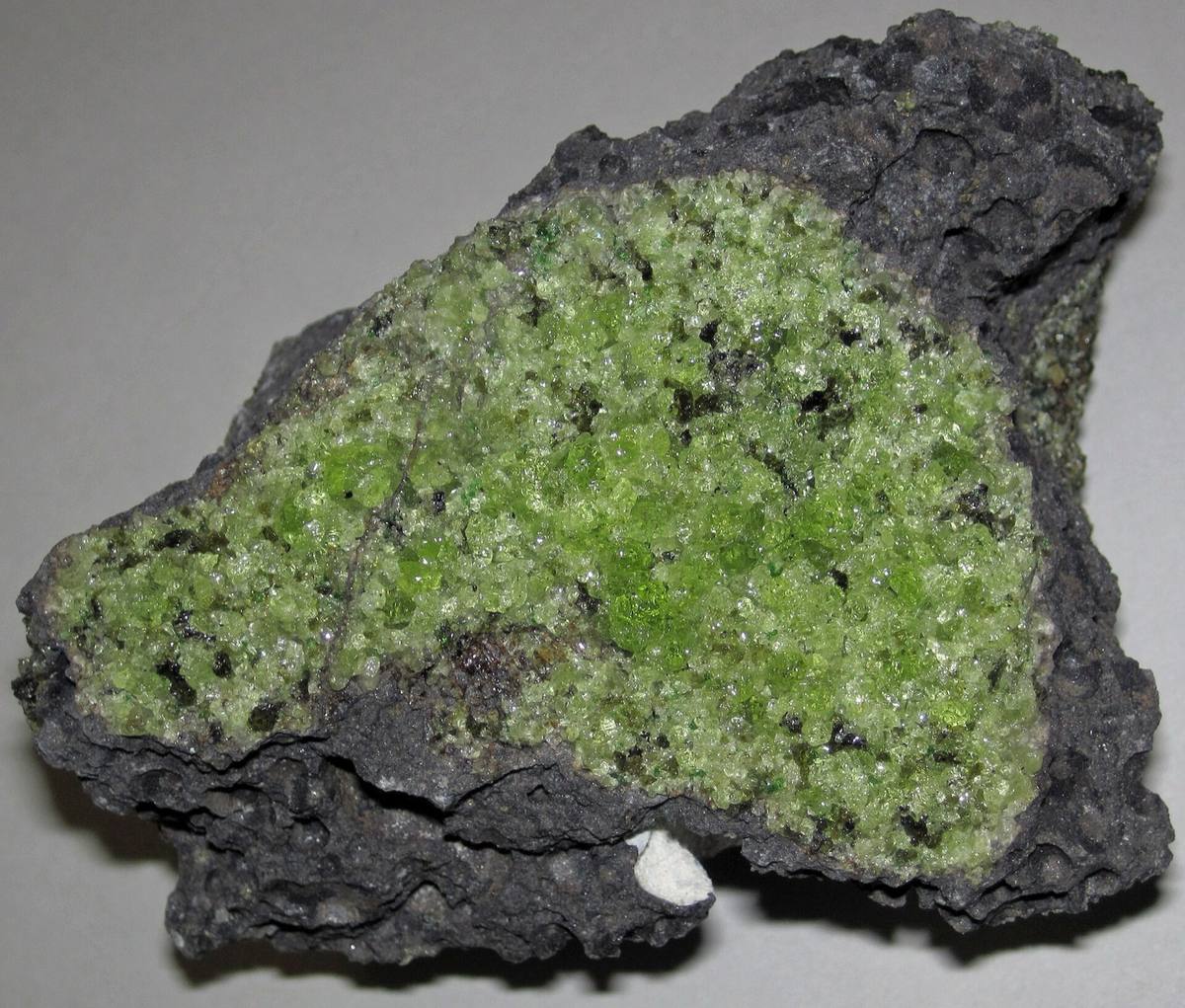
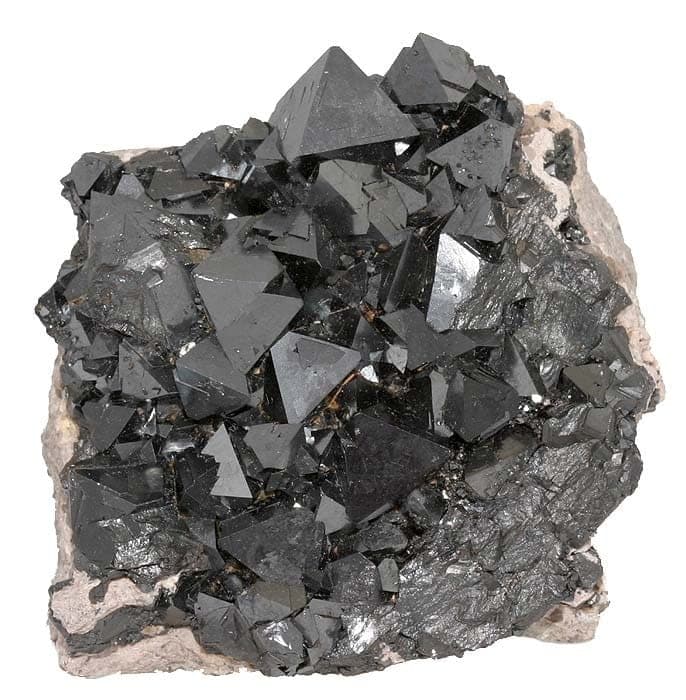
All properties
- Chemical formula
- (Na,Ca)(Si,Al)₄O₈
- Mohs hardness
- 6-6.5
- Density
- 2.68-2.72 g/cm³
- Streak
- White
- Luster
- Vitreous; pearly on cleavages
- Transparency
- Translucent to transparent
- Crystal system
- Triclinic
- Crystal habit
- Massive
- Cleavage
- Perfect on {001}, less perfect on {010}, intersecting at 90°; distinct on {110}
- Rarity
- Common
- Uses
- Gemstone, Lapidary, Decorative
- Host rock
- In mafic igneous rocks and anorthosites
Where rockhounds find labradorite
11 mapped spotsClassic worldwide localities
- Northern New York, forming the Adirondack Mountains, USA
- Sagebrush Flat, about 37 km north of Plush, Lake Co., Oregon, USA
- Atop the San Marcos Mountains, San Diego Co., and in the western San Gabriel Mountains, Los Angeles Co., California, USA
- Ford Harbour, Pauls Island, Labrador, Newfoundland, Canada
- Lake St. John, Quebec, Canada
Field-hunting tip
Where it forms: In mafic igneous rocks and anorthosites. If you start seeing olivine, pyroxenes, amphiboles in float, you are in the right ground. Typical habit: massive. Train your eye for that shape before scanning the outcrop. In the U.S., the densest reported localities are in New York, North Carolina, Pennsylvania. Start trip planning there.
Common questions
How do you identify labradorite?+
Where is labradorite found?+
Can I find labradorite in the United States?+
What rocks look like labradorite?+
What minerals are found with labradorite?+
What kind of rock does labradorite form in?+
What is labradorite used for?+
Find labradorite on the map
RockHoundR shows mapped rockhounding spots, access rules, and lets you log every find.