
GeodeMohs 7
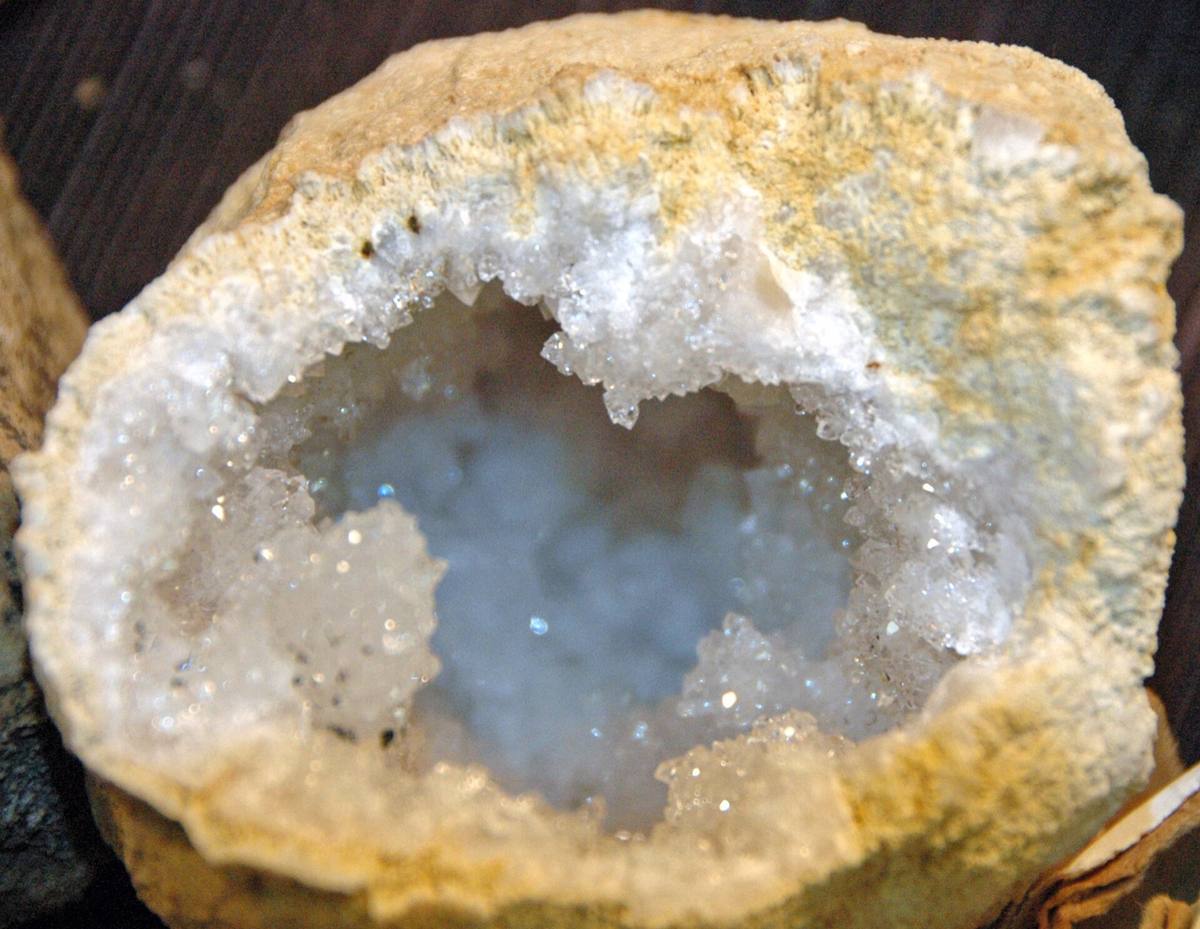
The general case: outer shell with a hollow cavity inside, lined with crystals pointing inward. Hand-feel is lighter than a solid rock of the same size.
Photo: James St. John · wikimedia
A geode is a hollow rock cavity lined inwards with crystals. A nodule is the solid version of the same nodular shape. A thunderegg is a rhyolite-hosted cousin with a star-shaped agate core. People mix the three up constantly, and the photo identifier is built around telling them apart. Upload a cracked or uncracked specimen and you get three ranked candidates with the lining mineral, the host environment, and the closest look-alike to rule out.
Reviewed by RockHoundR Field Team · Field identification & geology editors · Last verified
Quick answer
Geodes are hollow; nodules are solid; thundereggs are rhyolite-hosted with a star-shaped agate core and usually solid; septarians are crack-filled concretions. Photograph the broken face if you have it. The identifier returns three ranked matches with the lining mineral (quartz, amethyst, calcite, celestine), host rock, and the look-alike to rule out.
A geode is a hollow cavity in a host rock, lined inwards with crystals that grew from mineral-rich fluids. The cavity itself usually started as a gas bubble in a lava flow, a fossil hollow in a marine limestone, or a soft-sediment void that the host rock formed around. As silica- or carbonate-rich groundwater later moved through the cavity, layer after layer of chalcedony or calcite built up on the walls, often capped by an inward-pointing crust of quartz, amethyst, or calcite crystals. The shell is what protects the lining and is what makes a geode a geode: an outer skin of dense, fine-grained material and a hollow interior full of crystal points.
The classic confusion is geode versus nodule versus thunderegg. A nodule is the solid version of the same nodular shape: same outside, no cavity inside, the whole interior filled with chalcedony, agate, or jasper. A thunderegg is a rhyolite-hosted nodule from the Pacific Northwest with a star-shaped agate core surrounded by an ash-rind, and most thundereggs are solid rather than hollow. A septarian nodule is a concretion shot through with mud-crack-style cracks filled by yellow calcite and brown aragonite, and it is solid throughout. The identifier reads the broken face when you have one and is honest that uncracked round rocks are hard to call from a photo alone, since the only proof of a hollow is the sound and weight in your hand.
Locality narrows everything. Keokuk-style geodes from the tri-state area of Iowa, Illinois, and Missouri are smallish chalcedony shells with quartz, calcite, dolomite, and sometimes pyrite or sphalerite inside, hosted in Mississippian limestone. Brazilian and Uruguayan amethyst geodes are huge basalt-vesicle cavities lined with deep purple amethyst points. Mexican coconut geodes (Las Choyas) are hollow chalcedony shells with fine quartz and selenite linings. Oregon and central Washington produce thundereggs in rhyolite ash beds. Use the locality field heavily, since the same crystal lining can mean different things in different host rocks. The identifier never invents locality details you did not provide.
Reference pieces for the most-found geodes and their solid cousins. Each card shows the single feature that places a specimen.
The general case: outer shell with a hollow cavity inside, lined with crystals pointing inward. Hand-feel is lighter than a solid rock of the same size.
Photo: James St. John · wikimedia
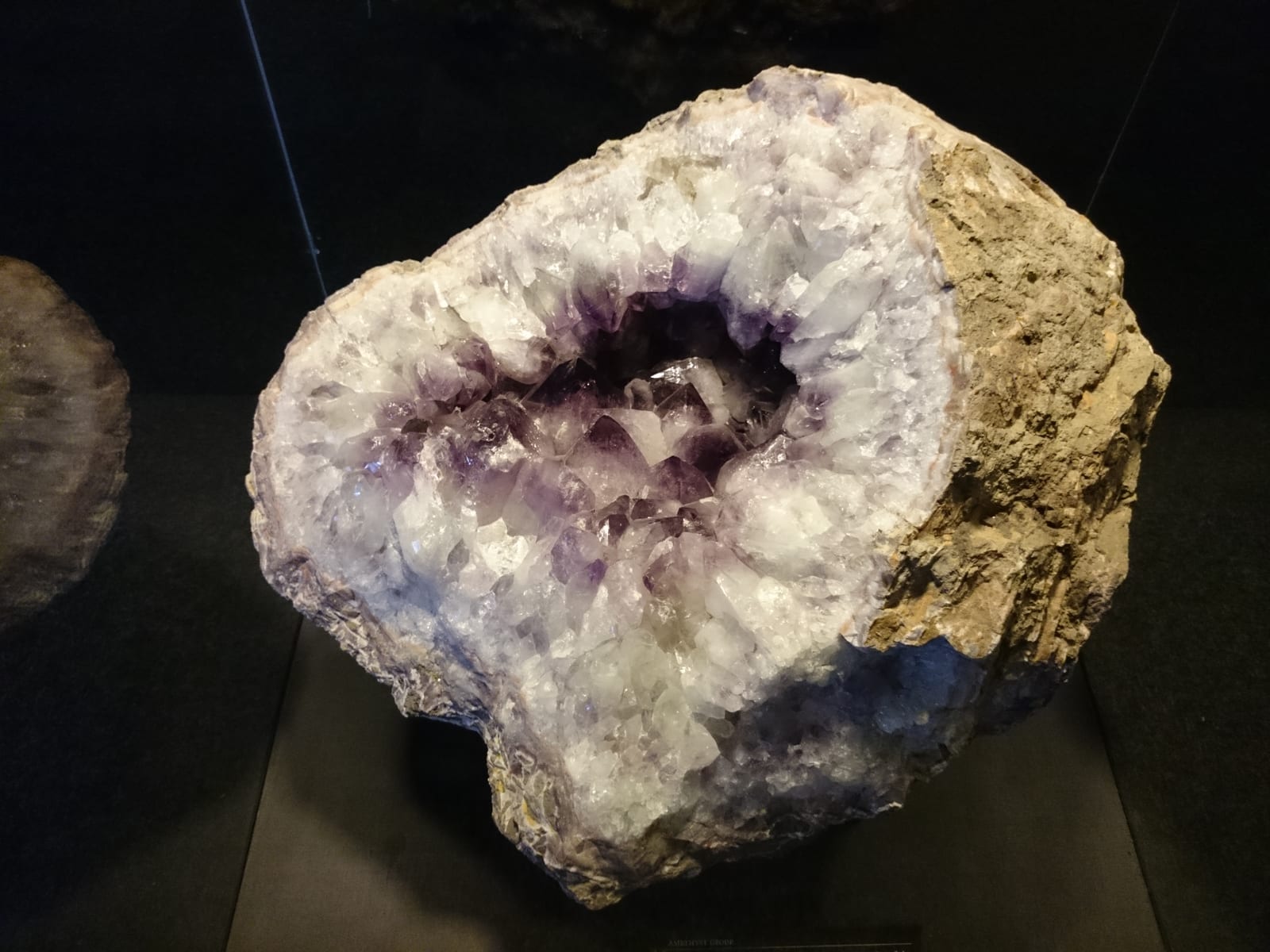
Purple drusy quartz lining. Large basalt-hosted Brazilian and Uruguayan pieces are the iconic form. Color saturation is deepest at the tip of each point.
Photo: Nkansahrexford · wikimedia
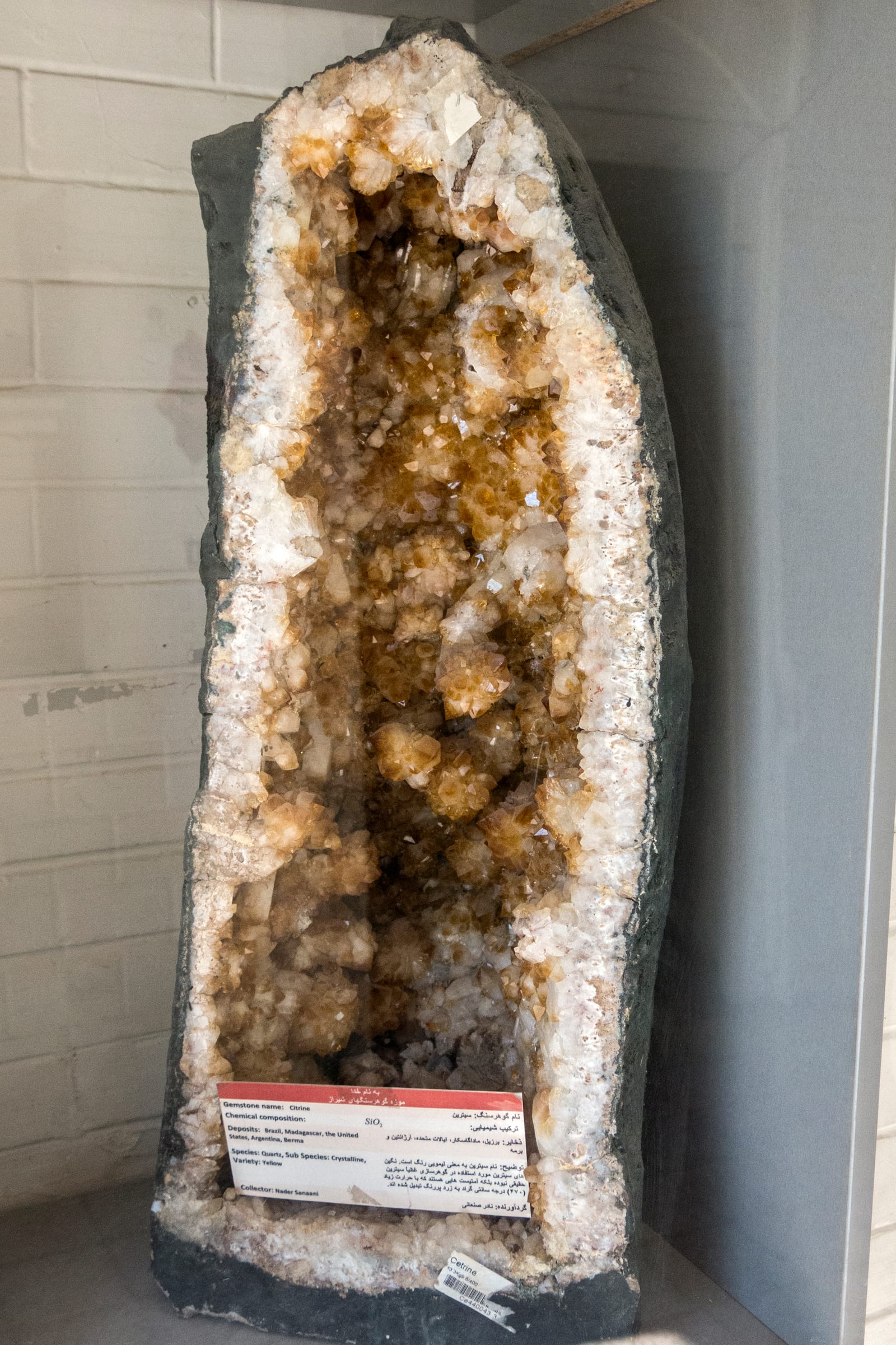
Yellow-to-orange quartz lining. Most commercial citrine geodes are heat-treated amethyst; natural citrine has a softer, less reddish tone.
Photo: Mahdikarimi70 · wikimedia
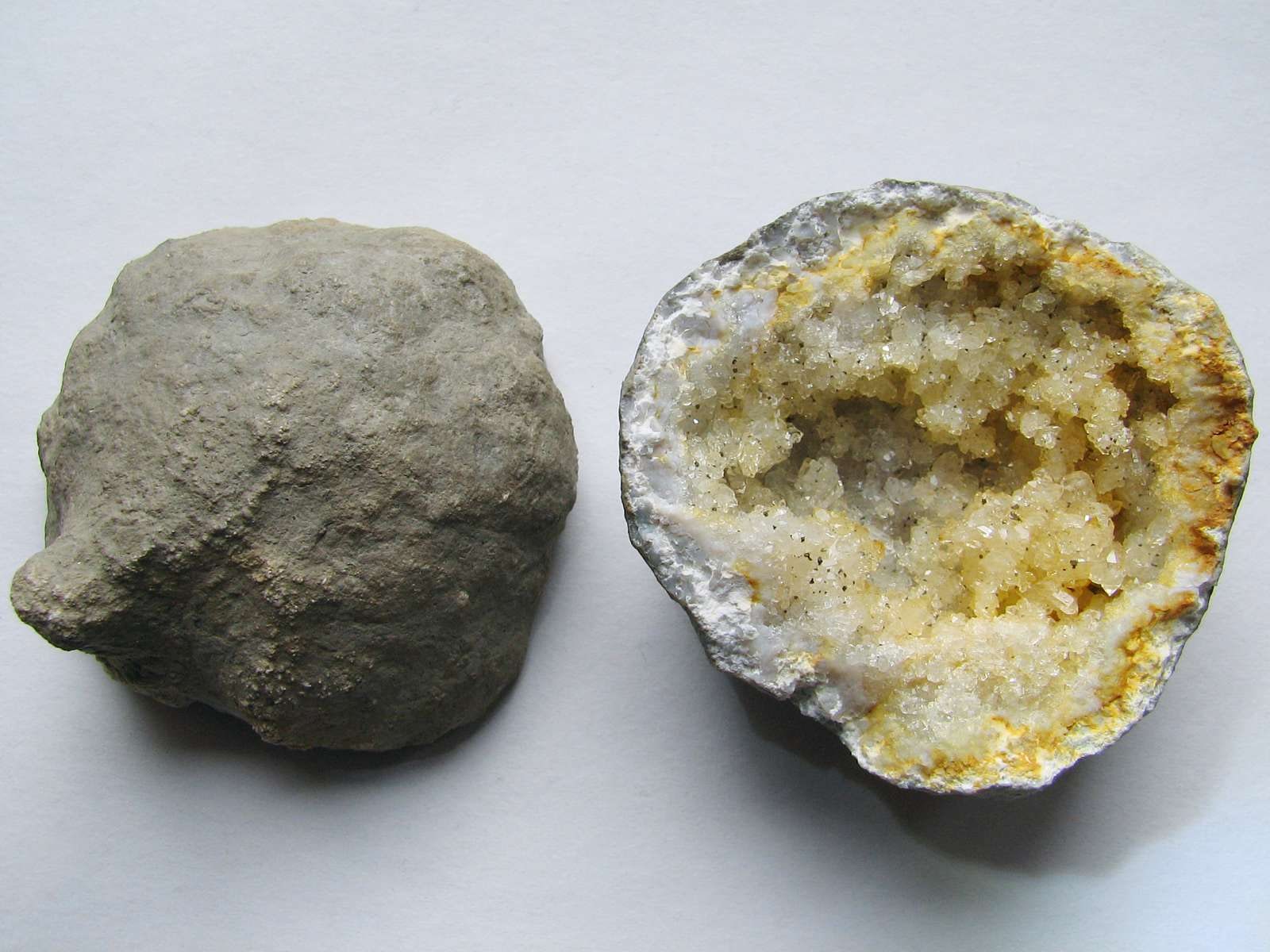
Small chalcedony shell, drusy quartz lining often with calcite, dolomite, or pyrite crystals. Tri-state Mississippian limestone classic.
Photo: Astynax · wikimedia
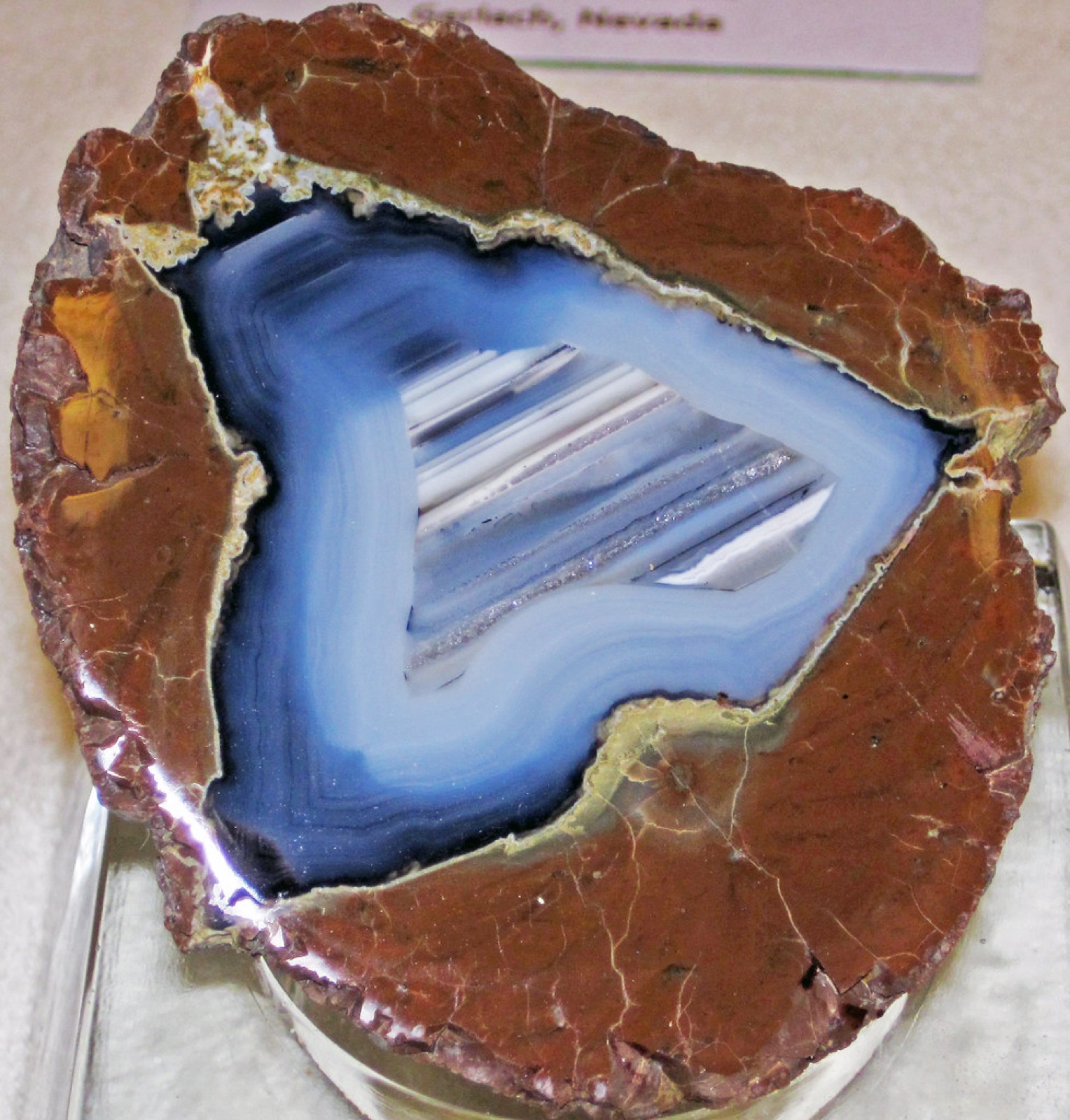
Rhyolite ash host with a star-shaped agate core. Usually solid rather than hollow. Oregon and Washington are the classic source.
Photo: James St. John · flickr
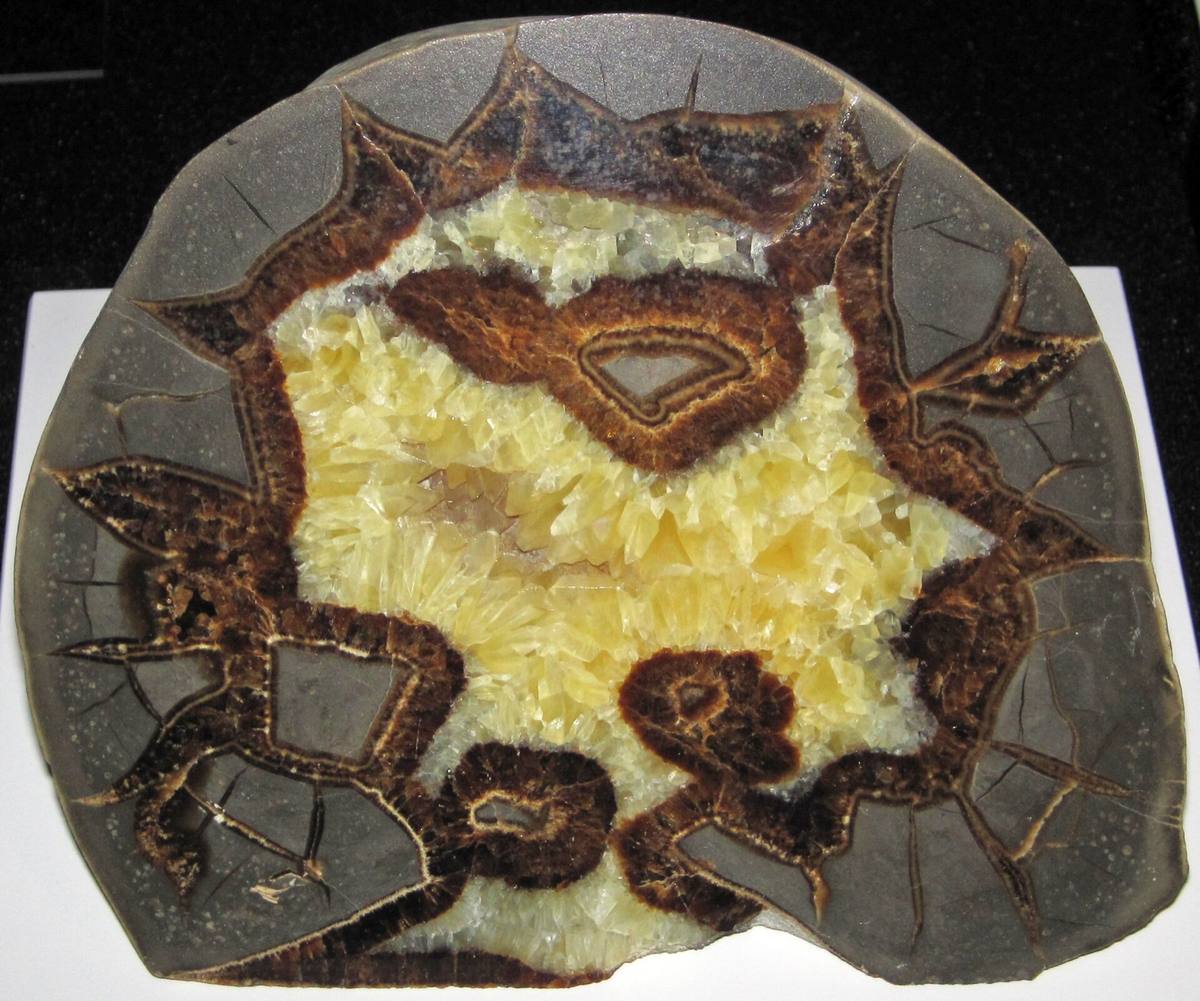
Solid concretion shot through with mud-crack-style internal cracks filled with yellow calcite and brown aragonite. Not a geode, but constantly confused with one.
Photo: James St. John · wikimedia
Lining mineral and host rock decide most calls. Hardness on the lining and the acid reaction settle the rest.
| Specimen | Hardness (Mohs) | Luster | Habit | Field tell |
|---|---|---|---|---|
| Geode | 7 | vitreous | Hollow, roughly spherical rock with a mineral lining | Hollow cavity with inward-pointing crystals. Lighter in hand than a solid rock the same size. |
| Amethyst Geode | 7 | vitreous | drusy crystals lining a cavity | Purple drusy quartz lining, deepest color at tip; Brazilian basalt host. |
| Keokuk Geode | 7 | vitreous | druzy | Chalcedony shell with mixed quartz/calcite/dolomite inside; Mississippian limestone host. |
| Thunderegg | 6.5-7 | vitreous | nodular | Star-shaped agate core in rhyolite ash. Usually solid. |
| Septarian Nodule | 3-5 | dull to vitreous | Concretion of polyhedral blocks separated by mineral-filled radiating cracks (septaria) | Solid; internal crack network filled with yellow calcite + brown aragonite. |
| Nodule | Varies | Varies | Small, irregularly rounded lump that contrasts with the enclosing sediment or rock | Solid throughout; chalcedony, agate, or jasper fill with no cavity. |
Quartz Geode
The default. Drusy clear-to-milky quartz lining. Mohs 7, scratches glass.
Amethyst Geode
Purple quartz lining. Brazilian and Uruguayan basalt geodes are the famous large form.
Citrine Geode
Yellow-to-orange quartz lining. Often heat-treated amethyst sold as citrine; natural citrine geodes are uncommon.
Calcite Geode
Carbonate lining: scalenohedral 'dogtooth' or rhombohedral crystals. Mohs 3, fizzes in dilute acid.
Celestine Geode
Sky-blue tabular celestine crystals. Crystal Cave on South Bass Island, Ohio is the iconic locality.
Thunderegg
Rhyolite ash host, star-shaped agate core, usually solid. Pacific Northwest specialty.
Keokuk Geode
Mississippian limestone, chalcedony shell, quartz + calcite + dolomite + pyrite inside.
Septarian Nodule
Concretion with mud-crack-style internal cracks filled with yellow calcite and brown aragonite. Solid, not hollow.
The crystal lining decides the name. Read color, habit, and hardness.
The single most-asked distinction in this category. The shell, the host rock, and what's inside decide it.
If the geode is cracked, the lining is the answer. If it's uncracked, show the shell and add a heft note in the location field. JPG, PNG, or WebP up to 6MB.
Iowa Keokuk, Brazilian basalt, Oregon thunderegg country, Mexican coconut. Locality decides the host rock and weights candidates strongly.
Each match: lining mineral, host rock, and the look-alike (thunderegg, septarian, nodule) to rule out.
Photos of a cracked-open geode identify well, because the lining and host are visible. Uncracked nodules are harder, since the only proof of a hollow is the sound and weight in your hand.
The RockHoundR app works offline, saves every find to your map, and overlays them onto 250,000+ rockhounding spots with geology and land-access data.


A geode is hollow; the inside of the shell is lined with crystals that grew inward from the walls. A nodule has the same outer shape but is solid all the way through, filled with chalcedony, agate, or jasper instead of an open cavity. You can sometimes tell from heft (a geode is lighter in hand than a solid rock the same size) and from a hollow tap, but the only certain proof is to crack it.
A thunderegg is a nodule that grew in a rhyolite ash bed, with a star-shaped agate core surrounded by a rind of weathered ash. Most thundereggs are solid rather than hollow, so they are technically nodules, not geodes. The Pacific Northwest (Oregon, Washington) is the world's richest source. Thundereggs were named the official state rock of Oregon in 1965.
The deep purple of Brazilian and Uruguayan amethyst geodes is natural, caused by iron impurities exposed to natural radiation during the basalt's cooling history. Some pieces are color-enhanced or dyed in low-cost commercial channels, but the classic mine-fresh geodes show natural color zoning, deepest at the crystal tip and fading toward the matrix.
Yes, most often. Natural citrine geodes are uncommon and command a premium; the bulk of bright orange-yellow 'citrine geodes' on the market are amethyst geodes that have been heated to convert the iron color centers to yellow. Both are real quartz, both look fine, but the price and rarity differ. A reddish-orange tone and a flat color zoning hint at heat treatment; a soft, gradient yellow hints at natural.
Score the equator with a hacksaw or rock saw, then place it in a sock or rag and tap firmly along the score line with a hammer. A geode cracker (a hinged steel device) gives the cleanest break. Avoid using a chisel or just hammering, which usually destroys the crystal interior. Wear safety glasses since the chalcedony shell shatters in sharp fragments.
The Keokuk area at the corner of Iowa, Illinois, and Missouri is the iconic U.S. geode locality, with limestone-hosted chalcedony shells lined with quartz, calcite, and pyrite. Indiana, Kentucky, and Tennessee produce similar limestone geodes. The Pacific Northwest produces thundereggs. Mexico's Las Choyas and Brazilian basalt fields produce the imported coconut and amethyst geodes you see in shops.
Yes. Three free identifications per day per device, no signup, no install. The RockHoundR app removes the daily limit, saves every crack with photos and notes, works offline at the dig, and overlays results onto 250,000+ rockhounding spots with geology and land-access data.
Property data and reference imagery used on this page are cross-checked against the following sources.
State survey reference on geode formation, lining minerals, and the Keokuk region. Geode is Iowa's state rock.
Reference article on geode host rocks and the minerals that line them.
Reference for the rhyolite-hosted thunderegg type and the geode vs thunderegg distinction.