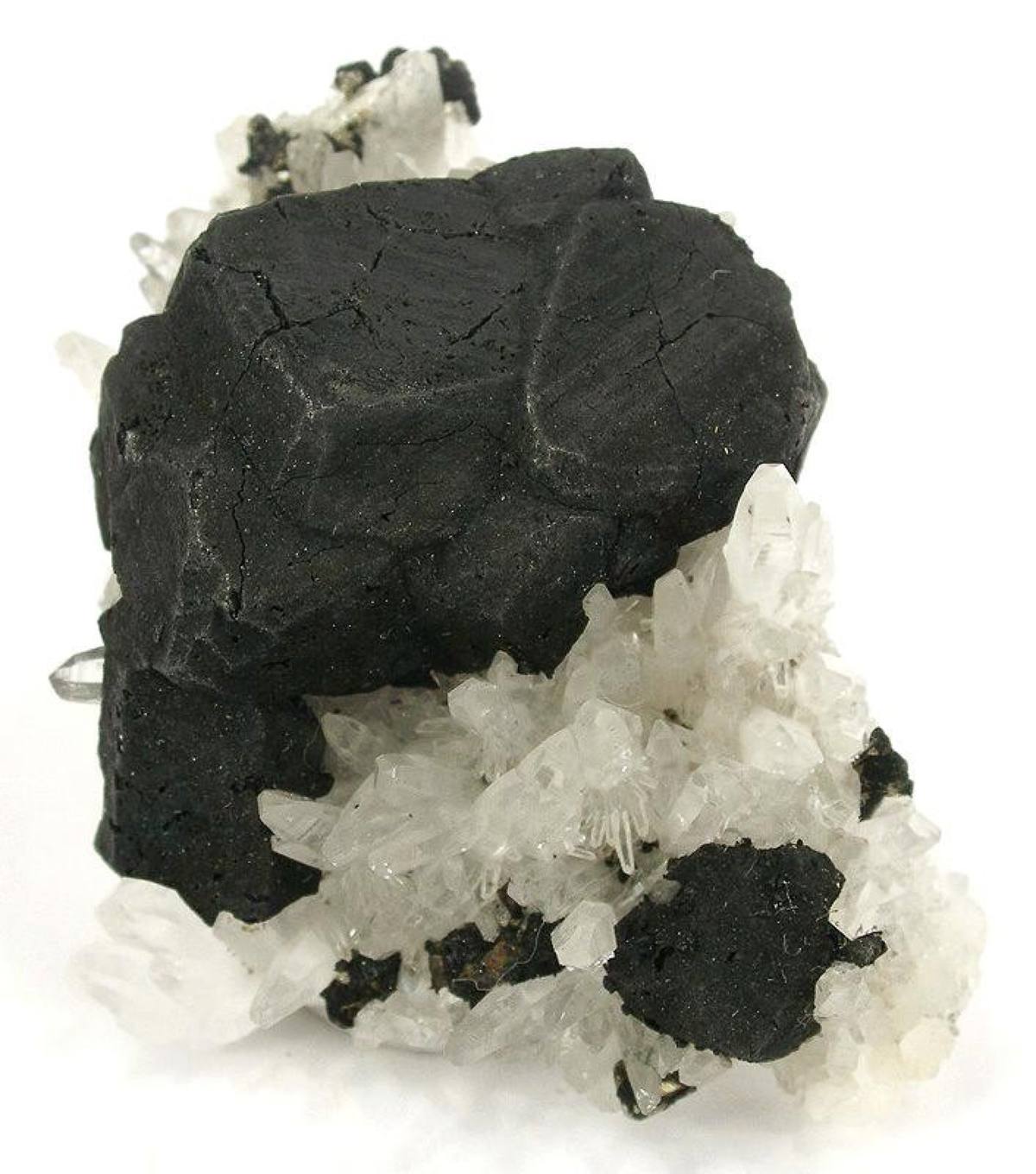
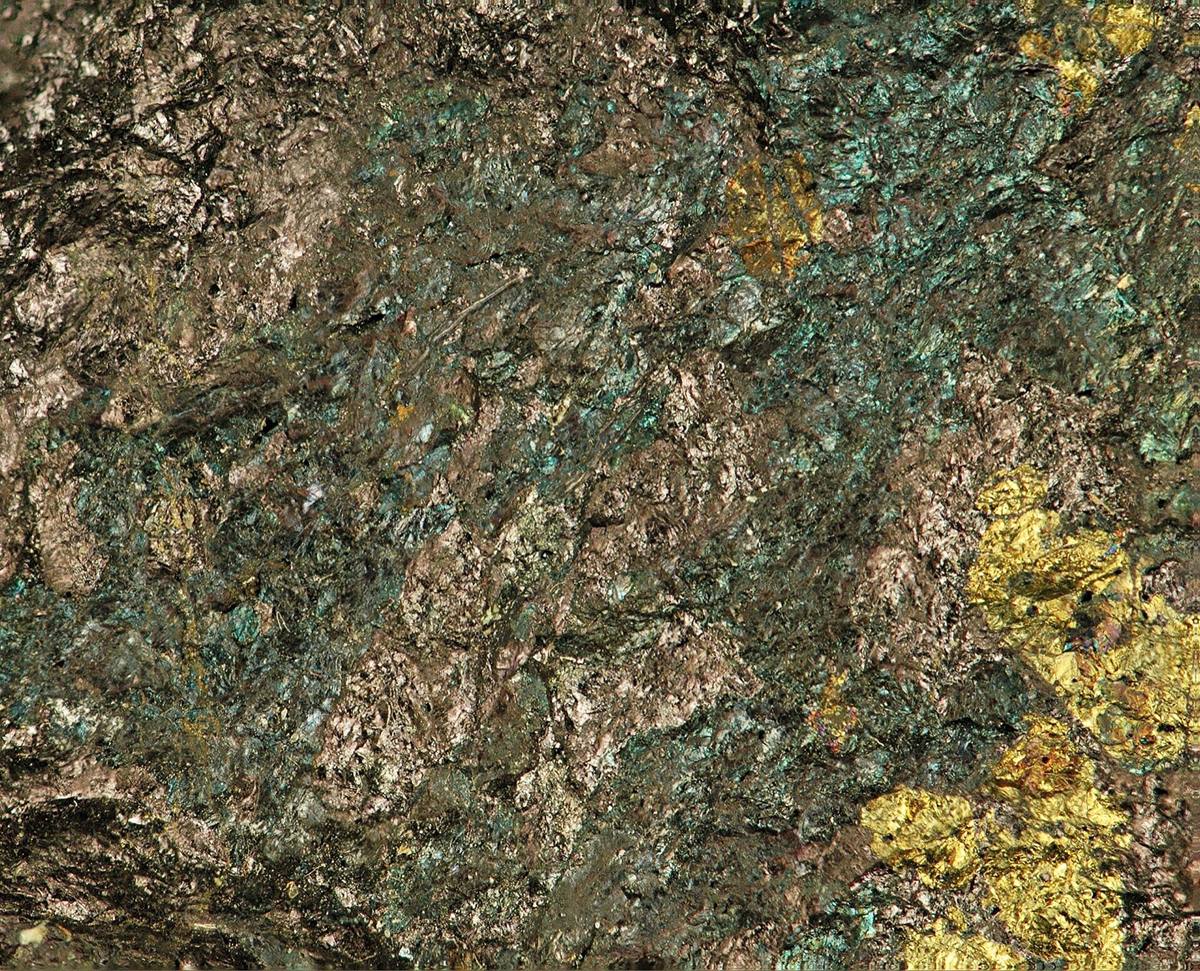
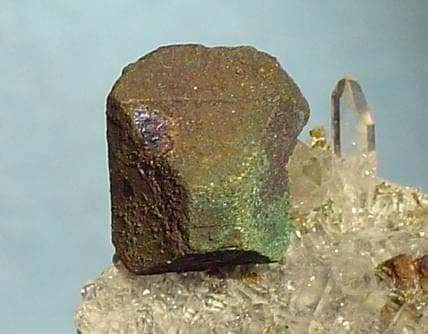
Bornite is a significant copper ore known for its distinctive iridescent tarnish that turns shades of blue and purple upon exposure to air, earning it the nickname 'peacock ore.' While typically found in massive, granular forms, it can occasionally present in poorly defined cubic or dodecahedral crystals associated with other sulfide minerals.
Is this bornite?
5-step field checkRun through these checks against the specimen in your hand. The more boxes tick, the more confident the ID.
- 1Test the hardnessTry to scratch bornite with a known reference. Bornite sits at Mohs 3-3.25, softer than the next harder reference, harder than the previous one.
- 2Check the streakDrag the specimen across an unglazed porcelain plate. Streak: pale grayish black.
- 3Read the lusterHold the specimen under a strong light. Luster: metallic.
- 4Match the color rangeCompare against the expected color range: copper red, bronze, iridescent blue, purple, bronze brown.
- 5Look at form & habitCrystal system: orthorhombic. Typical habit: granular, massive, reniform.
Often confused with
Bornite vs. its common look-alikes, and how to tell them apart in the field.
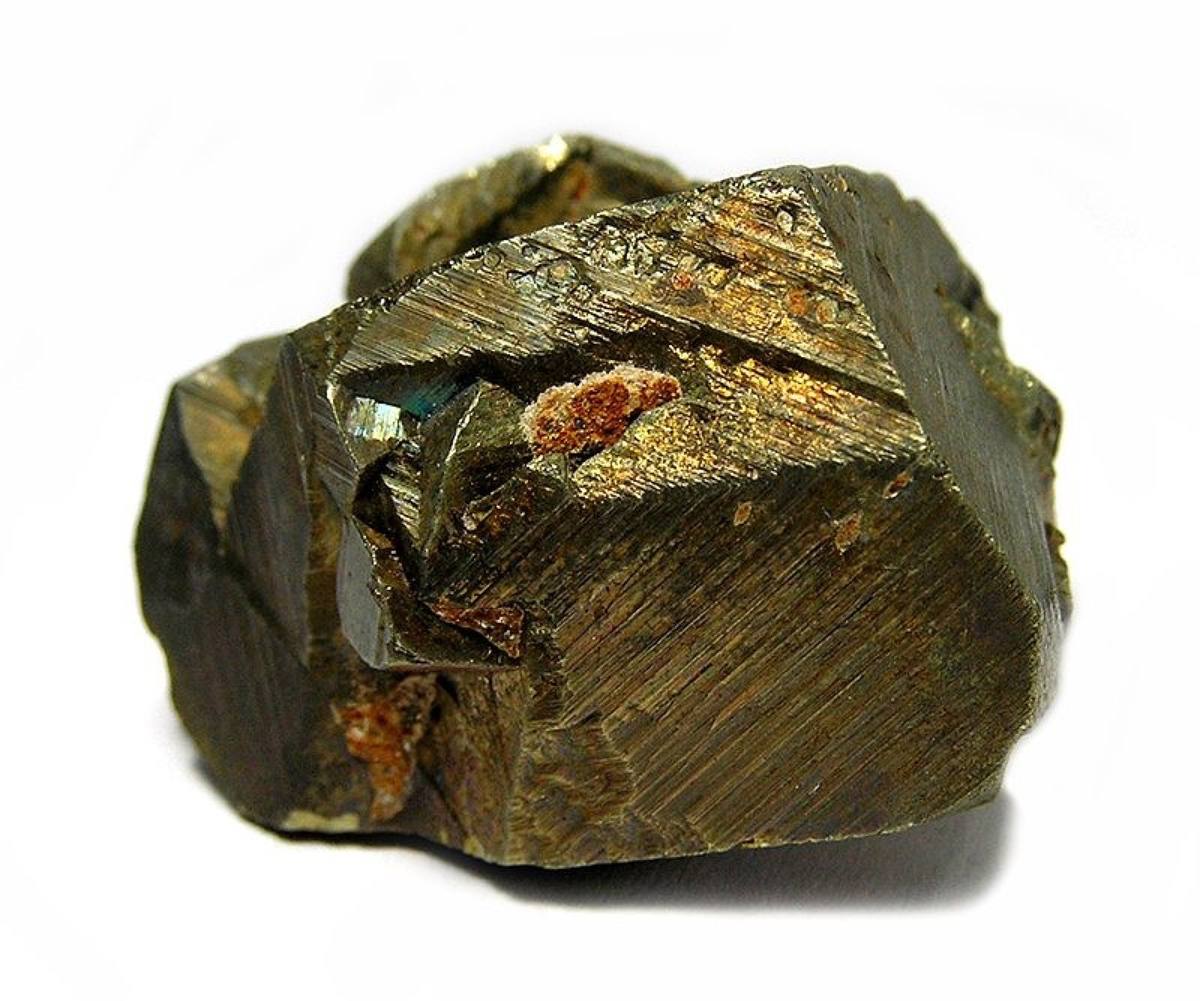
How to tell apart: Streak differs, so Bornite leaves pale grayish black, Chalcopyrite leaves greenish black.
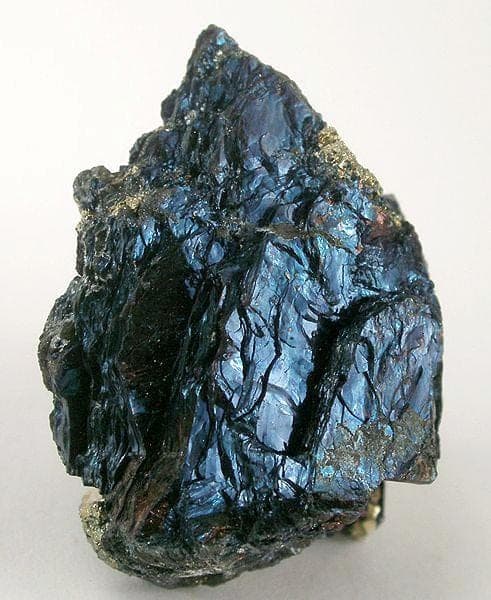
How to tell apart: Bornite is noticeably harder (Mohs 3-3.25 vs. 1.5-2); streak differs, so Bornite leaves pale grayish black, Covellite leaves lead-gray, shining; luster reads metallic on Bornite and submetallic, inclining to resinous, somewhat pearly on cleavage; subresinous to dull when massive on Covellite.
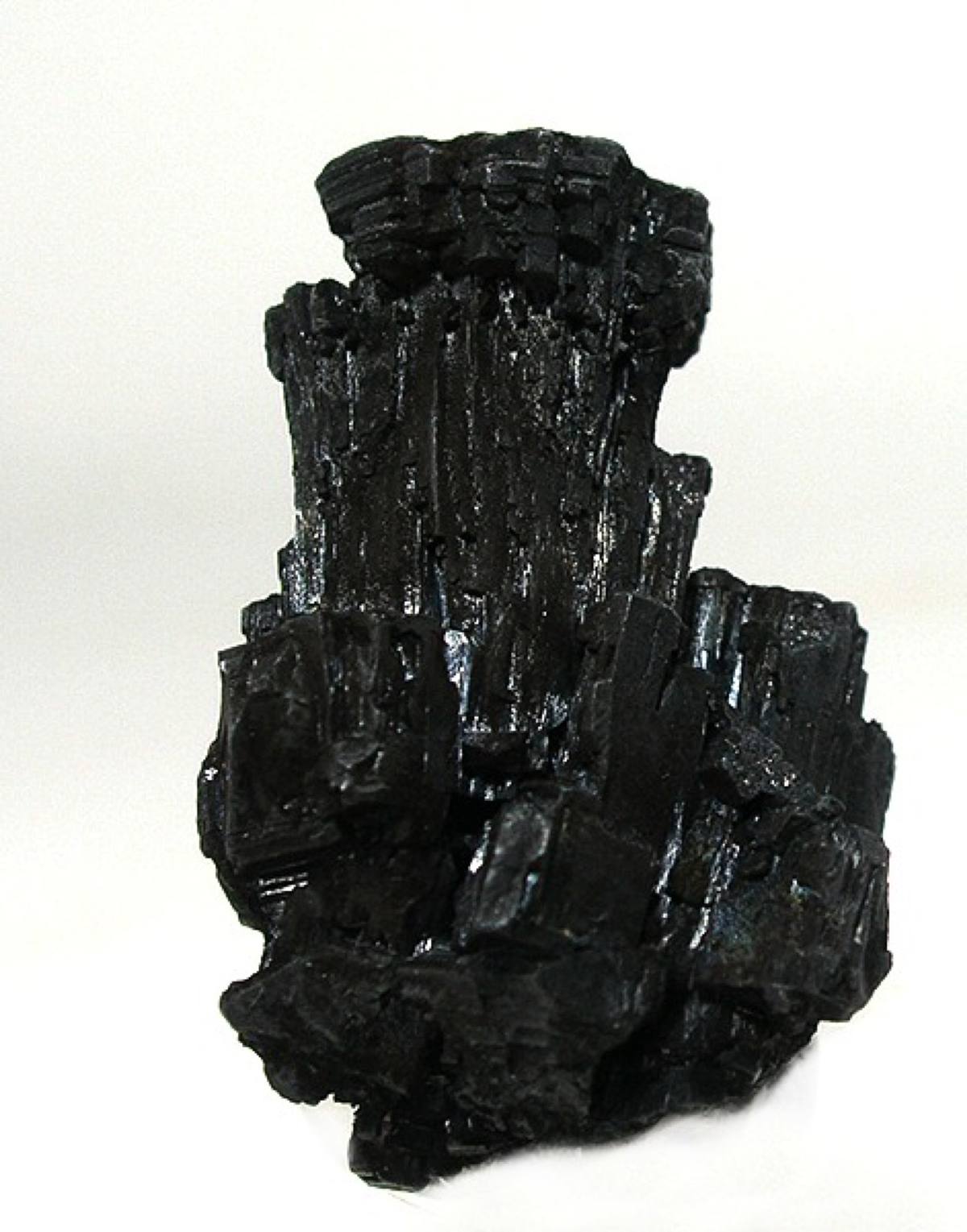
How to tell apart: Streak differs, so Bornite leaves pale grayish black, Chalcocite leaves blackish lead-gray.
Often found alongside bornite
Minerals reported to co-occur with bornite. Spotting these in float or country rock is a strong cue you are in the right ground.
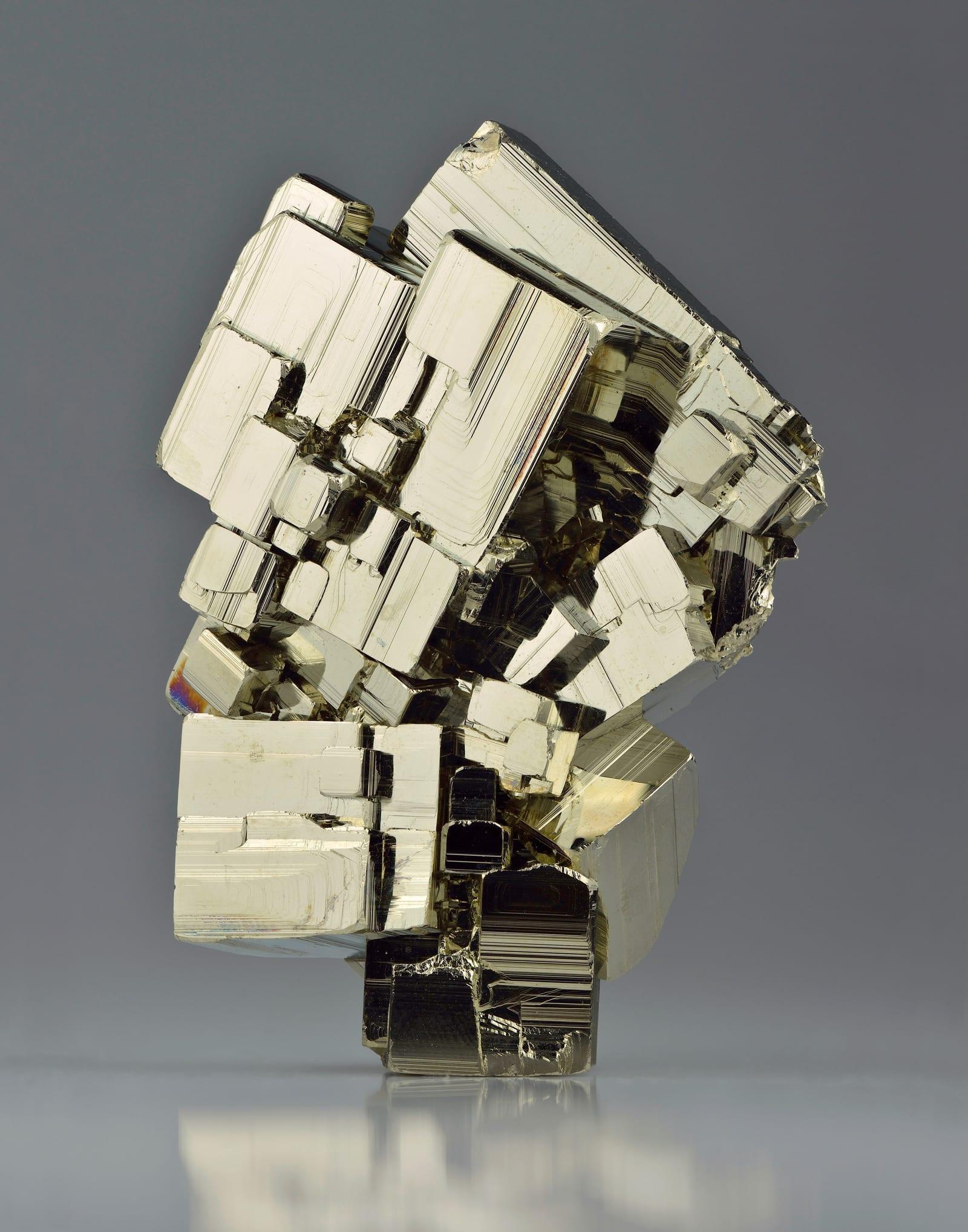
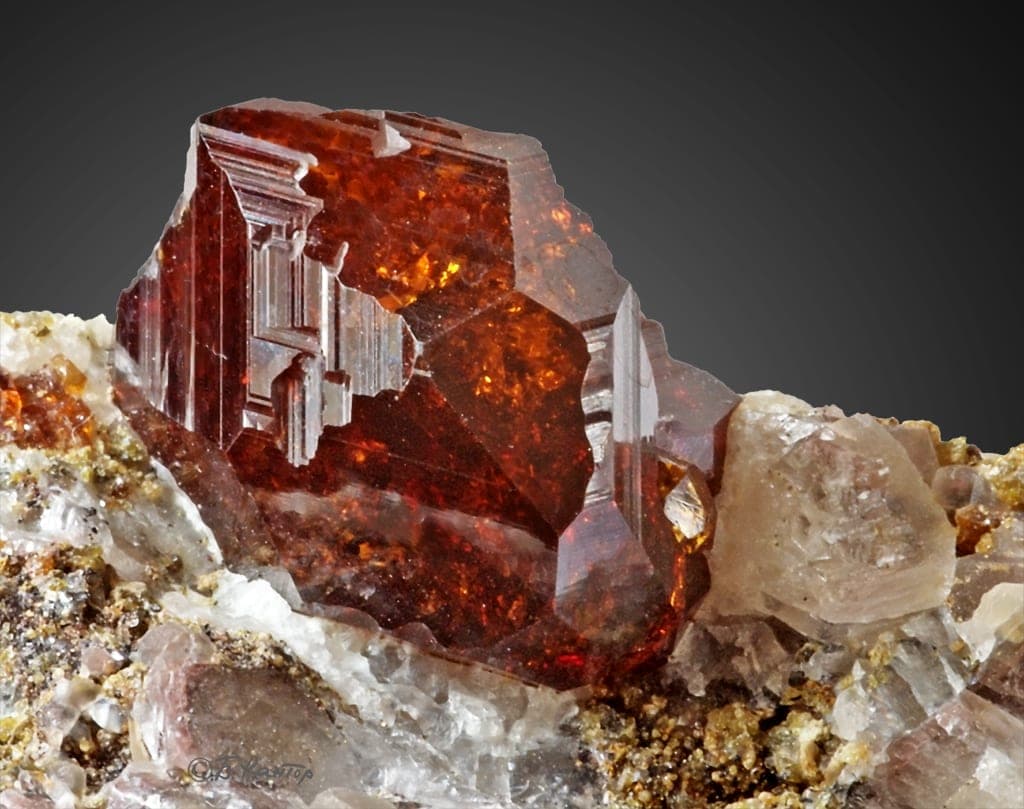
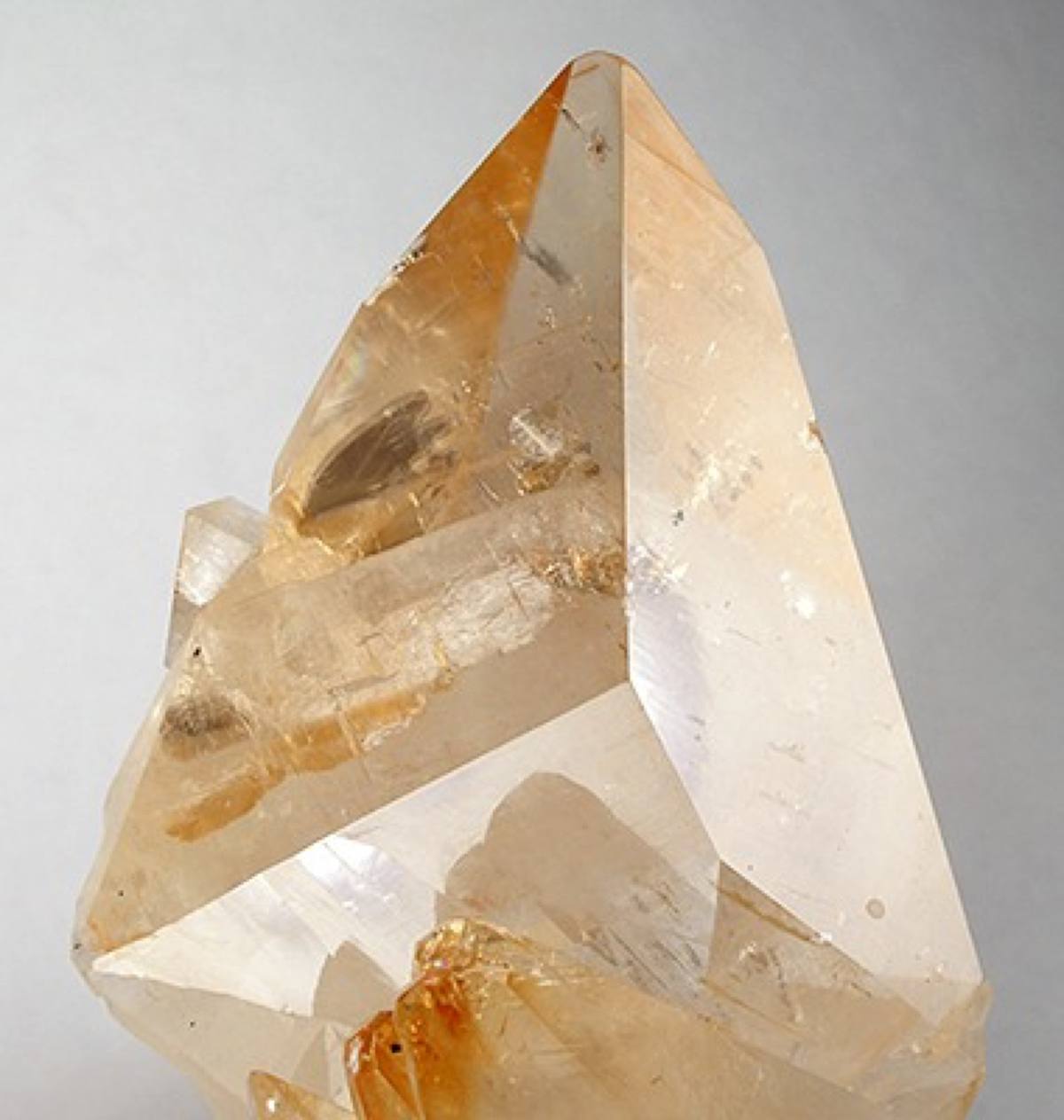
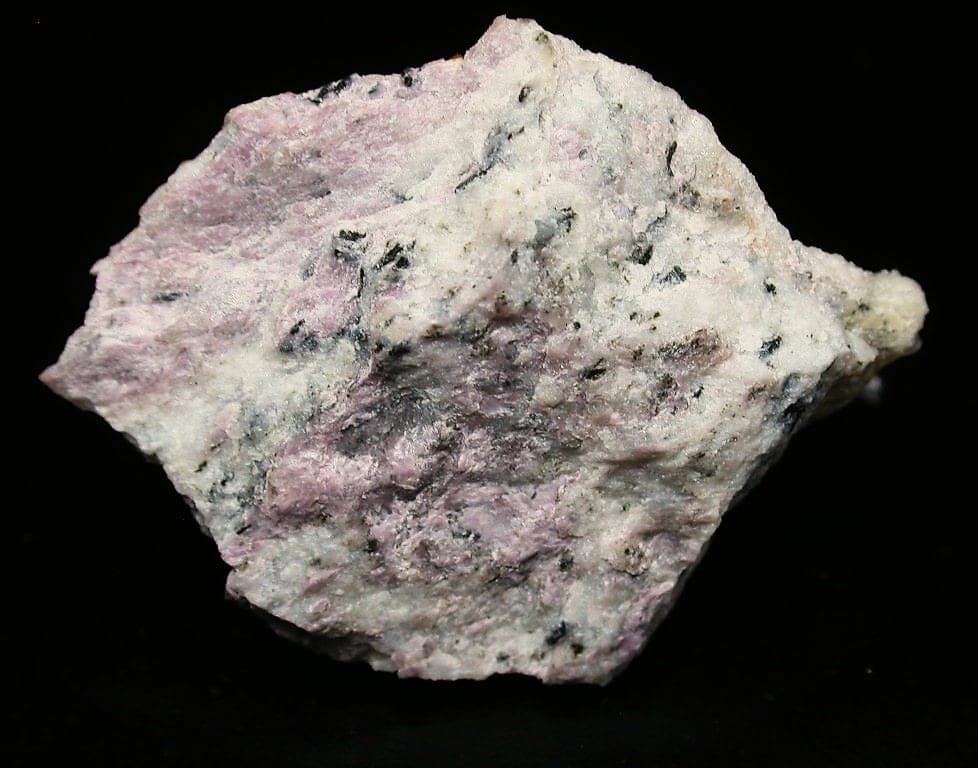
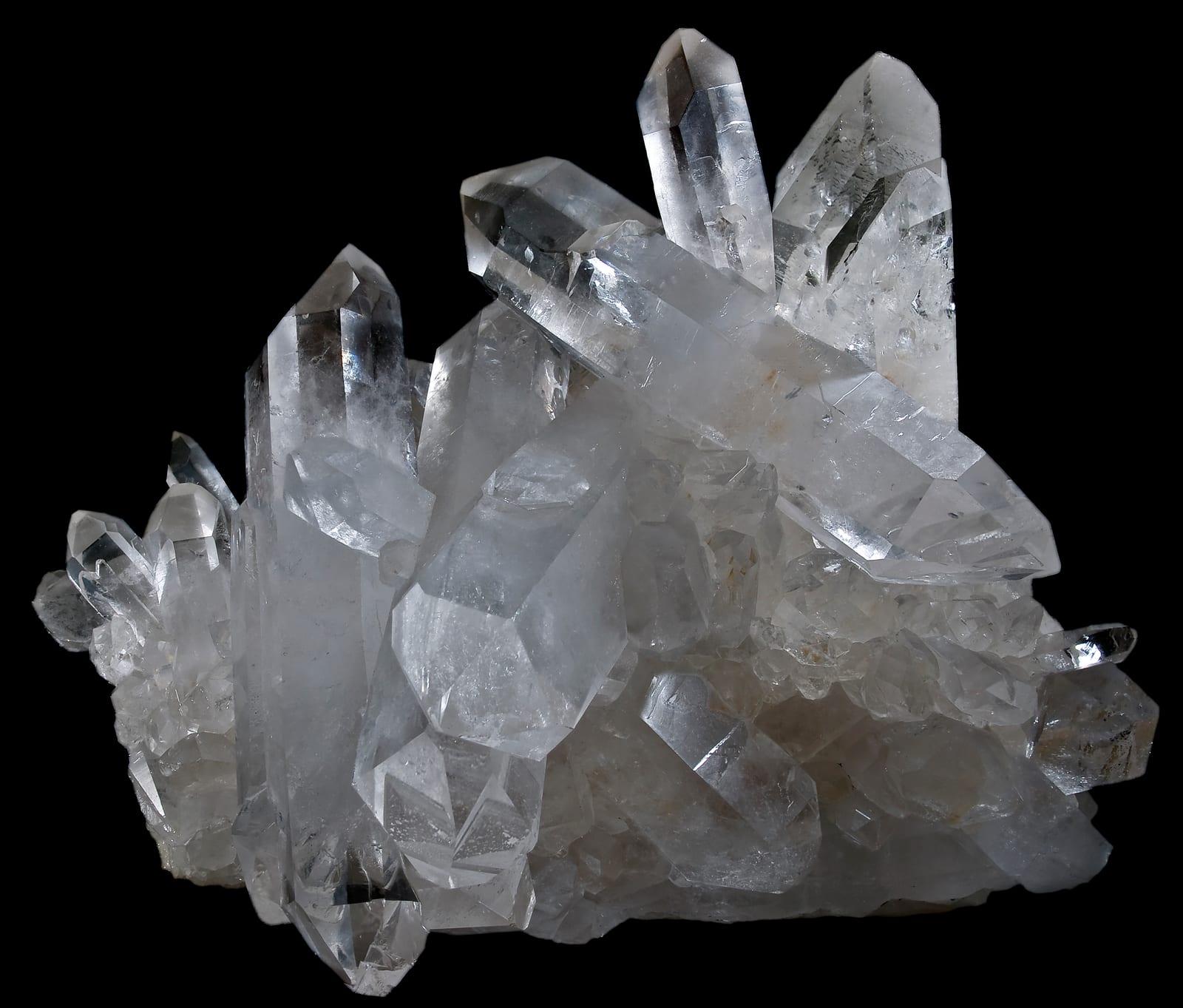
All properties
- Chemical formula
- Cu₅FeS₄
- Mohs hardness
- 3-3.25
- Density
- 5.06-5.08 g/cm³
- Colors
- Streak
- Pale grayish black
- Luster
- Metallic
- Transparency
- Opaque
- Crystal system
- Orthorhombic
- Crystal habit
- Granular, massive, reniform
- Cleavage
- {111} in traces
- Rarity
- Common
- Uses
- Collector, Ore of copper
- Host rock
- Associated with and disseminated in mafic igneous rocks, in contact metamorphic skarn deposits, in pegmatites, in medium- to high-temperature hydrothermal deposits, and in sedimentary cupriferous shales
Where rockhounds find bornite
32 mapped spotsClassic worldwide localities
- Butte, Silver Bow Co., Montana, and at Bristol, Hartford Co., Connecticut, USA
- Copper, for example at the Magma mine, Superior, Pinal Co., and Bisbee, Cochise Co., Arizona, USA
- Kennicott, Alaska, USA
- Carn Brea mine, Illogan, Cornwall, England
- Mangula mine, Lomagundi district, Zimbabwe
- Frossnitz Alpe, eastern Tirol, Austria
U.S. states with bornite
Each link opens a state-specific list of mapped rockhounding spots that produce bornite.
Field-hunting tip
Where it forms: Associated with and disseminated in mafic igneous rocks, in contact metamorphic skarn deposits, in pegmatites, in medium- to high-temperature hydrothermal deposits, and in sedimentary cupriferous shales. If you start seeing chalcopyrite, pyrite, garnet in float, you are in the right ground. Typical habit: granular, massive, reniform. Train your eye for that shape before scanning the outcrop. In the U.S., the densest reported localities are in Utah, New Jersey, Wisconsin. Start trip planning there.
More bornite photos
Common questions
How do you identify bornite?+
Where is bornite found?+
Can I find bornite in the United States?+
Is bornite safe to handle?+
What rocks look like bornite?+
What minerals are found with bornite?+
What kind of rock does bornite form in?+
What is bornite used for?+
Find bornite on the map
RockHoundR shows mapped rockhounding spots, access rules, and lets you log every find.