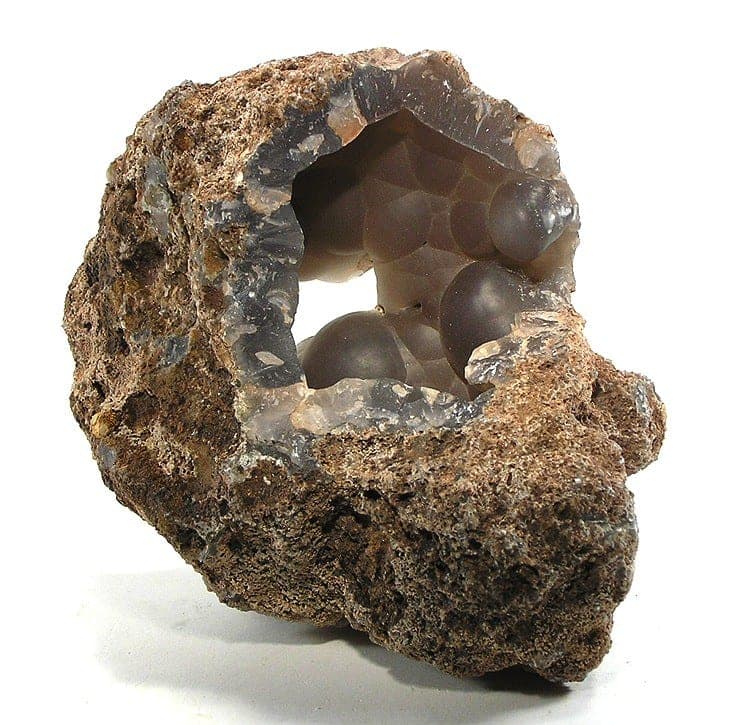
Hyalite is a clear, colorless variety of opal often found as bubbly or globular botryoidal crusts. It is most famous among collectors for its spectacular, intense neon-green fluorescence under ultraviolet light, which is caused by trace amounts of uranium impurities. It typically forms as a coating on rocks within volcanic environments or pegmatites.
Spotting hyalite in the field
Field marks- 1
Colorless, glassy, botryoidal crusts that look like drops of clear glue on rock
- 2
Glows a strong green under shortwave ultraviolet light
- 3
Very light in the hand, soft, and often quite thin
Hyalite is the best reason to carry a UV light. Trace uranium makes it fluoresce a vivid green that is unmistakable and visible from several feet away in the dark, so a night sweep of a known outcrop finds material that is nearly invisible by day. It forms as glassy botryoidal coatings in volcanic rock and pegmatite. Bring a shortwave lamp, wear UV-blocking glasses, and never look into the lamp.
Before you collect
Shortwave UV lamps damage eyes and skin. Wear UV-rated eye protection, keep the beam off skin, and never point it at another person.
Straight answers
- Is it worth cutting?
- Rarely cut. It is a specimen mineral, and its value is the fluorescence and the botryoidal form.
- What is it really worth?
- Modest. Bright fluorescence and well-formed clear botryoidal crusts on attractive matrix carry the value.
- Can you legally keep it?
- Ordinary personal-use collecting rules apply. The trace uranium is far too low to raise handling or transport concerns.
Often confused with
Hyalite vs. its common look-alikes, and how to tell them apart in the field.
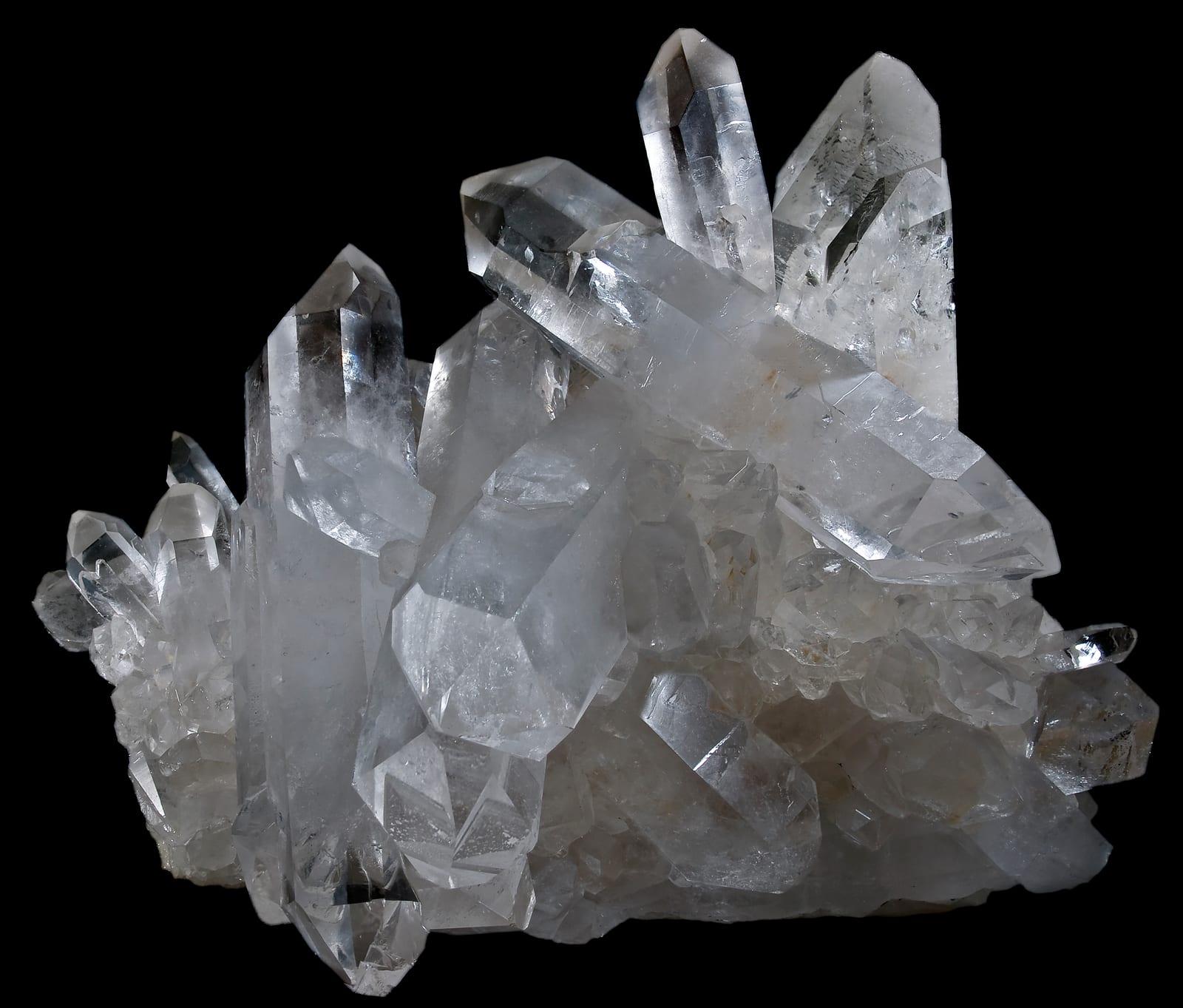
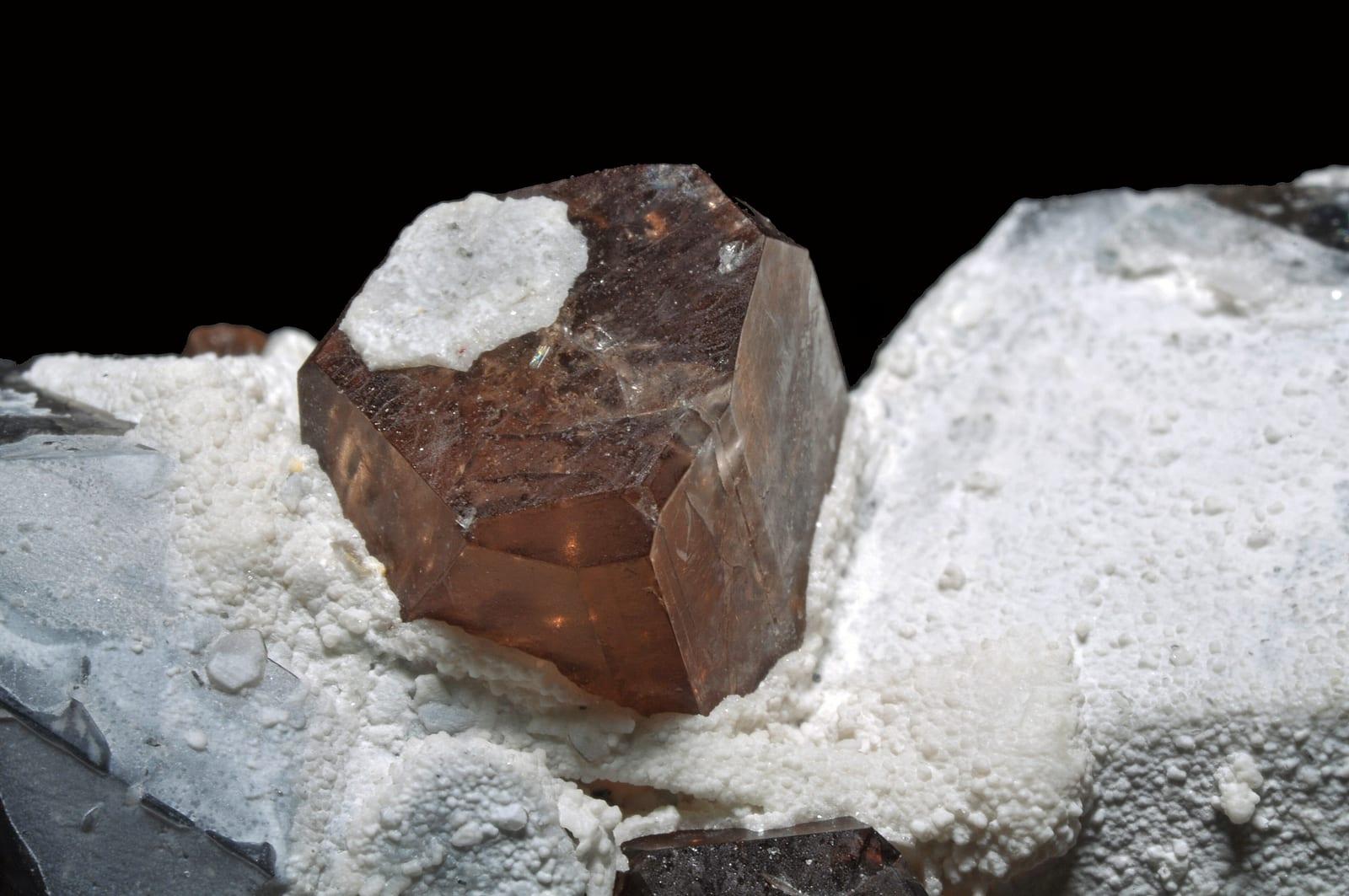
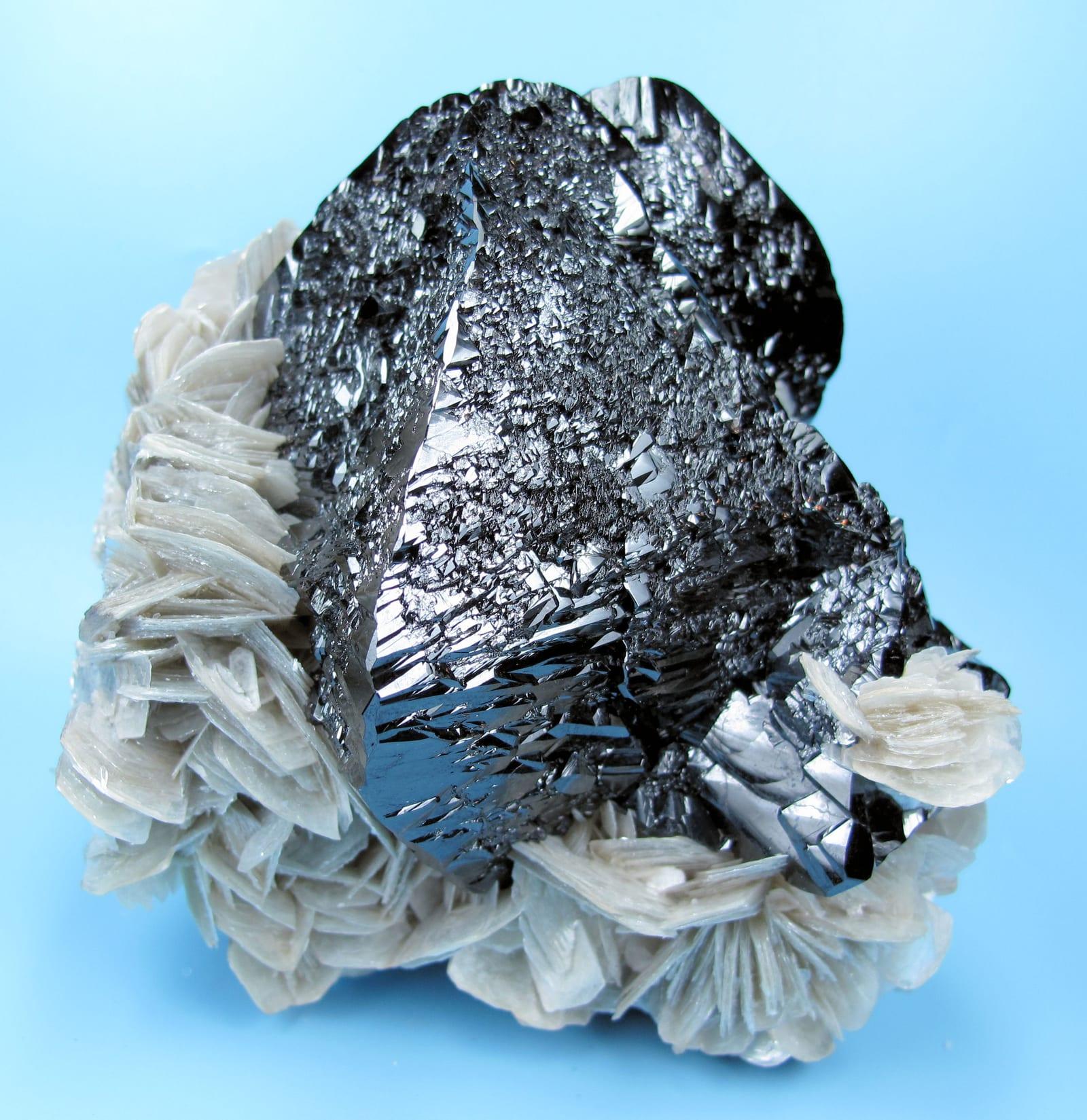
Often found alongside hyalite
Minerals reported to co-occur with hyalite. Spotting these in float or country rock is a strong cue you are in the right ground.
All properties
- Chemical formula
- SiO₂·nH₂O
- Mohs hardness
- 5.5-6.5
- Density
- 2.0-2.1 g/cm³
- Streak
- White
- Luster
- Vitreous
- Transparency
- Transparent
- Crystal system
- Amorphous
- Crystal habit
- Botryoidal, crusts, globular, stalactitic
- Cleavage
- None
- Fluorescence
- Intense bright green under SW and LW UV
- Rarity
- Common
- Uses
- Collector, Specimen
- Host rock
- volcanic rhyolite, pegmatites, hydrothermal cavities
Where rockhounds find hyalite
2 mapped spotsClassic worldwide localities
- Zacatecas, Mexico
- San Luis Potosi, Mexico
- Karlovarský, Czech Republic
- Georgia, USA
- North Carolina, USA
Field-hunting tip
Where it forms: volcanic rhyolite, pegmatites, hydrothermal cavities. If you start seeing quartz, topaz, cassiterite in float, you are in the right ground. Typical habit: botryoidal, crusts, globular, stalactitic. Train your eye for that shape before scanning the outcrop. In the U.S., the densest reported localities are in Utah. Start trip planning there.
Common questions
How do you identify hyalite?+
Where is hyalite found?+
Can I find hyalite in the United States?+
What rocks look like hyalite?+
What minerals are found with hyalite?+
What kind of rock does hyalite form in?+
What is hyalite used for?+
Find hyalite on the map
RockHoundR shows mapped rockhounding spots, access rules, and lets you log every find.