Mookaite is a silicified porcelainite or radiolarite characterized by its vibrant, multicolored swirls of red, yellow, and cream. It is highly valued by lapidary artists for its ability to take a high polish and its unique, opaque, earthy aesthetic found exclusively in Western Australia.
Spotting mookaite in the field
Field marks- 1
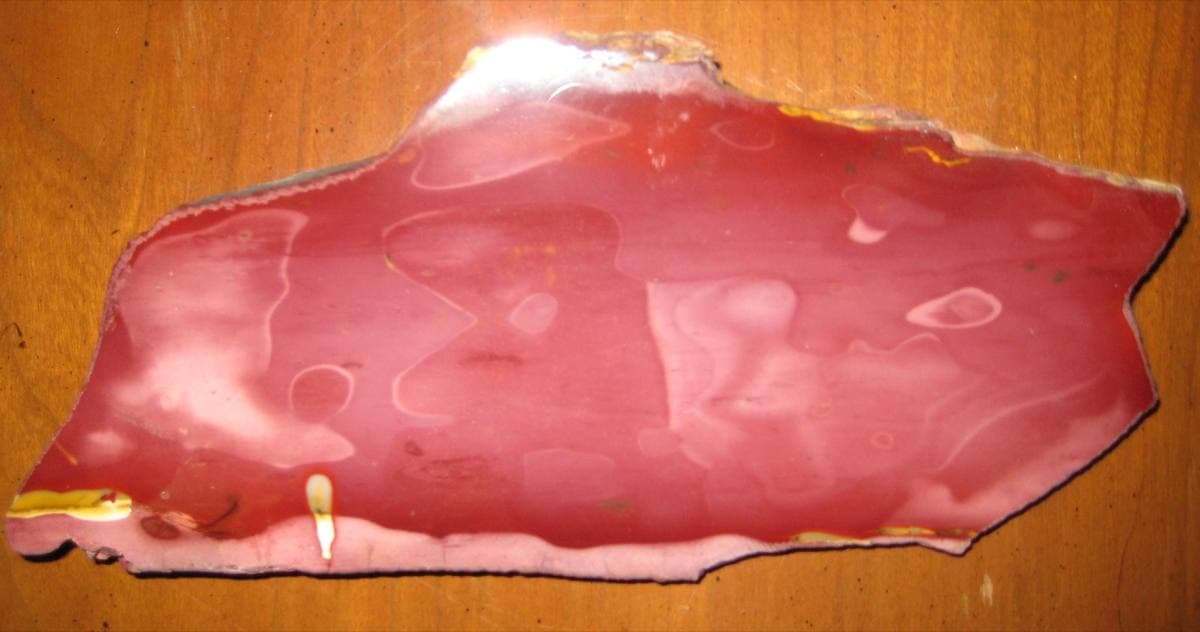
Mustard yellow, deep red, maroon and cream, often blended in one piece
- 2
Slightly softer feel than typical jasper, with occasional chalky zones
- 3
Opaque, with color boundaries that blur rather than band
Mookaite comes from the Mooka Creek area in the Kennedy Ranges of Western Australia, where it formed from silicified radiolarian sediments. It is a buying material for almost everyone outside Australia. Quality varies more than most named jaspers: good mookaite is dense and takes a hard polish, while poorer material has porous, chalky patches that never come up.
Straight answers
- Is it worth cutting?
- Test a corner before committing. Dense mookaite polishes to a glassy finish; the chalky zones will always look dull no matter how far you take the grit sequence.
- What is it really worth?
- Inexpensive and widely available. The premium is for solid, non-porous rough with strong red-to-yellow contrast.
- Can you legally keep it?
- Australian export of mineral specimens is regulated in some states. Buy from established suppliers.
Often confused with
Mookaite vs. its common look-alikes, and how to tell them apart in the field.
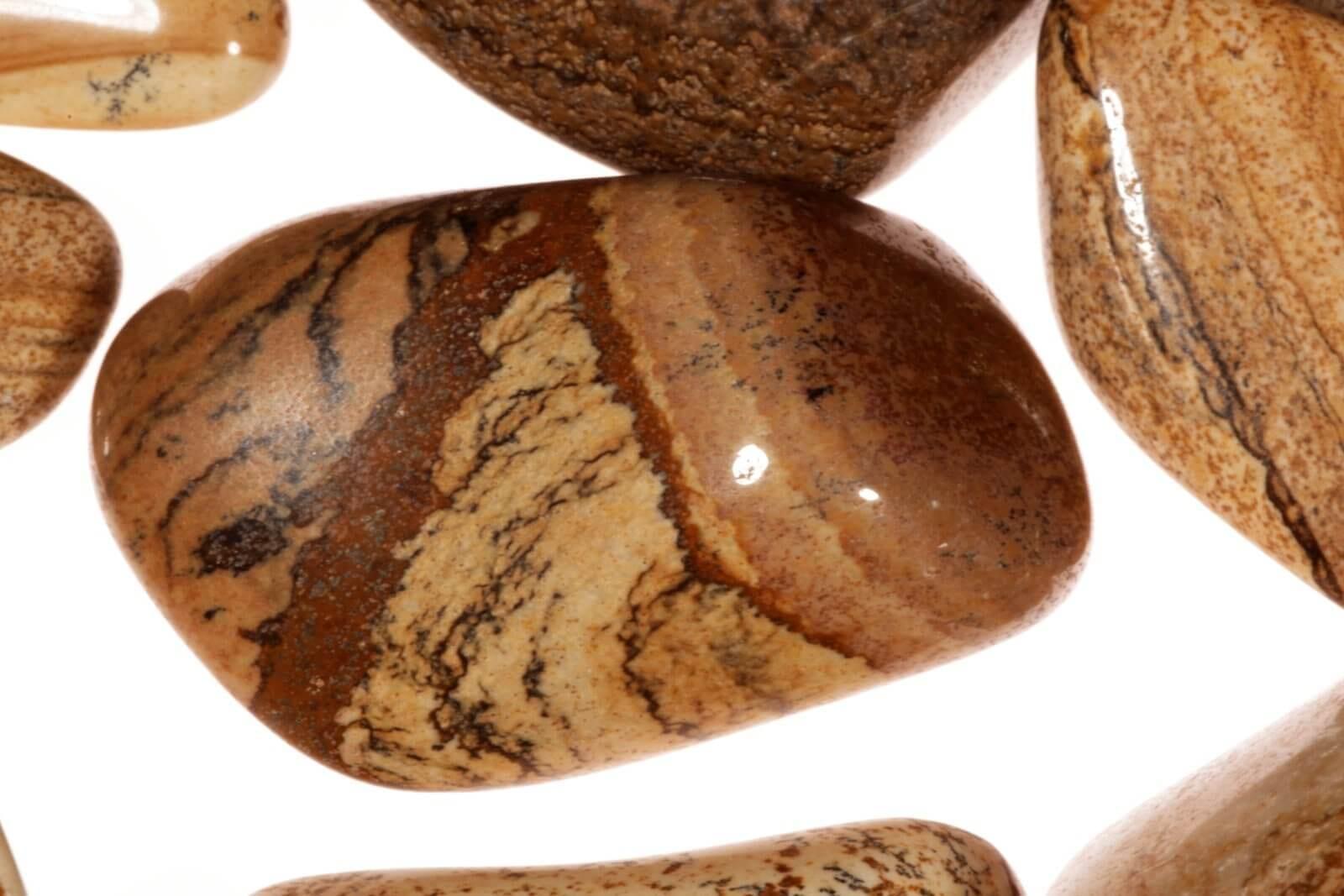
Often found alongside mookaite
Minerals reported to co-occur with mookaite. Spotting these in float or country rock is a strong cue you are in the right ground.
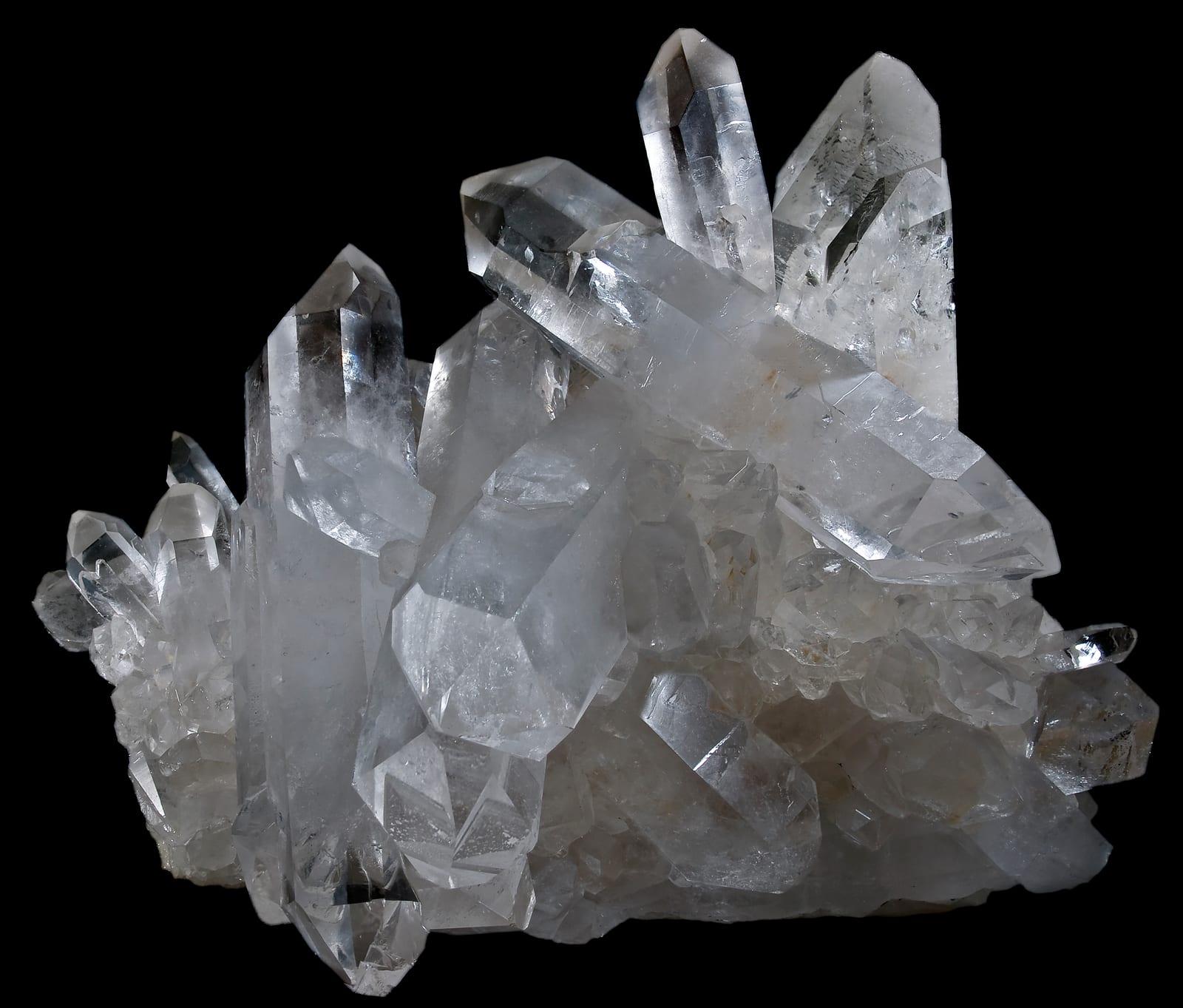
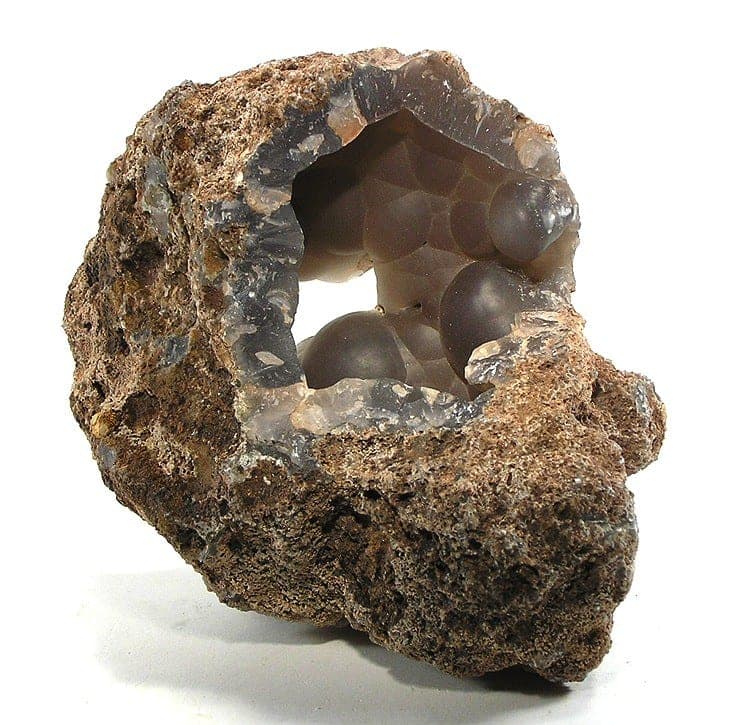
All properties
- Chemical formula
- SiO₂
- Mohs hardness
- 6.5-7
- Density
- 2.6-2.7 g/cm³
- Streak
- White
- Luster
- Dull to waxy
- Transparency
- Opaque
- Crystal system
- Trigonal
- Crystal habit
- Massive
- Cleavage
- None
- Rarity
- Common
- Uses
- Lapidary, Decorative, Collector
- Host rock
- sedimentary
Where rockhounds find mookaite
Classic worldwide localities
- Mooka Creek, Western Australia
- Kennedy Ranges, Australia
Field-hunting tip
Where it forms: sedimentary. If you start seeing quartz, chalcedony in float, you are in the right ground. Typical habit: massive. Train your eye for that shape before scanning the outcrop.
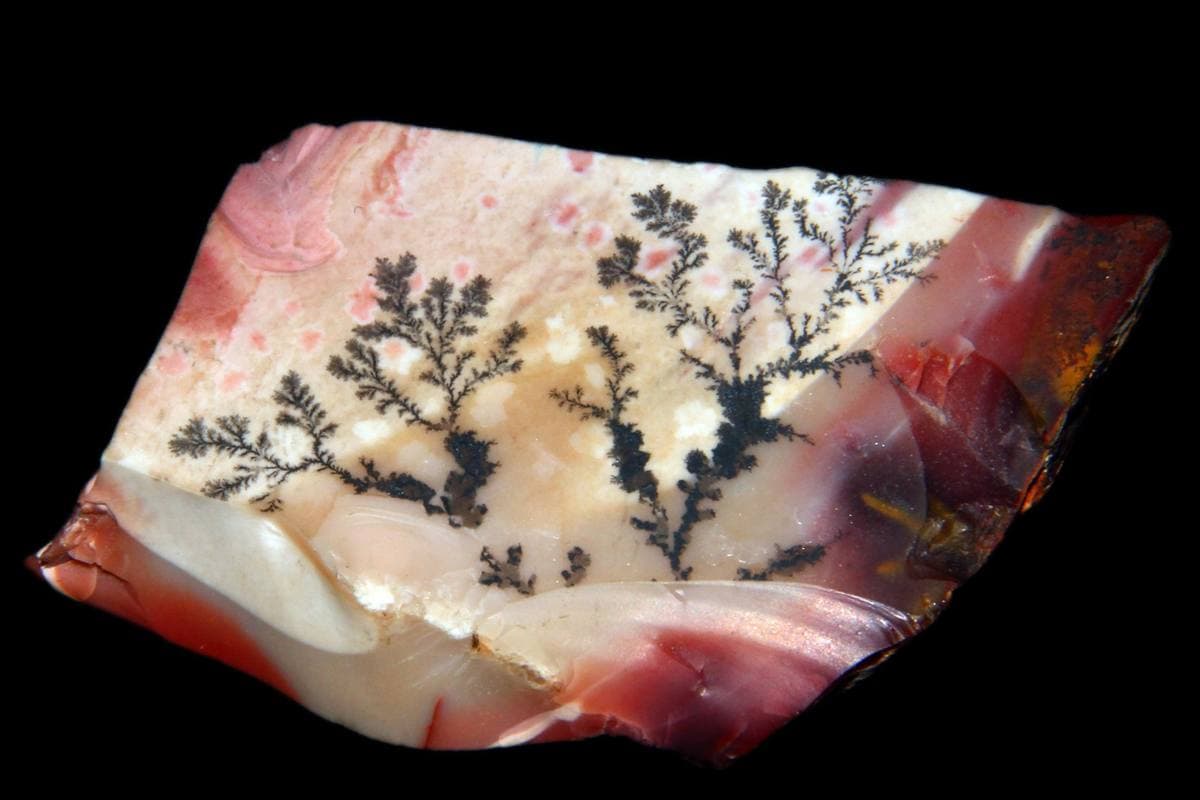
More mookaite photos
Common questions
How do you identify mookaite?+
Where is mookaite found?+
What rocks look like mookaite?+
What minerals are found with mookaite?+
What kind of rock does mookaite form in?+
What is mookaite used for?+
Find mookaite on the map
RockHoundR shows mapped rockhounding spots, access rules, and lets you log every find.