Poppy Jasper is a distinct variety of orbicular jasper characterized by its reddish, poppy-like inclusions of hematite scattered throughout a silica matrix. It is highly prized by lapidary enthusiasts for the striking patterns revealed when cut and polished into cabochons or decorative spheres.
Spotting poppy jasper in the field
Field marks- 1
Scattered red or orange rounded blotches on a darker red or brown ground
- 2
Blotches look like flower heads rather than concentric rings
- 3
Opaque and dense, with a fine grain that polishes hard
The classic poppy jasper comes from Morgan Hill in Santa Clara County, California, where the material weathers out of serpentine country rock. The historic ground is largely private and much of it is now built over, so collecting opportunities are limited and mostly a matter of knowing a landowner. Other poppy-patterned jaspers occur elsewhere and get sold under the same name.
Straight answers
- Is it worth cutting?
- Reliable cab material. The pattern is scale-dependent, so cut larger cabs to fit whole poppies rather than clipping them.
- What is it really worth?
- Inexpensive for general material, with genuine Morgan Hill rough carrying a collector premium.
- Can you legally keep it?
- Historic California localities are almost entirely private. Ask, or buy.
Often confused with
Poppy Jasper vs. its common look-alikes, and how to tell them apart in the field.
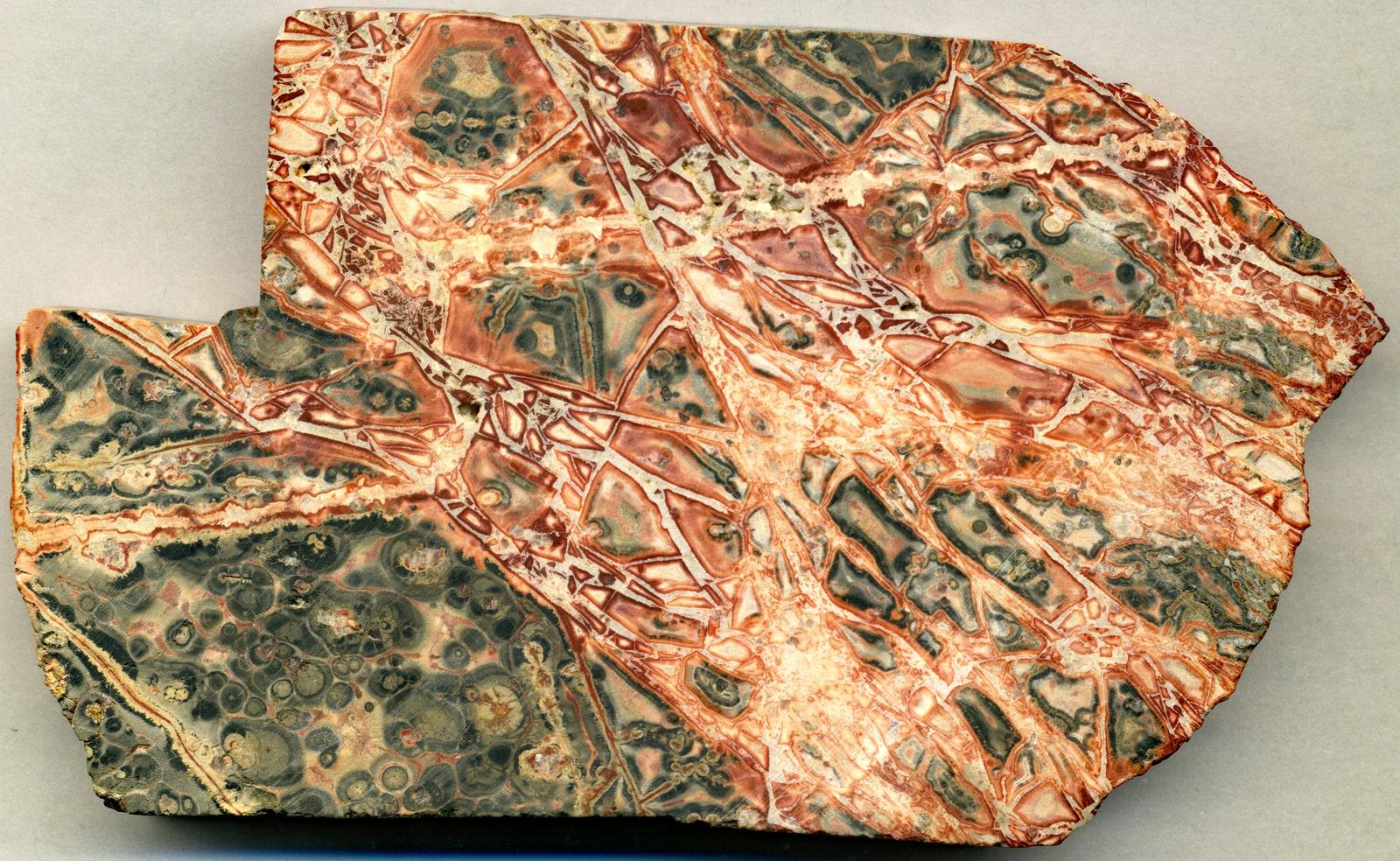
How to tell apart: Breccia is angular fragments cemented back together, with straight-edged shards. Poppy blotches are rounded and were never broken.
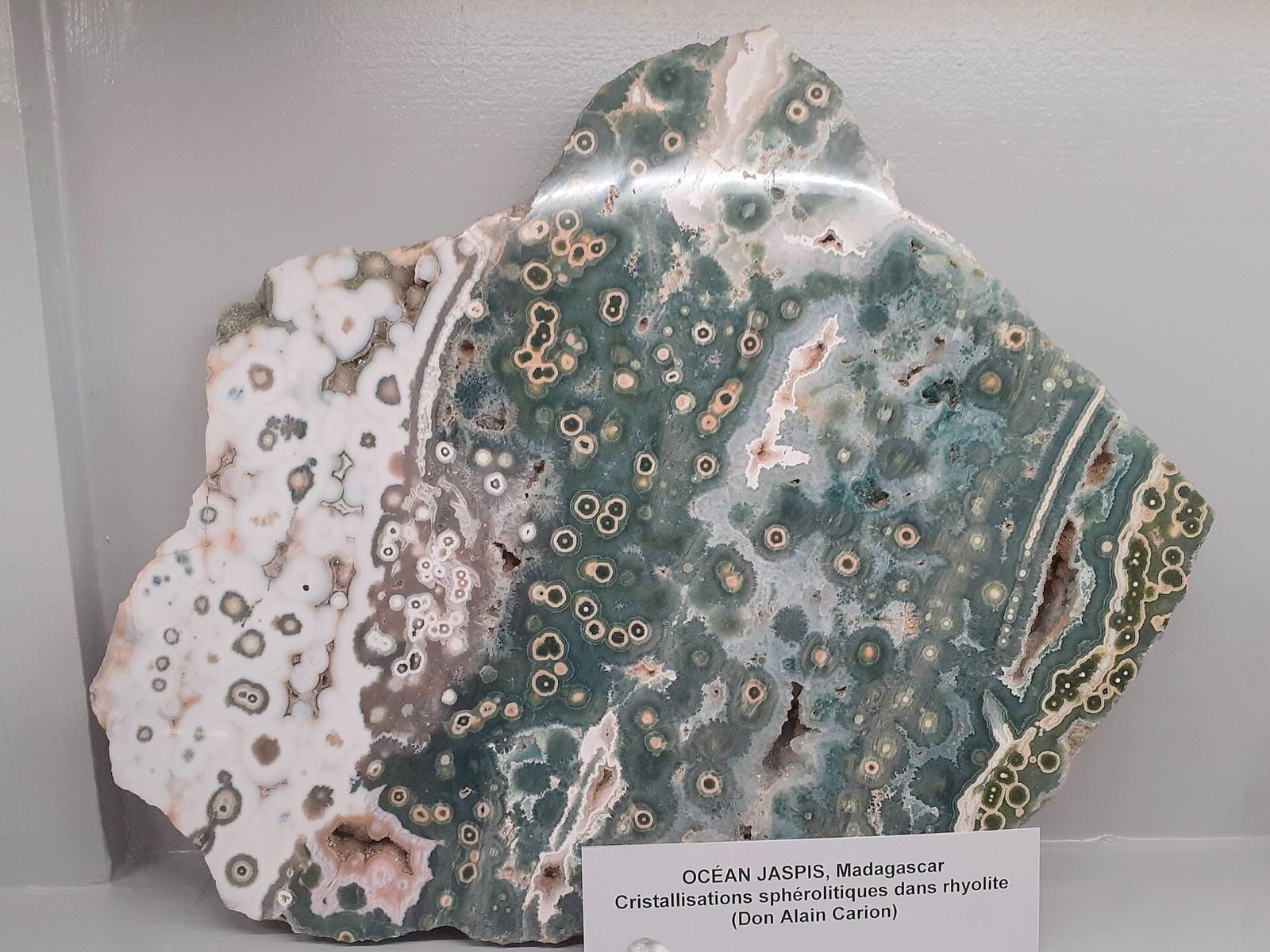
How to tell apart: Orbs have concentric internal structure and defined rims. Poppy blotches are solid color with soft edges.
Often found alongside poppy jasper
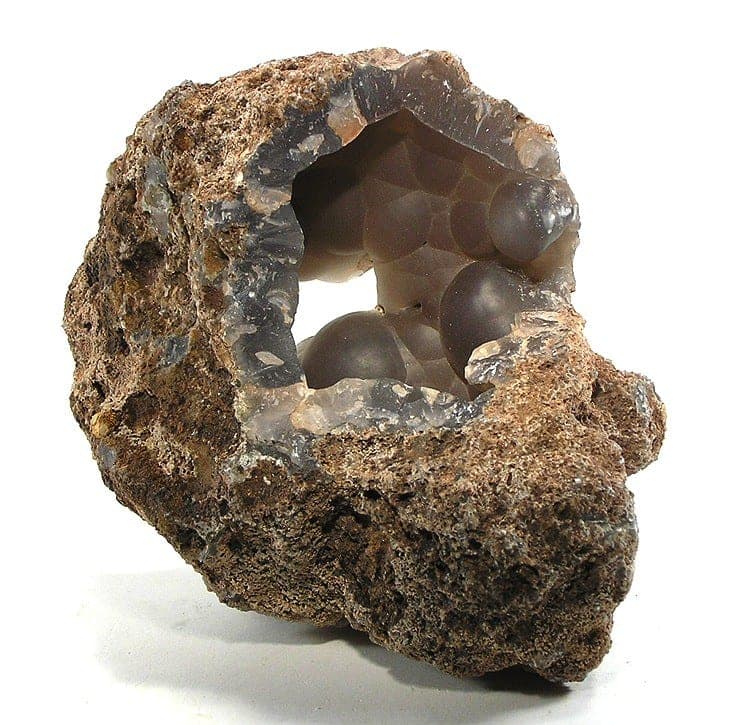
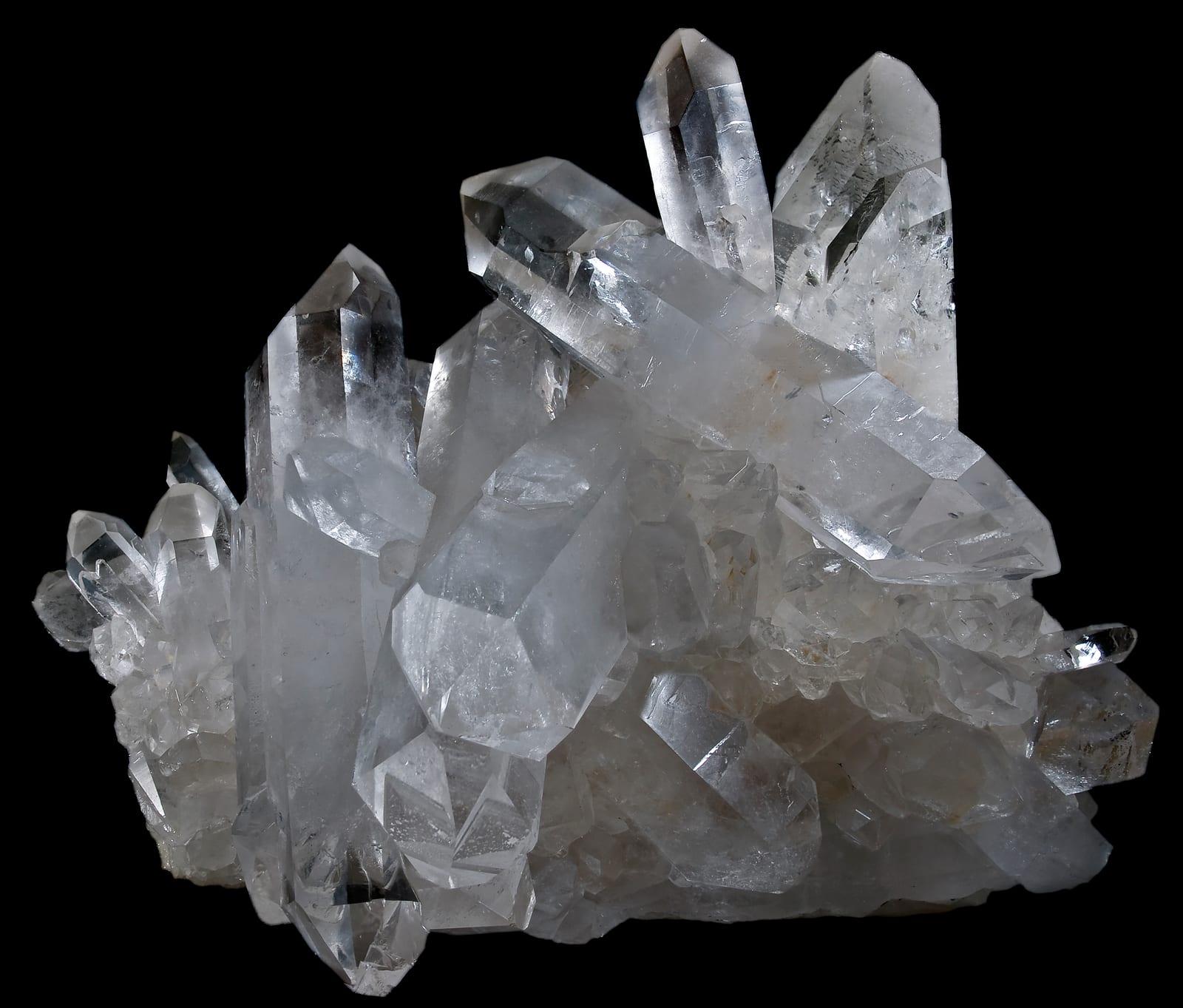
Minerals reported to co-occur with poppy jasper. Spotting these in float or country rock is a strong cue you are in the right ground.
All properties
- Chemical formula
- SiO₂
- Mohs hardness
- 6.5-7
- Density
- 2.6-2.7 g/cm³
- Streak
- White
- Luster
- Waxy
- Transparency
- Opaque
- Crystal system
- Trigonal
- Crystal habit
- Massive
- Cleavage
- None
- Rarity
- Common
- Uses
- Lapidary, Decorative, Collector
- Host rock
- sedimentary
Where rockhounds find poppy jasper
1 mapped spotsClassic worldwide localities
- Morgan Hill, California, USA
- Santa Clara County, California, USA
Field-hunting tip
Where it forms: sedimentary. If you start seeing chalcedony, quartz, hematite in float, you are in the right ground. Typical habit: massive. Train your eye for that shape before scanning the outcrop. In the U.S., the densest reported localities are in California. Start trip planning there.
Common questions
How do you identify poppy jasper?+
Where is poppy jasper found?+
Can I find poppy jasper in the United States?+
What rocks look like poppy jasper?+
What minerals are found with poppy jasper?+
What kind of rock does poppy jasper form in?+
What is poppy jasper used for?+
Find poppy jasper on the map
RockHoundR shows mapped rockhounding spots, access rules, and lets you log every find.