
Rutilated quartz is a variety of macrocrystalline quartz that contains needle-like inclusions of rutile, often appearing as golden, reddish, or silver threads. These inclusions form inside the quartz during its growth phase and can be arranged in parallel, radial, or chaotic patterns, making each specimen unique.
Spotting rutilated quartz in the field
Field marks- 1
Fine golden or coppery needles suspended inside clear or smoky quartz
- 2
Needles are straight, rigid and metallic-looking, often crossing in a lattice
- 3
Host quartz is transparent enough to see the needles at depth
The needles are rutile, a titanium oxide, that grew before the quartz enclosed it. The metallic glint is the giveaway: rutile catches the light like a fine wire, quite unlike the matte look of the mineral inclusions in moss agate. Best American material tends to come from pegmatite and Alpine-type vein settings, with Brazil and Madagascar supplying most of what is on the market.
Straight answers
- Is it worth cutting?
- Orientation is everything. Cut so the needles run across the face of the stone rather than into it, and cut thin enough that light reaches them.
- What is it really worth?
- Moderate and driven entirely by how good the needle pattern is. Dense golden starbursts in clean quartz are worth many times ordinary material.
- Can you legally keep it?
- Ordinary personal-use collecting rules apply where it occurs on public land.
Often confused with
Rutilated Quartz vs. its common look-alikes, and how to tell them apart in the field.
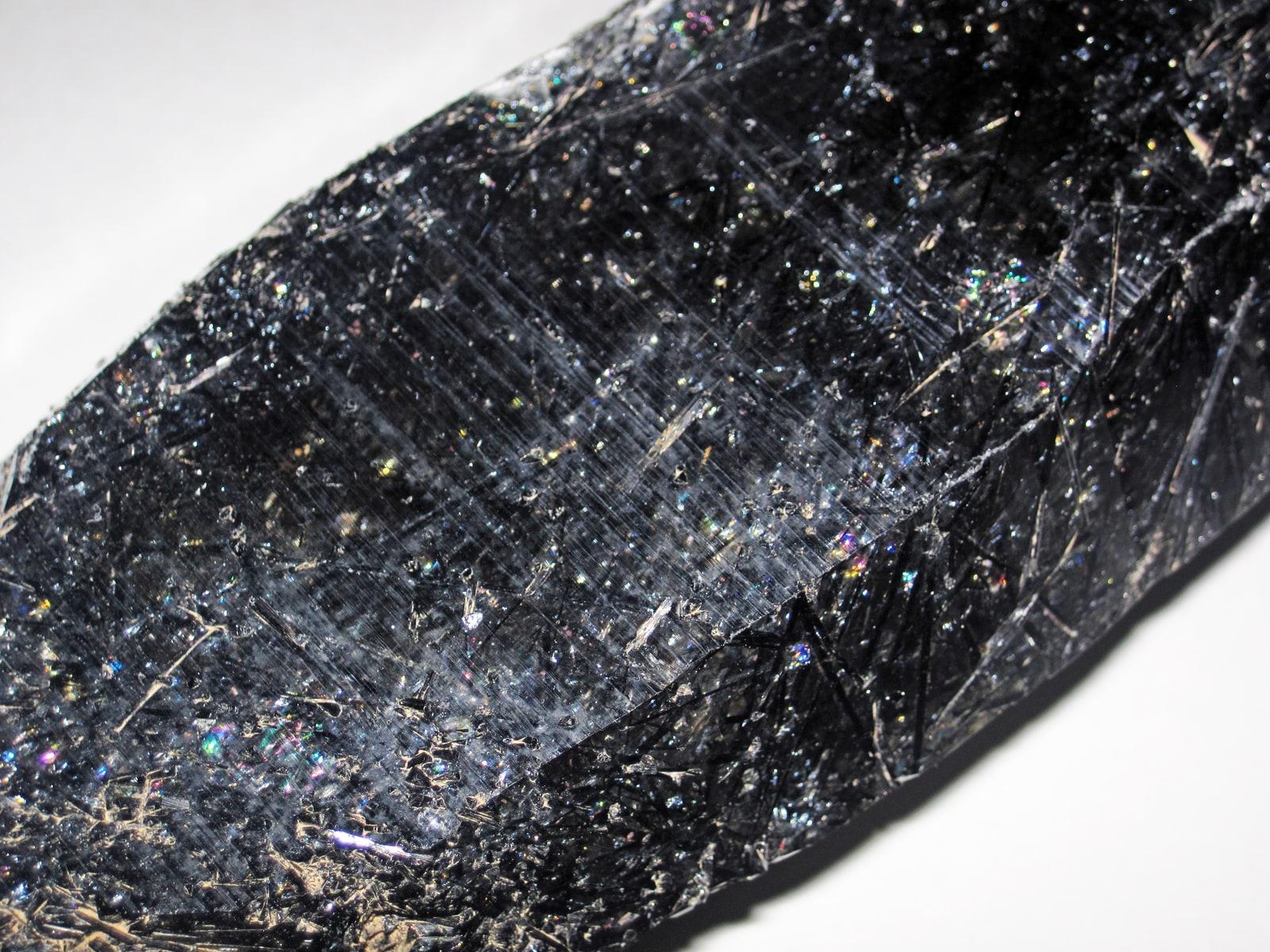
How to tell apart: Tourmaline needles are black and matte. Rutile needles are golden to coppery and metallic.
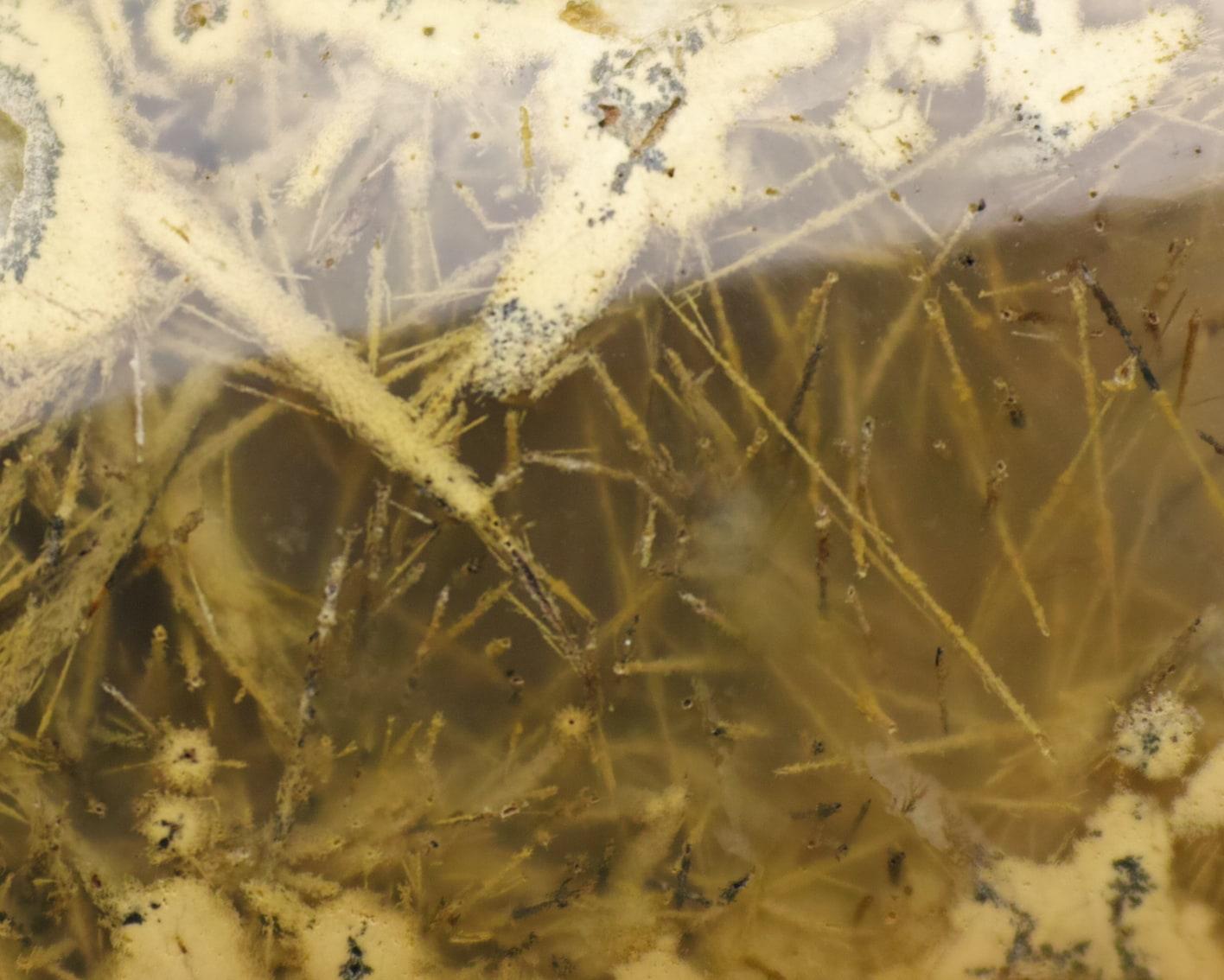
How to tell apart: Same needle idea, different host. Sagenite sits in translucent banded chalcedony, rutilated quartz in transparent crystalline quartz.
Often found alongside rutilated quartz
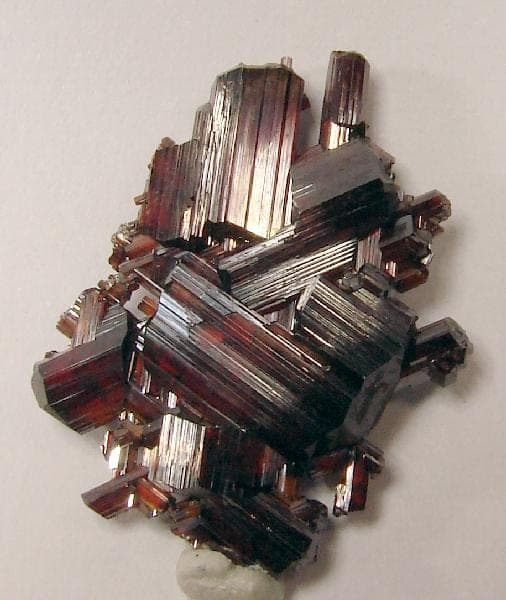
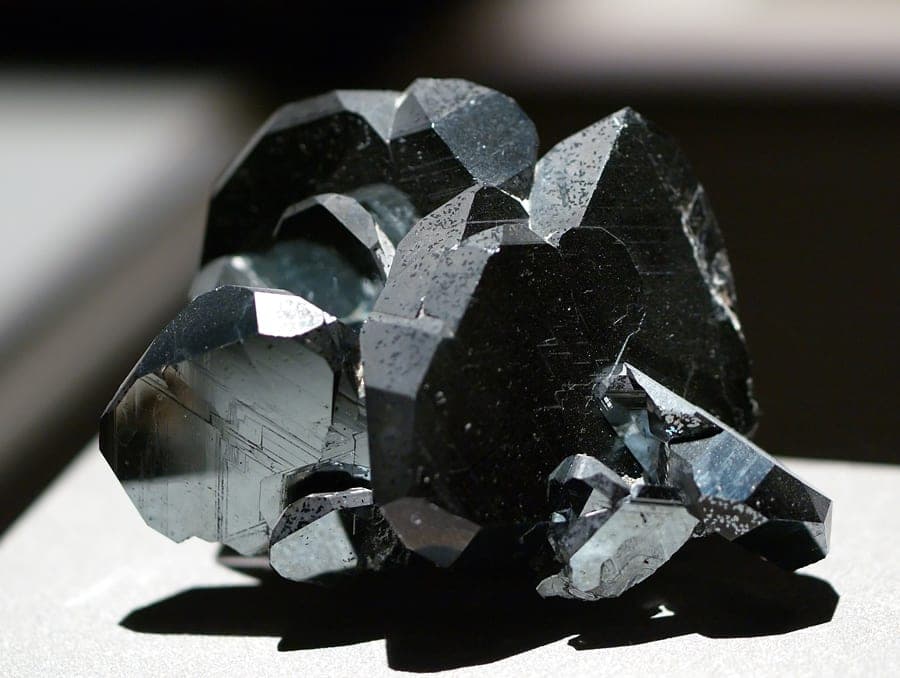
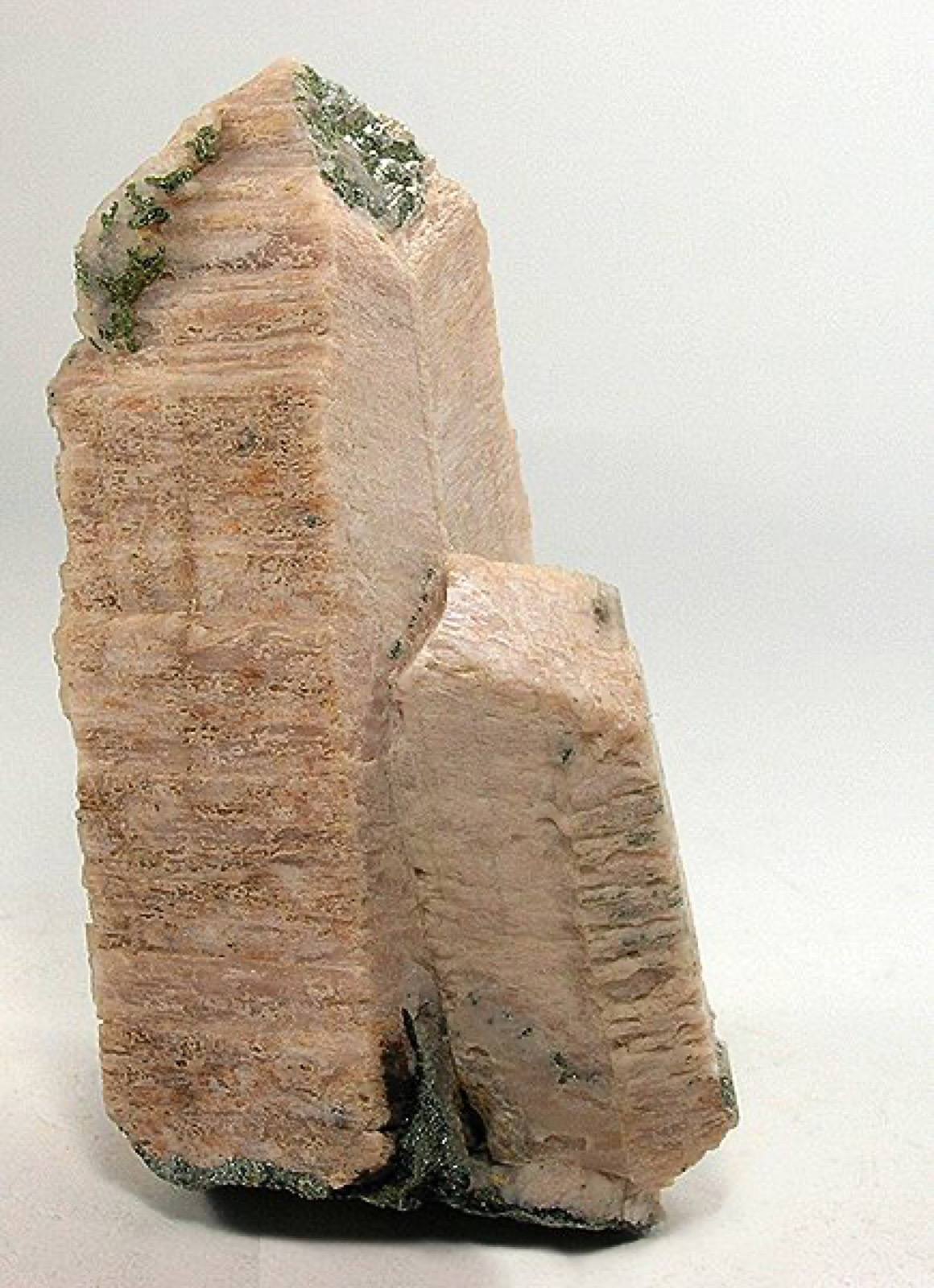
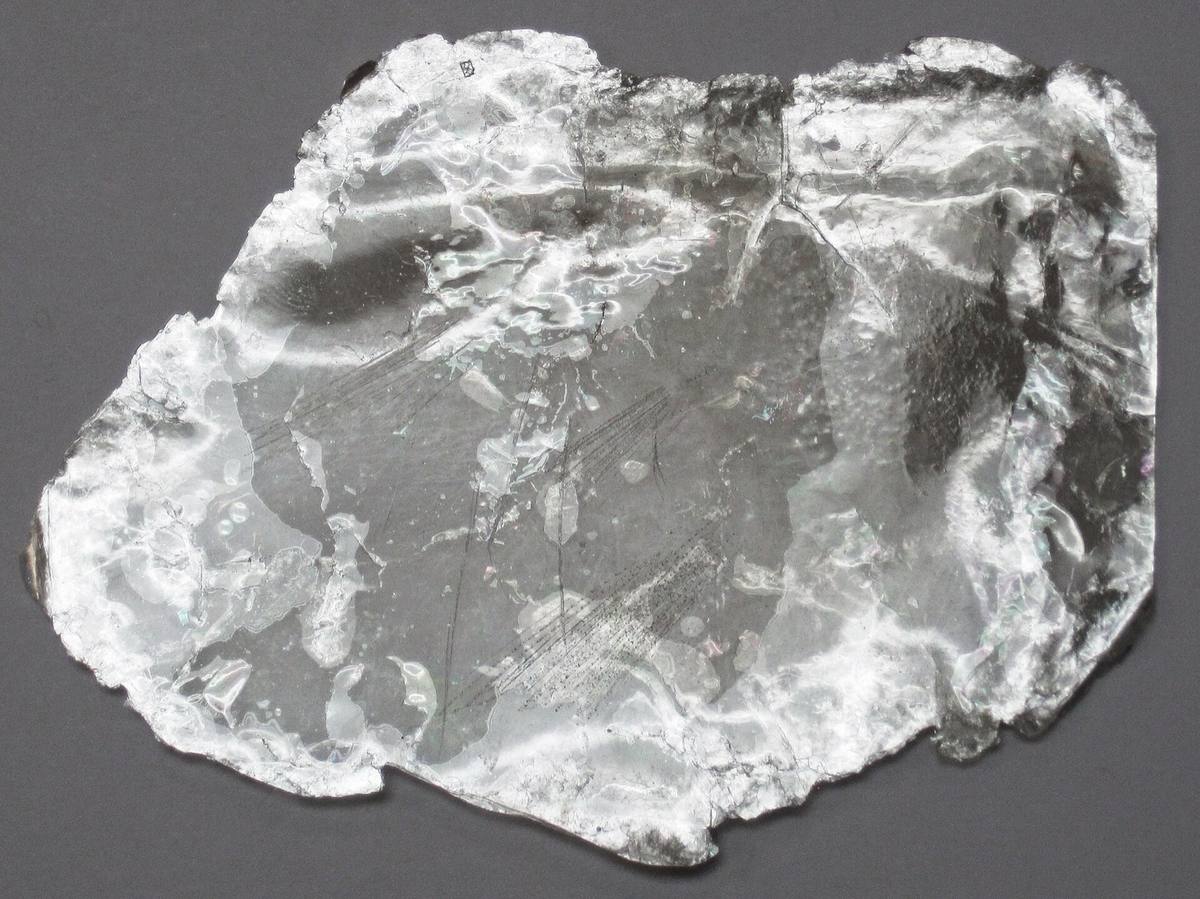
Minerals reported to co-occur with rutilated quartz. Spotting these in float or country rock is a strong cue you are in the right ground.
All properties
- Chemical formula
- SiO₂
- Mohs hardness
- 7
- Density
- 2.65 g/cm³
- Streak
- White
- Luster
- Vitreous
- Transparency
- Transparent
- Crystal system
- Trigonal
- Crystal habit
- Prismatic crystals with acicular inclusions
- Cleavage
- None
- Rarity
- Common
- Uses
- Gemstone, Lapidary, Collector
- Host rock
- pegmatites, hydrothermal quartz veins
Where rockhounds find rutilated quartz
Classic worldwide localities
- Brazil
- Madagascar
- USA
- Australia
- Pakistan
Field-hunting tip
Where it forms: pegmatites, hydrothermal quartz veins. If you start seeing rutile, hematite, feldspar in float, you are in the right ground. Typical habit: prismatic crystals with acicular inclusions. Train your eye for that shape before scanning the outcrop.
Common questions
How do you identify rutilated quartz?+
Where is rutilated quartz found?+
What rocks look like rutilated quartz?+
What minerals are found with rutilated quartz?+
What kind of rock does rutilated quartz form in?+
What is rutilated quartz used for?+
Find rutilated quartz on the map
RockHoundR shows mapped rockhounding spots, access rules, and lets you log every find.

