
Tourmalinated Quartz is a popular collector variety of clear quartz that contains natural inclusions of acicular or needle-like black tourmaline crystals. The contrast between the needle-like tourmaline fibers and the transparent host quartz makes it highly sought after for both lapidary work and mineral displays.
Spotting tourmalinated quartz in the field
Field marks- 1
Black needles and rods of schorl tourmaline inside clear or milky quartz
- 2
Needles are matte black, not metallic, and often thicker than rutile
- 3
Sometimes shows a triangular cross-section on a thicker rod
Schorl is the common black tourmaline of granites and pegmatites, and where it grew into a quartz-filled cavity you get this. Look in pegmatite dumps and weathered granite. The triangular cross-section on a thicker included rod is a nice confirmation, since tourmaline crystallizes in a trigonal system and rutile does not.
Straight answers
- Is it worth cutting?
- Cabs and facets well, and the strong black-on-clear contrast suits simple, clean cuts. Thick rods can pluck on the polish, so finish gently.
- What is it really worth?
- Inexpensive to moderate. Clean quartz with well-spaced, sharply defined black rods is the good end.
- Can you legally keep it?
- Ordinary personal-use collecting rules apply. Pegmatite dumps are often on private mine property.
Often confused with
Tourmalinated Quartz vs. its common look-alikes, and how to tell them apart in the field.
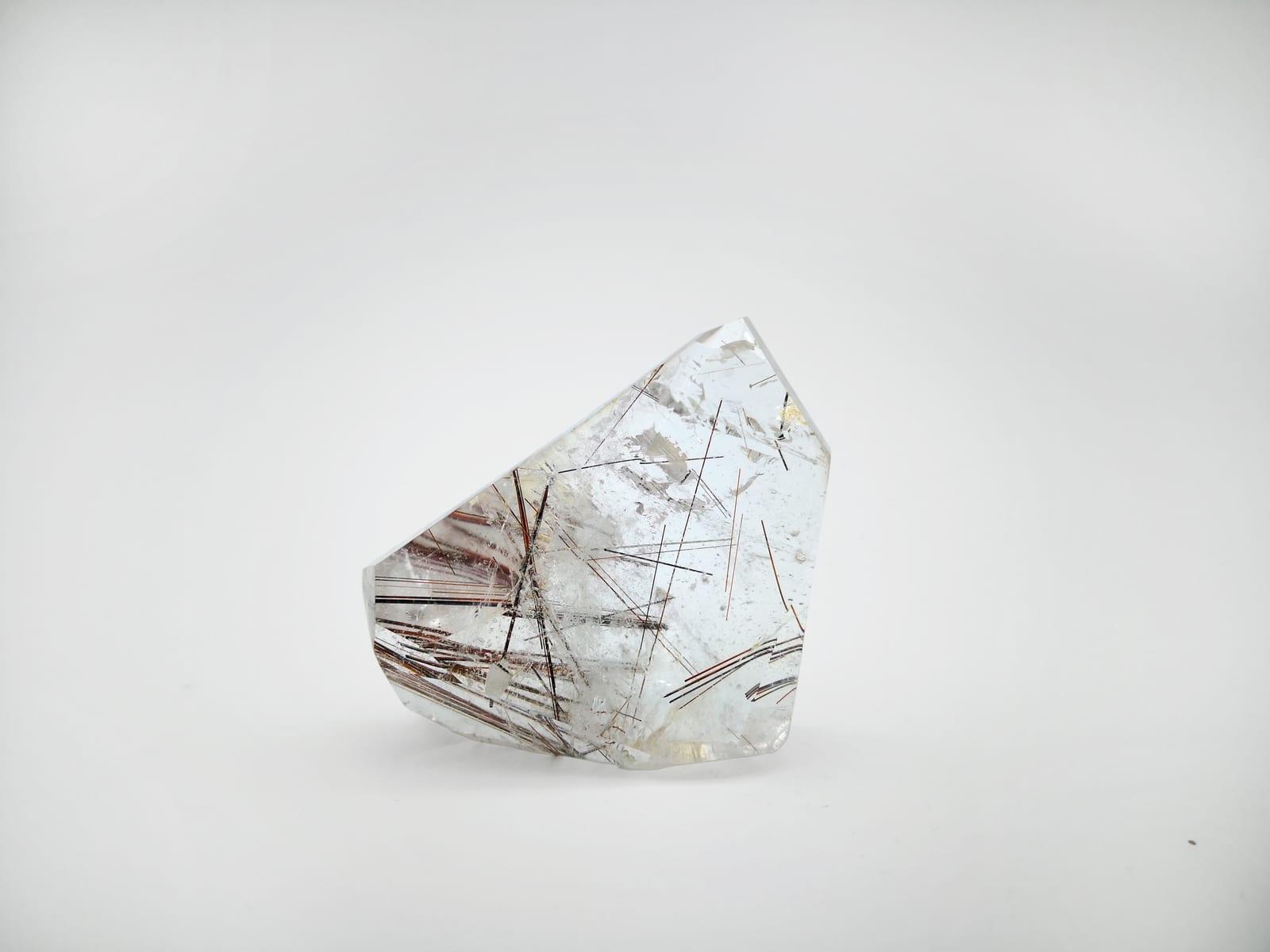
How to tell apart: Color and luster. Rutile is golden and metallic, schorl is black and matte.
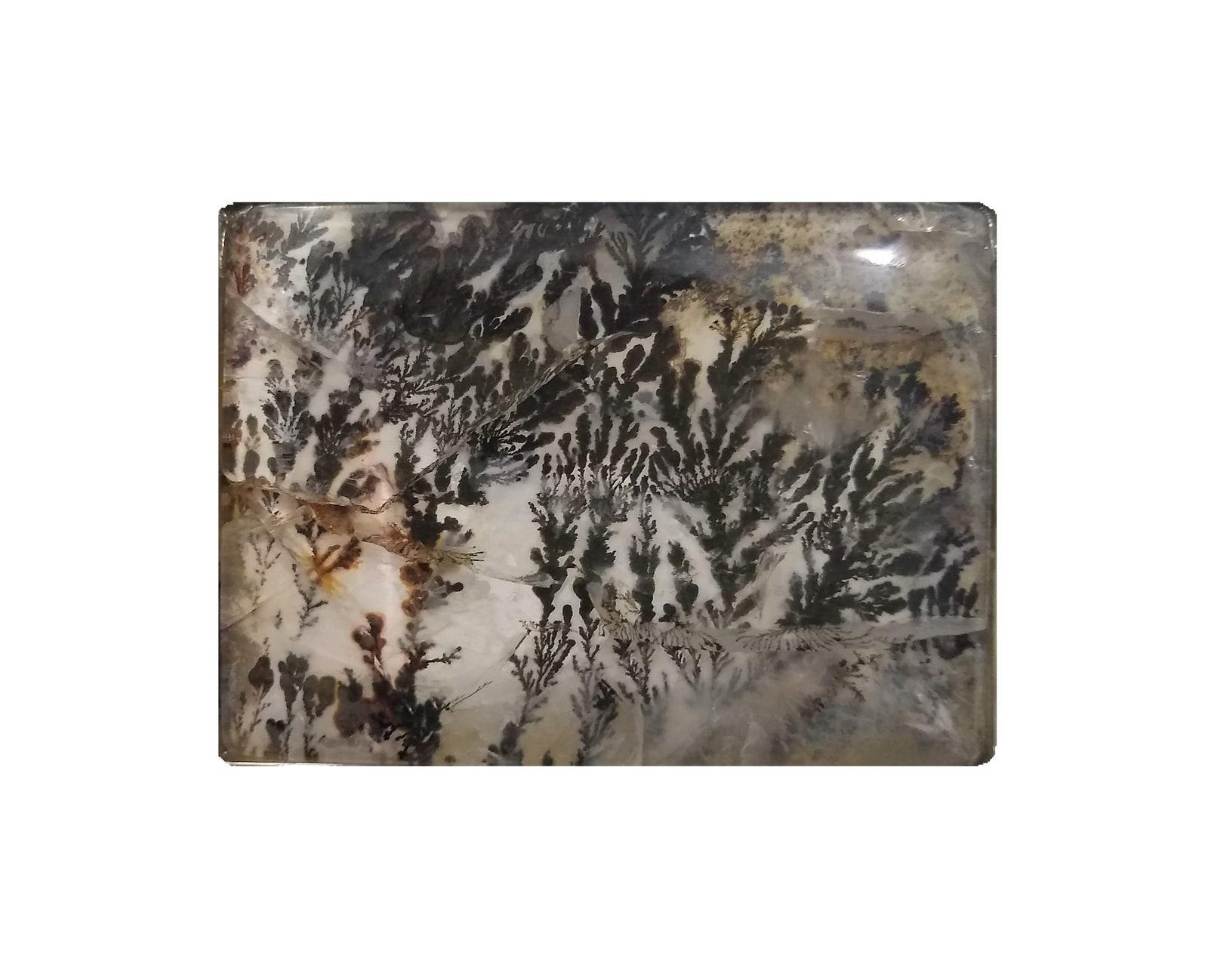
How to tell apart: Dendrites branch in a plane and are surface-fed. Tourmaline rods are straight, solid and three-dimensional.
Often found alongside tourmalinated quartz
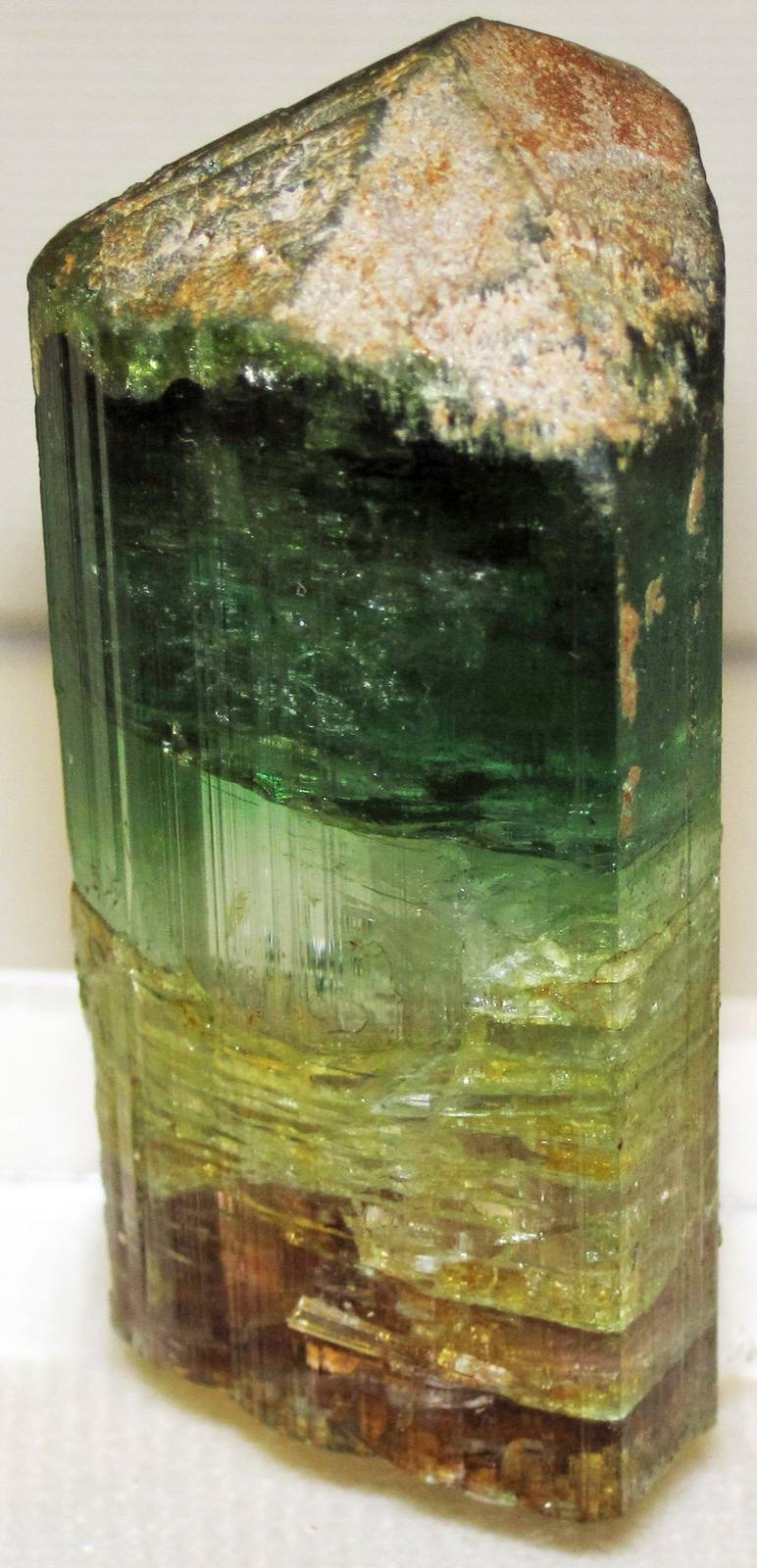
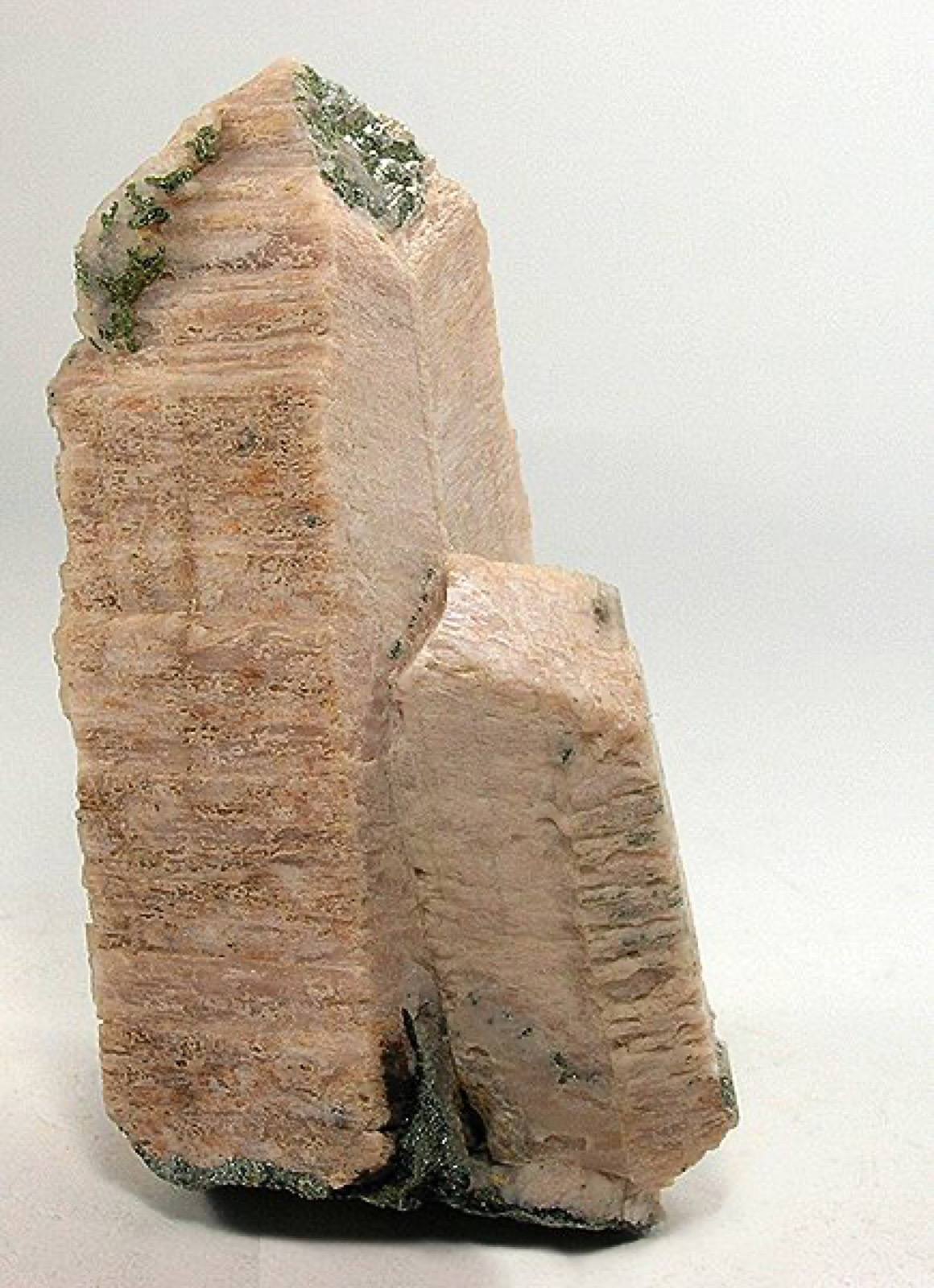
Minerals reported to co-occur with tourmalinated quartz. Spotting these in float or country rock is a strong cue you are in the right ground.
All properties
- Chemical formula
- SiO₂
- Mohs hardness
- 7
- Density
- 2.65 g/cm³
- Streak
- White
- Luster
- Vitreous
- Transparency
- Transparent
- Crystal system
- Trigonal
- Crystal habit
- Prismatic crystals with needle-like inclusions
- Cleavage
- None
- Rarity
- Common
- Uses
- Lapidary, Collector, Decorative
- Host rock
- pegmatites
Where rockhounds find tourmalinated quartz
Classic worldwide localities
- Brazil
- Madagascar
- USA
- India
- Sri Lanka
Field-hunting tip
Where it forms: pegmatites. If you start seeing tourmaline, feldspar, mica in float, you are in the right ground. Typical habit: prismatic crystals with needle-like inclusions. Train your eye for that shape before scanning the outcrop.
Common questions
How do you identify tourmalinated quartz?+
Where is tourmalinated quartz found?+
What rocks look like tourmalinated quartz?+
What minerals are found with tourmalinated quartz?+
What kind of rock does tourmalinated quartz form in?+
What is tourmalinated quartz used for?+
Find tourmalinated quartz on the map
RockHoundR shows mapped rockhounding spots, access rules, and lets you log every find.

