Tiger's Eye is a chatoyant gemstone formed by the pseudomorphous replacement of crocidolite fibers by silica. It is highly valued for its striking golden-brown luster and distinctive 'cat-eye' band effect when polished in cabochons. It is typically found in weathered metamorphic rocks where oxidation of iron-rich fibers creates its signature warm color palette.
Spotting tiger's eye in the field
Field marks- 1
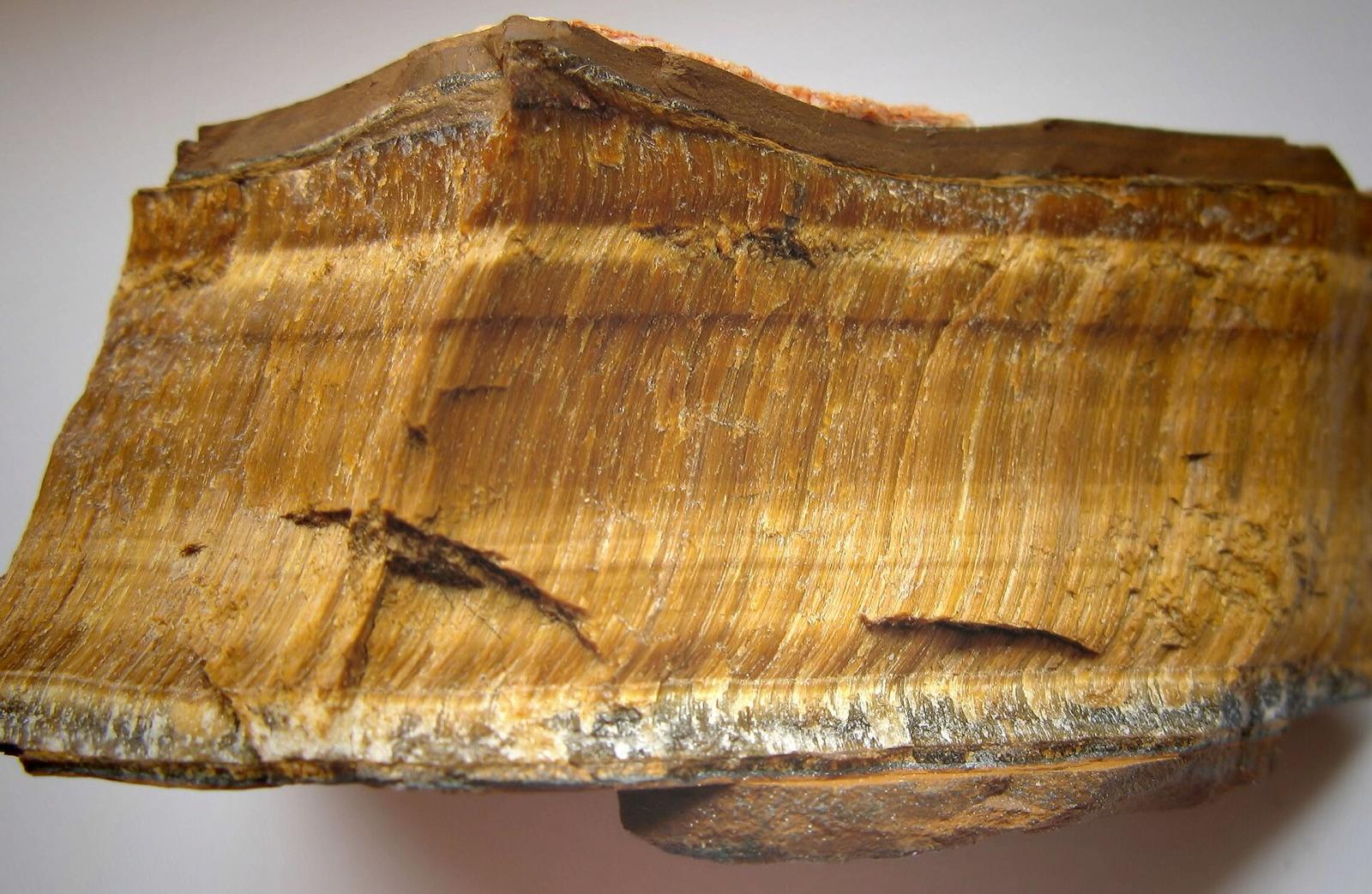
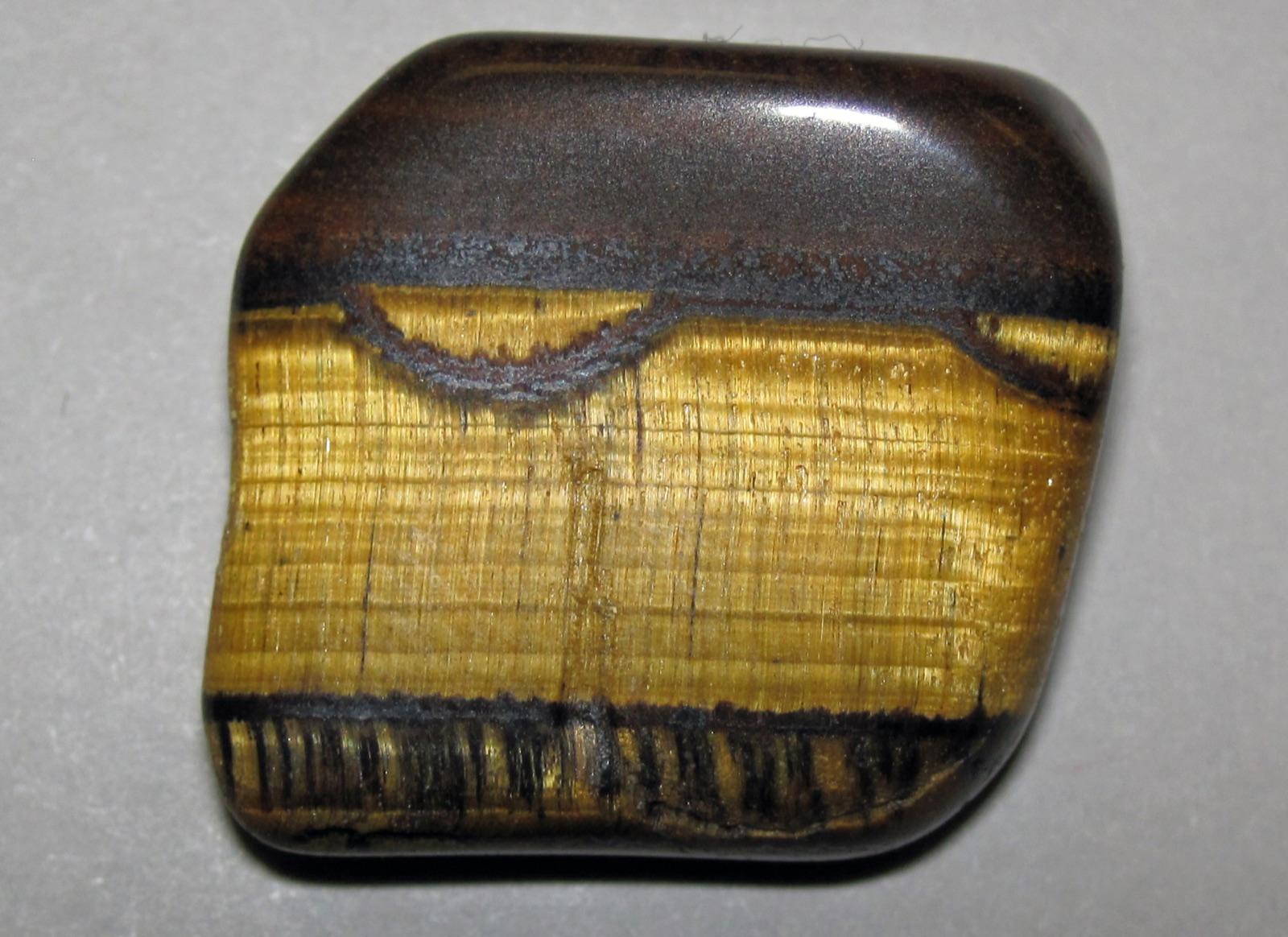
Golden brown with a silky band of light that moves across the surface
- 2
Fibrous structure visible as fine parallel lines running through the stone
- 3
Hardness 7, takes a high polish, opaque
Tiger's eye formed where quartz replaced fibrous crocidolite asbestos, keeping the fiber structure and with it the moving band of light. Rotate the stone under a single light source: the chatoyant band should sweep across at right angles to the fibers. The great majority comes from the Northern Cape in South Africa. Blue-grey material of the same type is called hawk's eye, and heating turns gold material red.
Before you collect
The parent material is crocidolite, a form of asbestos. In fully silicified tiger's eye the fibers are replaced and locked in quartz, but cutting and grinding any stone dry generates hazardous dust. Work wet and wear a respirator, which is good practice for all lapidary work and non-negotiable here.
Straight answers
- Is it worth cutting?
- Cut with the fibers running across the length of the cab and dome it well, or the chatoyant band will not form. This is a stone where a flat cut wastes the material.
- What is it really worth?
- Inexpensive. Sharp, bright, well-centered chatoyancy is what separates good from ordinary.
- Can you legally keep it?
- Imported material. South Africa regulates mineral export, so buy from established suppliers.
Often confused with
Tiger's Eye vs. its common look-alikes, and how to tell them apart in the field.
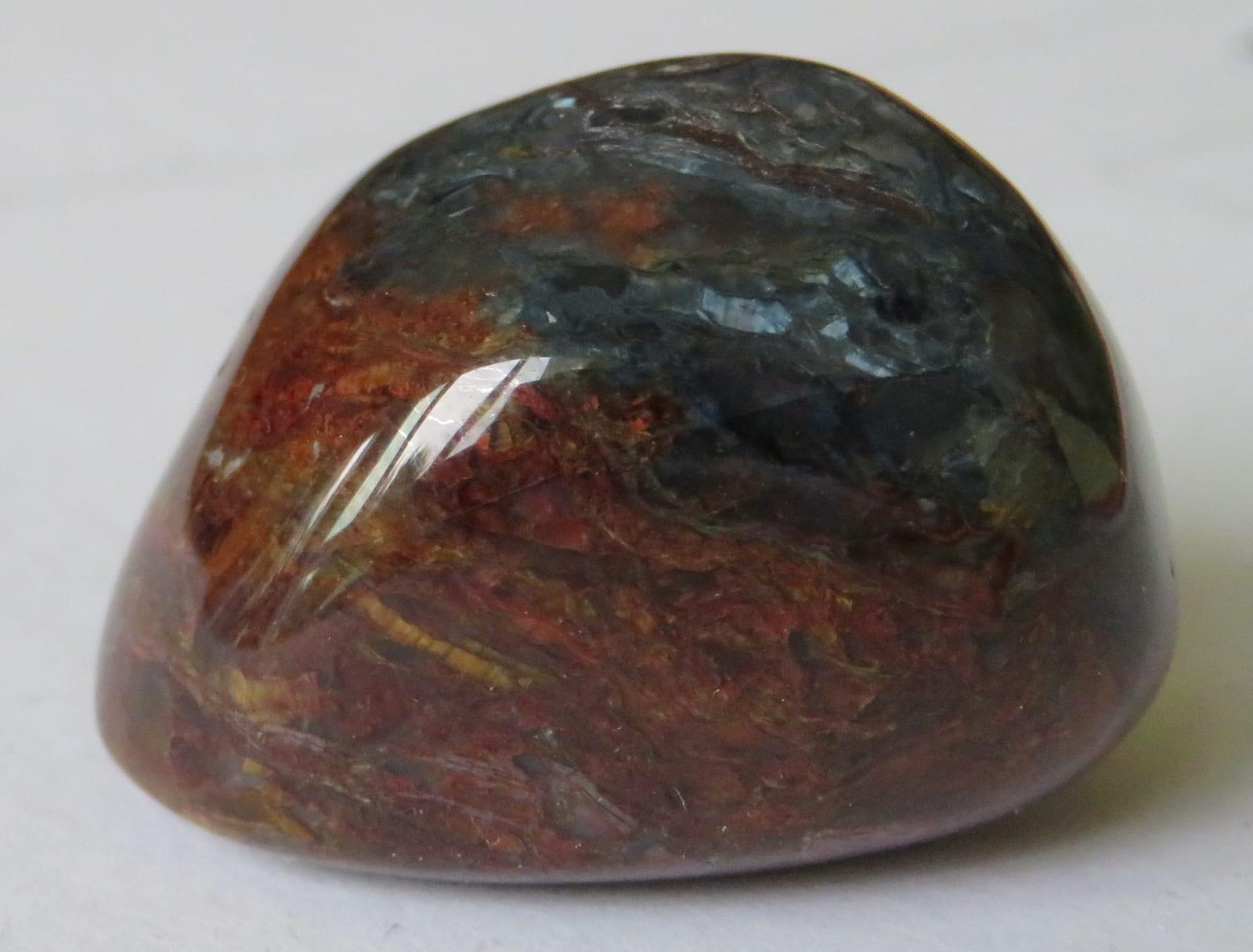
Often found alongside tiger's eye
Minerals reported to co-occur with tiger's eye. Spotting these in float or country rock is a strong cue you are in the right ground.
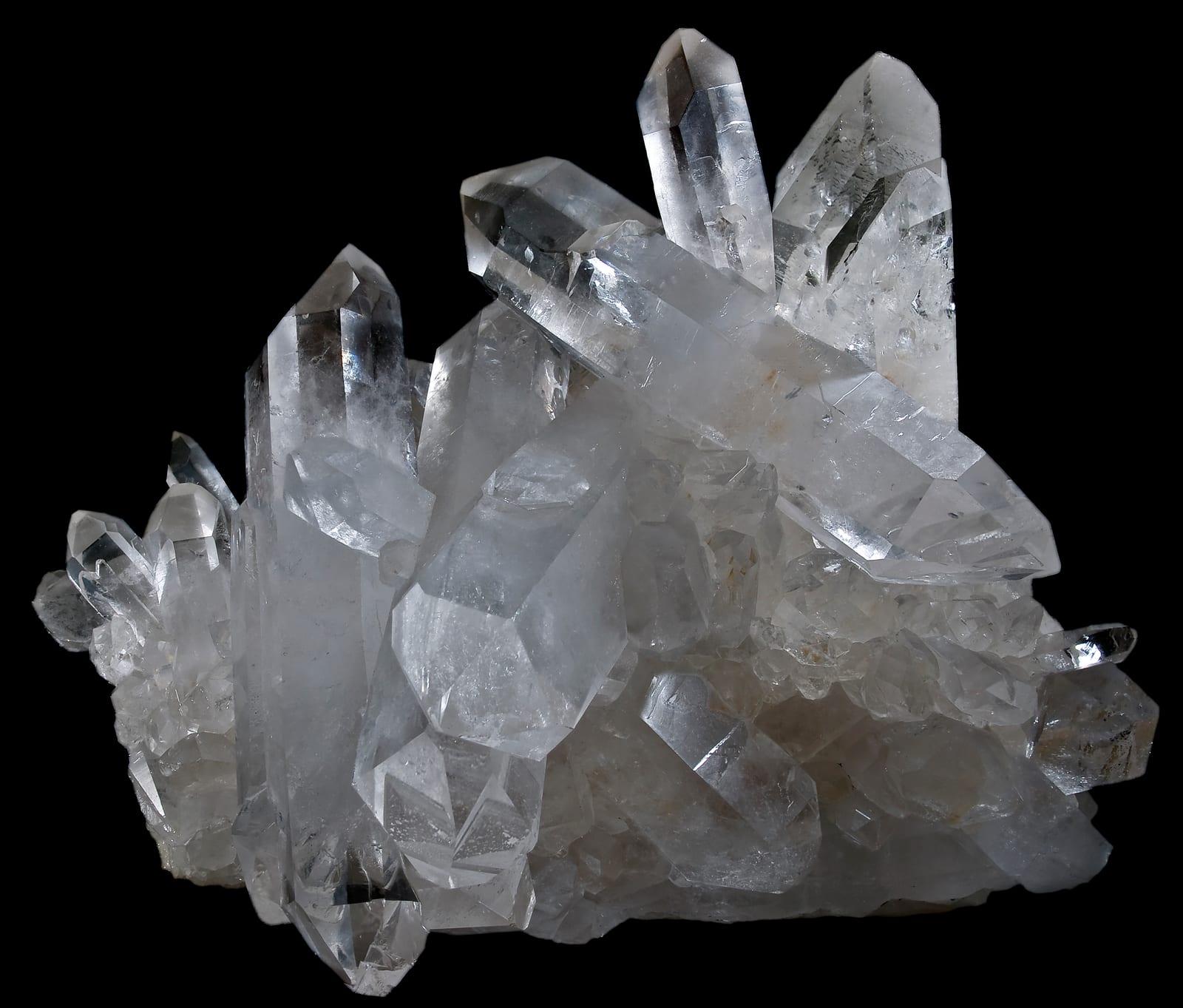
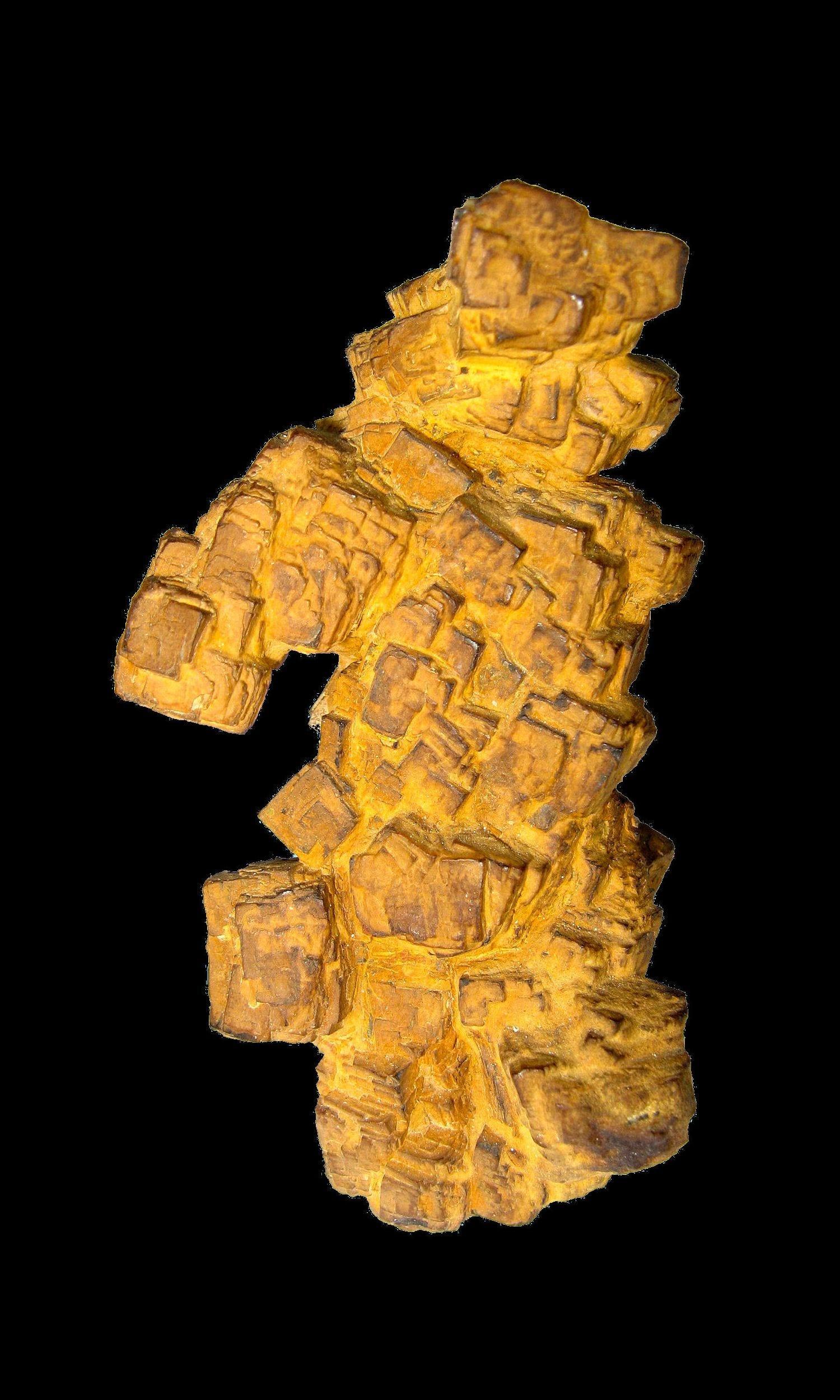
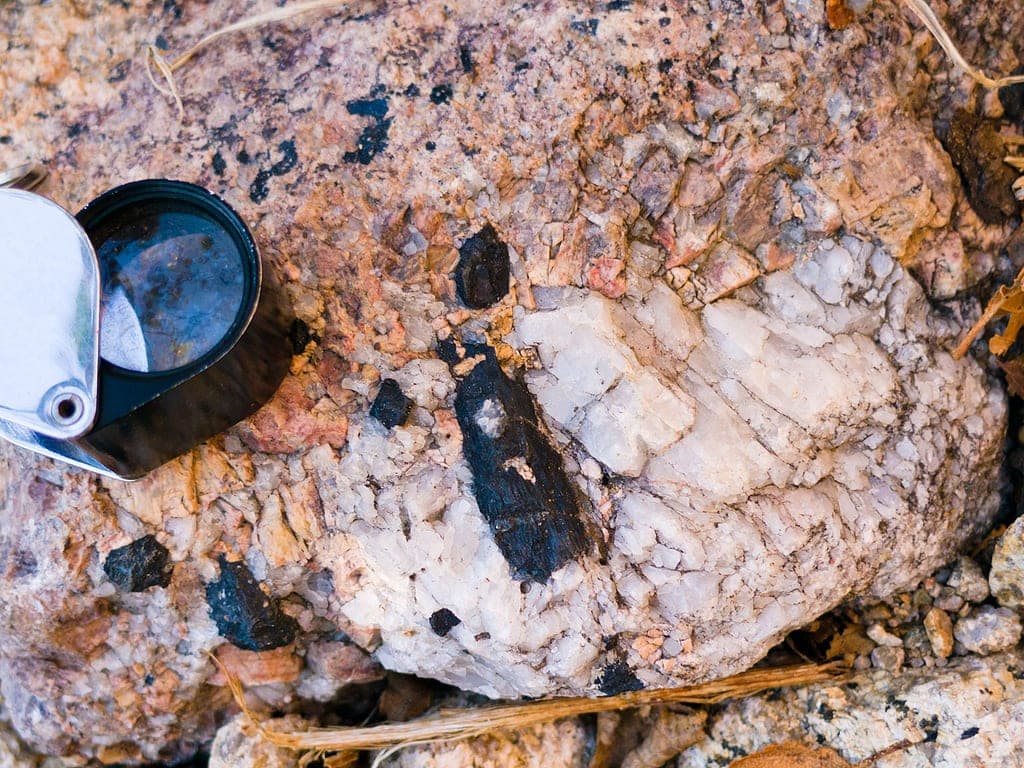
All properties
- Chemical formula
- SiO₂
- Mohs hardness
- 7
- Density
- 2.64-2.71 g/cm³
- Streak
- White
- Luster
- Silky
- Transparency
- Opaque
- Crystal system
- Trigonal
- Crystal habit
- Massive
- Cleavage
- None
- Rarity
- Common
- Uses
- Lapidary, Jewelry, Collector, Decorative
- Host rock
- metamorphic rocks
Where rockhounds find tiger's eye
Classic worldwide localities
- South Africa
- Western Australia
- India
- USA
- Burma
Field-hunting tip
Where it forms: metamorphic rocks. If you start seeing quartz, limonite, riebeckite in float, you are in the right ground. Typical habit: massive. Train your eye for that shape before scanning the outcrop.
More tiger's eye photos
Common questions
How do you identify tiger's eye?+
Where is tiger's eye found?+
What rocks look like tiger's eye?+
What minerals are found with tiger's eye?+
What kind of rock does tiger's eye form in?+
What is tiger's eye used for?+
Find tiger's eye on the map
RockHoundR shows mapped rockhounding spots, access rules, and lets you log every find.