
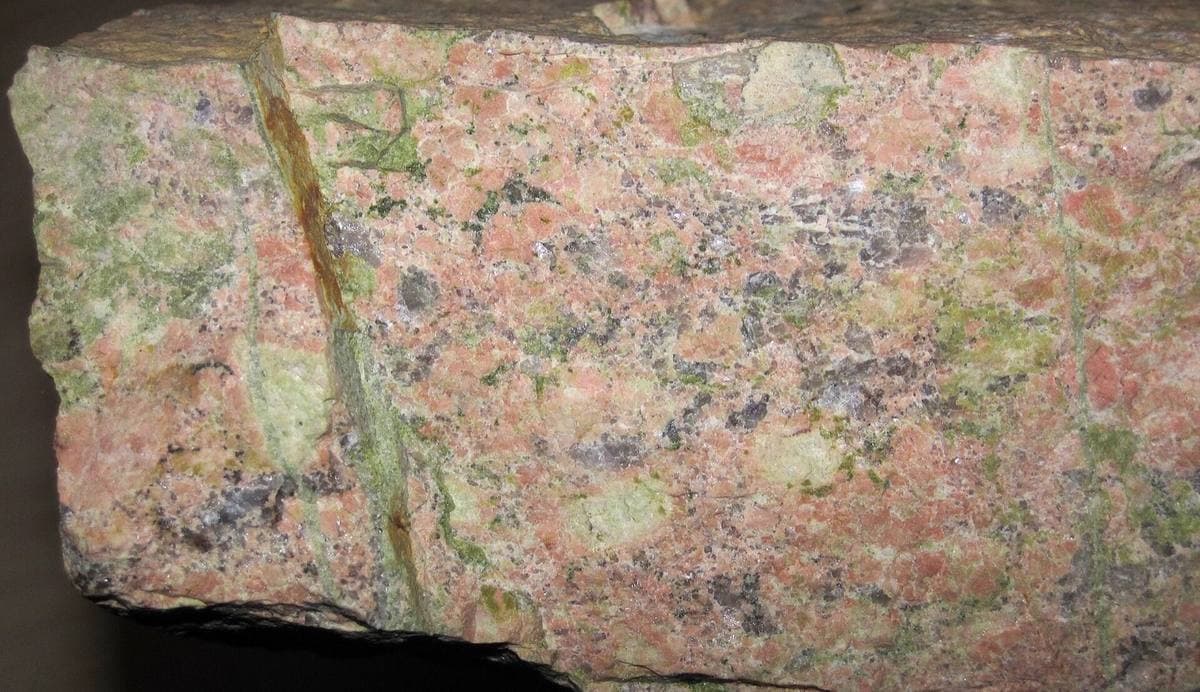
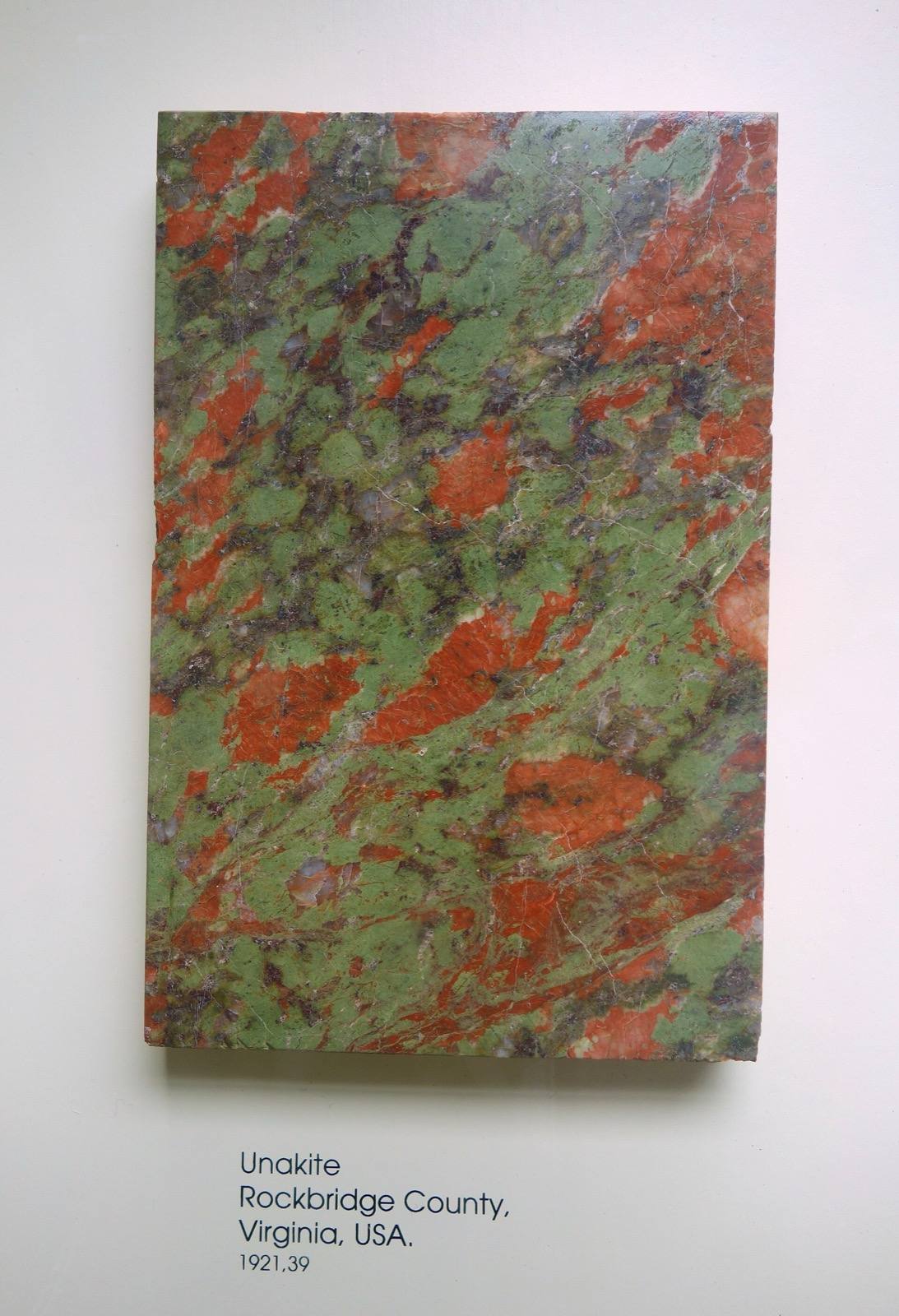
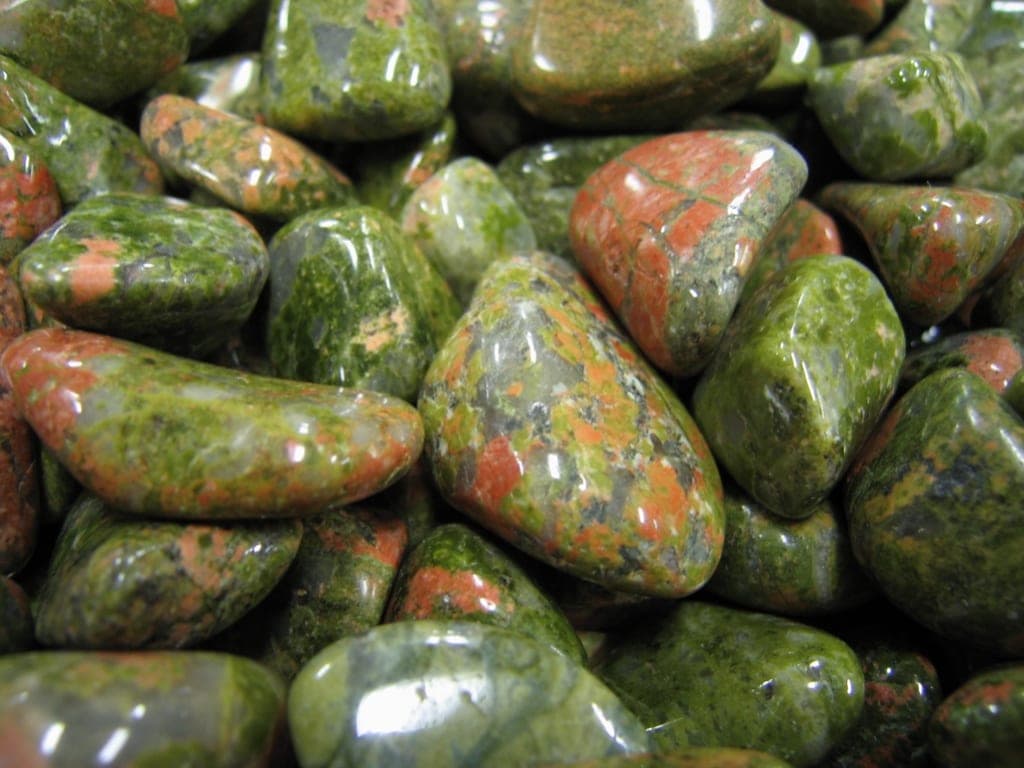
Unakite is an altered granite composed primarily of pink orthoclase, green epidote, and clear quartz. It is highly valued by rockhounders and lapidaries for its distinct mottled appearance and ability to take a high polish. It is typically found as pebbles in river beds or as massive boulders resulting from the hydrothermal alteration of granitic rocks.
Spotting unakite in the field
Field marks- 1
Mottled pistachio green and salmon pink, opaque, with a granular texture
- 2
The green is epidote, the pink is potassium feldspar, and clear quartz makes the third component
- 3
Hardness around 6 to 7, takes a good polish
Unakite is an altered granite, named for the Unaka Range in the southern Appalachians, and the green-and-pink mottling is unmistakable. It occurs through the Blue Ridge in Virginia, North Carolina and Tennessee, and glacial transport carried it to Lake Superior beaches, so Michigan hunters find it too. Look in river gravels draining the Blue Ridge and on Superior beaches, where its color makes it one of the easier finds.
Straight answers
- Is it worth cutting?
- Cuts and tumbles well and is a good beginner material. The three components have slightly different hardnesses, so a final polish on a soft wheel avoids a lumpy surface.
- What is it really worth?
- Cheap and abundant. Strong contrast between saturated green and salmon is the quality mark.
- Can you legally keep it?
- Ordinary personal-use collecting rules apply. Michigan beach collecting falls under the state's 25 pound annual limit.
Often confused with
Unakite vs. its common look-alikes, and how to tell them apart in the field.
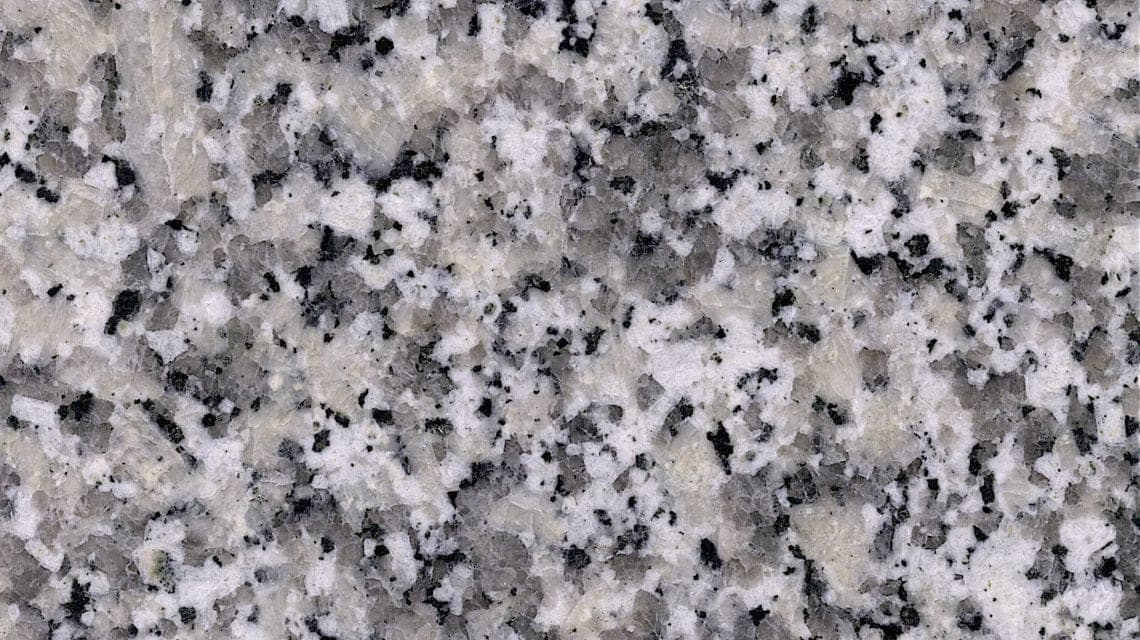
Often found alongside unakite
Minerals reported to co-occur with unakite. Spotting these in float or country rock is a strong cue you are in the right ground.
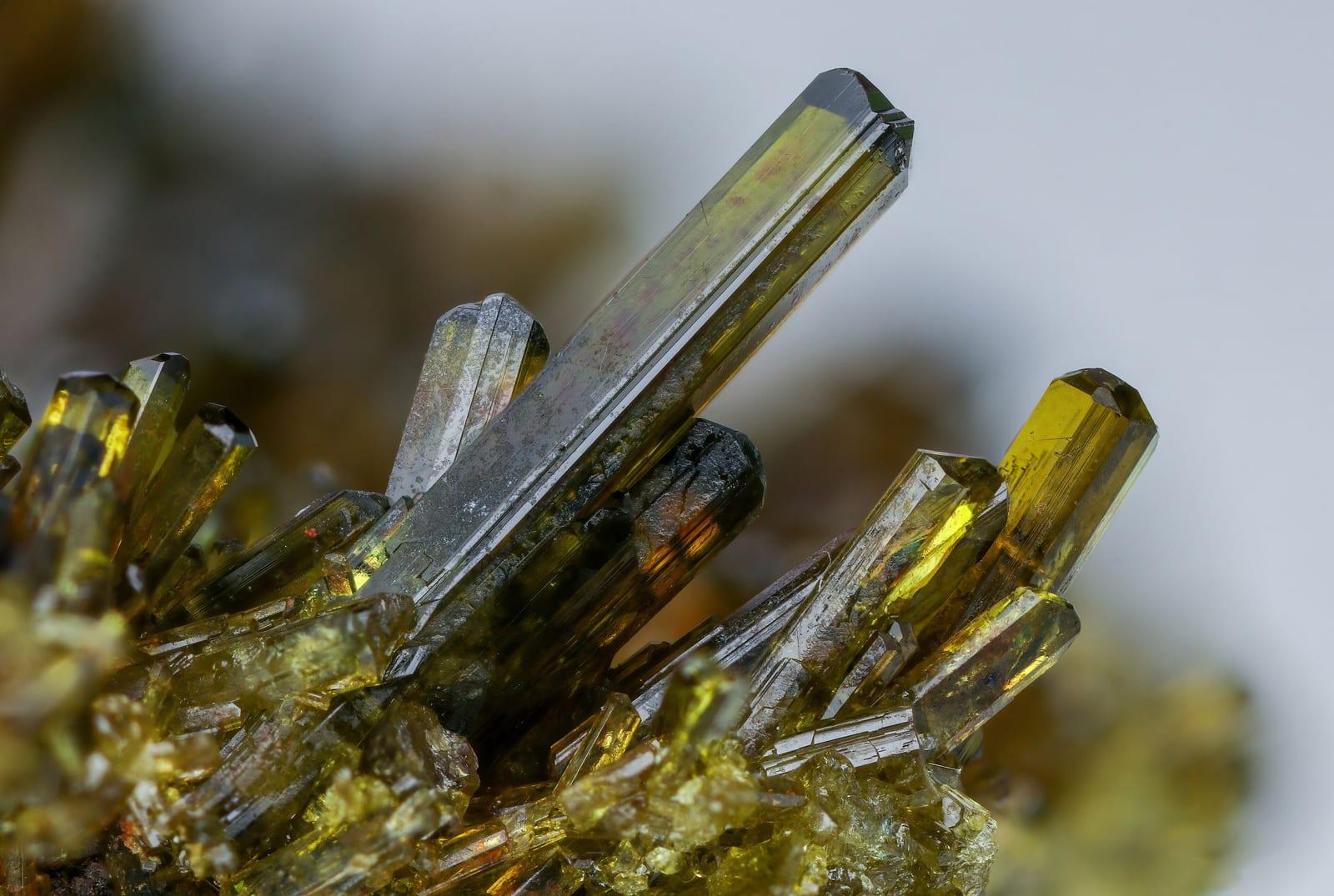
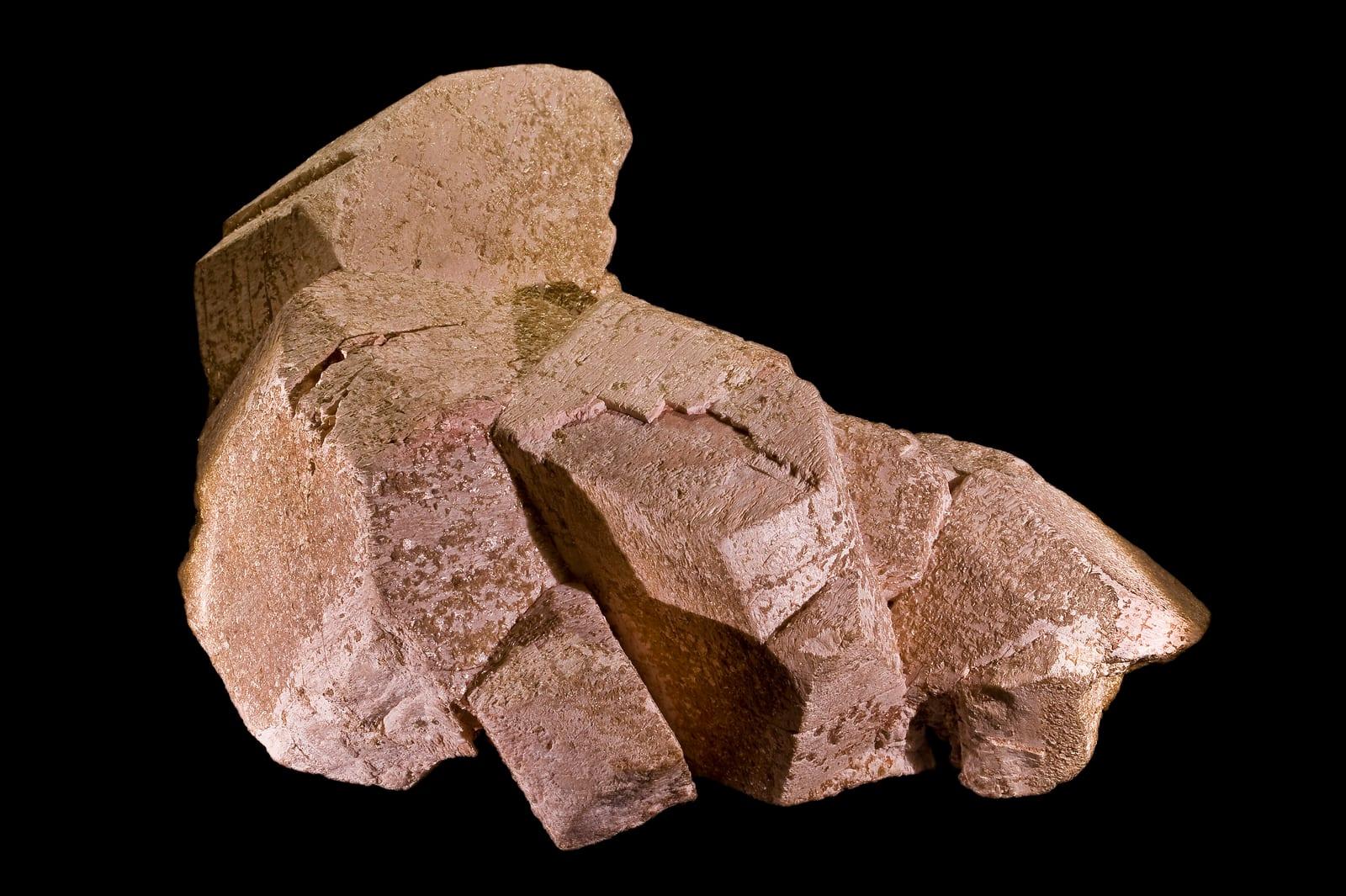
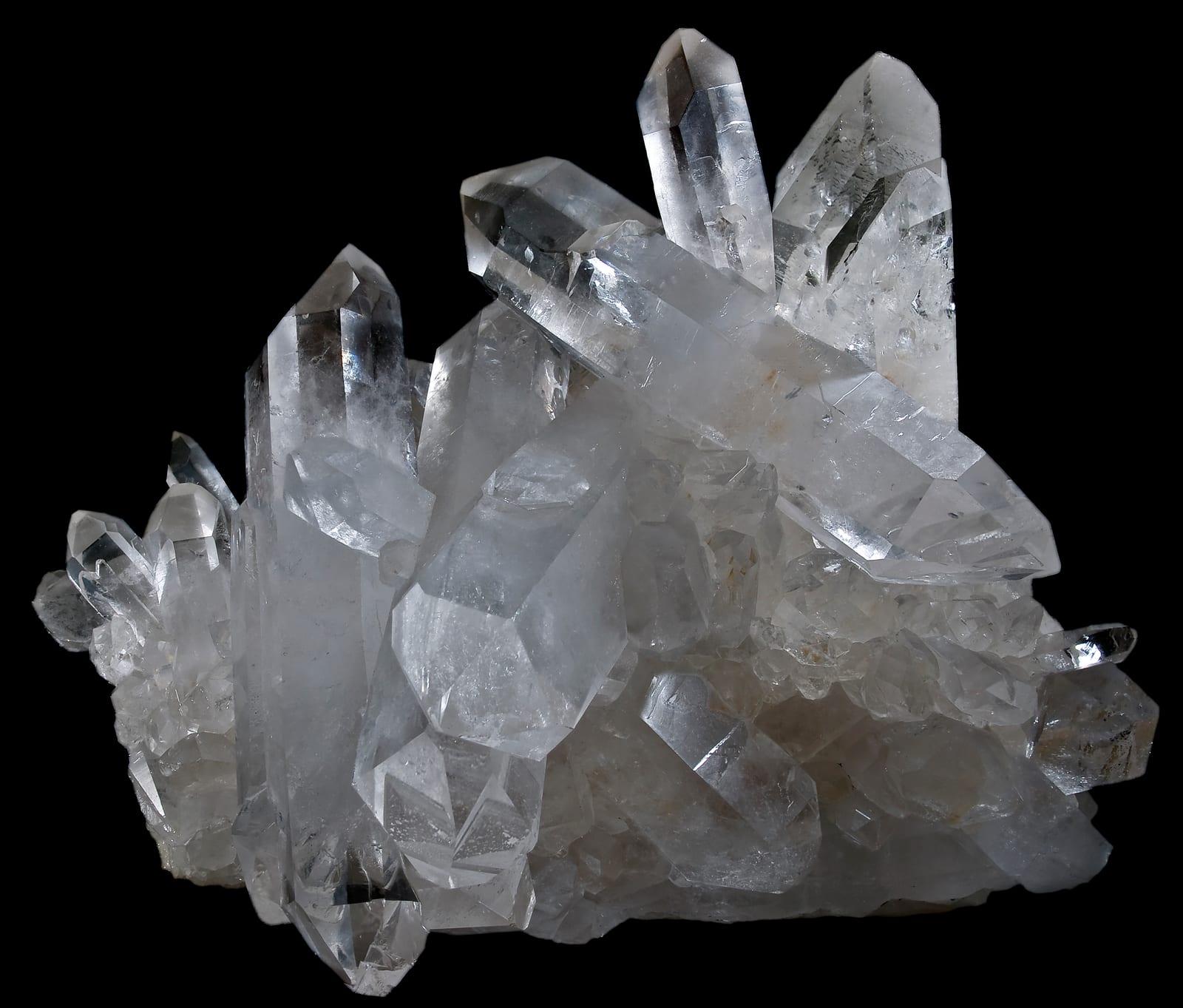
All properties
- Mohs hardness
- 6-7
- Density
- 2.8-3.2 g/cm³
- Luster
- Vitreous
- Transparency
- Opaque
- Rarity
- Common
- Uses
- Lapidary, Decorative, Collector
- Host rock
- altered granite
- Grain size
- Coarse-grained
- Composition
- Altered granitoid of pink orthoclase, yellow-green epidote and smoky or colorless quartz; white plagioclase may be present
Where rockhounds find unakite
52 mapped spotsClassic worldwide localities
- USA (North Carolina, Virginia)
- South Africa
- Brazil
- China
U.S. states with unakite
Each link opens a state-specific list of mapped rockhounding spots that produce unakite.
Field-hunting tip
Where it forms: altered granite. If you start seeing epidote, orthoclase, quartz in float, you are in the right ground. In the U.S., the densest reported localities are in Michigan, Virginia, North Carolina. Start trip planning there.
More unakite photos
Common questions
How do you identify unakite?+
Where is unakite found?+
Can I find unakite in the United States?+
What rocks look like unakite?+
What minerals are found with unakite?+
What kind of rock does unakite form in?+
What is unakite used for?+
Find unakite on the map
RockHoundR shows mapped rockhounding spots, access rules, and lets you log every find.

