Vanadinite is highly sought after by collectors for its brilliant red to orange, sharply defined hexagonal prisms. It is typically found in the oxidized zones of lead-bearing ore deposits as a secondary mineral. Its distinct crystal habit and resinous luster make it a staple in any systematic mineral collection.
Spotting vanadinite in the field
Field marks- 1
Brilliant orange-red hexagonal prisms, usually small and often barrel-shaped
- 2
Very heavy for its size, and quite soft at 3
- 3
Sits on brown or black iron-stained matrix, which sets off the color
Vanadinite is one of the most photogenic minerals there is, and its intense orange-red hexagonal crystals on dark matrix need no interpretation. It forms in the oxidized zone of lead deposits in arid country, which puts it in Arizona and New Mexico, with Mibladen in Morocco supplying most specimens on the market. Crystals are fragile and the color fades with prolonged strong light, so collect and store carefully.
Before you collect
Vanadinite is a lead mineral containing vanadium. Wash hands after handling, do not cut or grind it, and keep it away from children and food.
Straight answers
- Is it worth cutting?
- Not cut. A display mineral, and a fragile one.
- What is it really worth?
- Inexpensive to moderate. Large sharp crystals with intense color on attractive matrix carry the value.
- Can you legally keep it?
- Arizona localities are largely on private or claimed mine land.
Often confused with
Vanadinite vs. its common look-alikes, and how to tell them apart in the field.
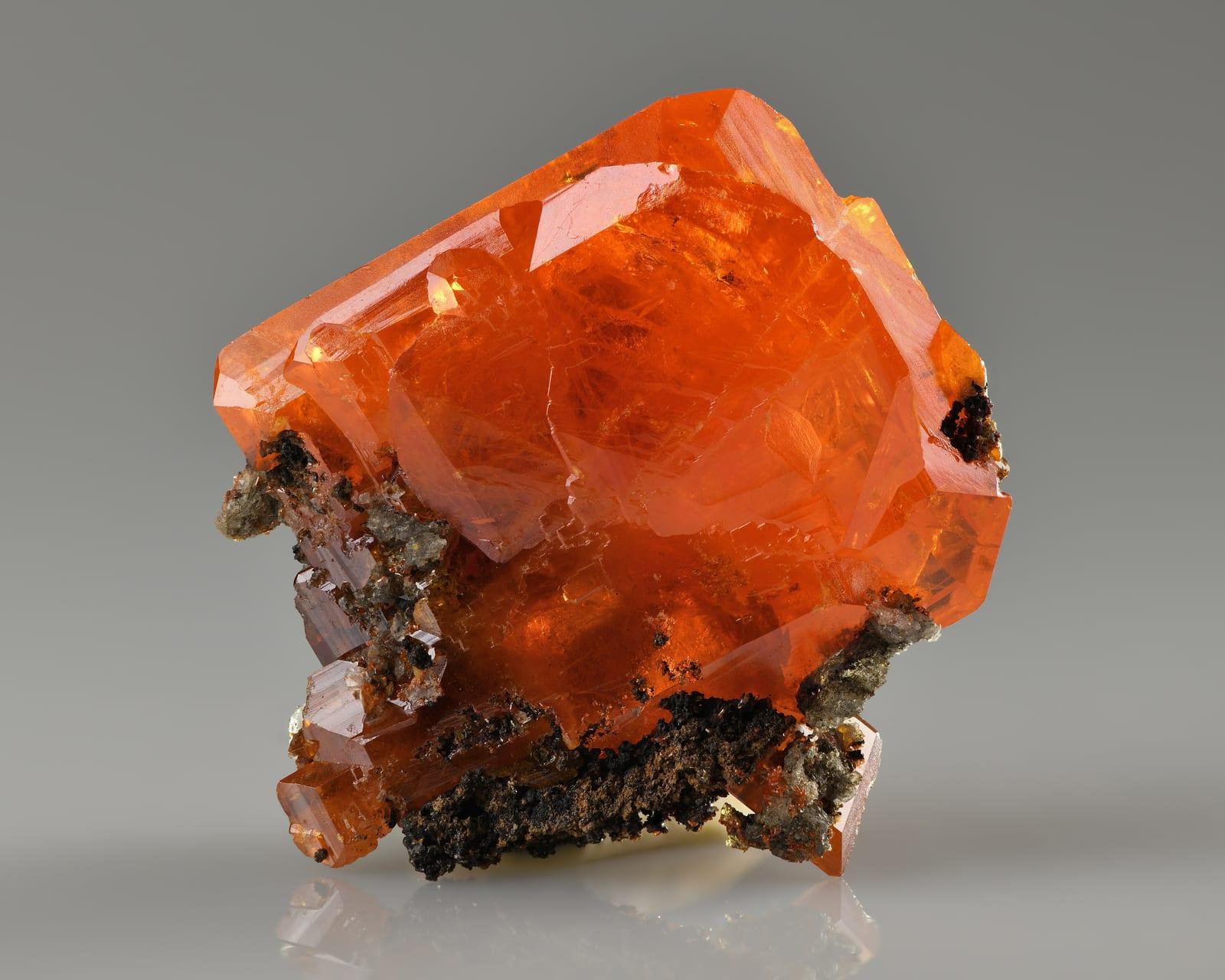
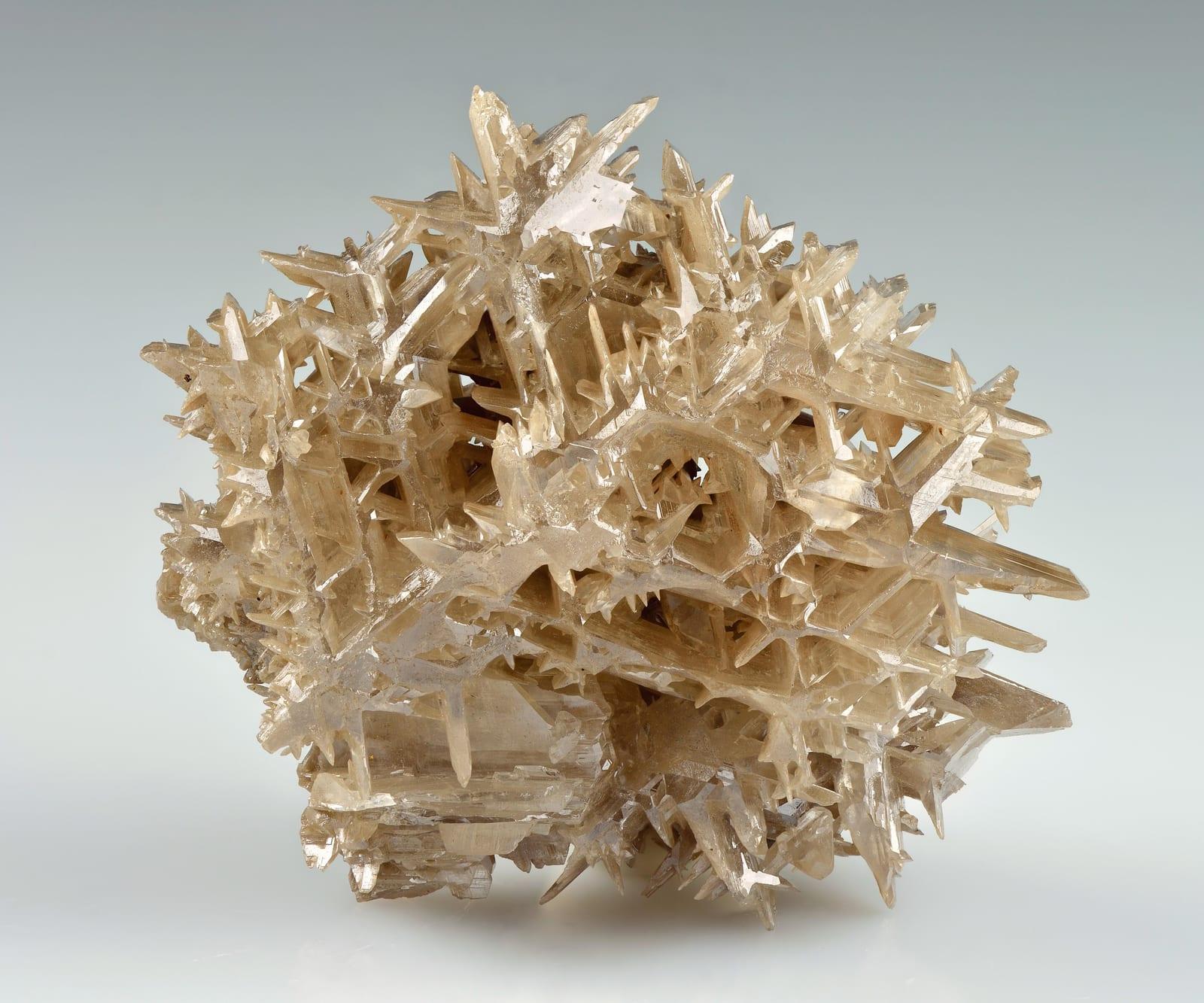
How to tell apart: Wulfenite forms thin square tabular plates. Vanadinite forms hexagonal prisms and barrels.
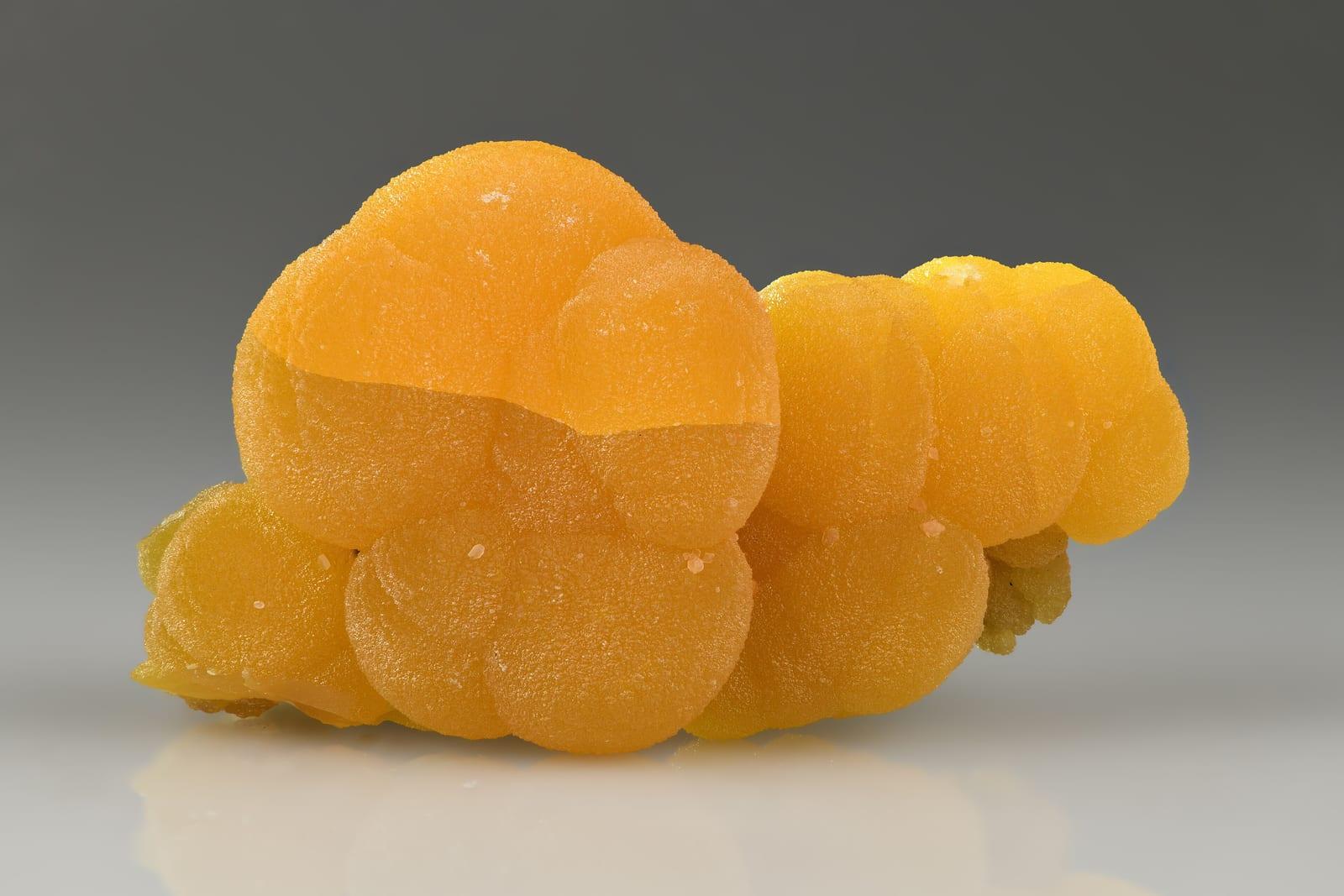
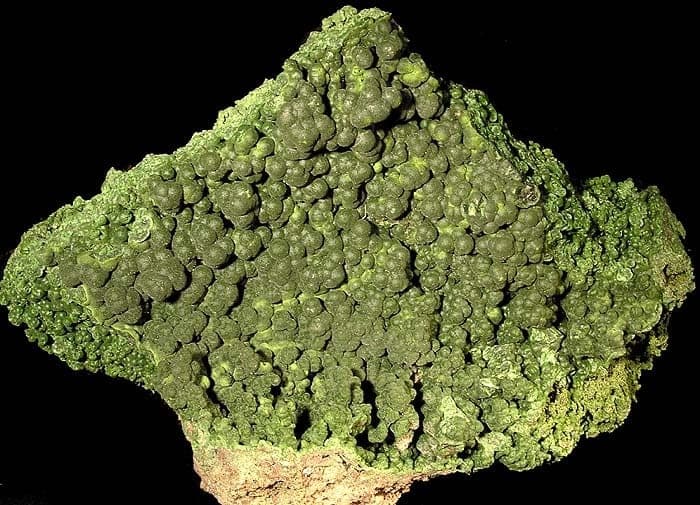
How to tell apart: Chemically similar and visually close, usually more yellow-green and often botryoidal rather than sharply prismatic.
Often found alongside vanadinite
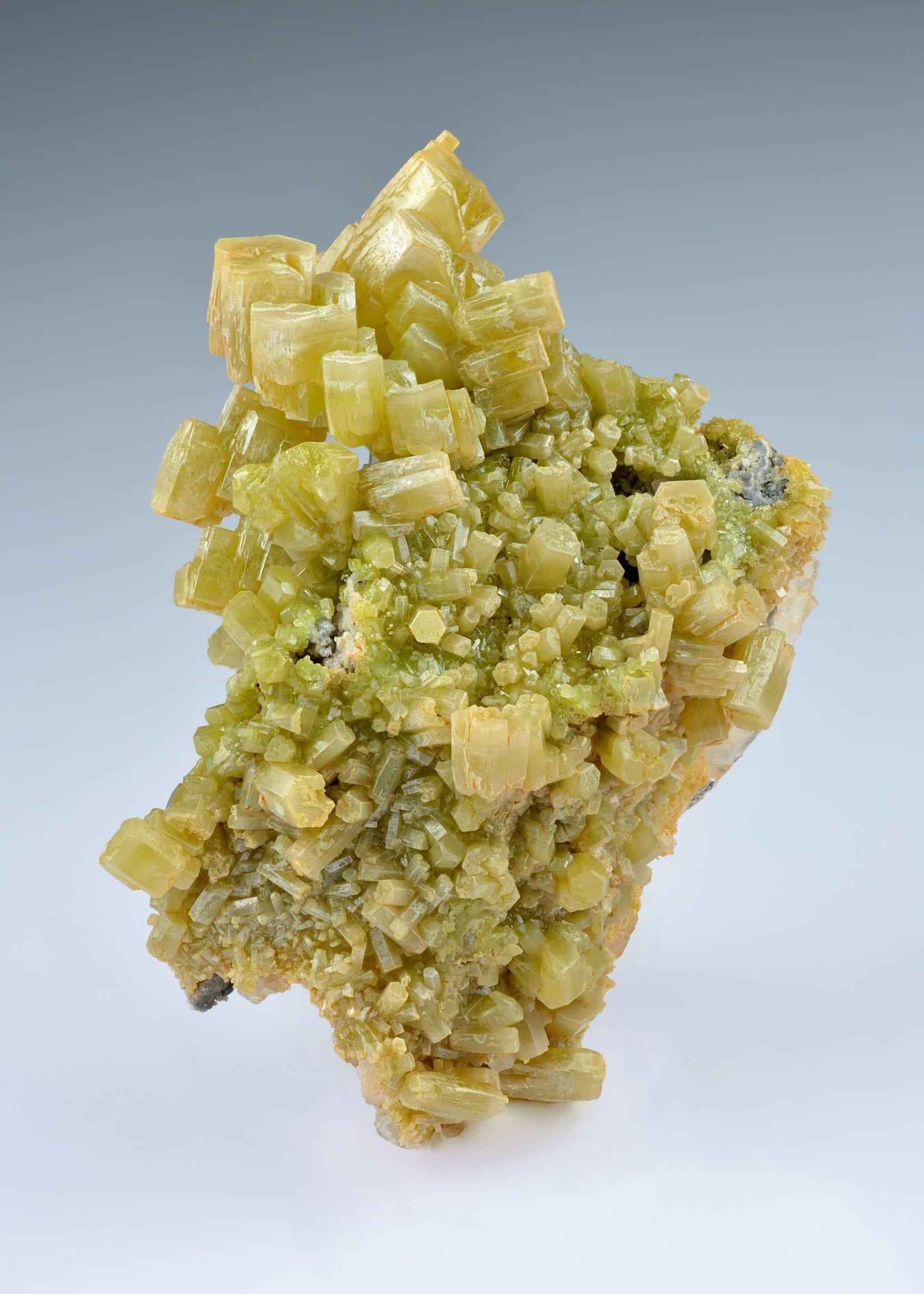
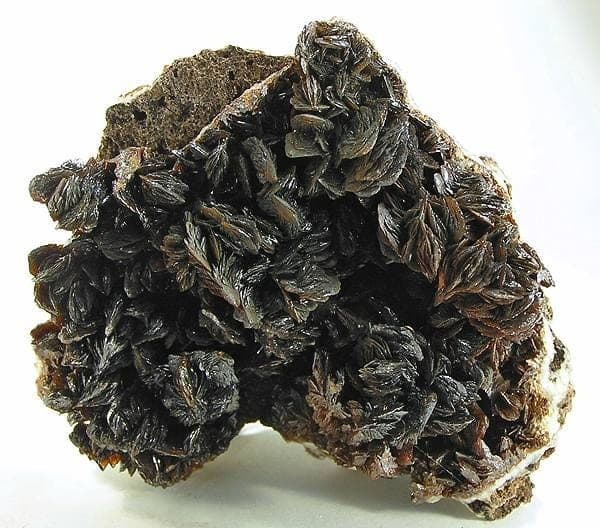
Minerals reported to co-occur with vanadinite. Spotting these in float or country rock is a strong cue you are in the right ground.
All properties
- Chemical formula
- Pb₅(VO₄)₃Cl
- Mohs hardness
- 2.5-3
- Density
- 6.88 g/cm³
- Streak
- White to pale red or pale yellow
- Luster
- Subresinous to subadamantine
- Transparency
- Translucent
- Crystal system
- Hexagonal
- Crystal habit
- Hexagonal prisms
- Cleavage
- None
- Rarity
- Uncommon
- Uses
- Collector, Ore of vanadium
- Host rock
- A secondary mineral in the oxidized zone of lead-bearing deposits, the vanadium leached from wall-rock silicates
Where rockhounds find vanadinite
3 mapped spotsClassic worldwide localities
- Hillsboro and Lake Valley districts, Sierra Co., New Mexico, USA
- Zimapán, Hidalgo, Mexico
- San Carlos and Los Lamentos, Chihuahua, Mexico
- Rayon, Sonora, Mexico
- Mibladen, at Taouz, and in the Touissit mine, near Oujda, Morocco
- Keban, Turkey
Field-hunting tip
Where it forms: A secondary mineral in the oxidized zone of lead-bearing deposits, the vanadium leached from wall-rock silicates. If you start seeing mimetite, pyromorphite, descloizite in float, you are in the right ground. Typical habit: hexagonal prisms. Train your eye for that shape before scanning the outcrop. In the U.S., the densest reported localities are in Arizona. Start trip planning there.
Common questions
How do you identify vanadinite?+
Where is vanadinite found?+
Can I find vanadinite in the United States?+
Is vanadinite safe to handle?+
What rocks look like vanadinite?+
What minerals are found with vanadinite?+
What kind of rock does vanadinite form in?+
What is vanadinite used for?+
Find vanadinite on the map
RockHoundR shows mapped rockhounding spots, access rules, and lets you log every find.