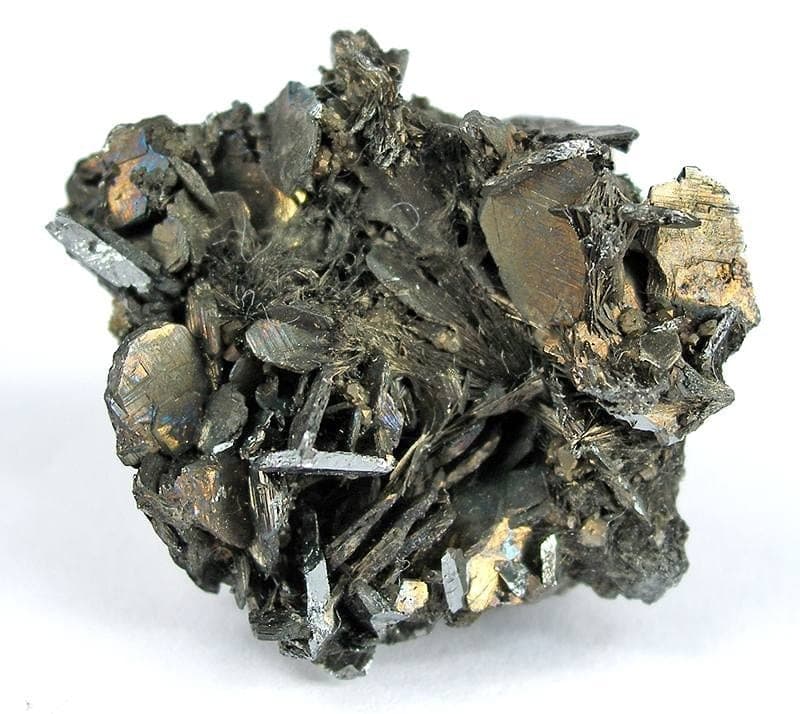
Zinkenite is a rare lead-antimony sulfide typically found as delicate, needle-like acicular crystals or fibrous masses. It is most easily identified by its lead-gray metallic luster and its tendency to form radiating sprays, commonly found in low-temperature hydrothermal ore deposits.
Is this zinkenite?
5-step field checkRun through these checks against the specimen in your hand. The more boxes tick, the more confident the ID.
- 1Test the hardnessTry to scratch zinkenite with a known reference. Zinkenite sits at Mohs 3-3.5, softer than the next harder reference, harder than the previous one.
- 2Check the streakDrag the specimen across an unglazed porcelain plate. Streak: steel-gray.
- 3Read the lusterHold the specimen under a strong light. Luster: metallic.
- 4Match the color rangeCompare against the expected color range: steel gray, gray.
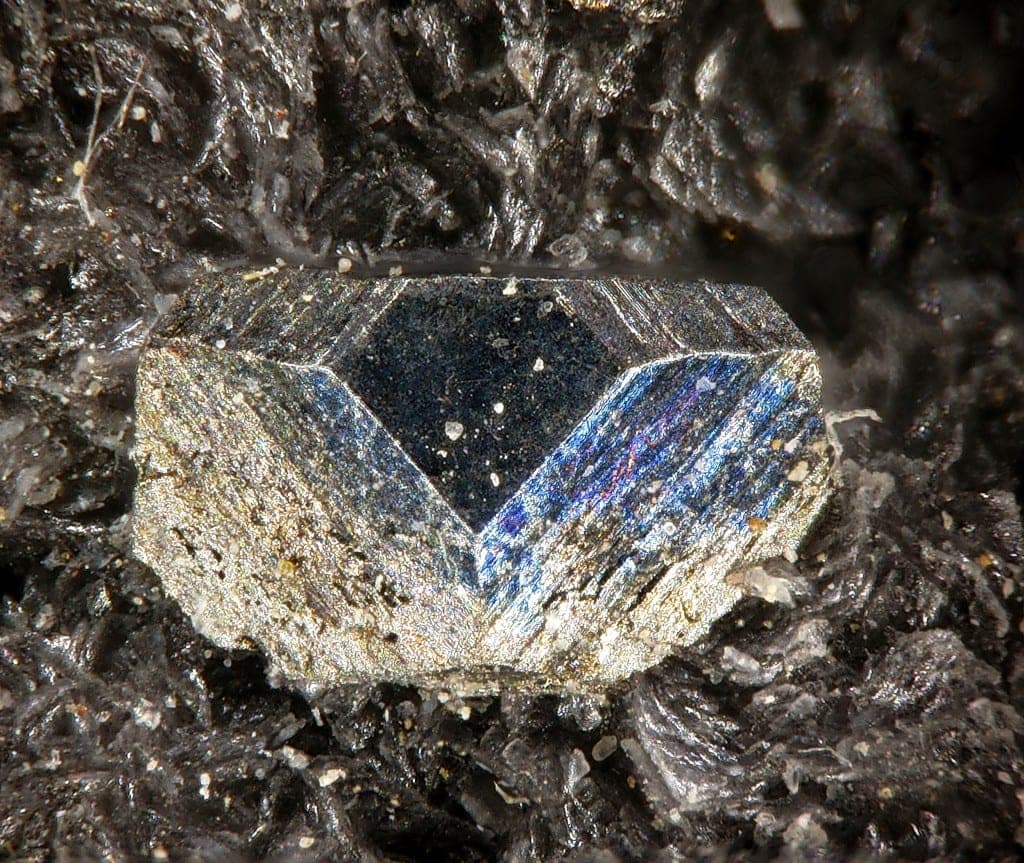
- 5Look at form & habitCrystal system: hexagonal. Typical habit: acicular, prismatic, striated.
Often confused with
Zinkenite vs. its common look-alikes, and how to tell them apart in the field.
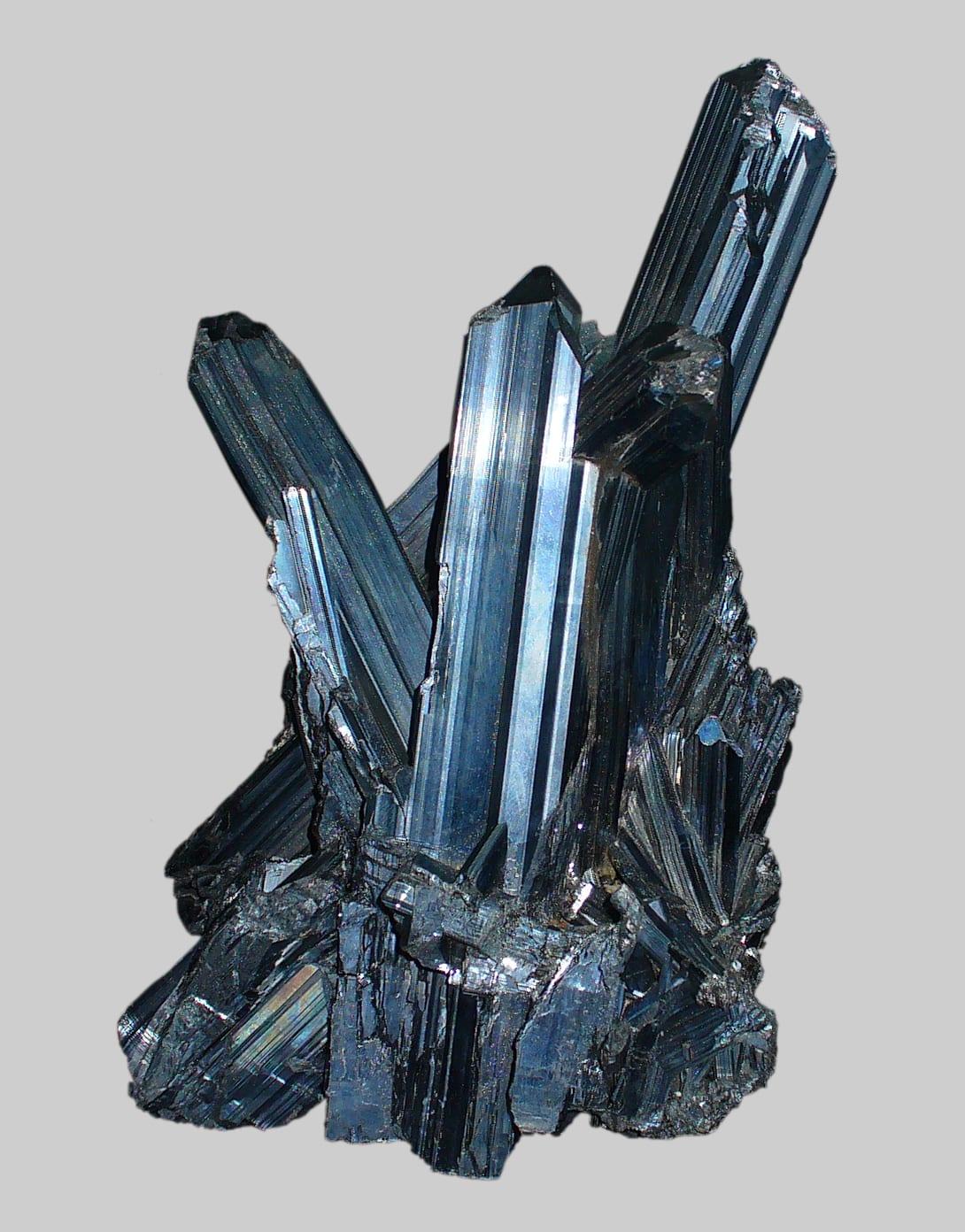
How to tell apart: Zinkenite is noticeably harder (Mohs 3-3.5 vs. 2); streak differs, so Zinkenite leaves steel-gray, Stibnite leaves lead-gray.
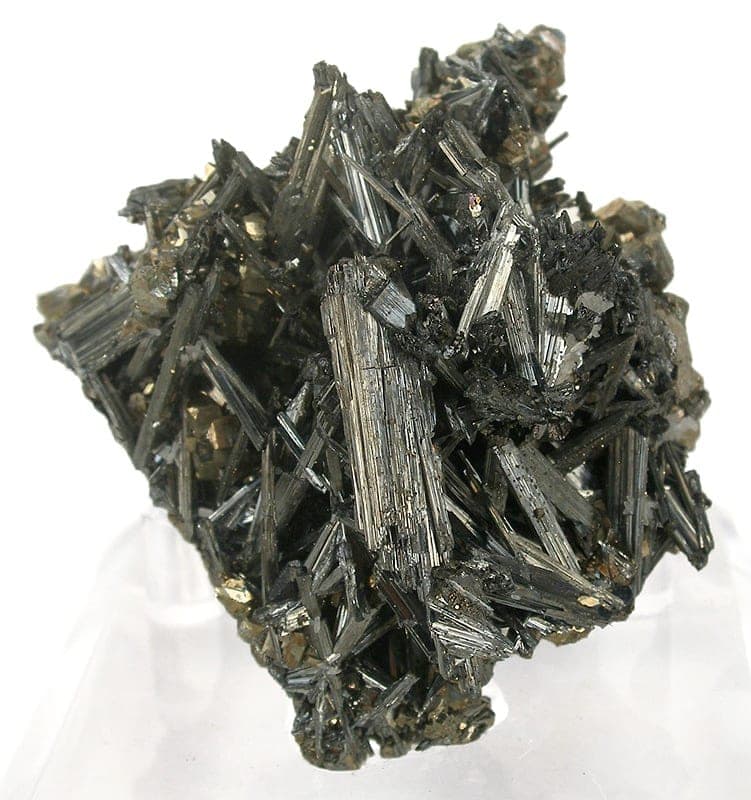
How to tell apart: Streak differs, so Zinkenite leaves steel-gray, Jamesonite leaves black. grayish.
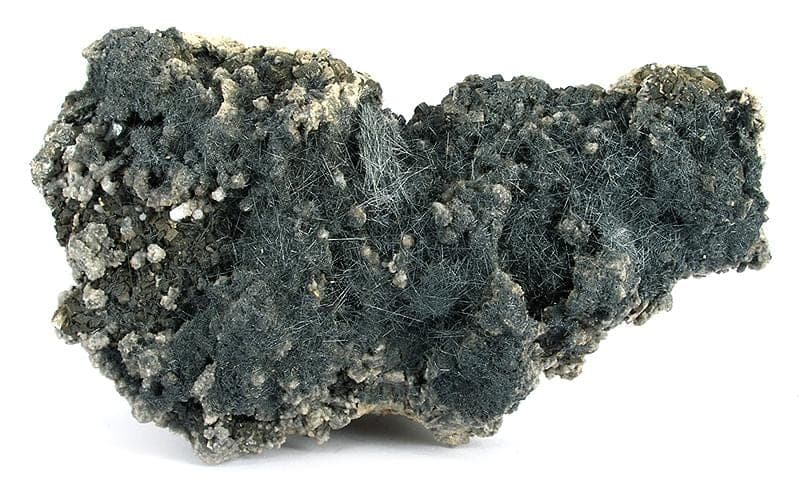
How to tell apart: Streak differs, so Zinkenite leaves steel-gray, Boulangerite leaves brownish.
Often found alongside zinkenite
Minerals reported to co-occur with zinkenite. Spotting these in float or country rock is a strong cue you are in the right ground.
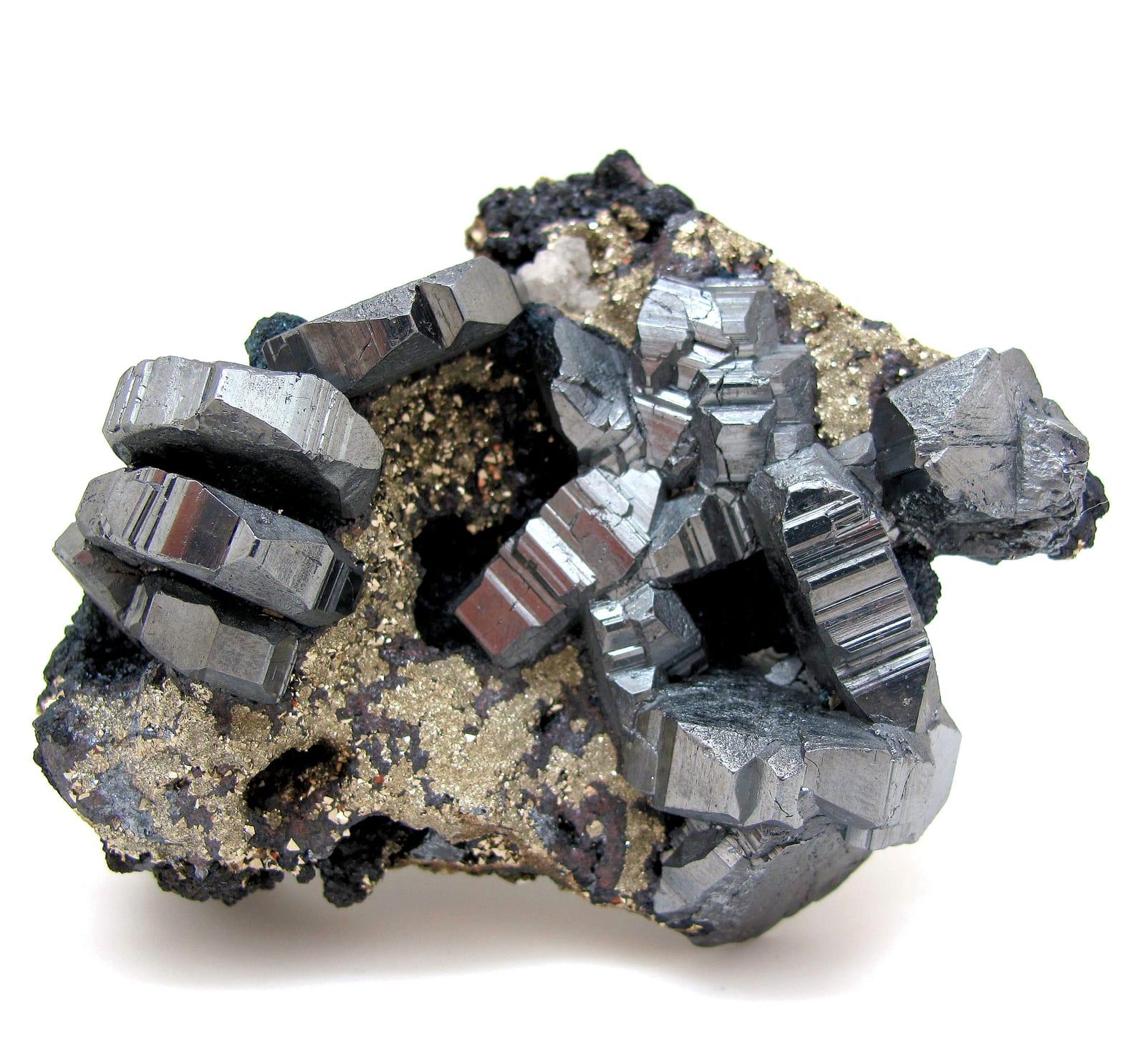
All properties
- Chemical formula
- Pb₉Sb₂₂S₄₂
- Mohs hardness
- 3-3.5
- Density
- 5.33 g/cm³
- Colors
- Streak
- Steel-gray
- Luster
- Metallic
- Transparency
- Opaque
- Crystal system
- Hexagonal
- Crystal habit
- Acicular, prismatic, striated
- Cleavage
- Indistinct on {1120}
- Rarity
- Rare
- Uses
- Collector
- Host rock
- A constituent of hydrothermal veins, associated with base metal and tin sulfides and sulfosalts
Where rockhounds find zinkenite
Classic worldwide localities
- Brobdignag prospect, near Silverton, Red Mountain district, San Juan Co., Colorado, USA
- Morey mine, Morey district, Nye Co., and Eureka, Eureka Co., Nevada, USA
- Wolfsberg, in the Harz Mountains, Germany
- Aldersbach, in the Kinzigtal, Bavaria, Germany
- Săcărı̂mb (Nagyág) and Baia Mare (Nagybánya), Romania
- Peschadoire, near Pontgibaud, Puy-de-Dôme, France
Field-hunting tip
Where it forms: A constituent of hydrothermal veins, associated with base metal and tin sulfides and sulfosalts. If you start seeing stibnite, jamesonite, boulangerite in float, you are in the right ground. Typical habit: acicular, prismatic, striated. Train your eye for that shape before scanning the outcrop.
Common questions
How do you identify zinkenite?+
Where is zinkenite found?+
Is zinkenite safe to handle?+
What rocks look like zinkenite?+
What minerals are found with zinkenite?+
What kind of rock does zinkenite form in?+
What is zinkenite used for?+
Find zinkenite on the map
RockHoundR shows mapped rockhounding spots, access rules, and lets you log every find.