You found a heavy, stone-hard piece of wood with the grain still showing, and you want to know what it is and whether it is the real thing. This identifier reads the photo for growth rings, ray cells, bark, and the rod-and-dot pattern of palm wood, then names the replacement mineral (silica, agate, jasper, or opal) and the look-alike to rule out before you add it to the collection.
Tells agatized, jasperized, opalized, and palm wood apart
Reads growth rings, ray cells, bark, and grain
Mohs hardness tied to the replacement mineral
Names the plain jasper or agate look-alike to rule out
Reviewed by RockHoundR Field Team · Field identification & geology editors · Last verified
Genuine petrified wood preserves visible grain, growth rings, or the rod-and-dot pattern of palm wood. Upload a clear photo of a cut or broken face and the identifier returns three ranked matches naming the replacement mineral (silicified, agatized, jasperized, or opalized), the Mohs hardness, and the plain jasper or agate look-alike to rule out.
Petrified wood is fossilized wood: the original cellulose and lignin have dissolved away and been replaced, cell by cell, with silica or opal that hardened in place. Because the mineral takes the exact shape of the wood it replaced, growth rings, ray cells, knots, bark, and even insect borings survive in stone. That is what separates petrified wood from an ordinary pretty rock. If a specimen shows no trace of wood grain or cell structure, it is almost certainly plain jasper or agate, not petrified wood, no matter how wood-like the color looks.
The replacement mineral decides the name and the hardness. Most petrified wood is silicified, replaced by microcrystalline quartz (chalcedony), which gives it a waxy-to-glassy luster and a Mohs hardness of about 6.5 to 7, hard enough to scratch glass. When the chalcedony is translucent and banded it is called agatized wood; when it is opaque and richly colored by iron oxides (red, yellow, brown) it is jasperized wood. A smaller share is opalized, replaced by hydrated silica (opal), which is softer (Mohs 5.5 to 6.5), often more translucent, and sometimes shows a waxy sheen. Rarer specimens are replaced by calcite or pyrite. Reading the luster and translucency from a photo is the fastest way to narrow which replacement you are looking at.
Locality and botany add the final layer. The American West holds the world's richest petrified wood, from the Triassic conifer logs of the Petrified Forest in Arizona to the limb casts of Eden Valley, Wyoming, and the agatized beds of central Oregon. Petrified palm wood, the state stone of Texas and the state fossil of Louisiana, is unmistakable once you know the cue: rows of dark dots or rods (the sclerenchyma bundles of a palm trunk) with no concentric growth rings, because palms are monocots and do not grow rings the way conifers and hardwoods do. The identifier weights these patterns and classic localities when you tell it where the piece came from, and it never invents a locality you did not provide.
Visual identification guide for petrified wood
Reference pieces for the replacement types and the two most common look-alikes. Each card shows the single feature that places a specimen, or rules it out.
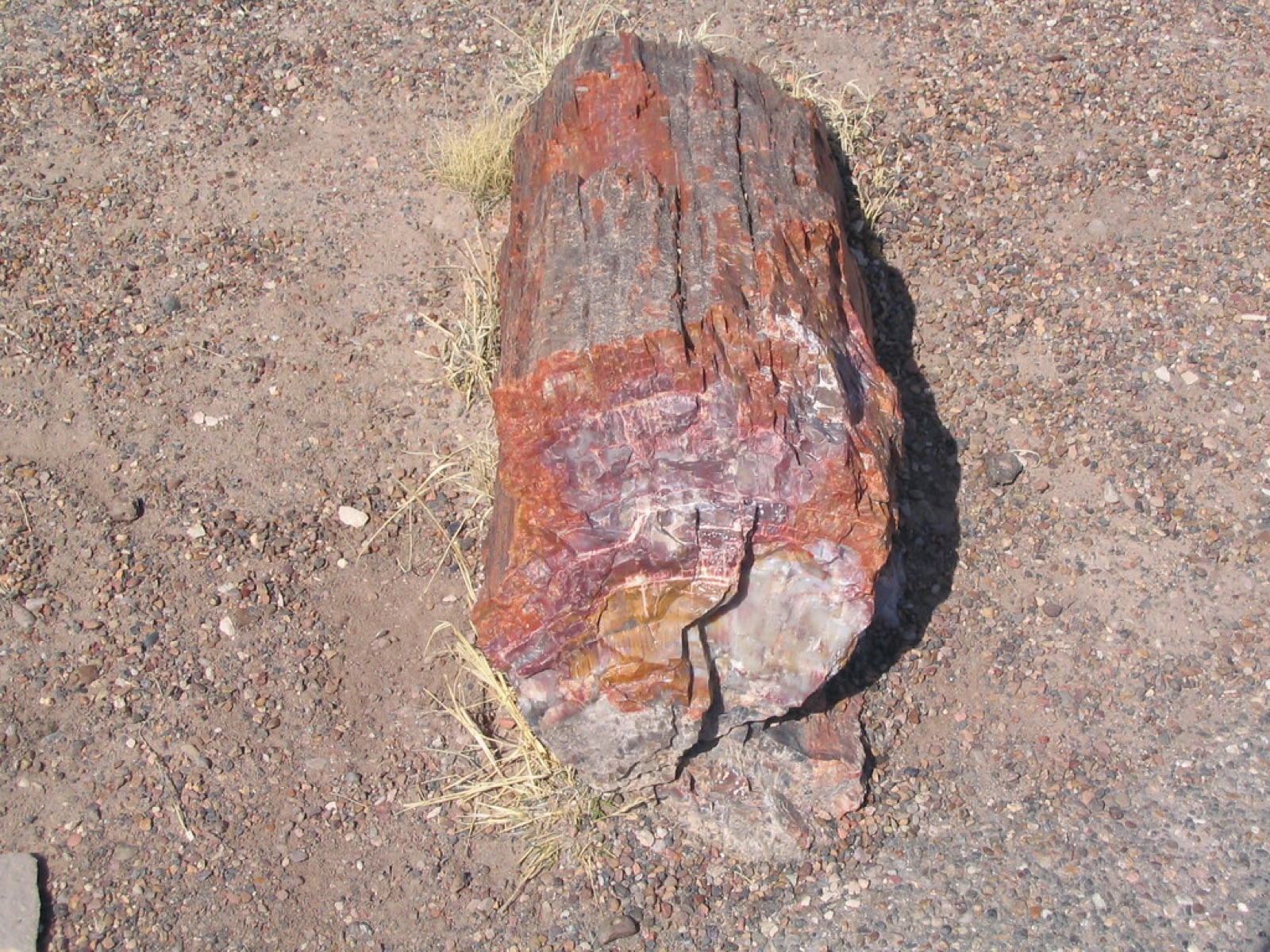
The general case: silica-replaced wood with growth rings, grain, or ray cells preserved. Waxy-to-glassy luster, Mohs ~7, scratches glass. If there is no cell structure at all, suspect plain jasper instead.
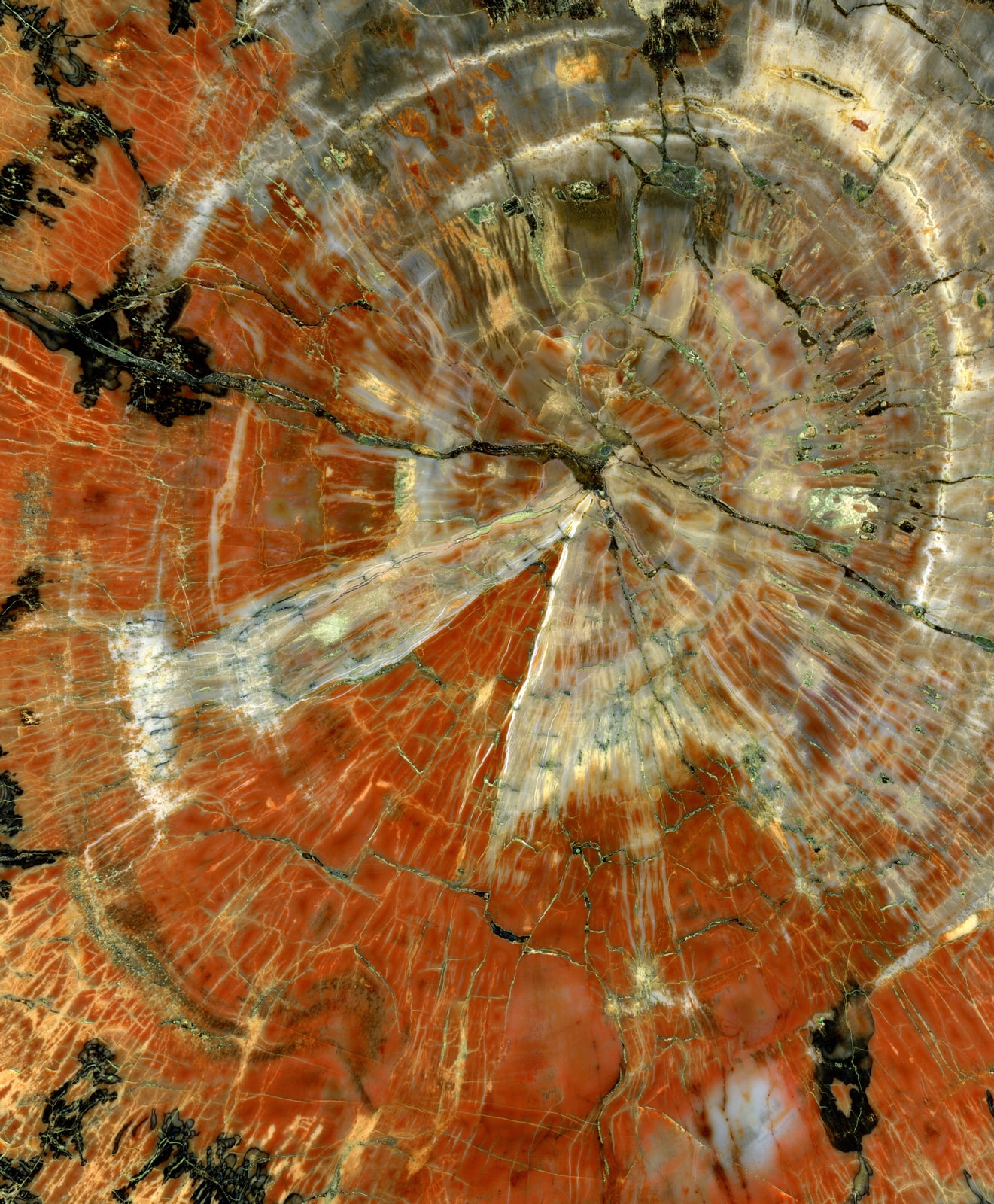
Translucent, banded chalcedony replacement. Hold it to light and the bands glow while the wood grain still reads through them. The most collectible form.
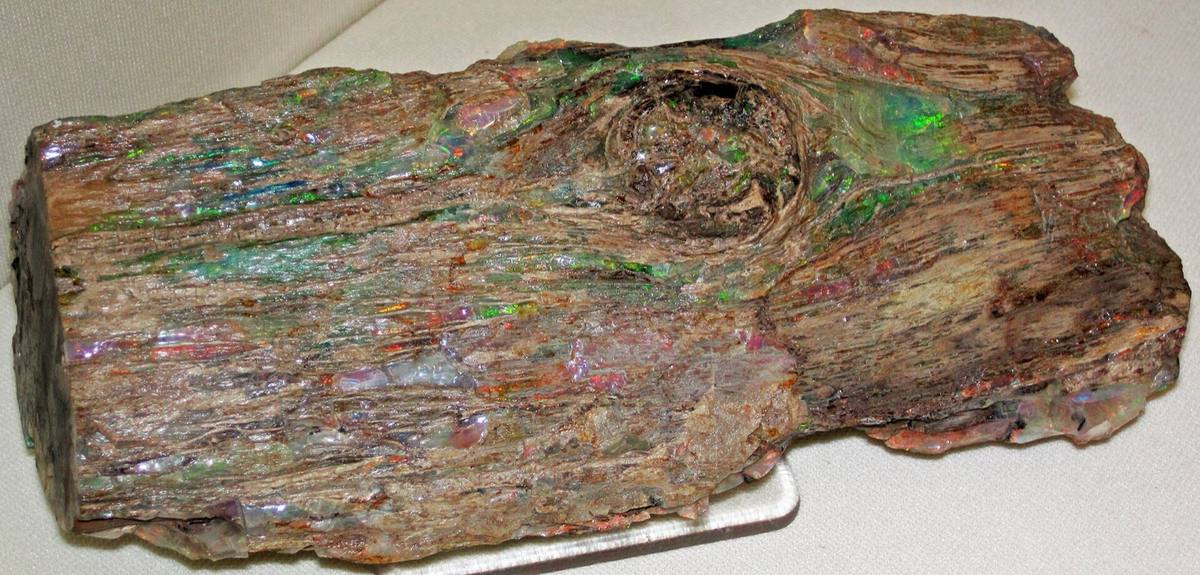
Opal (hydrated silica) replacement. Softer at Mohs 5.5 to 6.5, often more translucent with a waxy-to-resinous sheen. A steel knife may scratch it where chalcedony wood will not.
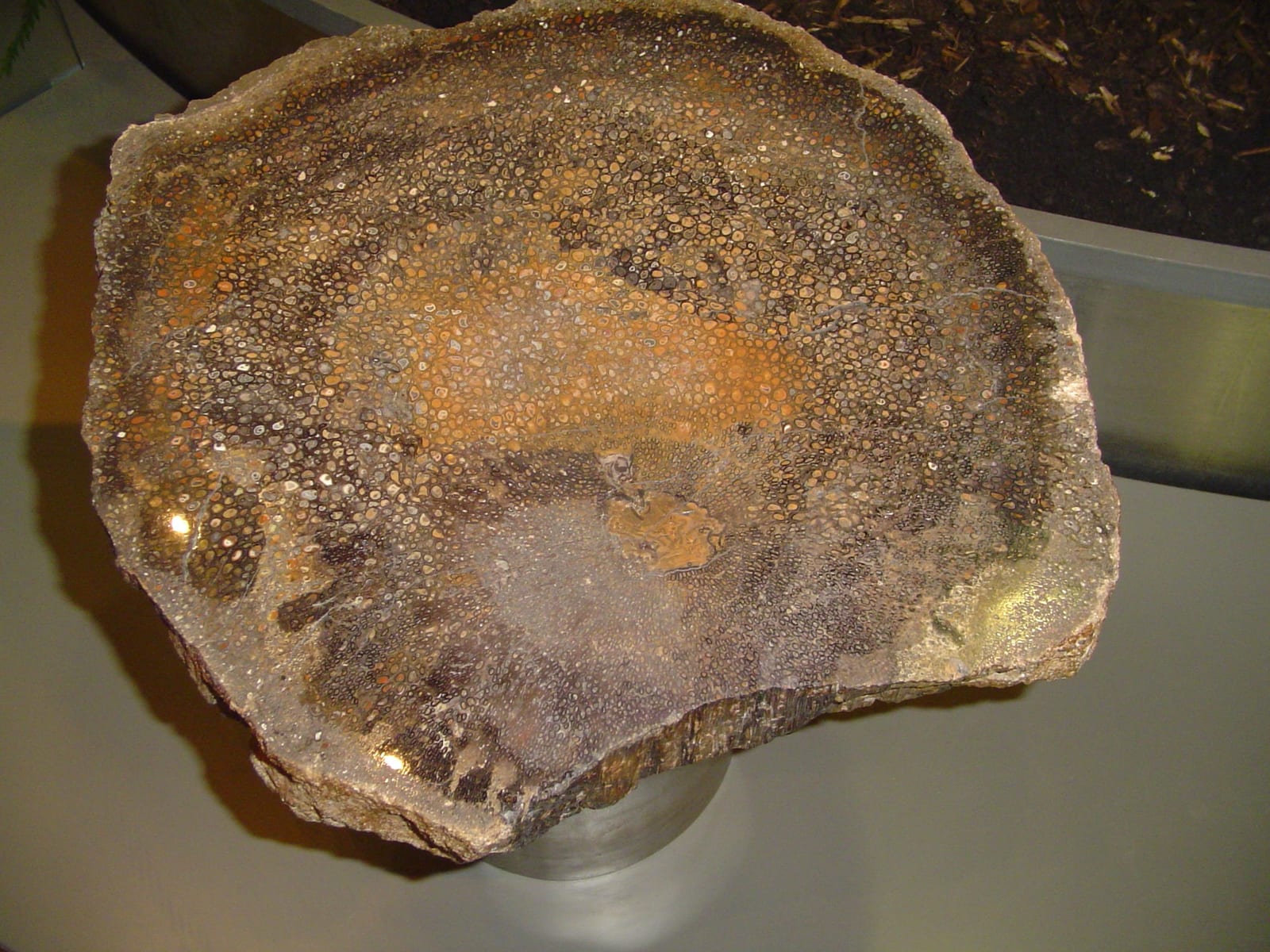
Rows of dark rods or dots (sclerenchyma bundles) running through the piece, with NO concentric growth rings. Diagnostic of palm, a monocot. State stone of Texas.
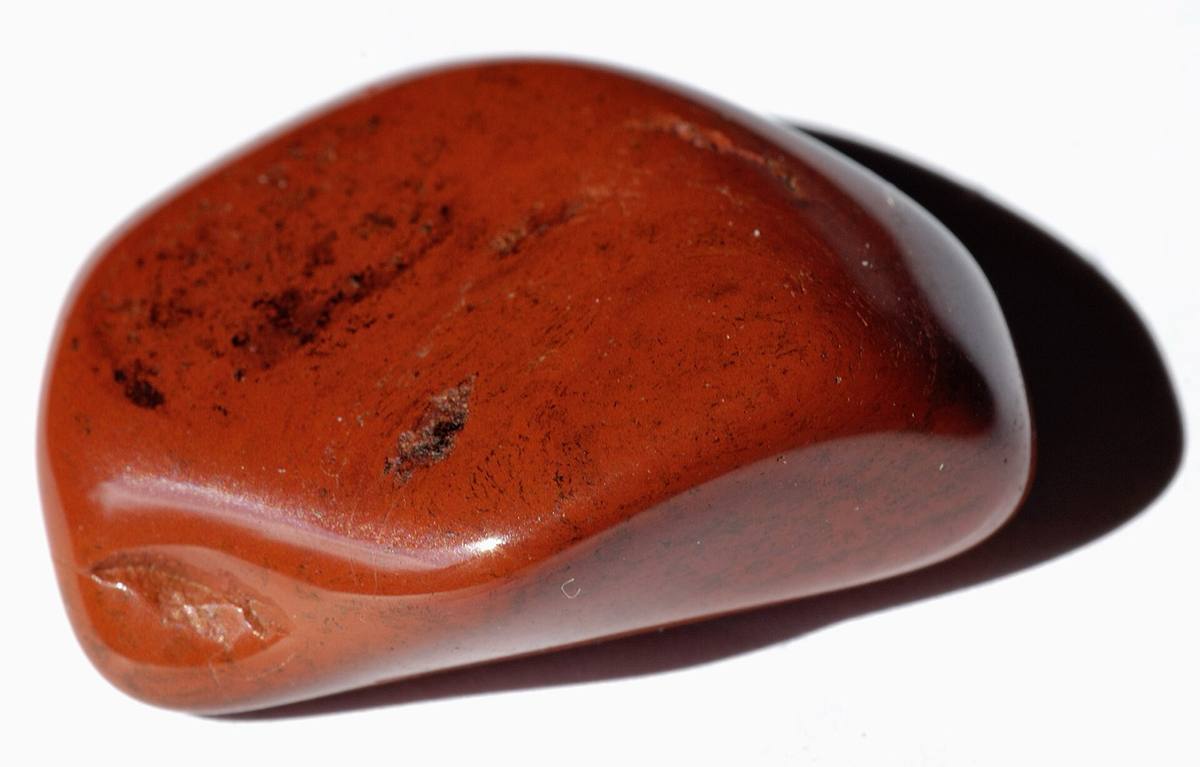
The most common look-alike. Opaque silica with no cell structure, grain, or rings. Wood-brown jasper fools people constantly. No preserved botany means it is not petrified wood.
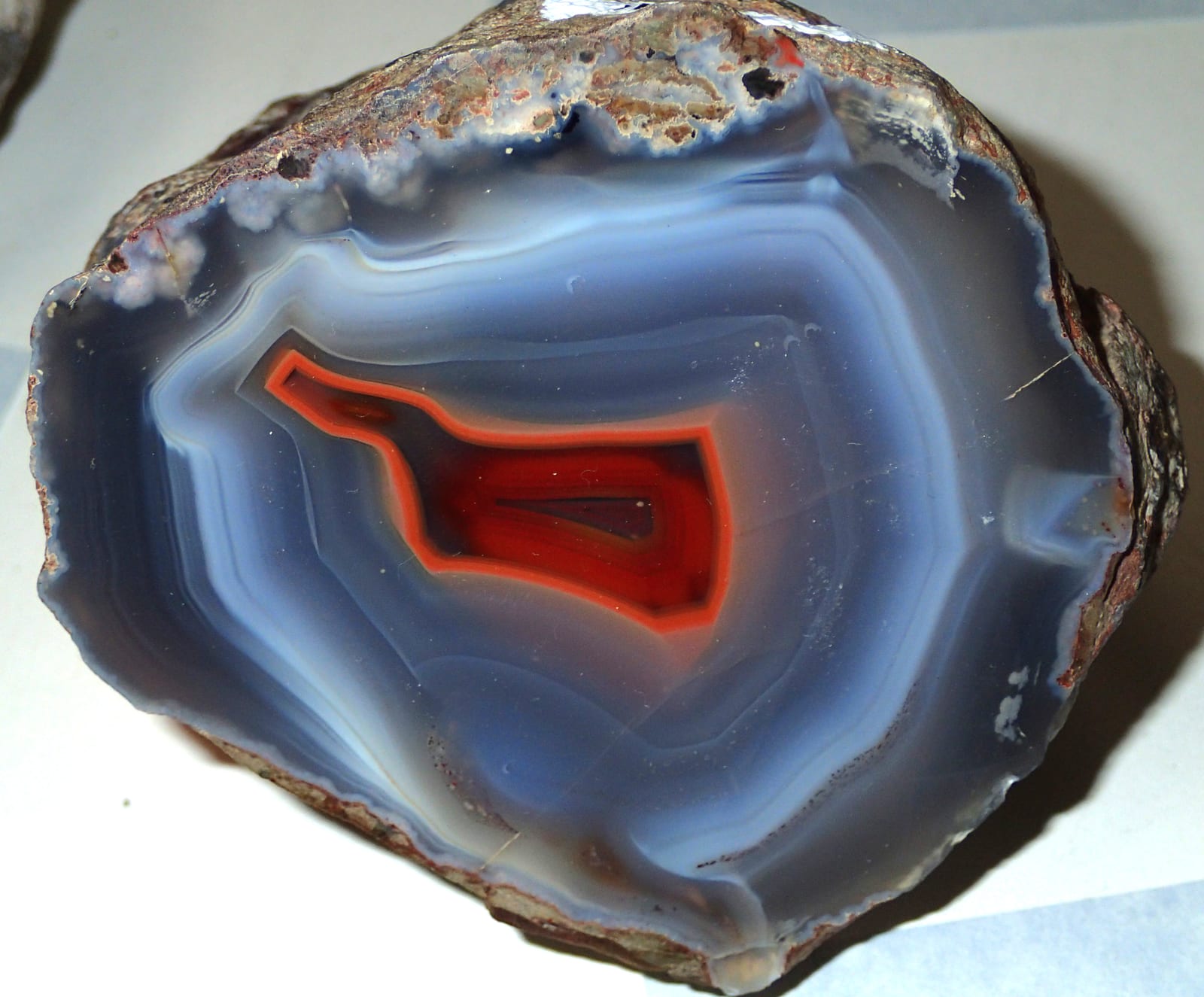
Banded chalcedony with no wood structure. Concentric or parallel bands that follow a nodule shape, not wood grain. Agatized wood differs by preserving the cellular pattern of the original log.
Photo: Wikipedia contributors · wikipedia
Petrified wood and look-alike comparison
The replacement types and their two closest look-alikes side by side. Luster and hardness narrow the replacement; the presence of preserved grain settles wood versus not-wood.
Banded chalcedony following a nodule, not wood grain.
Common types of petrified wood
Silicified (chalcedony) wood
The default. Quartz-family replacement, waxy-to-glassy, Mohs ~7. Grain and rings usually clear.
Agatized wood
Translucent, banded chalcedony replacement. The most prized, with the wood structure picked out in agate.
Jasperized wood
Opaque, iron-stained red, yellow, or brown silica. Solid color, grain shows on a polished face.
Opalized wood
Replaced by hydrated silica (opal). Softer (Mohs 5.5 to 6.5), often more translucent, sometimes a waxy sheen.
Petrified palm wood
Monocot. Rows of dark rods or dots (sclerenchyma) and no growth rings. Texas and Louisiana classic.
Limb casts
Branch-shaped pieces filled with chalcedony or agate. Eden Valley, Wyoming is the type locality.
Identify by replacement mineral
The mineral that replaced the wood sets the luster, the hardness, and the name. Read luster and translucency first.
Silicified (chalcedony / quartz)
The default. Waxy-to-glassy, opaque to slightly translucent, Mohs ~7, scratches glass. Called simply petrified or silicified wood.
Agatized
Translucent, banded chalcedony. Bands glow when backlit and the wood grain reads through them. The most collectible replacement.
Jasperized
Opaque chalcedony colored red, yellow, or brown by iron oxides. Solid color, with grain visible mainly on a cut and polished face.
Opalized
Hydrated silica (opal). Softer at Mohs 5.5 to 6.5, often more translucent with a resinous sheen. A knife may scratch it.
Calcite-replaced
Uncommon. Much softer (Mohs 3) and fizzes in dilute hydrochloric acid. Mostly found where wood was buried in carbonate-rich settings.
Pyritized
Rare. Metallic brassy replacement, heavy, found in marine black shales (the famous example is Teredo-bored driftwood).
Identify by what's preserved
Petrified wood is defined by the botanical structure that survived. The more of these you can see, the more confident the call.
Growth rings
Concentric rings on a cross-cut face mean a conifer or hardwood (a dicot). Their absence, plus rods, points to palm.
Grain and ray cells
Parallel grain along the trunk and fine rays running across it. Visible on a longitudinal cut.
Bark
A darker, rougher outer rind that wraps the piece. Strong confirmation that you are looking at a whole limb or trunk section.
Knots and branch scars
Swirled grain around a knot or a circular branch scar. Hard to fake and unmistakably wood.
Palm rods and dots
Rows of dark sclerenchyma bundles with no rings. Diagnostic of petrified palm wood, a monocot.
Insect borings
Tubes or tunnels (such as Teredo shipworm borings) preserved in the silica. Confirms the piece was once wood.
How the petrified wood identifier works
Step 1
Photograph a face with grain
A cut or broken surface shows growth rings, grain, or palm dots best. Natural light, fill the frame. JPG, PNG, or WebP up to 6MB.
Step 2
Add where you found it (optional)
Arizona, Oregon, Wyoming, Texas. Locality and botany weight the replacement type and the variety without inventing details.
Step 3
Get 3 ranked matches
Each match: the replacement mineral, the preserved structure to look for, Mohs hardness, and the look-alike to rule out.
Take a photo that identifies well
Photograph a cut or naturally broken face, where grain and rings read clearest.
Backlight a thin edge to reveal whether the silica is translucent (agatized, opalized) or opaque (jasperized).
Wet or polish a small spot to bring out grain that a dusty surface hides.
Include a cross-cut end if you have one, so growth rings or palm dots are visible.
What to avoid
Photos of a single dusty, rounded cobble with no visible structure.
Camera flash, which flattens luster and hides translucency.
Cropping out the grain or the bark rind.
Multiple unrelated pieces in one frame.
How accurate is this petrified wood identifier?
Photos read grain, color, and luster well. The exact replacement chemistry and the tree species often need a cut face, a hand lens, or lab work, so the tool is honest about where it stops.
Strong on
Confirming wood versus a plain jasper or agate look-alike when grain or rings are visible.
Telling petrified palm wood from ring-bearing wood by the rod-and-dot pattern.
Inferring silicified versus opalized from luster, translucency, and apparent hardness.
Less reliable on
Tumbled or heavily weathered pieces where the cell structure is polished or worn away.
Species-level botany (which conifer or hardwood), which usually needs thin-section microscopy.
Distinguishing agatized from jasperized when the piece is opaque and the lighting is flat.
Anything where a hardness test or a cut, polished face would decide it. The photo cannot run those.
Want unlimited IDs in the field?
The RockHoundR app works offline, saves every find to your map, and overlays them onto 250,000+ rockhounding spots with geology and land-access data.
Petrified Wood Identifier FAQ
How can I tell real petrified wood from a plain rock?+
Look for preserved wood structure: growth rings on a cross-cut end, parallel grain and ray cells along the trunk, bark, knots, or the rod-and-dot pattern of palm wood. Genuine petrified wood keeps the exact cellular shape of the original log. If a piece shows none of that, only solid or banded color, it is almost certainly jasper or agate rather than petrified wood, however wood-like the color seems.
What is the difference between agatized, jasperized, and opalized wood?+
All three are silica replacements, separated by the form of silica. Agatized wood is translucent banded chalcedony and glows when backlit. Jasperized wood is opaque chalcedony colored red, yellow, or brown by iron oxides. Opalized wood is replaced by hydrated silica (opal), which is softer (Mohs 5.5 to 6.5), often more translucent, and shows a waxy or resinous sheen. Reading luster and translucency from the photo is the fastest way to tell them apart.
How do I identify petrified palm wood?+
Petrified palm wood shows rows of dark dots or rods running through it with no concentric growth rings. Those rods are the sclerenchyma bundles that stiffen a palm trunk. Palms are monocots, so they never form the tree rings that conifers and hardwoods do. That rod-and-dot pattern with no rings is diagnostic. It is the state stone of Texas and the state fossil of Louisiana.
How hard is petrified wood and will it scratch glass?+
Silicified wood (the common chalcedony-replaced kind) sits at about Mohs 6.5 to 7, so it scratches glass and a steel knife will not scratch it. Opalized wood is softer, around Mohs 5.5 to 6.5, and a hard steel point may mark it. A piece that a fingernail or copper penny scratches is not silica-replaced and is more likely calcite-replaced wood or not petrified wood at all.
Where is petrified wood found in the United States?+
The American West is the richest source. Arizona's Petrified Forest holds Triassic conifer logs, central and eastern Oregon produce agatized and limb-cast wood, Eden Valley in Wyoming is famous for limb casts, and Washington has its own state gem petrified wood. Petrified palm wood comes from Texas and Louisiana. Always check collecting rules first, since national parks prohibit removal and other federal land has limits.
Can I legally collect petrified wood?+
It depends on the land. Collecting is banned in national parks, including Petrified Forest National Park. On most BLM land, casual collection of petrified wood for personal use is allowed up to a daily and annual weight limit, with no sale and no use of power equipment. State and private rules vary, so confirm the land status before you keep a piece.
Is this petrified wood identifier free?+
Yes. Upload a photo and get ranked identifications in your browser at no cost, three free IDs per day per device, with no signup or install. The RockHoundR app removes the daily limit, saves every find to a personal map, works offline at remote beds, and overlays results onto 250,000+ rockhounding spots with geology and land-access data.
References & sources
Property data and reference imagery used on this page are cross-checked against the following sources.