Azurite is a vibrant, deep-blue copper carbonate mineral frequently sought after for its intense color and beautiful crystal formations. It is often found as a weathering product of copper ore deposits and frequently alters into green malachite through hydration.
Spotting azurite in the field
Field marks- 1
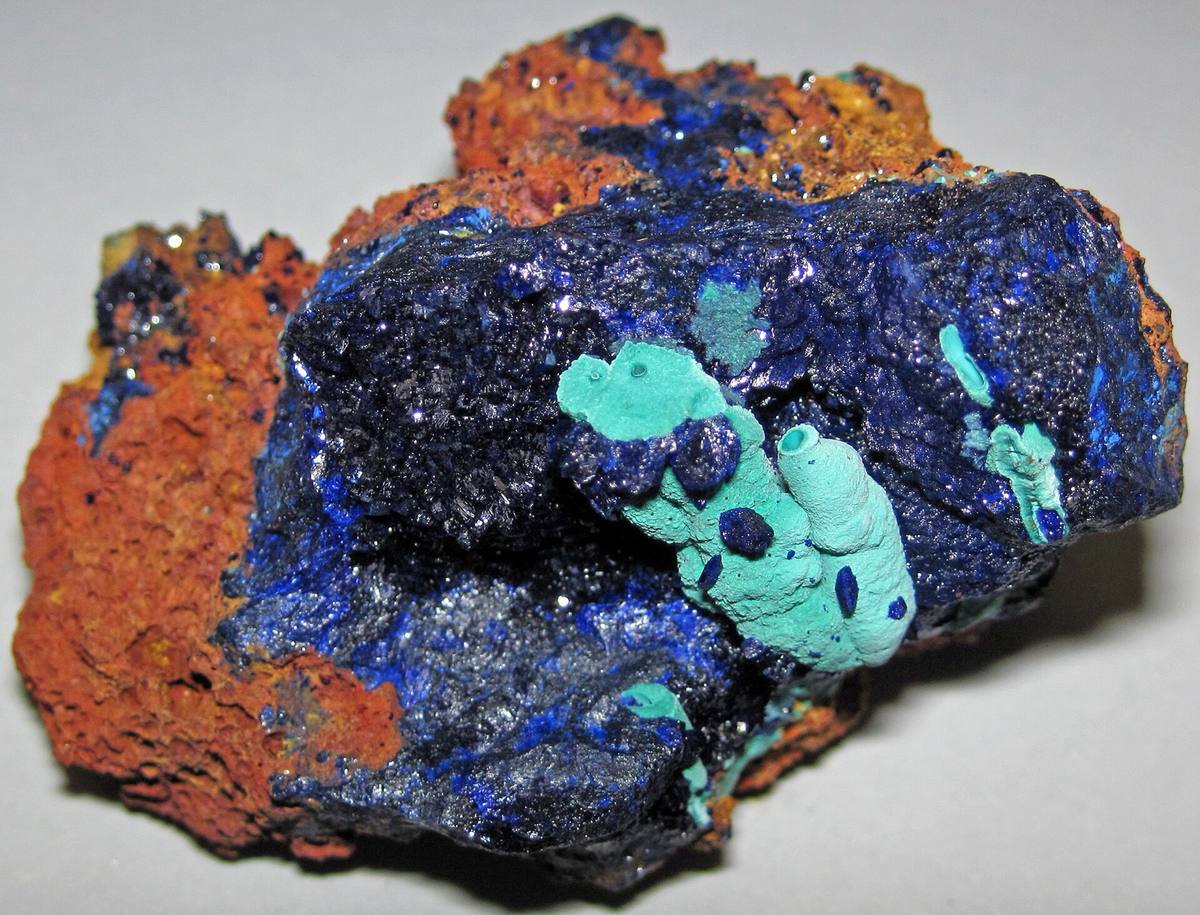
Deep azure blue, often as sharp blocky crystals or as earthy blue crusts
- 2
Frequently intergrown with green malachite in the same specimen
- 3
Soft at 3.5 to 4, fizzes in dilute acid, streak is light blue
Azurite occurs in the same oxidized copper zones as malachite and is often the earlier mineral, which is why so many specimens show blue azurite partly altered to green malachite. That alteration is worth understanding: azurite is unstable over geological time and slowly converts to malachite, and it can continue slowly in a collection. The blue is deeper and more purple than any other common mineral.
Before you collect
A copper mineral, so the same rule as malachite applies: cut and grind wet with a respirator, never dry. Keep good crystal specimens out of strong light and heat, which accelerate alteration to malachite.
Straight answers
- Is it worth cutting?
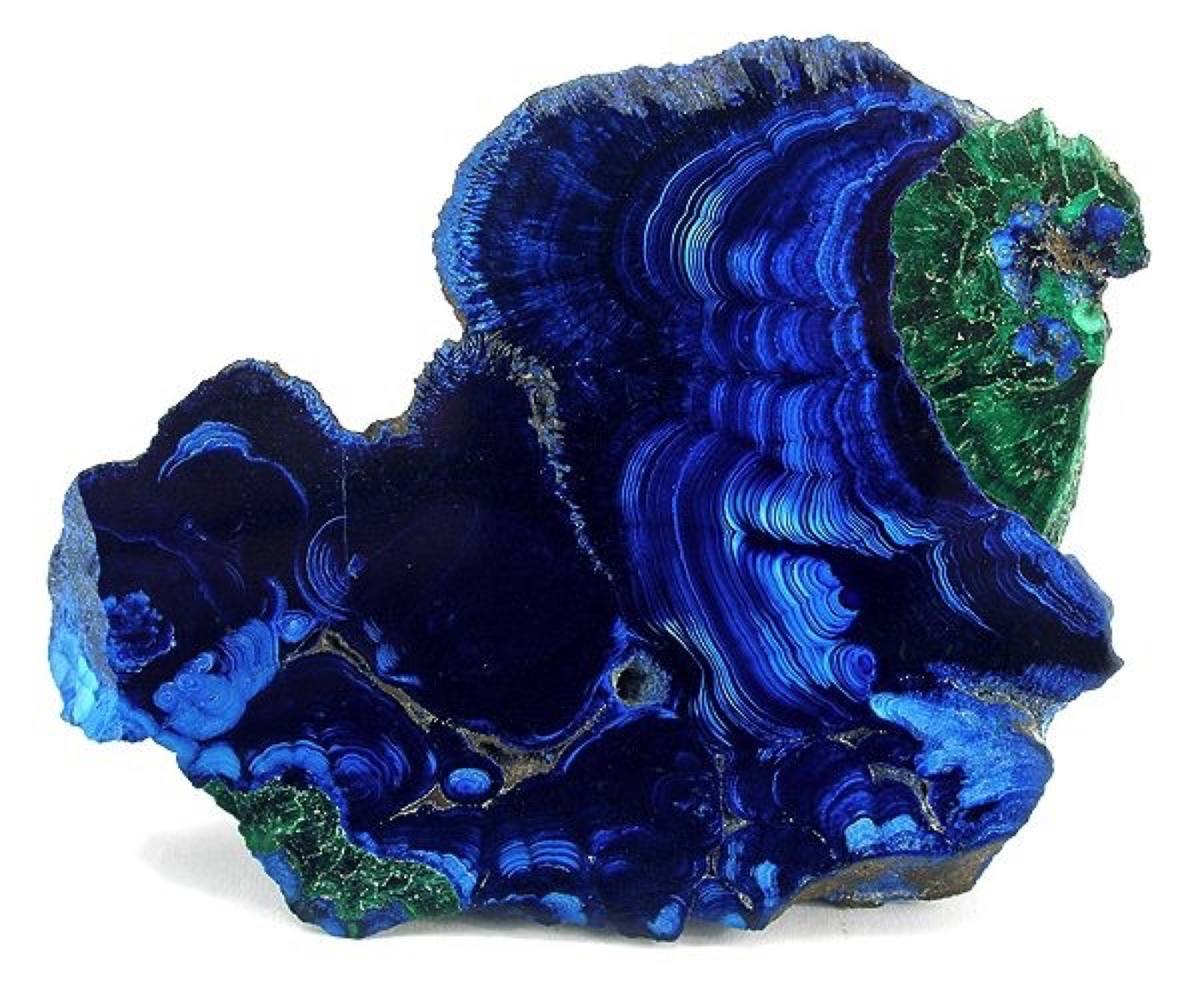
- Usually cut as azurite-malachite, where the blue and green banding together make the stone. Same wet-cutting rule as malachite.
- What is it really worth?
- Moderate for good crystal specimens, which are the collectible form. Massive azurite-malachite for cutting is inexpensive.
- Can you legally keep it?
- American occurrences are on private copper mine land. Buy rather than trespass.
Often confused with
Azurite vs. its common look-alikes, and how to tell them apart in the field.
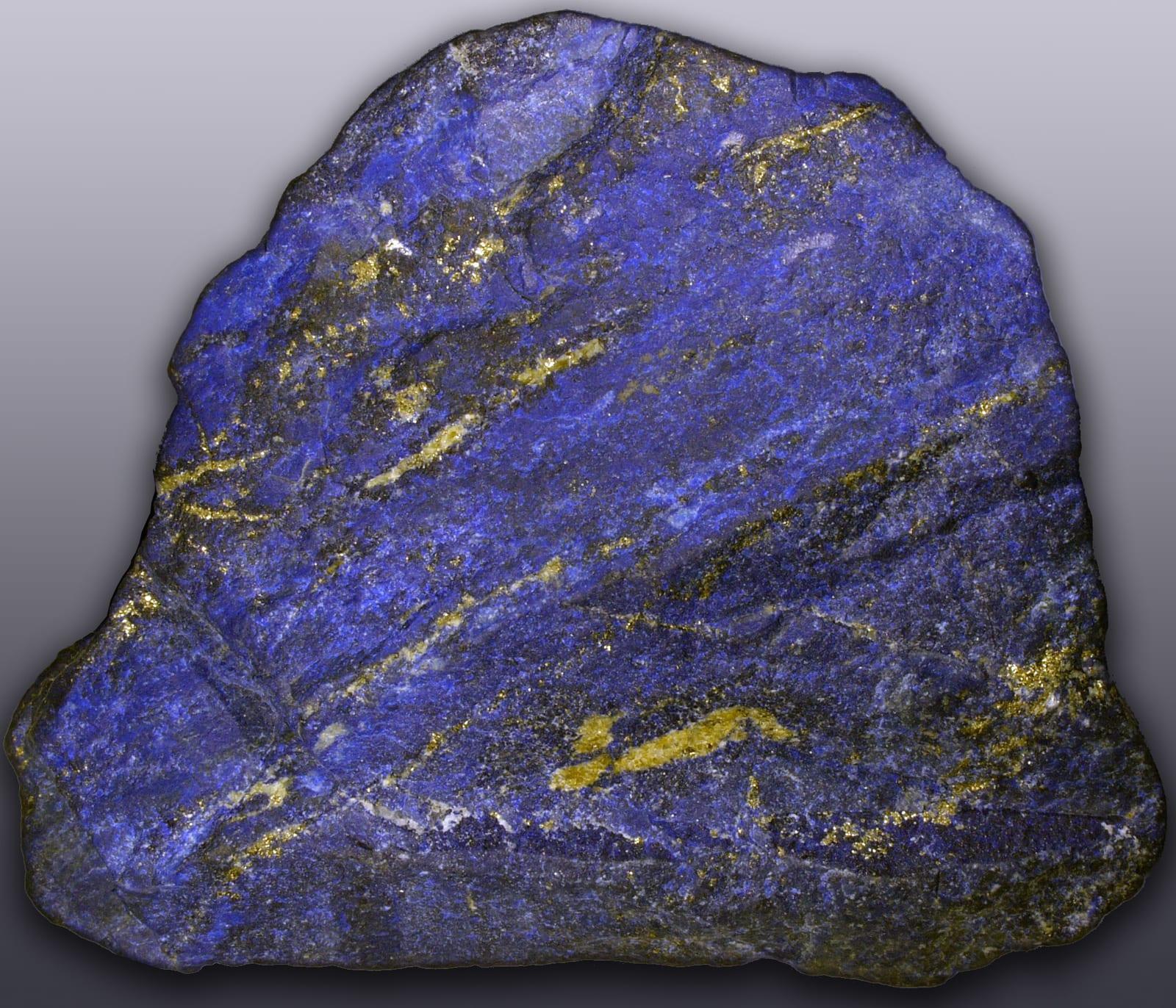
How to tell apart: Lapis is harder at 5 to 6, does not fizz in acid, and usually carries gold pyrite flecks. Azurite is soft and effervesces.
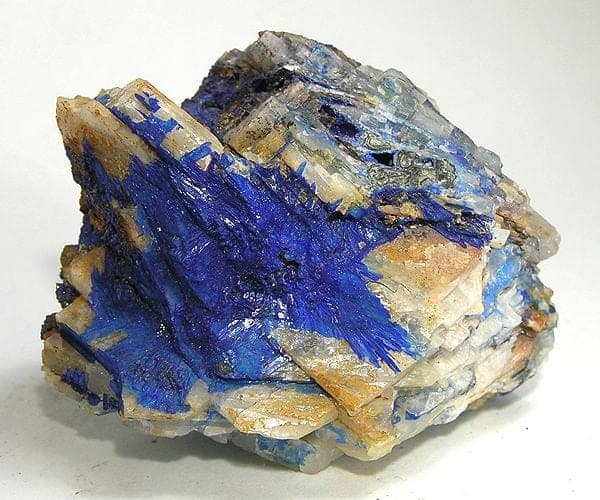
How to tell apart: A rarer blue copper mineral that looks very similar. Linarite does not fizz in dilute hydrochloric acid; azurite does.
Often found alongside azurite
Minerals reported to co-occur with azurite. Spotting these in float or country rock is a strong cue you are in the right ground.
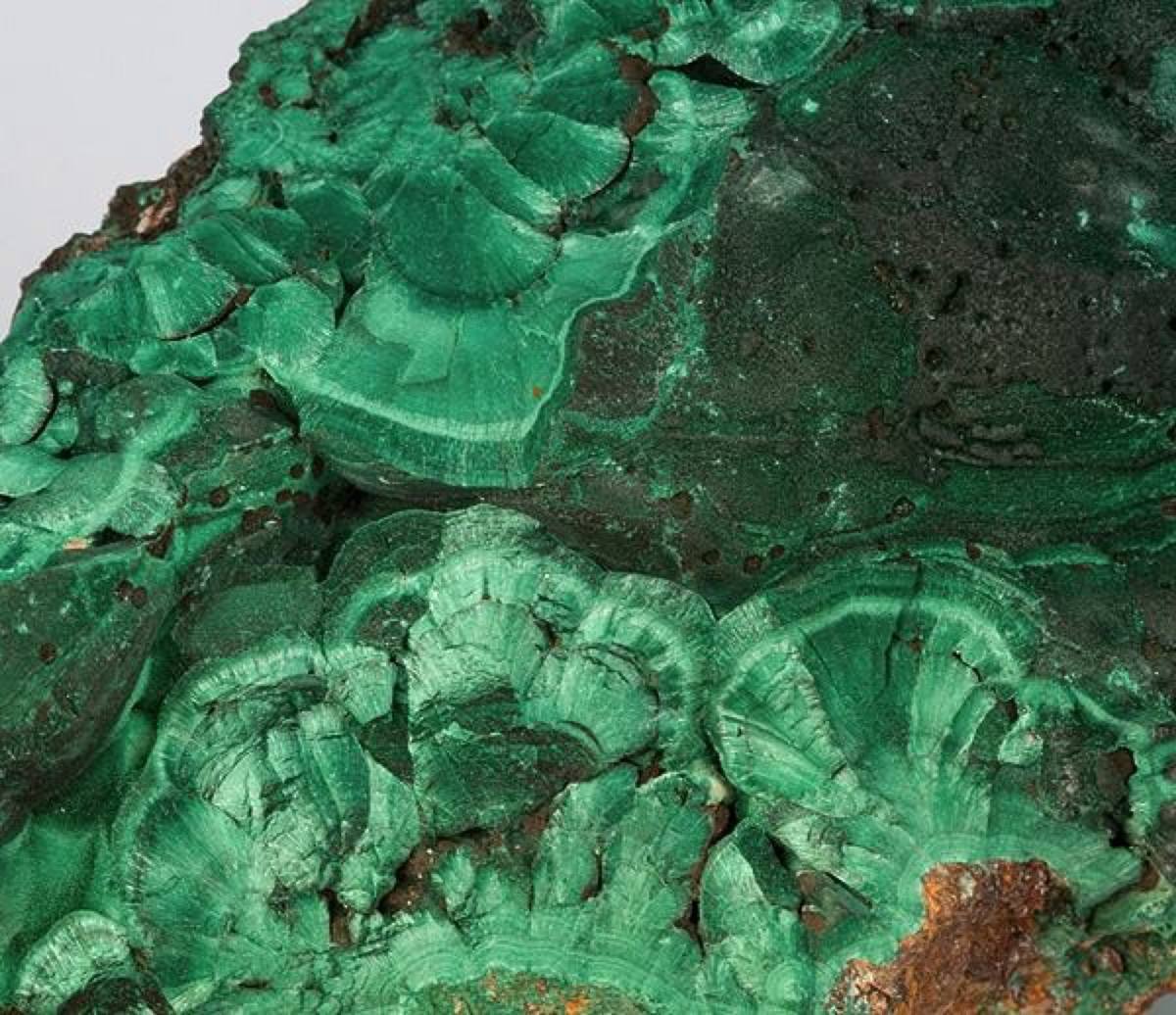
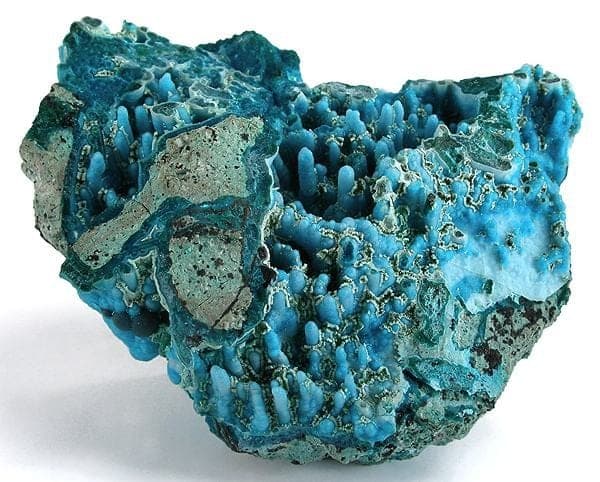
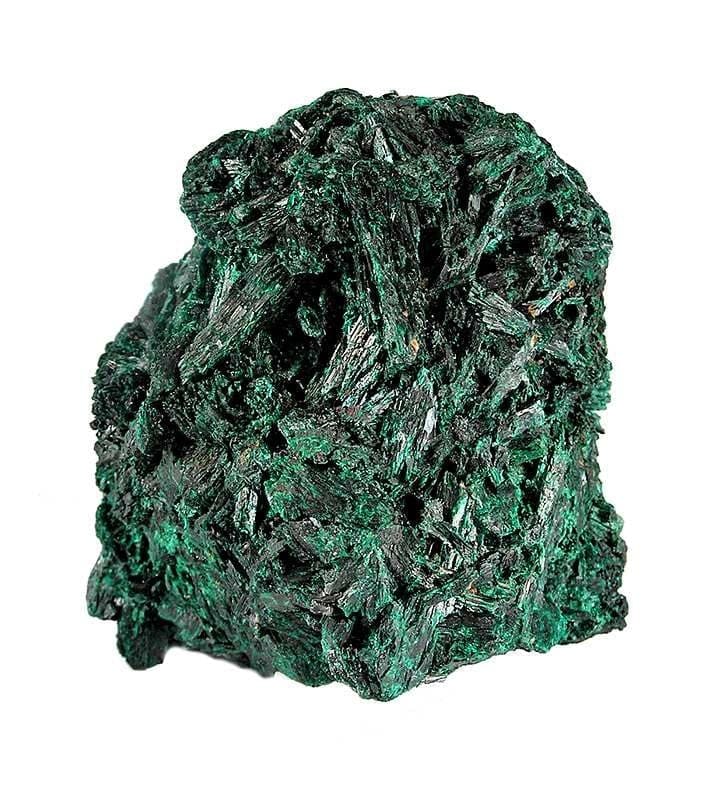
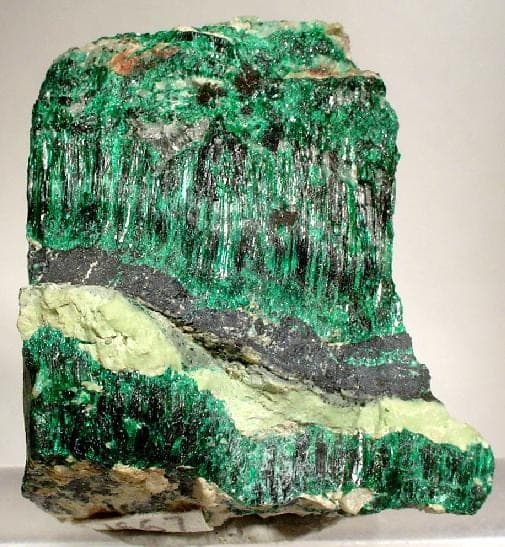
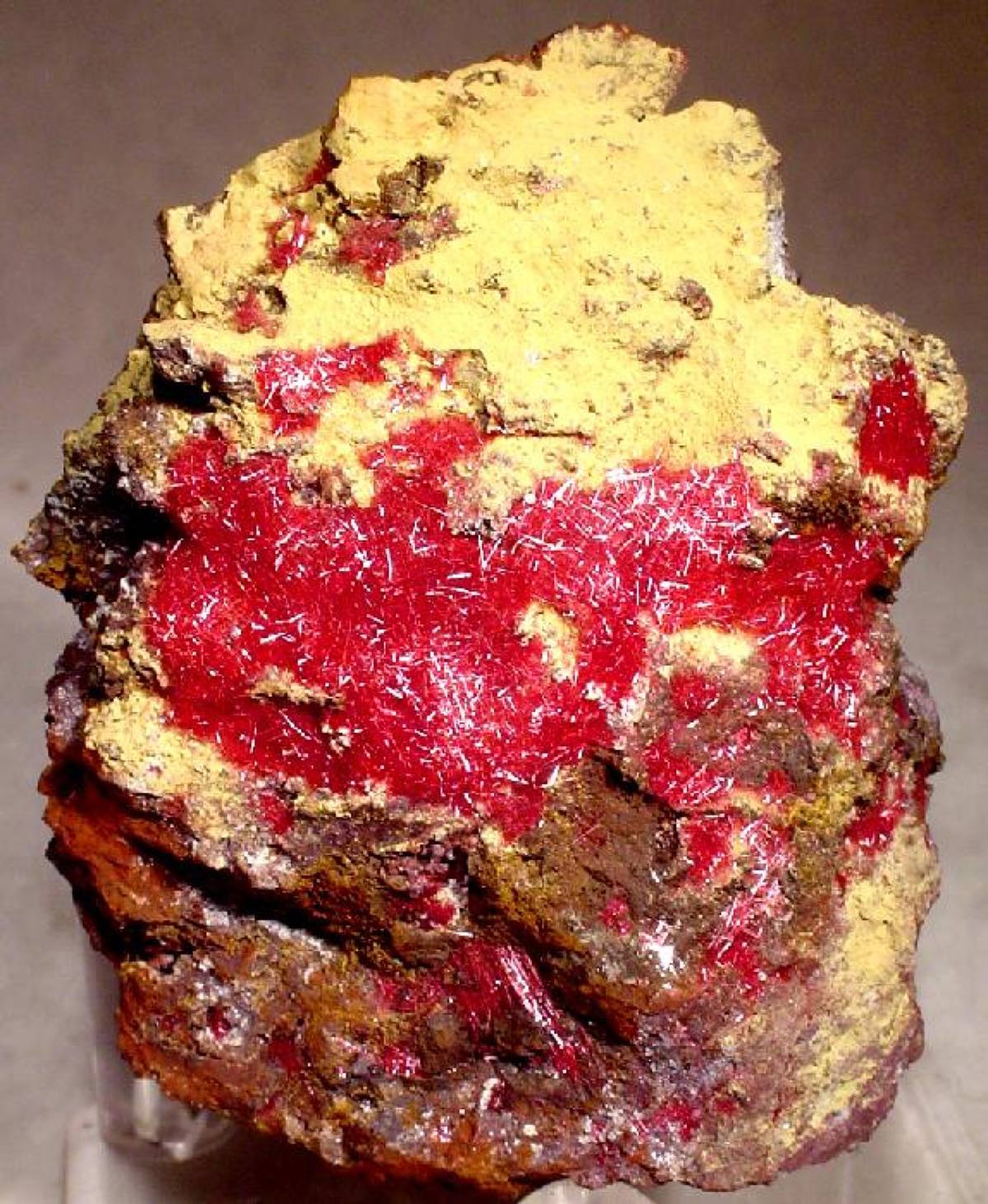
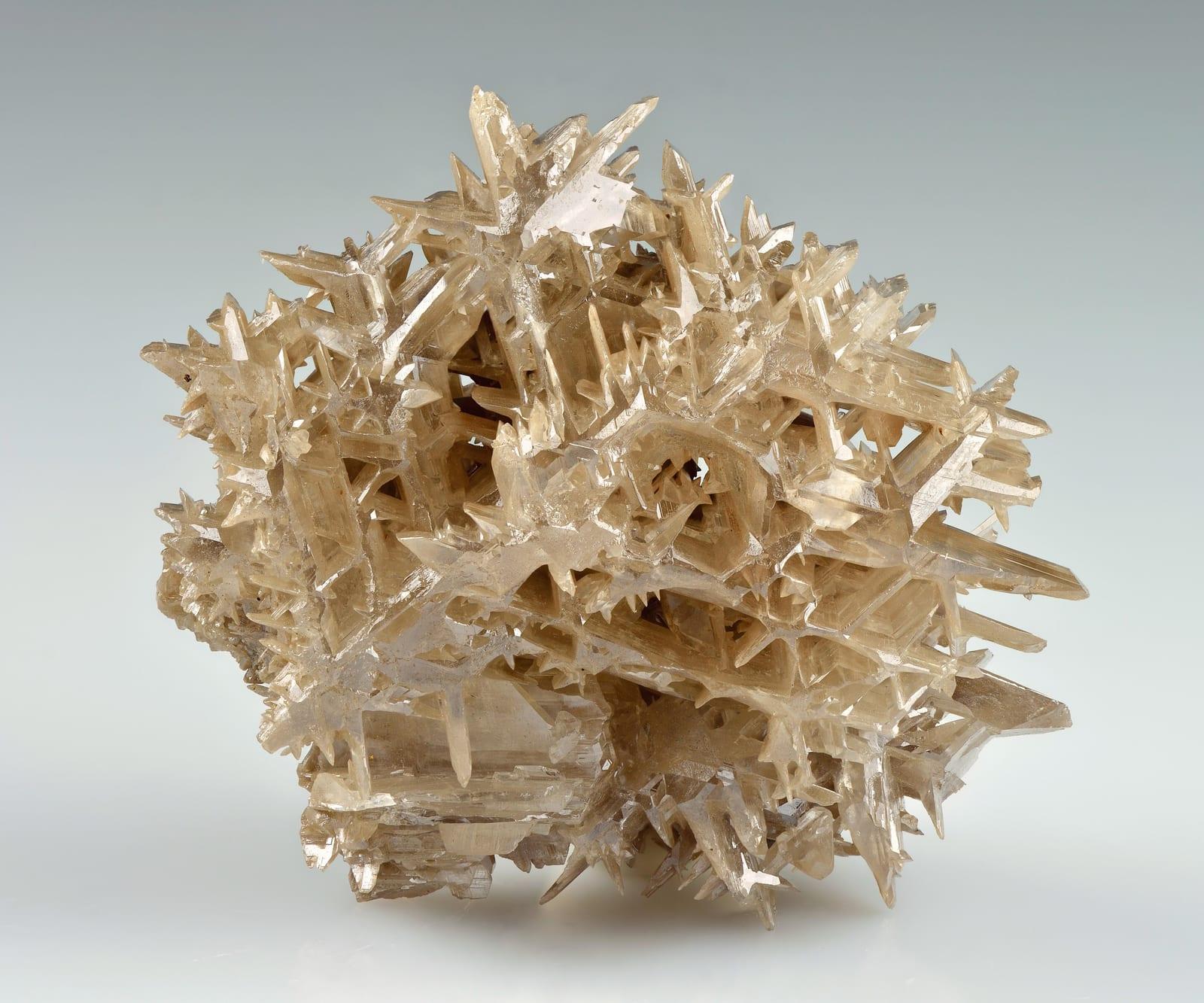
All properties
- Chemical formula
- Cu₃(CO₃)₂(OH)₂
- Mohs hardness
- 3.5-4
- Density
- 3.773 g/cm³
- Streak
- Pale blue
- Luster
- Vitreous to subadamantine
- Transparency
- Transparent to translucent
- Crystal system
- Monoclinic
- Crystal habit
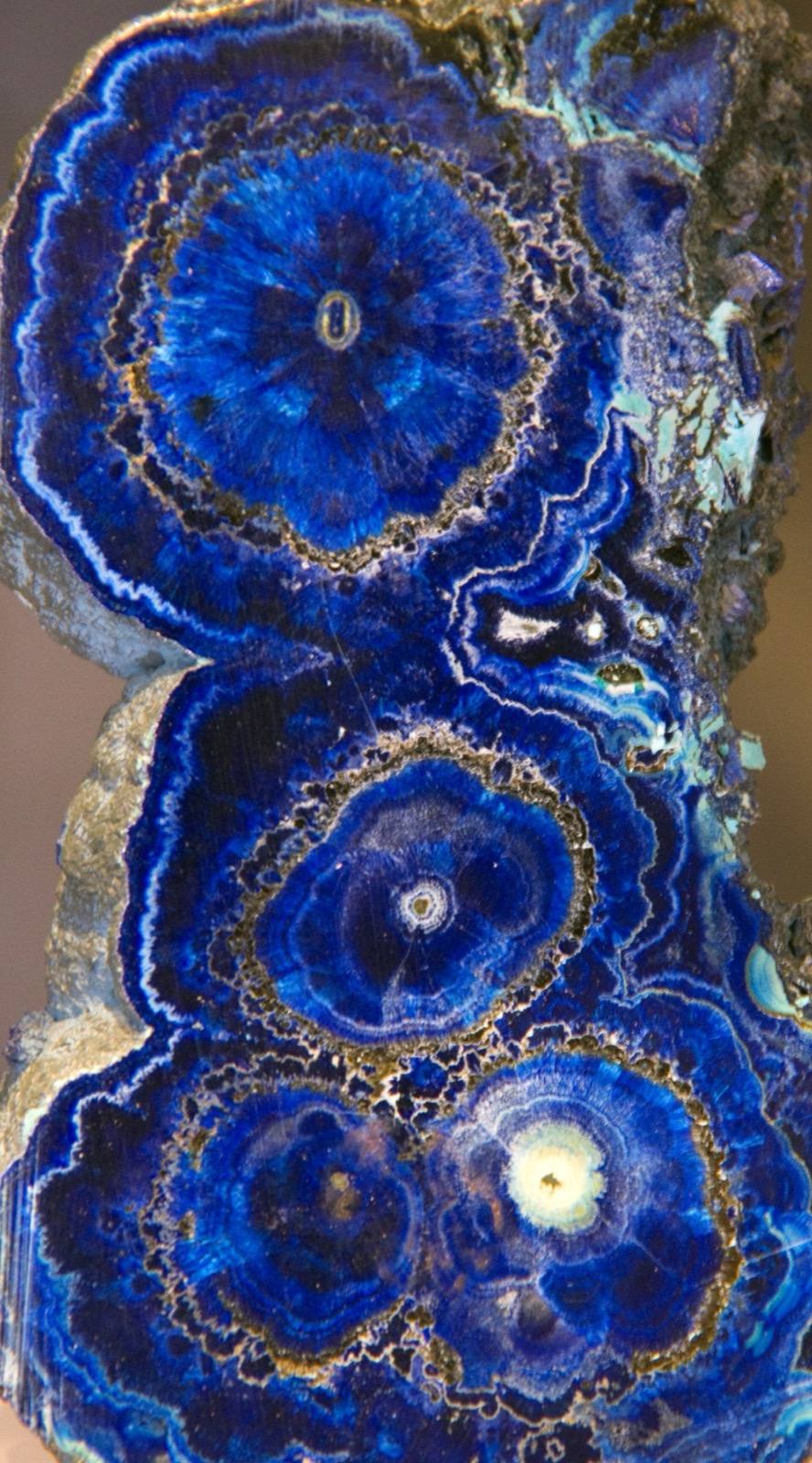
- Prismatic crystals, massive, botryoidal, crusts
- Cleavage
- On {011}, perfect but interrupted; on {100}, fair; on {110}, poor
- Rarity
- Common
- Uses
- Collector, Decorative, Pigment
- Host rock
- In the oxidized zones of copper deposits associated with carbonate rocks; may constitute an ore of copper
Where rockhounds find azurite
92 mapped spotsClassic worldwide localities
- Warren district, Bisbee, Cochise Co., Arizona, USA
- Morenci, Greenlee Co., Arizona, USA
- Mammoth-St. Anthony mine, Pinal Co., Arizona, USA
- New Cornelia mine, Ajo, Pima Co., Arizona, USA
- Chessy, near Lyon, Rhône, France
- Alghero, on Sardinia, Italy
U.S. states with azurite
Each link opens a state-specific list of mapped rockhounding spots that produce azurite.
Field-hunting tip
Where it forms: In the oxidized zones of copper deposits associated with carbonate rocks; may constitute an ore of copper. If you start seeing malachite, chrysocolla, brochantite in float, you are in the right ground. Typical habit: prismatic crystals, massive, botryoidal, crusts. Train your eye for that shape before scanning the outcrop. In the U.S., the densest reported localities are in Utah, Missouri, New Mexico. Start trip planning there.
More azurite photos
Common questions
How do you identify azurite?+
Where is azurite found?+
Can I find azurite in the United States?+
Is azurite safe to handle?+
What rocks look like azurite?+
What minerals are found with azurite?+
What kind of rock does azurite form in?+
What is azurite used for?+
Find azurite on the map
RockHoundR shows mapped rockhounding spots, access rules, and lets you log every find.