
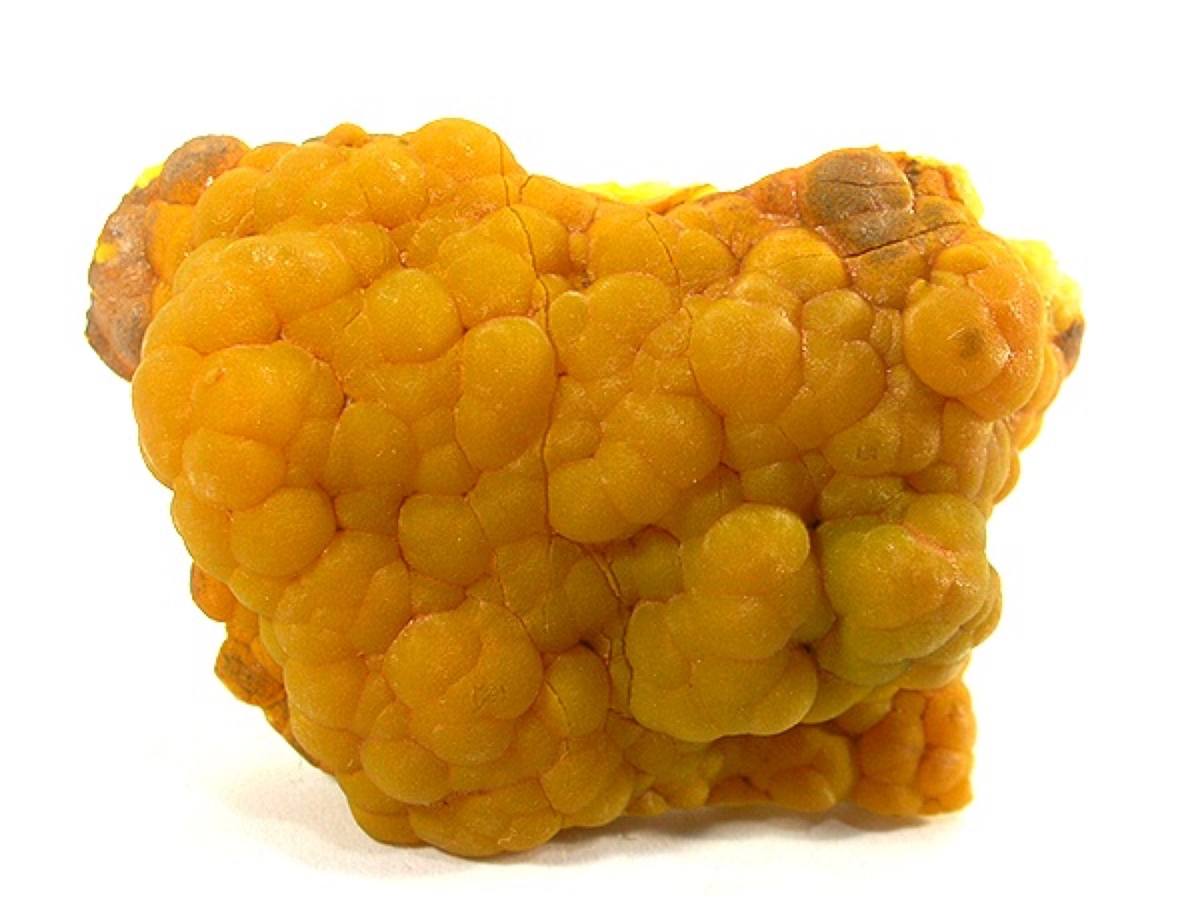
Smithsonite is highly prized by collectors for its distinctive rounded, botryoidal habits and vibrant pastel colors. It typically forms in the oxidation zones of zinc-bearing ore bodies, often appearing in crusts or stalactitic formations.
Spotting smithsonite in the field
Field marks- 1
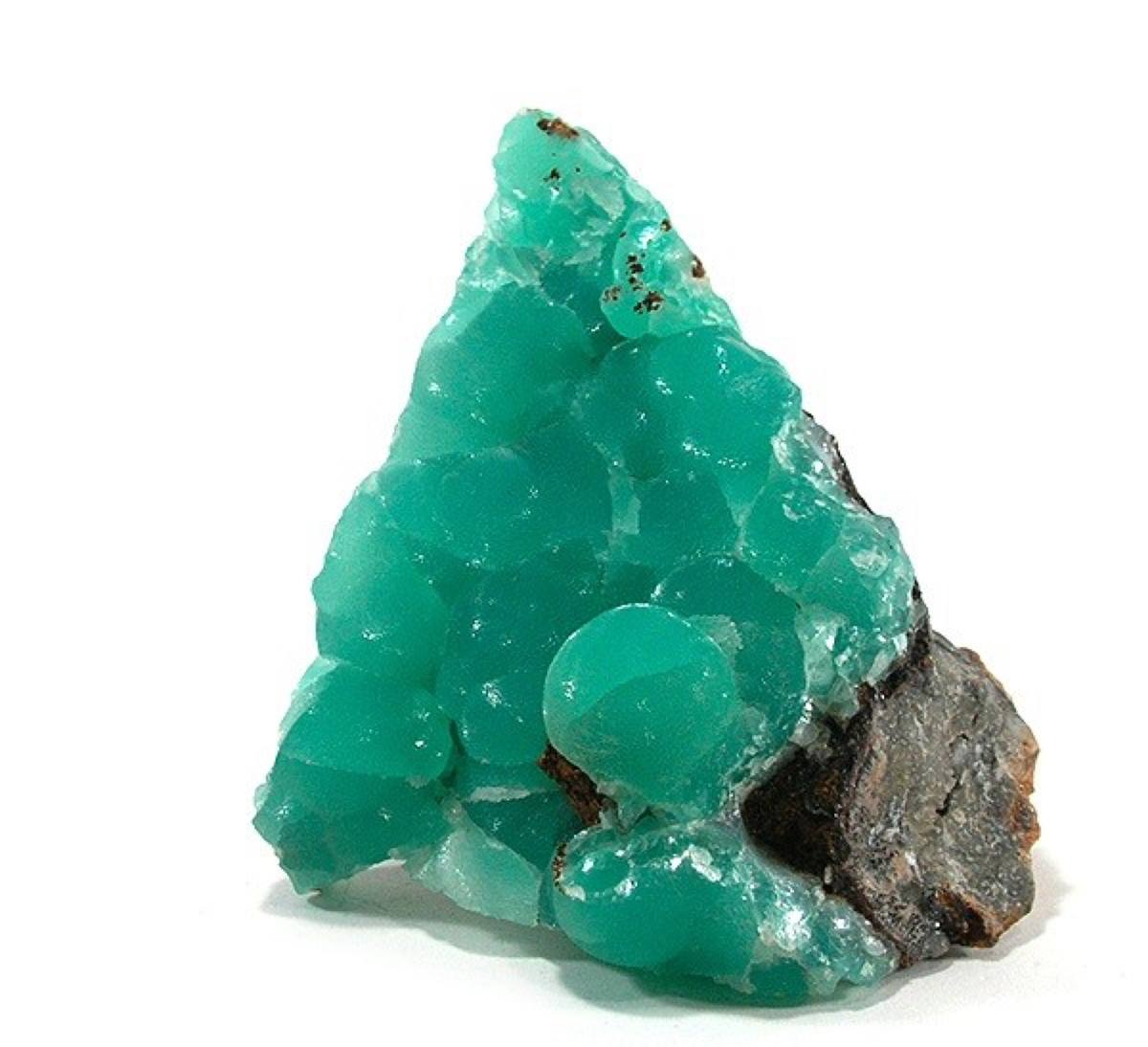
Botryoidal grape-cluster crusts with a soft satiny or pearly sheen
- 2
Blue-green, pink, yellow or white, with a slightly translucent glow
- 3
Heavy for its size, hardness 4 to 4.5, and it fizzes in warm acid
Smithsonite is a zinc carbonate forming in the oxidized zone of zinc deposits, and the blue-green material from the Kelly Mine in New Mexico is one of the most beautiful minerals in North America. The satiny botryoidal texture and the surprising weight together are the identification. It fizzes in warm dilute acid, which separates it from the silicate look-alikes it commonly grows beside.
Straight answers
- Is it worth cutting?
- Occasionally cabbed, and the satiny botryoidal surface is often better left natural than polished.
- What is it really worth?
- Moderate. Kelly Mine blue-green material and strongly colored pink cobaltian smithsonite are the sought-after forms.
- Can you legally keep it?
- The Kelly Mine operates as a fee-dig site. Other zinc districts are largely private.
Where it is worth going
- Kelly MineSocorro County, New Mexico
Famous blue-green smithsonite, available through paid access to the mine dumps.
Often confused with
Smithsonite vs. its common look-alikes, and how to tell them apart in the field.
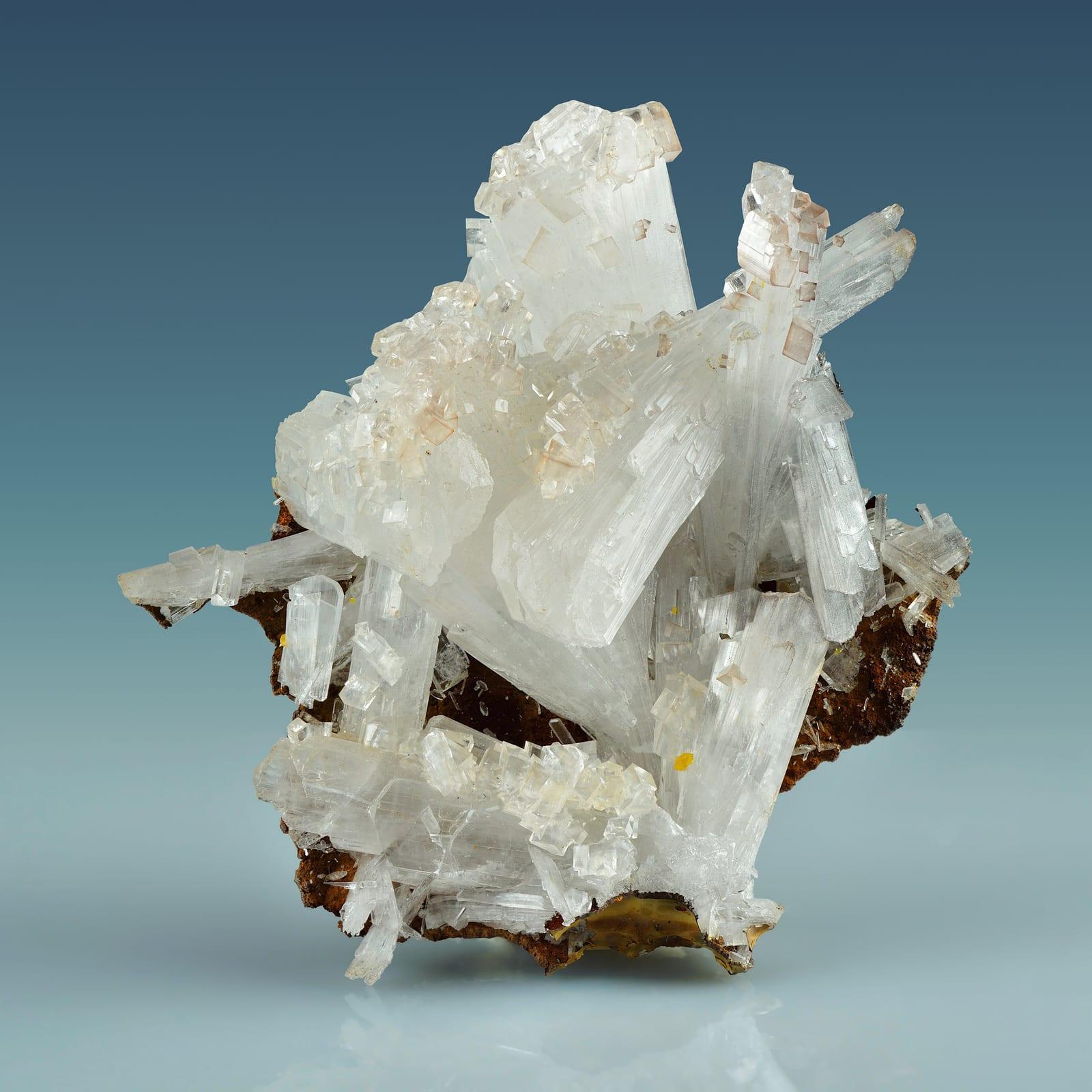
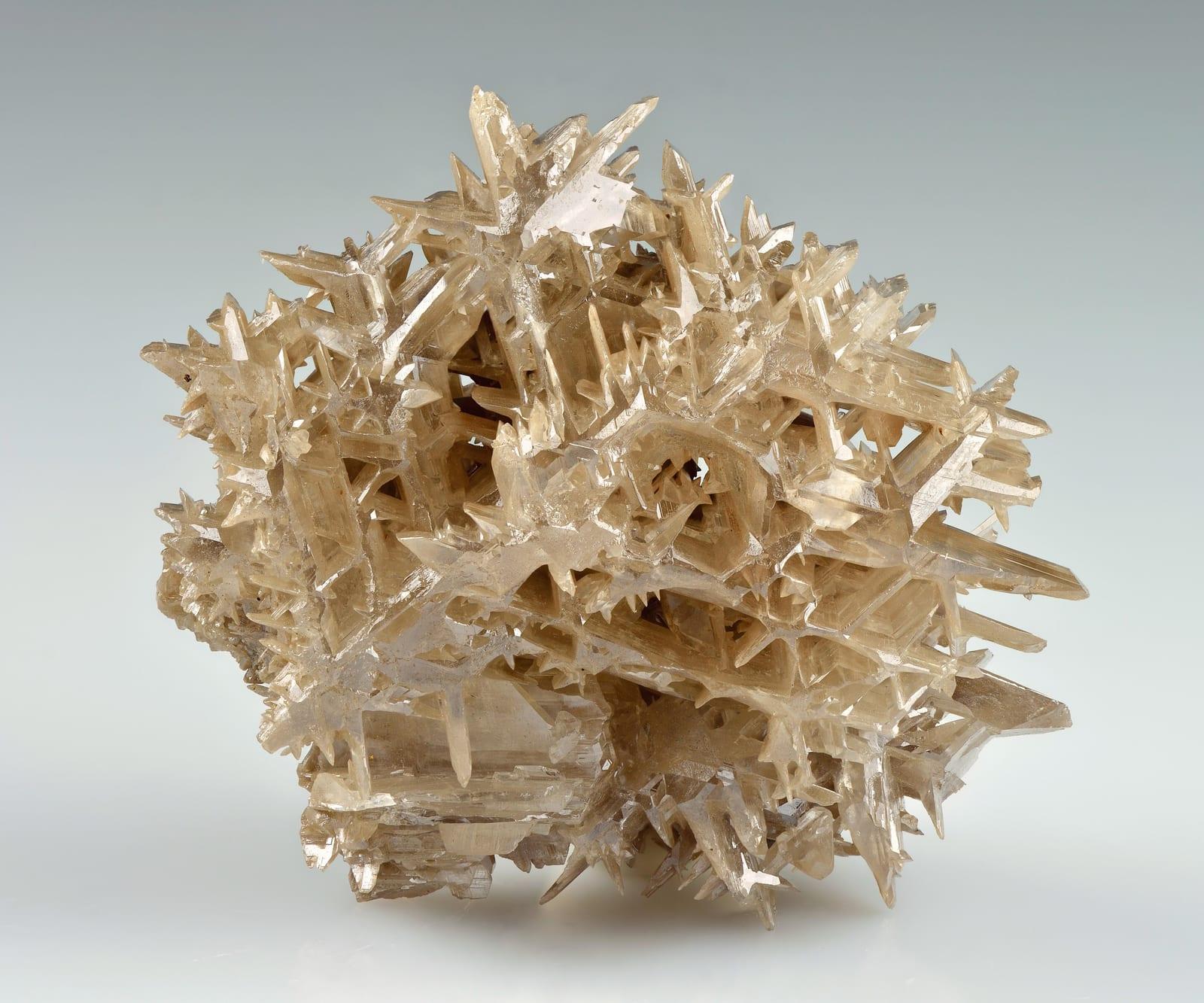
How to tell apart: Very similar botryoidal blue crusts, and they occur together. Hemimorphite is a silicate and does not fizz; smithsonite does in warm acid.
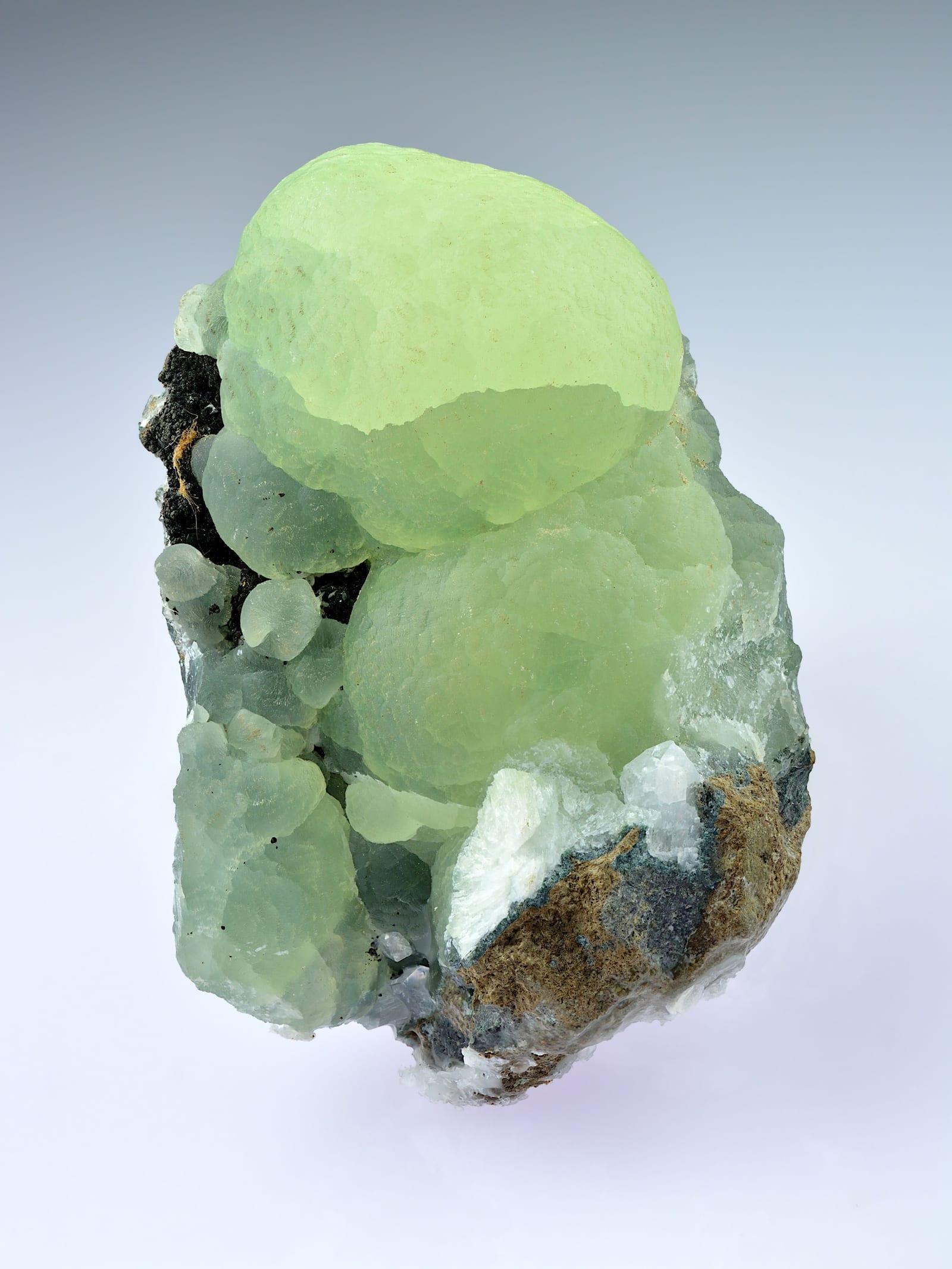
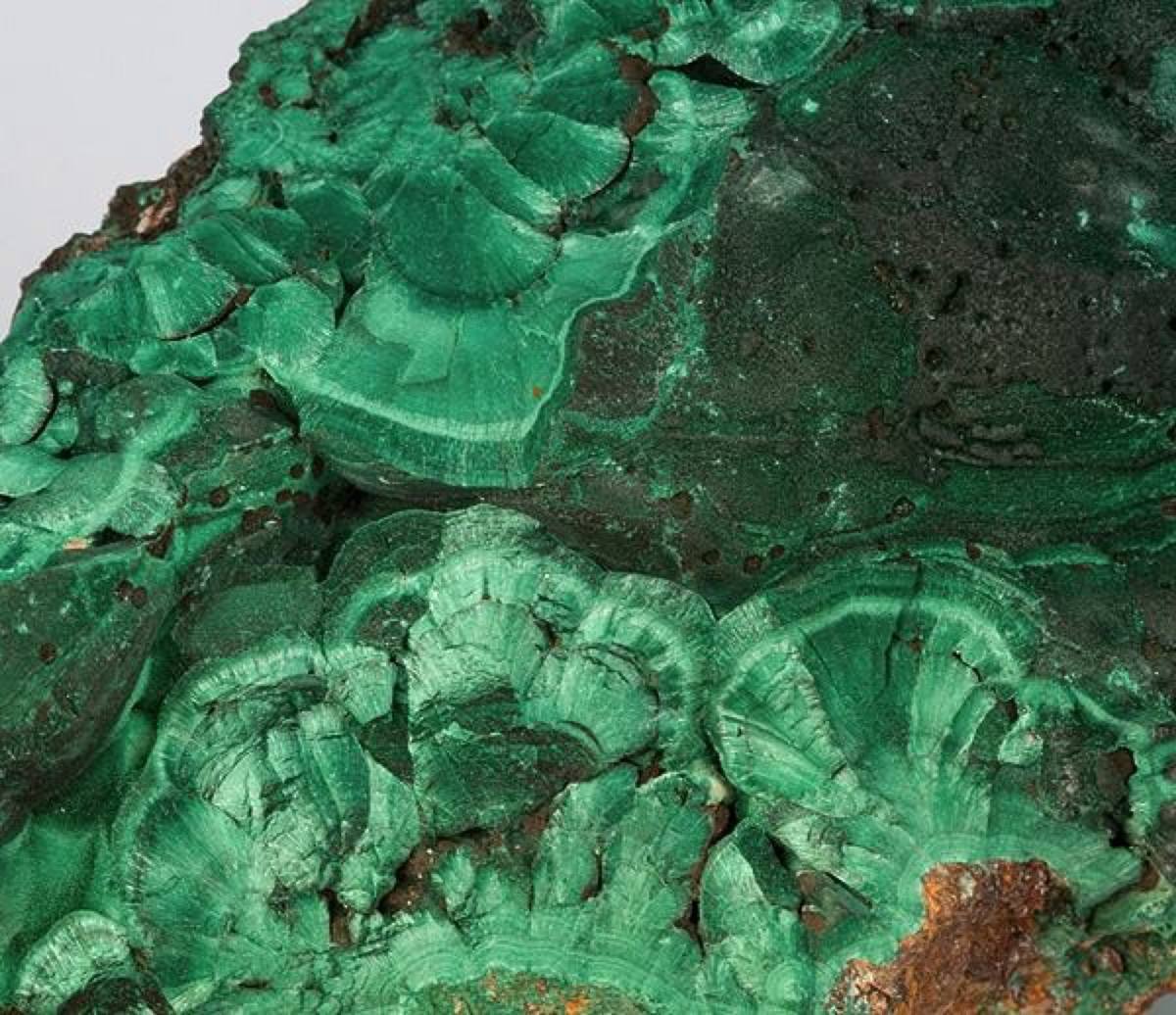
How to tell apart: Prehnite is greener, lighter, harder at 6 to 6.5 and does not react with acid.
Often found alongside smithsonite
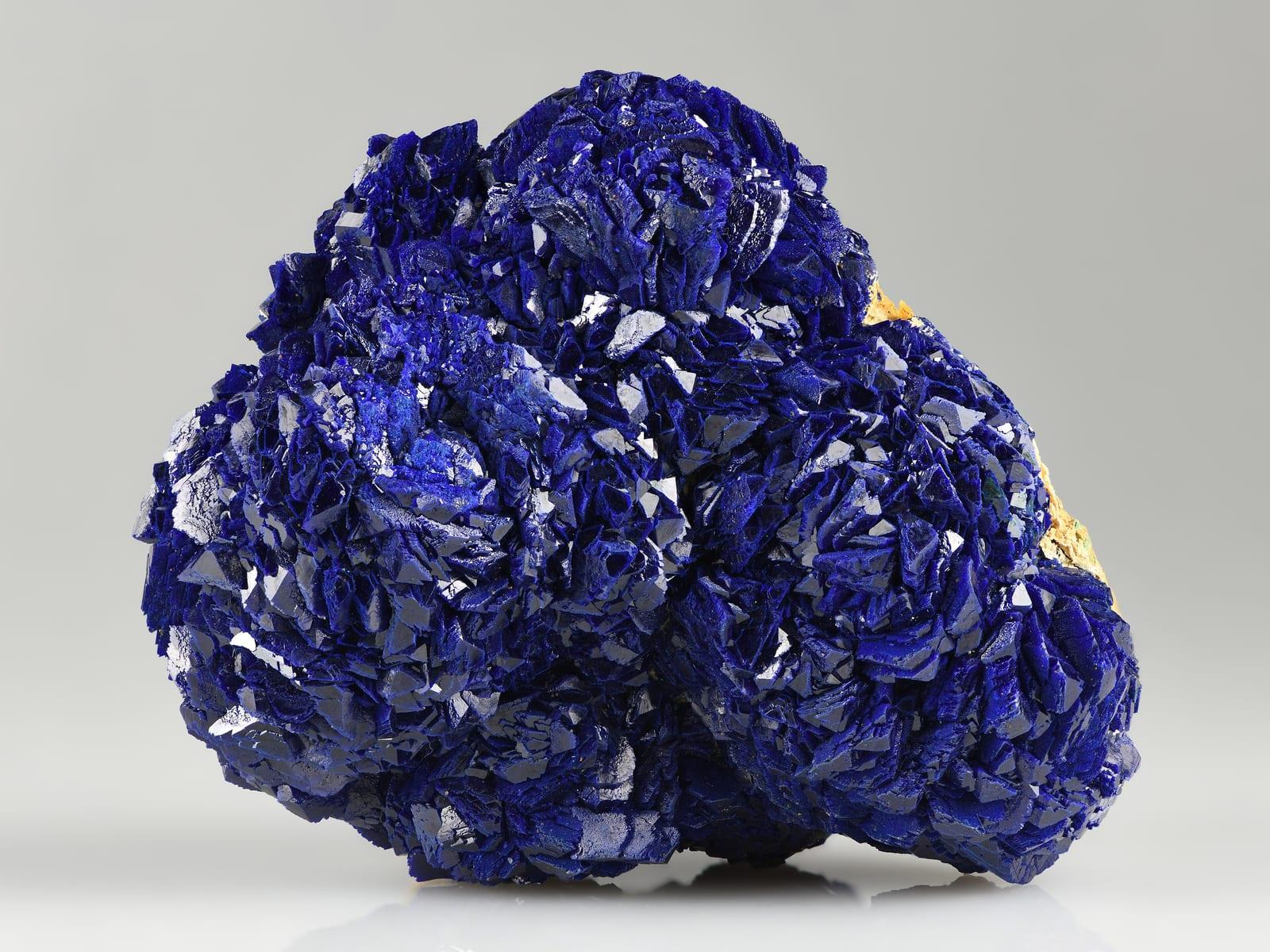
Minerals reported to co-occur with smithsonite. Spotting these in float or country rock is a strong cue you are in the right ground.
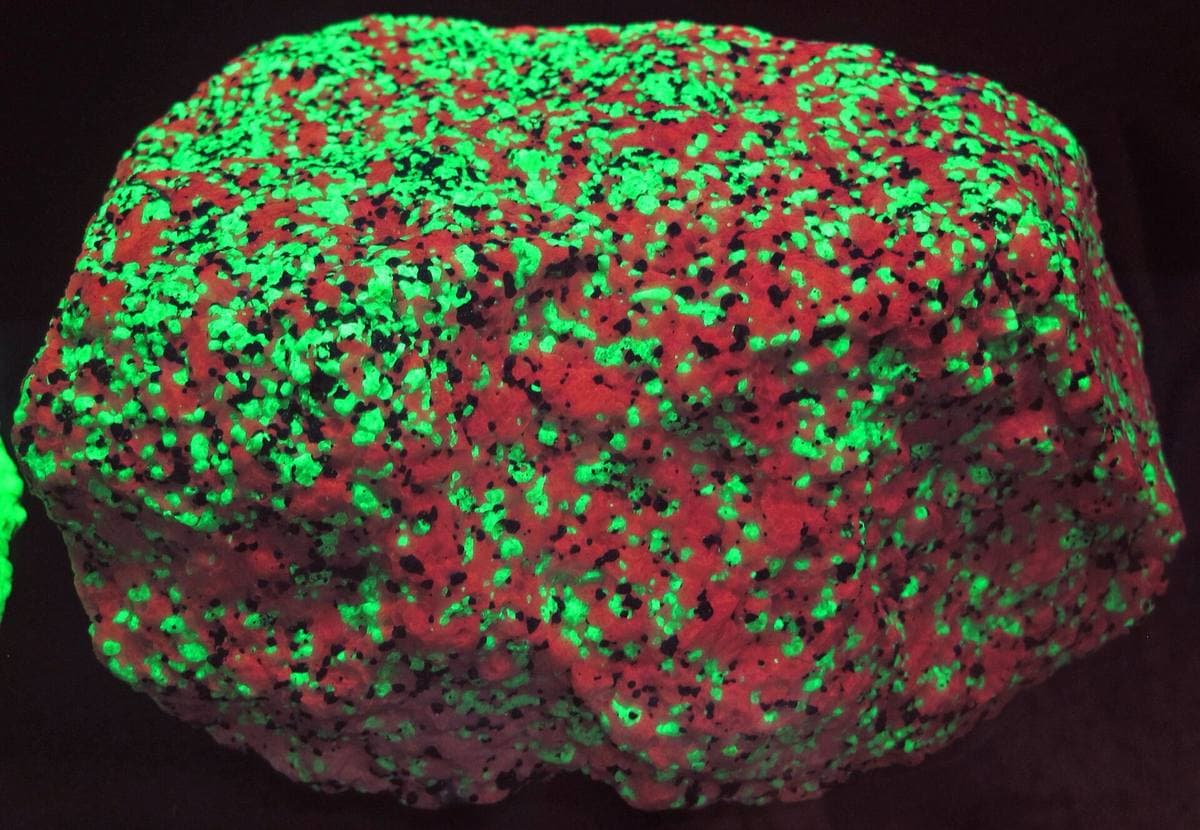
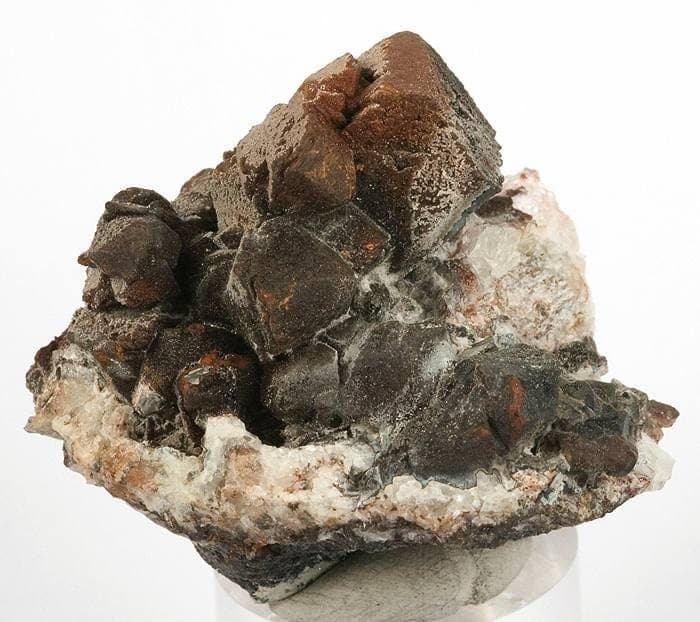
All properties
- Chemical formula
- ZnCO₃
- Mohs hardness
- 4-4.5
- Density
- 4.43 g/cm³
- Streak
- White
- Luster
- Vitreous, may be pearly
- Transparency
- Translucent to transparent
- Crystal system
- Trigonal
- Crystal habit
- Botryoidal
- Cleavage
- On {1011}, nearly perfect
- Fluorescence
- Gray pale yellow under LW UV
- Rarity
- Common
- Uses
- Collector, Ore
- Host rock
- A secondary mineral formed in the oxidized zone of zinc-bearing deposits and replacing adjacent carbonate rocks, where it may constitute an ore
Where rockhounds find smithsonite
36 mapped spotsClassic worldwide localities
- Friedensville, Lehigh Co., Pennsylvania, USA
- Joplin district, Jasper Co., Missouri, USA
- Rush Creek district, Marion Co., Arkansas, USA
- Leadville, Lake Co., Colorado, USA
- Laurium, Greece
- Tarnowitz and Beuthen, Poland
U.S. states with smithsonite
Each link opens a state-specific list of mapped rockhounding spots that produce smithsonite.
Field-hunting tip
Where it forms: A secondary mineral formed in the oxidized zone of zinc-bearing deposits and replacing adjacent carbonate rocks, where it may constitute an ore. If you start seeing hemimorphite, willemite, hydrozincite in float, you are in the right ground. Typical habit: botryoidal. Train your eye for that shape before scanning the outcrop. In the U.S., the densest reported localities are in Missouri, Wisconsin, Tennessee. Start trip planning there.
More smithsonite photos
Common questions
How do you identify smithsonite?+
Where is smithsonite found?+
Can I find smithsonite in the United States?+
What rocks look like smithsonite?+
What minerals are found with smithsonite?+
What kind of rock does smithsonite form in?+
What is smithsonite used for?+
Find smithsonite on the map
RockHoundR shows mapped rockhounding spots, access rules, and lets you log every find.

