Barite is widely recognized by its high density and distinctively perfect cleavage. It frequently forms striking, tabular crystals or rose-like clusters, and is a staple for collectors due to its diverse color range and global availability.
Spotting barite in the field
Field marks- 1
Surprisingly heavy for a pale, non-metallic mineral, which is the giveaway
- 2
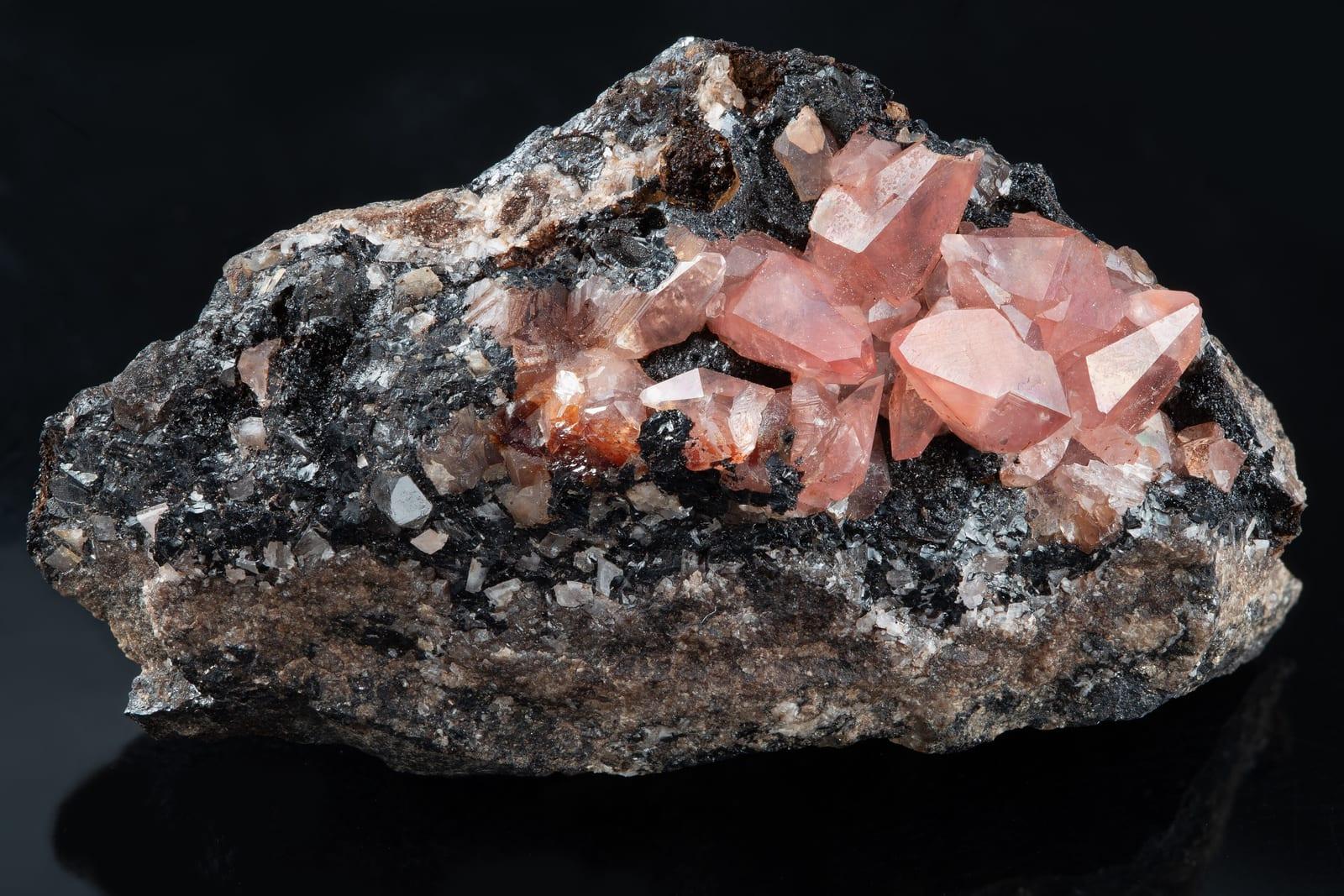
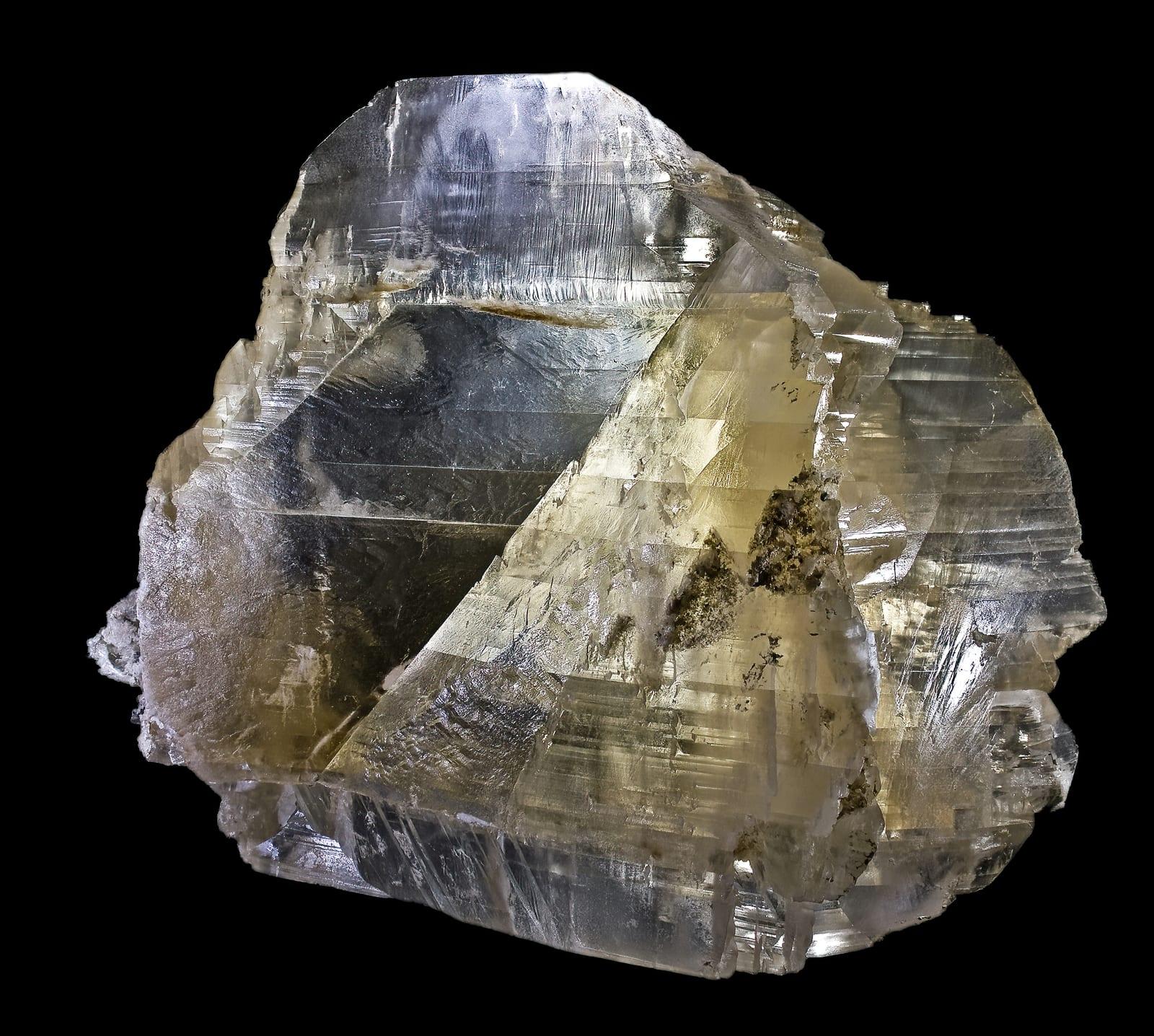
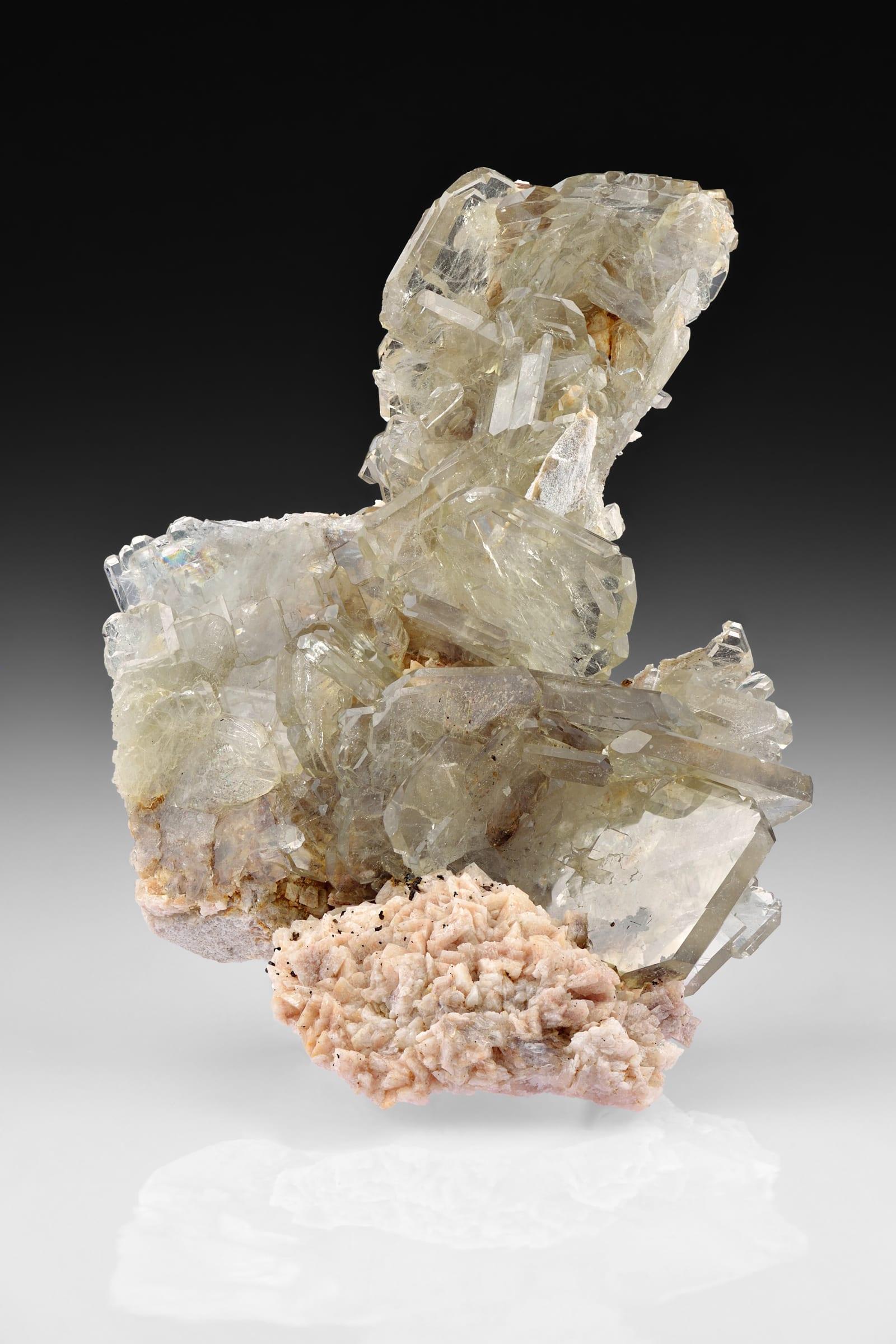
Tabular bladed crystals, often in rosettes
- 3
Soft at 3 to 3.5, does not fizz in acid
Pick it up and the weight tells you. Barite is barium sulfate and it is far denser than any pale mineral has a right to be, which is the whole reason it is mined for drilling mud. That heft plus softness plus no acid reaction is a complete identification. Barite roses, sand-included rosettes from Oklahoma, are the state rock there and form in sandstone near Noble. Colorado's Stoneham area produced fine blue crystals.
Straight answers
- Is it worth cutting?
- Too soft and too cleavable to cut. Collected as crystals and rosettes.
- What is it really worth?
- Low. Barite roses and sharp blue crystal groups are the collectible forms.
- Can you legally keep it?
- Oklahoma barite roses occur largely on private land, with some public access sites. Ordinary rules elsewhere.
Where it is worth going
- Barite rose countryAround Noble, Cleveland County, Oklahoma
The Oklahoma state rock. Sand-included rosettes weathering out of sandstone, mostly on private land.
Often confused with
Barite vs. its common look-alikes, and how to tell them apart in the field.
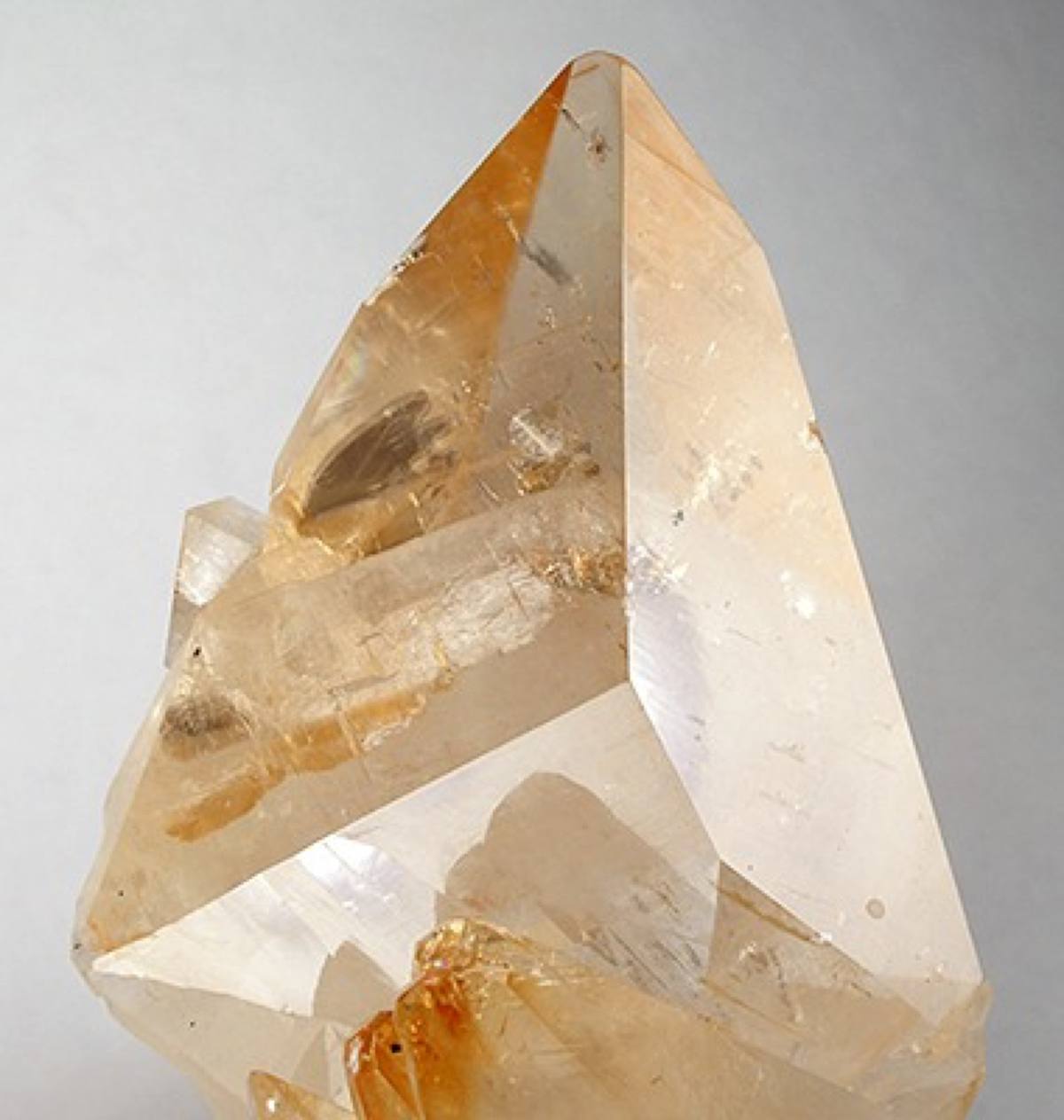
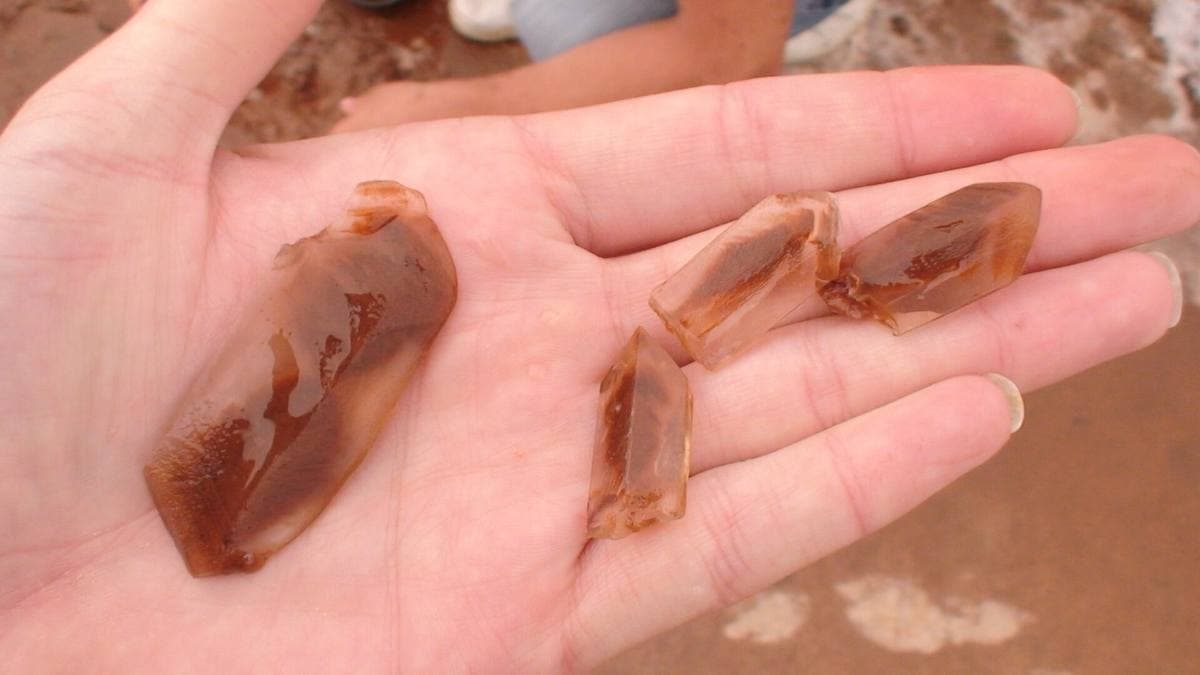
Often found alongside barite
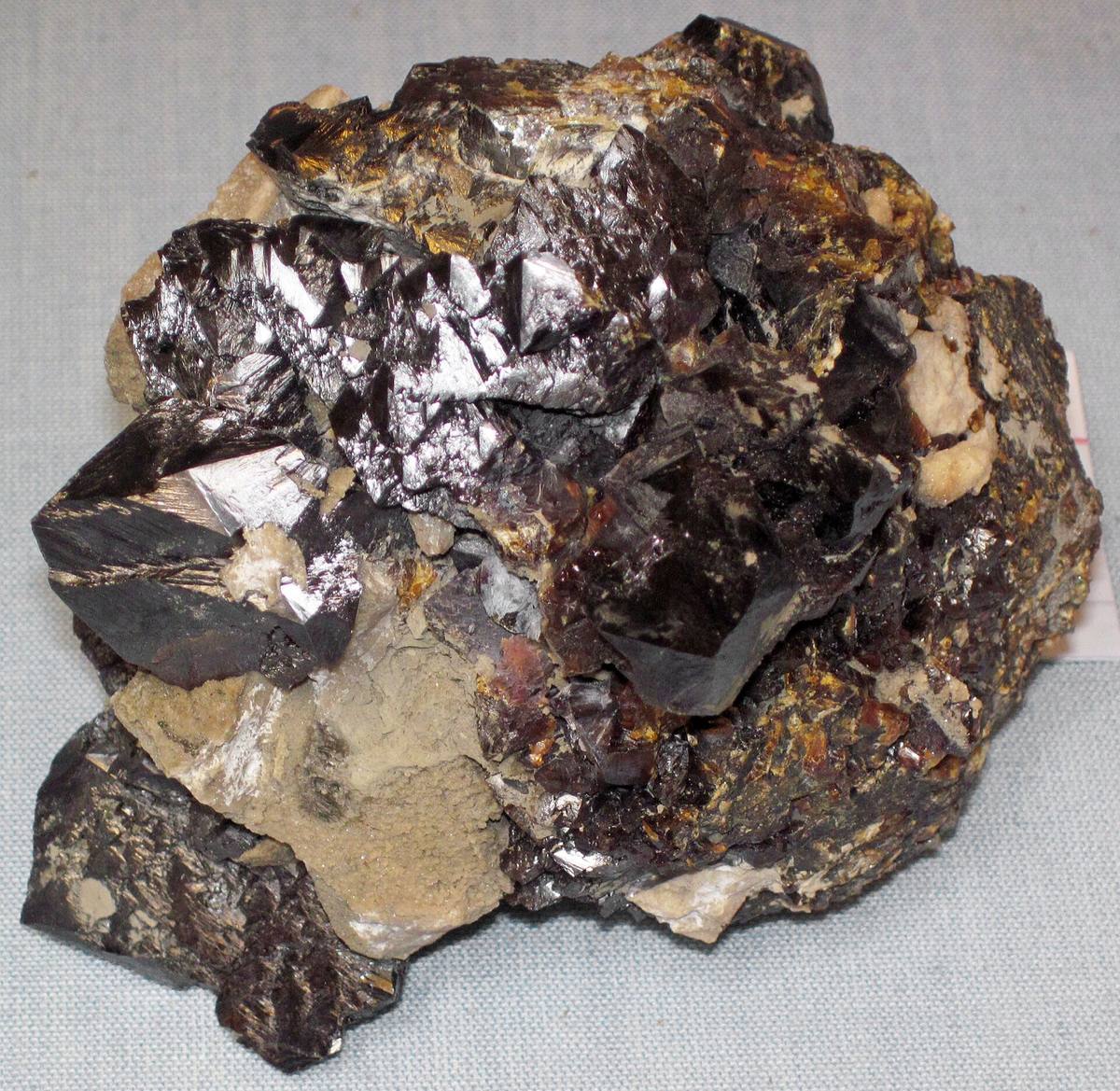
Minerals reported to co-occur with barite. Spotting these in float or country rock is a strong cue you are in the right ground.
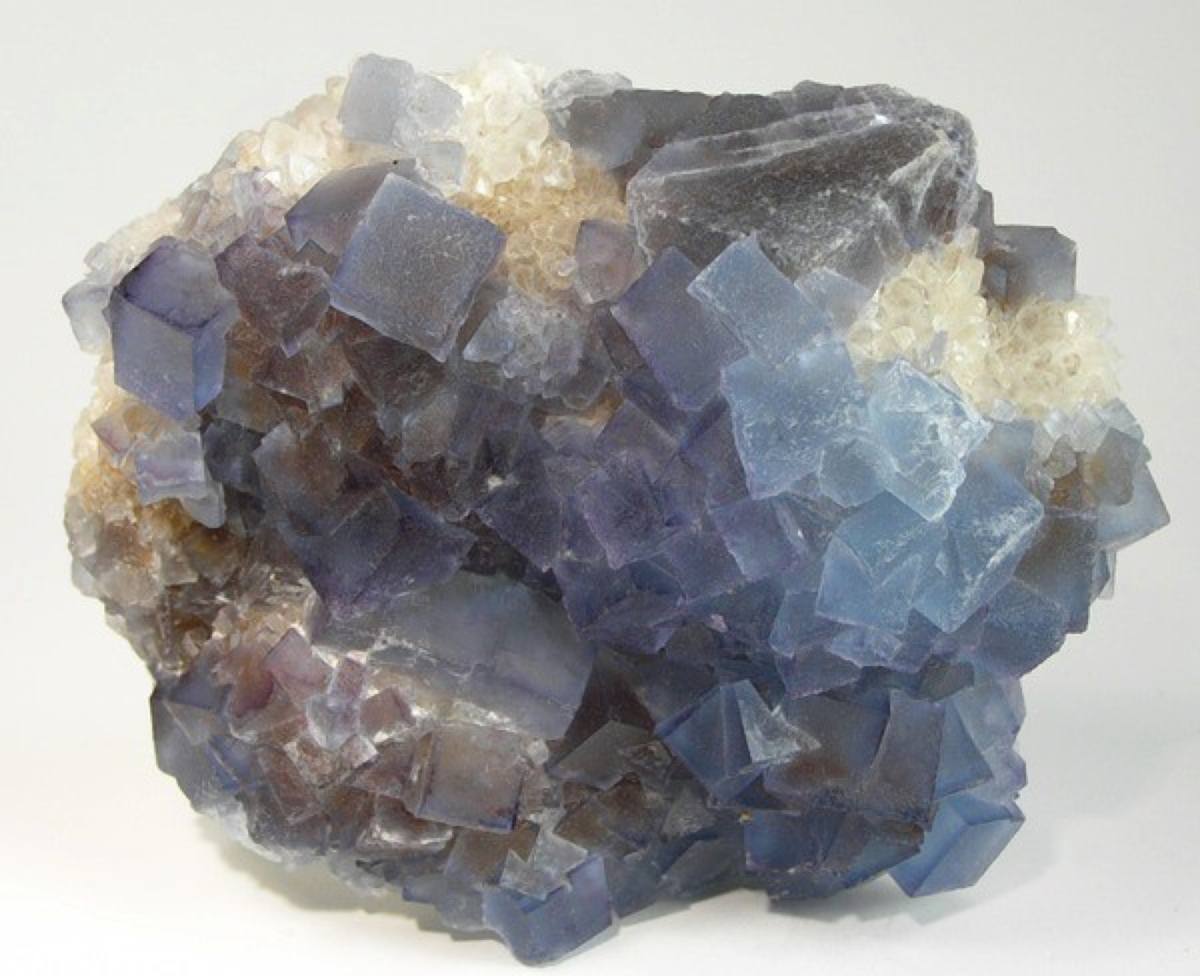
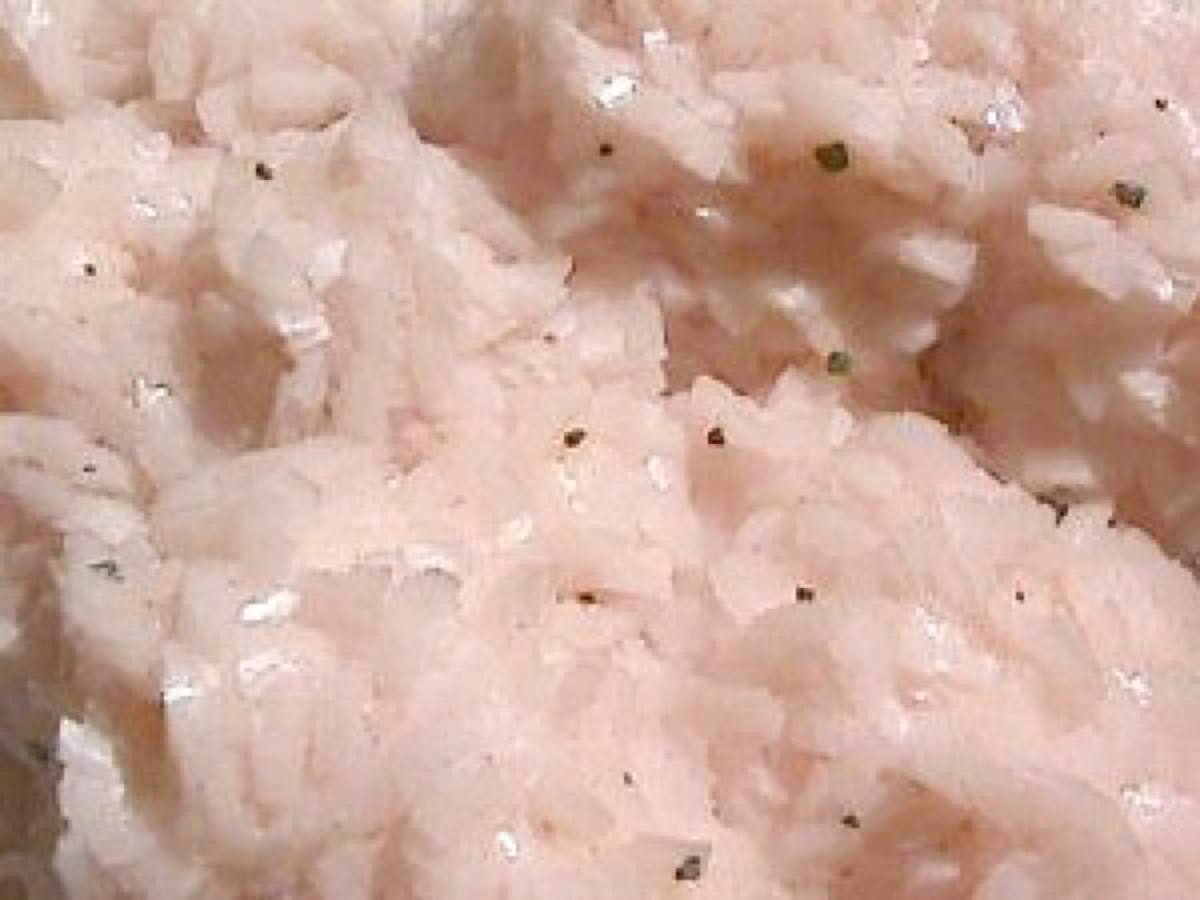
All properties
- Chemical formula
- BaSO₄
- Mohs hardness
- 3-3.5
- Density
- 4.50 g/cm³
- Streak
- White
- Luster
- Vitreous to resinous, may be pearly
- Transparency
- Transparent to translucent
- Crystal system
- Orthorhombic
- Crystal habit
- Tabular crystals, bladed, crested, or massive
- Cleavage
- {001}, perfect; {210}, less perfect; {010}, imperfect
- Fluorescence
- Often fluorescent white or yellow under UV
- Rarity
- Common
- Uses
- Industrial, Collector
- Host rock
- A gangue mineral in low-temperature hydrothermal veins; in residual deposits from weathered barite-bearing limestones; an accessory mineral in igneous rocks; in carbonatites
Where rockhounds find barite
107 mapped spotsClassic worldwide localities
- Book Cliffs, near Grand Junction, Mesa Co., at Stoneham, Weld Co., in the Bulldog Mountain mine, Creede District, Mineral Co., Colorado, USA
- Elk Creek and Box Elder Creek, Meade and Pennington Cos., South Dakota, USA
- Palos Verdes, Los Angeles Co., California, USA
- Magma mine, Superior, Gila Co., Arizona, USA
- Alston Moor, Frizington, Cleator Moor, in Cumbria, England
- Baia Sprie (Felsőbánya) and Cavnic (Kapnikbánya), Romania
U.S. states with barite
Each link opens a state-specific list of mapped rockhounding spots that produce barite.
- Utah22 spots
- Missouri14 spots
- Oklahoma7 spots
- New York6 spots
- Wisconsin6 spots
- Indiana5 spots
- Kentucky5 spots
- Tennessee5 spots
Field-hunting tip
Where it forms: A gangue mineral in low-temperature hydrothermal veins; in residual deposits from weathered barite-bearing limestones; an accessory mineral in igneous rocks; in carbonatites. If you start seeing fluorite, calcite, dolomite in float, you are in the right ground. Typical habit: tabular crystals, bladed, crested, or massive. Train your eye for that shape before scanning the outcrop. In the U.S., the densest reported localities are in Utah, Missouri, Oklahoma. Start trip planning there.
More barite photos
Common questions
How do you identify barite?+
Where is barite found?+
Can I find barite in the United States?+
What rocks look like barite?+
What minerals are found with barite?+
What kind of rock does barite form in?+
What is barite used for?+
Find barite on the map
RockHoundR shows mapped rockhounding spots, access rules, and lets you log every find.