
Bruneau Jasper is a highly sought-after variety of orbicular jasper famous for its intricate, concentric patterns in rich shades of cream, red, and brown. It is found exclusively in the remote Bruneau Canyon of Idaho, where it formed in volcanic rhyolite cavities. Lapidary artists prize it for its excellent polish and striking, complex designs.
Spotting bruneau jasper in the field
Field marks- 1
Concentric orbs in cream, brick red and deep brown with dark outlines
- 2
Orbs sit in a solid brown or reddish ground rather than in bands
- 3
Extremely fine grained, glassy under polish, and heavy for its size
Bruneau came from a single deposit in Bruneau Canyon in Owyhee County, Idaho, on privately controlled ground, and it has been effectively exhausted for years. It is included here because it is one of the most collected jaspers in the world and because the name is used loosely, so a rockhound needs to know what the real thing looks like. Real Bruneau has crisp, dark-rimmed orbs against a warm ground and a polish that looks wet even when dry.
Straight answers
- Is it worth cutting?
- Superb cab material, and worth cutting thin to get the most faces out of it given the price.
- What is it really worth?
- Expensive and rising, because supply is a fixed pool of old rough. Cheap Bruneau is a warning sign, not a bargain.
- Can you legally keep it?
- Not open to collecting. Anything on the market is old stock or from private arrangement.
Often confused with
Bruneau Jasper vs. its common look-alikes, and how to tell them apart in the field.
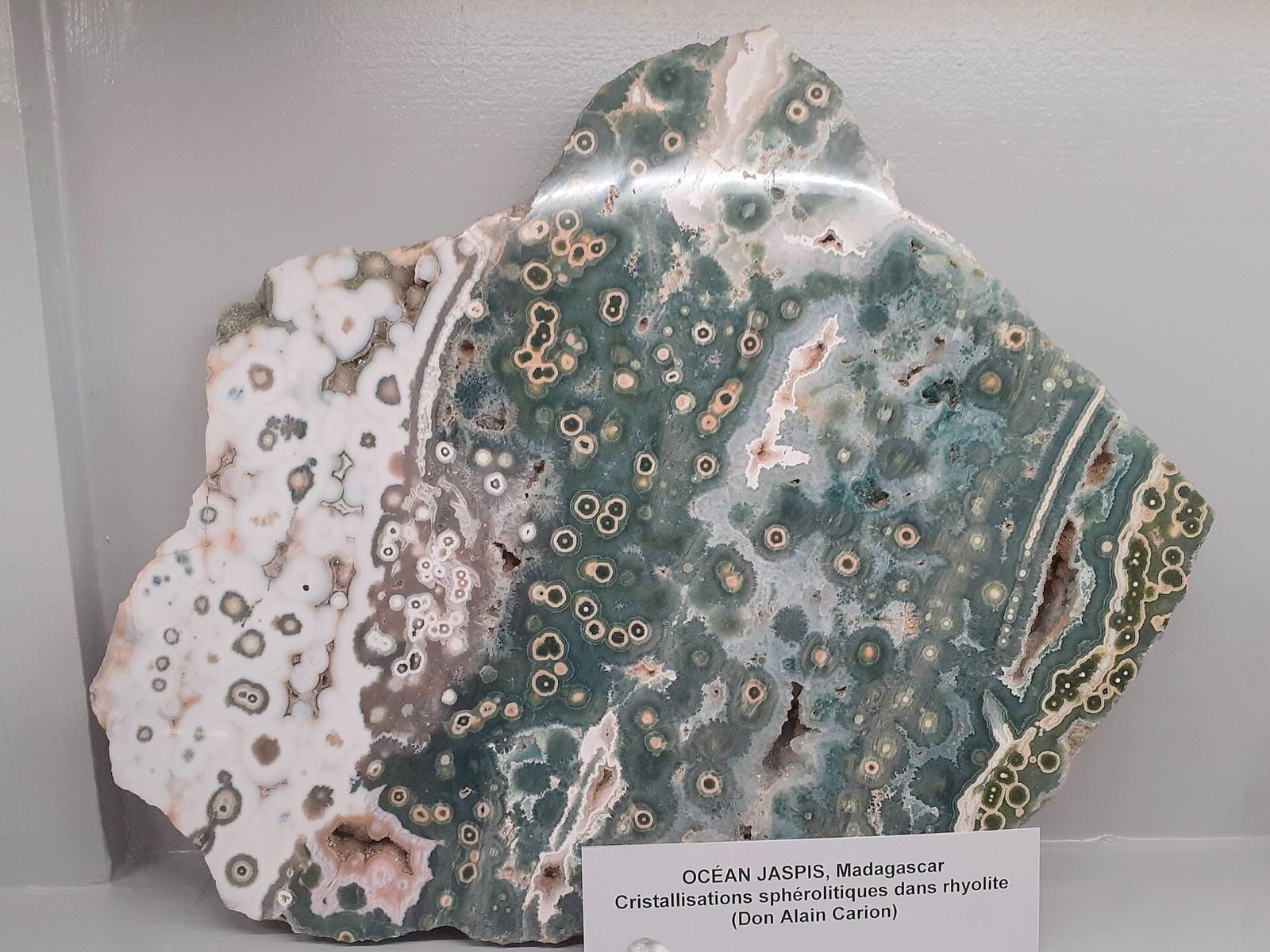
How to tell apart: Orbicular jasper is the general class; Bruneau is one famous member. Ocean jasper from Madagascar has brighter, more varied orb colors and often visible druzy pockets.
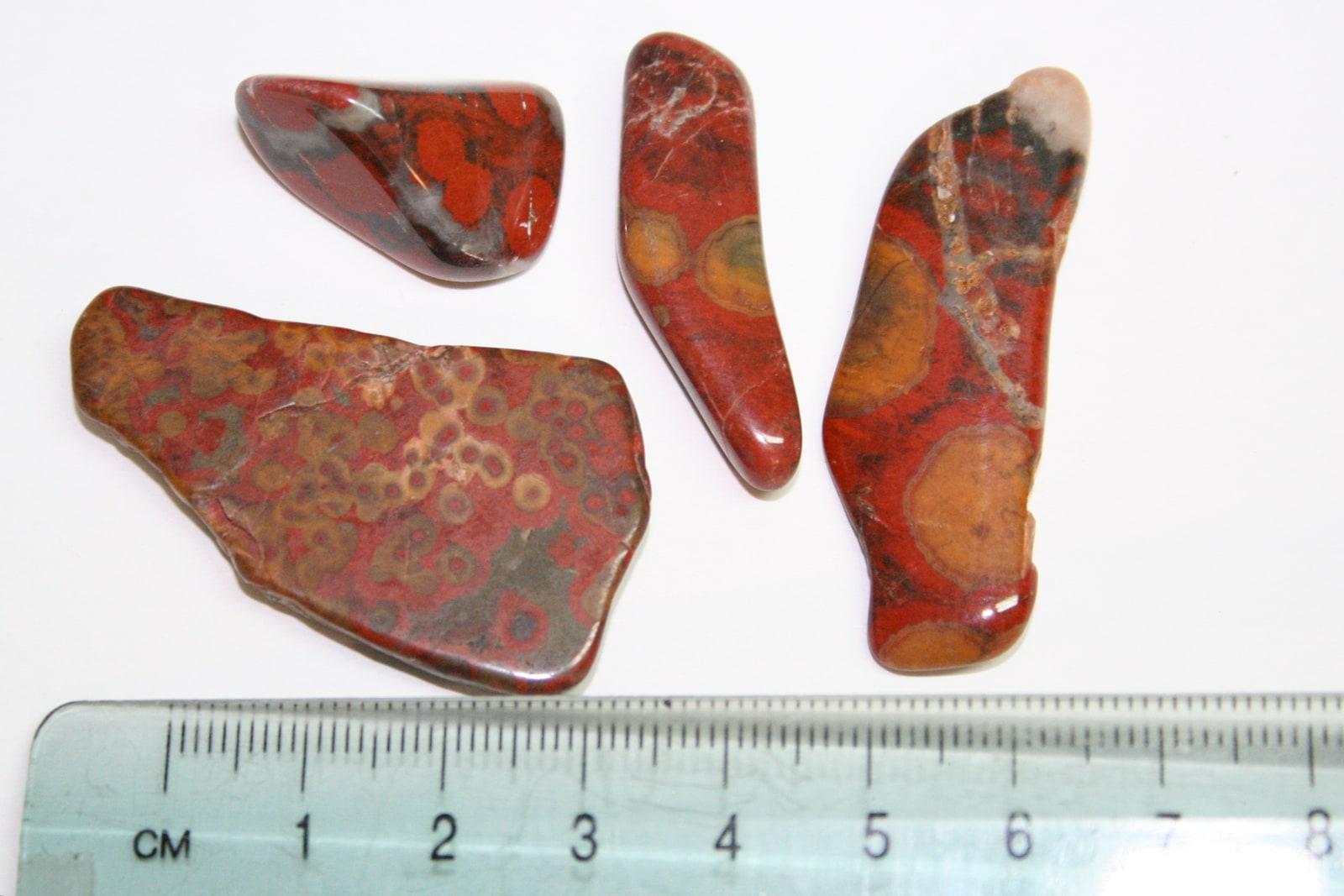
How to tell apart: Poppy has scattered red flower-like blotches on a lighter ground, without the tight dark rims of Bruneau.
Often found alongside bruneau jasper
Minerals reported to co-occur with bruneau jasper. Spotting these in float or country rock is a strong cue you are in the right ground.
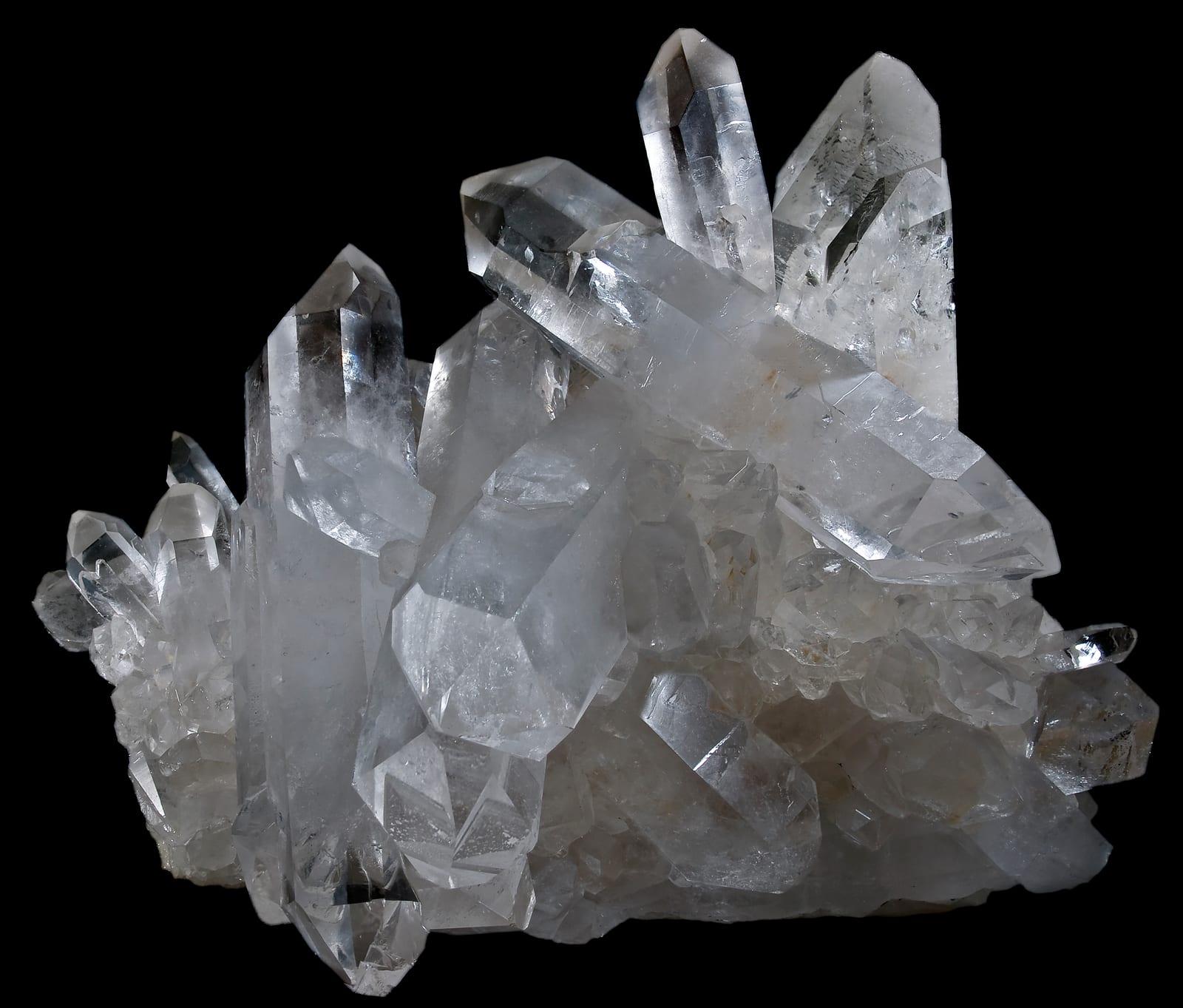
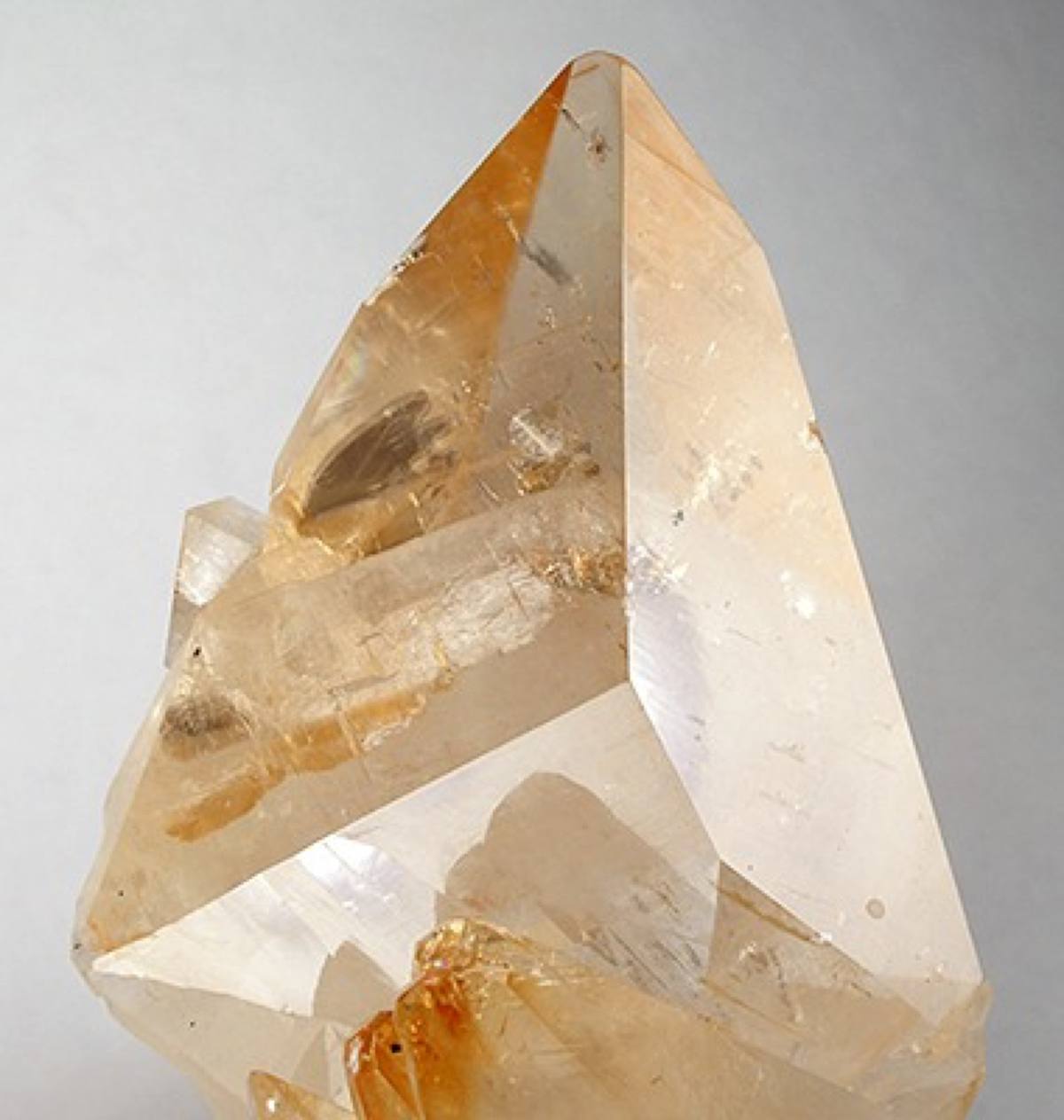
All properties
- Chemical formula
- SiO₂
- Mohs hardness
- 6.5-7
- Density
- 2.58-2.64 g/cm³
- Streak
- White
- Luster
- Waxy
- Transparency
- Opaque
- Crystal system
- Trigonal
- Crystal habit
- Massive
- Cleavage
- None
- Rarity
- Uncommon
- Uses
- Lapidary, Collector, Decorative
- Host rock
- volcanic rhyolite
Where rockhounds find bruneau jasper
Classic worldwide localities
- Owyhee County, Idaho, USA
- Bruneau Canyon, USA
Field-hunting tip
Where it forms: volcanic rhyolite. If you start seeing quartz, calcite, chalcedony in float, you are in the right ground. Typical habit: massive. Train your eye for that shape before scanning the outcrop.
Common questions
How do you identify bruneau jasper?+
Where is bruneau jasper found?+
What rocks look like bruneau jasper?+
What minerals are found with bruneau jasper?+
What kind of rock does bruneau jasper form in?+
What is bruneau jasper used for?+
Find bruneau jasper on the map
RockHoundR shows mapped rockhounding spots, access rules, and lets you log every find.

