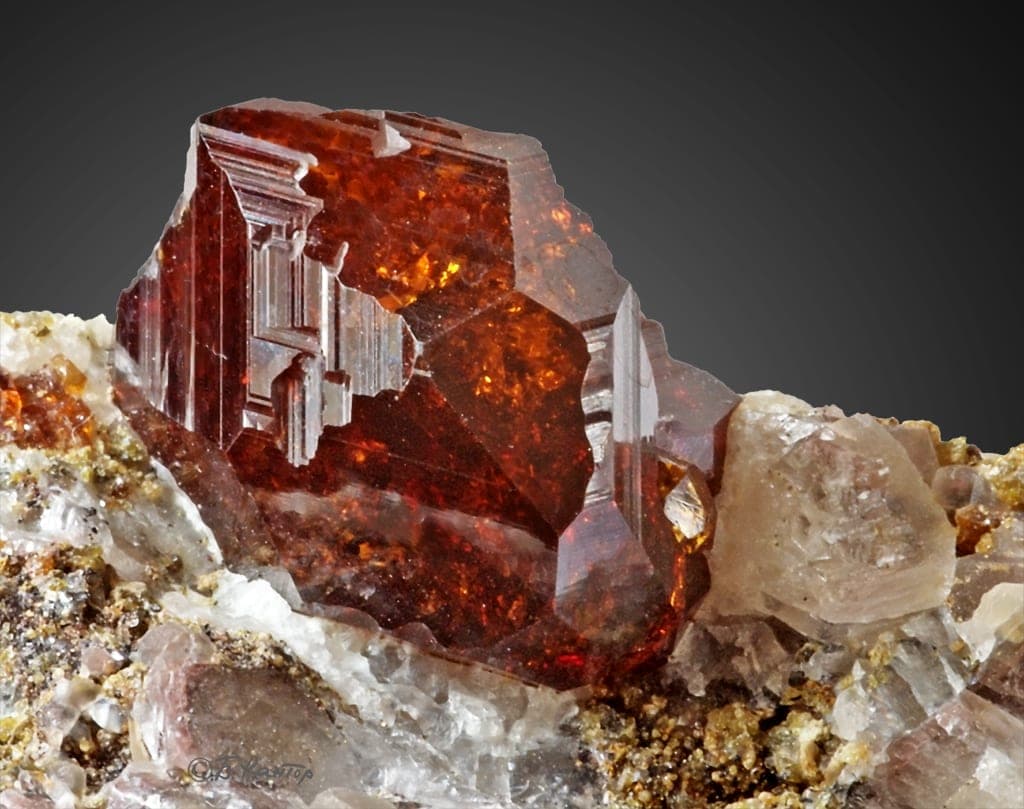
Datolite is a silicate mineral known for its variety of colors and often complex, multi-faceted crystal growth. It is highly prized by collectors for its strong fluorescence under ultraviolet light and its ability to be polished for lapidary work.
Spotting datolite in the field
Field marks- 1
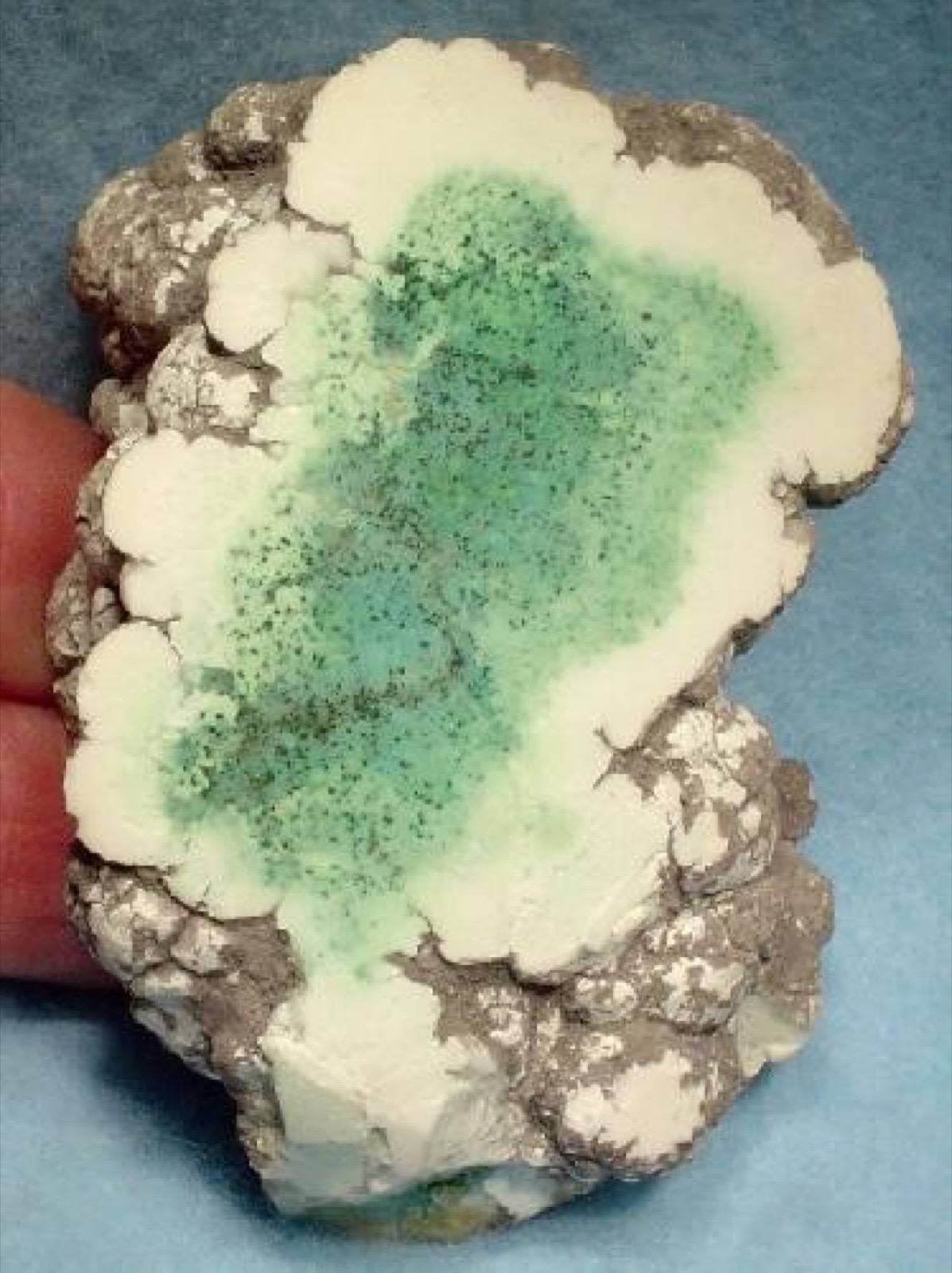
Dense porcelain-like nodules, white or tinted, with a fine sugary texture inside
- 2
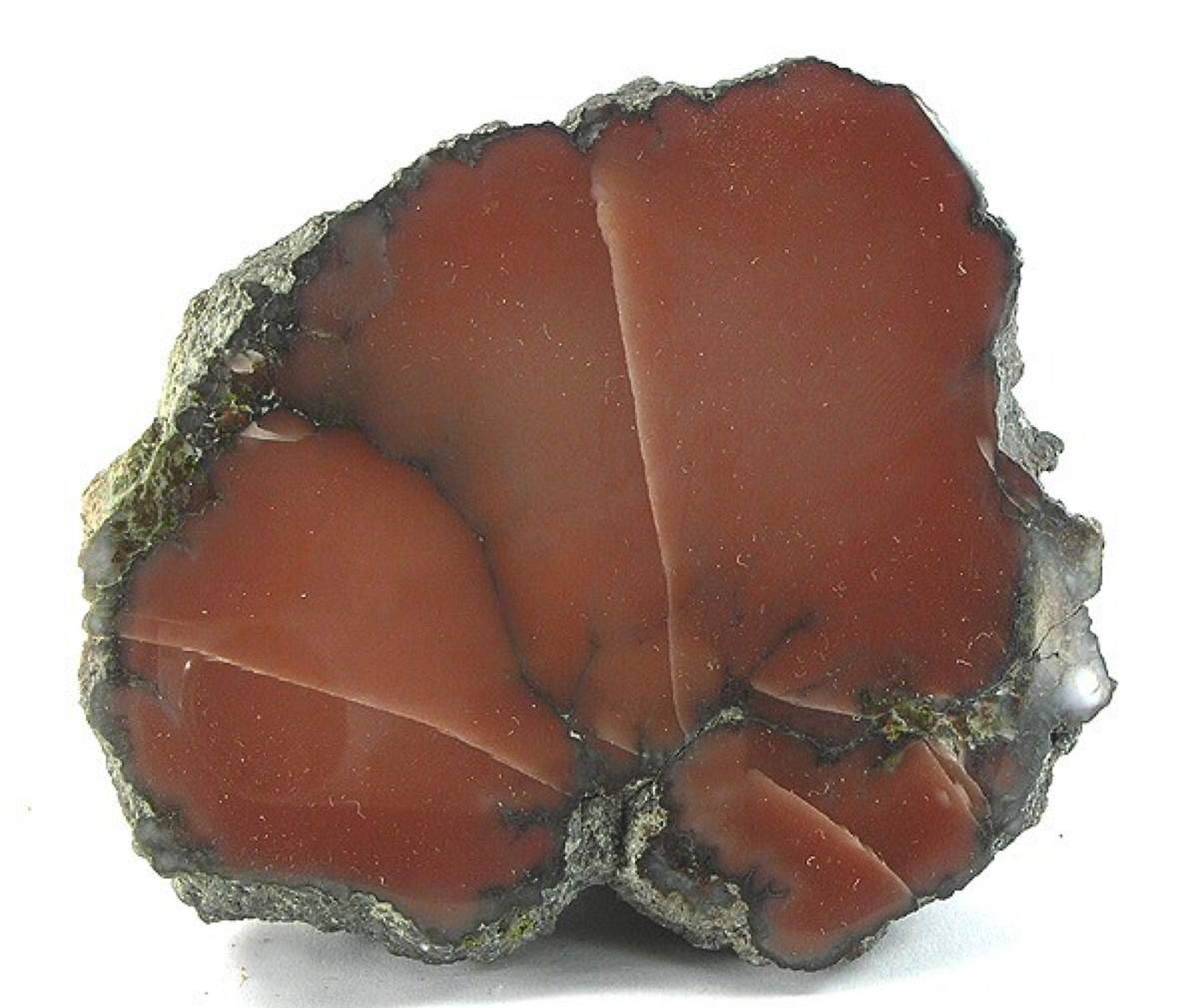
Michigan nodules often carry copper inclusions that give pink, red or orange coloring
- 3
Hardness 5 to 5.5, with a glassy to dull luster
Datolite is a specialty of the Keweenaw copper district in Michigan, where it formed as nodules in the basalt and often trapped native copper inside, producing pink, salmon and red coloring that collectors chase by locality. From the outside a datolite nodule is a plain white or grey lump in dark rock, so the material is found by working known mine dumps rather than by eye. Elsewhere it forms glassy crystals in traprock cavities.
Straight answers
- Is it worth cutting?
- Michigan copper-included datolite cabs beautifully and is highly collected by mine locality. Cut a window first, since the exterior tells you nothing about the color inside.
- What is it really worth?
- Moderate to high for Michigan copper datolite with strong color, and locality provenance genuinely affects price there.
- Can you legally keep it?
- Keweenaw mine dumps are private property. Fee-dig operations at several historic mines are the legal route.
Where it is worth going
- Keweenaw copper districtHoughton and Keweenaw counties, Michigan
Copper-included datolite nodules from historic mine dumps. Access through commercial fee digs.
Often confused with
Datolite vs. its common look-alikes, and how to tell them apart in the field.
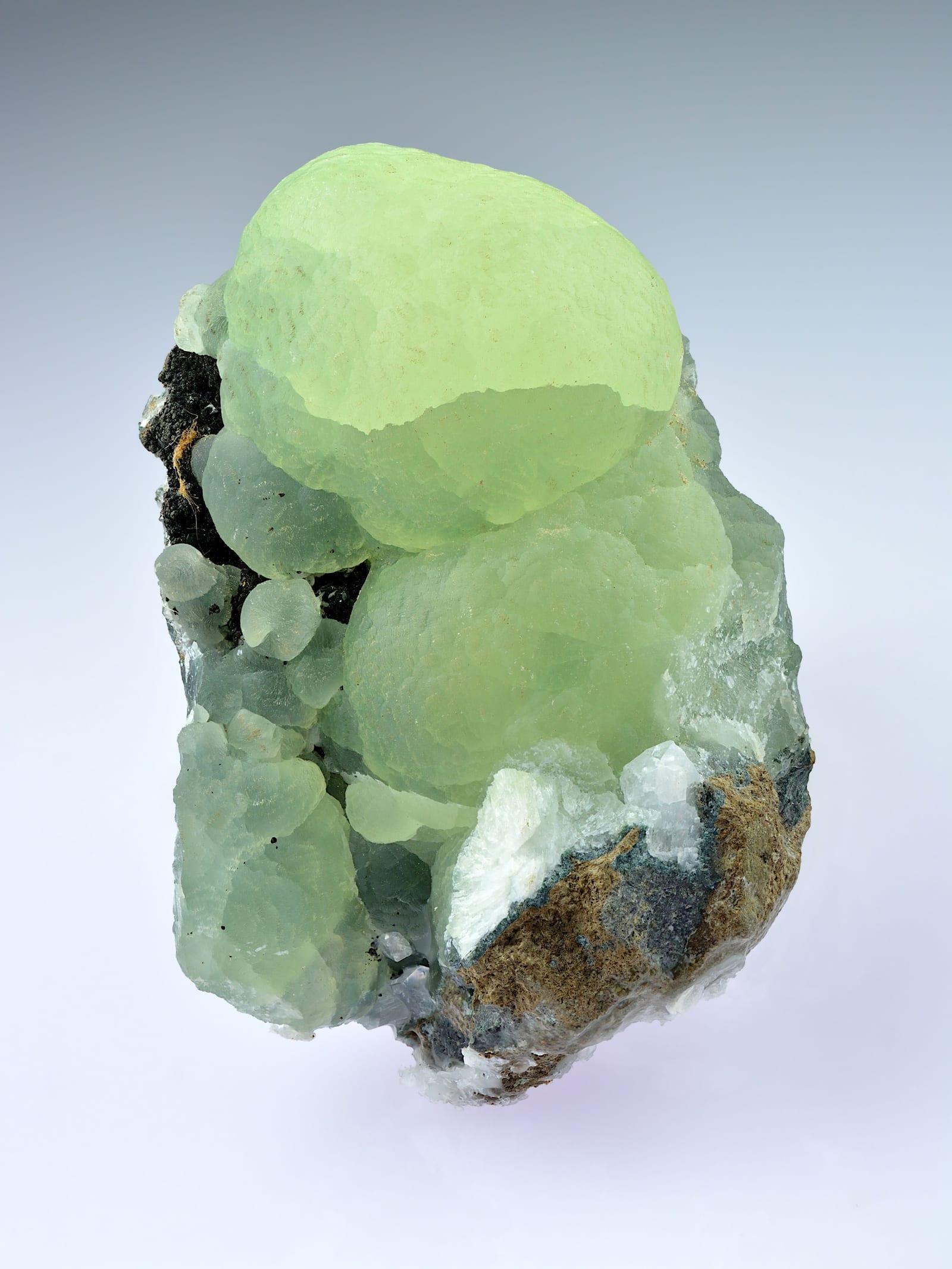
Often found alongside datolite
Minerals reported to co-occur with datolite. Spotting these in float or country rock is a strong cue you are in the right ground.
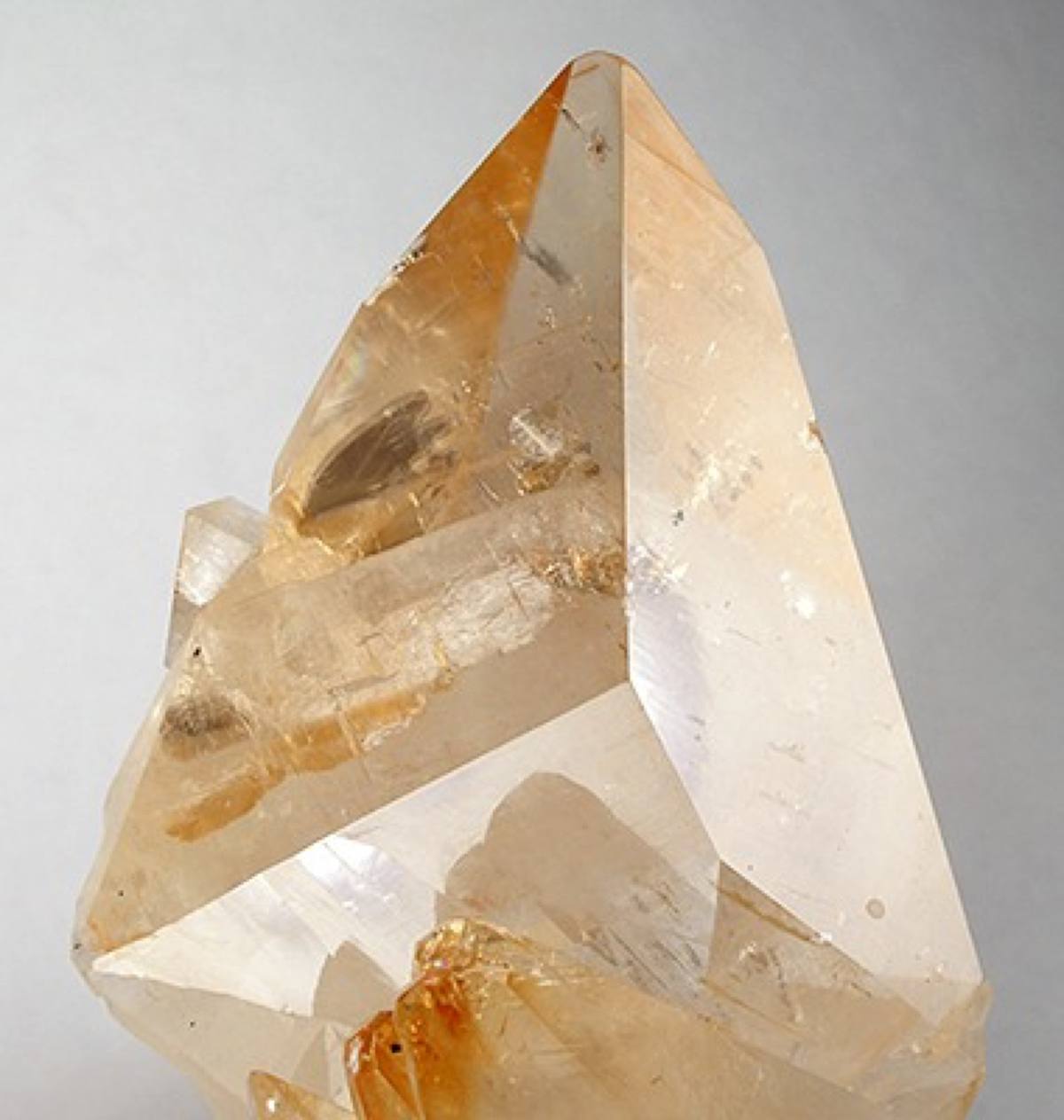
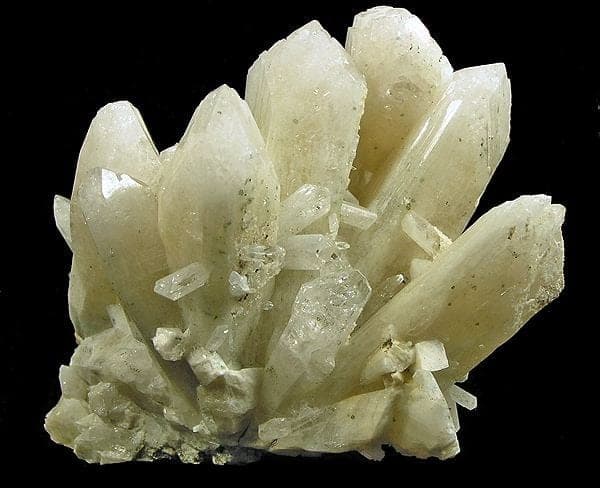
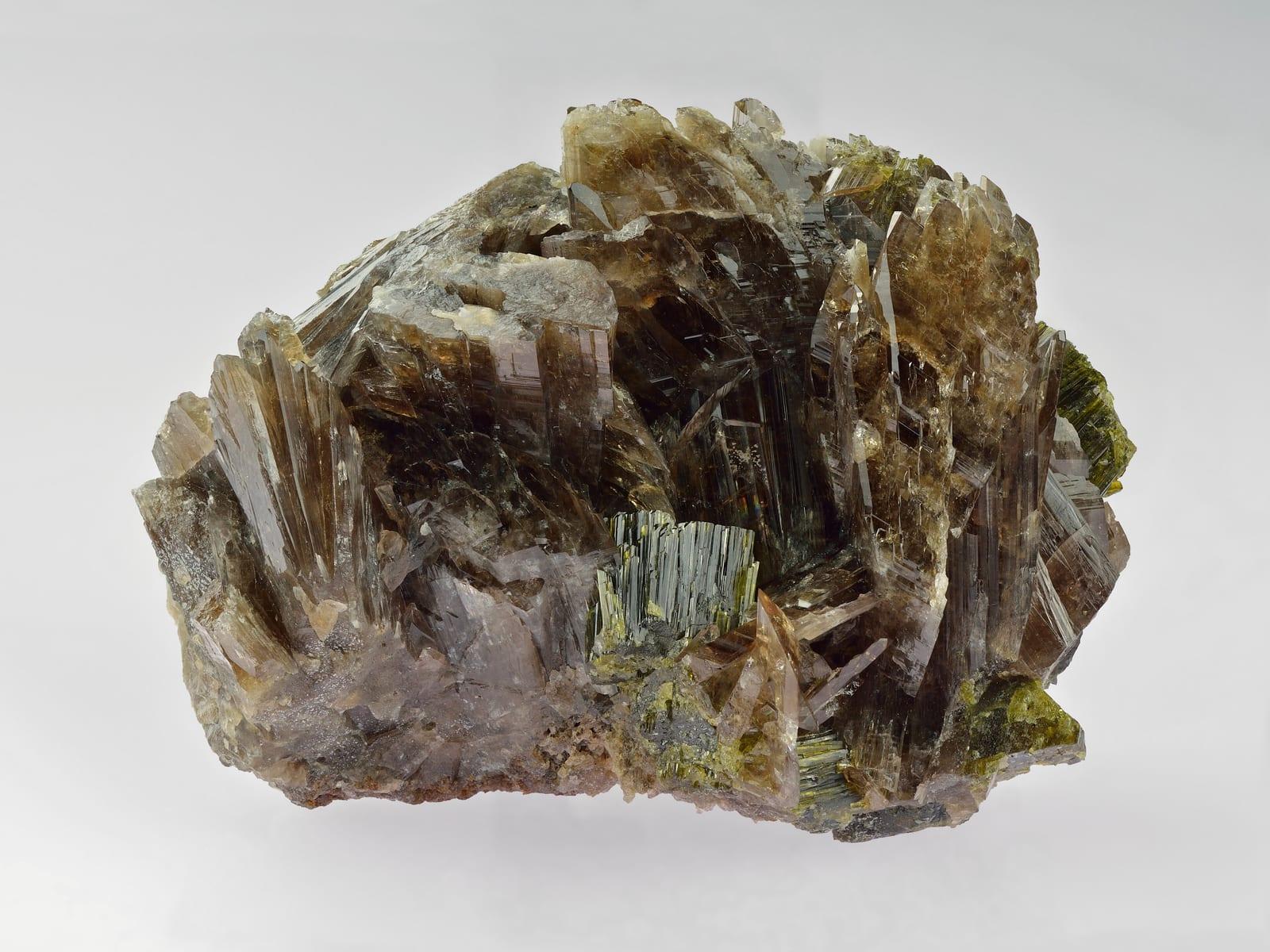
All properties
- Chemical formula
- CaBSiO₄(OH)
- Mohs hardness
- 5-5.5
- Density
- 2.96-3.00 g/cm³
- Streak
- White
- Luster
- Vitreous, rarely subresinous on fracture surface
- Transparency
- Transparent to translucent, rarely opaque
- Crystal system
- Monoclinic
- Crystal habit
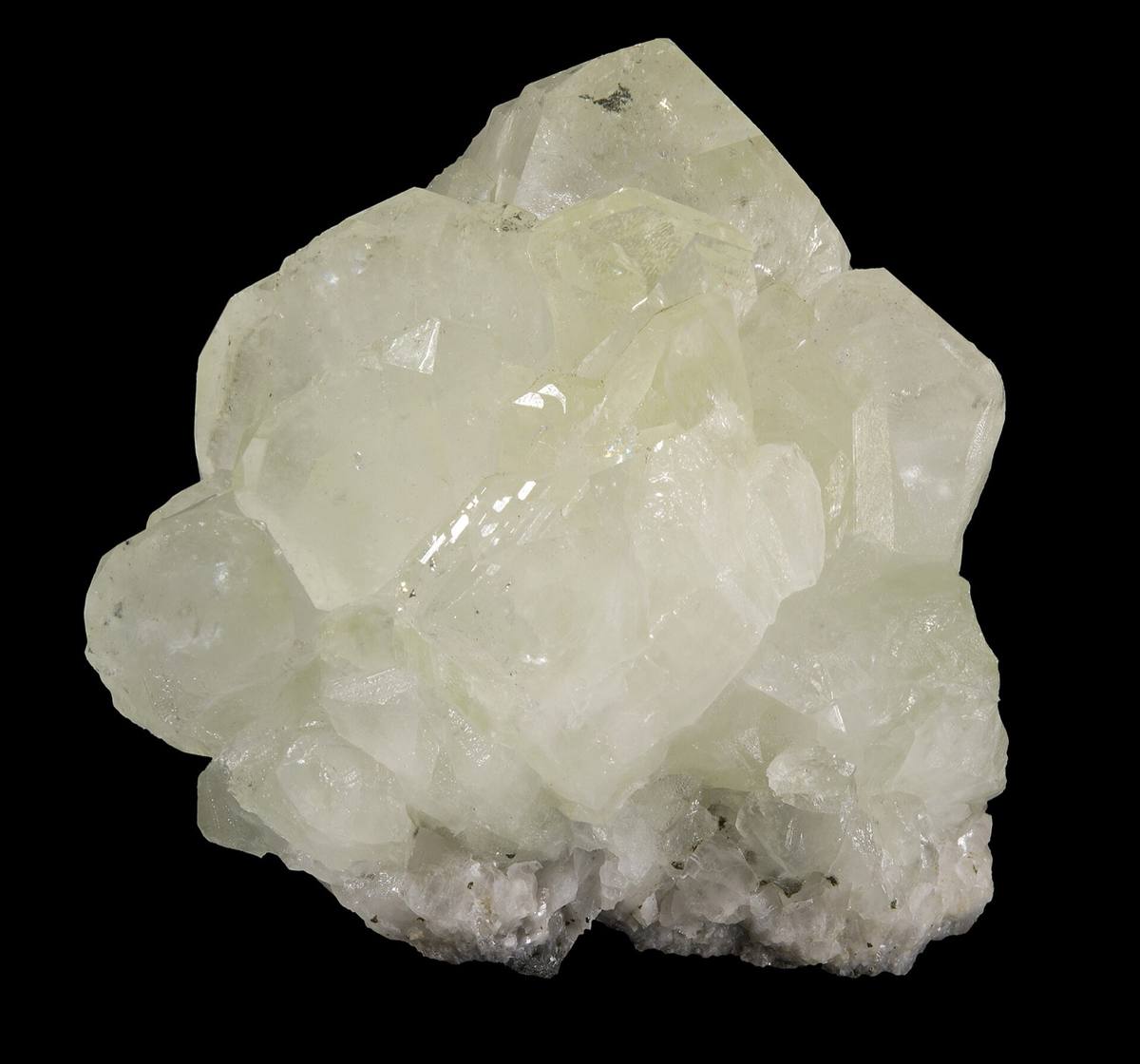
- Prismatic crystals, massive, botryoidal, granular
- Cleavage
- None
- Rarity
- Common
- Uses
- Collector, Lapidary
- Host rock
- A secondary mineral in mafic igneous rocks; in geodes in tuffs; in skarns in limestones; in serpentinites and hornblende schists; from some ore veins
Where rockhounds find datolite
23 mapped spotsClassic worldwide localities
- Lane quarry, Westfield, Hampden Co., Massachusetts, USA
- Roncari quarry, East Granby, Hartford Co., Connecticut, USA
- Bergen Hill, Hudson Co., Great Notch, Essex Co., and at Paterson and Prospect Park, Passaic Co., New Jersey, USA
- Goose Creek quarry, near Leesburg, Loudoun Co., Virginia, USA
- Arendal, and north of Hardangerfjiord, Norway
- St. Andreasberg, Harz Mountains, Germany
U.S. states with datolite
Each link opens a state-specific list of mapped rockhounding spots that produce datolite.
Field-hunting tip
Where it forms: A secondary mineral in mafic igneous rocks; in geodes in tuffs; in skarns in limestones; in serpentinites and hornblende schists; from some ore veins. If you start seeing calcite, prehnite, zeolites in float, you are in the right ground. Typical habit: prismatic crystals, massive, botryoidal, granular. Train your eye for that shape before scanning the outcrop. In the U.S., the densest reported localities are in New Jersey, Michigan, Massachusetts. Start trip planning there.
More datolite photos
Common questions
How do you identify datolite?+
Where is datolite found?+
Can I find datolite in the United States?+
What rocks look like datolite?+
What minerals are found with datolite?+
What kind of rock does datolite form in?+
What is datolite used for?+
Find datolite on the map
RockHoundR shows mapped rockhounding spots, access rules, and lets you log every find.