Apophyllite is highly prized by collectors for its brilliant, mirror-like pearly luster on cleavage faces and clear, geometric tetragonal crystals. It is most frequently encountered in basaltic vugs where it forms stunning, water-clear prismatic clusters alongside zeolites.
Spotting apophyllite in the field
Field marks- 1
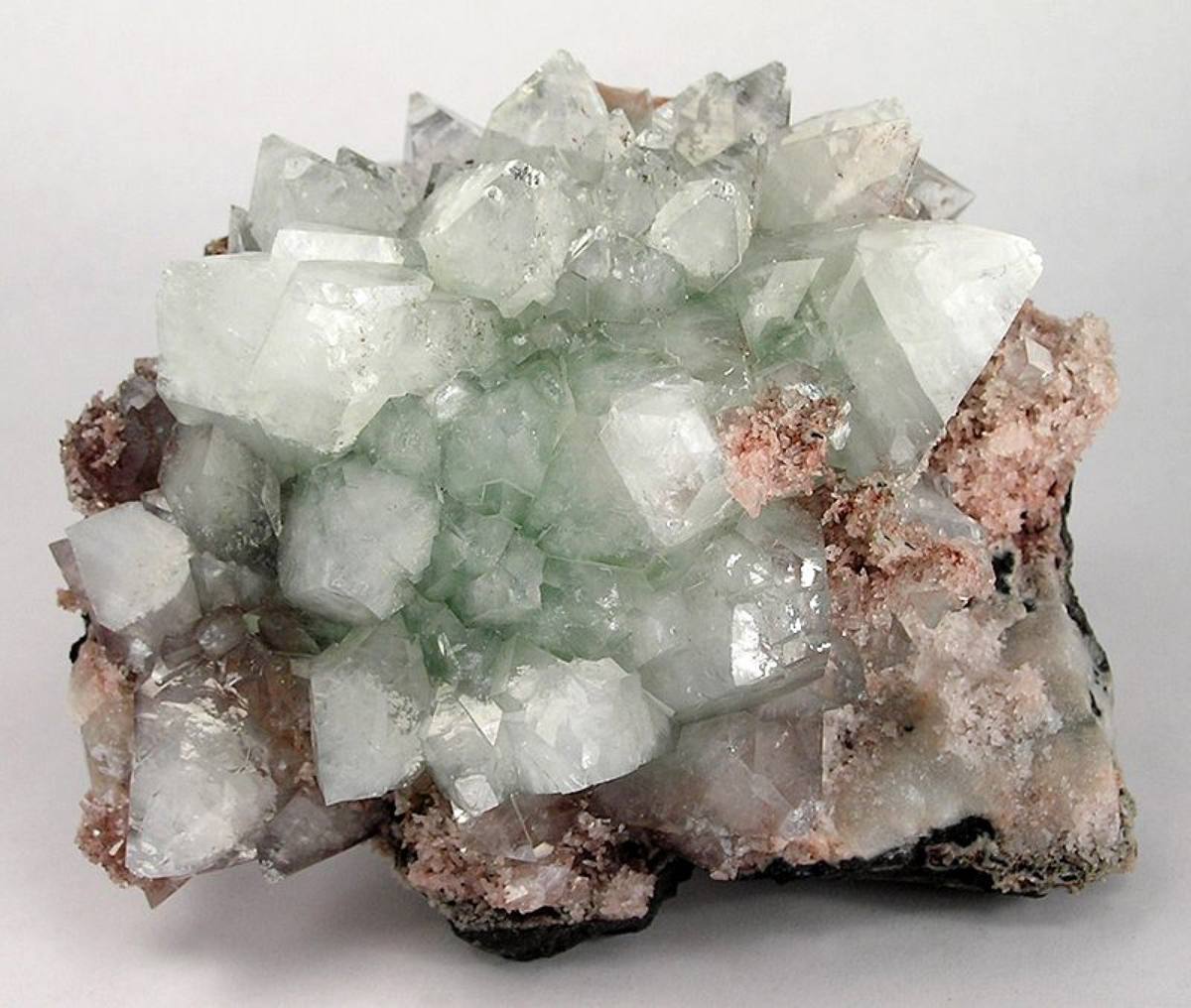
Glassy colorless or pale green crystals, often cubes topped by a steep pyramid
- 2
One perfect cleavage giving a distinctly pearly sheen on the flat basal face
- 3
Soft at 4.5 to 5, and it flakes along that cleavage, which is where the name comes from
Apophyllite is technically not a zeolite but it occurs with them in the same basalt cavities, and the combination of a glassy pyramid-capped crystal with a distinctly pearly flat base is diagnostic. The green apophyllite from Pune in India is particularly sought after. The perfect basal cleavage makes crystals easy to damage, so extract on matrix and handle by the rock, never by the crystals.
Straight answers
- Is it worth cutting?
- Not cut. Too soft and too cleavable.
- What is it really worth?
- Inexpensive to moderate. Green apophyllite and large glassy crystals on stilbite make the best specimens.
- Can you legally keep it?
- Quarry access, usually through clubs, is the practical route in North America.
Often confused with
Apophyllite vs. its common look-alikes, and how to tell them apart in the field.
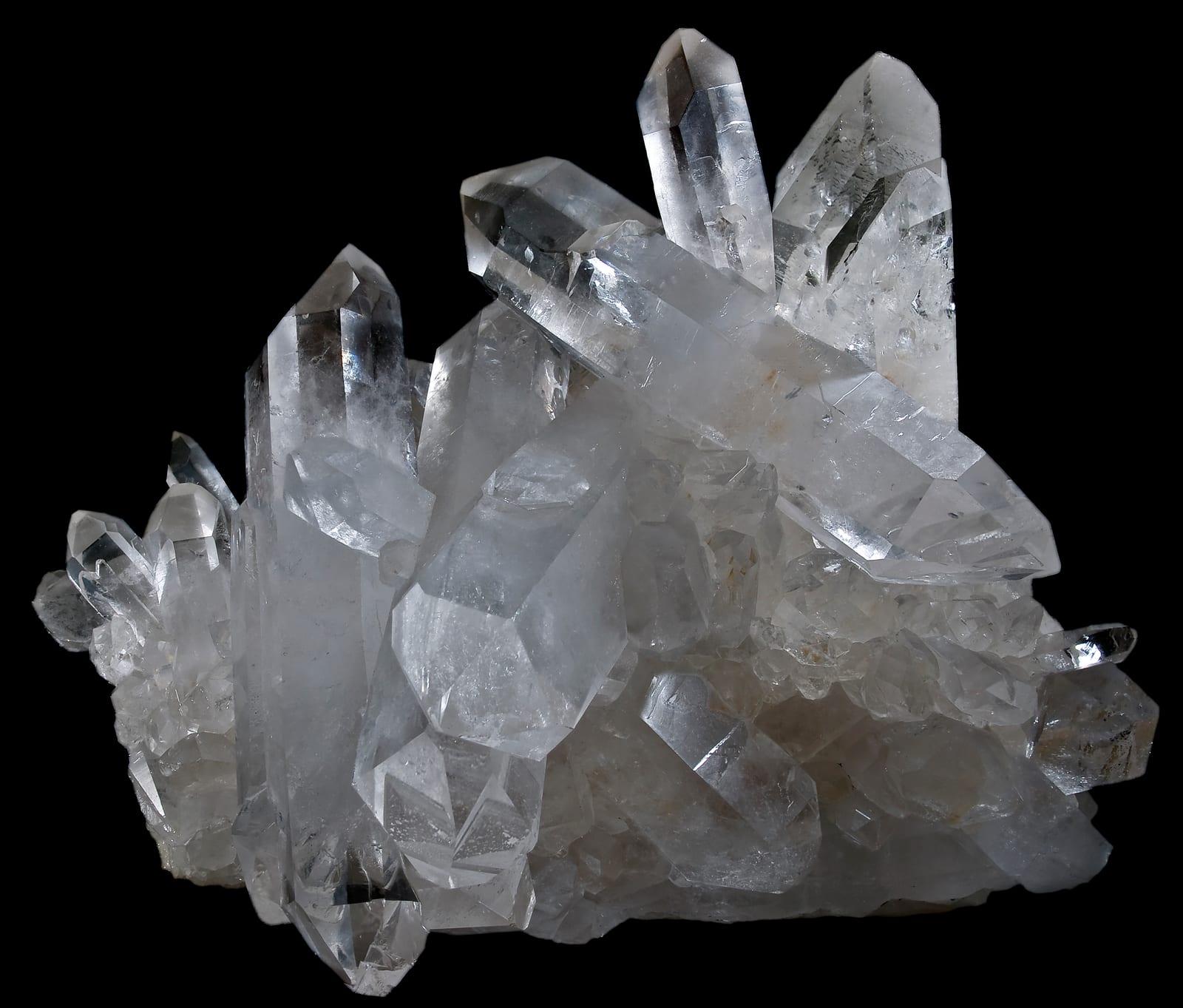
How to tell apart: Quartz is hardness 7 with no cleavage and six-sided prisms. Apophyllite is softer, has a perfect basal cleavage and a pearly base.
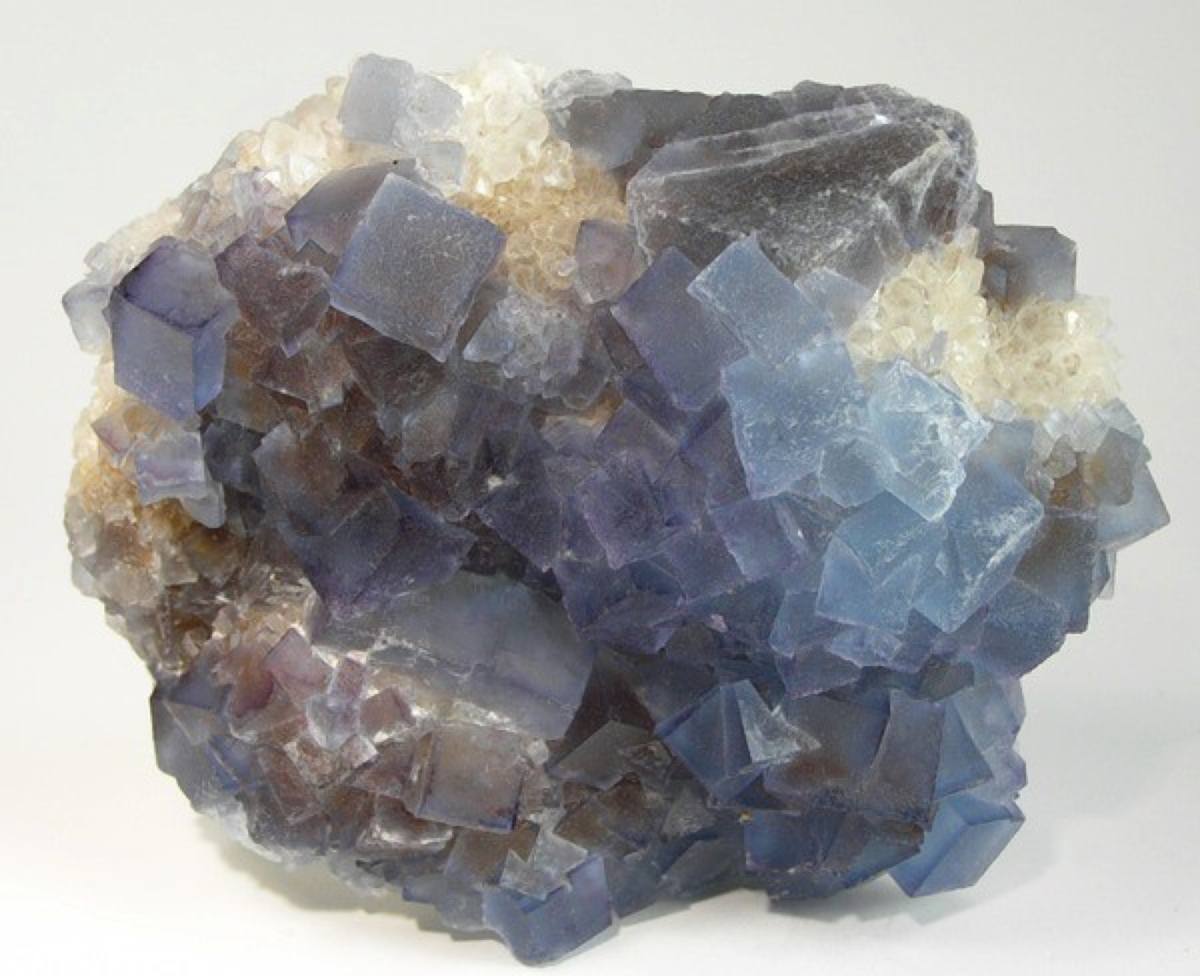
How to tell apart: Fluorite cleaves in four directions into octahedra. Apophyllite cleaves in one direction only.
Often found alongside apophyllite
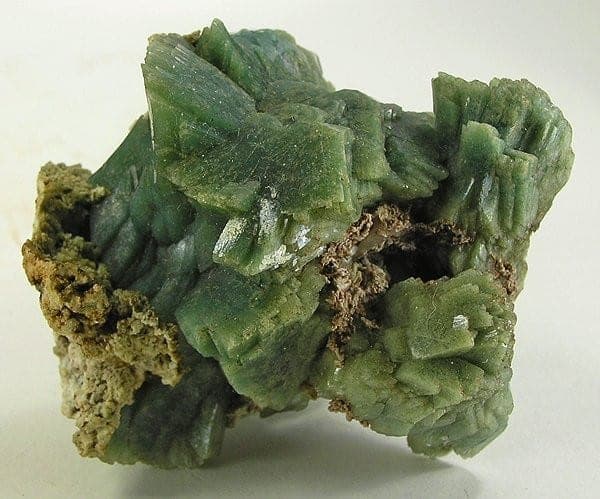
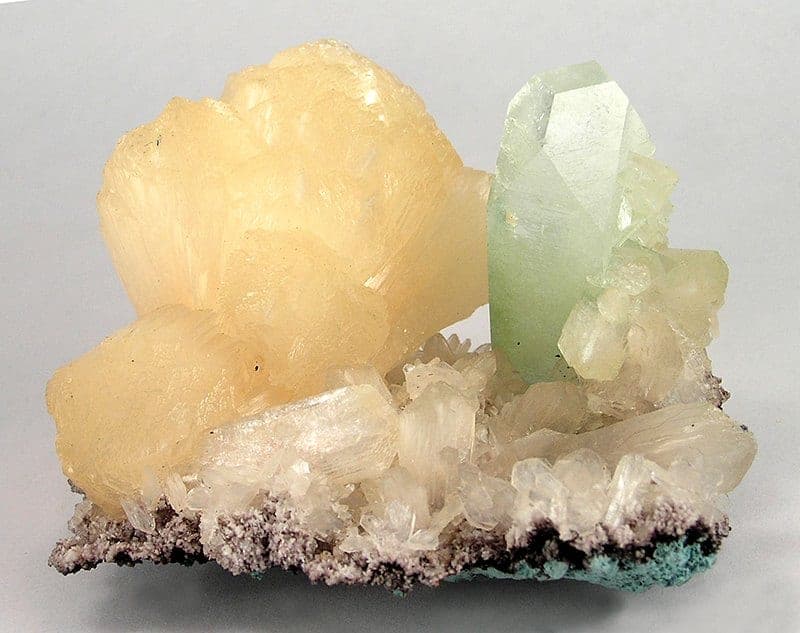
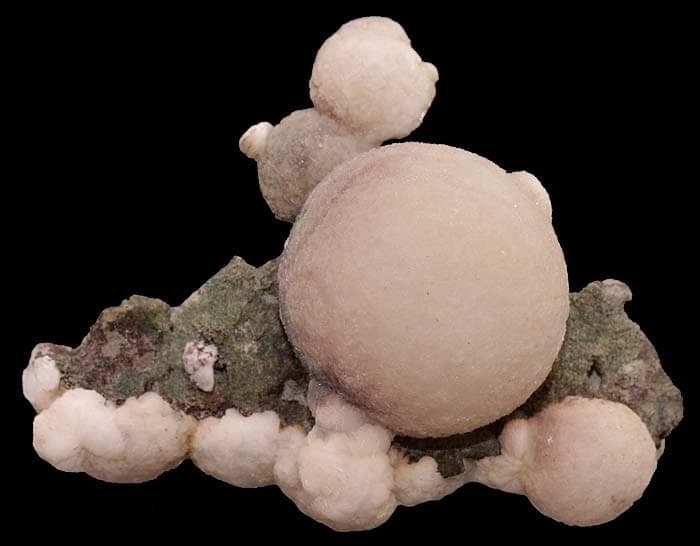
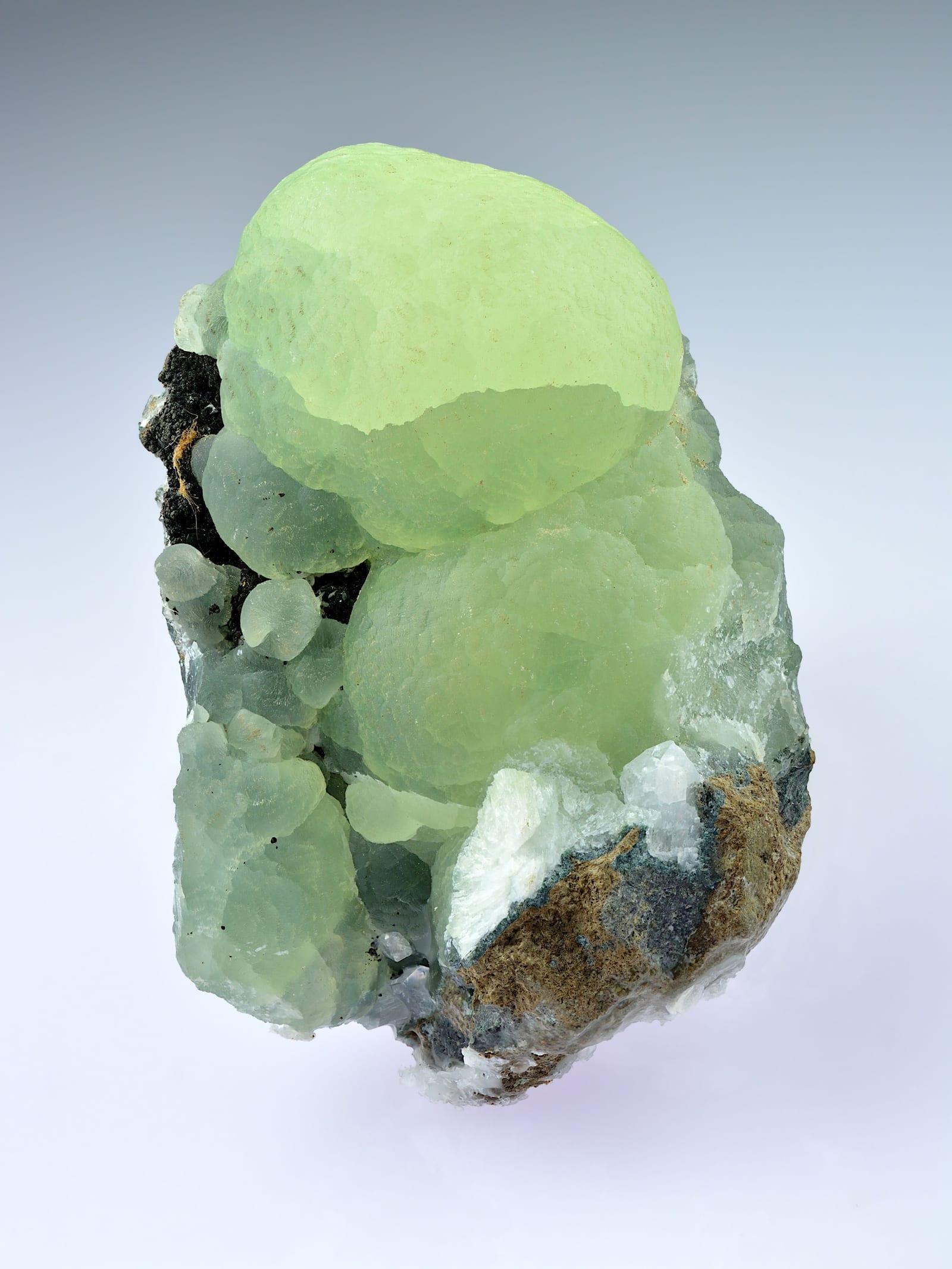
Minerals reported to co-occur with apophyllite. Spotting these in float or country rock is a strong cue you are in the right ground.
All properties
- Chemical formula
- KCa₄(Si₈O₂₀)(F,OH)·8H₂O
- Mohs hardness
- 4-5
- Density
- 2.3-2.4 g/cm³
- Streak
- White
- Luster
- Vitreous to pearly
- Transparency
- Transparent
- Crystal system
- Tetragonal
- Crystal habit
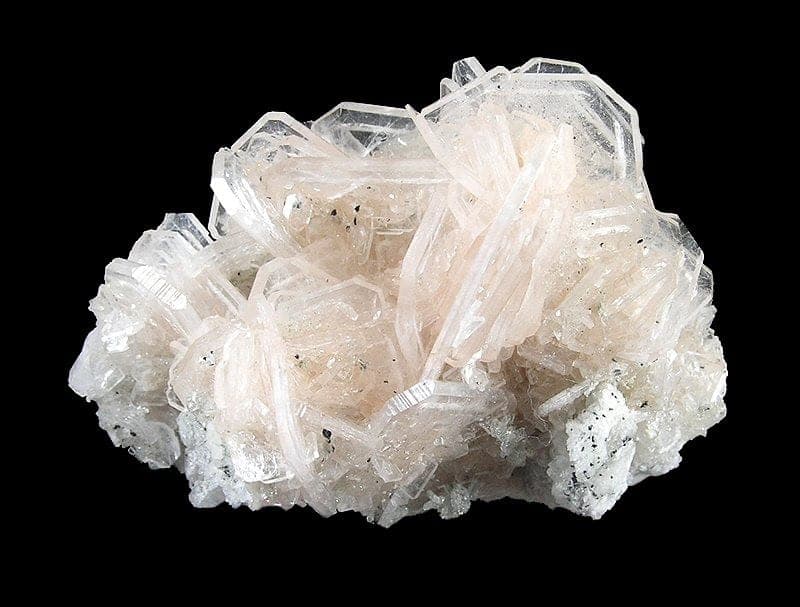
- Prismatic crystals, blocky, tabular, or as drusy crusts
- Cleavage
- Perfect on {001}
- Rarity
- Common
- Uses
- Collector, Decorative
- Host rock
- Secondary mineral in basalts
Where rockhounds find apophyllite
6 mapped spotsClassic worldwide localities
- Lonault and Poona, southeast of Bombay, India (type locality)
Field-hunting tip
Where it forms: Secondary mineral in basalts. If you start seeing heulandite, stilbite, thomsonite in float, you are in the right ground. Typical habit: prismatic crystals, blocky, tabular, or as drusy crusts. Train your eye for that shape before scanning the outcrop. In the U.S., the densest reported localities are in California, Colorado, New Jersey. Start trip planning there.
More apophyllite photos
Common questions
How do you identify apophyllite?+
Where is apophyllite found?+
Can I find apophyllite in the United States?+
What rocks look like apophyllite?+
What minerals are found with apophyllite?+
What kind of rock does apophyllite form in?+
What is apophyllite used for?+
Find apophyllite on the map
RockHoundR shows mapped rockhounding spots, access rules, and lets you log every find.