
Dendritic Agate is a variety of chalcedony characterized by tree-like or fern-like inclusions known as dendrites. These delicate, dark-colored patterns are caused by the presence of manganese or iron oxides, which grow within fractures or spaces in the silica. It is highly sought after by lapidary artists for cutting into unique, picture-like cabochons.
Spotting dendritic agate in the field
Field marks- 1
Black or brown branching growths that look exactly like a fern or a bare winter tree
- 2
The branching is flat, confined to a plane, and sharply defined
- 3
Host is usually clear to milky white rather than strongly banded
The dendrites are manganese and iron oxides that crystallized along a fracture, which is why the pattern is essentially two-dimensional. That is the single most useful field fact about it: rotate the stone and a dendrite disappears edge-on, while moss and plume keep their body from every angle. People consistently mistake dendrites for fossil plants, and it is worth knowing they are pure mineral growth with nothing biological about them.
Straight answers
- Is it worth cutting?
- Because the dendrites live on a plane, you get one or two good slabs out of a nodule and a lot of blank material. Find the plane first by wetting a broken face.
- What is it really worth?
- Inexpensive and widely available. Value sits almost entirely in whether the pattern reads as a convincing scene rather than a smudge.
- Can you legally keep it?
- Depends on the locality. Widely distributed on western BLM land under ordinary personal-use rules.
Often confused with
Dendritic Agate vs. its common look-alikes, and how to tell them apart in the field.
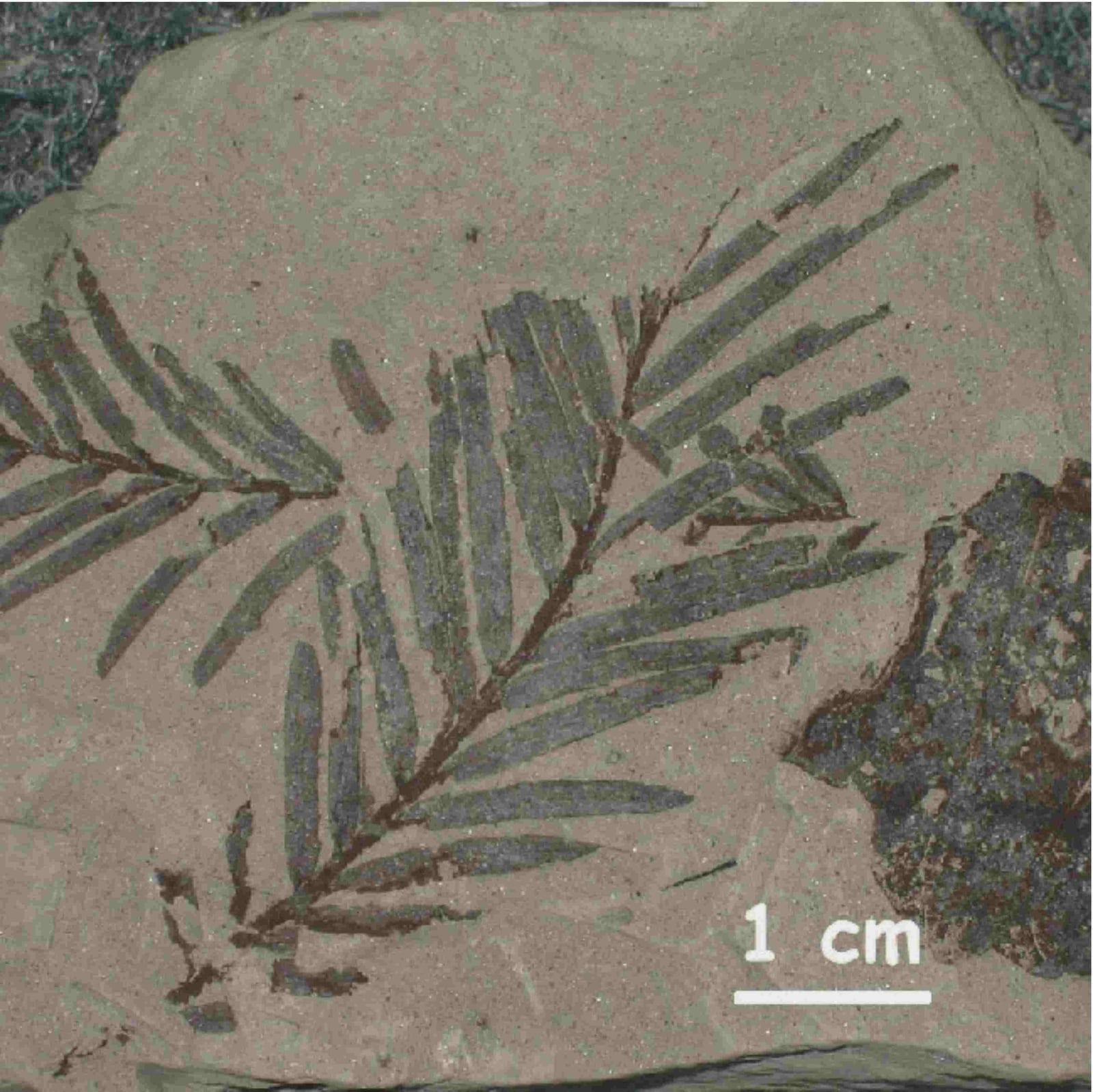
How to tell apart: The classic beginner error. Dendrites branch with fractal self-similarity and no stem, midrib or vein structure. A real leaf fossil has a stem and orderly venation.
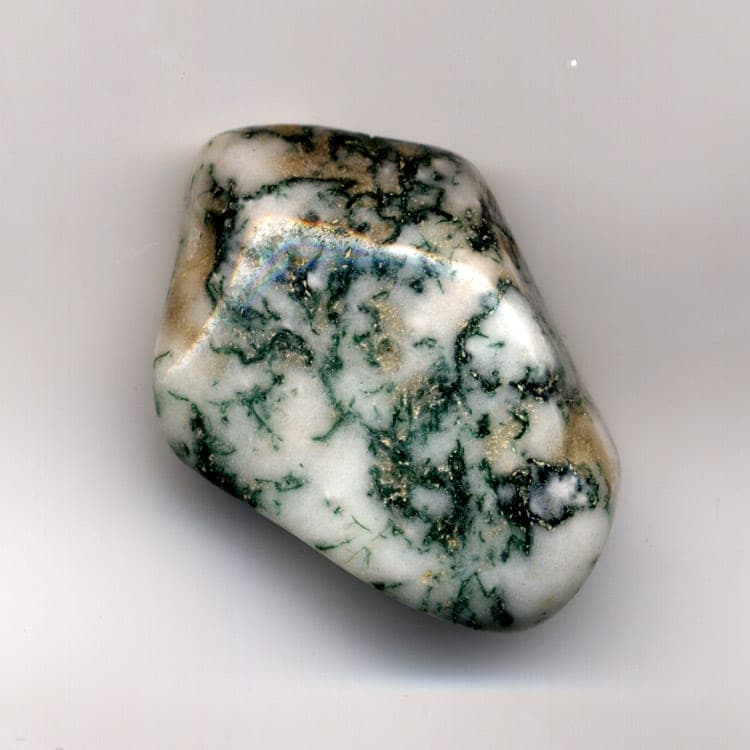
How to tell apart: Moss is a three-dimensional tangle. Dendrites are flat, and vanish when viewed edge-on.
Often found alongside dendritic agate
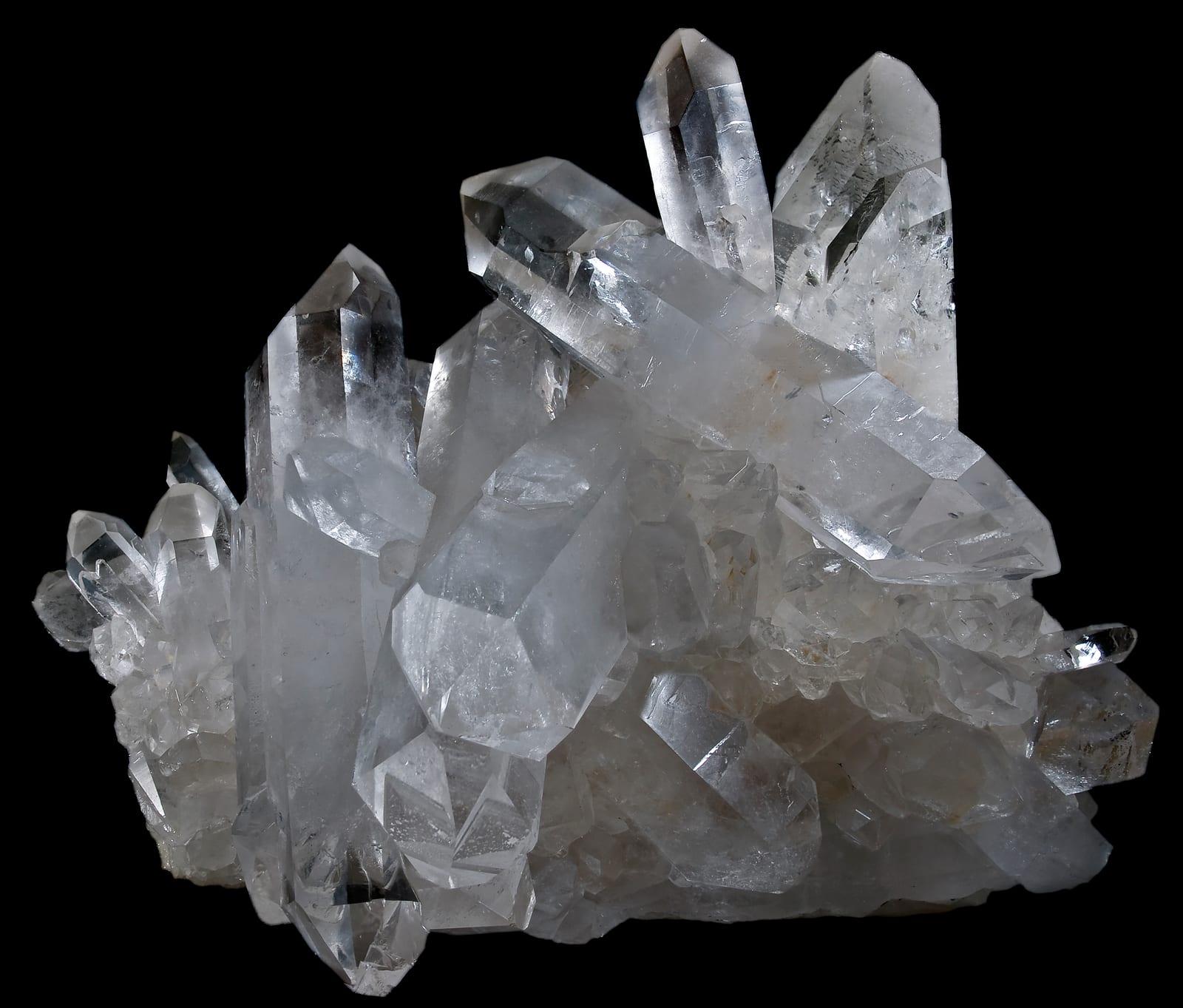
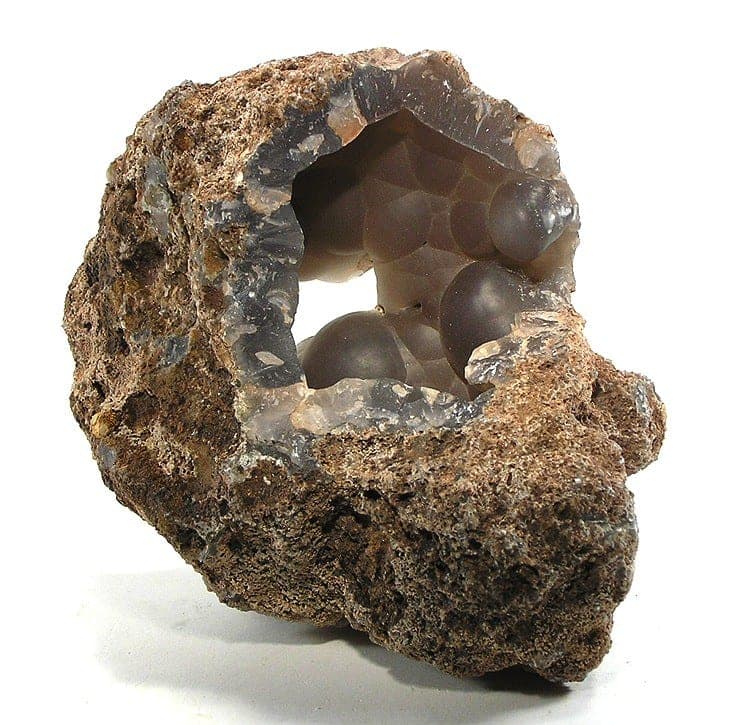
Minerals reported to co-occur with dendritic agate. Spotting these in float or country rock is a strong cue you are in the right ground.
All properties
- Chemical formula
- SiO₂
- Mohs hardness
- 6.5-7
- Density
- 2.6-2.7 g/cm³
- Streak
- White
- Luster
- Waxy
- Transparency
- Translucent
- Crystal system
- Trigonal
- Crystal habit
- Massive
- Cleavage
- None
- Rarity
- Common
- Uses
- Lapidary, Collector, Decorative
- Host rock
- volcanic rocks
Where rockhounds find dendritic agate
4 mapped spotsClassic worldwide localities
- Brazil
- India
- USA
- Mexico
- Madagascar
Field-hunting tip
Where it forms: volcanic rocks. If you start seeing quartz, chalcedony, calcite in float, you are in the right ground. Typical habit: massive. Train your eye for that shape before scanning the outcrop. In the U.S., the densest reported localities are in Utah, California. Start trip planning there.
Common questions
How do you identify dendritic agate?+
Where is dendritic agate found?+
Can I find dendritic agate in the United States?+
What rocks look like dendritic agate?+
What minerals are found with dendritic agate?+
What kind of rock does dendritic agate form in?+
What is dendritic agate used for?+
Find dendritic agate on the map
RockHoundR shows mapped rockhounding spots, access rules, and lets you log every find.

