
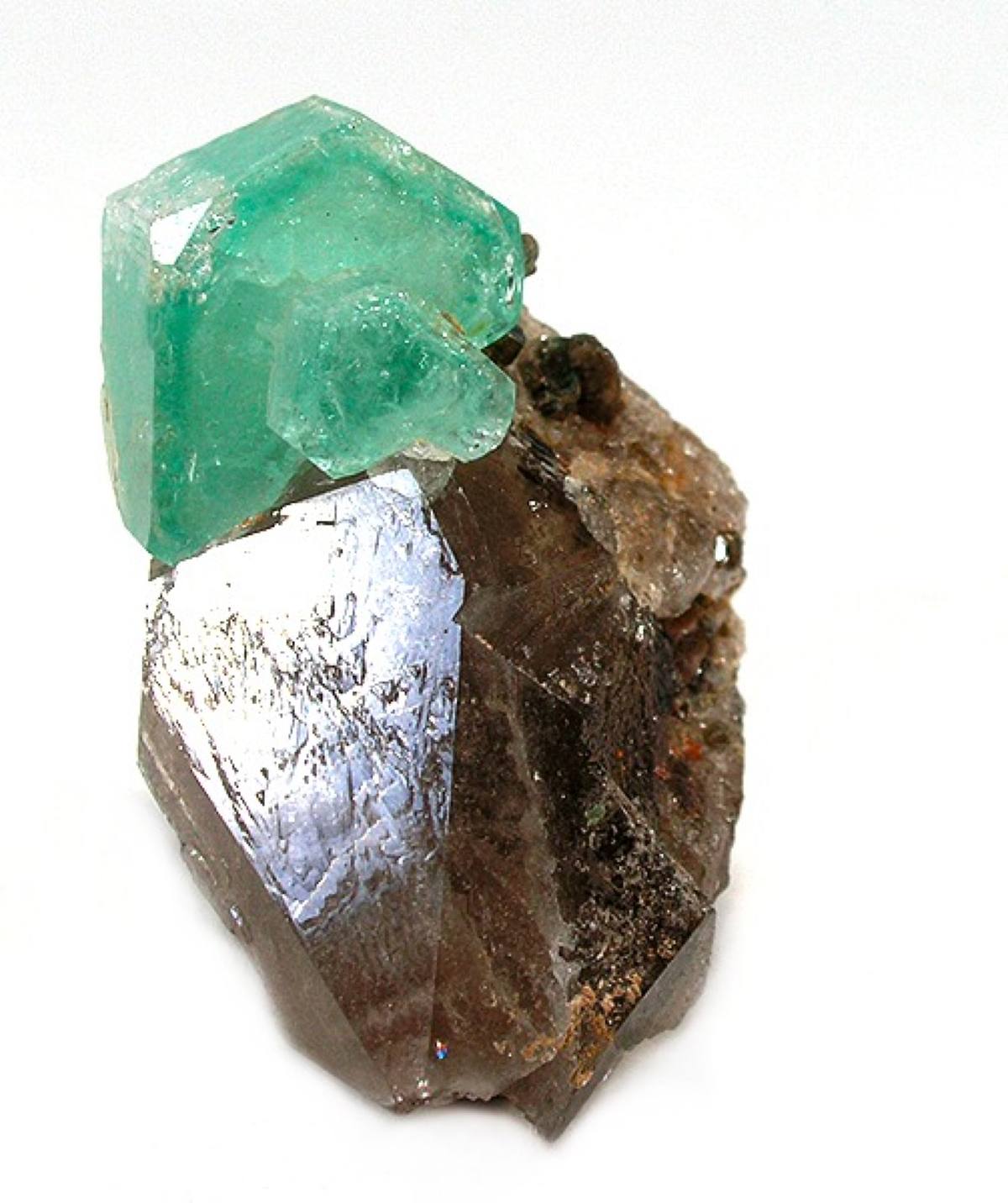
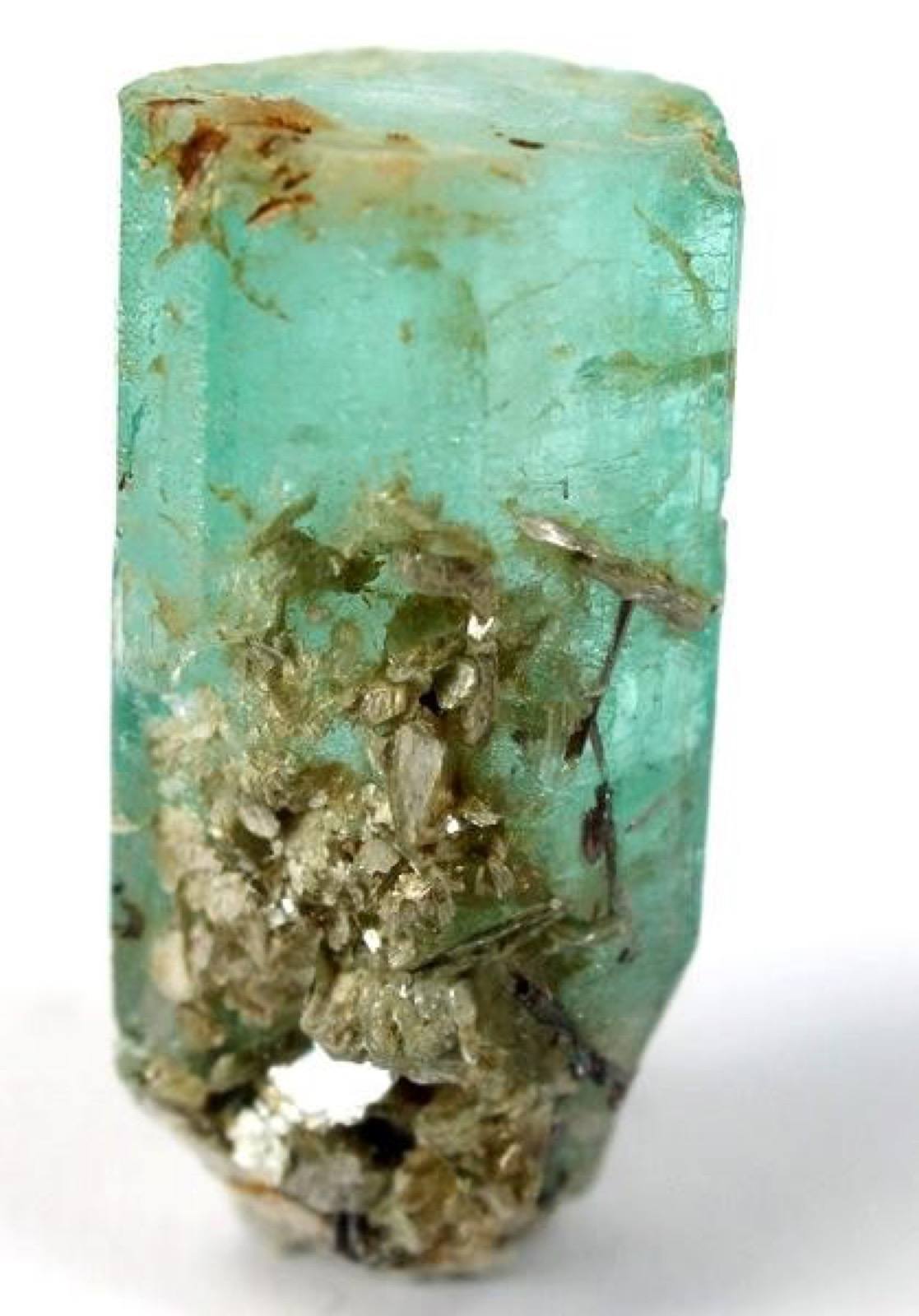
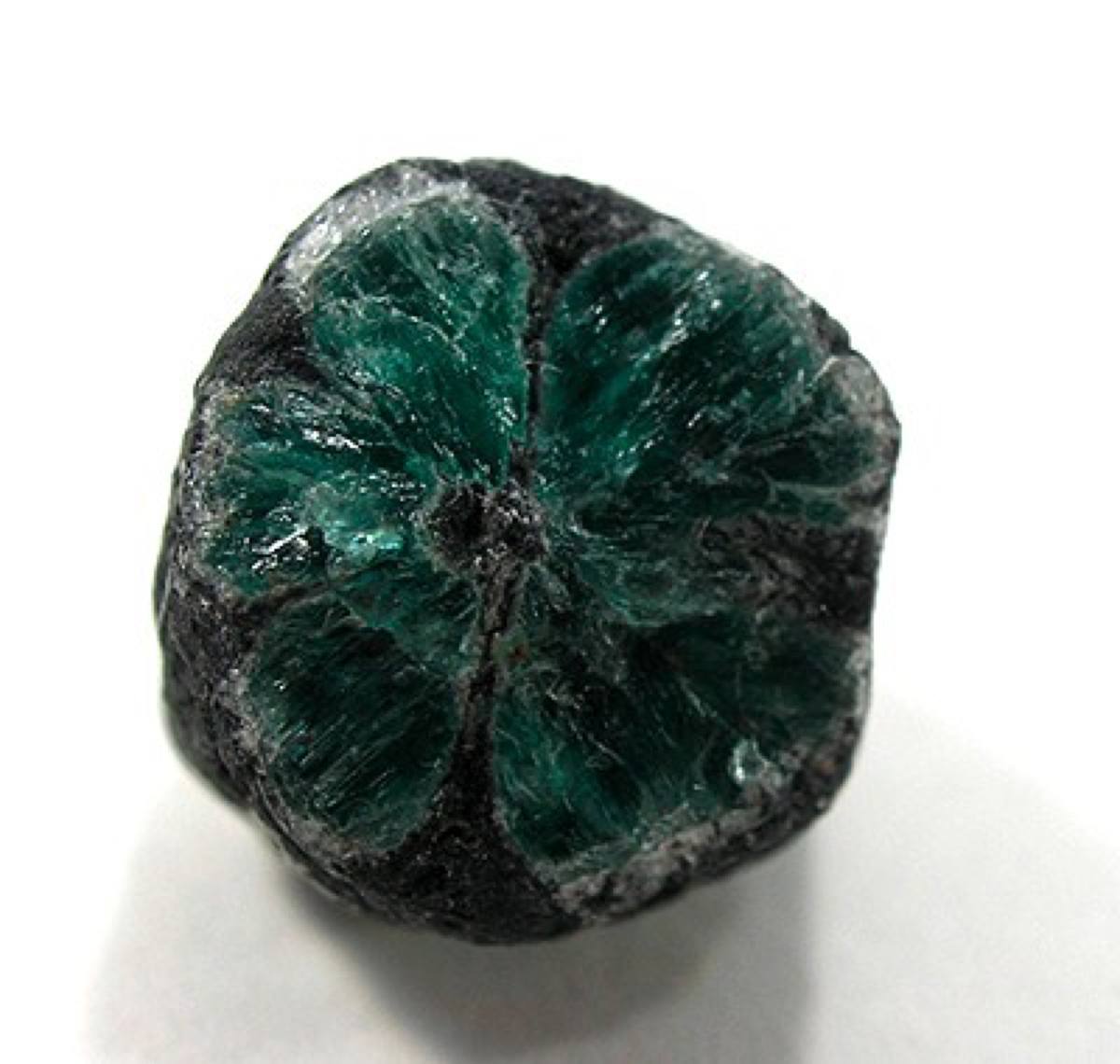
Emerald is a distinct green variety of beryl colored by trace amounts of chromium and vanadium. It is famous for its characteristic hexagonal crystal habit and often contains inclusions known as 'jardin' that collectors prize for authenticity.
Spotting emerald in the field
Field marks- 1
Deep green hexagonal prisms, colored by chromium or vanadium
- 2
Almost always visibly included, with internal veils and fractures
- 3
Hardness 7.5 to 8, but brittle because of the inclusions
Emerald is beryl colored by chromium, and its defining practical trait is that it is nearly always included. A flawless green stone is more likely to be something else or synthetic than a natural emerald. In the United States, North Carolina is the real locality: emerald occurs in pegmatites around Hiddenite and Crabtree, and the Emerald Hollow Mine near Hiddenite is the only place in the country where the public can dig for emerald on a walk-in basis.
Straight answers
- Is it worth cutting?
- The classic emerald cut exists because the corners of a brittle, included stone chip easily. Oiling to fill surface fractures is a traditional and accepted treatment that must be disclosed.
- What is it really worth?
- Fine emerald is among the most valuable of all gemstones. North Carolina material is mostly of collector rather than gem quality, with occasional exceptions that have been genuinely significant.
- Can you legally keep it?
- American emerald localities are private. The Hiddenite fee-dig operation is the accessible route.
Where it is worth going
- Emerald Hollow MineHiddenite, Alexander County, North Carolina
The only public emerald dig in the United States. Sluicing, creeking and digging offered by the day.
Often confused with
Emerald vs. its common look-alikes, and how to tell them apart in the field.
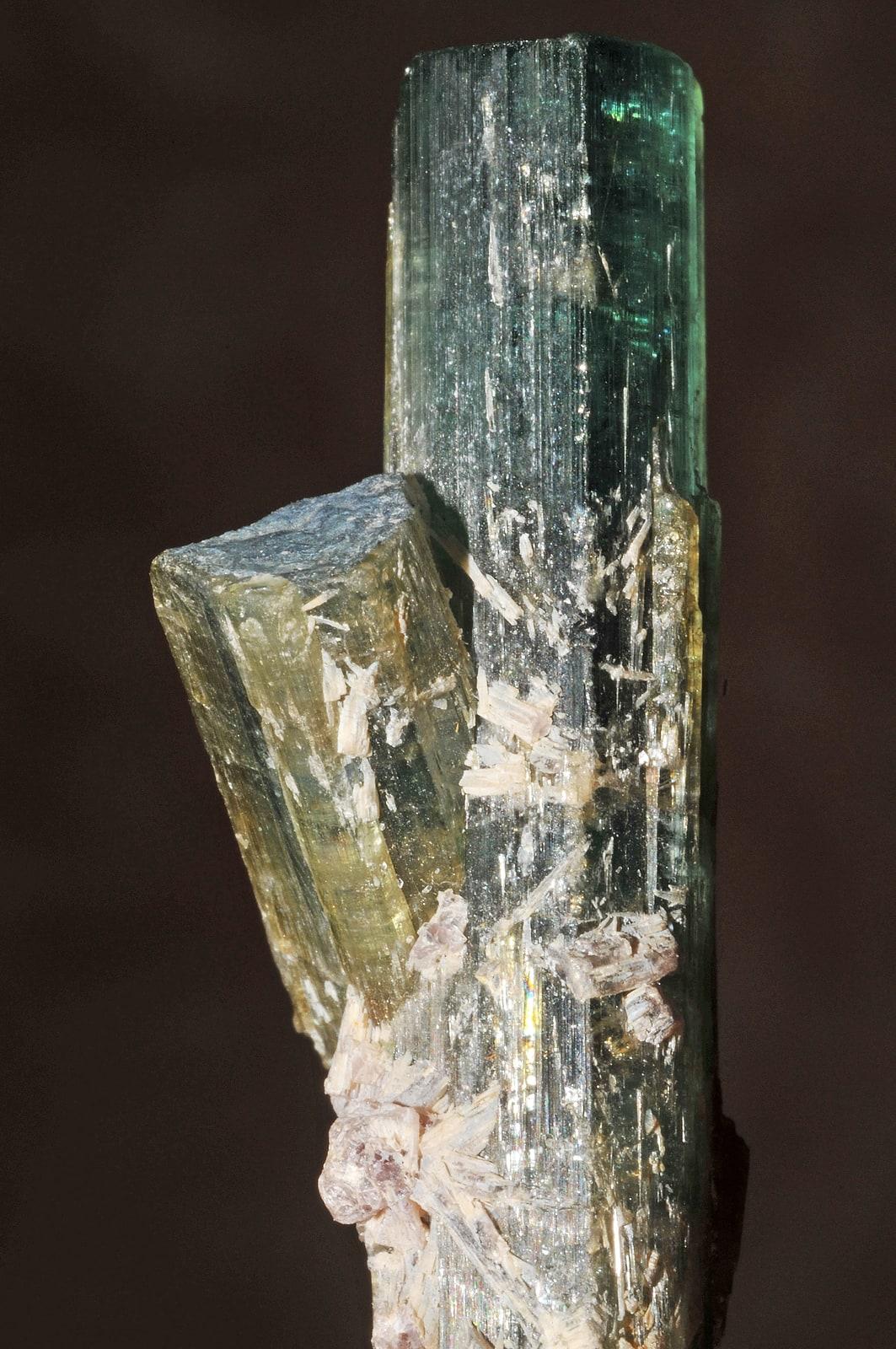
How to tell apart: Tourmaline has a rounded triangular cross-section and heavy striations. Emerald is a clean hexagonal prism.
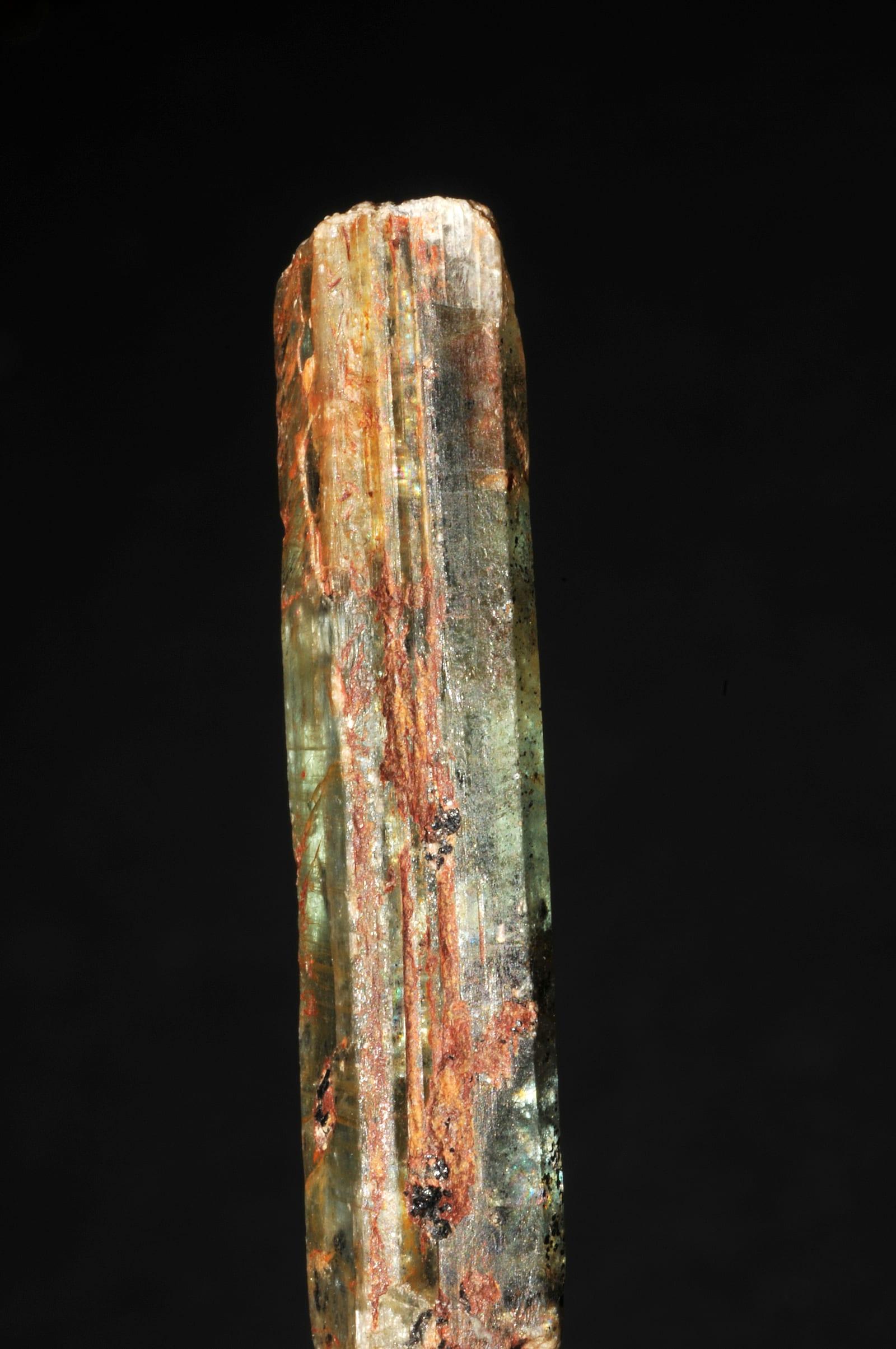
How to tell apart: Diopside is softer at 5.5 to 6.5 and has two good cleavages at nearly 90 degrees.
Often found alongside emerald
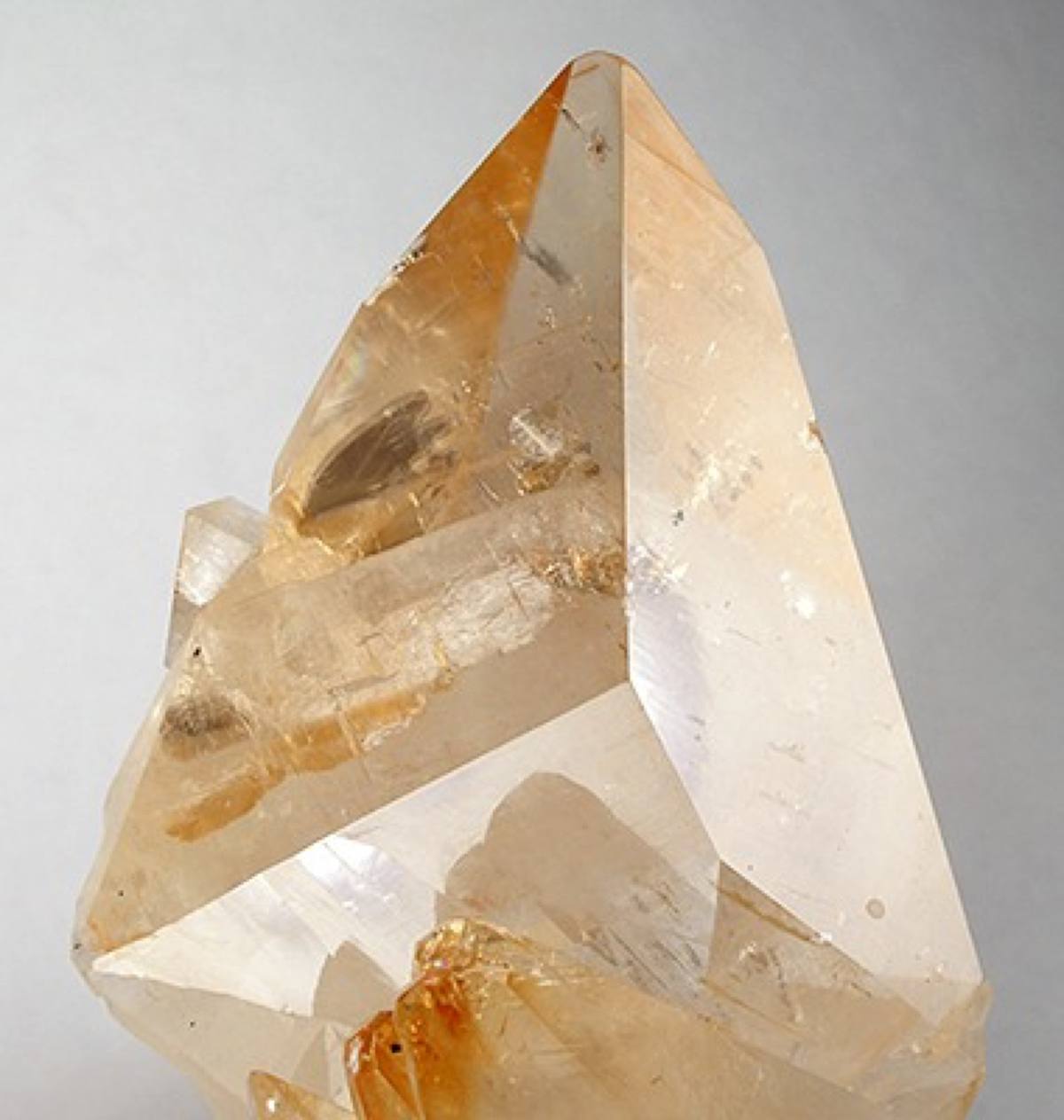
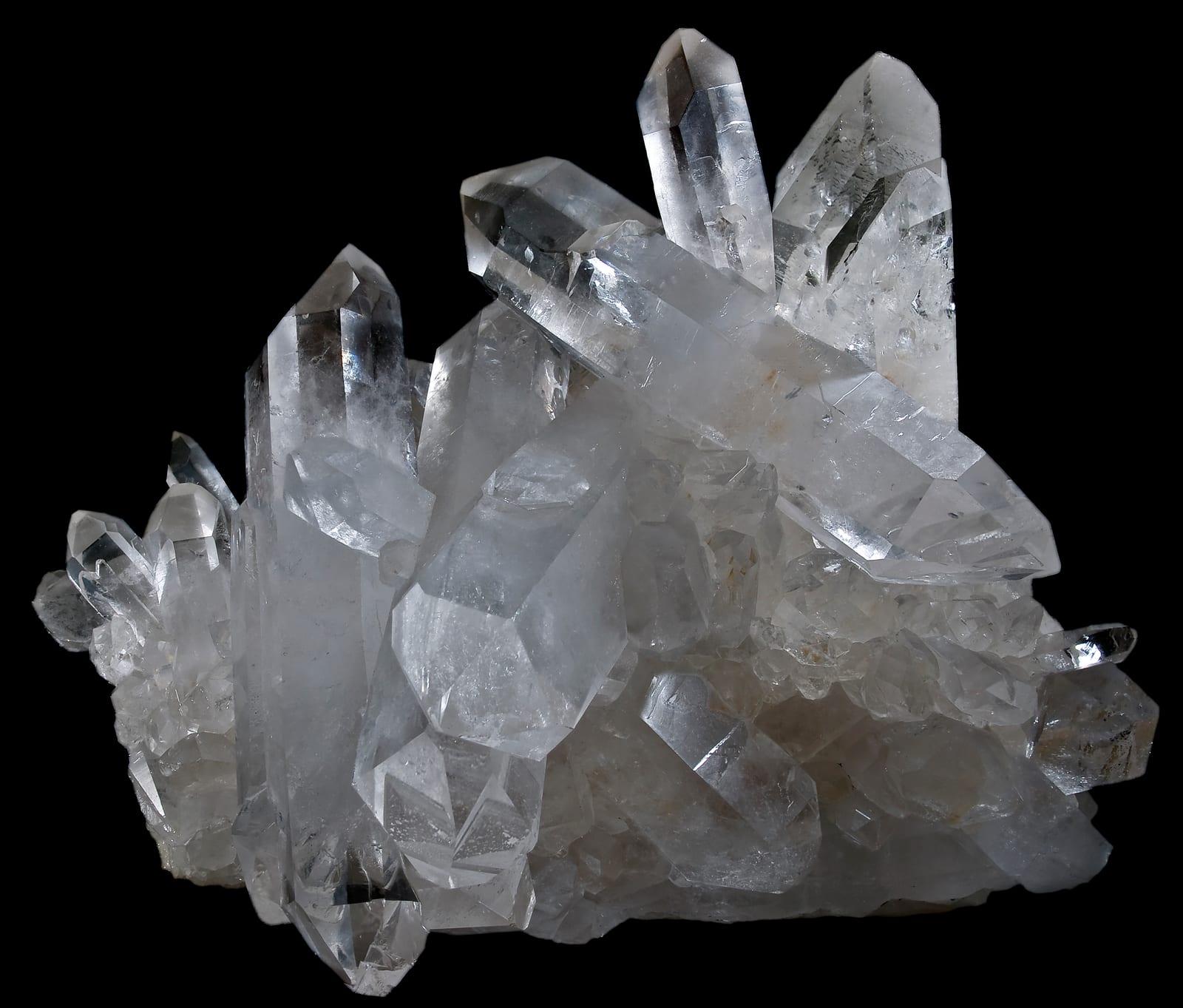
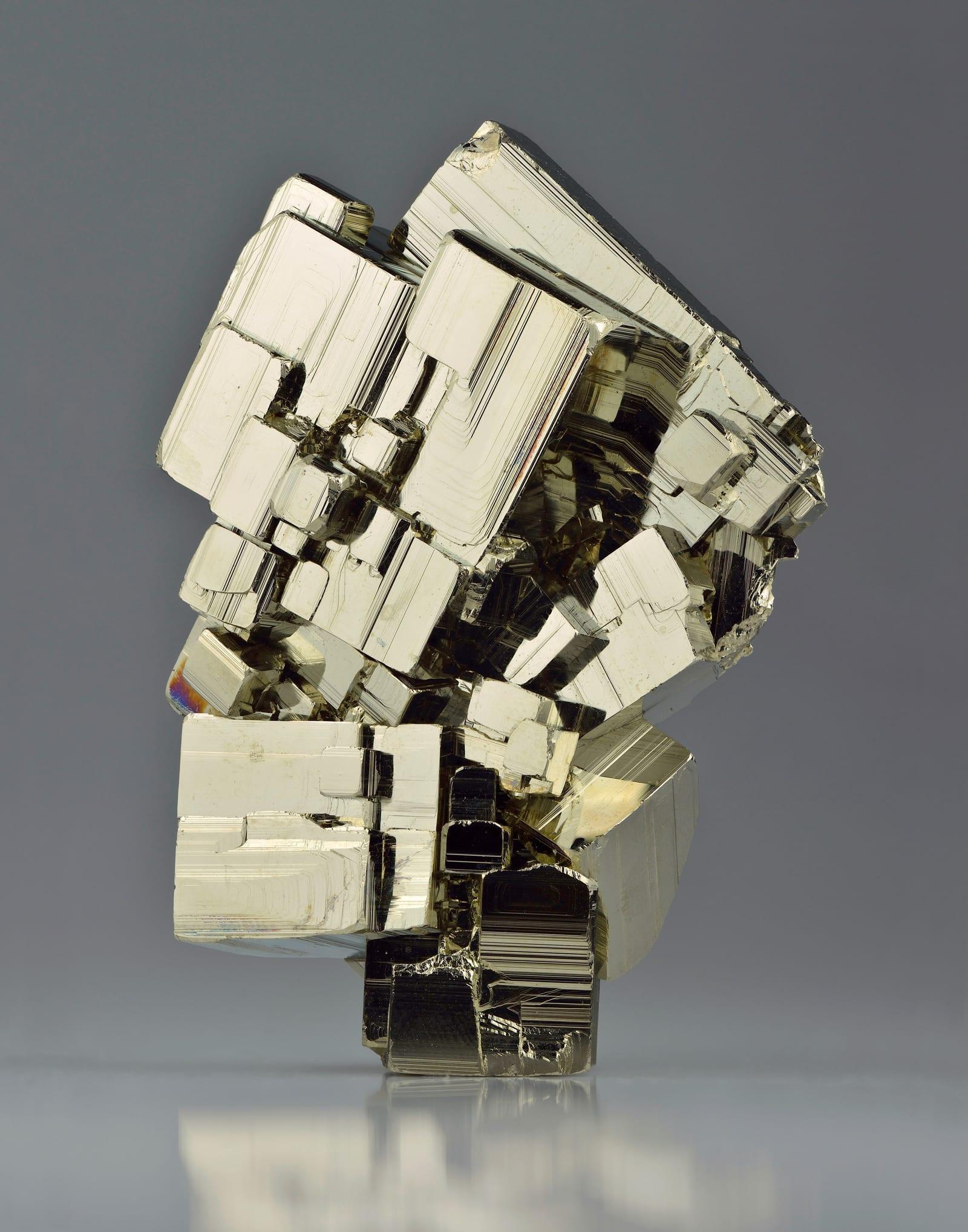
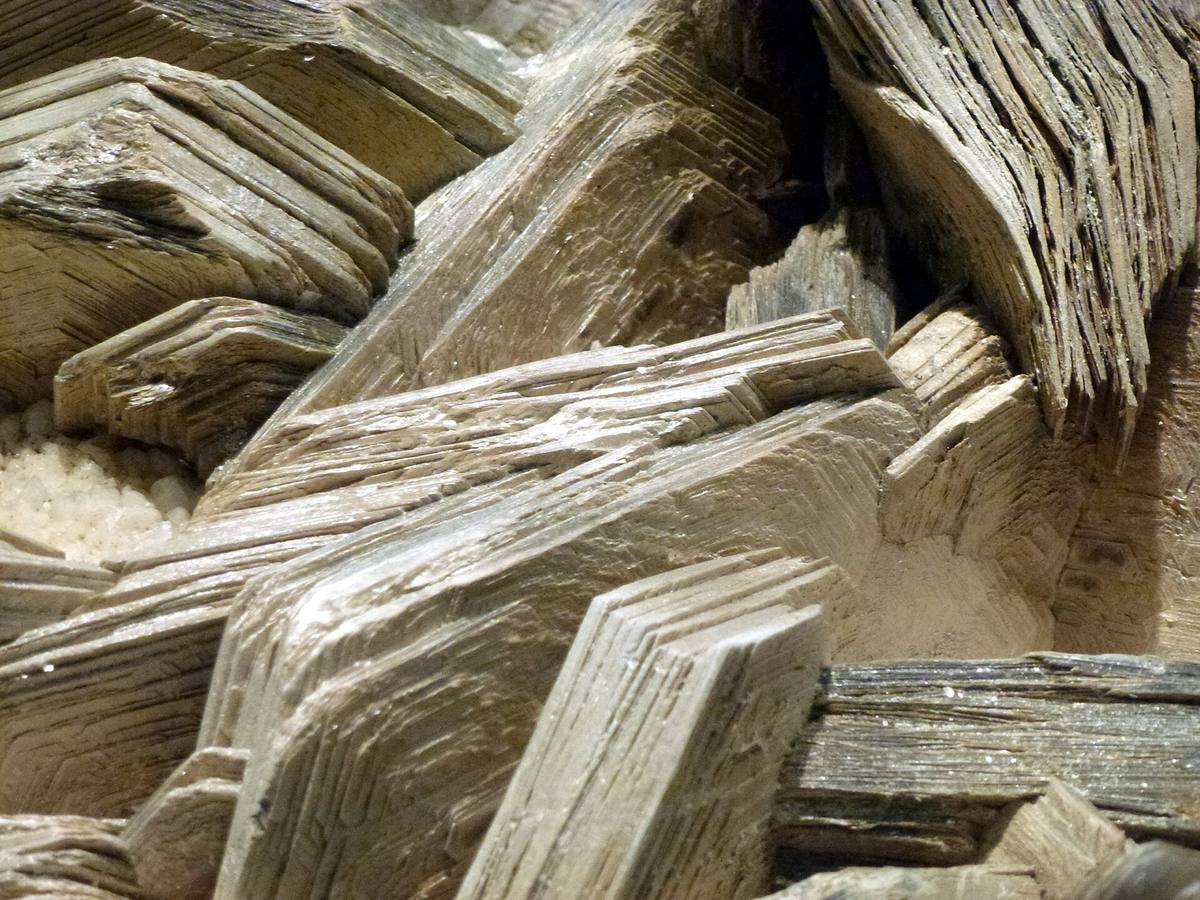
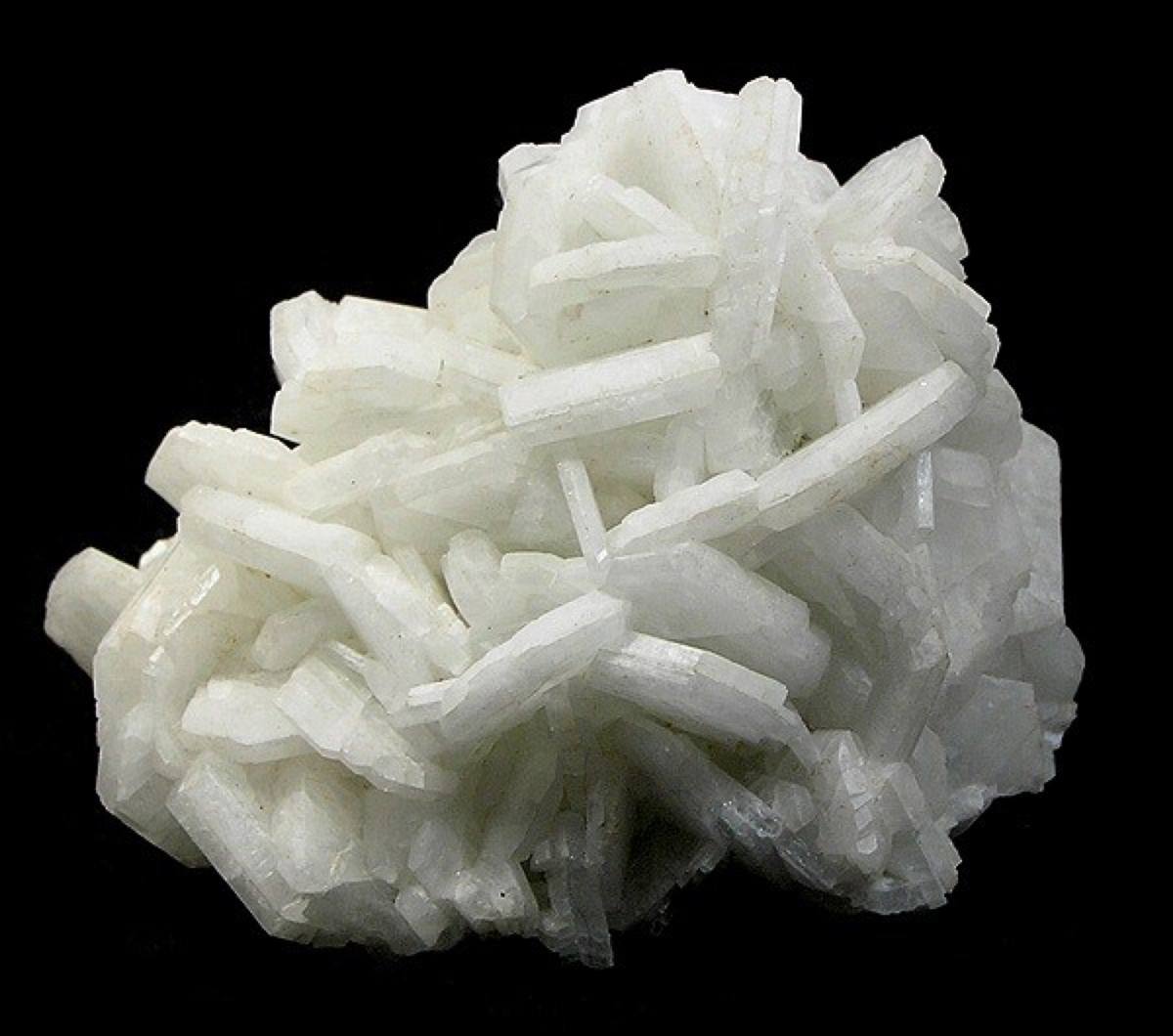
Minerals reported to co-occur with emerald. Spotting these in float or country rock is a strong cue you are in the right ground.
All properties
- Chemical formula
- Be₃Al₂Si₆O₁₈
- Mohs hardness
- 7.5-8
- Density
- 2.67-2.78 g/cm³
- Streak
- White
- Luster
- Vitreous
- Transparency
- Transparent
- Crystal system
- Hexagonal
- Crystal habit
- Prismatic crystals
- Cleavage
- Imperfect basal
- Rarity
- Rare
- Uses
- Gemstone, Collector, Jewelry
- Host rock
- hydrothermal veins, mica schists, and limestone
Where rockhounds find emerald
13 mapped spotsClassic worldwide localities
- Colombia
- Zambia
- Brazil
- Afghanistan
- Pakistan
- Russia
Field-hunting tip
Where it forms: hydrothermal veins, mica schists, and limestone. If you start seeing calcite, quartz, pyrite in float, you are in the right ground. Typical habit: prismatic crystals. Train your eye for that shape before scanning the outcrop. In the U.S., the densest reported localities are in North Carolina, Wyoming, Massachusetts. Start trip planning there.
More emerald photos
Common questions
How do you identify emerald?+
Where is emerald found?+
Can I find emerald in the United States?+
Is emerald safe to handle?+
What rocks look like emerald?+
What minerals are found with emerald?+
What kind of rock does emerald form in?+
What is emerald used for?+
Find emerald on the map
RockHoundR shows mapped rockhounding spots, access rules, and lets you log every find.

