Kyanite is highly recognizable due to its distinct bladed habit and variable hardness depending on the direction of the blade. It is an index mineral for metamorphic environments and is commonly found in schist and gneiss, often associated with staurolite and garnet.
Spotting kyanite in the field
Field marks- 1
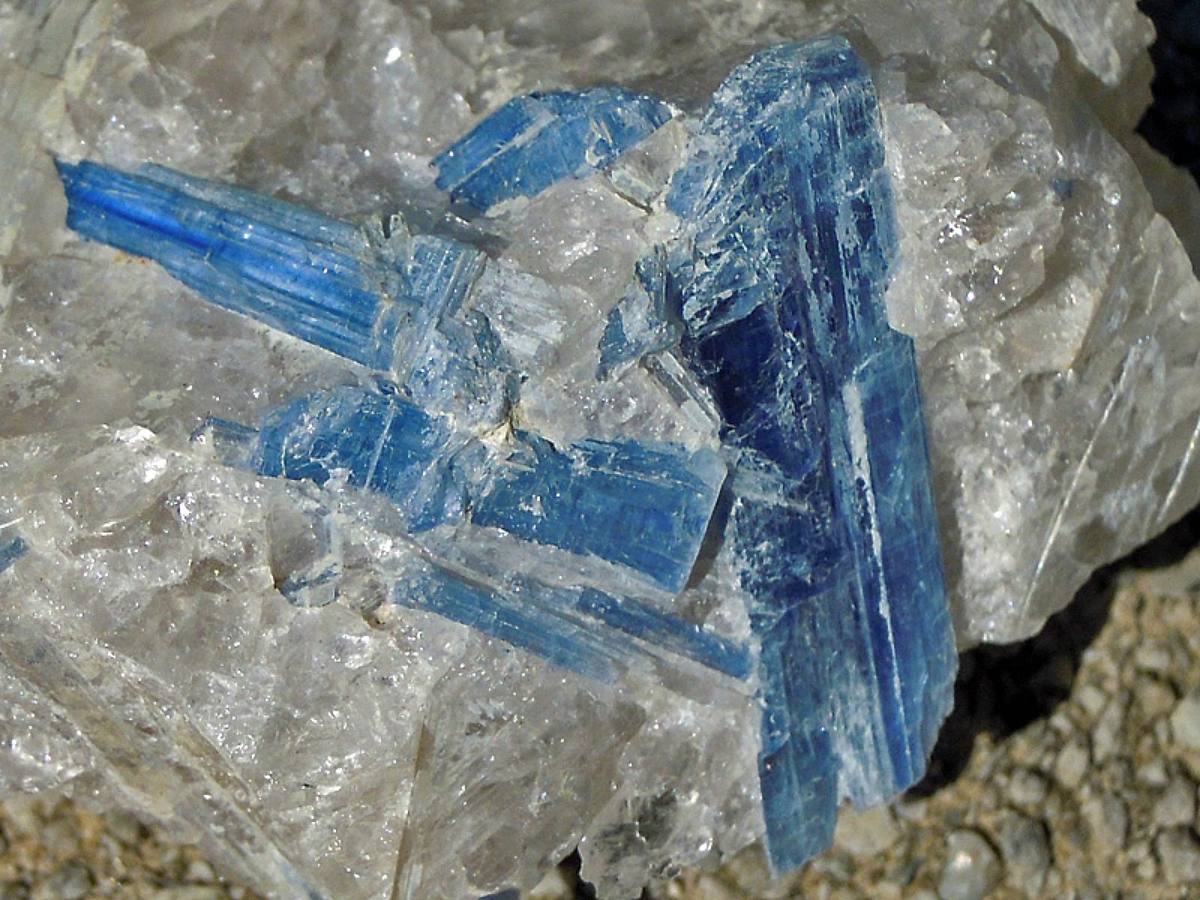
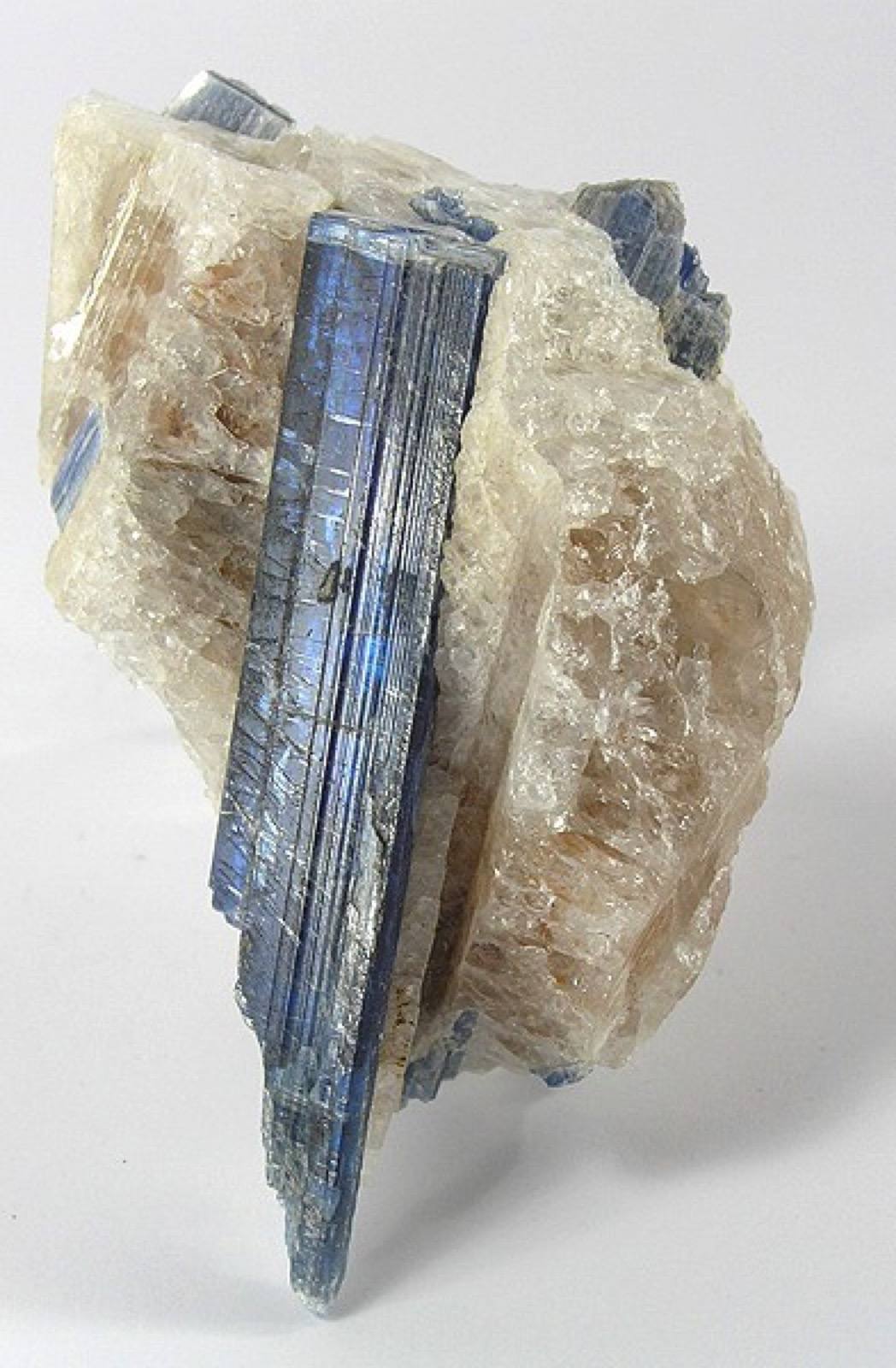
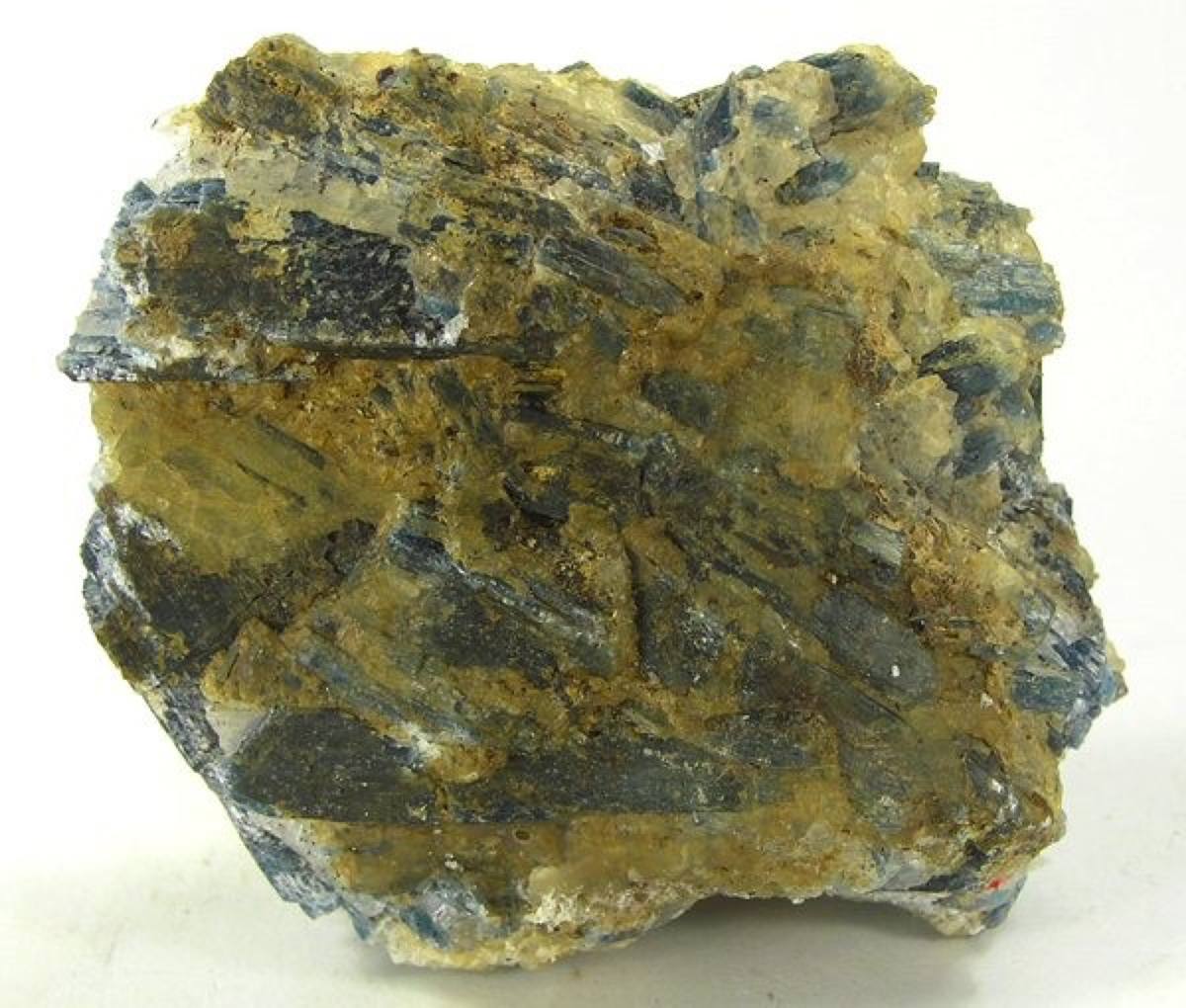
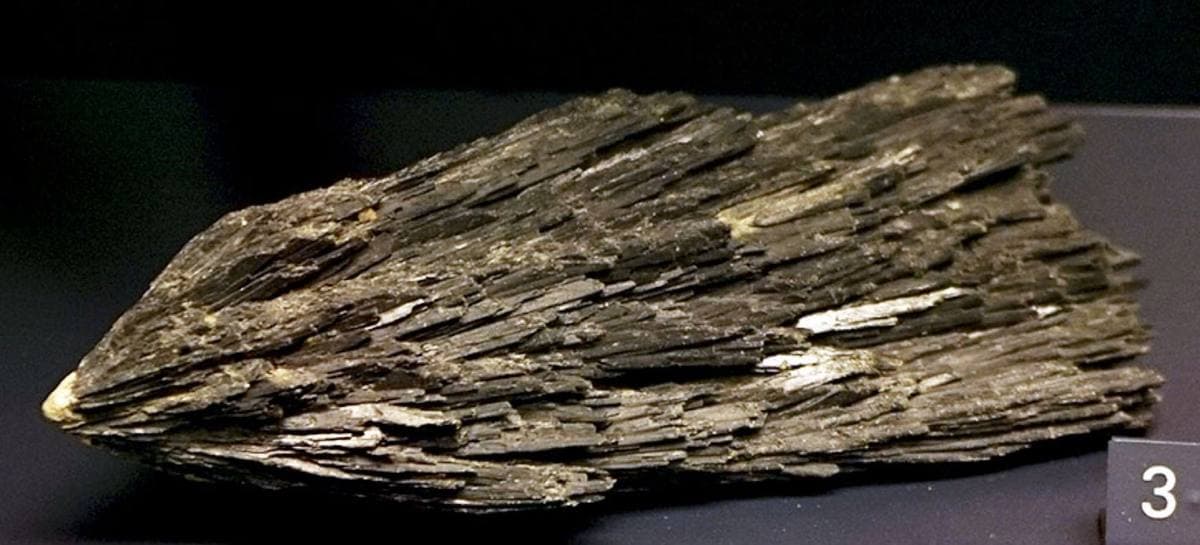
Blue bladed crystals, flat and elongated like a knife blade
- 2
Two different hardnesses on the same crystal: about 4.5 along the blade, about 7 across it
- 3
One perfect cleavage running the length of the blade
Kyanite has the single most memorable field test in mineralogy. Take a steel point and scratch along the length of a blade: it marks easily. Scratch across the width: it will not. That directional hardness is unique among common minerals and settles the identification instantly. It forms in high-pressure metamorphic rocks, so look in schist and gneiss, often with garnet and staurolite.
Straight answers
- Is it worth cutting?
- Difficult. The directional hardness and perfect cleavage make it awkward to cut and fragile in wear, so it is more often kept as a specimen than cut.
- What is it really worth?
- Low as material. Deep blue, well-formed bladed crystals on matrix are the collectible form.
- Can you legally keep it?
- Ordinary personal-use collecting rules apply.
Often confused with
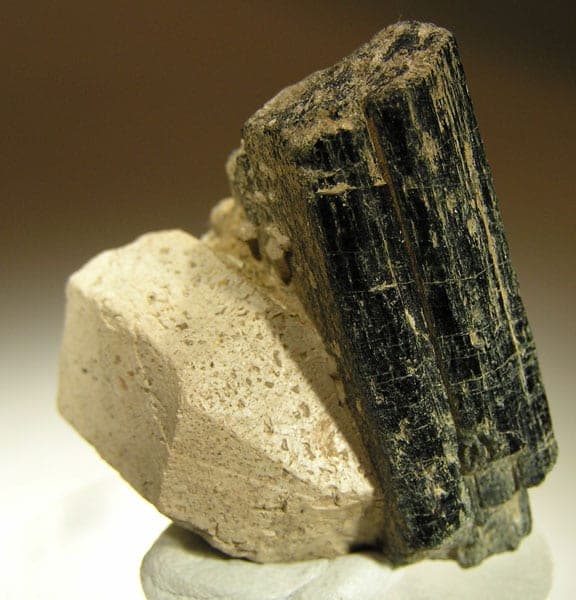
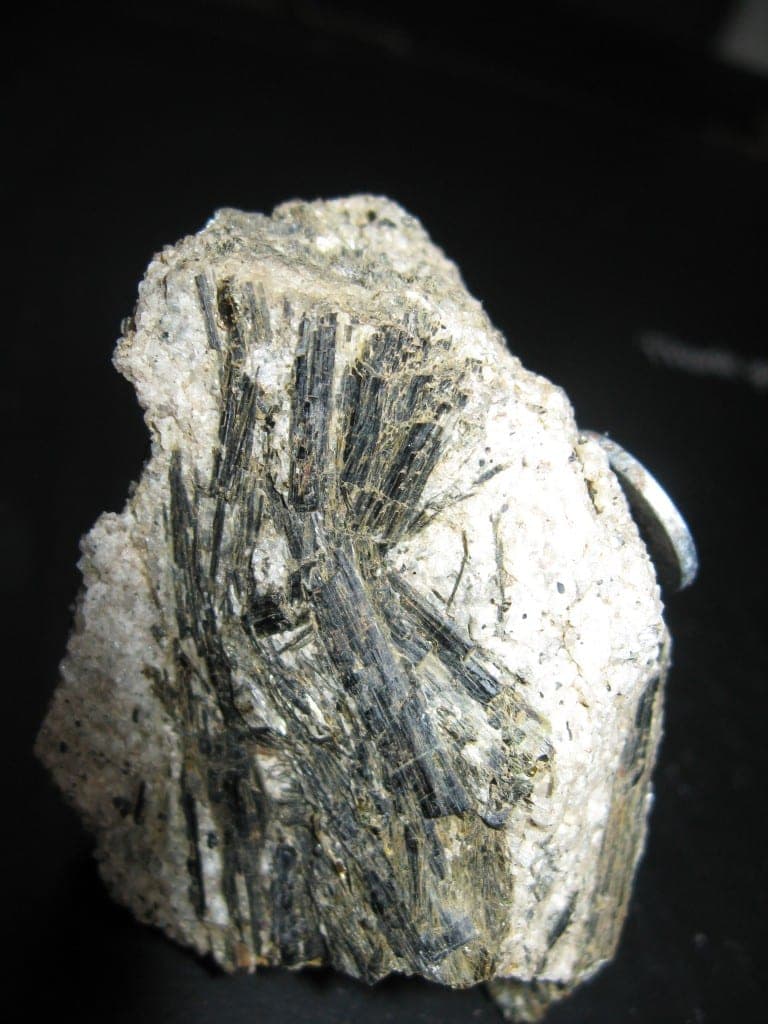
Kyanite vs. its common look-alikes, and how to tell them apart in the field.
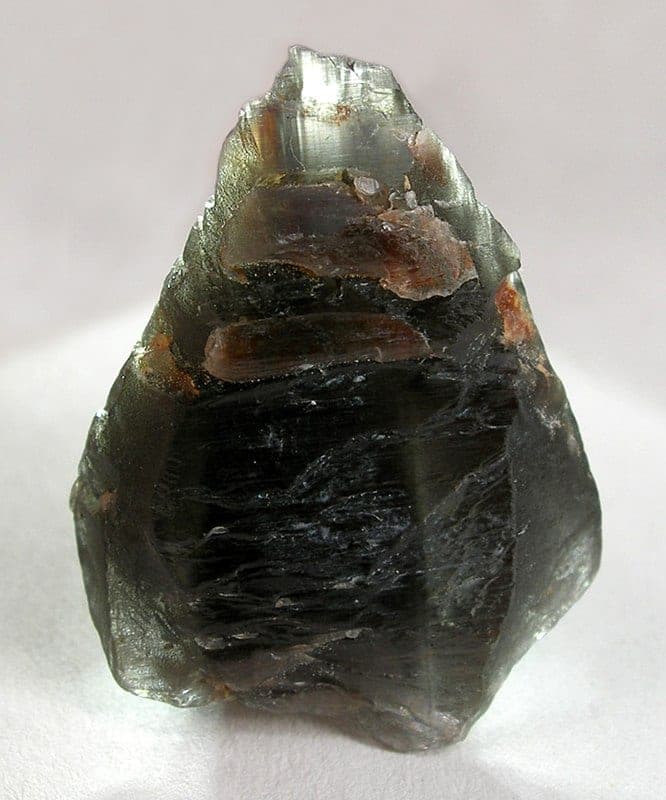
Often found alongside kyanite
Minerals reported to co-occur with kyanite. Spotting these in float or country rock is a strong cue you are in the right ground.
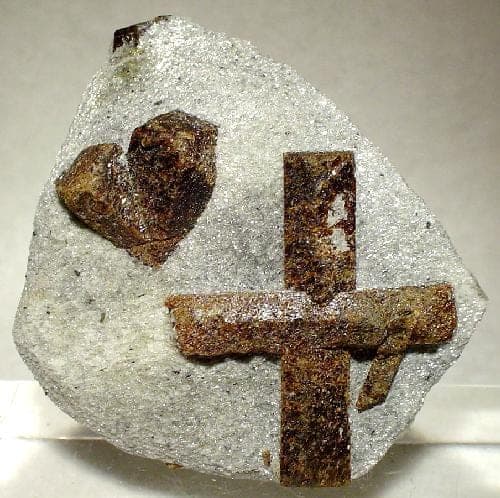
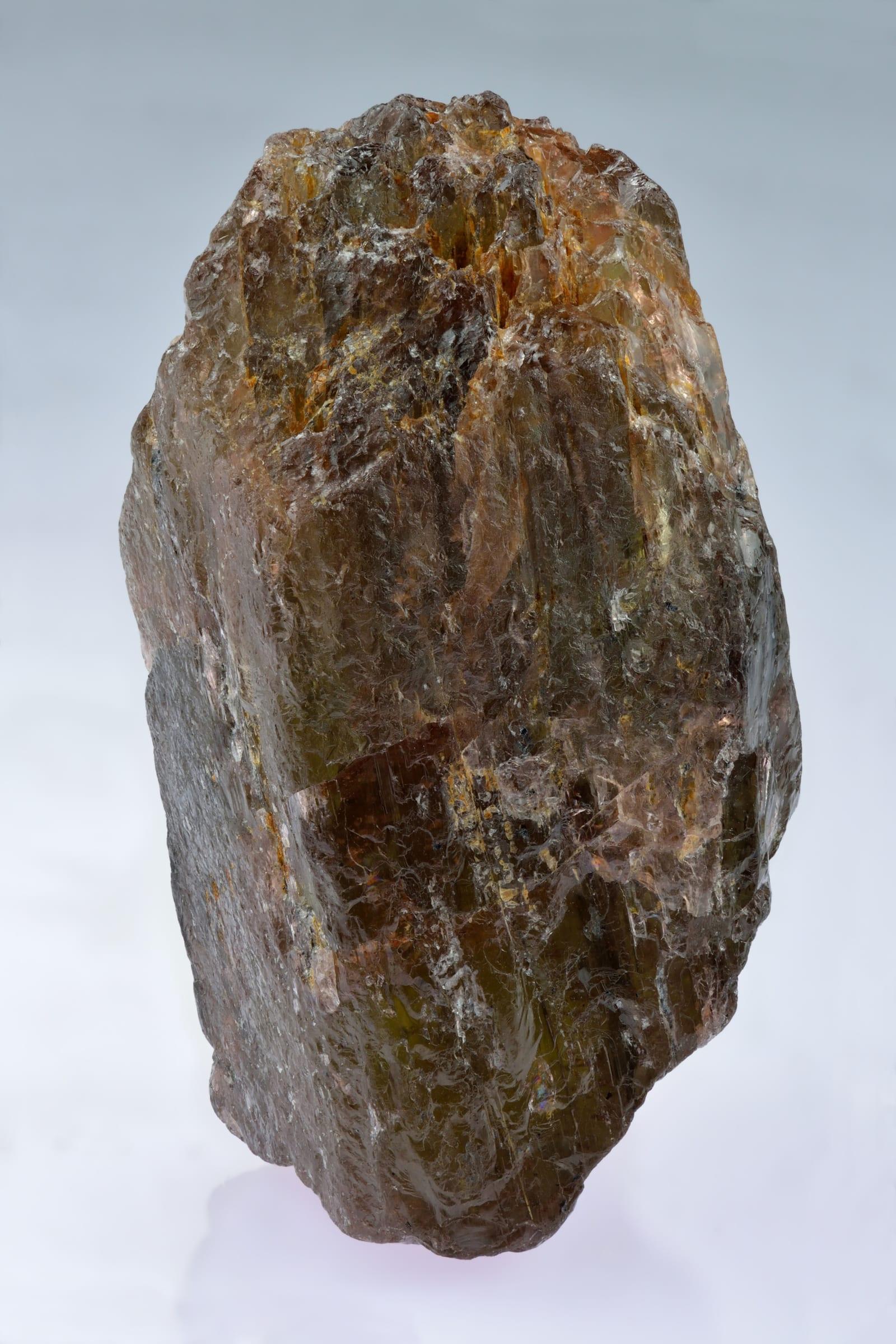
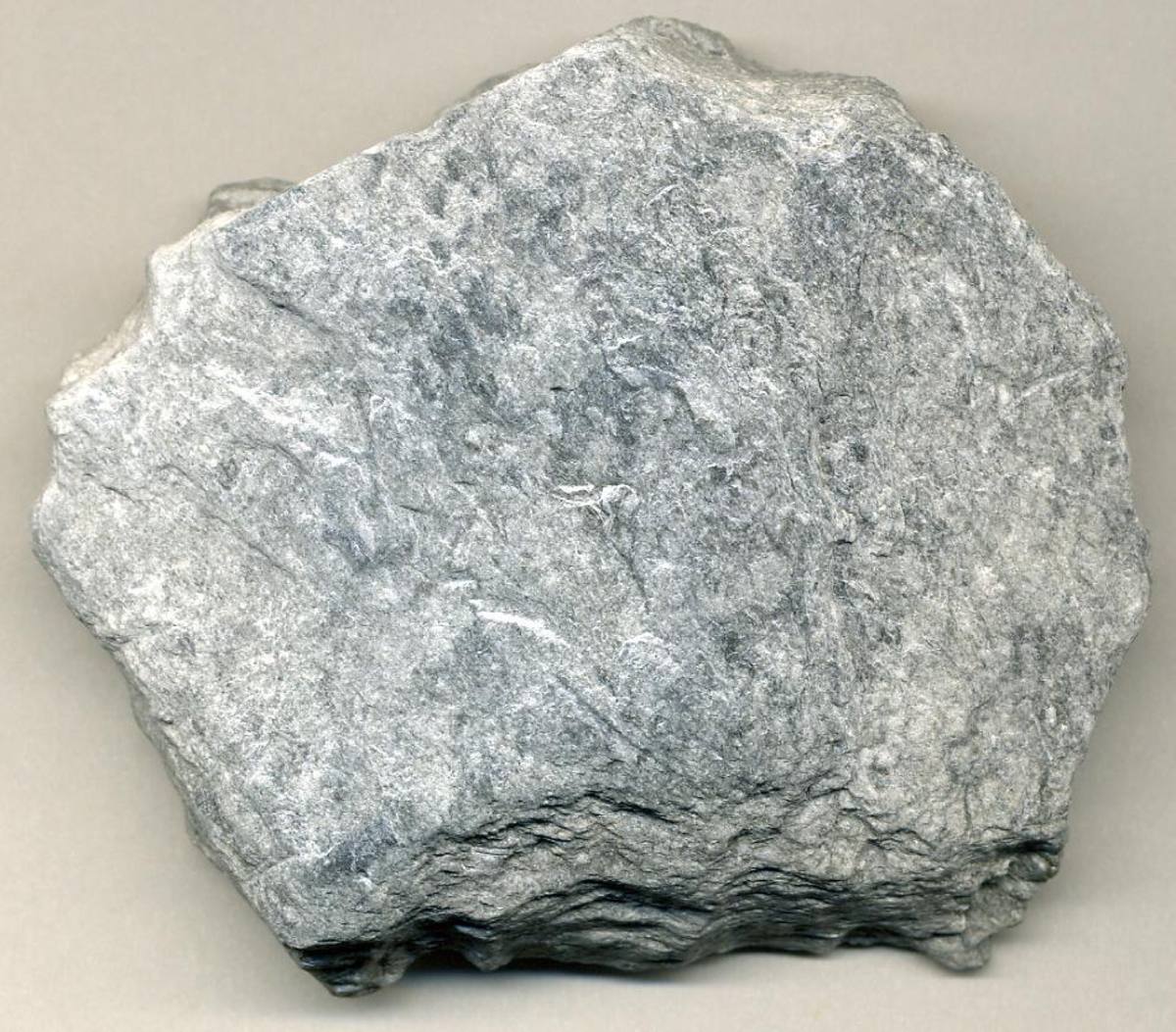
All properties
- Chemical formula
- Al₂SiO₅
- Mohs hardness
- 5.5-7
- Density
- 3.53-3.65 g/cm³
- Streak
- White
- Luster
- Vitreous to pearly
- Transparency
- Transparent to translucent
- Crystal system
- Triclinic
- Crystal habit
- Bladed crystals
- Cleavage
- Perfect on {100}, good on {010}, (100) ^ (010) = 79°; parting on {001}
- Rarity
- Common
- Uses
- Gemstone, Industrial, Collector
- Host rock
- In gneisses, schists, included pegmatites, and quartz veins, from moderately high-pressure regional metamorphism of principally pelitic rocks; detrital in sedimentary rocks
Where rockhounds find kyanite
57 mapped spotsClassic worldwide localities
- Lyme, Grafton Co., New Hampshire, USA
- Judd's Bridge, Litchfield Co., Connecticut, USA
- Darby, Delaware Co., Pennsylvania, USA
- Bakersville, Mitchell Co., and near Burnsville, Yancy Co., North Carolina, USA
- Mt. Greiner, Zillertal, Tirol, Austria
- Alpe Sponda, Pizzo Forno, and at Alpe Campolungo, Tessin, Switzerland
U.S. states with kyanite
Each link opens a state-specific list of mapped rockhounding spots that produce kyanite.
Field-hunting tip
Where it forms: In gneisses, schists, included pegmatites, and quartz veins, from moderately high-pressure regional metamorphism of principally pelitic rocks; detrital in sedimentary rocks. If you start seeing staurolite, andalusite, sillimanite in float, you are in the right ground. Typical habit: bladed crystals. Train your eye for that shape before scanning the outcrop. In the U.S., the densest reported localities are in North Carolina, Georgia, Wisconsin. Start trip planning there.
More kyanite photos
Common questions
How do you identify kyanite?+
Where is kyanite found?+
Can I find kyanite in the United States?+
What rocks look like kyanite?+
What minerals are found with kyanite?+
What kind of rock does kyanite form in?+
What is kyanite used for?+
Find kyanite on the map
RockHoundR shows mapped rockhounding spots, access rules, and lets you log every find.