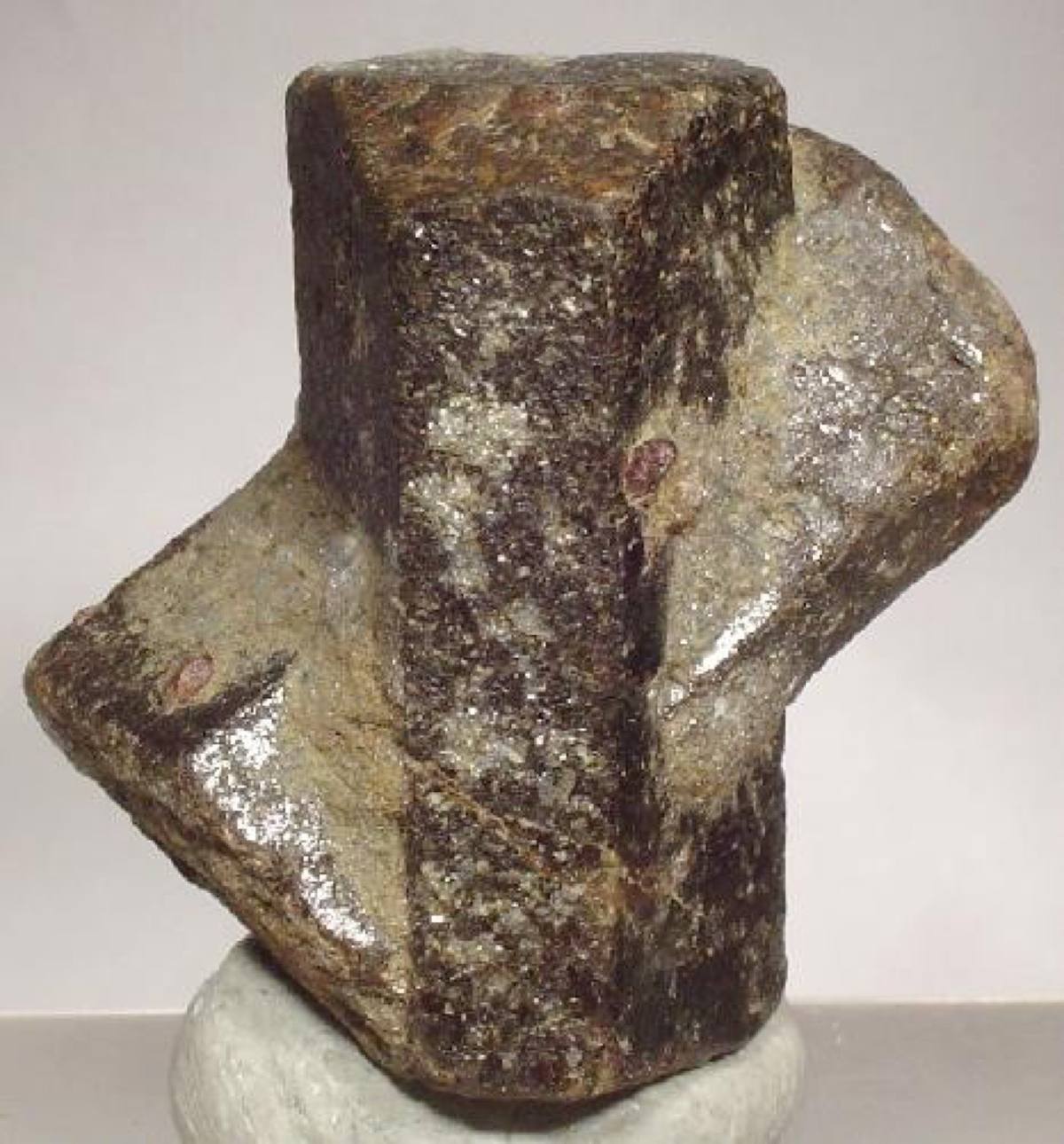
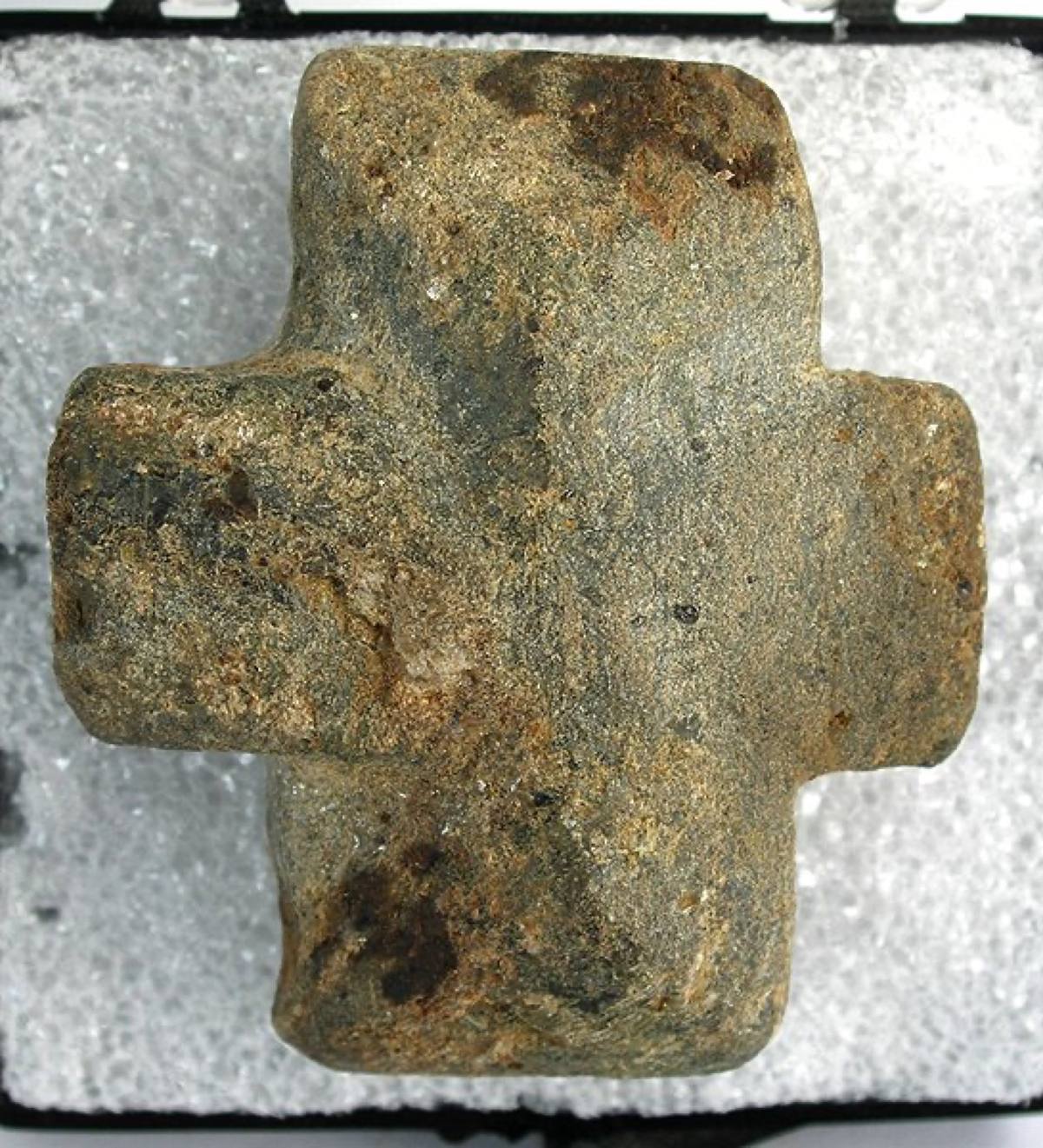
Staurolite is a fascinating metamorphic mineral famously known for its penetration twins that form cross-like shapes, often called 'fairy crosses'. It is a key indicator mineral for medium-grade metamorphic rocks and is typically found embedded in mica schist, standing out as dark, prismatic crystals against a lighter matrix.
Spotting staurolite in the field
Field marks- 1
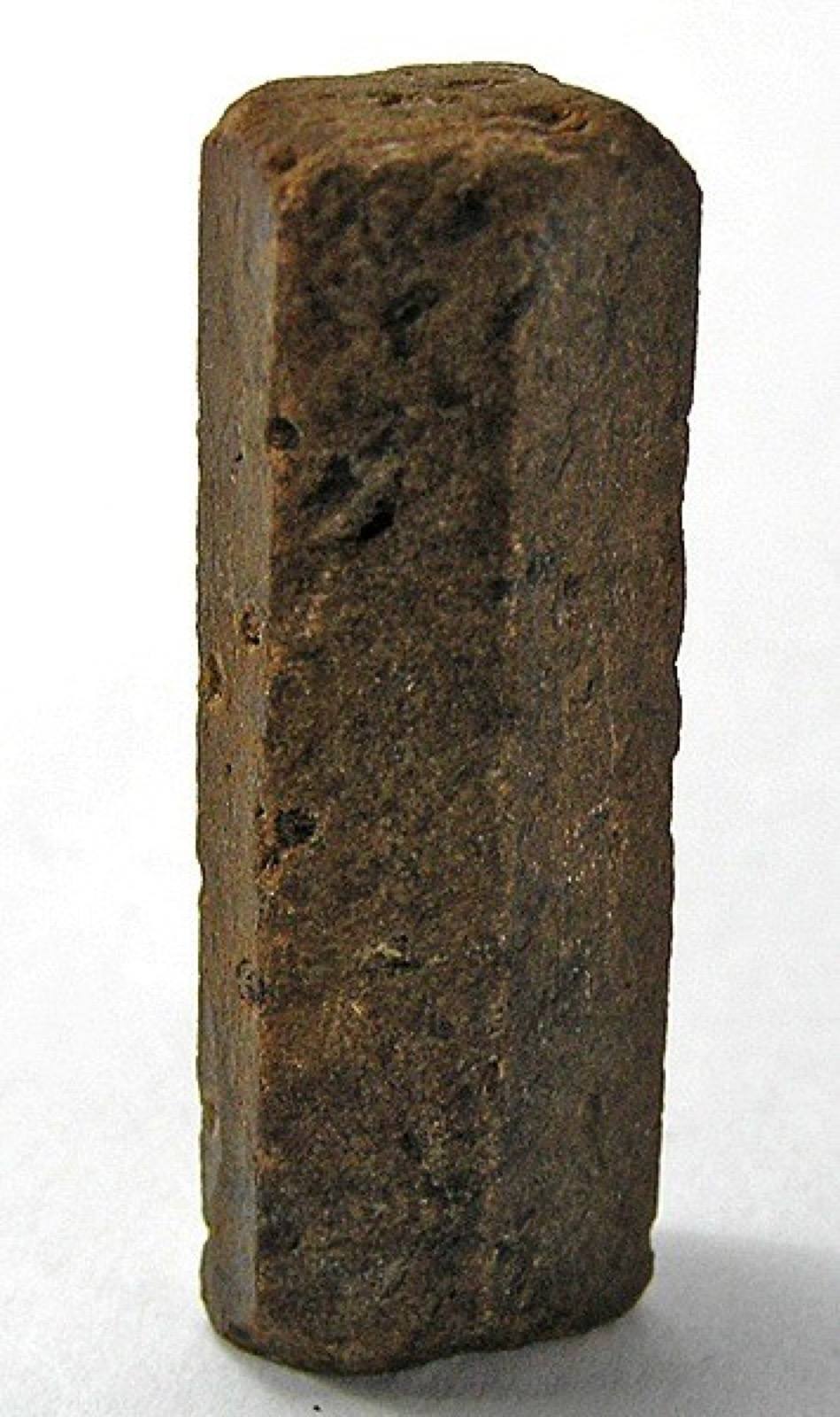
Reddish brown to nearly black stubby prisms in mica schist
- 2
Twinned crystals cross at 60 or 90 degrees, forming a natural cross
- 3
Dull to slightly resinous luster, hardness 7 to 7.5
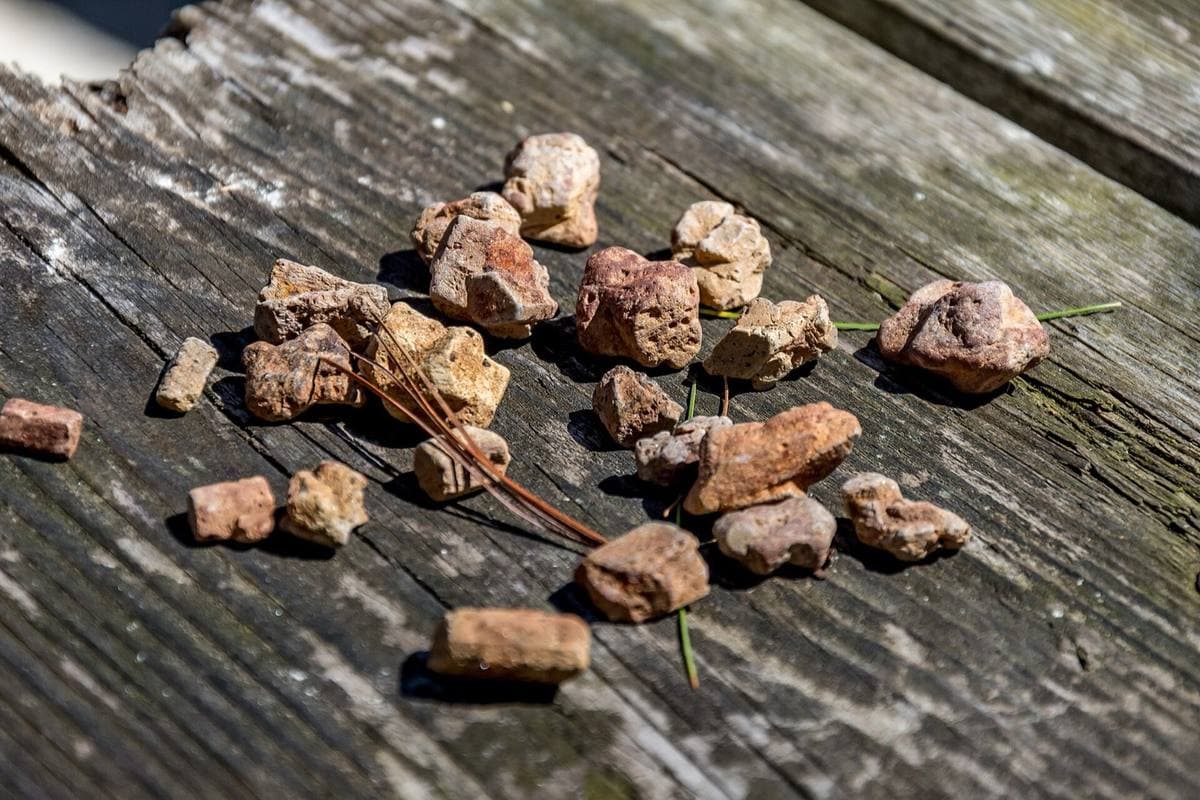
Staurolite's cross-twinned crystals, called fairy stones, are the reason anyone collects it, and the 90-degree cross is much rarer than the 60-degree one. It forms in medium-grade metamorphic rock, so look in mica schist and in the weathered soil below schist outcrops, where the crystals survive after the rock around them has broken down. Screening loose soil below an outcrop is more productive than hammering the rock, and Fairy Stone State Park in Virginia lets visitors collect them.
Straight answers
- Is it worth cutting?
- Not cut. Cleaned of matrix with a brush and displayed, or worn as a natural cross.
- What is it really worth?
- Low. Sharp, complete 90-degree crosses with clean arms are what collectors want.
- Can you legally keep it?
- Fairy Stone State Park in Virginia permits visitors to collect staurolite, which is unusual for a state park and worth knowing. Elsewhere, ordinary rules apply.
Where it is worth going
- Fairy Stone State ParkPatrick County, Virginia
One of the few state parks that lets visitors collect. Staurolite crosses weather out of the soil.
Often confused with
Staurolite vs. its common look-alikes, and how to tell them apart in the field.
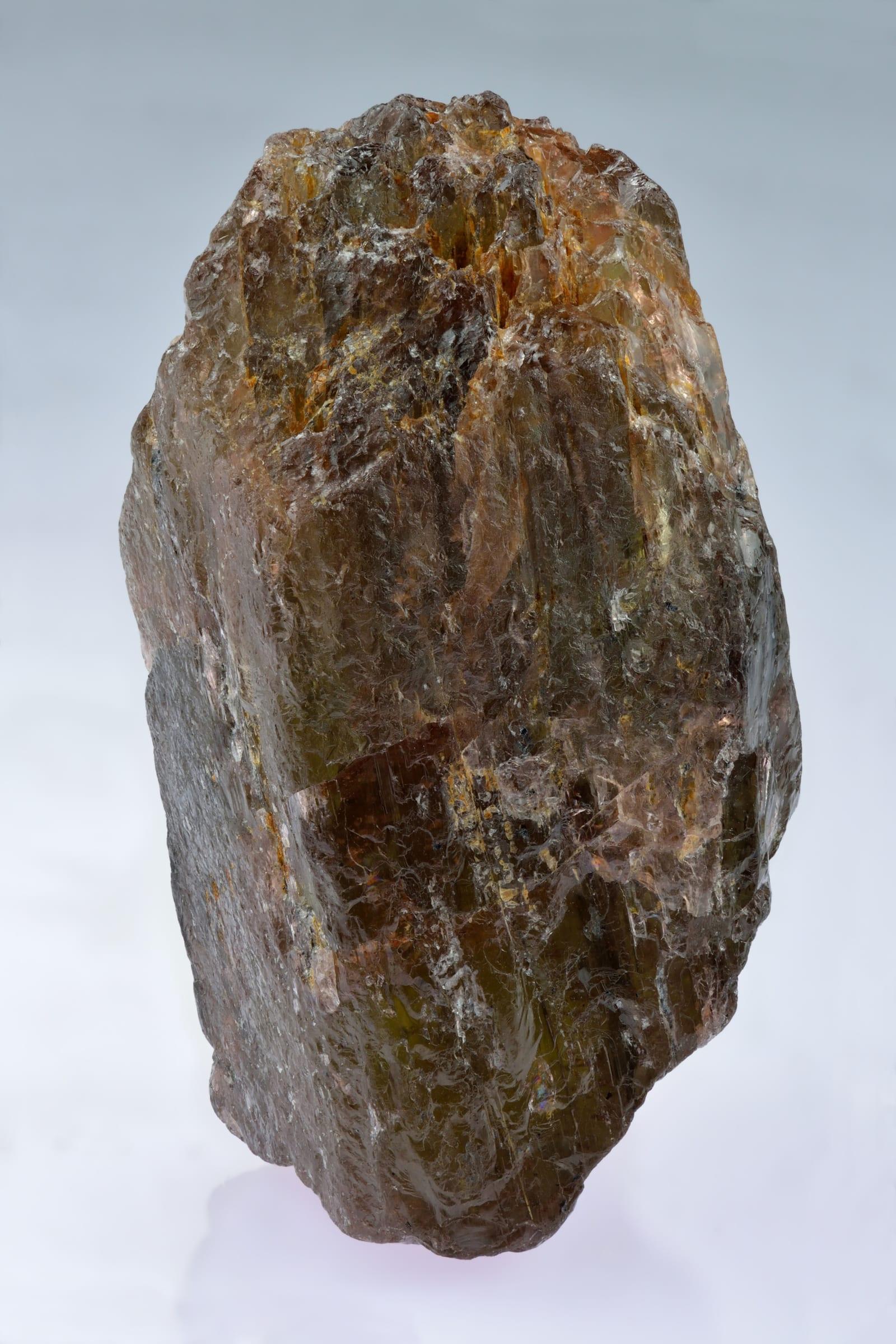
Often found alongside staurolite
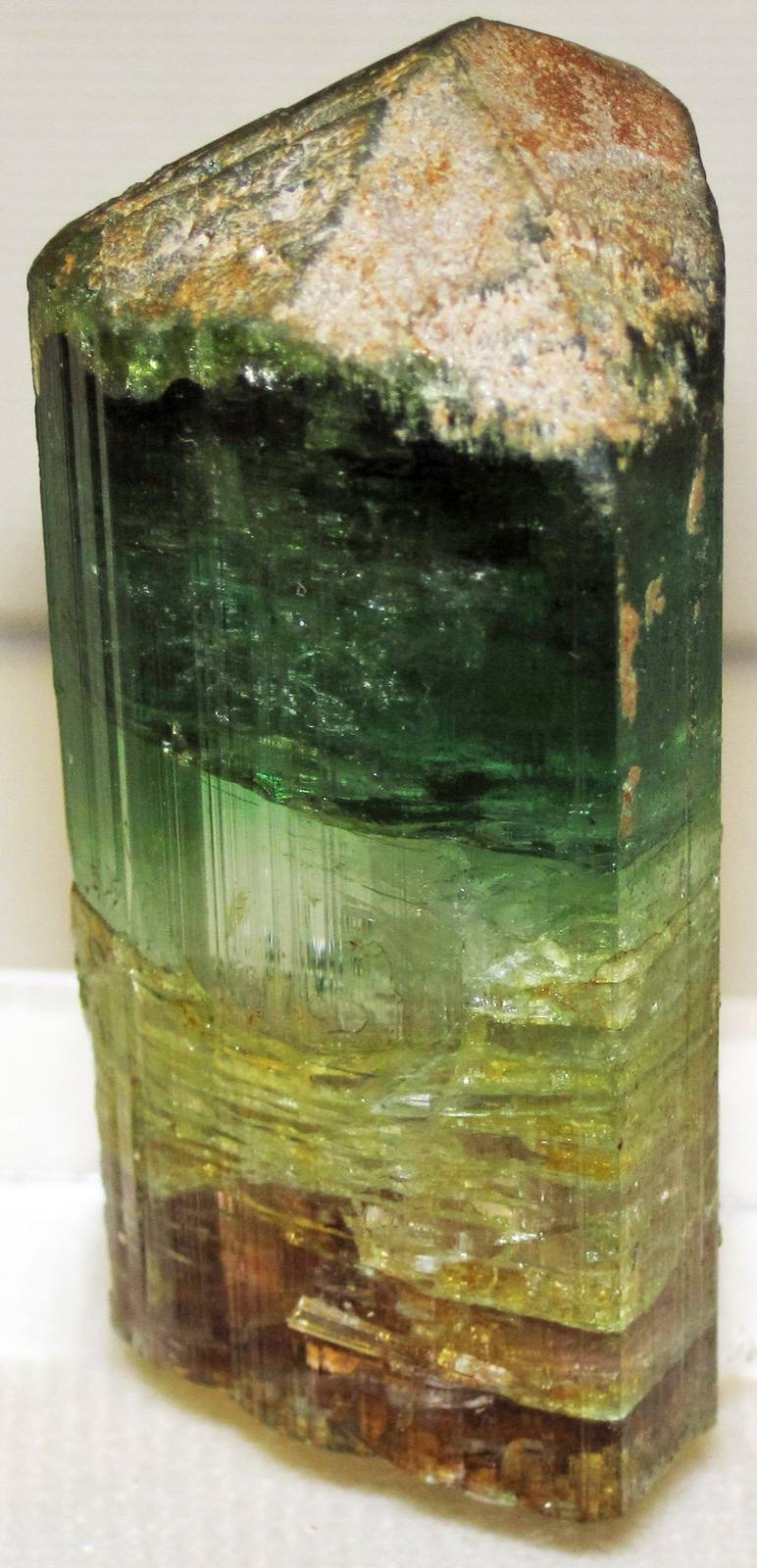
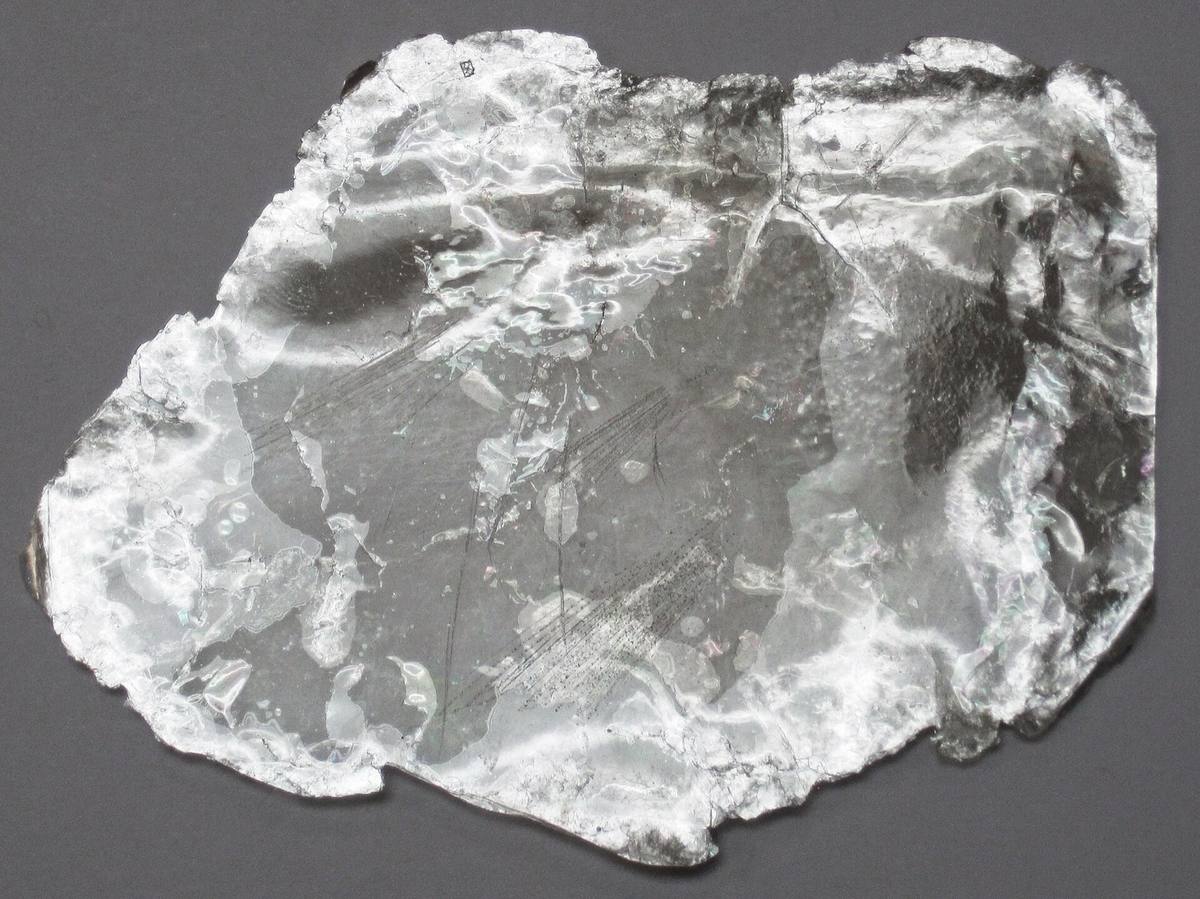
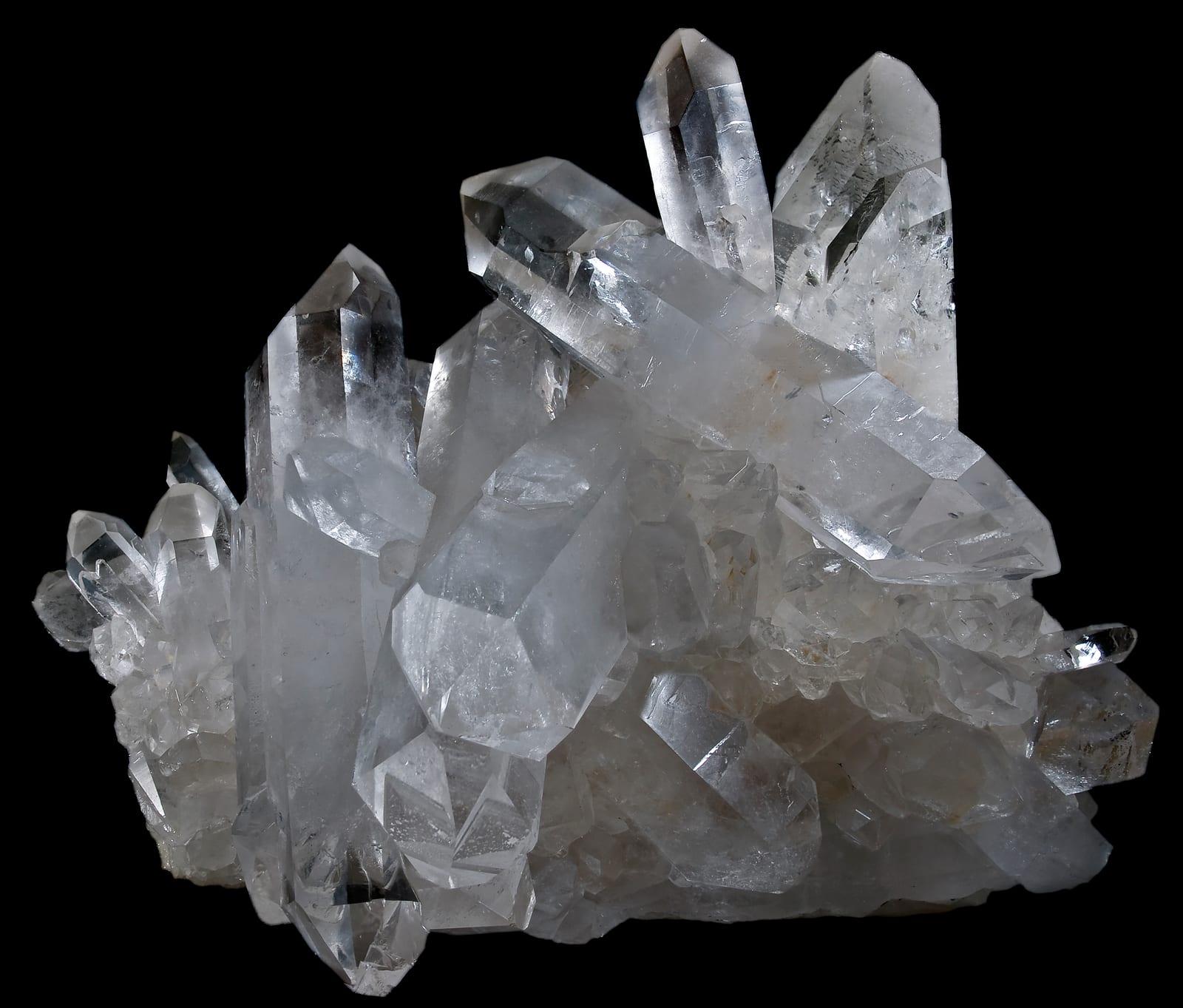
Minerals reported to co-occur with staurolite. Spotting these in float or country rock is a strong cue you are in the right ground.
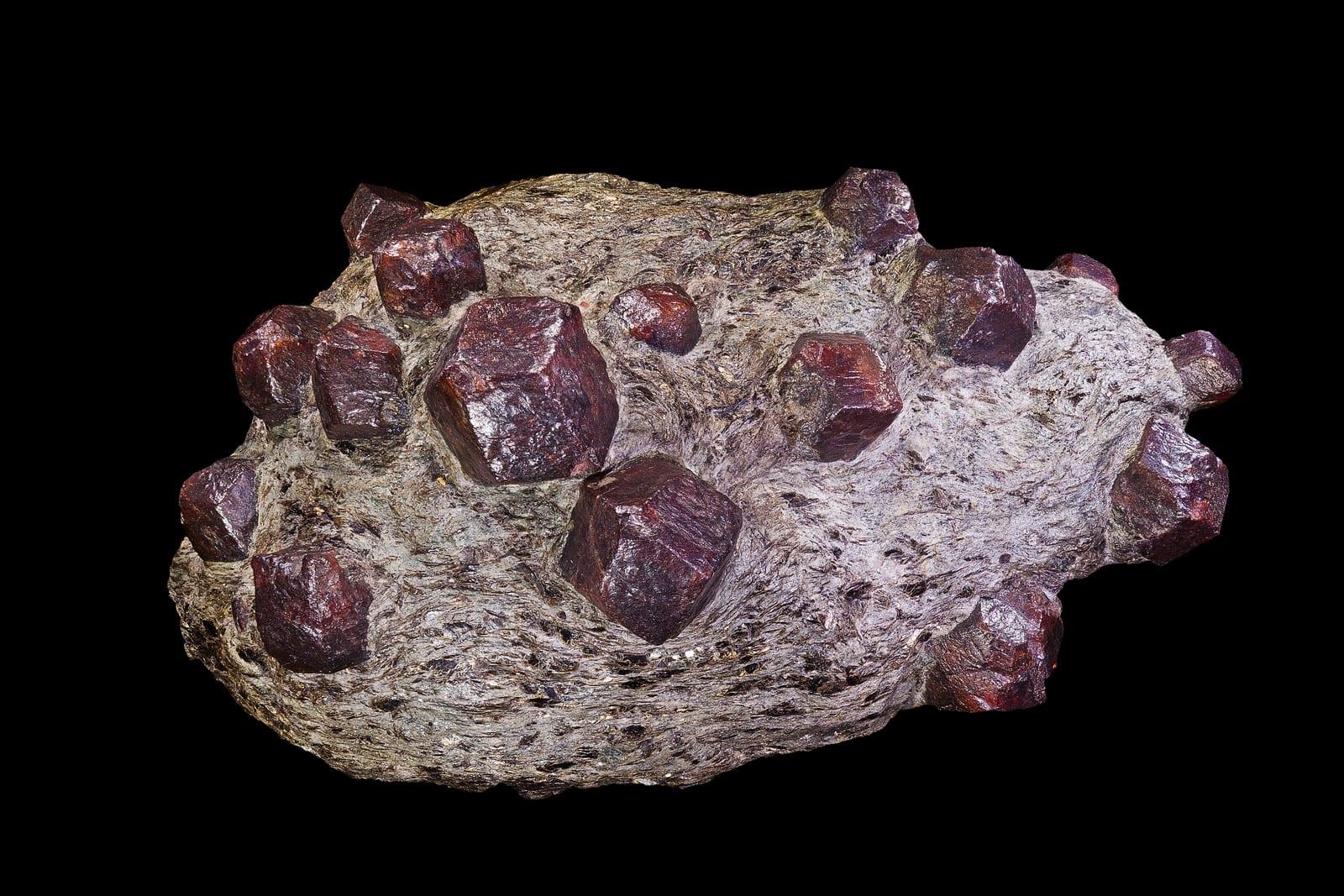
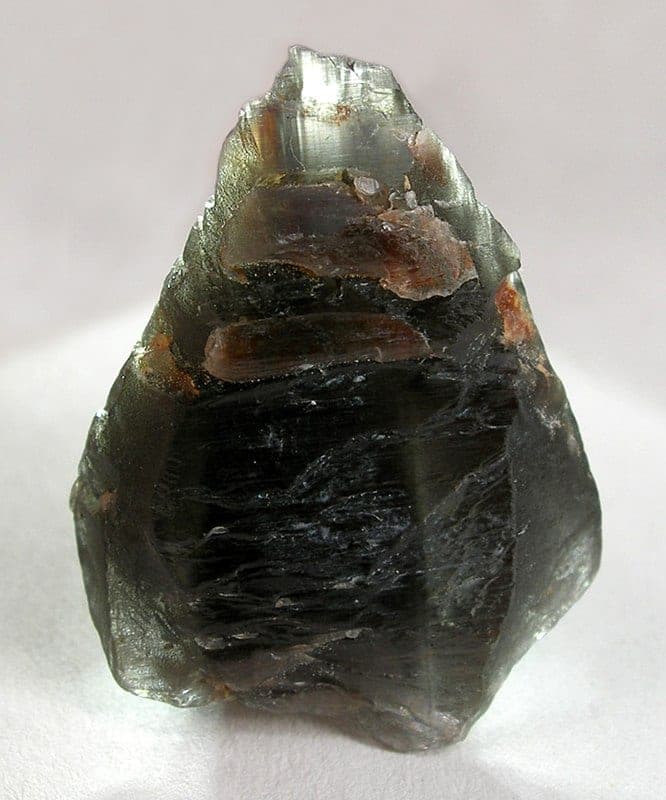
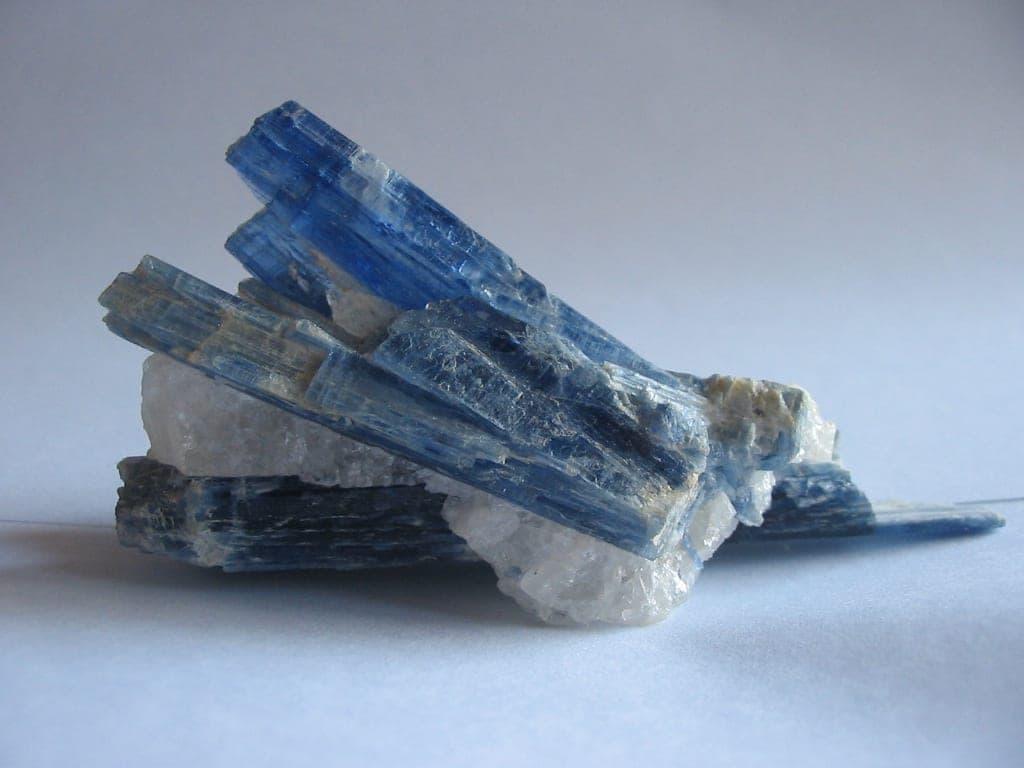
All properties
- Chemical formula
- Fe₂Al₉Si₄O₂₃(OH)
- Mohs hardness
- 7-7.5
- Density
- 3.74-3.83 g/cm³
- Streak
- White to grayish
- Luster
- Subvitreous to resinous
- Transparency
- Transparent to opaque
- Crystal system
- Monoclinic
- Crystal habit
- Prismatic, often cruciform penetration twins
- Cleavage
- Distinct on {010}
- Rarity
- Common
- Uses
- Collector, Educational
- Host rock
- Common in pelitic schists, gneisses, and argillaceous rocks regionally metamorphosed to amphibolite grade; also a detrital mineral
Where rockhounds find staurolite
60 mapped spotsClassic worldwide localities
- Franconia, Grafton Co., New Hampshire, USA
- Chesterfield, Hampshire Co., Massachusetts, USA
- Blue Ridge, Fannin Co., Georgia, USA
- Picures, Taos Co., New Mexico, USA
- Pizzo Forno and Alpe Piona, Ticino, Switzerland
- Mt. Greiner, Zillertal, Tirol, Austria
U.S. states with staurolite
Each link opens a state-specific list of mapped rockhounding spots that produce staurolite.
Field-hunting tip
Where it forms: Common in pelitic schists, gneisses, and argillaceous rocks regionally metamorphosed to amphibolite grade; also a detrital mineral. If you start seeing almandine, sillimanite, kyanite in float, you are in the right ground. Typical habit: prismatic, often cruciform penetration twins. Train your eye for that shape before scanning the outcrop. In the U.S., the densest reported localities are in North Carolina, Georgia, New Hampshire. Start trip planning there.
More staurolite photos
Common questions
How do you identify staurolite?+
Where is staurolite found?+
Can I find staurolite in the United States?+
What rocks look like staurolite?+
What minerals are found with staurolite?+
What kind of rock does staurolite form in?+
What is staurolite used for?+
Find staurolite on the map
RockHoundR shows mapped rockhounding spots, access rules, and lets you log every find.