
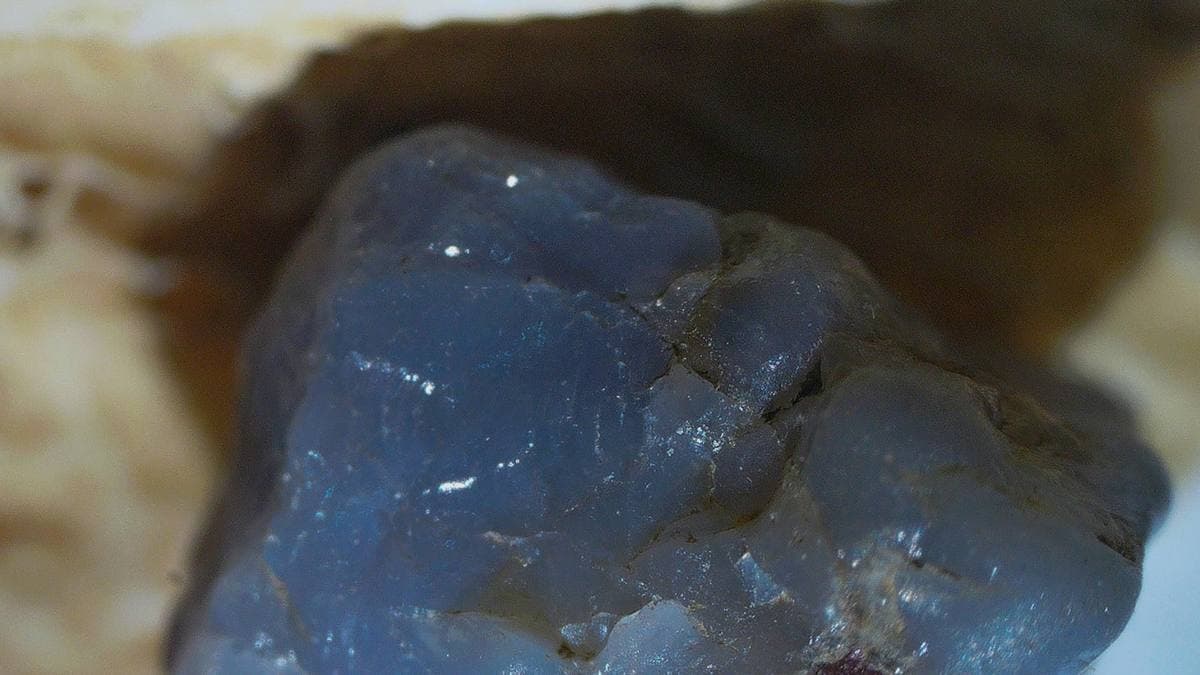
Larimar is a rare blue variety of the mineral pectolite found exclusively in the Dominican Republic. It is highly prized by collectors for its unique sky-blue coloration and white, cloud-like patterns that resemble sunlight filtering through Caribbean waters.
Spotting larimar in the field
Field marks- 1
Sky blue to blue-green with white patterning that suggests sunlight through shallow water
- 2
Opaque, with a fibrous radiating structure visible in the pattern
- 3
Hardness around 4.5 to 5, so it is soft and scratches easily
Larimar is a blue variety of pectolite and it comes from exactly one place on Earth: a small area in Barahona Province in the Dominican Republic, where it fills volcanic cavities. It is mined from a single mountainside and washes into the river below, and that is the entire world supply. For anyone outside the island this is a buying material, and the finiteness of the source is the main thing to understand about its price.
Straight answers
- Is it worth cutting?
- Soft, so it scratches in daily wear and suits pendants and earrings better than rings. Color can fade with prolonged strong sunlight.
- What is it really worth?
- Moderate to high and steadily rising, driven by a single finite source. Deep sky blue with strong white patterning is the top grade.
- Can you legally keep it?
- Imported. The mine area is regulated by the Dominican government and worked by local cooperatives.
Often confused with
Larimar vs. its common look-alikes, and how to tell them apart in the field.
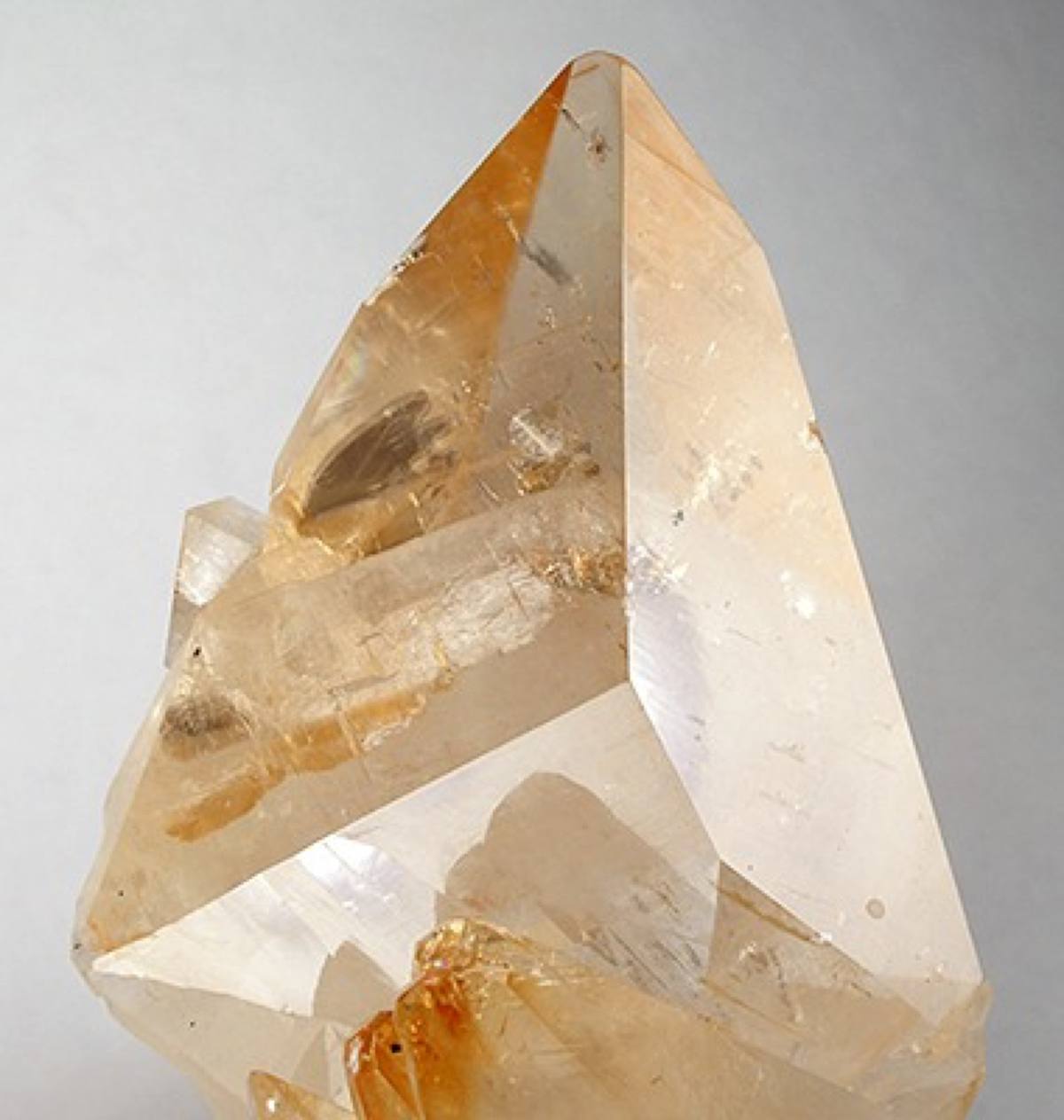
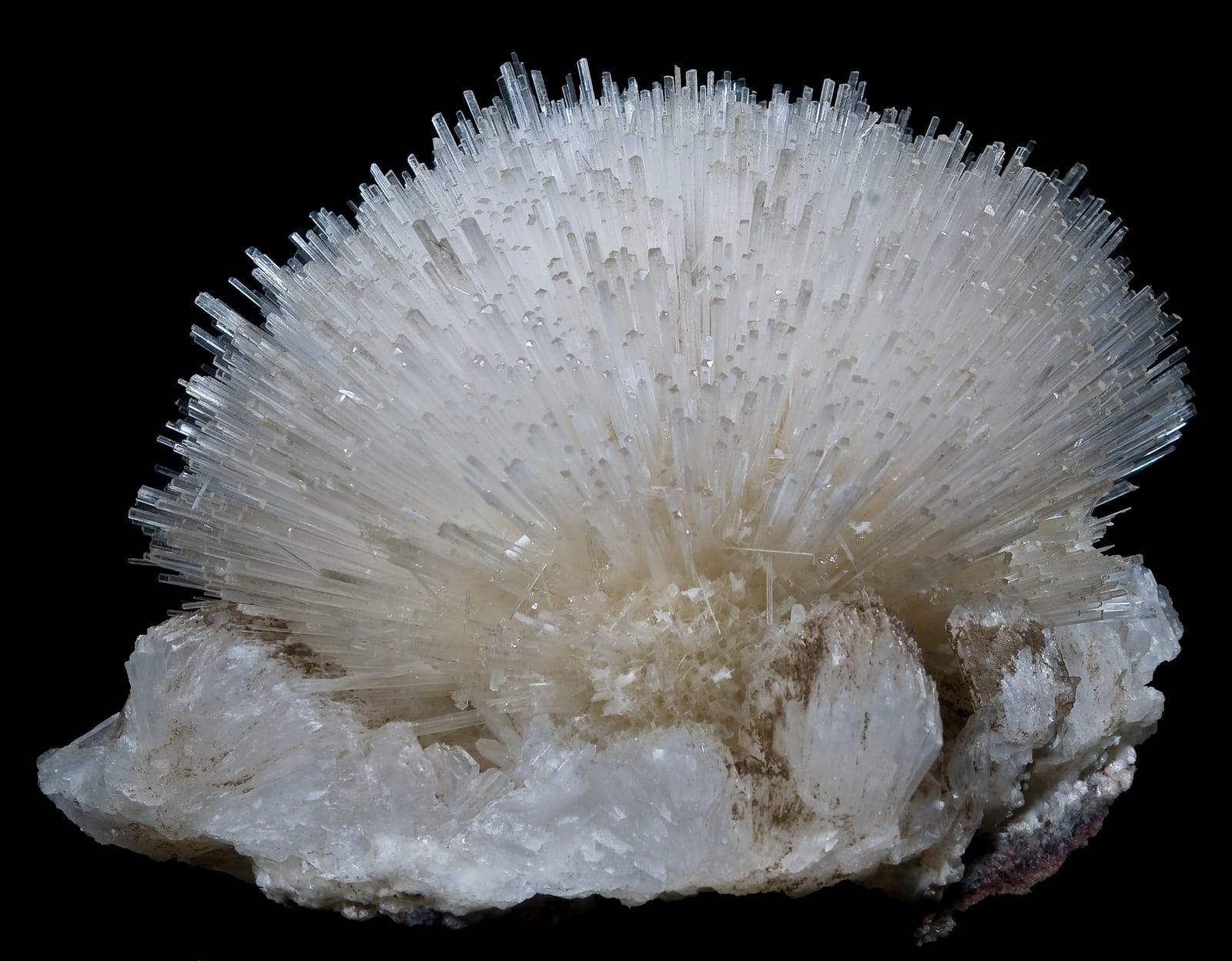
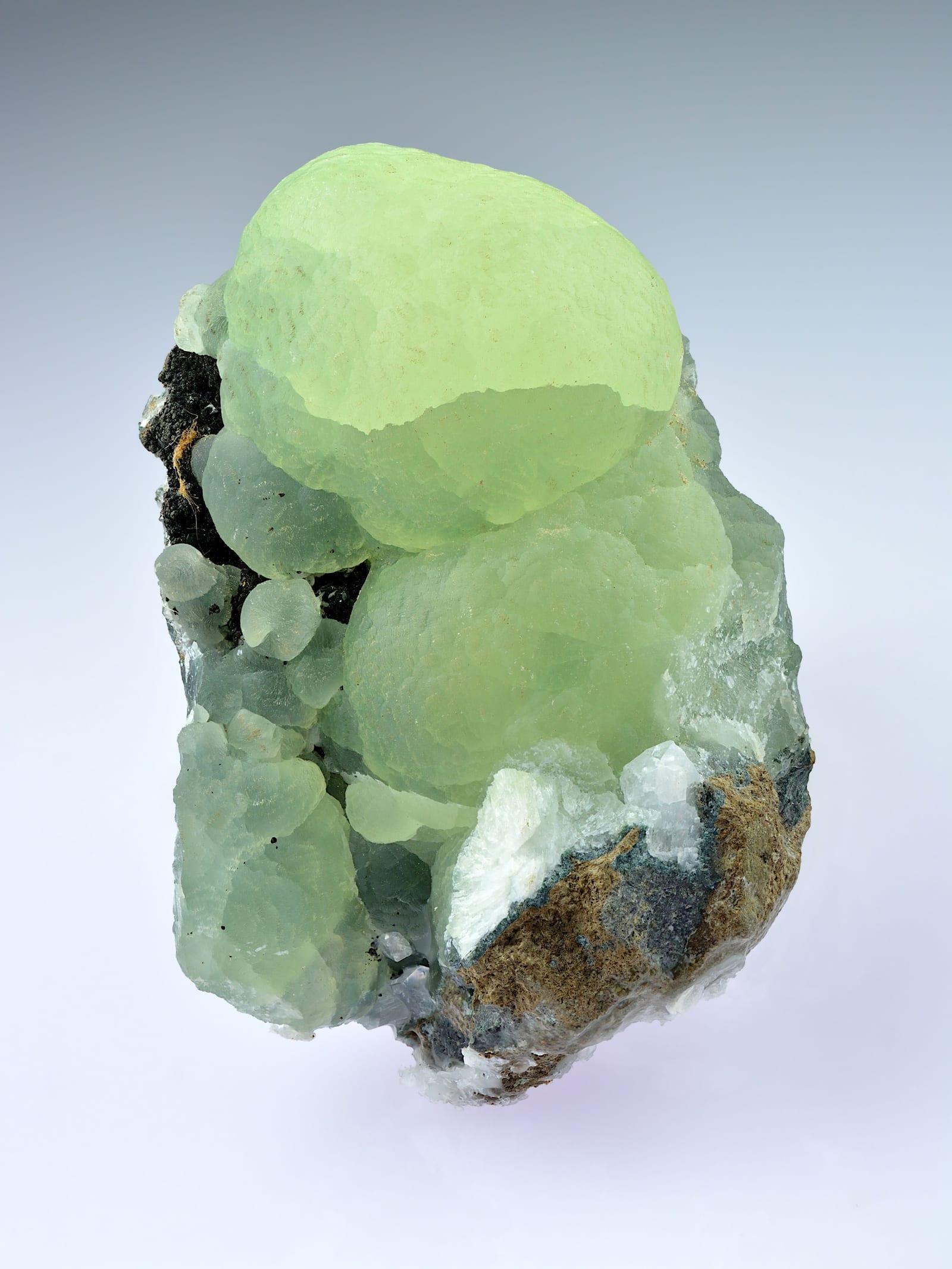
Often found alongside larimar
Minerals reported to co-occur with larimar. Spotting these in float or country rock is a strong cue you are in the right ground.
All properties
- Chemical formula
- NaCa₂Si₃O₈(OH)
- Mohs hardness
- 4.5-5
- Density
- 2.7-2.9 g/cm³
- Colors
- Streak
- White
- Luster
- Vitreous to silky
- Transparency
- Translucent
- Crystal system
- Triclinic
- Crystal habit
- Massive, fibrous, radiating aggregates
- Cleavage
- Perfect in two directions
- Rarity
- Rare
- Uses
- Gemstone, Lapidary, Jewelry, Collector
- Host rock
- basaltic volcanic cavities
Where rockhounds find larimar
Classic worldwide localities
- Barahona, Dominican Republic
Field-hunting tip
Where it forms: basaltic volcanic cavities. If you start seeing calcite, natrolite, prehnite in float, you are in the right ground. Typical habit: massive, fibrous, radiating aggregates. Train your eye for that shape before scanning the outcrop.
Common questions
How do you identify larimar?+
Where is larimar found?+
What rocks look like larimar?+
What minerals are found with larimar?+
What kind of rock does larimar form in?+
What is larimar used for?+
Find larimar on the map
RockHoundR shows mapped rockhounding spots, access rules, and lets you log every find.

