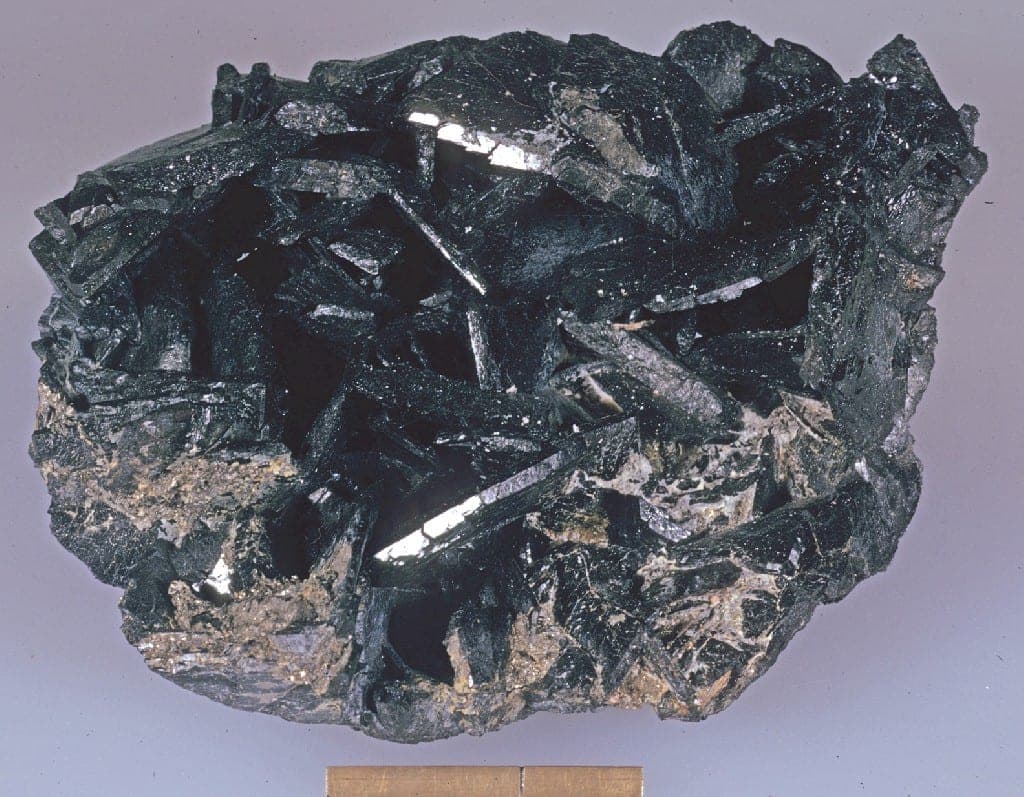
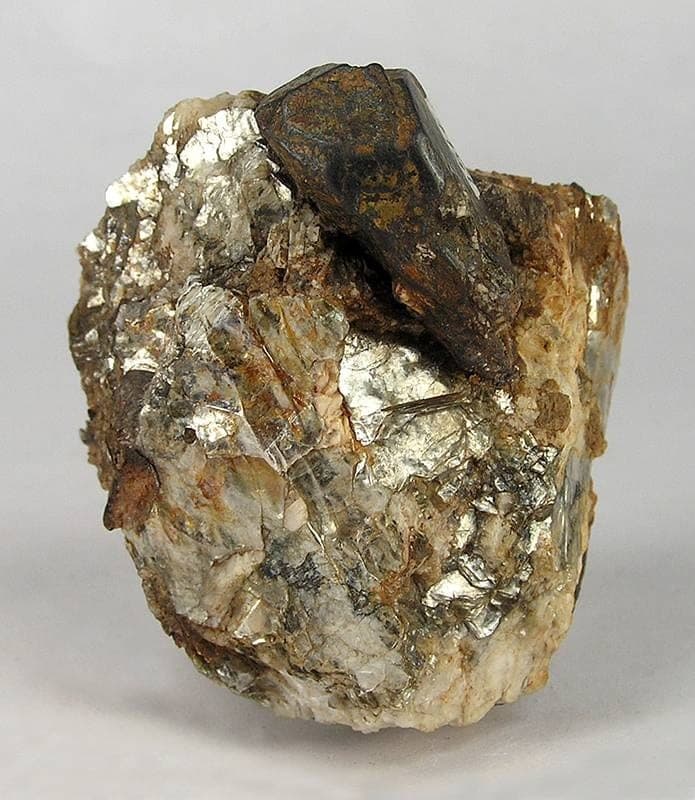
Monazite-(Ce) is a phosphate mineral primarily known as a major source of rare earth elements and thorium. It typically appears as brownish, resinous, wedge-shaped crystals in pegmatites or as rounded grains in alluvial sands. Collectors value it for its well-defined crystalline forms, but it must be handled with appropriate radioactive safety precautions.
Is this monazite-(ce)?
5-step field checkRun through these checks against the specimen in your hand. The more boxes tick, the more confident the ID.
- 1Test the hardnessTry to scratch monazite-(ce) with a known reference. Monazite-(Ce) sits at Mohs 5-5.5, softer than the next harder reference, harder than the previous one.
- 2Check the streakDrag the specimen across an unglazed porcelain plate. Streak: grayish white.
- 3Read the lusterHold the specimen under a strong light. Luster: resinous, waxy, vitreous to adamantine.
- 4Match the color rangeCompare against the expected color range: brown, colorless, greenish, gray white, yellow.
- 5Look at form & habitCrystal system: monoclinic. Typical habit: crystalline, twinning common.
Often confused with
Monazite-(Ce) vs. its common look-alikes, and how to tell them apart in the field.
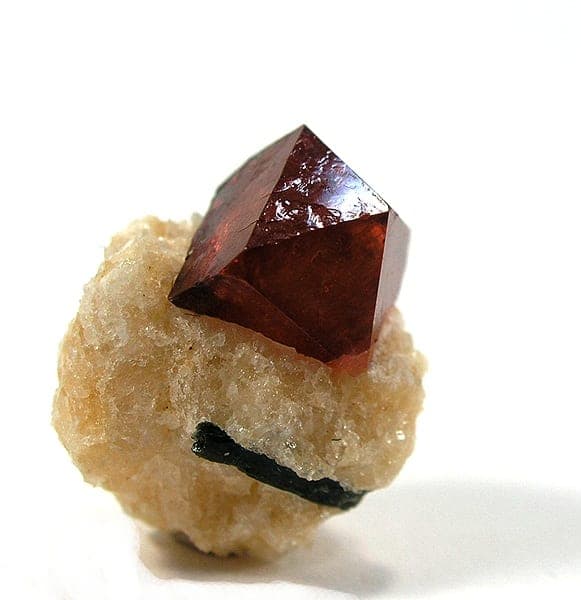
How to tell apart: Zircon is the harder of the two (Mohs 7.5 vs. 5-5.5); streak differs, so Monazite-(Ce) leaves grayish white, Zircon leaves white; luster reads resinous, waxy, vitreous to adamantine on Monazite-(Ce) and vitreous to adamantine; greasy when metamict on Zircon.
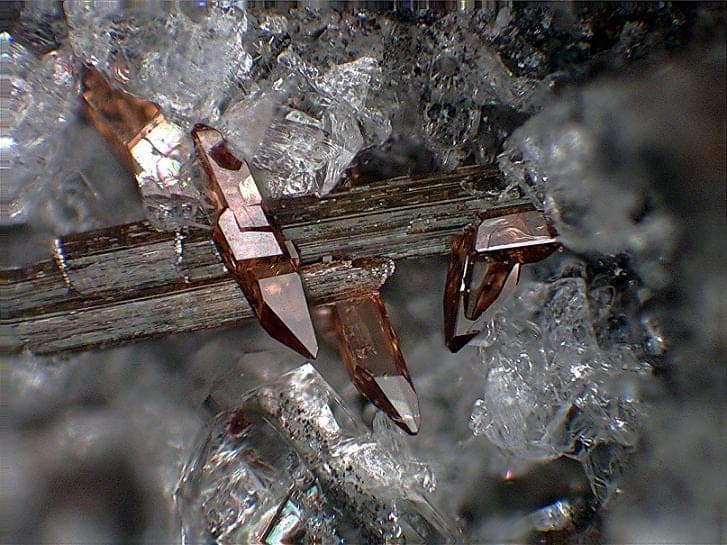
How to tell apart: Streak differs, so Monazite-(Ce) leaves grayish white, Titanite leaves white; luster reads resinous, waxy, vitreous to adamantine on Monazite-(Ce) and adamantine to resinous on Titanite.
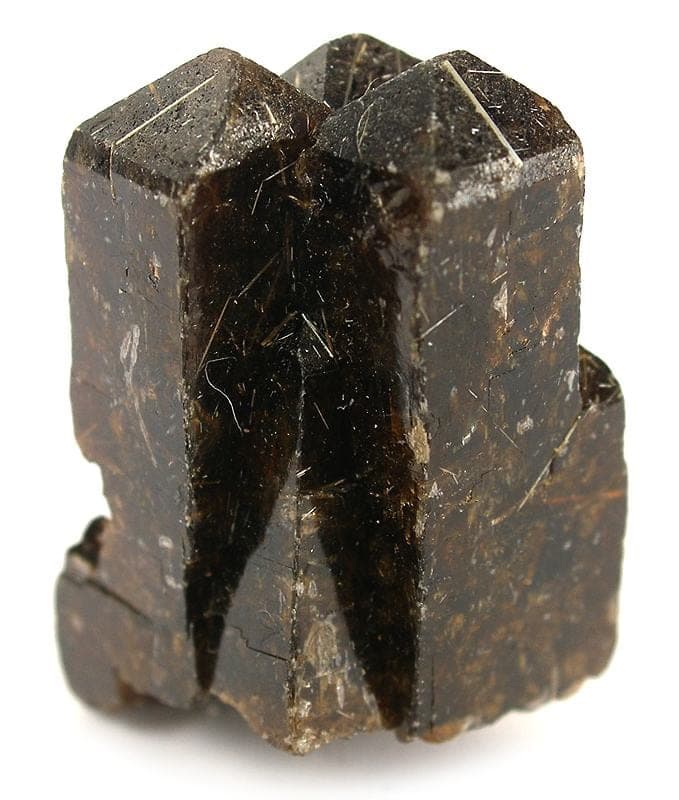
How to tell apart: Streak differs, so Monazite-(Ce) leaves grayish white, Xenotime leaves white; luster reads resinous, waxy, vitreous to adamantine on Monazite-(Ce) and vitreous on Xenotime.
Often found alongside monazite-(ce)
Minerals reported to co-occur with monazite-(ce). Spotting these in float or country rock is a strong cue you are in the right ground.
All properties
- Chemical formula
- CePO₄
- Mohs hardness
- 5-5.5
- Density
- 4.98-5.43 g/cm³
- Streak
- Grayish white
- Luster
- Resinous, waxy, vitreous to adamantine
- Transparency
- Translucent to opaque
- Crystal system
- Monoclinic
- Crystal habit
- Crystalline, twinning common
- Cleavage
- {100}, distinct; {010}, poor; parting on {001} or {111}
- Rarity
- Common
- Uses
- Collector, Scientific research, Ore for rare earth elements
- Host rock
- An accessory mineral in granites, syenites, and their pegmatites; in carbonatites and volcanoclastic rocks; in fissure veins and high-grade metamorphic rocks; commonly detrital in river and beach sands
Where rockhounds find monazite-(ce)
Classic worldwide localities
- Mars Hill, Madison Co., near Double Shoals, Cleveland Co., North Carolina, USA
- Ilmen Mountains, Southern Ural Mountains, Russia, at Miass
- Ambatofotsikely, Ampangabe, and Ampatakala, Madagascar
- Kangankunde Hill carbonatite, 30 km west of Lalaka, Malawi
- Joaquim Felicio mine, near Buenopolis, and José Pinto pegmatite, at Jaguaraçú, near Coronel Fabriciano, Minas Gerais, Brazil
- Ishikawa district, Fukushima Prefecture, Japan
Field-hunting tip
Where it forms: An accessory mineral in granites, syenites, and their pegmatites; in carbonatites and volcanoclastic rocks; in fissure veins and high-grade metamorphic rocks; commonly detrital in river and beach sands. If you start seeing zircon, xenotime, titanite in float, you are in the right ground. Typical habit: crystalline, twinning common. Train your eye for that shape before scanning the outcrop.
Common questions
How do you identify monazite-(ce)?+
Where is monazite-(ce) found?+
Is monazite-(ce) safe to handle?+
What rocks look like monazite-(ce)?+
What minerals are found with monazite-(ce)?+
What kind of rock does monazite-(ce) form in?+
What is monazite-(ce) used for?+
Find monazite-(ce) on the map
RockHoundR shows mapped rockhounding spots, access rules, and lets you log every find.