Nephrite is an extremely tough, fibrous amphibole mineral traditionally prized for carvings and jewelry. It is often found as dense, massive rocks rather than individual crystals and is distinguished by its waxy luster and high tenacity.
Spotting nephrite in the field
Field marks- 1
Dark to mid green, opaque to slightly translucent, with a smooth waxy surface
- 2
Exceptionally tough: it resists breaking far beyond what its hardness suggests
- 3
Rings with a clear musical note when tapped, where serpentine sounds dull
Toughness, not hardness, is what makes jade jade. Nephrite is an interlocking mass of amphibole fibers, which means it will blunt a hammer rather than break, and that felted structure is why prehistoric peoples made tools from it. The tap test is genuinely useful in the field: a real nephrite cobble rings. Look in serpentine country, in river gravels below ultramafic outcrops. Wyoming and the Big Sur coast of California are the classic American sources.
Straight answers
- Is it worth cutting?
- Slow to cut because of its toughness, and it takes a superb polish. Wyoming jade in particular is dense enough that impatience just wastes abrasive.
- What is it really worth?
- Moderate. Deep even color, translucency and freedom from fractures are what matter. Jadeite generally outsells nephrite.
- Can you legally keep it?
- Wyoming jade occurs on a mix of public and private land, with state rules on collecting from state ground. At Jade Cove on the Big Sur coast, collecting is allowed from the beach below the mean high tide line, but digging into the cliffs and removing jade from above that line is prohibited.
Where it is worth going
- Jade CoveBig Sur coast, Monterey County, California
Beach and dive collecting of nephrite. Legal below mean high tide only, and the surf there is dangerous.
- Wyoming jade countryCentral Wyoming, around the Granite and Rattlesnake ranges
The Wyoming state gem. Mixed land status, much of it ranch land needing permission.
Often confused with
Nephrite vs. its common look-alikes, and how to tell them apart in the field.
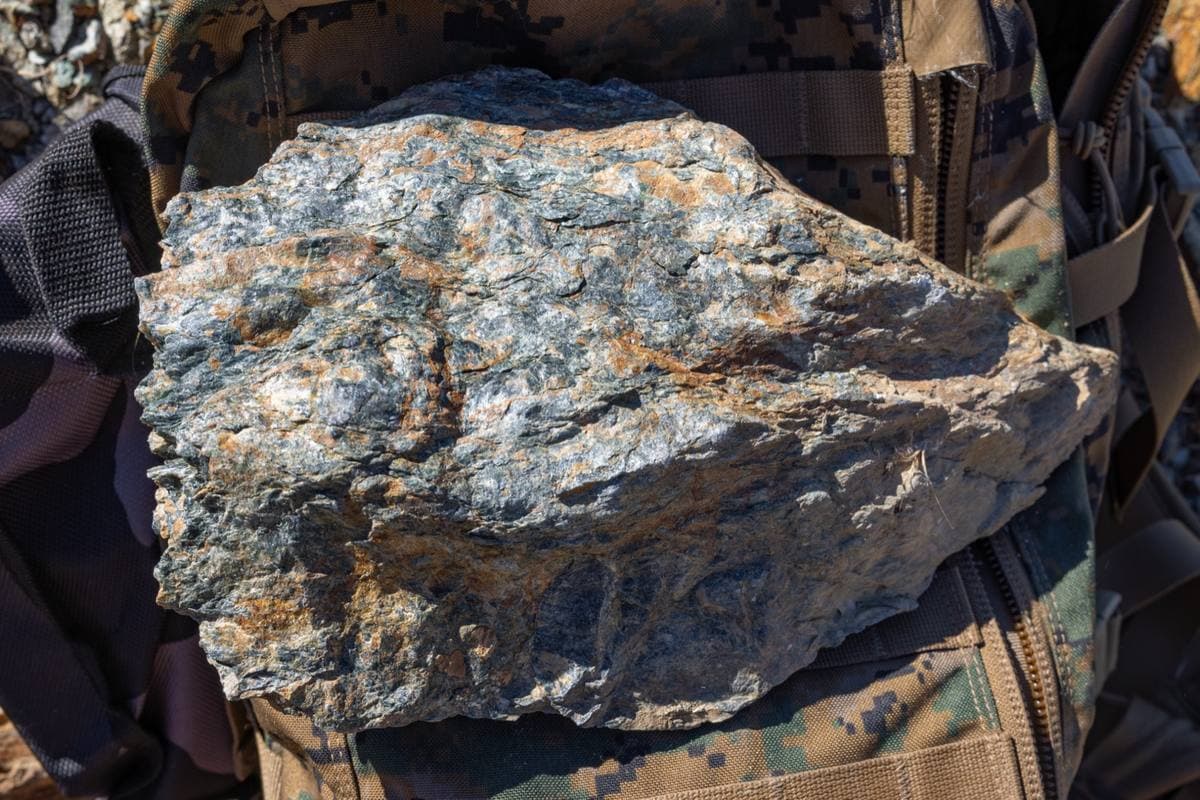
How to tell apart: The most common substitution. Serpentine is soft, greasy and sounds dull when tapped. Nephrite is hard, tough and rings.
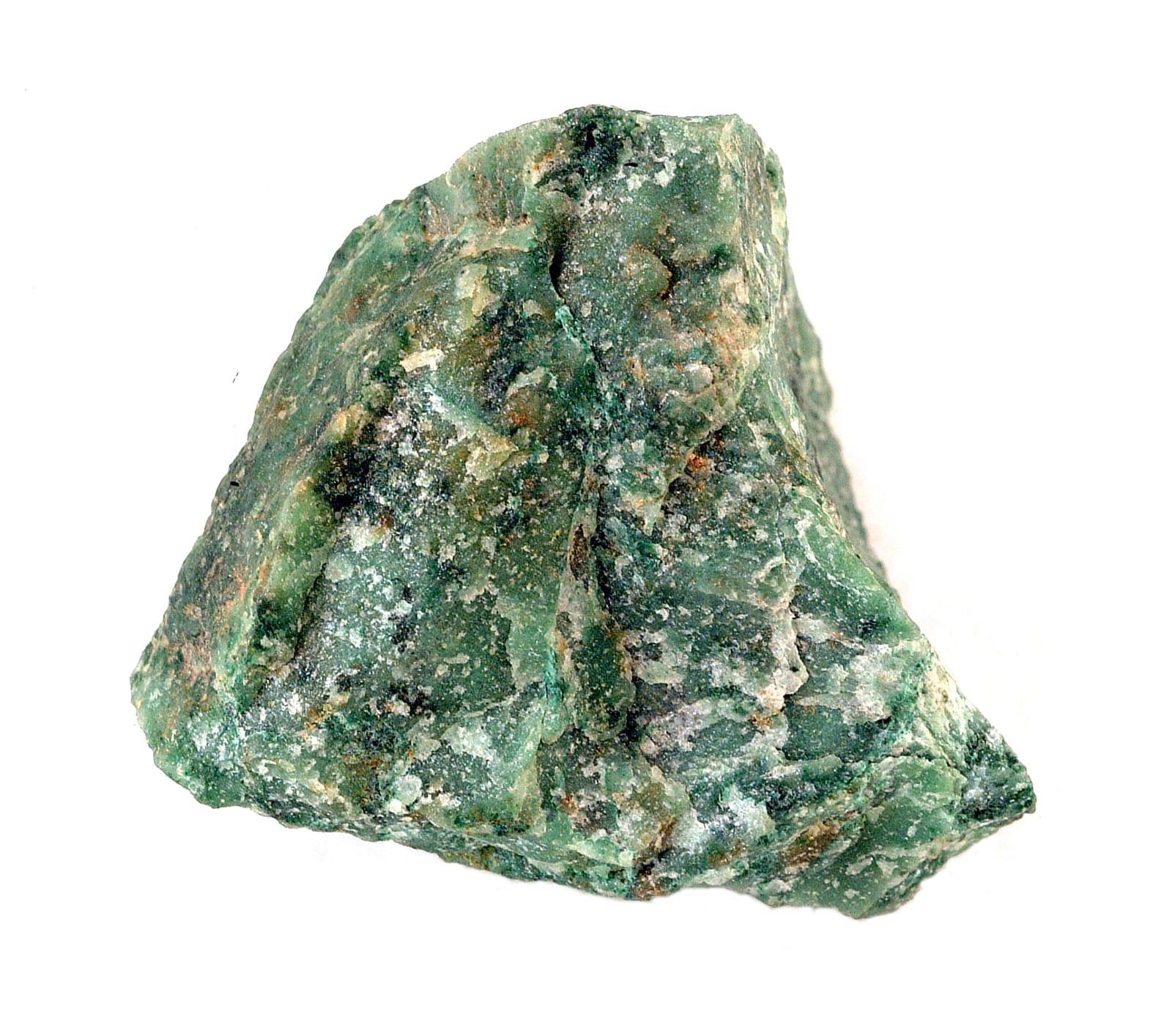
How to tell apart: The other true jade, and the more valuable one. Jadeite has a granular sugary texture under magnification; nephrite is fibrous and felted.
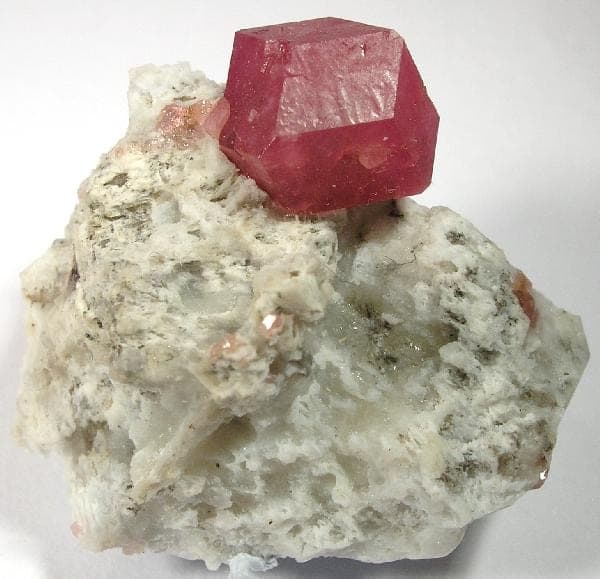
How to tell apart: Massive green grossular is sold as Transvaal jade. It is granular and lacks nephrite's toughness.
Often found alongside nephrite
Minerals reported to co-occur with nephrite. Spotting these in float or country rock is a strong cue you are in the right ground.
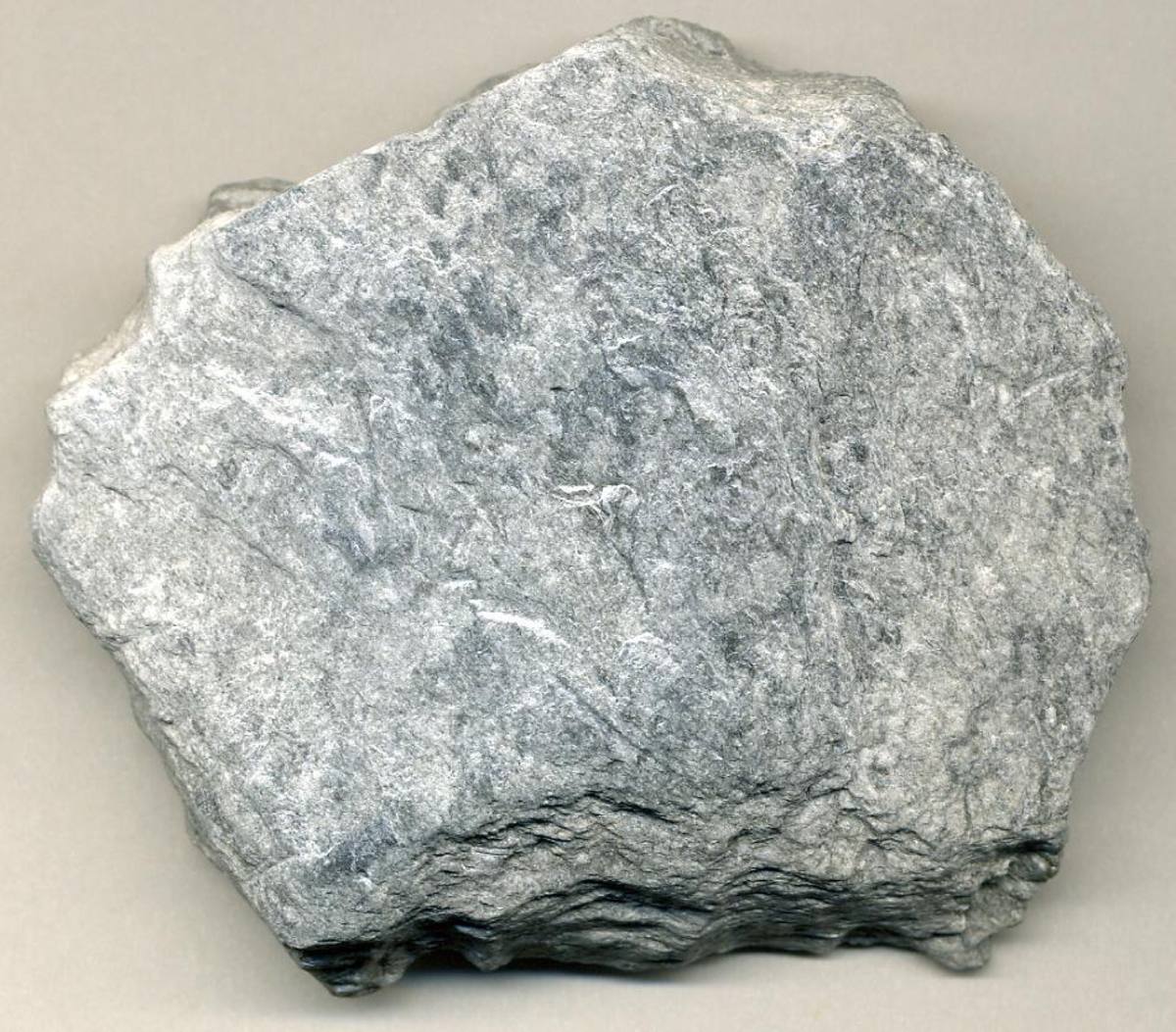
All properties
- Chemical formula
- Ca₂(Mg,Fe)₅Si₈O₂₂(OH)₂
- Mohs hardness
- 6-6.5
- Density
- 2.9-3.0 g/cm³
- Streak
- White
- Luster
- Waxy
- Transparency
- Translucent
- Crystal system
- Monoclinic
- Crystal habit
- Fibrous mass
- Cleavage
- Perfect
- Rarity
- Common
- Uses
- Lapidary, Decorative, Collector, Sculpture
- Host rock
- metamorphic rocks
Where rockhounds find nephrite
5 mapped spotsClassic worldwide localities
- China
- New Zealand
- Canada
- Russia
- USA
Field-hunting tip
Where it forms: metamorphic rocks. If you start seeing talc, serpentine, calcite in float, you are in the right ground. Typical habit: fibrous mass. Train your eye for that shape before scanning the outcrop. In the U.S., the densest reported localities are in California, Oregon, Wyoming. Start trip planning there.
Common questions
How do you identify nephrite?+
Where is nephrite found?+
Can I find nephrite in the United States?+
What rocks look like nephrite?+
What minerals are found with nephrite?+
What kind of rock does nephrite form in?+
What is nephrite used for?+
Find nephrite on the map
RockHoundR shows mapped rockhounding spots, access rules, and lets you log every find.