Reyerite is a rare phyllosilicate mineral that forms delicate, pearly-lustered platy or foliated aggregates. It is typically found lining cavities in basaltic rocks, often occurring in association with secondary minerals like gyrolite and apophyllite.
Is this reyerite?
5-step field checkRun through these checks against the specimen in your hand. The more boxes tick, the more confident the ID.
- 1Test the hardnessTry to scratch reyerite with a known reference. Reyerite sits at Mohs 3.5-4.5, softer than the next harder reference, harder than the previous one.
- 2Check the streakDrag the specimen across an unglazed porcelain plate. Streak: white.
- 3Read the lusterHold the specimen under a strong light. Luster: vitreous.
- 4Match the color rangeCompare against the expected color range: white, colorless, light green.
- 5Look at form & habitCrystal system: trigonal. Typical habit: massive, micaceous, spherical.
Often confused with
Reyerite vs. its common look-alikes, and how to tell them apart in the field.
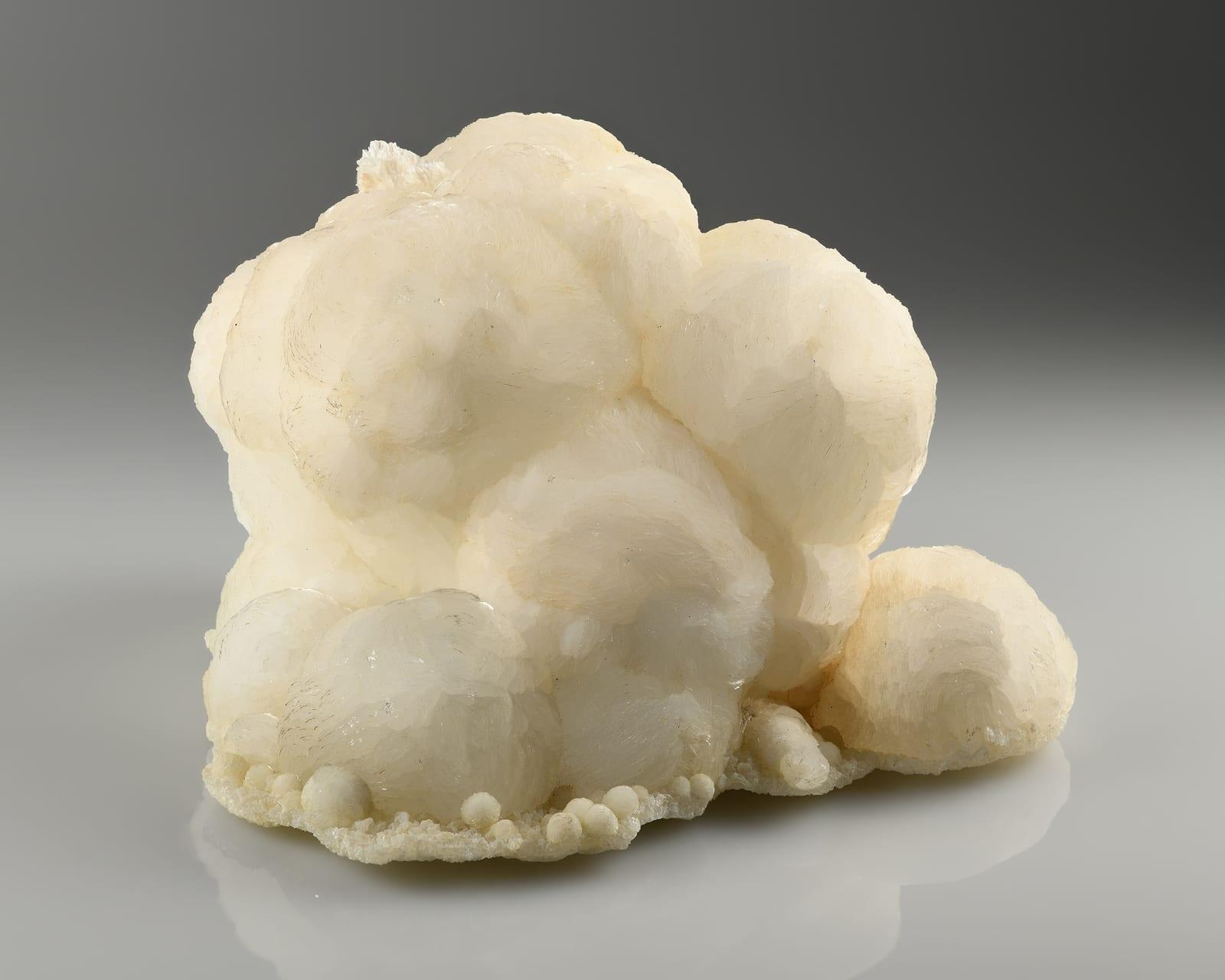
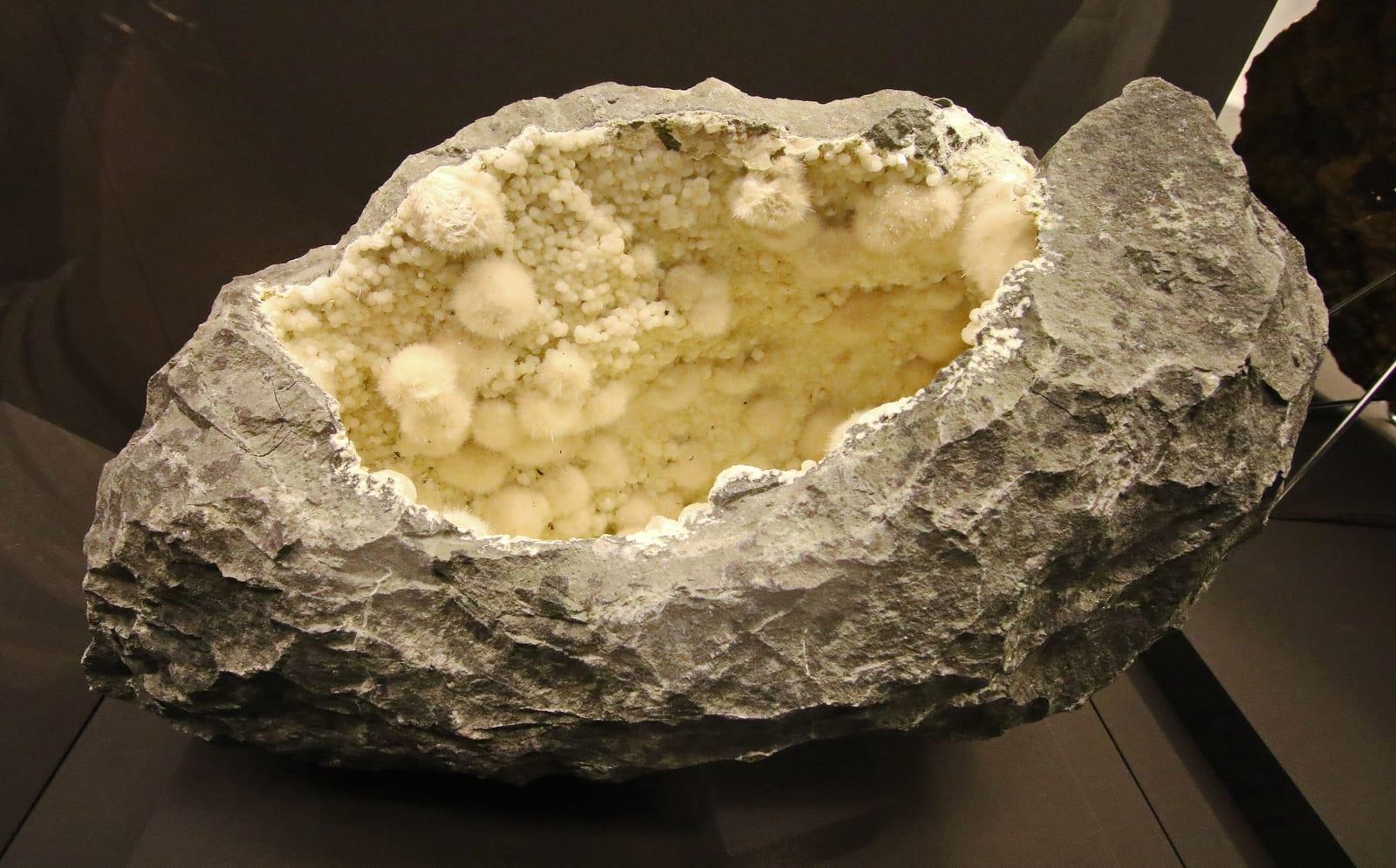
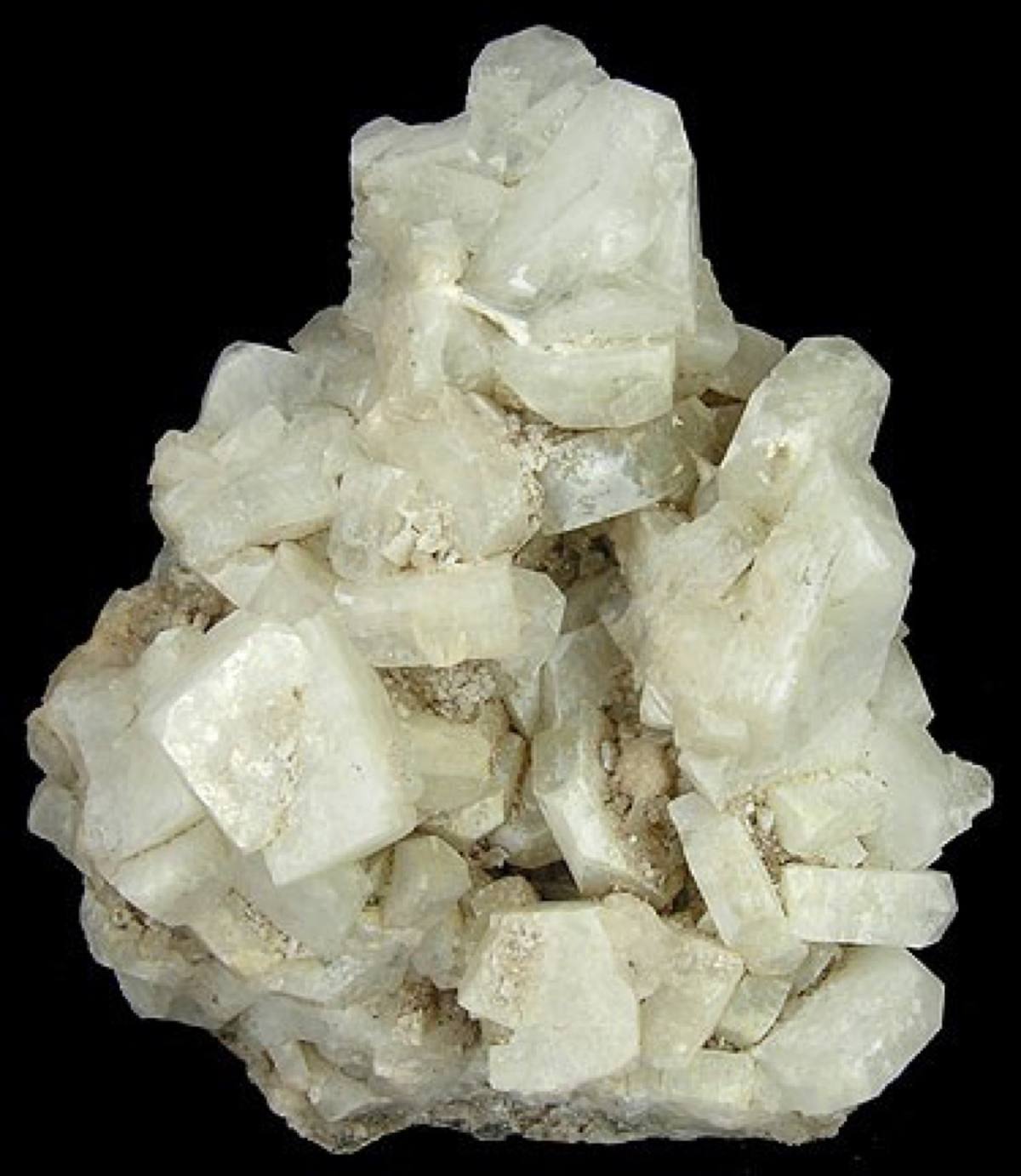
Often found alongside reyerite
Minerals reported to co-occur with reyerite. Spotting these in float or country rock is a strong cue you are in the right ground.
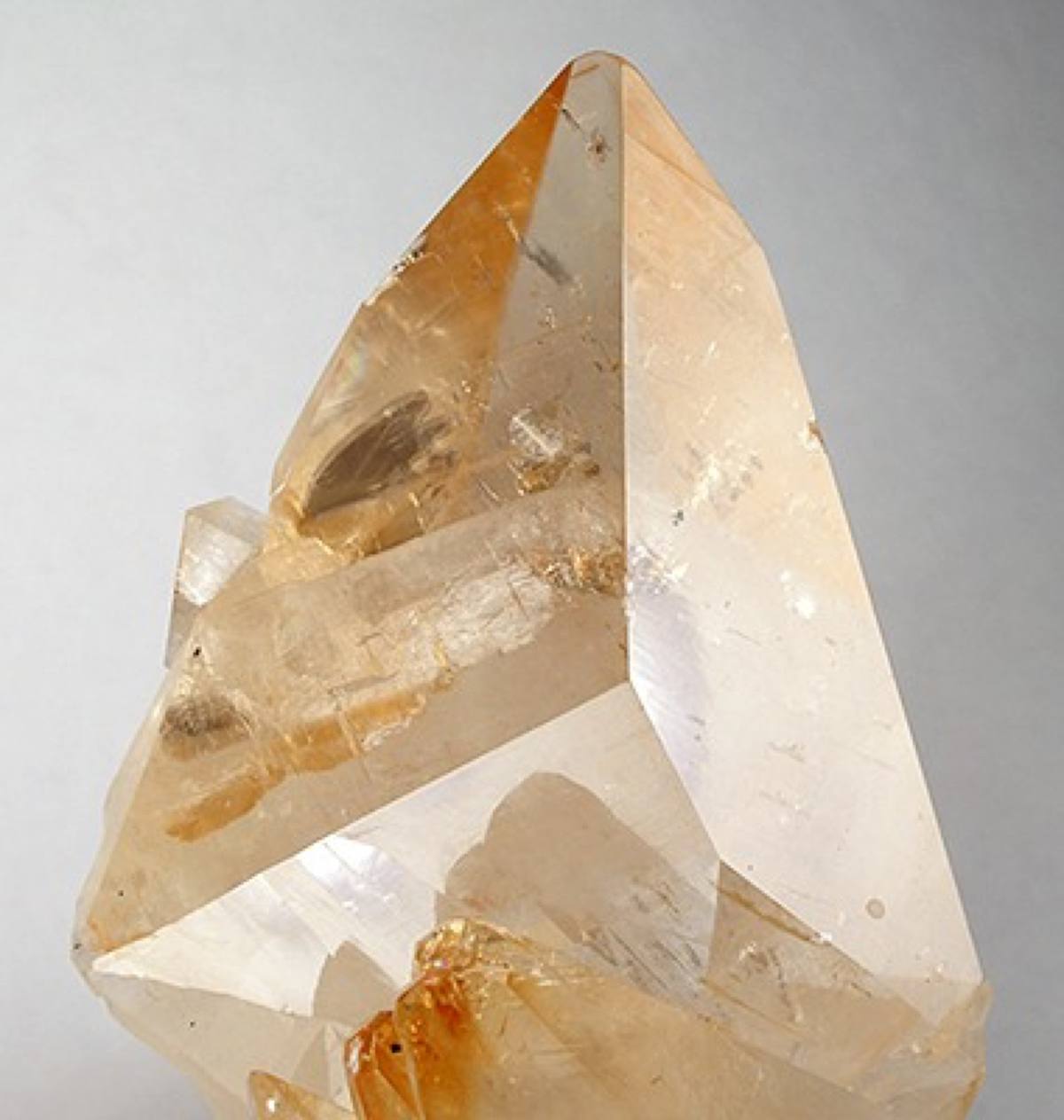
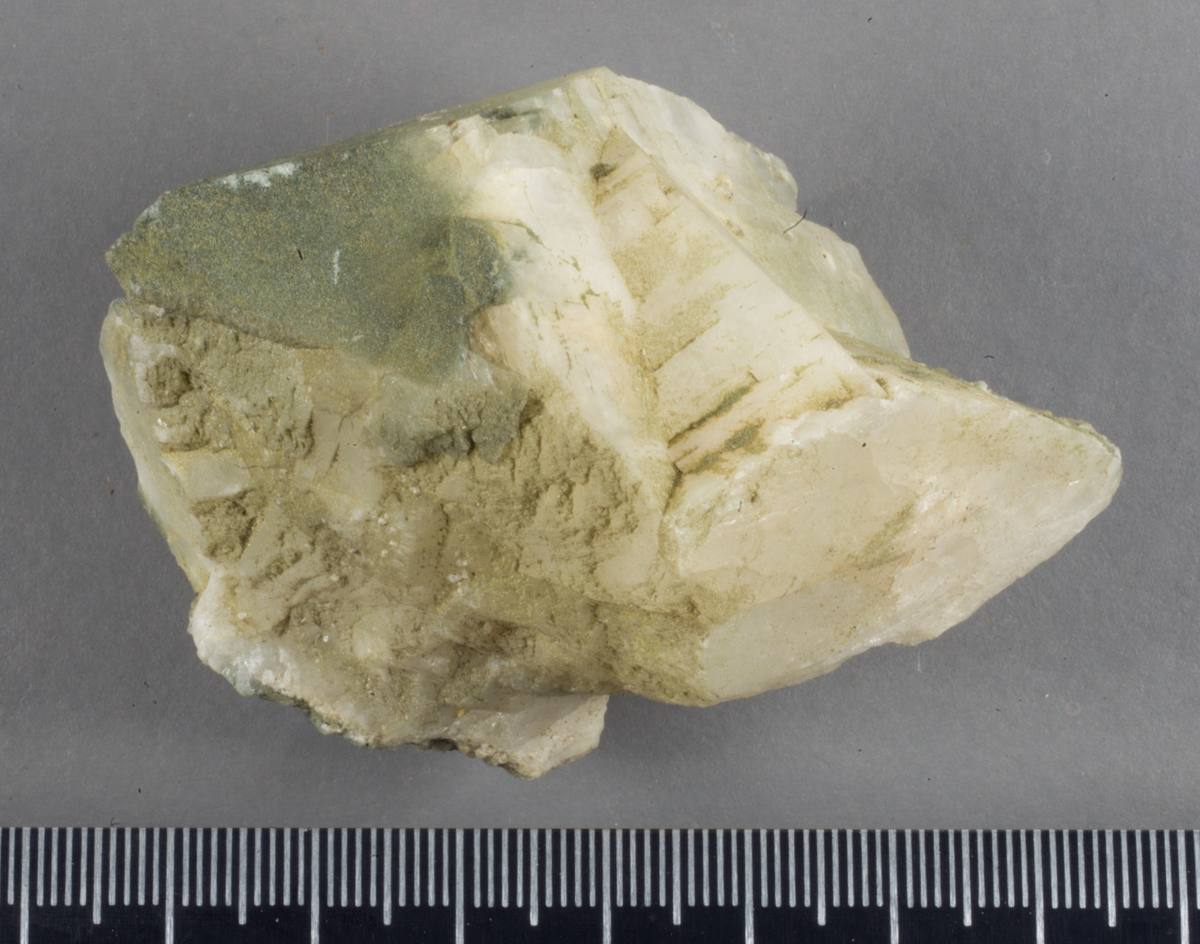
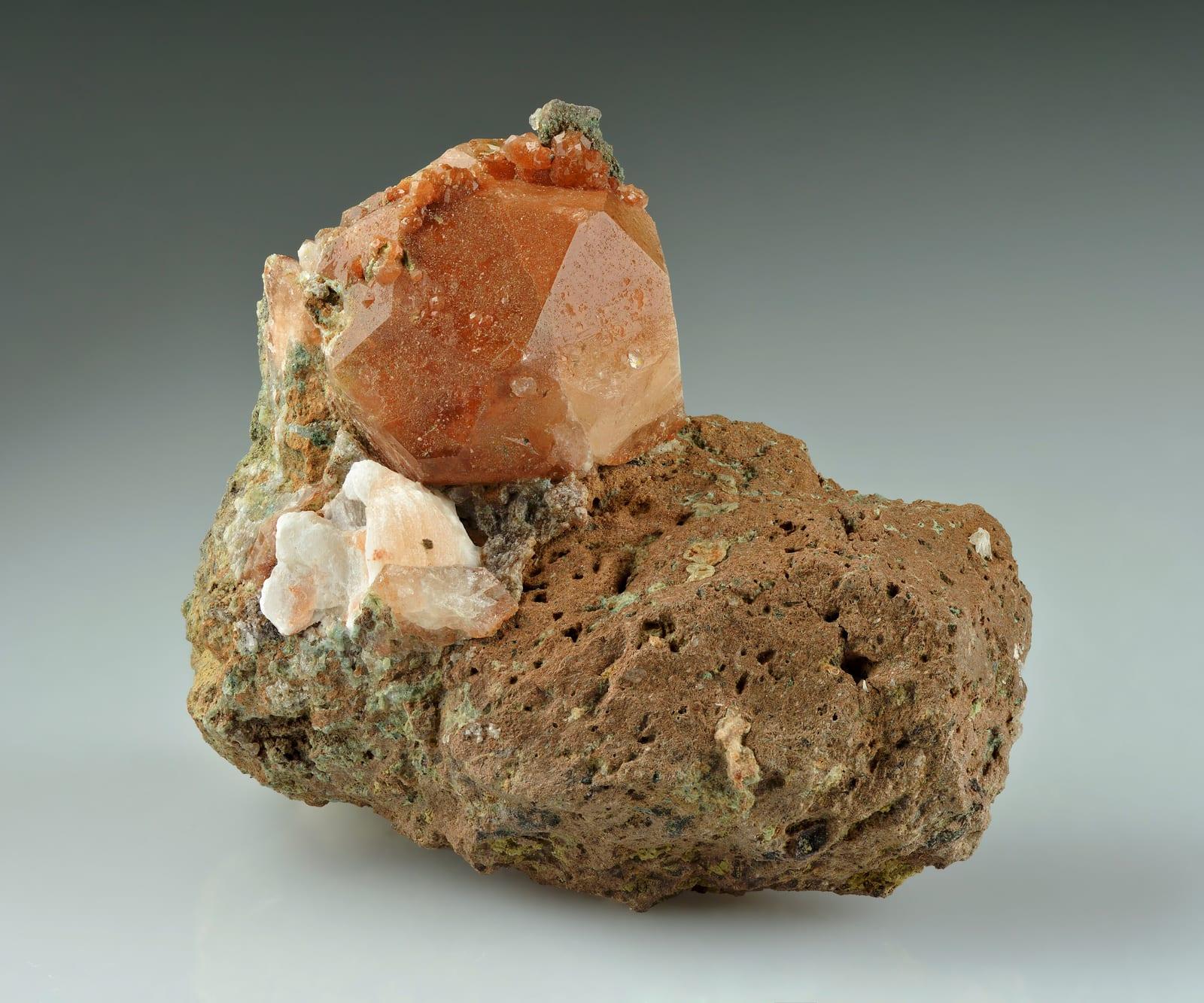
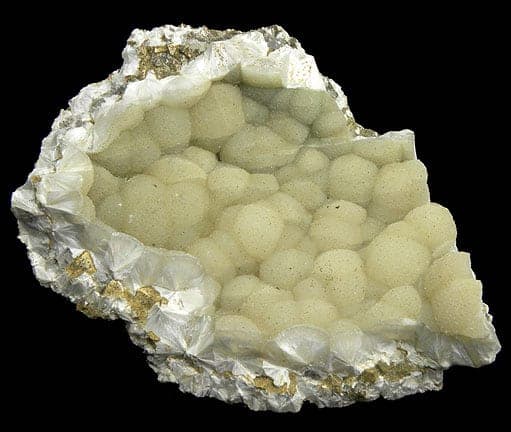
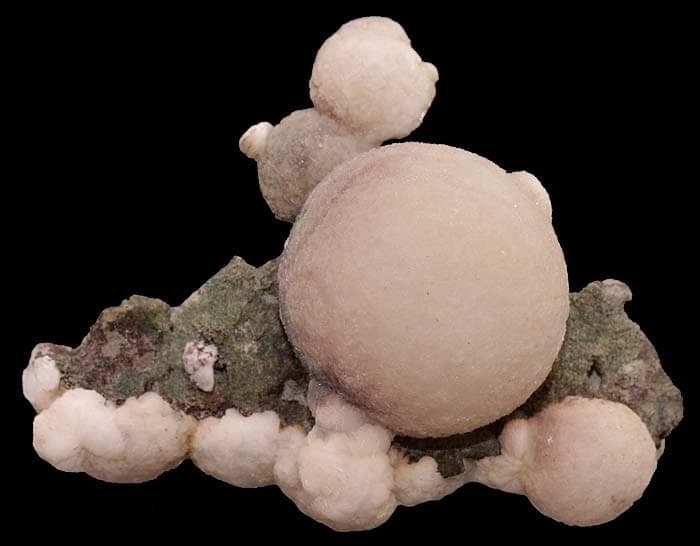
All properties
- Chemical formula
- Na₂Ca₁₄Al₂Si₂₂O₅₈(OH)₈(H₂O)₆
- Mohs hardness
- 3.5-4.5
- Density
- 2.51-2.58 g/cm³
- Streak
- White
- Luster
- Vitreous
- Transparency
- Transparent to translucent
- Crystal system
- Trigonal
- Crystal habit
- Massive, micaceous, spherical
- Cleavage
- Perfect on {0001}, micaceous
- Rarity
- Rare
- Uses
- Collector
- Host rock
- In tu® (Niaqornat, Greenland); in basalt, within the contact aureole of a volcanic plug (Isle of Mull, Scotland); in a low-grade regionally metamorphosed diabase dike (Rawlings quarry, Virginia, USA)
Where rockhounds find reyerite
Classic worldwide localities
- Rawlings quarry, south of McKenney, Brunswick Co., Virginia, USA
- Niaqornat (Niakornak), Greenland
Field-hunting tip
Where it forms: In tu® (Niaqornat, Greenland); in basalt, within the contact aureole of a volcanic plug (Isle of Mull, Scotland); in a low-grade regionally metamorphosed diabase dike (Rawlings quarry, Virginia, USA). If you start seeing calcite, chlorite, gyrolite in float, you are in the right ground. Typical habit: massive, micaceous, spherical. Train your eye for that shape before scanning the outcrop.
Common questions
How do you identify reyerite?+
Where is reyerite found?+
What rocks look like reyerite?+
What minerals are found with reyerite?+
What kind of rock does reyerite form in?+
What is reyerite used for?+
Find reyerite on the map
RockHoundR shows mapped rockhounding spots, access rules, and lets you log every find.