
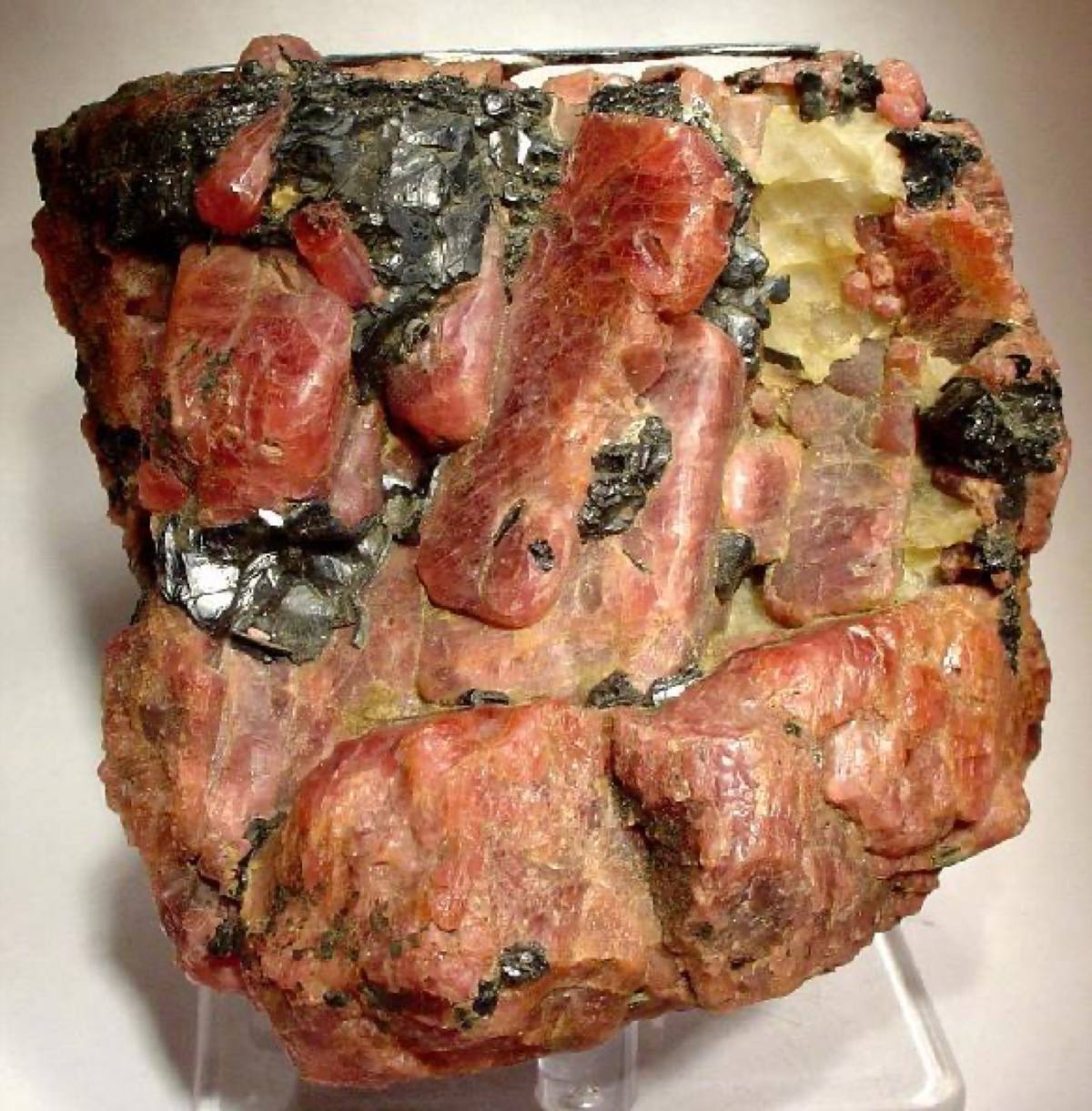
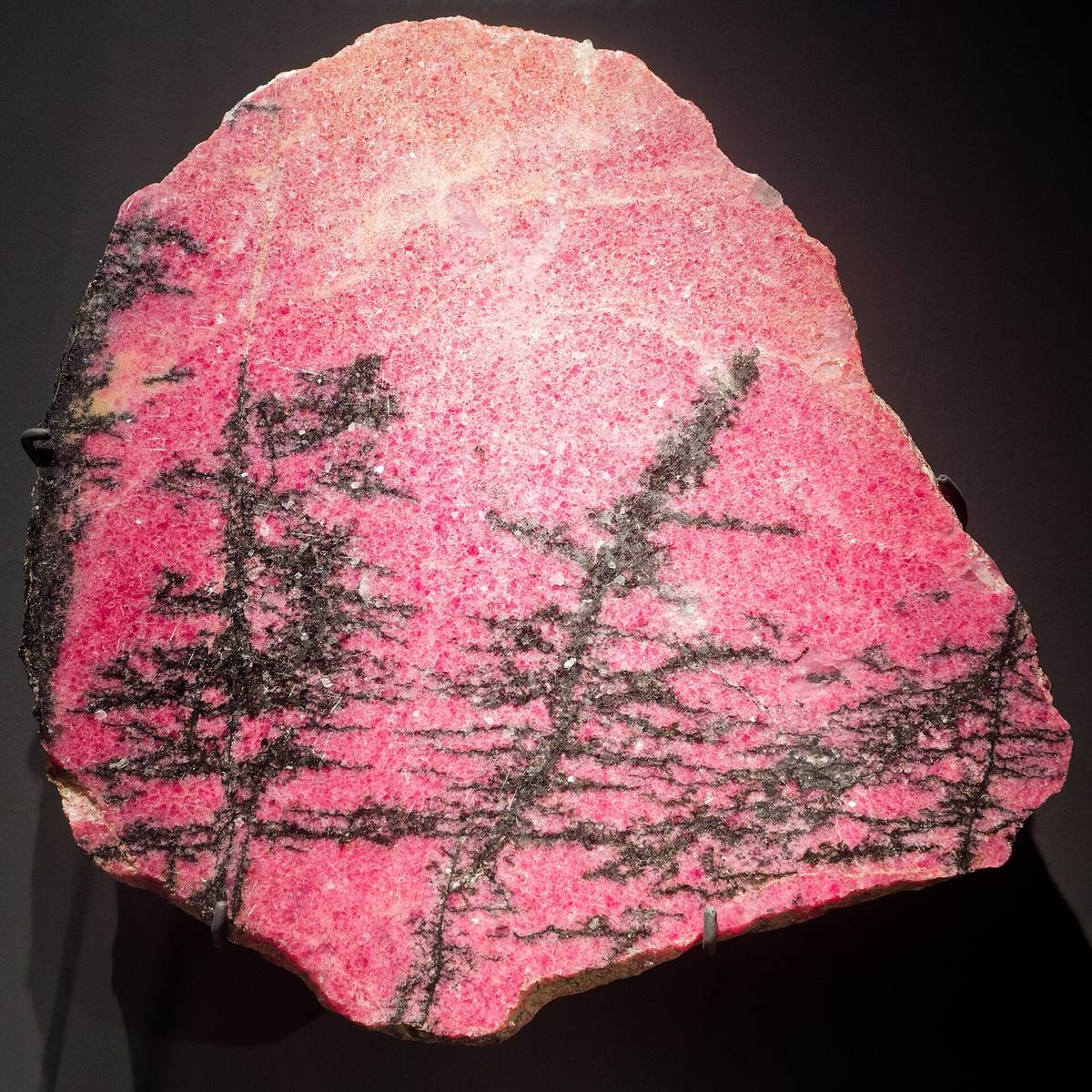
Rhodonite is a manganese silicate mineral easily recognized by its distinctive rose-pink color, often streaked with black dendritic inclusions of manganese oxide. It typically occurs in massive or granular forms and is highly valued by lapidary artists for creating polished cabochons and decorative carvings.
Spotting rhodonite in the field
Field marks- 1
Rose to brownish pink, opaque, threaded with black manganese oxide veins
- 2
The black veining is the signature and is present in nearly all cutting material
- 3
Hard enough to resist a knife at 5.5 to 6.5
The black veins are what tell rhodonite from every other pink stone, and they come from manganese oxide filling fractures in the pink manganese silicate. It forms in metamorphosed manganese deposits, so look in metamorphic terrain with manganese occurrences. It is the state gem of Massachusetts, from Cummington, with Australia and Madagascar supplying most commercial material. Exposed surfaces weather to a black manganese crust, so a pink stone can hide inside a black rock.
Straight answers
- Is it worth cutting?
- A good cabbing stone, though the black manganese veins are softer than the pink and undercut, so finish carefully on a soft wheel.
- What is it really worth?
- Inexpensive. Deep even pink with well-defined rather than muddy black veining is the quality mark.
- Can you legally keep it?
- Ordinary personal-use collecting rules apply. Some classic localities are private quarries.
Often confused with
Rhodonite vs. its common look-alikes, and how to tell them apart in the field.
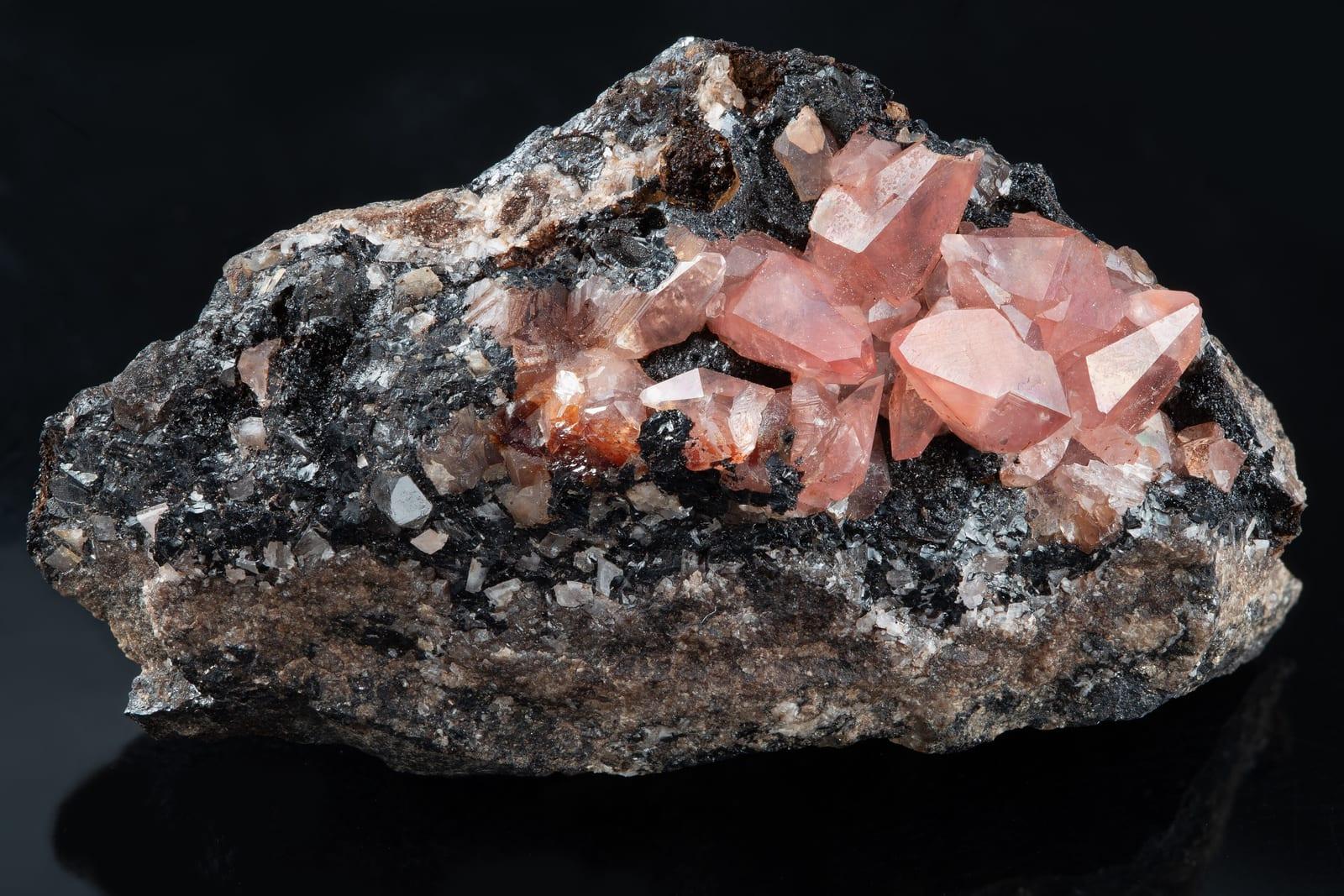
How to tell apart: Hardness and acid. Rhodochrosite is soft, cleaves, and fizzes. Rhodonite is hard, has no easy cleavage, and does not react.
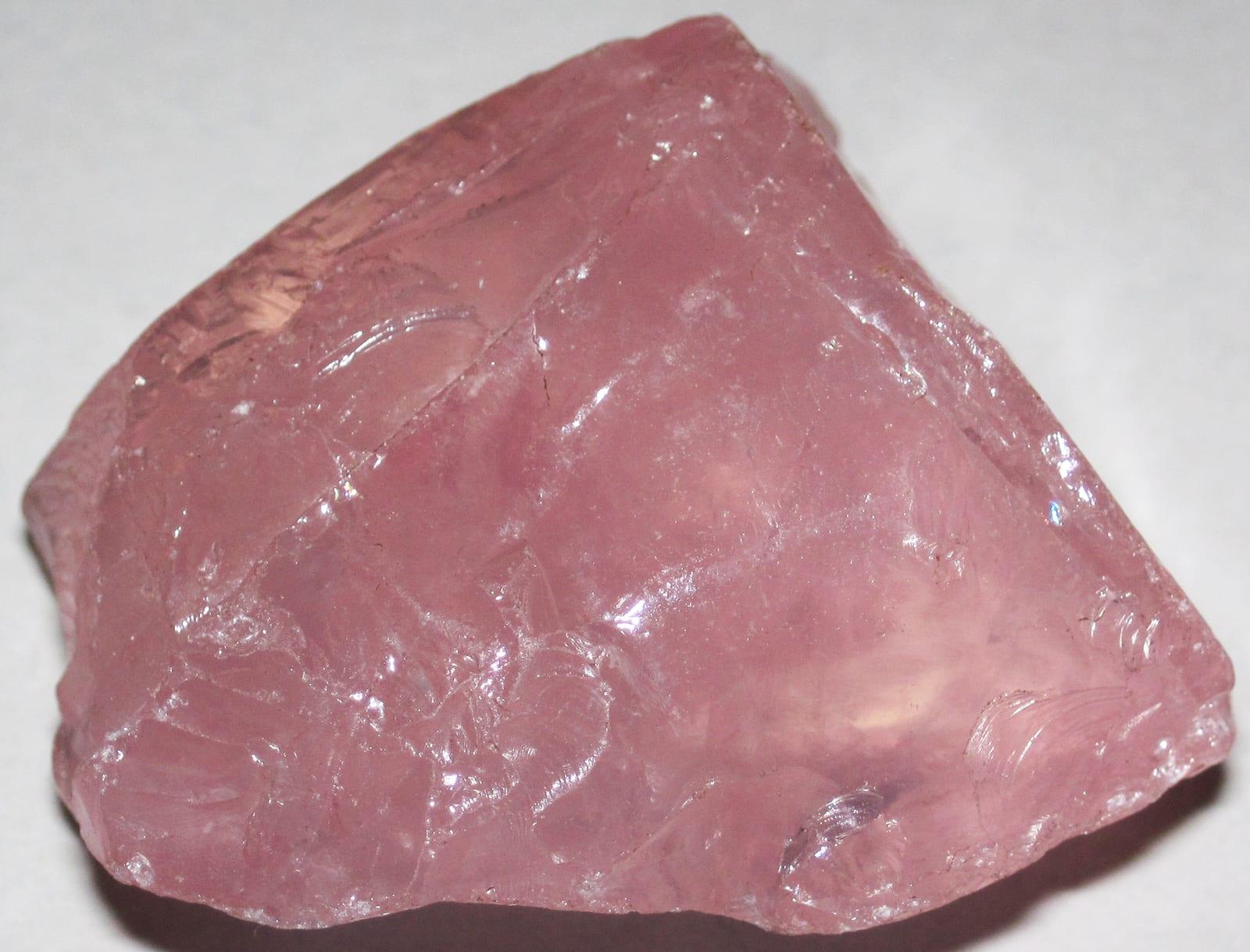
How to tell apart: Rose quartz is translucent, has no black veining, and is harder at 7.
Often found alongside rhodonite
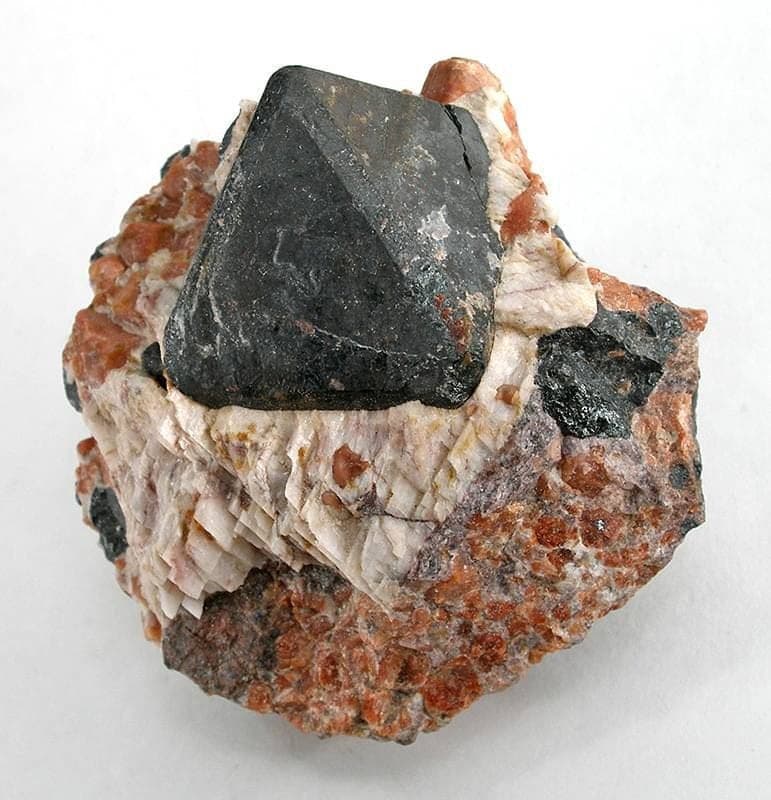
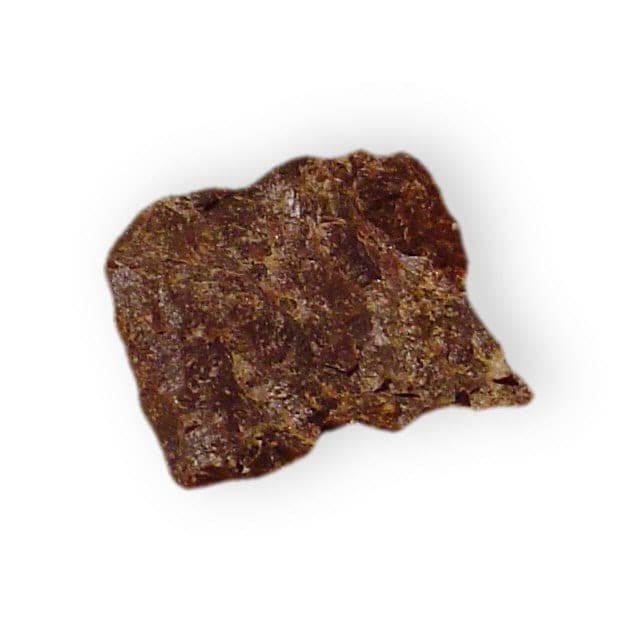
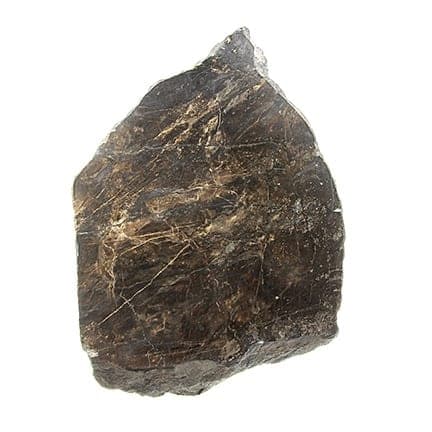
Minerals reported to co-occur with rhodonite. Spotting these in float or country rock is a strong cue you are in the right ground.
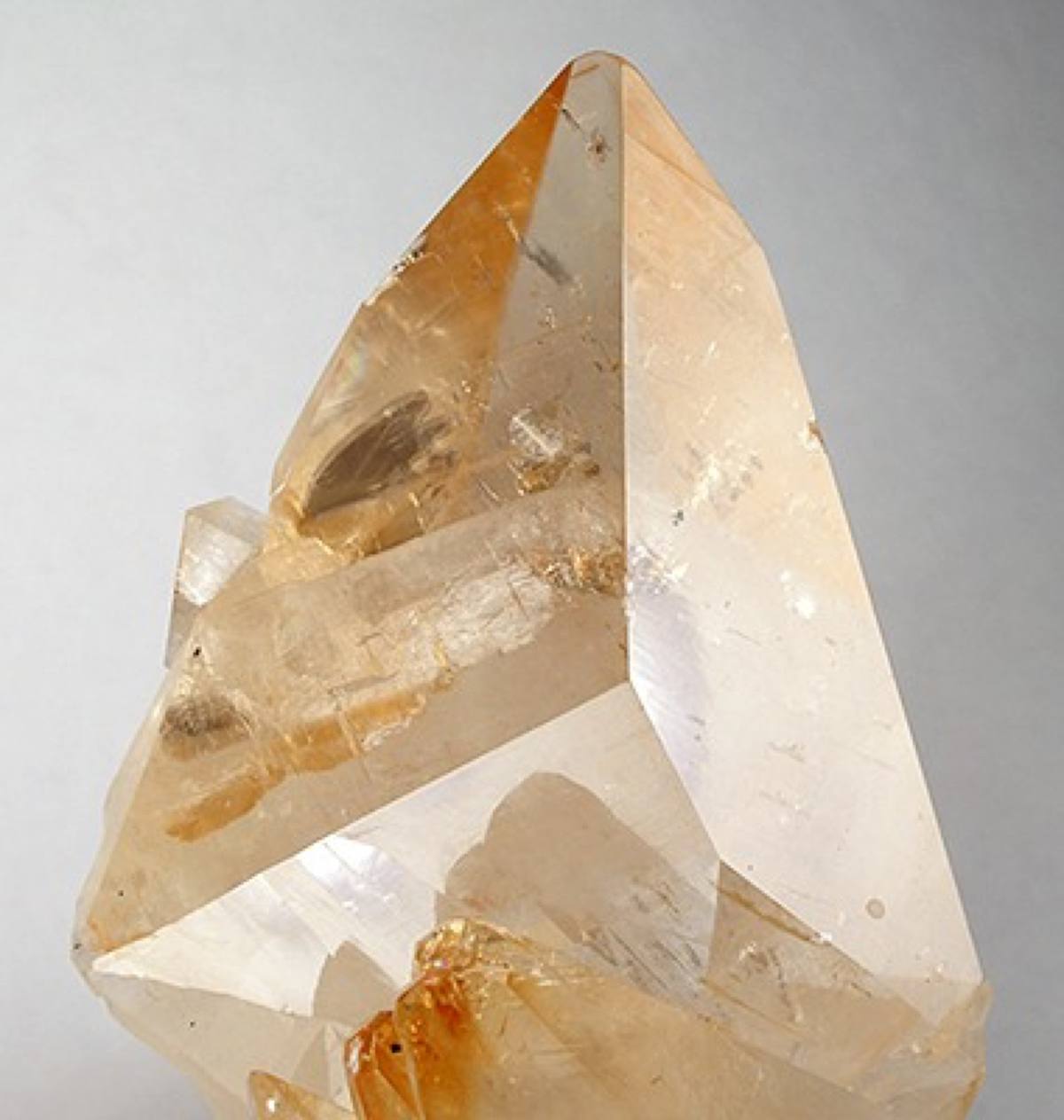
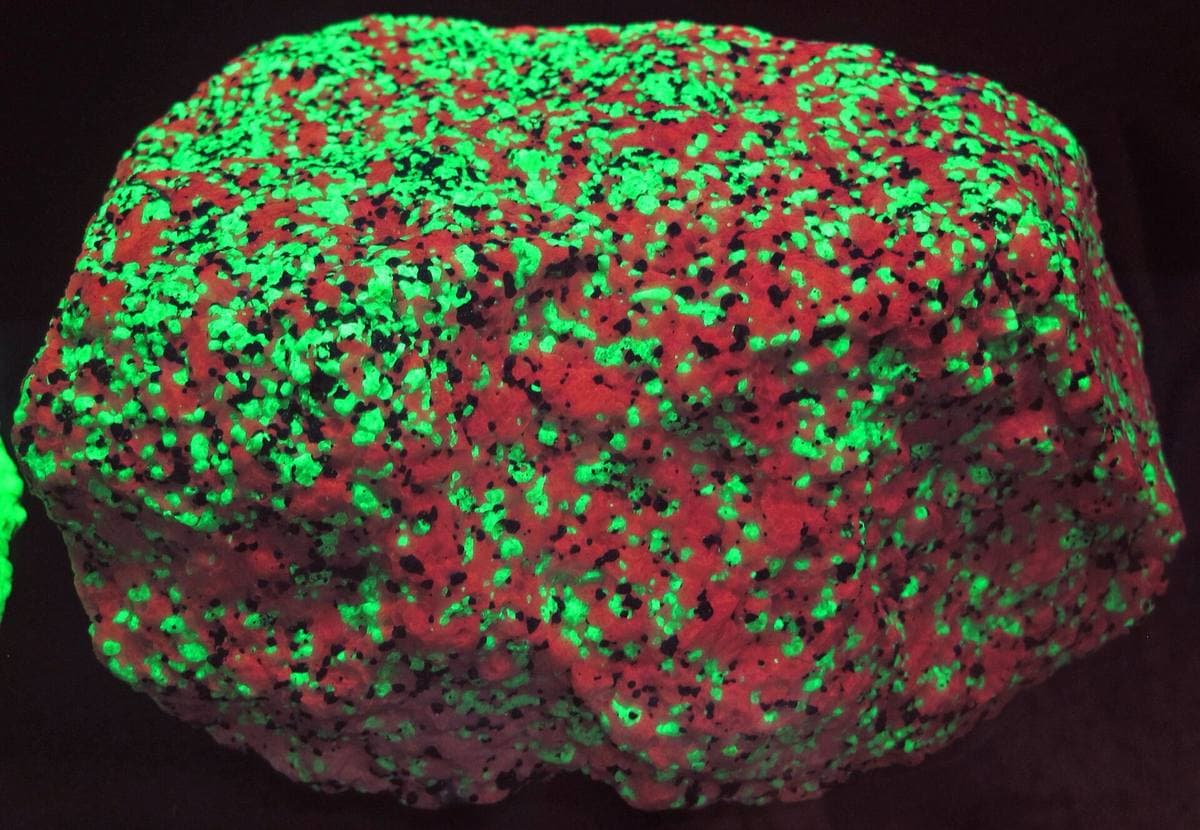
All properties
- Chemical formula
- CaMn₃MnSi₅O₁₅
- Mohs hardness
- 5.5-6.5
- Density
- 3.57-3.76 g/cm³
- Streak
- White
- Luster
- Vitreous, somewhat pearly on cleavages
- Transparency
- Transparent to translucent
- Crystal system
- Triclinic
- Crystal habit
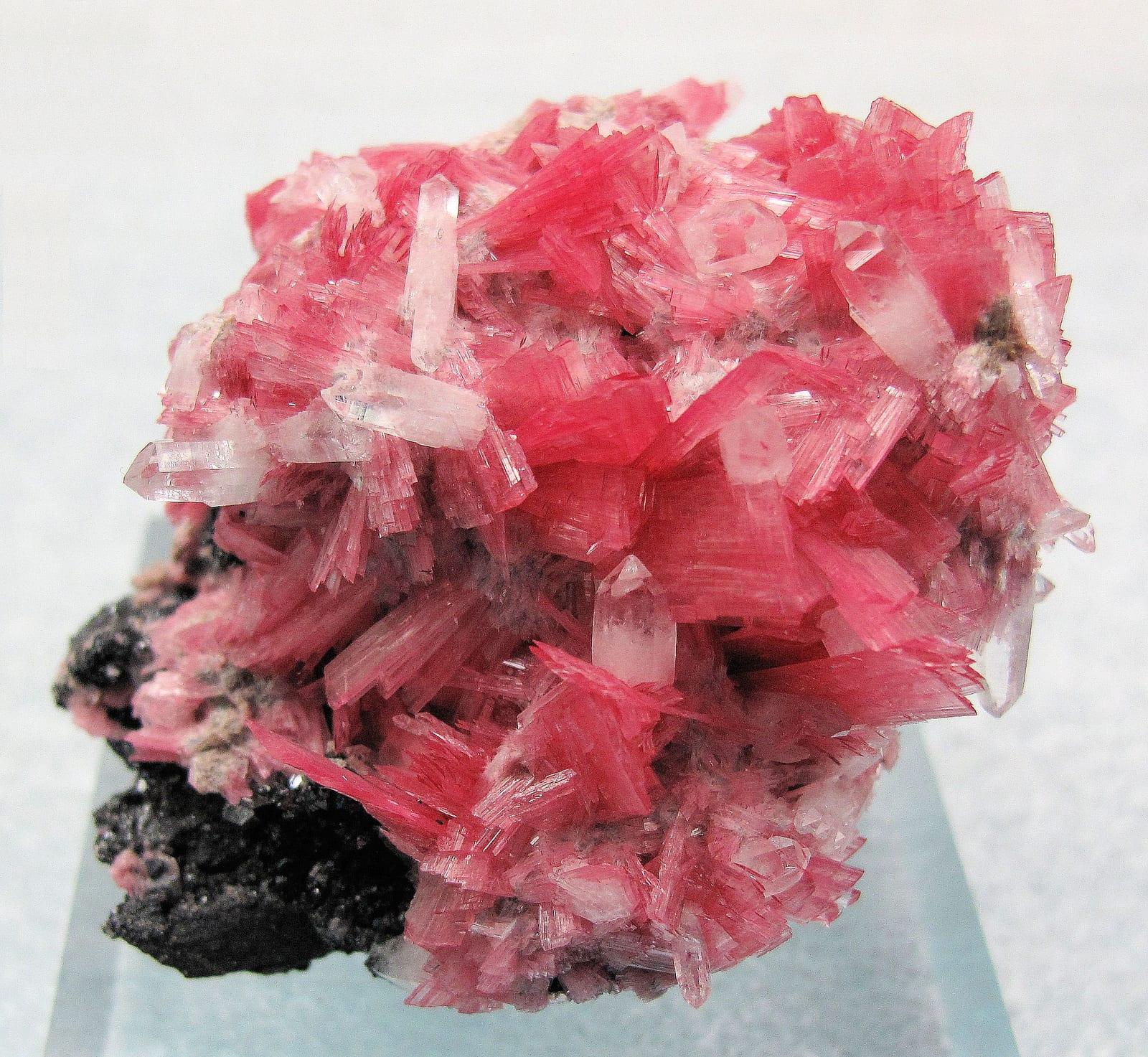
- Massive, granular, tabular crystals
- Cleavage
- Perfect on {110} and {110}, (110) ^ (110) = 92.5°; good on {001}
- Rarity
- Common
- Uses
- Lapidary, Collector, Decorative, Gemstone
- Host rock
- In manganese-bearing deposits formed by hydrothermal, contact and regional metamorphic, and sedimentary processes
Where rockhounds find rhodonite
16 mapped spotsClassic worldwide localities
- Franklin and Sterling Hill, Ogdensburg, Sussex Co., New Jersey, USA
- Bald Knob, near Sparta, Alleghany Co., North Carolina, USA
- Butte, Silver Bow Co., Montana, USA
- Yekaterinburg (Sverdlovsk), Ural Mountains, Russia
- Harstigen mine, near Persberg, and at Långban, Värmland, Sweden
- Meldon quarry, Okehampton, Devon, England
U.S. states with rhodonite
Each link opens a state-specific list of mapped rockhounding spots that produce rhodonite.
Field-hunting tip
Where it forms: In manganese-bearing deposits formed by hydrothermal, contact and regional metamorphic, and sedimentary processes. If you start seeing calcite, willemite, franklinite in float, you are in the right ground. Typical habit: massive, granular, tabular crystals. Train your eye for that shape before scanning the outcrop. In the U.S., the densest reported localities are in California, Idaho, Massachusetts. Start trip planning there.
More rhodonite photos
Common questions
How do you identify rhodonite?+
Where is rhodonite found?+
Can I find rhodonite in the United States?+
What rocks look like rhodonite?+
What minerals are found with rhodonite?+
What kind of rock does rhodonite form in?+
What is rhodonite used for?+
Find rhodonite on the map
RockHoundR shows mapped rockhounding spots, access rules, and lets you log every find.

